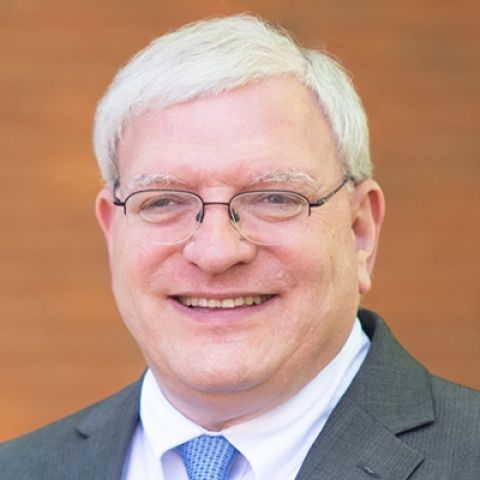
Michael Weiss is a Lecturer in the Department of Mathematics at the University of Michigan. He teaches foundational courses such as Linear Algebra (MATH 217) and Explorations in Euclidean Geometry (MATH 431). His office is located in East Hall (Room 1868) at 530 Church Street, Ann Arbor, MI. Current Courses: MATH 217-004 (Linear Algebra), MATH 217-011 (Linear Algebra), MATH 431-001 (Explorations in Euclidean Geometry) Weiss’s research focuses on mathematics education, particularly on pedagogical strategies for teaching geometry and mathematical reasoning. His work explores the use of visual representations, interactive technologies, and narrative tools (e.g., comics) to enhance learning and teacher development. He emphasizes the role of theory-building in secondary geometry instruction and investigates how students translate abstract mathematical concepts into concrete reasoning. His publications highlight interdisciplinary approaches to education, integrating technology (e.g., animated stories, voice assistants) with traditional teaching methods. Keywords across his work include Mathematics Education , Geometry , Interactive Media , Visual Learning , and Teacher Training . Contact: mweiss@umich.edu
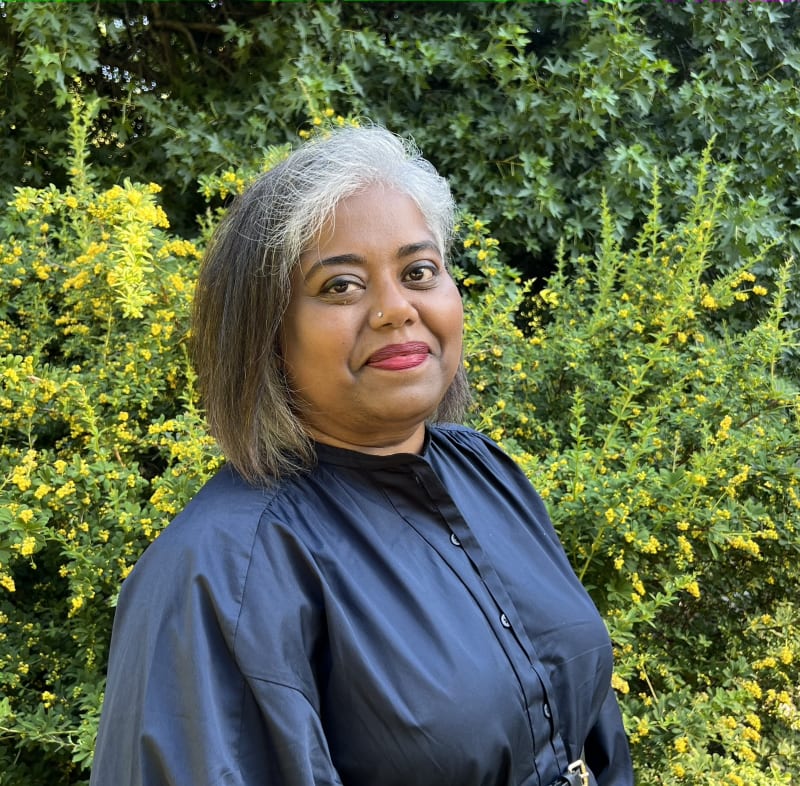
Dr. Janet Walkoe is an Associate Professor in the Department of Teaching and Learning, Policy and Leadership at the University of Maryland. Her work focuses on mathematics education, particularly algebra teaching and learning, and the role of teacher noticing in responsive instruction. She holds a Ph.D. in Learning Sciences from Northwestern University (2013), an MS in Mathematics from the University of Illinois at Chicago, and a BA in Mathematics from the University of Chicago. Before academia, she taught high school mathematics for a decade, earning National Board Certification. Her research emphasizes how teachers attend to student algebraic thinking during instruction and how pre-service teachers can develop noticing skills through video analysis. Key areas include teacher responsiveness, multimodal algebraic thinking, and computational thinking integration in mathematics education. She has led the NSF-funded CAREER grant (2020) exploring teacher noticing of student thinking, and co-authored influential works like Lenses for examining students’ mathematical thinking (2014), which earned an NCTM award. Notable Grants: NSF CAREER DRL 17-537 ($736,914), INFACT Subaward ($250k), Spencer Foundation Grant ($44k) Teaching: Courses include Interdisciplinary Teaching in Middle Grades (TLPL 423/424), Elementary Mathematics Education (EDCI 652), and Foundations of Mathematics Education (EDCI 751) Professional Development: Develops video-based tools for teacher reflection and computational thinking integration Walkoe advocates for culturally sustaining pedagogy and equity in teacher education. Her recent work bridges computational thinking with mathematics instruction, emphasizing interdisciplinary approaches to foster student engagement.
George M. Cohen is a Professor of Law at the University of Virginia School of Law, where he joined the faculty in 1993 as an associate professor and was promoted to full professor in 1995. He serves as a prominent scholar in legal ethics, contract law, and law and economics, teaching courses in contracts, professional responsibility, agency and partnership, and previously teaching antitrust and law and economics. Cohen earned his undergraduate degree summa cum laude and Phi Beta Kappa from Yale University. He went on to earn his J.D. in 1986 and a Ph.D. in economics in 1992, both from the University of Pennsylvania. During law school, he served as articles editor of the University of Pennsylvania Law Review. Prior to joining UVA, Cohen clerked for Judge Walter K. Stapleton of the U.S. Court of Appeals for the Third Circuit and taught at the University of Pittsburgh School of Law starting in 1988. Professor Cohen's research spans several interconnected areas of legal scholarship with a particular focus on the intersection of law, economics, and professional ethics. His work examines contract law through economic analysis, explores ethical dilemmas in legal practice, and investigates the theoretical foundations of agency and partnership law. He has made significant contributions to understanding how fault concepts shape contract law, the ethical responsibilities of lawyers in corporate settings, and the application of economic principles to traditional legal doctrines. His scholarship often bridges theoretical frameworks with practical applications in legal practice. Analysis of Cohen's recent publications reveals a consistent scholarly trajectory focusing on the evolving landscape of legal ethics in contemporary practice, particularly examining how traditional ethical frameworks respond to modern challenges like political interference in legal practice and the aftermath of financial crises. His work demonstrates a sophisticated integration of economic analysis with doctrinal legal scholarship, maintaining relevance across both theoretical and practical dimensions of law. Cohen has held significant leadership roles within the academic community, serving as chair of the UVA Faculty Senate from 2012-13. He has also contributed extensively to legal discourse through his role as an ethics consultant and expert for several law firms, demonstrating the practical impact of his scholarly work. His scholarship has appeared in prestigious law reviews including the Virginia Law Review, Fordham Law Review, and Michigan Law Review. Professor Cohen maintains an active scholarly presence with recent publications addressing contemporary legal challenges, including his 2024 analysis of Rudy Giuliani's disciplinary proceedings related to the 2020 election. His work continues to shape discussions on professional responsibility and the application of legal ethics in politically charged environments.
Monika Rosińska is an Assistant Professor at SWPS University's Faculty of Design in Warsaw, where she serves as Head of the Department of Design Theory and Research and as Dean's Representative for Interdisciplinarity. She is affiliated with both the Institute of Social Sciences and the Design Institute within the university. Her research focuses on the socio-cultural dimensions of design practices, with particular expertise in non-anthropocentric design, science and technology studies (STS), and critical/speculative design approaches. She investigates the history of design within political, social and cultural contexts, and examines the sociology of objects in everyday life. Dr. Rosińska explores why the creative process extends beyond form and function, pursues definitions of "good design," and investigates what matters to contemporary designers. Her scholarly work reveals consistent themes across publications, with recent research increasingly focused on multi-species communities and non-anthropocentric approaches to design. Her 2019 paper "Zoepolis: Non-anthropocentric design as an experiment in multi-species care" represents a significant contribution to this emerging field, building on earlier work exploring urban revitalization and participatory design. Dr. Rosińska has curated exhibitions including "Zoepolis. Design for Plants and Animals," which serves as both research output and practical exploration of her theoretical frameworks. Her publications span from foundational works on collective behaviors ("Deindywiduacja. Socjologia zachowań zbiorowych") to cutting-edge explorations of AI in visual arts (2025). She actively contributes to academic discourse through platforms including Google Scholar, ResearchGate, Academia.edu, and ORCID, maintaining visibility across multiple scholarly networks. Her work bridges sociology and design in innovative ways that challenge traditional disciplinary boundaries.
Dr. Rathna Ramanathan is a leading academic and practitioner in intercultural communication and alternative publishing. Currently serving as Provost of Central Saint Martins and UAL Executive Dean for Global Affairs , she has previously held deanships at Central Saint Martins and the Royal College of Art. Based in London but originally from Chennai, India, her work bridges South Asian and global design practices. University of Reading - PhD in Typography and Graphic Communication Central Saint Martins - MA in Communication Design University of Madras - BA Fine Art Her research focuses on intercultural communication and alternative publishing in the Global South, examining how marginalized voices can be amplified through design. She explores the tension between tangible/intangible heritages and contemporary design, and investigates how form, media, and content interact in addressing social/political issues. Recent publications highlight her design research trends in decolonial publishing, critical typography, and intercultural book design. As a design educator , she emphasizes listening, cross-cultural learning, and sustainable practices. Her supervision includes postgraduate research students working on topics like female printers in India, exhibition design, and architectural lettering. Key scientific collaborations include major projects with Tara Books (international design awards), British Council-funded initiatives (Crafting Futures, Going Global Partnership), and the Murty Classical Library of India (Harvard University Press partnership). She consults on Indic typeface design with Adobe and Monotype. Her design lab at Central Saint Martins (M9Design) works with international networks of editors, translators, and type designers. Current team projects focus on digital/print transitions, bilingual typography, and preserving endangered typographic practices through innovative publishing formats.
Bryan Kian Hsiang Low serves as Associate Professor in the Department of Computer Science at the National University of Singapore's School of Computing, while simultaneously holding leadership positions as Director of AI Research at AI Singapore and Deputy Director of the NUS AI Institute. His academic journey includes a B.Sc. (2001) and M.Sc. (2002) in Computer Science from NUS, followed by a Ph.D. in Electrical & Computer Engineering from Carnegie Mellon University (2009). His research spans probabilistic machine learning, multi-agent systems, and trustworthy AI, with particular focus on Bayesian optimization , federated learning , and data-efficient methodologies . The Low Lab develops frameworks for collaborative AI, automated machine learning, and AI applications in scientific domains through the Group of Learning and Optimization Working in AI (GLOW.AI), which maintains a multi-disciplinary approach bridging computer science, mathematics, and engineering disciplines. Analysis of his recent publications reveals a consistent emphasis on data valuation , privacy-preserving collaborative learning , and robust optimization techniques , with increasing integration of large language models into his research framework. His work demonstrates strong theoretical foundations coupled with practical applications in computational sustainability and robotics. Andrew P. Sage Best Transactions Paper Award (2006) NUS Overseas Graduate Scholarship (2004-2009) Faculty Teaching Excellence Award (2017-2018) IEEE RAS Distinguished Lecturer (2019) World Economic Forum Global Future Councils Fellow (2016-2018) Dr. Low actively mentors PhD students including Rachael Sim, Quoc Phong Nguyen, and Zhongxiang Dai, while leading major initiatives like the AI Phenome Platform for plant breeding optimization. His research group GLOW.AI operates at the intersection of theory and practice, with strong industry engagement through AI Singapore. Current projects focus on scalable AI systems for scientific discovery and developing frameworks for equitable collaborative machine learning with robust privacy guarantees.
David Lewis is a Professor of Social Policy and Development at the London School of Economics (LSE), specializing in South Asia and Bangladesh. His work bridges anthropology and development studies, focusing on NGOs, civil society, and the historical dimensions of development policy. He has advised international agencies like Sida, DFID, and UNDP, and his research explores 'policy amnesia' and the interplay between development narratives and grassroots realities. Research Interests Anthropology of Policy NGO Effectiveness and Critique South Asian Development Dynamics Historical Analysis of Development Interventions Entrepreneurship Advice in Bangladesh/Sri Lanka Professional Engagements Consultant for major development organizations Author/editor of influential texts including Bangladesh: Politics, Economy and Civil Society (2011) and New Mediums, Better Messages? (2022) Editor of Popular Representations of Development (2013), analyzing media's role in shaping development perceptions His work critiques top-down development paradigms while emphasizing historical context and local agency.
Dr. Shawne D. Miksa is a Professor in the Department of Information Science at the University of North Texas (UNT), College of Information. He specializes in information organization, cataloging standards, and metadata. His research focuses on bibliographic control, information behavior, and the history of library and information science. Education: Ph.D., Library and Information Sciences, Florida State University, 2002 M.S., Library and Information Sciences, Florida State University, 1997 B.A., Liberal Arts with Anthropology minor, University of Central Florida, 1995 Research Interests: Dr. Miksa's work addresses cataloging rules (e.g., RDA, AACR2), metadata standards (MARC21), authority control systems, and LIS education. He explores theoretical frameworks like FRBR/LRM and investigates the intersection of bibliographic control with information behavior and scholarly communication. Grants & Professional Activities: Recipient of OCLC/ALISE grants (2004–2005) for cataloging tool utilization studies. Leadership roles in ALA's Core Metadata and Collections Section, ALISE, ASIST, and ISKO. Editor of the Journal of Library Metadata and contributor to key publications on RDA and FRBR. Recent Articles: Recent work analyzes trends in Cataloging & Classification Quarterly (2024), explores linked data in metadata (2021), and examines Elfreda Chatman's theoretical contributions (2021). Dr. Miksa's research bridges cataloging practices with evolving digital environments. Labs/Teams: Active in cross-disciplinary initiatives like the MARC Content Designation Utilization Project and collaborates with global LIS networks.
Associate Professor Lizzie Muller serves as Director of Research in the School of Art & Design at the University of New South Wales. An accomplished curator and researcher, she specializes in audience experience and interdisciplinary collaboration, with a particular focus on the future of museums as sites of knowledge production. Her research bridges curatorial practice with theories and methods from participatory design and interaction design, developing audience-centered curatorial methodologies and innovative approaches to audience research. Her work extends to preservation and archiving, particularly experiential documentation and oral histories of media art. Co-author of Curating Lively Objects: Exhibitions Beyond Disciplines (Routledge Museum Studies Series, 2022) Elected Councillor of the Sydney Culture Network Co-founder of the bi-monthly Sydney Culture Data Salon with Keir Winesmith Muller's research output demonstrates a consistent trajectory exploring the intersection of art, science, and technology through major international exhibitions including Human Non Human (Powerhouse Museum, 2018/19) and A Working Model of the World (staged across UNSW Galleries, Parsons School of Design, and University of Dundee). Her recent work focuses on art-science collaborations, deep time history through the ARC Centre for Excellence in Australian Biodiversity and Heritage, and the development of audience-centered curatorial frameworks. Scientific Awards: 2024 ADA Deans Award for Excellence in Higher Degree Supervision Muller leads significant research initiatives as Chief Investigator on multiple ARC-funded projects including the ARC Linkage project Curating Third Space: The Value of ArtScience Collaboration and SSHRC-funded research on The Living Effect and Curating Lively Objects . She has supervised numerous PhD and MFA candidates, with a special focus on curatorial practice-based research, and currently serves as Program Director of the Master of Curating and Cultural Leadership at UNSW Art & Design.
Ben Martin is Professor of Science and Technology Policy Studies at the University of Sussex Business School, leading SPRU (Science Policy Research Unit). With 40+ years of research experience, he specializes in science policy, innovation studies, and research evaluation. His work spans foresight methodologies, university-industry collaboration, and research integrity. Recent publications explore evolutionary economics, academic publishing ethics, and research misconduct frameworks. Key contributions include developing techniques for evaluating scientific performance, analyzing technological spin-offs, and pioneering studies on foresight. He has supervised 30+ doctoral students and secured funding from EU, ESRC, and DFID for projects like NETGENESIS and PRIME.
John Aloysius Zinda is an Associate Professor in the Department of Global Development at Cornell University and Director of the Polson Institute for Global Development. His research focuses on socio-environmental interactions, particularly flood risk management in the U.S. and rural development/conservation in China. He is affiliated with the East Asia Program and the Cornell Atkinson Center for Sustainability. Educated at Vanderbilt University (B.A.), Johns Hopkins-Nanjing (Certificate), University of Michigan (M.S.), and the University of Wisconsin-Madison (Ph.D.), Zinda teaches courses on environmental sociology, disaster risk, and GIS methods. His work bridges conceptual frameworks with empirical analyses of social-environmental systems, emphasizing equity and policy impact. Research emphasizes how marginalized communities navigate environmental risks and policies, including flood mitigation in New York and reforestation in China. Recent studies highlight racial disparities in flood preparedness and the tensions between authoritarian governance and ecological conservation. His publications span journals like Environmental Sociology , Society & Natural Resources , and World Development . Teaching includes GDEV 3240: Environmental Sociology and DSOC 6340: Risk and Disaster , fostering analytical skills for social-environmental advocacy. His research teams collaborate with governments and NGOs, producing actionable insights for sustainable development. Zinda's work addresses global challenges through interdisciplinary approaches, linking local practices to macro-level policies.
Stefania Degaetano-Ortlieb is an Associate Professor of English Linguistics and Corpus Linguistics at Saarland University's Department of Language Science and Technology. She serves as Principal Investigator for the Collaborative Research Center (SFB 1102) 'Information Density and Linguistic Encoding,' leading Project B1 on diachronic information density in English scientific writing (17th century-present). Her interdisciplinary work bridges computational methods with sociolinguistics, focusing on register variation, language change, and digital humanities. Research interests center on text mining, data analytics, and probabilistic modeling of language variation. Key areas include: Diachronic evolution of scientific registers and linguistic densification Information-theoretic approaches to language efficiency Computational sociolinguistics and register diversification AI applications in humanities education (e.g., ChatGPT integration) Her publications show a strong trend toward quantitative diachronic analysis, with recent work emphasizing: interpretable AI models for linguistic change detection; propagandistic narrative analysis in conflict zones; and multi-word expression dynamics in scientific discourse. Cross-disciplinary collaborations frequently intersect with history, psychology, and media studies. Awards include the Fellowship Excellence Program for Young Female Scientists (2015-2018). Current grants: EU Horizon MSCA Doctoral Network 'CASCADE' (€521K to UdS, 2024-2027) Data-Pin Project for AI in education (€50K, 2023-2024) SFB 1102 Project B1 (€595K, 2022-2026) Advises PhD candidates in the EU CASCADE project on computational semantic change. Leads a research team exploring Russian media narratives, personality modeling in LLMs, and multi-word expressions. Directs teaching modules integrating AI tools for humanities students.
Dcn. Stephen Frezza is a Professor of Software Engineering and current Director of the Software Engineering Program at Franiscan University of Steubenville . Prior to this, he served as a professor and three-time chair of the Computer and Information Science Department at Gannon University for 26 years. His expertise spans requirements engineering, project management, software testing, and embedded systems . Ph.D., M.S., and B.S. in Electrical Engineering from the University of Pittsburgh Professional Software Engineering Master (PSEM) Active in industry-university partnerships His research bridges engineering with theology , focusing on philosophy of engineering, affective-domain assessment, competency modeling, and software engineering education . He has authored numerous scholarly works on virtue formation, educational frameworks, and the philosophical foundations of computing. Recent publications highlight his contributions to computing curricula (CC2020), virtue-based educational models , and Lonergan’s epistemology applied to engineering . His work integrates faith and reason in pedagogical contexts, emphasizing the ethical dimensions of engineering education . Senior Member of the IEEE Computer Society Volunteer for IEEE-CS Special Technical Committee on Education Professional member of the American Society for Engineering Education (ASEE) Dcn. Frezza’s leadership in curriculum design and industry collaboration has shaped software engineering programs globally. His teaching and research underscore the interplay between technical rigor and moral development , advocating for holistic engineering education.
Prof. Cornelia Bohn is a Professor of General Sociology at the University of Lucerne's Department of Sociology, within the Faculty of Humanities and Social Sciences. She holds a Ph.D. from the University of Bielefeld and a habilitation from the University of Trier. Her career includes roles as Associate and Assistant Professor at several institutions, and she has been a visiting scholar at Toyo University, Stanford, and the University of Chicago. Bohn's research focuses on sociological theory, media theory, monetary systems, and inclusion/exclusion dynamics. She co-edits the journal Soziale Systeme and collaborates with prestigious research networks like NCCR 'Iconic Criticism' and SFB 600 'Strangers and Poor People'. Her work bridges historical and contemporary social analysis, emphasizing visual and monetary systems. Key achievements include a fellowship at the Institute for Advanced Study (University of Constance), editorial leadership, and international research engagements. Her theoretical contributions address autonomy, societal structures, and cultural representation. Current research explores the intersection of art, documentation practices, and modern sociological frameworks.
Natalia Villanueva-Rosales is an Associate Professor in the Department of Computer Science at The University of Texas at El Paso (UTEP). As Co-Principal Investigator at the NSF-funded Cyber-ShARE Center of Excellence, she leads the iLink Research Group focusing on semantic technologies and smart city initiatives. Ph.D. in Computer Science, Carleton University (2011) M.Sc. in Artificial Intelligence, University of Edinburgh (2005) B.Sc. in Computer Science & Statistics, Universidad Panamericana & CINVESTAV-IPN (2002) Her research bridges Semantic Web technologies with Smart Cities applications, particularly in Water Sustainability and Senior Mobility . Key projects include ontology-based frameworks for freight performance data integration and community-driven smart mobility solutions. Recent publications demonstrate her interdisciplinary approach across Environmental Informatics (2022-2025) and Urban Mobility (2019-2022). She holds editorial and leadership roles in semantic science initiatives while actively mentoring through the ACM-W WICS student group. 2019 HEENAC Education Award 2019 NCWIT Undergraduate Research Mentoring Award Her NSF grants include IRES-1658733 for US-Mexico Smart Cities collaboration and OAC-1835897 for the SWIM water sustainability project. The iLink Research Group under her leadership develops ontological frameworks for cross-domain data integration and trust establishment in collaborative environments.