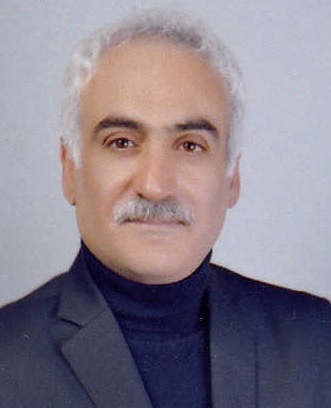
Ewa Batyra is an Affiliate Researcher at the Laboratory of Fertility and Well-Being within the Max Planck Institute for Demographic Research (MPIDR). Her work focuses on global demographic patterns related to fertility, family formation, and socioeconomic disparities. Key Research Areas: Fertility dynamics, child marriage, union formation, and the impact of education on demographic transitions. Geographic Focus: Global South, particularly Sub-Saharan Africa and Latin America. Recent Trends: Batyra's publications analyze post-disaster fertility shifts, unintended pregnancy outcomes, and the role of income inequality in delaying parenthood. She employs cross-national datasets and advanced statistical methods like fixed-effects modeling. Collaborations: Works with institutions such as the University of Pennsylvania (Hans-Peter Kohler), University of Oxford (Tiziana Leone), and Brazilian research teams on fertility forecasting.
Mark Brown is a Professor at the Department of Communication and Culture at BI Norwegian Business School. He holds a PhD from the University of Oslo (2008) and has extensive experience in academia since 1998, transitioning from business roles in sales and IT. His research focuses on the intersection of language, business, and environmental discourse, emphasizing sustainability communication, corporate social responsibility, and ethical stakeholder dialogue. He has published widely on topics such as corporate environmental rhetoric, Wendell Berry’s ecological philosophy, and the application of John Rawls’ political theory to business ethics. Education Background: PhD in Humanities (2008), University of Oslo MPhil in English (1997), University of Oslo Bachelor of Arts (1995), University of Oslo MSc in Chemical Engineering (1982), Imperial College London Research Interests: Combines linguistic analysis with environmental and business ethics, exploring how corporations construct discourses around sustainability and nature. Key themes include corporate greenwashing, stakeholder communication dynamics, and the rhetorical framing of ecological issues. Teaching: Specializes in intercultural communication at the undergraduate level, including courses on business cultures, ethical dilemmas, negotiation strategies, and presentation skills. His pedagogical work integrates digital learning tools and higher-level cognitive development in students. Grants/Advising: No explicit grants listed, but his research has been supported through institutional affiliations and academic collaborations. He has advised on educational initiatives like the Learning Lab Pilot Programme (2014–2015). Labs/Teams: Active in interdisciplinary research groups focusing on communication studies, sustainability, and ethics. Collaborates frequently with colleagues in humanities and business schools.
Helmut Rainer is a Professor of Economics at the University of Munich and Director of the Center for Labor and Demographic Economics at the ifo Institute. Previously, he held a faculty position at the University of St. Andrews' School of Economics and Finance. He earned his Ph.D. from the University of Essex in 2005. Education: Ph.D. in Economics, University of Essex, 2005 Research Interests: Focuses on applied microeconomics, particularly family economics and labor economics. His work extends to policy analysis involving domestic violence, gender equality, immigration, and social policy. Notable areas include quantifying domestic violence during crises, evaluating childcare policies, and studying the socioeconomic impacts of political movements like Fridays for Future. Policy Contributions: Advised German Federal Government on the Second Gender Equality Report (2015–2017) and contributed to evaluations of family policies and labor market reforms. His recent work highlights the effectiveness of arrests in reducing domestic violence cycles and analyzes the economic consequences of sports-related violence. Awards: Economic Journal Best Paper Award 2016 Grants & Funding: DFG-funded projects on custody effects and gender dynamics Leibniz Association grants for research on violence against women and economic uncertainty Labs/Teams: Leads the Center for Labor and Demographic Economics at ifo Institute, focusing on policy-relevant economic analysis of labor markets, family structures, and demographic trends.
Stephen Terry is an Associate Professor of Economics at the University of Michigan's College of Literature, Science, and the Arts. He is also a Research Associate at the National Bureau of Economic Research (NBER) and serves as Co-Editor of the Review of Economics and Statistics. His research focuses on macroeconomics, particularly firm investment and the impact of micro-level frictions on long-term growth and business cycles. Dr. Terry received his PhD in Economics from Stanford University in 2015. Prior to joining the University of Michigan, he served as an Assistant Professor at Boston University. Professor Terry's research spans several key areas in macroeconomics, with a particular emphasis on understanding how micro-level frictions affect macroeconomic outcomes. His work investigates firm investment behavior, economic growth dynamics, and business cycle fluctuations. He employs both theoretical models and empirical analysis to examine how factors like uncertainty, immigration, innovation, and financial constraints shape economic performance at the aggregate level. His research often bridges micro and macroeconomic perspectives to provide deeper insights into economic mechanisms, with special attention to how short-term phenomena can have long-term consequences for economic growth. Analysis of Professor Terry's recent publications reveals a consistent focus on macroeconomic dynamics, particularly the relationship between micro-level frictions and macroeconomic outcomes. His work spans topics including economic uncertainty, firm dynamics, innovation, immigration effects, and business cycle analysis. A notable trend is his examination of how short-term phenomena can have long-term economic consequences, as seen in his research on short-termism and its macroeconomic impact. His collaborative work with leading economists across various institutions demonstrates the interdisciplinary nature of his research. Professor Terry has earned significant recognition in his field: Research Associate, National Bureau of Economic Research (NBER) Co-Editor, Review of Economics and Statistics As an academic advisor, Professor Terry has mentored numerous PhD and Master's students in economics. His research has been supported by various grants that have enabled extensive empirical analysis and theoretical modeling. His work on economic uncertainty, firm dynamics, and growth mechanisms has contributed significantly to our understanding of macroeconomic phenomena. Professor Terry actively collaborates with researchers across institutions, fostering interdisciplinary approaches to economic questions, and frequently participates in academic discussions at major conferences including the NBER Summer Institute. Professor Terry is affiliated with several research groups at the University of Michigan, including the Research Seminar in Quantitative Economics (RSQE). His work connects with various subfields within economics, particularly Macroeconomics, and contributes to ongoing research in economic growth, business cycles, and firm dynamics. His position as Co-Editor of the Review of Economics and Statistics places him at the forefront of scholarly communication in economics.
Sahil Gandhi is a Lecturer (Assistant Professor) in Real Estate and Urban Economics at the University of Manchester, within the School of Planning, Property and Environmental Management. Previously, he held positions at the Tata Institute of Social Sciences (Assistant Professor) and Brookings Institution (visiting fellow). His research focuses on urban economics, real estate markets, housing policy, and property rights, with publications in top journals such as the Journal of Urban Economics , Journal of Development Economics , and Journal of Regional Science . Research Interests: Urban development, housing supply elasticity, regulatory reforms, property rights, and the intersection of public policy and economic outcomes. His work addresses challenges like housing market inefficiencies, urban inequality, and climate resilience in cities like Mumbai. Recent Articles: Recent works analyze mandatory disclosures in housing markets (2025), urban regulations and rural-urban inequality (2025), and land use deregulation in India (2024). His research highlights institutional frictions and policy impacts on housing markets, property rights, and gender equity. Awards & Recognition: Received the 2024 Commended Award from the University of Manchester’s Making A Difference Awards for contributions to policy-relevant research. Outreach & Media: Contributed to media outlets like the Washington Post , Financial Times , and BBC, discussing urban policy, pandemic impacts, and housing crises. Co-led a report on affordable housing in India and is active in global academic networks like the 2025 American Real Estate and Urban Economics Conference.
Laura J. Faherty is a Senior Physician Policy Researcher at the RAND Corporation and an Affiliate Professor of Policy Analysis at the RAND School of Public Policy. She is also an Associate Professor at the Tufts University School of Medicine and an attending physician at Maine Medical Center, holding the title of RAND Global Scholar in Pandemic Preparedness. Her research focuses on maternal-child health, pandemic preparedness, vaccination strategies, and behavioral health surveillance in public health crises. Education: M.D. and M.P.H. (Global Epidemiology) from Emory University M.S. in Health Policy Research from the University of Pennsylvania B.A. in History of Science from Princeton University Research Interests: Her work emphasizes building public health trust through social media, wastewater surveillance for pandemic early warning, school vaccination policies, and perinatal behavioral health. She has contributed to critical initiatives like the CDC-funded behavioral health surveillance toolkit, the 2020 U.S. Vaccines National Strategic Plan, and The Rockefeller Foundation's playbook for K–12 school testing during the pandemic. Grants & Funding: Supported by NIH (NIDA, NIMHD, NIMH), the Bill & Melinda Gates Foundation, the Rockefeller Foundation, and CDC. Labs & Teams: Collaborates across interdisciplinary teams at RAND, Tufts, and global health organizations to address pandemic preparedness and maternal-child health disparities.
Jim Chen is a Professor at the Department of Marine and Environmental Sciences and holds an affiliation with the College of Engineering's Civil and Environmental Engineering at Northeastern University. His research focuses on coastal engineering and science, emphasizing numerical modeling to address coastal resiliency and sustainability, particularly in the context of hurricanes and sea-level rise. Education details are not explicitly provided in the text, but his expertise includes advanced modeling techniques applied to coastal systems. His work integrates field observations with computational methods, such as deep learning and physics-informed neural networks, to analyze wave dynamics, sediment transport, and vegetation effects on coastal processes. Key research areas include hurricane impact analysis on wetlands and engineered infrastructure, living shoreline restoration effectiveness, and the morphological evolution of coastal systems. His studies often involve rapid deployment of sensors during storms (e.g., Hurricane Laura) to monitor wave, current, and sediment dynamics, contributing to disaster preparedness and mitigation strategies. Notable collaborations include projects with the Shinnecock Indian Nation, Gandys Beach (New Jersey), and Chesapeake Bay, focusing on sustainable coastal management. His work bridges engineering and environmental science to enhance coastal resilience in vulnerable regions.
Monika Gabriela Bartoszewicz is an Associate Professor at the Department of Technology and Security , UiT The Arctic University of Norway. Her research spans terrorism, political violence, international security, and migration policy with a focus on societal security and resilience. Email: monika.bartoszewicz@uit.no Office Location: Teknologibygget Tromsø 4.008 Her research interests include: Religion and politics Political and religious radicalisation Culture and identity in political processes Hybrid threats in Arctic regions Epistemic security and knowledge monopolies Recent publications explore dystopian migration discourses, firearm policy impacts, and NATO’s evolving security strategies. She contributes to interdisciplinary projects like Global Security: North–South Partnership and Cultural Heritage in Crisis .
Eirik Valseth is an Associate Professor of Scientific Computing at the Norwegian University of Life Sciences (NMBU), Department of Data Science. He holds concurrent roles as a research associate at the Oden Institute, University of Texas at Austin, and an affiliated researcher at Simula Research Laboratory (Department of Numerical Analysis and Scientific Computing). His expertise lies in advanced finite element methods for PDEs with applications in flood modeling and hydropower systems. Current Affiliation: NMBU (Norwegian University of Life Sciences) Secondary Affiliations: Oden Institute (UT Austin), Simula Research Laboratory Research interests span numerical methods for challenging PDE systems, including: Stabilized finite element formulations Hurricane storm surge and riverine flood modeling Hydropower infrastructure analysis Computational mechanics and applied mathematics His recent publications (2024–2025) emphasize flood risk assessment (compound flooding, dam breaks, dredging impacts), advanced numerical methods (isogeometric analysis, stochastic finite elements, graph-grammar algorithms), and environmental applications (pollution transport, pathogen distribution, mosquito population dynamics after hurricanes). Key trends include cross-disciplinary integration of physics-aware machine learning and robust hydrodynamic simulation tools. Valseth's work extends to software development (e.g., WAVEx for spectral wave models, SWEMniCS for coastal circulation) and large-scale modeling frameworks like the ADCIRC unstructured mesh model for US coasts. Collaborative projects involve institutions such as University of Texas at Austin, Simula, and NOAA.
HÜSEYİN METİN FELEKOĞLU is an Assistant Professor at Gaziantep University since 2018, affiliated with the Technical Sciences Vocational School in the Construction Technology department. Previously, he held roles at Bozok University (2014-2018) as Assistant Professor, and as Lecturer (2007-2013) and Expert (2001-2007) in the Department of Architecture at Bozok University's Faculty of Engineering and Architecture. Doctorate: Gazi University Faculty of Architecture (2001-2013) Master's: Çukurova University Faculty of Engineering and Architecture (1996-2000) Bachelor's: Yildiz Technical University Faculty of Architecture (1989-1996) His research focuses on architecture and urban planning , particularly: Seismic design and earthquake resilience in Türkiye Public spaces like movie theaters in urban contexts (e.g., Ankara) Sustainable urban development and environmental legislation in construction (e.g., Burdur) Recent publications highlight trends in earthquake-informed building models (2024), cinematic architecture as social infrastructure (2014-2017), and EU environmental frameworks' impact on Turkish cities (2005-2006). His teaching portfolio includes courses on building management, structural engineering, and architectural design across multiple institutions.
Prof. Dr. Julia Rieck is a Full Professor of Business Administration at the University of Hildesheim , leading the Department of Business Administration and Operations Research within the Faculty of Mathematics, Natural Sciences, Economics and Computer Science. As Dean of the Faculty , she oversees academic programs, quality management, and research initiatives. Her roles include academic advising for the Business Information Systems (B.Sc./M.Sc.) programs and active participation in examination boards and quality committees. Education: PhD in Political Science (Dr. rer. pol.) with summa cum laude (2008), Habilitation at Clausthal University of Technology (2014), and studies in Business Mathematics (Diploma, University of Hamburg, 2003) and Mathematics (Georg-August-University Göttingen, 2000). Research: Focuses on Operations Research , Supply Chain Management , Project Planning , and Logistics . Her work integrates mathematical modeling , machine learning , and real-world applications , particularly in disaster response , dynamic transportation , and sustainable e-commerce . Projects: Leads third-party funded initiatives like "IT für die sorgende Gesellschaft" (AI in healthcare/social sectors) and contributes to the HULLS real-lab (AI in aging societies). Collaborates with regional companies (e.g., Youco, ADITUS) and institutions (HAWK, University of Hannover). Teaching: Emphasizes practical application through case studies, industry partnerships, and the IT-Speed Dating event for student-company connections. Her courses cover project resource planning , logistics , and digital transformation . Labs & Teams: Active in the Institute of Business Administration & Business Information Systems , contributing to the KET Kompetenzwerkstatt (entrepreneurship support) and interdisciplinary teams in AI and sustainability research.
Dr. Oliver Guidetti serves as a Level A Lecturer in Psychology at the University of Wollongong, specializing in human factors, cyber vigilance, and applied cognitive science. His interdisciplinary research bridges psychology, cybersecurity, and artificial intelligence to address critical challenges in human-machine collaboration and security operations environments. His educational foundation includes: Bachelor of Mathematics from Edith Cowan University (2011-2014) Bachelor of Science in Psychology from Edith Cowan University (2011-2014) Bachelor of Science (Psychology Honours) from Edith Cowan University (2015) Doctor of Philosophy from Edith Cowan University (2019-2022) Guidetti's research centers on the cognitive and physiological dimensions of human performance in security contexts. He investigates how eye-tracking, biometric monitoring, and neuroergonomic approaches can optimize vigilance in cybersecurity operations, while exploring socio-technical impacts of AI on human decision-making. His work extends to digital relationship literacy and AI bias mitigation, demonstrating applications across defense, healthcare, and industrial settings through collaborations with the Department of Home Affairs and Western Australian Cyber Defence Taskforce. His 2023-2024 publications reveal a cohesive research trajectory focused on cyber vigilance task design, human-AI teaming frameworks, and neuroergonomic validation methods. The corpus shows increasing integration of biometric data with cognitive theory to develop real-time performance assessment tools, alongside growing attention to ethical AI governance and cross-sector resilience in critical infrastructure protection. As an educator, Guidetti supervises Honours and PhD students in human factors and AI-driven research while teaching psychology research methods and cybersecurity applications. He co-developed an Australian Psychological Society-certified professional development course for psychologists entering cybersecurity fields, demonstrating his commitment to translating research into industry practice. His professional leadership includes advising on cyber vigilance frameworks, developing AI bias mitigation strategies, and serving on APS committees focused on digital psychology applications. Current projects involve designing AI-driven dating simulators for relationship literacy interventions and creating certified training programs for security operations personnel.
Dr Moe Mojtahedi is a Senior Lecturer at the School of Built Environment, University of New South Wales (UNSW). He earned his PhD in 2014 from the School of Civil Engineering at the University of Sydney. As a certified Project Management Professional (PMP) and Professional Engineer (PEng) accredited by Engineers Australia, Dr Mojtahedi bridges academic research with practical application in construction management and disaster risk reduction. PhD (University of Sydney, 2014) MEngSc (University of New South Wales) B.E. (Industrial), Professional Engineer (Australia) His research focuses on the intersection of construction management , urban resilience , and disaster risk reduction , particularly examining: Climate change adaptation in infrastructure Post-disaster recovery frameworks Lean construction methodologies Decision support systems for risk management Evacuation planning optimization Resilient hospital infrastructure Recent publications analyze trends in disaster science using computational modeling, prefabricated construction for industrial buildings, and AI/ML applications in aged care facility evacuation. His 2025 ChemistryOpen article explores sustainable reaction media for chemoselective processes, demonstrating interdisciplinary reach. Scientific recognition includes: Research Excellence Awards (Engineers Australia, 2012 & 2013) Best Conference Paper (ICES, Salford, 2017) Elsevier Outstanding Contribution Award (International Journal of Project Management, 2017) Learning and Teaching Excellence (UNSW, 2017) As a supervisor, he guides 7 PhD candidates and has mentored 4 graduates, including Mahmoud Ershadi (project management office effectiveness) and Kamyar Kabirifar (construction waste management). He contributes to policy discussions on aligning National Construction Code with UN Sendai Framework and advocates for disaster science integration in built environment practices. His media contributions examine hospital flood risks and climate change adaptation in Australia.
Dr. George O'Mahony serves as Head of Department of Computer Science at Munster Technological University (MTU) and is a CONNECT Associate Investigator with Research Ireland. He leads Ireland's Cyber Range infrastructure development and acts as WorldSkills Ireland Expert for Cybersecurity Skill 54, driving national cybersecurity initiatives through academia-industry collaboration. Education: B.E. in Electrical and Electronic Engineering, University College Cork (UCC) Ph.D. in Electrical and Electronic Engineering, University College Cork (UCC), 2021 His research pioneers cyber resilience frameworks for OT/IoT systems, zero-trust architectures, and machine learning applications in anomaly detection. He develops low-complexity security solutions for resource-constrained edge devices, with emphasis on wireless sensor networks, GPS applications, and penetration testing methodologies. His work bridges theoretical innovation with practical infrastructure implementation. Recent publications reveal accelerating focus on quantum-resistant cryptography, MQTT-ZT secure brokers, and unified cyber resilience models. His scholarly output consistently addresses interference detection in wireless networks while expanding into satellite communications security and AI-driven network customization, reflecting strategic adaptation to emerging cyber threats. Research Leadership: CONNECT: Associate Investigator advancing cyber security research NCF Cyber Shock: Co-Principal Investigator Cyber Explore: Principal Investigator at MTU Cyber Range: National infrastructure lead (mobile/cloud) Horizon Telemetry: Core research team member As STEM advocate and Cyber Futures Academy contributor, O'Mahony shapes cybersecurity education through WorldSkills Ireland engagement and industry-focused cyber range deployments that serve academic, governmental, and commercial sectors.
Dr. Anders Karlsson is a distinguished scholar of Korean history at SOAS University of London, where he has been a faculty member since 2000. He is affiliated with the School of Languages, Cultures and Linguistics and the Centre of Korean Studies. His academic career has established him as a leading Western expert on Choson Korea (1392-1910), with particular expertise in legal history, statecraft, and social institutions of the period. Dr. Karlsson received his PhD in Korean history from Stockholm University in 2000 with a dissertation on the Hong Kyongnae Rebellion, which erupted in the North-western part of the Korean peninsula in 1812. His doctoral research established the foundation for his subsequent scholarship on rural society, famine relief, and local administration in late Choson Korea. Dr. Karlsson's research focuses on the social, institutional and intellectual history of Choson Korea. His work explores Confucian statecraft, famine and disaster relief mechanisms, penal law, rural unrest and rebellion, and writing systems. His scholarship is characterized by meticulous archival research and innovative theoretical approaches that bridge historical, legal, and cultural studies perspectives. He has made significant contributions to understanding how law functioned as an instrument of statecraft in premodern Korea, particularly examining the relationship between legal theory and practice, and how social status influenced legal outcomes. His publication record demonstrates a clear evolution from early work on peasant rebellions to increasingly sophisticated analyses of legal and administrative systems. The most recent fifteen years of his scholarship show a pronounced focus on legal history, with particular attention to how Confucian ideology shaped legal development and implementation. His articles reveal expertise in analyzing primary sources in Korean, Chinese, and Swedish, reflecting his unique position as a European scholar deeply immersed in East Asian historical materials. Dr. Karlsson has supervised numerous doctoral students working on Korean history topics, including: Lee H. - "The effect of the genre-based approach on KFL advanced learners' writing and reading" Jang H.J. - "Exploring the Development of Intercultural Competence of University Students Majoring in Korean" Kilkelly P. - "Mainstream culture and the inculturation of Catholicism in late Chosŏn Korea" Choi Y.-C. - "A History of Protestant theory of liberty in Korea, 1886-1917" Jin S.P. - "Korean neutralisation attempts (1882-1907): retracing the struggle for survival and imperial intrigues" Verdier-Shin M.-L. - "Contextualised mission: the South Korean evangelical response to the humanitarian crisis in North Korea (1995-2012)" Song S.K. - "Intellectuals and the state: the resilience and decline of Neo-Confucianism as state ideology in Joseon Korea" At SOAS, Dr. Karlsson teaches courses on Korean history, contemporary Korean culture and society, and Chinese characters (Hanja) as they are used in Korean. His teaching reflects his deep engagement with both historical and contemporary aspects of Korean studies, providing students with comprehensive perspectives on Korean civilization. He also maintains a significant profile as a literary translator, having translated Korean novels into Swedish for 25 years, including recent works by Han Kang, the 2024 Nobel Prize in Literature laureate.