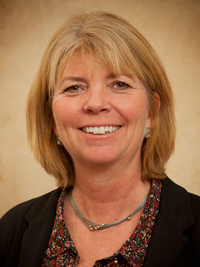
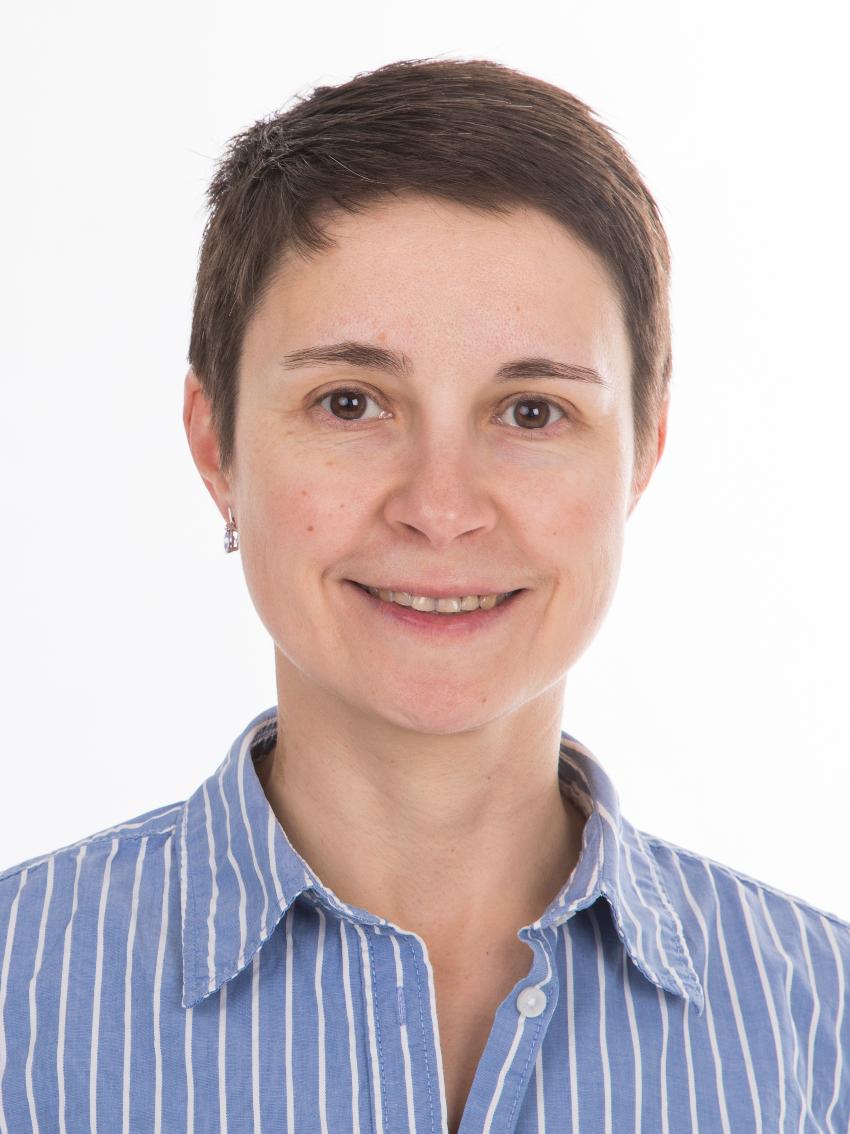
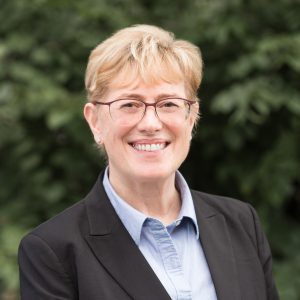
Reidar Staupe is an Associate Professor in Public Safety at the Department of Technology and Security, UiT The Arctic University of Norway. He previously held a Marie Skłodowska-Curie Individual Fellowship (2020-2022) at Roskilde University, Denmark. Research Interests: His work bridges civil security, disaster risk reduction, and anticipatory governance. Key themes include: Temporalities of crisis perception and response Cultural/political impacts of disaster declarations Creeping crises (AMR, climate change) Disaster terminology evolution Wind power development conflicts Polycrisis dynamics Publication Trends: Recent articles (2022-2025) explore the interplay between societal security, slow-onset disasters, and interdisciplinary collaboration. His work appears in journals like Time & Society , Policy & Politics , and International Journal of Disaster Risk Reduction , with forthcoming books on doomscrolling and global crisis cooperation. Scientific Awards: Marie Skłodowska-Curie Individual Fellowship Teaching: Courses include SVF-3202 Crisis Management SVF-3616 Crisis and Disaster Management His research group The Grey Zone – Secure Societies examines security narratives in crisis contexts.
Tine Kristin Jensen is a Professor of Clinical Psychology at the University of Oslo's Department of Psychology, with a part-time affiliation at the Norwegian Centre for Violence and Traumatic Stress Studies. She specializes in child trauma, PTSD treatment, and developmental psychology, focusing on interventions for youth exposed to violence, disasters, and terrorism. Dr. Jensen co-leads major trauma-focused cognitive behavioral therapy (TF-CBT) implementation projects across Europe and conducts research on unaccompanied refugee minors and digital mental health interventions for war-affected children. Education: Cand. psychol. (University of Oslo, 1986) Approved specialist in clinical psychology (Norwegian Psychological Association, 1996) Dr. Psychol. (PhD, University of Oslo, 2005; thesis: Suspicions of Child Sexual Abuse) Her research interests span trauma treatment efficacy, post-traumatic stress symptom dynamics, and cultural influences on psychological recovery. She has pioneered studies on parental experiences of terrorism (e.g., Utøya attack survivors) and developed digital tools like apps to complement TF-CBT for adolescents. Dr. Jensen also addresses systemic challenges in child mental health services, including therapist burnout and resource allocation. Recent work explores social media literacy's role in youth mental health and evaluates stepped-care models for trauma survivors. She collaborates internationally with institutions like Drexel University and Denver University, contributing to global PTSD treatment guidelines. Key projects include: Implementation of TF-CBT in Norwegian child mental health clinics Treatment outcomes for unaccompanied asylum-seeking minors Longitudinal studies on terror survivors' mental health Development of trauma-focused interventions for online abuse victims Dr. Jensen actively contributes to Nordic psychology policy as a journal editor and sits on scientific committees for organizations like ECOTS. Her work bridges clinical practice, research, and public health policy to improve care for traumatized children and families.
Maria Sydnes serves as an Associate Professor in the Department of Technology and Security at UiT The Arctic University of Norway, Tromsø. Her academic work focuses on emergency management and organizational resilience within high-risk Arctic environments, with particular emphasis on maritime safety and cross-border crisis coordination between Norway and Russia. Her research interests span interorganizational coordination during emergencies, organizational learning for resilience building, and practical applications of lean production principles in crisis contexts. She investigates Arctic-specific challenges including avalanche response in Longyearbyen, oil spill management in polar waters, and integration of unorganized volunteers into formal emergency systems, consistently addressing the intersection of climate change impacts and security vulnerabilities. Analysis of her publication record reveals a strong trend toward interdisciplinary solutions for Arctic safety, with recurring themes of Norwegian-Russian cooperation, maritime risk assessment, and adaptive governance structures. Her work bridges theoretical frameworks with real-world case studies—from Svalbard waters to the Barents Sea—demonstrating practical approaches to disaster risk reduction in extreme environments. Dr. Sydnes actively participates in multiple research initiatives including the Climate Change Adaptation and Secure Societies groups. Her current projects encompass Co-producing knowledge about risk and safety of maritime activities around Svalbard SPRICE (spray icing modelling for maritime decision support) GLOBSEC (North-South security partnerships) NoCoU (civil security for Norwegian communities) Beredt! (risk-based governance for climate-driven natural hazards) highlighting her commitment to scalable, community-focused security solutions in vulnerable Arctic regions.
Ann Bostrom is the Weyerhaeuser Endowed Professor in Environmental Policy at the Evans School of Public Policy & Governance, University of Washington, where she joined the faculty in 2007 after serving as Associate Dean for Research and Professor at Georgia Tech's Ivan Allen College. She co-directed the NSF Decision Risk and Management Science Program and serves on the AAAS and Washington State Academy of Sciences boards. Her educational background includes: Ph.D. in Public Policy Analysis, Carnegie Mellon University M.B.A., Western Washington University B.A. in English, University of Washington Postdoctoral studies in Engineering and Public Policy, Carnegie Mellon University Postdoctoral studies in cognitive survey methodology, Bureau of Labor Statistics Bostrom's research centers on risk perception, communication, and management in environmental policy and uncertain decision contexts. She investigates causal misconceptions about climate change, earthquake risk awareness, and pandemic risk communication, bridging social/behavioral sciences with weather and climate risk management through efficacy-focused frameworks. Her 2017-2021 publications reveal concentrated work on climate change communication, natural hazards, and pandemic risks. Key themes include causal thinking's impact on policy support, risk message design efficacy, and cross-cultural risk perception comparisons, frequently contributing to National Academies reports on science communication and hazard management. Major scientific recognitions include: 2020 Distinguished Educator Award (Society for Risk Analysis) 1997 Chauncey Starr Award Elected fellow of AAAS, WSAS, and Society for Risk Analysis ASA/NSF/BLS Research Associateship (1991-92) Fulbright Fellowship (1989-90) Patricia Roberts Harris Fellowship (1988-89) She has secured major funding from NSF, EPA, and NIH, currently co-leading the Cascadia Coastlines and Peoples Hazards Research Hub and NSF AI Institute for Trustworthy AI in Weather/Climate. Advisory roles include National Renewable Energy Laboratory Decision Science Committee and Earthquake Hazards Reduction Advisory Committee. At UW, Bostrom co-chairs Environments and Populations research in the Center for Studies in Demography and Ecology, serves on EarthLab's steering committee, and participates in the Program on Climate Change Governing Board, while maintaining affiliations with Carnegie Mellon's Center for Climate and Energy Decision Making.
Prof. Chong-Yu Xu is a Professor of Hydrology at the University of Oslo's Department of Geosciences, affiliated with the Section for Geography and Hydrology (GeoHyd). He has held this position since 2005, having previously served as an Associate Professor at Uppsala University (1998–2005) and Assistant Professor (1994–1998). His research focuses on hydrological modeling, climate change impacts, regional evapotranspiration, and uncertainty analysis. He teaches courses such as GEO4310 (Stochastic Methods in Hydrology) and GEO4320 (Hydrological Modelling). Education: BSc in Hydrology (Nanjing University, 1978–1982), MSc in Regional Hydrological Modeling (Free University Brussels, 1986–1988), and PhD in Hydrological Modelling (Free University Brussels, 1988–1992). He has been honored with prestigious awards, including the NHF Lifetime Achievement Award (2022) and IWA Publishing Award (2022). He serves as an honorary professor at institutions like Hohai University and is a doctoral supervisor at multiple universities. His research spans global, regional, and local hydrological modeling, with a focus on climate change adaptation and water resource management. He leads projects such as the NORHED-II initiative on climate change and ecosystem management in Malawi and Tanzania. His work bridges theoretical hydrology with practical applications, including flood risk reduction and hydropower optimization. Publications highlight advancements in hydrological extremes, non-stationary drought assessment, and AI-driven flood prediction. Collaborative efforts with international networks like the Nordic Hydrological Association underscore his global impact in hydrological sciences.
Eirik Valseth is an Associate Professor of Scientific Computing at the Norwegian University of Life Sciences (NMBU), Department of Data Science. He holds concurrent roles as a research associate at the Oden Institute, University of Texas at Austin, and an affiliated researcher at Simula Research Laboratory (Department of Numerical Analysis and Scientific Computing). His expertise lies in advanced finite element methods for PDEs with applications in flood modeling and hydropower systems. Current Affiliation: NMBU (Norwegian University of Life Sciences) Secondary Affiliations: Oden Institute (UT Austin), Simula Research Laboratory Research interests span numerical methods for challenging PDE systems, including: Stabilized finite element formulations Hurricane storm surge and riverine flood modeling Hydropower infrastructure analysis Computational mechanics and applied mathematics His recent publications (2024–2025) emphasize flood risk assessment (compound flooding, dam breaks, dredging impacts), advanced numerical methods (isogeometric analysis, stochastic finite elements, graph-grammar algorithms), and environmental applications (pollution transport, pathogen distribution, mosquito population dynamics after hurricanes). Key trends include cross-disciplinary integration of physics-aware machine learning and robust hydrodynamic simulation tools. Valseth's work extends to software development (e.g., WAVEx for spectral wave models, SWEMniCS for coastal circulation) and large-scale modeling frameworks like the ADCIRC unstructured mesh model for US coasts. Collaborative projects involve institutions such as University of Texas at Austin, Simula, and NOAA.
Norwegian University of Science and TechnologyNorway
Jan Emblemsvåg is a Professor at NTNU’s Department of Ocean Space Operations and Civil Engineering in Ålesund, Norway. He has held senior industry roles including Shipyard Director at Vard, SVP Ship Design & Systems at Rolls-Royce Marine, and Managing Director at Midsund Bruk. His academic positions span BI Norwegian Business School, Ålesund University College, and NTNU since 2006. Emblemsvåg’s expertise bridges engineering and management, focusing on sustainable development through rigorous analytical frameworks. Education: PhD from Georgia Institute of Technology (1999), MSc (1995), and Civil Engineering degree from Norwegian Institute of Technology (1994). R&D focuses on six core areas: 1) Product/process development with Lean methodologies, 2) Life-Cycle Costing/Analyses (integrating cost, environmental, and social dimensions), 3) Risk management and uncertainty analysis using Monte Carlo methods, 4) Operations/General management under Lean principles, 5) Project management with Lean integration, and 6) Renewable energy (especially nuclear power’s role in maritime and industrial sectors). Publications emphasize energy policy critiques, nuclear propulsion feasibility, and sustainable shipping. Recent work highlights nuclear energy’s potential as a cost-effective, low-emission solution for maritime transport and industrial needs. Active in policy debates advocating evidence-based energy strategies. Labs/Teams: Leads NTNU’s research initiatives on nuclear propulsion for merchant ships (NuProShip project) and collaborates internationally on maritime safety and evacuation modeling.
Norwegian University of Science And TechnologyNorway
Elena Marianne Pummer is a Professor in the Department of Civil and Environmental Engineering at NTNU. She specializes in hydraulic engineering, with a focus on hydrodynamics, sediment transport, and glacial lake outburst floods (GLOFs). Her research integrates experimental modeling, CFD simulations, and field studies to address challenges in hydropower, flood mitigation, and infrastructure design. Education: Dr.-Ing., RWTH Aachen University, Germany (2016) Dipl.-Wirtsch.-Ing., TU Darmstadt, Germany (2011) Research Interests: Her work spans hydraulic structures, ethohydraulics, and the dynamics of high-speed flows. She leads projects on GLOF hydraulics, underground pumped storage plants, and culvert blockage analysis. Key areas include sediment transport modeling, experimental validation of CFD frameworks, and sustainable hydropower solutions for climate resilience. Publications: Recent work addresses GLOF mechanisms in Peru, spillway capacity optimization, and CFD studies of supercritical flows. Her publications emphasize practical applications in infrastructure design and environmental risk management. Awards: 2019: DTK & WasserWirtschaft Studienpreis (3rd place) 2018: Young European Talent Award 2017: Friedrich-Wilhelm and ICOLD Young Engineers Awards Leadership & Projects: She chairs committees including IAHR's Hydraulic Structures and EERA's Hydropower SP2. Current projects include RenewHydro (sediment management), HydroCen (hydraulic structures), and Energydam (non-powered dam retrofitting). Advising: Supervises PhD students in GLOF hydraulics (Jan Hrebrina) and InSpillyFish (Nils Solheim). Past advisees include Subhojit Kadia (supercritical flows) and Joakim Sellevold (culvert hydraulics). Labs/Teams: Leads experimental hydraulics research at NTNU, collaborating with global institutions on projects like Pen@Hydropower (hydropower potential analysis) and Kajak Waves (nature-based infrastructure solutions).
Professor F. LeRon Shults holds a faculty position at the University of Agder's Department of Global Development and Planning. His research focuses on social simulation, computational social science, and the cognitive science of religion. He leads projects analyzing secularization trends, prosocial behavior, and pandemic response strategies through agent-based modeling. Collaborations include international teams addressing issues like religious demography, ethical AI systems, and conflict resolution. Key contributions include modeling the role of religious motivation in societal cooperation and simulating emotional contagion during crises. Research groups affiliated with him include 'Mobility, culture and gender' and 'Social simulation'. His work bridges disciplines such as sociology, cognitive science, and public policy. Recent studies explore secularization's evolutionary foundations, psychedelic experience analysis, and the ethics of artificial societies. He actively participates in conferences and publishes in journals like *Theory and Society* and *Religion, Brain and Behavior*.
Norwegian University of Science and TechnologyNorway
Gunhild Setten is a Professor of Social Geography at NTNU's Department of Geography and Social Anthropology, serving as Deputy Head of Department for research (Jan-Aug 2025). Her work focuses on human-nature relationships, moral geographies, and socio-natural landscapes. She has conducted fieldwork in Norway, Australia, Sweden, and the UK, including research stays at the University of Melbourne, Gothenburg University, and the James Hutton Institute. Her research explores outdoor recreation ethics, agricultural policies, heritage management, and species politics through qualitative methods. Key themes include: moral judgments in landscape management, contested environmental values, and the interplay between local knowledge and scientific frameworks in disaster risk reduction. Her recent work analyzes migrant integration in Norwegian outdoor spaces and the role of ecosystems in climate adaptation. She co-edited Landscape, Law and Justice - 20 years (2024) and contributed to Nature, temporality and environmental management (2017). Her articles critically examine topics like biodiversity offsetting in Uganda, community resilience in flood-prone areas, and the socio-cultural dimensions of invasive species. She has engaged in interdisciplinary projects on ecosystem services and participatory governance, emphasizing practical applications of geographical theories.
Western Norway University of Applied SciencesNorway
Naser Kazemi Eilaki is an Assistant Professor at the Department of Civil Engineering and Environmental Sciences, Western Norway University of Applied Sciences. His work focuses on structural reliability, risk assessment, and infrastructure resilience against natural disasters including floods, earthquakes, and fires. Risk Analysis Fire Safety Engineering Water/Wastewater Network Risk Machine Learning Applications Offshore Structure Fatigue Analysis His research integrates advanced optimization algorithms like Harmony Search and Particle Swarm Optimization with artificial neural networks to develop reliability models for civil infrastructure. Key applications include corrosion risk assessment in pipelines, bridge pier scour reduction using gabion obstacles, and passive defense strategies for utility networks. Recent publications highlight trends in hybrid computational methods for structural reliability. These works combine probabilistic modeling with evolutionary algorithms, addressing challenges in seismic risk assessment, fire safety, and water loss prevention through pipeline integrity analysis. As an active academic, he contributes to resilience engineering through interdisciplinary approaches that bridge civil engineering and computational risk analysis frameworks.
Sherry Adomah Bempah is affiliated with the University of Agder's Department of Global Development and Planning. She teaches courses including Research Methods in Development Studies, Management in Sustainable Development, and International Development Practice. Her research focuses on disaster risk reduction, climate resilience, and community perception dynamics in development contexts. Key contributions include a 2017 study on flood disaster perceptions in Ghana's Volta River communities published in the International Journal of Disaster Risk Reduction. She can be reached at sherry.bempah@uia.no .
Norwegian University of Science And TechnologyNorway
Gunhild Setten is a Professor of Human Geography at the Department of Geography and Social Anthropology, Norwegian University of Science and Technology (NTNU). From January to August 2025, she serves as Deputy Head of Department for research. Her work spans 25 years, focusing on landscapes, socio-natures, and human-nature relationships, with an emphasis on moral geography. Key research areas include outdoor recreation, agricultural policies, heritage management, and species politics. She has held visiting researcher positions at institutions such as the University of Melbourne, Gothenburg University, and the James Hutton Institute in Aberdeen, and spent an academic year at the Centre for Advanced Studies in Oslo. Her research networks are primarily in Australia, Sweden, and the UK. Setten’s expertise includes qualitative methods and the intersections of culture, space, and ethics. Her recent work explores moral judgments in landscapes, community resilience in disaster management, and the politics of invasive species. She has contributed to interdisciplinary projects on ecosystem services, climate change adaptation, and the role of local knowledge in environmental governance. Publications span academic articles, book chapters, and edited volumes, addressing topics like moral geographies, community configurations in risk management, and the socio-cultural dimensions of landscapes. Her research bridges theoretical frameworks with practical applications in environmental policy and heritage conservation.
Norwegian University of Science and TechnologyNorway
Sabrina Scherzer is a Postdoctoral Fellow at the Department of Geography and Social Anthropology, Norwegian University of Science and Technology (NTNU). Her interdisciplinary research bridges quantitative social science, geography, and economics. PhD in Geography Background in Economics and Development Studies Her research focuses on community resilience to natural hazards, transparency/accountability in extractive industries, and societal polarization. She employs GIS and quantitative methods in her work, with recent publications analyzing citizen engagement strategies and regional disparities in Norway. Key publication trends include: (1) disaster resilience frameworks, (2) resource revenue transparency, and (3) urban density impacts. She uses mixed-method approaches combining cluster analysis, survey research, and geospatial modeling. Teaching includes GIS and quantitative methods at NTNU. She actively engages with media, contributing to public understanding of community resilience through multiple 2019 interviews.
Norwegian University of Science and TechnologyNorway
Professor Hans Ola Fredin holds a faculty position at the Department of Geosciences, NTNU within the Faculty of Engineering. His research focuses on Quaternary geology, glacial landforms, and geohazards related to loose materials like quick clays. He employs advanced techniques such as GIS, remote sensing, and machine learning to study spatial relationships and geological processes. Current research projects include Antarctic ice volume changes, deglaciation patterns of Norway/Scandinavia, and AI-driven geoscience applications. His work bridges field observations with computational methods, contributing to understanding both past glacial dynamics and modern geohazard mitigation. Publications from 2020–2024 highlight interdisciplinary approaches to glacial geomorphology, ice sheet behavior, and environmental risk assessment. Notable contributions include studies on strandflat formation mechanisms, radon risks from rock-avalanche deposits, and mid-Pliocene Antarctic ice thickness reconstructions.