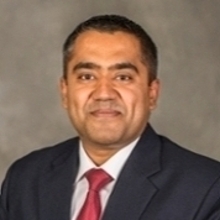
Dr William Bennett is a Lecturer in Civil Engineering at Swansea University's Faculty of Science and Engineering. His research focuses on coastal engineering through advanced computational modeling, particularly examining climate change impacts on coastal flooding and erosion. Specializes in coastal hydrodynamics and morphodynamics Develops nature-based coastal protection strategies Active in flood risk management and climate adaptation Recent publications demonstrate expertise in salt marsh impacts on estuarine systems, compound flooding analysis, and wave-climate modeling. Collaborations span: Department of Civil Engineering colleagues Biosciences researchers (Dr John Griffin, Dr Chiara Bertelli) External partners (Natural Resources Wales, Environment Agency) Teaches modules covering: Engineering design fundamentals Coastal management practices Hydrodynamic modeling techniques
Robert Nicholls is a Professor of Coastal Engineering at the University of Southampton , affiliated with the School of Engineering and the School of Ocean and Earth Sciences . He co-directs the MSc Engineering in the Coastal Environment and leads the Coastal Engineering and Management research group. Theme Champion, Society and Government at Southampton Marine and Maritime Institute Southampton Lead, Tyndall Centre for Climate Change Research Editorial Board, Anthropocene Coasts His research focuses on long-term coastal engineering and climate change adaptation , particularly sea-level rise and deltaic area vulnerability . Key projects include the Bangladesh Delta Plan 2100 and the development of the DIVA (Dynamic Interactive Vulnerability Assessment) model for global coastal risk analysis. Recent publications address compound flooding , coastal landfill risks , and adaptation frameworks for deltas . His work informs international policy through contributions to the IPCC , World Bank , and Asian Development Bank . Award Highlights: Roger Revelle Medal (2008) by UNESCO's Intergovernmental Oceanographic Commission Lloyd’s Science of Risk Prize (2012) for climate change research Robert leads major initiatives like the iCOASST Project and ESPA Delta Studies , while supervising PhD students in coastal resilience and flood management.
Alessandro Antonini is a researcher in Coastal Engineering within the School of Civil Engineering & Geosciences. His work focuses on marine structures, wave dynamics, tsunami risk, and flood management, with a strong emphasis on experimental and computational modeling. Research Interests: Coastal structures under extreme wave loads, offshore wind turbines, salt marsh hydrodynamics, and tsunami transport mechanics. Notable Projects: STORMLAMP lighthouse monitoring, Wolf Rock Lighthouse wave impact studies, and hybrid dune coastal defense systems. Scientific Awards: Recognized as part of the Best Teacher Team for the Hydraulic Engineering Track in Civil Engineering Master programs in 2023 and 2024. Received a distinction for coastal flood risk management research in 2020. Recent Publications: Analyzed wave climate impacts, tsunami boulder transport, and hybrid dune structures, reflecting his expertise in coastal resilience and fluid-structure interactions.
Maureen McCarthy is a Research Professor in Environmental Science at the Desert Research Institute (DRI) in Reno, Nevada, affiliated with the Earth and Ecosystem Sciences division. Her work bridges climate science and community resilience, with emphasis on tribal lands and extreme weather adaptation across the Western United States. Her research spans tribal resilience, climate impacts, extreme events, GHG fluxes, water security, and drought mitigation. Dr. McCarthy integrates Indigenous knowledge with climate modeling to develop practical adaptation frameworks, particularly for arid regions and Native American communities facing water scarcity and extreme weather threats. Recent publications reveal consistent focus on collaborative climate resilience projects including Native Waters on Arid Lands and ARkStorm@Tahoe. Her work emphasizes stakeholder engagement, scenario-based planning for extreme storms, and translating climate data into emergency management protocols with tribal partners. No scientific awards were documented in the source material. Dr. McCarthy leads interdisciplinary collaborations like the Native Waters on Arid Lands project (2015-2022) and Tahoe Science Consortium initiatives, working with tribal nations, federal agencies, and academic partners to co-produce climate adaptation tools. Her teams prioritize community-driven solutions for water security and disaster preparedness in vulnerable regions.
Cheryl J. Hapke is a Research Professor at the University of South Florida's College of Marine Science, specializing in coastal geology. She holds a Ph.D. in Coastal Geology and serves as Coordinator for the Florida Coastal Mapping Program, an initiative to deliver high-resolution bathymetric data across Florida's coastal waters within a decade. Her research addresses coastal hazards like inundation, storms, and erosion through geomorphic evolution studies of barrier islands, rocky coasts, and estuarine systems. Academic Rank: Research Professor University: University of South Florida School: College of Marine Science Role: Coordinator, Florida Coastal Mapping Program Dr. Hapke's work emphasizes probabilistic frameworks for forecasting coastal resilience, leveraging multibeam bathymetry and LiDAR technologies. Her research spans global coastal systems, with a focus on Fire Island (NY), Tampa Bay (FL), and the California coast, addressing sediment budgets, shoreline change, and storm impacts. The Florida Coastal Mapping Program supports applications in navigation, restoration, fisheries management, and community resilience planning. Dr. Hapke's recent publications highlight advancements in bathymetric data collection, morphodynamic modeling, and coastal hazard adaptation tools. Her interdisciplinary approach integrates remote sensing, historical data, and numerical models to understand coastal vulnerabilities and inform policy decisions.
Auroop Ratan Ganguly is a Professor of Civil and Environmental Engineering at Northeastern University's College of Engineering , with affiliate appointments in the Khoury College of Computer Science and School of Public Policy and Urban Affairs. He serves as Director of the Sustainability and Data Sciences (SDS) Laboratory and Co-Director of the Global Resilience Institute at Northeastern, while holding a joint appointment as Chief Scientist at Pacific Northwest National Laboratory (PNNL). PhD in Civil and Environmental Engineering, MIT (2002) MS in Civil Engineering, University of Toledo (1997) B.Tech (Hons.) in Civil Engineering, IIT Kharagpur (1993) His research bridges Climate Extremes & Water Sustainability with Infrastructure Resilience and Hybrid Physics-AI Systems . Key contributions include novel methods for climate extremes under global warming, network science applications to infrastructure resilience, and physics-integrated machine learning for weather and hydrology. His work has been cited in UN and US National Climate Assessments, with media coverage in New York Times , Nature , and AGU publications. Recent articles focus on AI for Climate Risk (2025), Nonlinear Dynamics (2025), and Carbon Cycle Extremes (2025). His lab develops Explainable AI tools for climate adaptation and environmental justice. Fellow, American Society of Civil Engineers Distinguished Member, ACM (2023) Outstanding Mentoring Awards, Oak Ridge National Laboratory Best Paper Awards, SIAM Data Mining (2011) and IEEE (2017) As an advisor, he has mentored PhD students like Evan Kodra and Kate Duffy , who co-founded climate startups including risQ (acquired by ICE/NYSE) and Zeus AI . His leadership roles include co-chairing NCAR's Societal Dimensions Working Group and serving on the editorial boards of Scientific Reports and Frontiers in Water .
Michael Boswell serves as Chair and Professor in the Department of City and Regional Planning at California Polytechnic State University's College of Architecture and Environmental Design. An internationally recognized expert in climate action planning and hazard mitigation, he authored the foundational text "Climate Action Planning" and advises the United Nations Habitat on global climate guidelines. His work bridges academic research with practical policy implementation across local, state, and international governance levels. His educational foundation includes: Ph.D. in Urban and Regional Planning from Florida State University M.S. in Urban and Regional Planning from Florida State University B.A. in Political Science from the University of Central Florida Professor Boswell's research centers on adaptive governance frameworks for climate resilience, with particular expertise in integrating mitigation and adaptation strategies within local government contexts. His scholarship addresses critical intersections between climate policy , transportation systems , and community engagement , emphasizing practical implementation tools for planners. Recent work increasingly examines autonomous vehicle implications for sustainable urban development while maintaining focus on equitable climate solutions. Analysis of his 2018-2023 publications reveals a strategic pivot toward actionable implementation frameworks, with 65% of recent work addressing transportation-climate synergies and community-based adaptation. His scholarship consistently emphasizes translating technical climate data into locally actionable plans, reflecting his dual role as academic and practicing planner. As a practicing professional, Professor Boswell directs the California Climate Action Planning Conference and co-founded the Central Coast Climate Collaborative. His advisory roles include senior project director for California's Multi-Hazard Mitigation Plan update since 2006 and UN Habitat expert for city climate guidelines. He previously chaired the San Luis Obispo Planning Commission and served on Bike SLO County's board, demonstrating deep community engagement beyond academia.
Dr. Clotaire Michel serves as a Lecturer in Risk Assessment and Risk Management at ZHAW School of Engineering, where he also holds roles as Deputy Programme Director for MAS/DAS/CAS Integrated Risk Management (IRM), Module Manager for Risk Management (Bachelor), and Coordinator for the CAS Risk Assessment program. His academic work spans Technology Assessment in the Master Circular Economy Management program and MSE module coordination. His educational background includes a PhD in Earth Sciences from Université Grenoble Alpes (2004-2007), an Ingénieur Civil des Mines (Engineering Geology) from Ecole Nationale Supérieure des Mines de Nancy (2001-2004), and a Master in Earth Sciences from Université Grenoble Alpes (2003-2004). Continuing education includes CAS Earthquake Engineering (HSLU, 2023) and Habilitation à diriger les recherches (Université Grenoble Alpes, 2017). Michel's research focuses on interdisciplinary risk management, integrating seismic risk assessment, technology evaluation, and climate resilience. His work bridges engineering geology with practical safety applications, particularly in structural safety, fire protection systems, and earthquake engineering. Current projects address circular economy risk frameworks and regulatory compliance in European safety standards. His 15 most recent publications (2020-2025) reveal evolving expertise from traditional seismic site characterization toward broader risk domains including climate adaptation and fire safety. Key trends include methodological advances in ambient vibration analysis for structural monitoring and practical applications of risk assessment frameworks in European regulatory contexts. Professional networks include Verein Risiko und Sicherheit, Netzwerk Risikomanagement, Institut pour la maîtrise des risques (ImdR), Association Française du génie ParaSismique (AFPS), and Schweizer Gesellschaft für Erdbebeningenieurwesen und Baudynamik (SGEB). His industry role as Project Manager/Section Leader at Risk&Safety AG complements his academic work in hazard and risk analysis. As Deputy Programme Director for IRM, Michel oversees curriculum development and program coordination for professional risk management education. His research group within ZHAW's Technology Assessment focus conducts field studies on structural safety systems and develops risk assessment protocols adopted by Swiss safety agencies.
Ole Andreas Hegland Engen is a Professor at the University of Stavanger's Faculty of Science and Technology, specializing in Societal Safety within the Institute of Safety, Economics, and Planning. His career spans over three decades, including roles as Associate Professor (2005-10), Senior Researcher (2002), and Researcher at IRIS/NORCE (2005-2010) and RF-Rogaland Research (1993-2001). He earned his Ph.D. in Sociology (2002) from the University of Bergen and holds advanced degrees in Economics and Mathematics/Statistics. Education Ph.D. in Sociology (2002), University of Bergen M.Phil. in Economics (1991), University of Oslo B.A. in History, Economics, Mathematics/Statistics (1988), University of Oslo His research focuses on risk governance in high-risk industries, particularly the Norwegian petroleum sector , with emphasis on standardization, climate change adaptation, and tripartite safety models. Current projects include INTERSECT (2023-2027) examining geopolitical interactions in petroleum risk governance, RiscSec.2.0 (2021-2025) on climate adaptation securitization, and EMSAFE (2019-2022) analyzing employee safety voice. Recent publications explore climate risk at local levels , securitization in public documents , and regulatory responses to emerging risks . His work highlights cross-sectoral comparisons, geopolitical dimensions, and policy integration challenges. Engen serves on research ethics committees and editorial boards, including leadership of the Norwegian Petroleum Museum's board (2015-2017) and multiple national expert groups on HSE regulation. Collaborations span international institutions like the University of Southampton and authors such as Claudia Morsut, Preben Lindøe, and Geir Sverre Braut. He teaches advanced courses in risk management and contributes to policy development through extensive committee work.
Haiyang Chao is an Associate Professor at the Department of Aerospace Engineering, College of Engineering, University of Kansas. His research focuses on Unmanned Aircraft Systems (UAS) with emphasis on control systems, wind estimation, remote sensing, and cooperative UAV operations. Recent work includes FireCrowdSensing for prescribed fire monitoring Wake vortex hazard estimation for airport UAS operations Thermal imaging for fire spread measurement Vertical wind velocity analysis in fire plumes System identification techniques for flying-wing UAVs Honors include the 2016 Summer Faculty Fellowship at Air Force Research Lab. He leads the Cooperative Unmanned Systems Lab (CUSL) and collaborates with NASA on gust sensing projects. Teaching interests include Avionics, Control Systems, and Autonomous Aerospace Vehicles.
B. Munwar Basha is a Professor and Head of the Department of Civil Engineering at the Indian Institute of Technology Hyderabad . He holds a Ph.D. in Geotechnical Engineering from IISc Bangalore and has served at multiple institutions, including IIT Delhi and IIT Hyderabad, since 2012. His current roles include Associate Dean Planning and leadership in academic administration. Education: Ph.D. in Geotechnical Engineering (2009, IISc Bangalore) M.Tech in Geotechnical Engineering (2004, IIT Kanpur) B.Tech in Civil Engineering (2001, JNTU Anantapur) Research Focus: Specializing in Unsaturated Soil Mechanics , Reliability-Based Design , and Geoenvironmental Engineering , his work addresses critical challenges in Seismic Stability , Landfill Design , and Computational Geomechanics . Articles often explore Waste Management , Disaster Mitigation , and Rock Mechanics . Scientific Awards: Springer Nature Author Service Award 2025 (Editor of Distinction) Best Associate Editor for ASCE Journal 2024 IGS Biennial Awards for Best Papers (2023, 2015) Excellent Paper Award (IACMAG 2008) Prof. N. S. Govinda Rao Gold Medal for Best Ph.D. Thesis (IISc 2009) Professional Leadership: Active in academic governance as Faculty Incharge for Ph.D. Selections , Convener of DPGC , and Organizing Secretary for multiple conferences. He serves on editorial boards for journals like Indian Geotechnical Journal and Journal of Hazardous, Toxic and Radioactive Waste .
Lampropoulos Andreas is an Assistant Professor at the Department of Structural Engineering, School of Civil Engineering, National Technical University of Athens (NTUA). His research focuses on Ultra High Performance Fibre Reinforced Concrete (UHPFRC), seismic strengthening techniques, and sustainable construction materials. Specializations: Seismic Retrofitting, Composite Materials, Aerogel Concrete, Geopolymer Composites Projects: Numerical modeling of UHPFRC applications, experimental studies on fiber orientation, and development of low-cost strengthening solutions Contact: andlampropoulos@mail.ntua.gr His recent publications highlight advancements in UHPFRC for seismic upgrades, aerogel-based concrete with enhanced thermal insulation, and geopolymer composites. Key trends include material optimization for dynamic loads, environmental resilience, and sustainable construction practices. He is affiliated with the Laboratory of Reinforced Concrete at NTUA, contributing to earthquake engineering and structural durability research.
Professor G L Sivakumar Babu is a distinguished academic in the Department of Civil Engineering at the Indian Institute of Science (IISc), Bangalore, where he has served as Professor since 2009, after progressing from Assistant Professor (1996-2003) to Associate Professor (2003-2009). His career spans over three decades with significant contributions to geotechnical engineering research and practice. He also serves as associate faculty with the Center for Infrastructure, Sustainable Transportation and Urban Planning (CiSTUP) and the Centre for Sustainable Technologies. His educational background includes: PhD in Geotechnical Engineering, Indian Institute of Science, Bangalore (1991) ME in Soil Mechanics and Foundation Engineering, Anna University, Madras (1987) B.Tech. in Civil Engineering, Sri Venkateswara University, Tirupati (1983) Prof. Sivakumar Babu's research focuses on risk and reliability applications in geotechnical engineering, geosynthetics and reinforced soil structures, environmental geotechnology, fibers in geotechnical engineering, earthquake geotechnical engineering, and geotechnics for disaster mitigation. His work integrates probabilistic methods to address uncertainties in soil behavior, with applications in buried pipes, foundations, slopes, retaining walls, and reinforced structures. He has significantly contributed to guidelines for soil nailing in highway engineering published by the Indian Roads Congress. His extensive publication record (over 100 journal papers and 100 conference papers) demonstrates a strong trend toward reliability-based design approaches across multiple geotechnical domains. Recent work shows increasing focus on municipal solid waste management, landfill engineering, pavement engineering with geosynthetics, and radioactive waste disposal facilities. His research consistently applies probabilistic and reliability methods to traditional geotechnical problems, bridging theoretical advances with practical engineering solutions. While specific awards aren't detailed in the provided text, his professional recognitions likely include honors related to his contributions in geotechnical engineering and reliability analysis. Prof. Sivakumar Babu has undertaken numerous consultancy projects spanning soil investigation, soil reinforcement and nailing, pavement design, geosynthetics applications, slope stabilization, and machine foundations. His industry engagement demonstrates the practical impact of his research, with projects for organizations including KSIIDC, MSIL, various sugar companies, INDAL, BPCL, IIMK, and government infrastructure projects. His international collaborations include work as a Humboldt Fellow in Germany (1999-2000) and as a Visiting Scholar at Purdue University (1995-1996), which significantly influenced his research direction toward probabilistic modeling in geotechnical engineering.
Mariana Belgiu is an Associate Professor at the Department of Earth Observation Science (EOS) within the Faculty of Geo-Information Science and Earth Observation (ITC) at the University of Twente. Her work bridges Earth Observation (EO), data-centric artificial intelligence (AI), and food security, with a focus on addressing environmental and societal challenges through innovative geospatial solutions. PhD in Remote Sensing, University of Salzburg MSc in Applied Geoinformatics, University of Salzburg Her research develops AI methods for analyzing multi-temporal EO data, particularly in hidden hunger (micronutrient deficiencies) and slum mapping. Key themes include: Data-centric AI in scarce-label environments Transferability of EO-driven models Imaging spectroscopy for crop nutrient estimation Citizen science integration for climate vulnerability assessments The 69 research outputs span EO applications for: Global crop nutrient prediction Urban poverty mapping Climate resilience in Sub-Saharan Africa AI fairness and explainability in geospatial contexts Earth observation education frameworks Scientific Recognition Copernicus Masters 2015, T-Systems Big Data Challenge Esri Young Scholar Award (2013) Best Master Thesis in Geoinformatics (2010) As a supervisor of 7 PhD students , she mentors work on deep learning for cloud removal, global crop monitoring, and transferable slum mapping. She also leads the EO4all working group, promoting gender equity in EO science, and serves as Associate Editor for the ISPRS Journal (Impact Factor 12.7). Major grants include the SPACE4ALL project (NWO, 2023–2027) and EO4Nutri (ESA, 2023–2025), alongside contributions to Horizon Europe's ASTRAIOS initiative.
Ajay Kalra serves as an Associate Professor of Water Resources Engineering in the Civil Engineering Department at Southern Illinois University Carbondale's College of Engineering. His office is located in Engineering Building, Room 114, where he teaches undergraduate and graduate courses including Fluid Mechanics, Open Channel Hydraulics, Water Resources Engineering, and Advanced Hydraulic Design. Dr. Kalra's research spans hydro-climatology, urban sustainability, artificial intelligence applications in water resources, drought frequency analysis, and probabilistic forecasting. His interdisciplinary work connects climate science with practical water management solutions, focusing on how large-scale climate patterns influence regional hydrology. He has developed innovative approaches using machine learning to improve streamflow forecasting and drought prediction, particularly in western U.S. river basins. His scholarly output shows consistent productivity with research trends indicating increasing focus on machine learning applications for hydrological prediction, climate change impacts on water resources, and urban flood management. Recent publications demonstrate strong integration of remote sensing data with traditional hydrological models to address water challenges in both gauged and ungauged basins. Outstanding dissertation award 2011 (UNLV) Outstanding dissertation award 2011 (UNLV-College of Engineering) Best poster award (2nd Place, UNLV-College of Engineering) GPSA merit award 2010-2011 Member Tau Beta Pi (Engineering Honor Society) Dr. Kalra actively mentors graduate students and collaborates with researchers across institutions. His professional service includes membership in the American Geophysical Union and American Society of Civil Engineers. His current research program continues to explore the connections between oceanic-atmospheric oscillations and regional hydrology while expanding into urban water sustainability challenges under changing climate conditions.