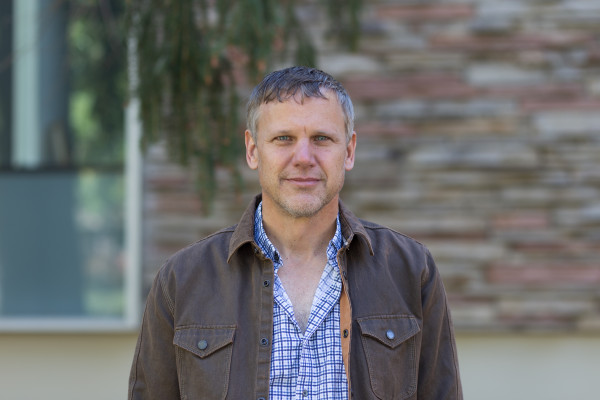
Runhuan Feng is a Professor of Statistics and holds a secondary appointment in the Department of Mathematics at the University of Illinois at Urbana-Champaign. He is affiliated with the College of Liberal Arts & Sciences. His research focuses on risk analytics, actuarial science, quantitative finance, pension planning, healthcare data analytics, and innovations in FinTech/InsurTech. Recent work addresses risk aggregation methodologies, peer-to-peer insurance models for flood risks, multi-risk insurance frameworks, mortality shock management, and editorial leadership in actuarial science. His research bridges theoretical models with practical applications in finance and insurance sectors. No scientific awards are explicitly mentioned in the profile. Advising and grants sections remain unspecified. His research outputs reflect interdisciplinary collaboration, as seen in his editorial role and co-authored studies.
Dr Habib Rahman is a Professor of Economics at Durham University Business School, with prior roles at Curtin University, Monash University, and others. His research focuses on Development Economics, Climate Change, Natural Disasters, and Political Economy. He has led numerous grants, including AUD-funded projects on climate policy frameworks and disaster recovery in Australia, Vietnam, and Southeast Asia. His work informs public policy in multiple countries and has been published in top journals like the Journal of Development Economics and Health Economics. Key research interests include the economics of natural disasters, climate change adaptation, and the interplay between disasters and political institutions. He has pioneered models to assess economic losses from natural hazards and advised international organizations like UNDP and the World Bank. Grants include AUD 213,797 for carbon market establishment in Vietnam (2023) and AUD 641,528 for Paris Agreement training (2022). His recent publications analyze disaster recovery, famine impacts, and climate-smart agriculture interventions. Technical assistance extends to governments and NGOs globally. Labs/Teams: Leads interdisciplinary teams on climate policy and disaster resilience initiatives, collaborating with institutions like the Bushfire & Natural Hazards CRC and the Asian Disaster Preparedness Center.
Overview Jasper van Vliet is an Associate Professor in Land Use and Urban Development at the Vrije Universiteit Amsterdam's Faculty of Science, specializing in Environmental Geography. His research focuses on understanding land use change, urban development processes, and their impacts at global to local scales, with particular attention to food systems and human settlements' role in land use dynamics. He leads initiatives such as the VIDI-funded 'Guiding human settlements towards sustainable development' project and the RUGBIS project on urban densification's ecological impacts. Education PhD in Geo-Information Science, Wageningen University (2013) MSc in Geo-Information Science, Wageningen University (2006) Research Interests Dr. van Vliet's work integrates methodologies like spatial analysis, land use modeling, and case studies to address challenges in sustainable development. His current projects explore trade-offs between urbanization and biodiversity conservation, food security in Southeast Asia, and the spatial structuring of cities across regions. He emphasizes multi-scale approaches to bridge rural-urban divides and advance SDG-aligned policies. Key Contributions Recent publications highlight his focus on rural-urban biodiversity threats, Lao PDR's agricultural sustainability, and global urban land-use equity. He has pioneered studies on solar energy infrastructure siting in the EU and comparative urban spatial structures across continents. His work consistently bridges empirical analysis with policy-oriented solutions. Awards & Grants NWO Vidi Grant (2019) for sustainable human settlement research Teaching & Mentorship As program director for the Bachelor in Earth, Economics, and Sustainability, he teaches GIS, land use change, and urban development courses. He actively supervises student theses and collaborates with international teams on projects like the SDG food initiative in Laos and Myanmar. Labs & Collaborations His research involves partnerships with institutions like PBL Netherlands Environmental Assessment Agency, TU Delft, and the Athena Institute. Key projects include land-use modeling capacity building in the Mekong region and urban vulnerability assessments globally.
Thomas Choi is a Regents Professor and the AT&T Professor at Arizona State University's W. P. Carey School of Business, specializing in supply chain management. He leads the Complex Adaptive Supply Networks Research Accelerator (CASN-RA) and has advised major organizations like LG Electronics, Samsung, and the U.S. Department of Energy. His research focuses on supply chain design, multi-tier dynamics, and complex adaptive systems. He holds a Ph.D. from the University of Michigan (1992) and a B.A. from UC Berkeley (1980). Research Interests: Supply chain design, multi-tier management, supply network complexity, and resilience. Notable contributions include theories on triads in supply networks and supply chain financing. He has co-authored the Oxford Handbook of Supply Chain Management and been recognized as a Clarivate Highly Cited Researcher. Awards: 2018 Highly Cited Researcher, 2017 Emerald Citation of Excellence, 2016 Harold Fearon Best Paper Award. Collaborations span academia and industry, including a $15M USAID project in Ghana. Grants and Labs: Principal researcher in NSF-funded studies on supply network design and environmental performance. Co-directs CASN-RA and CAPS Research. Advised doctoral students now leading academic and industry roles globally. Service: Editorships in top journals, invited talks at institutions worldwide, and leadership in global executive education programs.
Jonathan Gammell is an Assistant Professor at Queen's University's Department of Electrical and Computer Engineering and a member of the Ingenuity Labs Research Institute. He holds an adjunct fellowship at the Oxford Robotics Institute (University of Oxford), where he previously taught. His expertise spans autonomous systems, robotics, and AI, with a focus on motion planning for diverse applications, including medical devices, self-driving cars, and aerial robotics. He leads the Estimation, Search, and Planning (ESP) group, which develops algorithms for autonomous systems. Educations: BASc in Mechanical Engineering and Physics from the University of Waterloo MASc and PhD in Robotics from the University of Toronto Institute for Aerospace Studies Research Interests: Dr. Gammell's work addresses fundamental motion planning challenges in robotics, emphasizing asymptotically optimal algorithms like BIT*, AIT*, and FCIT*. His research integrates robotics with medical applications (e.g., knee replacement implants) and autonomous systems (e.g., aerial mapping for emergency response). His algorithms are widely adopted in industry and academia, including collaborations with NASA JPL and Oxford orthopaedic surgeons. Publications: His recent work explores advanced motion planning frameworks (e.g., AORRTC, Osprey), multimotion visual odometry (MVO), and medical robotics applications. These contributions highlight his dual focus on theoretical algorithm development and practical, high-impact applications. Awards: CIPPRS Award for Best Canadian PhD Thesis (Medical Imaging/Robotics) NASA Group Achievement Award (2021, 2022) IROS Best Paper Shortlist (2020) Advising & Grants: He advises on projects involving autonomous systems, medical robotics, and AI. His grants support collaborations with industry and academic partners, including NASA JPL and Oxford's robotics and medical teams. The ESP group's open-source tools (e.g., Planner Developer Tools) enable reproducible motion-planning research. Labs/Teams: He leads the ESP research group at Queen's University and collaborates with the Oxford Robotics Institute and Ingenuity Labs, focusing on cutting-edge robotics solutions for real-world challenges.
Philippe Gachon is a Professor in the Department of Geography at the University of Quebec at Montreal (UQAM), Director of the ESCER Research Centre, and leader of the Quebec InterSectoral Flooding Network (RIISQ). He specializes in hydro-climatology and climate risk assessment, with extensive experience at Environment Canada and as a Strategic Research Chair holder on Hydrometeorological Risks Related to Climate Change. His research examines climate change impacts on extreme weather events including floods, droughts, and heat waves. Recent work focuses on improving risk identification and adaptation strategies through intersectoral approaches. Key research themes include: Regional climate modeling and validation Hydro-meteorological hazard intensification Systemic risk assessment Community-scale resilience building Climate services development His recent publications demonstrate advanced statistical approaches for modeling non-stationary flood regimes, evaluating wildfire risks under climate change, and quantifying vector-borne disease transmission. Collaborative projects with 16 universities address physical climate risks and socioeconomic vulnerabilities across Quebec.
Christen Fleming is an Assistant Professor at the University of Central Florida who leads the Ecoinformatics Lab. The lab specializes in developing and applying analytic methods for ecological, environmental, and evolutionary data with a focus on conservation needs. Develops continuous-time movement modeling (ctmm) software Collaborates with institutions like CASUS, UMD, UBC, and UA Focuses on interdisciplinary approaches combining mathematics, statistics, and computational methods Research interests emphasize animal movement analysis, species distribution modeling, and population dynamics. Fleming’s work involves complex data analysis and stochastic processes to improve conservation strategies through better understanding of animal space use and movement patterns.
Nafiseh Ghorbani-Renani is a Teaching Professor in the Department of Systems and Enterprises at Stevens Institute of Technology. Her research develops mathematical frameworks for managing risk in interconnected systems such as critical infrastructure, supply chains, and energy networks. Education includes: PhD in Industrial and Systems Engineering (University of Oklahoma) MS in Industrial Engineering (University Technology Malaysia) BS in Industrial Engineering (Yazd University) Research integrates optimization techniques with machine learning for resilience planning in interdependent networks. Current projects examine microgrid energy trading, supply chain disruption management, and infrastructure restoration scheduling. Recent publications focus on tri-level optimization models for critical infrastructure protection, energy equity in community microgrids, and machine learning applications for network resilience. Articles demonstrate consistent advancement in modeling complex interdependencies across infrastructure systems. As Faculty Advisor for the Software Division, she guides student projects bridging theoretical models with practical implementation. Course instruction spans software engineering fundamentals, agile methodologies, and systems development lifecycle management.
Shane Halse is an Assistant Professor at the University of Cincinnati in the School of Information Technology , specializing in crisis response and social media technologies for emergency communication. PhD in Information Science and Technologies, Pennsylvania State University (2019) MSE in Software Engineering, Pennsylvania State University (2014) BSP in Psychology and BSEE in Electrical Engineering, University of Central Florida (2008, 2011) His research focuses on enhancing emergency responders' decision-making through social media data analysis , trust detection , and information filtering during disasters. He has contributed to frameworks for multimedia emergency protocols and hyperlocal data collection . Recent publications analyze crisis social media dynamics (e.g., retweetability, trust metrics, sensor data integration), reflecting his expertise in sociotechnical systems for disaster management. Grants include collaborations with the National Science Foundation and Texas Tech University on Next-Generation 911 training and technology. Key contributions appear in journals like Information, Communication & Society and conferences such as ISCRAM and Hawaii International Conference on System Sciences .
Mahdi Safa is an Instructional Assistant Professor at the University of Houston's Cullen College of Engineering, Department of Civil and Environmental Engineering. His research focuses on digital transformation in construction, supply chain optimization, workplace safety, and disaster management. He has published extensively on topics such as AI applications in engineering, pandemic response logistics, and ethical challenges in smart city development. Research interests include leveraging emerging technologies (IoT, blockchain, AI) to enhance construction processes and safety. His work also addresses global challenges like energy efficiency in buildings, offshore infrastructure resilience, and mental health in the construction industry. Notable contributions include frameworks for vaccine supply chain management during pandemics, analysis of workplace conflicts affecting safety, and strategic project readiness assessments. Though no awards or grants are listed in the provided text, his publications indicate active involvement in interdisciplinary research collaborations. Contact: msafa@central.uh.edu
Prof. Dr. Jana-Rebecca Rehse serves as Assistant Professor for Management Analytics at the University of Mannheim Business School, where she leads the Chair of Management Analytics within the Information Systems department. Her academic work bridges theoretical research with practical business applications, focusing on data-driven approaches to business process optimization. Her primary research interests encompass User Behavior Mining , Process Mining , and AI applications in business process management . Rehse investigates how organizations can leverage process mining techniques to extract meaningful insights from event logs, with particular attention to conformance checking, process resilience assessment, and the practical implementation challenges businesses face when adopting these technologies. Her work frequently addresses the intersection of human behavior and process execution, examining how user interactions with IT systems can be analyzed to improve process design and user experience. Analysis of her recent publications reveals a clear research trajectory toward increasingly sophisticated integration of artificial intelligence with traditional process mining techniques. Starting with foundational work on reference model mining and process discovery methodology, her research has evolved to address cutting-edge applications of generative AI, explainable AI, and predictive analytics in business process contexts. The majority of her work appears in top-tier information systems and business process management journals including Information Systems, Process Science, and ACM Transactions publications, demonstrating her significant contributions to the field. Professor Rehse actively collaborates with industry partners including Siemens and MEHRWERK, offering thesis opportunities and research projects that address real-world business challenges. Her current call for applications includes work-study programs at Siemens and master thesis topics focused on conformance checking in cooperation with MEHRWERK. She has recently introduced innovative thesis topics exploring the use of Generative AI for Emotion Identification, reflecting her forward-looking research agenda that anticipates emerging technological trends and their business implications.
Dr. Chaminda Wijethilake serves as a Senior Lecturer in Accounting at Essex Business School, University of Essex, where he contributes to sustainability accounting education and research. His academic journey spans Sri Lanka, Taiwan, and Australia, culminating in impactful work at the intersection of accounting, sustainability, and governance across diverse global contexts. Education: Bachelor of Commerce with First Class Honours, University of Peradeniya, Sri Lanka (2007) Master of Business Administration, National Cheng Kung University, Taiwan (2011) PhD in Accounting and Corporate Governance, Macquarie University, Australia (2016) Chaminda's research pioneers the application of accounting frameworks to urgent sustainability challenges, particularly examining how management control systems mediate organizational responses to environmental pressures. His work spans waste management governance, sustainable supply chains in emerging economies, and accountability mechanisms during disasters, consistently revealing how formal control systems interact with cultural and institutional factors to drive (or hinder) sustainability outcomes. Current projects investigate digitalization in NGOs and sustainability core values in risk management. His publication portfolio demonstrates a clear trajectory toward increasingly complex global sustainability challenges, evolving from firm-level sustainability controls to transnational waste governance and pandemic response systems. Recent work shows growing emphasis on Global South contexts and the political dimensions of environmental accountability. Scientific Awards: President’s Award for Scientific Research by the Government of Sri Lanka Best International Impact Research Award by the University of Essex Chaminda actively supervises four PhD candidates researching sustainability management accounting in healthcare, Thailand's primary care system, and public sector accountability. His research program is supported by significant grants from PEFA-World Bank Group, Innovate UK, and the Global Challenges Research Fund, including a 2021 ESRC IAA project developing an Essex employability toolkit and a 2020 GCRF project integrating climate change into South Asian public finance policies.
Professor Martin Shields is a faculty member in the Department of Economics at Colorado State University (CSU), serving as the Director of Undergraduate Studies. He holds a PhD from the University of Wisconsin-Madison. His research focuses on regional economic growth, labor market outcomes, and the economic impacts of natural hazards and policy interventions. Shields specializes in modeling the effects of renewable energy transitions, disaster resilience strategies, and socioeconomic policy. His teaching includes courses such as Intermediate Microeconomics, Labor Economics, and Regional Economics. He has conducted influential studies on the economic implications of 100% renewable energy transitions (e.g., LA100 and PR100 projects) and has evaluated disaster mitigation strategies in regions like Puerto Rico and Utah. His work integrates engineering, environmental science, and economic modeling to address real-world challenges. Shields' research spans climate adaptation, infrastructure resilience, and energy policy. Notable projects include analyzing the economic impacts of improved weather forecasting systems (e.g., HRRR model) and assessing the effects of financial relief delays on disaster recovery. His interdisciplinary approach bridges economic theory with practical policy design, emphasizing equity and sustainability. While no formal awards are listed, his contributions to regional economic analysis and policy are widely recognized. Shields collaborates with government agencies, academic institutions, and community organizations to inform evidence-based decision-making. His advisory and grant activities, while not explicitly detailed, are implied through his extensive research portfolio and leadership roles.
Francis Jones is an Honorary Lecturer (retired) at the University of British Columbia's Department of Earth, Ocean and Atmospheric Sciences (Faculty of Science). He volunteers in roles supporting geoscience education and outreach, focusing on curriculum development, educational technology, and public engagement. His work includes coordinating the OCESE and QuEST projects to enhance quantitative geoscience education, developing open-source educational resources, and improving online and in-person teaching practices. Research interests center on geoscience education innovation, including curriculum redesign, assessment strategies, and bridging geophysics research with educational practice. He collaborates with institutions like the Pacific Museum of Earth (PME) to create accessible learning resources and has advised on geoscience programs at the University of Central Asia. Recent activities include evaluating teaching initiatives through multi-source data (student/instructor/observer inputs), designing interactive online labs, and promoting science literacy among non-science students. Jones emphasizes transfer of geophysical research techniques into education and industry, with a focus on fostering computational and quantitative skills in undergraduate programs. Key collaborations involve the PME, UBC's EOAS department, and international partnerships like the University of Central Asia. His work integrates pedagogical research with practical educational development, aiming to modernize STEM education through technology and community-driven approaches.
Anne Templeton serves as a Senior Lecturer in Social Psychology at the University of Edinburgh's School of Philosophy, Psychology and Language Sciences. She holds a UKRI Future Leaders Fellowship and leads the research group Identities and Collective Behaviour . Her academic journey includes a PhD from Sussex, MSc from Surrey, and MA (hons) from St Andrews. Her research centers on applying social identity theory to crowd psychology, particularly examining how group dynamics influence safety during emergencies and mass events. Key focus areas include: psychological crowd modeling, first responder communication strategies, and incorporating social identities into evacuation simulations. She develops behavioral interventions to improve public adherence during crises through computational modeling and virtual reality experiments. Her 15 most recent publications reveal strong thematic consistency across emergency management, crowd dynamics, and social identity applications. Recent work emphasizes high-rise evacuation protocols, tunnel fire egress, COP26 protest support mechanisms, and bystander CPR interventions. The research demonstrates interdisciplinary integration of psychology, computational modeling, and public safety practice. Scientific Recognition: UKRI Future Leaders Fellowship (2022) Research Leadership: Principal Investigator for ESRC, DCMS, and Chief Nursing Office grants totaling over £1.8 million, including the £1.377m UKRI project on first responder communication strategies. Current supervision of four PhD students (Waleed Alhajri, Sam Vo, Sayaka Hinata, Kayleigh Smith). Her knowledge exchange extends through government advisory roles including the Scottish Government COVID-19 Behavioural Insights team (2021-2022), UK Department of Digital, Culture, Media and Sport Science Board (2021), and Sports Grounds Safety Authority consultation (2020). Media engagements feature BBC, Reuters, and The Conversation coverage of Hajj crowd safety and stadium atmosphere research.