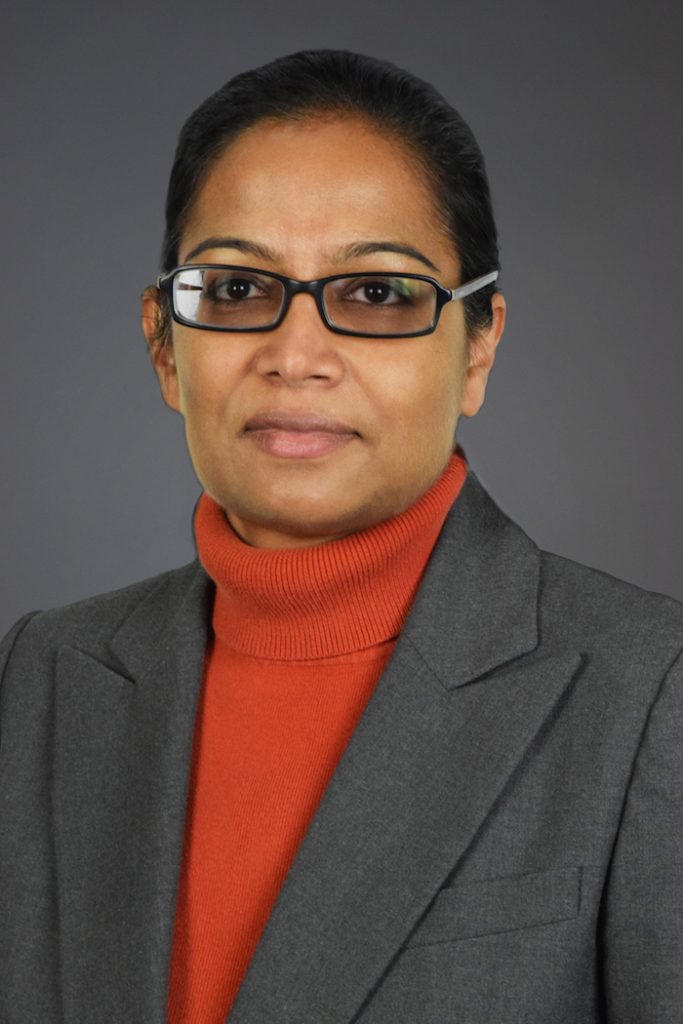
Arul Mishra is a David Eccles Professor of Marketing at the University of Utah , affiliated with the David Eccles School of Business . Her academic career spans roles such as Faculty Fellow and Emerging Scholar , focusing on consumer behavior and decision-making processes. Ph.D. in Marketing , University of Iowa MBA in Marketing Bachelor in Mathematics and Physics Her research explores consumer decision-making , behavioral promotions , risk perception , and financial decision-making , utilizing methodologies like predictive analytics and machine learning . Recent publications investigate topics such as clustering algorithms , temporal decision-making , and spatial bias . Arul Mishra has received prestigious awards including the David Eccles Professor title and the Outstanding Reviewer Award from the Journal of Consumer Research . Her work has been featured in top-tier journals like Marketing Science and Psychological Science , with popular mentions in Scientific American and The Wall Street Journal .
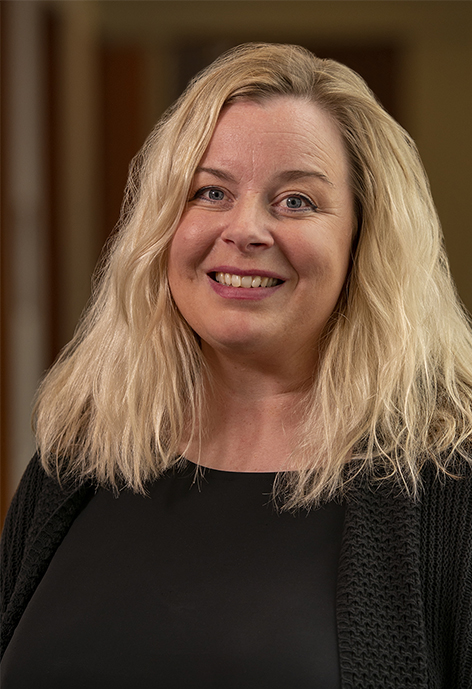
Linda Thunström is an Associate Professor in the Department of Economics at the University of Wyoming's College of Business. Her research bridges behavioral economics, experimental economics, and policy analysis, focusing on human responses to crises and risk. PhD, MS, BS in Economics from Umeå University, Sweden Research Interests: Behavioral economics, experimental economics, and applications to natural disasters, pandemic policies, and risk perception. Key themes include understanding subgroup behaviors (e.g., religious groups), the value of risk information, and trade-offs in public health/environmental policies. Publications: Recent work examines pandemic response strategies, climate policy experimentation, and the economics of trust and intercessory prayer. Her research often integrates interdisciplinary approaches to address societal challenges.
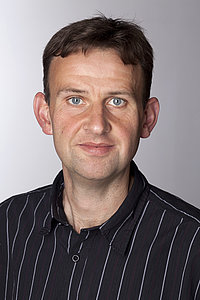
Mohammad Shojafar (M'17-SM'19) is an Associate Professor at the Institute for Communication Systems within the Faculty of Engineering and Physical Sciences at the University of Surrey , UK. He has secured over £1.9M in research funding as Principal Investigator for projects like ORAN-TWIN (EPSRC), PRISENODE (MSCA-IF), TRACE-V2X (MSCA-SE), and D-XPERT (Innovate UK), among others. Previously held positions include Senior Researcher at University of Toronto and Toronto Metropolitan University, Senior Researcher at Italian universities (Telecom Italia Mobile), and Postdoc at University of Padua Key affiliations: Associate Editor for IEEE Transactions on Network and Service Management, Intelligent Transportation Systems, Green Communications and Networking, and Consumer Electronics Magazine Research Specialism: 5G/6G Security and Privacy Open-RAN Security Green Networking Adversarial Machine Learning Applied Cryptography Publication Trends: Focus on Open RAN security challenges (bearer context migration poisoning, KPI poisoning attacks), IoT/Fog security (GAN-based attacks, distributed intrusion detection), Lightweight Cryptography (multi-signature protocols, authentication schemes), and AI-driven Network Optimization (federated learning, reinforcement learning applications). Recent work addresses security in vehicular networks, smart grids, and video streaming frameworks. Scientific Recognition: Marie Curie Individual Fellowship (MSCA-GF-IF) Intel Innovator ACM Professional Member Sustainability Fellow at Institute for Sustainability IEEE Senior Member Supervision: Currently supervising 6 PhD students and has graduated 5 PhD/MSc students since 2021. Active in 5G/Open RAN security research with over 20 related publications since 2022.
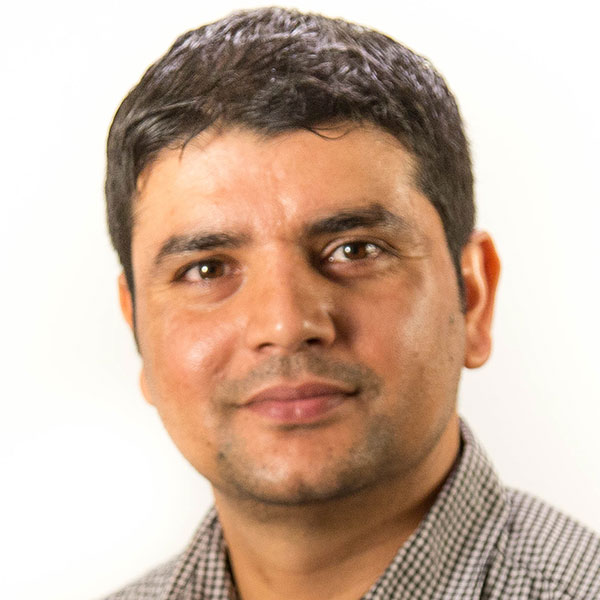
Gert Zöller is an Associate Professor of Applied Mathematics at the University of Potsdam, specializing in statistical seismology and mathematical modeling of earthquake processes. He has held this position since 2018, following a period from 2008-2018 as a Research Associate and Lecturer at the Institute of Mathematics at the University of Potsdam. His research focuses on statistical and physical models for earthquakes and other natural disasters, seismic hazard assessment, and extreme value statistics. Dr. Zöller earned his Diploma in Physics from Rheinische Friedrich-Wilhelms-University Bonn in 1995, his Doctorate (Dr. rer. nat.) from the University of Potsdam in 1999, and completed his Habilitation (Dr. rer. nat. habil.) in 2006. His academic journey included visiting scholar positions at the University of Southern California and the University of California, Santa Barbara in 2005. He has been actively involved in several major research initiatives including the DFG Collaborative Research Center 1294 (Data Assimilation) since 2017 and the DFG Graduate School NatRiskChange (Natural hazards and risks in a changing world) from 2015-2024. His research centers on developing sophisticated statistical models for earthquake forecasting, particularly focusing on the Groningen gas field in the Netherlands where induced seismicity has been a significant concern. Dr. Zöller's work integrates physics-based models with statistical approaches to improve seismic hazard assessment, with recent publications exploring Bayesian methods, Gaussian process modeling, and spatio-temporal analysis of earthquake sequences. His publications span top journals including Journal of Geophysical Research, Geophysical Journal International, and Bulletin of the Seismological Society of America. Dr. Zöller serves as a reviewer for numerous prestigious scientific journals including Science, Geophysical Research Letters, and Journal of Geophysical Research. He was Associate Editor of Nonlinear Processes in Geophysics from 2006-2014 and served as Scientific Officer for 'Earthquake Hazards' in the European Geosciences Union from 2010-2014. His professional memberships include the Seismological Society of America, American Geophysical Union, and European Geosciences Union. Currently, Dr. Zöller teaches 'Mathematics II for Economists' and serves on the Mathematics Examination Board at the University of Potsdam. His ongoing research continues to contribute significantly to the field of statistical seismology and earthquake hazard assessment, with publications extending into 2025.
Stefan Klonner serves as Professor of Development Economics at Heidelberg University's South Asia Institute since 2010, leading the Development Economics Team. His academic trajectory includes a Ph.D. in Economics from Heidelberg University (2001) and a Master's in Statistics and Econometrics from the University of Utah (1996), with prior appointments at Yale University (postdoctoral fellow and visiting lecturer), Cornell University (assistant professor), and Goethe University Frankfurt (Professor of International and Development Economics). His educational credentials: Ph.D. in Economics, Ruprecht-Karls University Heidelberg, 2001 Master's in Statistics and Econometrics, University of Utah, 1996 Klonner's research centers on microeconomic analysis of low-income economies, specializing in credit/insurance markets, health interventions, poverty targeting mechanisms, and impact evaluation of welfare programs. His extensive fieldwork in South India combines rigorous quantitative methods with deep regional expertise to address practical policy challenges in development contexts. This work bridges theoretical economics with real-world applications for poverty reduction. Analysis of his recent publications reveals consistent methodological rigor in evaluating social programs across India and Burkina Faso, with dominant themes including disaster resilience, maternal health financing, employment guarantee schemes, and poverty targeting. His research demonstrates strong regional specialization in South Asia while addressing universal development challenges through microeconometric approaches and field experiments. Professor Klonner actively engages public discourse through expert commentary in media outlets like Die Tageszeitung (taz) and La Liberté, along with invited lectures at institutions including the State Bank of India Leadership Institute and University of Cologne. His presentations address Sustainable Development Goals, fair trade, and poverty measurement methodologies. As head of the Development Economics Team within Heidelberg's South Asia Institute, he contributes to interdisciplinary research on South Asian economies through the Centre for Asian and Transcultural Studies (CATS), directing field studies and policy-relevant analysis focused on South India.
Dr. Donyale Padgett serves as Associate Professor in the Department of Communication at Wayne State University, where she has been a faculty member since 2002 and on the tenure-track since 2006. With over 15 years of professional communications experience in client service and strategic planning, she integrates practical industry insights into her teaching through service learning projects with local non-profits. She actively contributes to university-wide initiatives on diversity, inclusion, and student retention efforts. Professor Padgett earned her academic credentials from Wayne State University and Howard University: Bachelor of Arts in Journalism with Public Relations concentration, Wayne State University Master of Arts in Organizational Communication and Public Relations, Wayne State University Ph.D. in Rhetoric and Intercultural Communication, Howard University Her research centers on critical rhetoric examining how marginalized groups negotiate power and identity within social structures. Primary interests include crisis rhetoric and organizational legitimacy, crisis-cultural dynamics, and diversity in workplace communication. Secondary focuses encompass service learning pedagogy, student retention strategies in higher education, and hip-hop's influence on identity formation. This critical scholarship investigates rhetoric's generative power in public discourse, particularly regarding race, culture, and institutional oppression. Her publication record demonstrates consistent interdisciplinary scholarship bridging crisis communication with cultural studies, race theory, and social justice. Key contributions include the development of "restorative rhetoric" for non-traditional crises and analyses of race-based crisis response variations. Recent work spans political scandals, cross-cultural crisis management, hip-hop femininity, and critical journalism approaches, reflecting her commitment to examining communication through lenses of power and marginalization. Professor Padgett advises undergraduate and graduate students including thesis and dissertation supervision. She engages students through service learning projects connecting classroom theory with community needs. Her current research involves an interdisciplinary team studying retention challenges among marginalized student populations, aiming to develop actionable strategies for improving graduation rates through narrative analysis of student experiences.
Rajiv Ghimire is a Lecturer at the University of Michigan 's School for Environment and Sustainability (SEAS). His academic work bridges global development, climate and energy systems, adaptation and resilience studies, public policy, and the social dimensions of science and technology innovation. With a background in environmental science, he focuses on human-centered approaches to environmental governance and climate change mitigation.
Sarah Adams is an Assistant Professor at the University of Oregon School of Law and a faculty member of the Environmental and Natural Resources Law Center. Her work bridges climate change law, land use, and state and local government law, with a focus on coastal resilience and floodplain management. Ph.D. and M.Jur. advising in environmental law Principal Investigator on New York Sea Grant Editorial board member: Urban Lawyer Her research explores climate resilience through state-level legislation , zoning reforms , and legal frameworks for floodplain and wildland urban interface planning. Recent publications highlight intersections between racial equity and land use law . Adams' University of Oregon work includes grants for annotated zoning codes and wind energy development . She has testified before national bar committees and presented at major symposia including the Columbia Journal of Environmental Law Climate Change Symposium . 2025 : Land Law Localism and Climate Resilience Paradox 2023 : White Supremacist Structure of Zoning Law Awards include the Hans Linde Fellowship. She previously chaired OGALLA: The LGBT Bar Association of Oregon and serves on the Urban Lawyer editorial board, contributing to legal education reforms and empirical studies in law. Adams earned her J.D. from Lewis & Clark Law School and M.A. in Economics from the London School of Economics, combining economic analysis with environmental law in her scholarship.
David J. Yu is an Associate Professor at Purdue University with primary appointments in the Lyles School of Civil Engineering (75%) and Department of Political Science (25%) . He contributes to interdisciplinary research through Purdue’s Building Sustainable Communities cluster, focusing on sustainability and community resilience. His research examines resilience of coupled systems to change and uncertainty, combining natural, physical, and institutional factors across scales from local to global. Methodological approaches include mathematical modeling , case study analysis , and behavioral experiments to understand human-infrastructure-water interactions. Recent publications demonstrate expertise in socio-hydrology of reservoir operations groundwater governance frameworks agent-based modeling of water systems cognitive biases in water management His work was recognized with an NSF CAREER Award (2022) for innovative research on resilience engineering. He actively seeks graduate students for projects in Civil Engineering, Ecological Sciences, Environmental Engineering, and Political Science programs at Purdue. Current research includes logical interdependencies in water infrastructure and AI-enhanced resilience frameworks for reservoir management.
Hans-Joachim Linke is a Professor of Land Management at the Technical University of Darmstadt (TU Darmstadt) in the Department of Civil Engineering and Geodesy. Since 2002, he has led research on urban development, land management, and sustainability. He concurrently serves as Academic Director of the MSc program in Sustainable Urban Development at the Vietnamese-German University in Ho Chi Minh City (since 2013). Previously, he was a project leader at LEG Landesentwicklungsgesellschaft NRW GmbH (1997–2002) and a researcher at the University of Bonn (1990–1997). His education includes a degree in Surveying Engineering from the University of Bonn (1982–1988) and preparatory service for higher surveying administration in North Rhine-Westphalia (1988–1990). Research Focus: Linke investigates demographic shifts, climate adaptation in cities, infrastructure for rapidly urbanizing areas (especially Southeast Asia), land management tools, real estate determinants, and GIS applications. His work emphasizes participatory approaches, sustainable resource use, and policy integration across environmental and urban systems. Publication Trends: Recent articles (2020–2025) reveal a strong emphasis on sustainable land and water management, digital tools for urban planning, and climate resilience. Key themes include water reuse systems, AI/remote sensing in land assessment, participatory disaster resilience, and institutional analyses of land policies. Cross-disciplinary approaches integrate environmental engineering, geospatial tech, and socio-economic factors. Leadership & Service: He has held multiple university leadership roles, including Dean (2007–2011) and Vice Dean (2011–present) of Civil Engineering and Geodesy. External commitments include editorial roles for Flächenmanagement und Bodenordnung , committee memberships in geodesy and infrastructure organizations, and advisory positions for rural planning academies.
Professor Ake Fagereng is a Professor in Structural Geology at the School of Earth and Environmental Sciences, Cardiff University. He has been with Cardiff University since 2014, initially as a Lecturer in Structural Geology (2014-2017), then as a Reader in Structural Geology (2017-present), and currently as a Professor. Prior to Cardiff, he was a Lecturer/Senior Lecturer in the Department of Geological Sciences at the University of Cape Town (2010-2014). He also holds an honorary position as a Research Fellow in the Department of Geological Sciences at the University of Cape Town (2014-present). Professor Fagereng's primary research focuses on how the Earth deforms and how this deformation is recorded in rocks. His work integrates field investigations of active and ancient deformation structures with microstructural analysis and geochemical techniques to understand: Seismic styles in subduction zones (from creep through slow slip events to giant earthquakes) Rift formation processes and the role of pre-existing structures Causes of large earthquakes far from plate boundaries Interplay between fluids (water and melt) and deformation processes His recent research has been significantly supported by an ERC-funded MICA project, which explores geological processes controlling fault slip speed and varied behavior of faults accommodating tectonic deformation in the Earth's crust. The project investigates why some faults experience slow earthquakes while others generate damaging seismic events, addressing critical questions of societal importance regarding earthquake hazard. Professor Fagereng has received numerous prestigious awards for his contributions to geoscience, including: Outstanding Young Scientist Award from the European Geosciences Union (2016) International Visiting Fellow at Kyoto University, Japan (2016) Excellent Reviewer Award from Earth, Planets, and Space (2015) Editor's Citation for Excellence in Refereeing from the American Geophysical Union (2013) President's Award from the National Research Foundation, South Africa (2013) As a dedicated educator and Fellow of the Higher Education Academy, Professor Fagereng teaches across undergraduate programs at Cardiff University, specializing in structural geology, tectonics, and geodynamics. He has served as Director of Fieldwork from 2015 to 2018 and regularly leads field courses in Cornwall, North Wales, Spain, and Cyprus. His research portfolio demonstrates consistent contributions to understanding earthquake processes, fault mechanics, and tectonic deformation through extensive international collaborations and fieldwork in diverse tectonic settings worldwide.
Dr. Sarah Wolf serves as Head of the Junior Research Group 'Mathematics for Sustainability Transitions' at Free University of Berlin's Department of Mathematics and Computer Science and as a Senior Researcher and Board Member at the Global Climate Forum (GCF). Her dual affiliation bridges rigorous mathematical modeling with real-world sustainability policy, focusing on complex socio-ecological systems through an interdisciplinary lens since joining GCF's Green Growth initiative in 2012. Wolf earned her PhD in Mathematics from Freie Universität Berlin in 2010 with the thesis 'From Vulnerability Formalization to Finitely Additive Probability Monads,' developed during interdisciplinary work at the Potsdam Institute for Climate Impact Research. Her academic foundation combines pure mathematics with applied climate impact research, establishing her unique approach to formalizing sustainability concepts. Her research centers on agent-based modeling of socio-technical systems, with core expertise in sustainability transitions , green growth mechanics , and sustainable mobility . She develops mathematical frameworks to clarify vulnerability concepts while embedding simulations in stakeholder dialogues through innovations like the 'Decision Theatre Triangle.' This work uniquely positions mathematics as both analytical tool and communication medium for climate policy. Analysis of her 15 most recent publications reveals an evolutionary trajectory from foundational vulnerability formalization (2009-2012) toward applied stakeholder-integrated modeling (2021-2023). Her work consistently bridges mathematical rigor with policy relevance, showing increasing emphasis on participatory approaches while maintaining computational sophistication in agent-based systems. No scientific awards are documented in the source material, though her leadership in the MATH+ junior research group indicates competitive funding attainment. As group head, she directs research strategy and likely mentors junior researchers, though no formal student advisees are listed. Wolf leads the 'Mathematics for Sustainability Transitions' junior research group within FU Berlin's Biocomputing Group, collaborating with institutions like the Potsdam Institute. Her team develops computational frameworks for green growth transitions, emphasizing stakeholder co-creation through platforms like the Decision Theatre while maintaining strong ties to GCF's global policy networks.
Sophie N. Parragh is Professor and Head of the Institute of Production and Logistics Management at Johannes Kepler University Linz, where she also serves as program director of the master's degree program in Economic and Business Analytics. She received her PhD from the University of Vienna in 2009 and completed her habilitation in 2016, following postdoctoral research at the IBM Center for Advanced Studies in Porto and a visiting professorship at the Vienna University of Economics and Business. Her research focuses on developing exact and heuristic optimization algorithms for complex logistics and transportation problems. Key areas include vehicle routing, green logistics, disaster relief distribution planning, scheduling, and multi-objective optimization. She has particular expertise in branch-and-bound, branch-and-price, column generation, and metaheuristics approaches to solve challenging combinatorial optimization problems. Dr. Parragh's publication record shows a consistent trend toward increasingly complex multi-objective problems, with recent work focusing on electric vehicle routing, multi-echelon production planning under uncertainty, and bi-objective facility location problems with applications in disaster relief. Her research bridges theoretical optimization methods with practical applications in logistics and transportation. Scientific Awards: ÖGOR (Austrian Society for Operations Research) dissertation prize doc.award from the University of Vienna Hertha Firnberg Postdoc fellowship from the Austrian Science Fund (FWF) Dr. Parragh has served as department editor for OR Spectrum and as associate editor for Transportation Science, Transportation Research Part B: Methodological, INFORMS Journal on Computing, and Networks. She has led and participated in numerous third-party funded research projects in operations research, including work in healthcare logistics, field staff routing, production planning, and electric vehicle routing. In 2021-2022, she co-organized the monthly VeRoLog webinar series, demonstrating her active engagement with the international operations research community. She maintains strong research collaborations across Europe, evidenced by her co-authored publications with researchers from institutions in Austria, France, Portugal, Denmark, and beyond. Her work consistently addresses both theoretical challenges in optimization and practical applications in industry and public service contexts.
Prof. Dr. Murat Gül is a faculty member at the Faculty of Engineering , Department of Civil Engineering , Muğla Sıtkı Koçman University. His research focuses on geology, environmental science, coastal erosion, sedimentology, geotourism, and remote sensing. Education: He holds a bachelor's degree in Geological Engineering from Hacettepe University (1995), a master's in Geological Engineering from Mersin University (2001), and a Ph.D. in Geological Engineering from Çukurova University (2004). Research Interests: Prof. Gül investigates coastal sediment dynamics, geotourism potential, deep-sea sedimentation patterns, climate change impacts on coastal zones, and geotechnical properties of rock formations. His work often integrates field studies, geochemical analysis, and remote sensing tools. Scientific Trends: Recent publications highlight his expertise in microplastic pollution in coastal sediments, grus deposit formation mechanisms, eco-toxicological risk assessments, and natural hazard evaluations using InSAR techniques. Collaborative studies span Turkey, Nigeria, and Pakistan. Scientific Awards: No awards explicitly listed. Advising: Supervised 14 students on topics including microplastics, calciturbidites, mass wasting, and coastal geology. Grants: Participated in TÜBİTAK and international projects on environmental geology and remote sensing.
Axel Polleres is a full professor at the Institute for Data, Process and Knowledge Management in Vienna University of Economics and Business (WU Wien). He leads the department of Information Systems and Operations Management while maintaining active research in knowledge graphs, semantic web technologies, and ontology engineering. PhD and Habilitation from Vienna University of Technology Former positions at University of Innsbruck, Universidad Rey Juan Carlos, DERI Ireland, and Siemens AG Co-chair of W3C SPARQL working group Editorial board member for Semantic Web Journal and IJSWIS His research focuses on: Querying and reasoning over ontologies Graph schema languages (SHACL, SPARQL) Wikidata constraint formalization Ontology reuse in collaborative platforms Crisis management knowledge graphs FAIR data principles implementation Recent publications analyze knowledge graph evolution, constraint validation methodologies, and semantic web standardization efforts. Key topics include: OWL/RDF interoperability solutions Unit conversion systems for Wikidata Partition-based query processing frameworks Network resilience analysis for urban planning Open data platform discovery tools Temporal analysis of collaborative knowledge graphs He has co-organized major conferences like ISWC2023 and ESWC workshops while maintaining active roles in European research projects. Current work involves spatiotemporal knowledge graphs for city resilience and semantic web infrastructure development.