Amir AghaKouchak is a Chancellor’s Professor in the Department of Civil and Environmental Engineering at the Samueli School of Engineering, University of California, Irvine (UCI). He directs the Center for Hydrometeorology and Remote Sensing (CHRS) and focuses on interdisciplinary research at the intersection of hydrology, climatology, statistics, and remote sensing. B.Sc. and M.Sc. in Civil Engineering (Water Resources), K.N. Toosi University of Technology, Tehran, Iran (2001, 2005) Ph.D. in Civil and Environmental Engineering, University of Stuttgart, Germany (2010) His research aims to leverage satellite data and ground observations to advance modeling of hydrologic extremes (droughts, floods, landslides) and develop decision-support systems for water resources management. Key areas include climate change impacts , stochastic modeling , and the water-energy nexus . Recent publications highlight his work on multi-hazard analysis, groundwater decline, wildfire resilience, and climate projections. Tools like MhAST and MvCAT demonstrate his methodological contributions to copula-based and multi-hazard modeling.
Maher Elshakankiri is an Assistant Professor, Teaching Stream at the University of Toronto's Faculty of Information. He holds a Ph.D. in Computer Engineering from Ain Shams University (Egypt), followed by a postdoctoral fellowship at the University of Regina. His research focuses on IoT, Wireless Sensor Networks (WSN), and pedagogical integration of technology and gaming. He has supervised over 100 student projects and authored a book on WSNs. Education: Ph.D. in Computer Engineering, Ain Shams University, Egypt M.Eng., B.Eng. in Engineering, Ain Shams University, Egypt Postdoctoral Fellowship, University of Regina, Canada Research Interests: IoT in healthcare, agriculture, and sports Active learning classrooms and technology in education Wireless communication protocols (V2V, UAV, RFID) Leadership & Grants: Director, Bachelor of Information (BI) Program (2024–present) Coordinator, Information Systems and Design (ISD) Concentration (2023) SSHRC Grant: 'Gaming in teaching towards a more inclusive class' (2022–2023) Professional Activities: Member, SCC IoT & Digital Twins Standards Committee Reviewer for journals including Wireless Networks , Telematics and Informatics , and Computational Intelligence Technical Program Committee member at multiple conferences Teaching: Courses include INF1340 (Programming for Data Science), INF1005/1006 (IoT Workshops), and INF452 (Information Design Coding).
Jana Diesner is a Professor at the Technical University of Munich (TUM), leading the Human Centered Computing group within the School of Social Science and Technology. Previously, she held a tenured position at the University of Illinois Urbana Champaign (UIUC) School of Information Sciences. She earned her PhD in Computation, Organizations, and Society from Carnegie Mellon University's School of Computer Science. Her research focuses on human-centered data science, computational social science, network science, and ethical AI. She integrates methods from natural language processing, machine learning, and social science theories to study societal systems and responsible computing. Key areas include crisis informatics, data regulations, and impact assessment of media and research. Leadership Academy Fellow for underrepresented STEM leaders (2020) R.C. Evans Data Analytics Fellow (2018) NCSA Faculty Fellow (2015) Siebel Scholarship (2011) Recent work addresses stereotypes in large language models, reliability of crisis data extraction, and societal impact assessment of research. She advises on projects like the NCSA Faculty Fellowship and collaborates with organizations globally. Her teaching includes independent studies at TUM. Her research has been presented at venues like the International Conference on Computational Social Science (IC2S2), European Computational Social Science Symposium, and conferences on ethics in AI. She actively engages in initiatives promoting inclusive STEM leadership and responsible data science practices.
Dr. John Francis Clinton is the Director of Seismic Networks and Head of the Earthquake Monitoring Section at the Swiss Seismological Service (SED), ETH Zurich. He leads the Marsquake Service for NASA's InSight mission and oversees Switzerland's broadband and strong-motion seismic networks. His expertise spans earthquake early warning systems, seismic instrumentation, and glacial seismology. Clinton is also a Co-Investigator on the Mars InSight mission and involved in international projects like EPOS and RAMSIS. Education PhD in Civil Engineering (Minor in Geophysics), California Institute of Technology (2004) MSc in Civil Engineering, California Institute of Technology (1998) BEng in Civil Engineering, University College Dublin (1997) Research Interests Dr. Clinton focuses on real-time seismology, seismic instrument design, structural health monitoring, and glacial seismology. His work bridges engineering applications with geophysical data analysis, particularly in earthquake early warning systems and induced seismicity studies. He collaborates internationally on projects such as the Valais Near Fault Observatory and Nicaragua’s Earthquake Early Warning development. Publications Overview His 15 most recent papers (2011–2015) highlight advancements in seismic network optimization, Marsquake detection algorithms, and glacial icequake mechanisms. Key themes include improving early warning accuracy, understanding subglacial dynamics, and validating high-rate GPS for structural monitoring. Awards & Memberships Member, Swiss Academy of Sciences (since 2008) Member, IRIS Quality Assurance Advisory Committee (since 2013) Chair, European Integrated Data Archives (EIDA) (2013–2015) Labs & Teams Clinton directs the SED’s Earthquake Monitoring team and collaborates with ETH Zurich’s Geophysics Masters Program. His group manages Switzerland’s seismic networks and leads the Marsquake Service, which analyzes InSight lander data for Martian seismic events.
Megan S. Ryerson holds the UPS Chair of Transportation and serves as Associate Chair of City and Regional Planning at the University of Pennsylvania's Stuart Weitzman School of Design. Previously, she was Associate Dean for Research (2018–2023), demonstrating sustained leadership in academic administration while maintaining an active research profile focused on transportation systems integration. Her educational credentials include: Ph.D. in Civil and Environmental Engineering, University of California, Berkeley (2010) B.Sc. in Systems Engineering, University of Pennsylvania (2003) Ryerson's research pioneers the integration of intercity transportation into urban planning frameworks, with foundational work in aviation infrastructure planning , airline demand forecasting , and transportation resilience . She investigates airport competition dynamics across megaregions, airline disaster recovery protocols, and fuel-efficient flight planning methodologies. Her scholarship actively bridges civil engineering and urban planning disciplines to design transportation systems that are inherently safe , efficient , and resilient against disruptions. Analysis of her 15 most recent publications reveals a pronounced shift toward transportation equity since 2022, particularly examining driver education accessibility ('driver training deserts') and bikeshare infrastructure allocation. This equity focus coexists with continued aviation research, while pandemic-era studies on transportation behavior (2020–2023) demonstrate methodological adaptability through quasi-experimental designs and real-world crisis response analysis. Her scientific recognition includes: UPS Chair of Transportation (prestigious endowed professorship) Dr. Ryerson has significantly expanded urban planning pedagogy by incorporating megaregional transportation systems into core curricula. Her leadership as former Associate Dean for Research reflects active engagement with funding agencies and research administration, though specific grant details aren't documented in source materials. Current work emphasizes translating research into equitable policy frameworks, particularly for vulnerable transportation populations.
Assoc Prof Chia Wai Mun is an Associate Professor of Economics and Associate Chair (Academic) at the School of Social Sciences, Nanyang Technological University (NTU). She holds a PhD from NTU, MSc from the London School of Economics, and BSc from the University of London, all in economics. Her research focuses on international macroeconomics, cost-benefit analysis, transboundary pollution, and environmental policy. Prof Chia has served as a consultant to Singaporean government agencies including the National Environment Agency (NEA), Central Narcotics Bureau (CNB), and ASEAN Secretariat. She currently co-directs NTU's Economic Growth Centre and serves as Treasurer of the Economic Society of Singapore. Awards include the Nanyang Education Award (2021) and Singapore National Day Commendation (2011). Her work bridges macroeconomic theory with policy applications, particularly in environmental valuation and international financial dynamics. Recent research explores behavioral heterogeneity in financial markets, optimal monetary policy frameworks for emerging economies, and the economic impacts of transboundary environmental issues.
Associate Professor Joyce Nip is a member of the University of Sydney's Discipline of Media and Communications and Department of Chinese Studies. Her research focuses on media dynamics in Chinese societies, particularly the political and social implications of digital platforms like social media. She has held visiting roles at the University of Hong Kong and the University of Maryland, and received the 2020 Taiwan Fellowship. Education and Professional Background: Joyce has over 20 years of experience in journalism, teaching, and research. She was a Fulbright Scholar at the University of Maryland (2004–2005) and has held academic roles in Hong Kong before joining the University of Sydney in 2010. Research Interests: Her work spans journalism studies, civic media use, and diasporic Chinese communities. Current projects include studies on online public opinion in Greater China and China’s external news communication strategies. Grants and Awards: Joyce has secured grants from the Chiang Ching-Kuo Foundation for projects on Chinese social media and public opinion. Her 2020 Taiwan Fellowship reflects her expertise in cross-strait communication. Teaching and Supervision: She teaches courses on Chinese media in global contexts and supervises research on topics like Taiwanese public communication and diasporic media. Past students include Liang Xia (PhD) and Weiwei Xu (PhD). Labs and Collaborations: Joyce contributes to the Sydney Southeast Asia Centre and serves on editorial boards for Asian Journal of Communication , Digital Journalism , and Journalism Practice .
Tyler Wry is an Associate Professor of Management at the Wharton School, University of Pennsylvania . His research focuses on hybrid ventures and social enterprises that balance conflicting commercial and social goals. He has published in top-tier journals such as Academy of Management Annals , Academy of Management Journal , and Organization Science . He serves on the editorial boards of Administrative Science Quarterly , Academy of Management Journal , and Academy of Management Review . Research Highlights : Hybrid organizations, social entrepreneurship, nanotechnology startups, disaster philanthropy, microfinance dynamics, institutional logics, and strategic adaptation during crises. Teaching : Courses on entrepreneurship, social impact, venture creation, and research methods, including project-based learning and hands-on venture development. Scientific Awards include the IACMR Presidential Award, ONE/NBS Research Impact Award, Carolyn Dexter Award, and multiple best paper recognitions. His work has also been recognized through fellowships and teaching awards. Notable Contributions : Demonstrated how corporate disaster involvement accelerates recovery, how patriarchal societal logics affect microfinance lending to women, and how contextual factors shape social-financial tradeoffs in hybrid organizations.
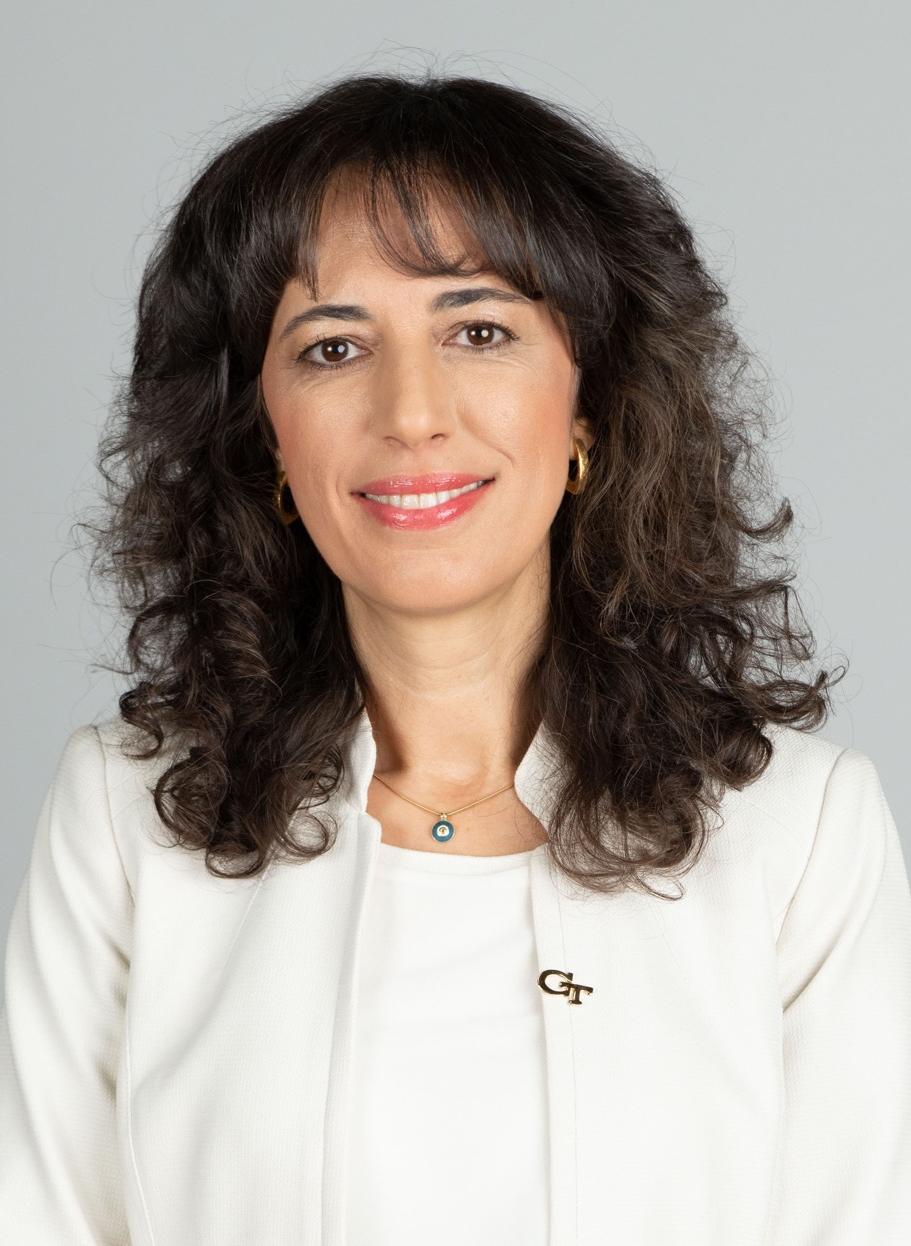
Pinar Keskinocak serves as the H. Milton and Carolyn J. Stewart School Chair and Professor in the H. Milton Stewart School of Industrial and Systems Engineering at the Georgia Institute of Technology. She co-founded and directs the Center for Health and Humanitarian Systems, demonstrating leadership in both academic administration and research innovation. Her career includes prior roles as College of Engineering ADVANCE Professor and interim associate dean for faculty development, alongside industry experience at IBM T.J. Watson Research Center. Her educational foundation includes a Ph.D. in Operations Research from Carnegie Mellon University and M.S. and B.S. degrees in Industrial Engineering from Bilkent University. This rigorous training underpins her interdisciplinary approach to complex societal challenges. Dr. Keskinocak's research pioneers operations research applications for societal impact , with dual emphases on health systems and humanitarian logistics . She develops advanced models for infectious disease dynamics (including COVID-19, malaria, and Guinea worm), vaccination strategies, disaster response, and supply chain optimization. Her work uniquely bridges engineering analytics with real-world implementation through partnerships with the CDC, American Red Cross, Carter Center, and Children's Healthcare of Atlanta. Analysis of her 2023-2025 publications reveals intensifying focus on eradication program modeling for polio and Guinea worm, with increasing integration of machine learning for predictive accuracy in vaccine distribution. A pronounced trend addresses health equity through targeted interventions for under-immunized populations in Sub-Saharan Africa, emphasizing resource allocation under constraints and cross-border coordination challenges. Her scientific recognition includes: INFORMS Fellow (2015) NSF CAREER Award (2001) Outstanding Professional Education Award, Georgia Tech (2018) Denning Award for Global Engagement, Georgia Tech (2016) Women in Engineering Excellence Teaching Award (2005) Moving Spirit Award, INFORMS (2005) Dr. Keskinocak has secured extensive project funding through collaborations with federal agencies and NGOs, directing research on pandemic response systems, vaccine logistics, and disaster debris management. While specific advisees aren't publicly cataloged, her leadership in the Center for Health and Humanitarian Systems mentors numerous graduate researchers through interdisciplinary projects. She significantly influences national policy via National Academies committees addressing supply chain resilience and vaccine distribution infrastructure. The Center for Health and Humanitarian Systems operates as a dynamic hub where engineering rigor meets humanitarian action, coordinating multi-institutional teams to develop deployable solutions for global health crises and disaster response systems.
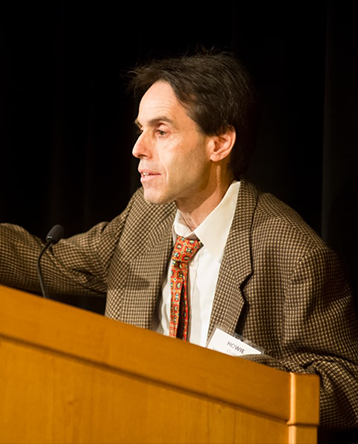
Howie Choset is a Professor of Robotics at the Robotics Institute, Carnegie Mellon University. He directs the Undergraduate Robotics Minor and leads the Biorobotics Laboratory, where his research focuses on snake robots, motion planning, and medical robotics. He is also affiliated with the Manufacturing Futures Institute. Ph.D., Mechanical Engineering, California Institute of Technology (1996) M.S., Mechanical Engineering, California Institute of Technology (1995) B.S.E., Computer Science and Engineering, University of Pennsylvania (1990) B.S., Economics, The Wharton School of Business (1990) Choset's research centers on robotics for confined and complex environments, particularly through the development of snake robots. His work integrates mechanism design, path and motion planning, and estimation to enable applications in surgery, manufacturing, infrastructure inspection, and search and rescue. He is a pioneer in medical robotics and has co-founded Medrobotics to commercialize minimally invasive surgical robots. His recent publications highlight a strong focus on ergodic exploration, multi-agent systems, motion planning under uncertainty, and medical robotics. Themes include optimizing robot trajectories for information gathering, solving complex path planning problems with dynamic obstacles, and advancing autonomous systems for disaster response and space exploration (e.g., the EELS robot for Enceladus). MIT Technology Review Top 100 Innovators under 35 (2002) Best Paper Award, RIA (1999) Best Paper Award, ICRA (2003) Best Paper, IEEE Bio Rob (2006) Best Video, ICRA (2011) Nominations for best papers at ICRA, IROS, and CLAWAR Choset has advised numerous students, many of whom have won top awards. His lab has received significant funding for robotics research, including projects in surgical robotics, additive manufacturing, and autonomous exploration. He is the lead author of the textbook Principles of Robot Motion and is actively involved in educational innovation through custom robotics labs. He leads the Biorobotics Laboratory at CMU, which develops advanced robotic systems like snake robots and the EELS (Exobiology Extant Life Surveyor) robot for NASA missions. The lab collaborates with industry and government agencies on applications ranging from surgery to space exploration.
Professor Michael C.L. CHAU serves as Professor and Deputy Area Head of Innovation and Information Management at The University of Hong Kong's Faculty of Business and Economics. He also holds the position of Associate Director at the HKU HKJC Centre for Suicide Research and Prevention, and serves on the HKU Senate and Court. His academic journey includes a Ph.D. in Management Information Systems from the University of Arizona and a B.Sc. in Computer Science (Information Systems) from the University of Hong Kong. Dr. Chau's research spans business analytics, artificial intelligence, web mining, fintech, smart health, and security informatics. His work focuses on applying data/text/web mining techniques to business, education, and social domains. He leads the Artificial Intelligence Research Group at HKU Business School, which has secured significant funding from the Hong Kong Research Grants Council, Food and Health Bureau, and other agencies for projects including 'The Invisible Hand in Crowdfunding' and 'Factors Moderating the Predictive Power of Social Media Sentiment on Stock Returns'. His publication portfolio includes over 150 articles in premier journals like MIS Quarterly, JMIS, and IEEE Transactions, with recent work exploring large language models, hate speech detection, and disaster-related social media analysis. His research demonstrates strong interdisciplinary connections across computer science, information systems, and business applications. INFORMS ISS Design Science Award (2020) IEEE ITSS Leadership Award in Intelligence and Security Informatics (2020) AIS Sandra Slaughter Service Award (2016) HKU Outstanding Young Researcher Award (2014) Faculty Research Postgraduate Supervision Award (2020 & 2025) Cited over 9,400 times (h-index = 47) Dr. Chau actively mentors doctoral students and has supervised numerous PhD graduates who now hold academic positions at institutions including Fudan University, Xi'an Jiaotong-Liverpool University, and the University of Maryland. His research grants portfolio demonstrates sustained funding success across diverse areas including blockchain, mental health applications, and social media analytics. The Artificial Intelligence Research Group he leads maintains strong industry connections through projects with Hong Kong Red Cross and the Hospital Authority.
Dr. Anthony Filippi is an Associate Professor and Director of Graduate Programs at Texas A&M University. His research focuses on remote sensing, geographic information systems (GIS), and machine learning applied to aquatic and terrestrial environments. He leads the Fluvial-GEOS Lab, studying riverine/floodplain systems using remote sensing and GIS technologies. Educational Background: Ph.D. in Geography, University of South Carolina (2003) M.S. in Geography, University of South Carolina B.A. in Geography, Kansas State University Research Interests: Imaging spectroscopy, hyperspectral remote sensing of rivers and coastal oceans, GIS-based modeling, data fusion, aquatic optics, and machine learning. His work addresses coastal ocean bathymetry estimation, floodplain dynamics, and applications in environmental monitoring, including hazardous waste site tracking and agricultural studies. Recent Research Trends: Recent publications highlight advancements in UAS-based image analysis, LSTM networks for floodplain classification, and environmental policy impacts on forest resources. His work integrates machine learning with remote sensing to improve ecological and geomorphological understanding. Labs/Teams: Director of the Fluvial-GEOS Lab, focusing on remote sensing and GIS applications in riverine environments.
Miyuki Hino is an Assistant Professor in the Department of City and Regional Planning and an Adjunct Assistant Professor in the Environment, Ecology, and Energy Program at the University of North Carolina at Chapel Hill. She holds a Ph.D. in Environment and Resources from Stanford University and a B.S. in Chemical Engineering from Yale University. Her research focuses on climate hazards, governance, and public policy , with emphasis on equitable adaptation to climate change. Key areas include sea level rise impacts, flood risk on property markets, and managed retreat strategies. She has conducted extensive work on floodplain development policies, household relocation programs, and community resilience frameworks. Dr. Hino's interdisciplinary approach integrates environmental science, urban planning, and social equity . She collaborates with academic and municipal partners, such as the Center for Urban and Regional Studies and Annapolis, MD local governments, to develop actionable solutions for climate adaptation. Her work bridges technical analyses (e.g., sensor networks, machine learning) with policy design to ensure both effectiveness and justice in climate responses. Recent projects emphasize preventing future 'trapped households' by analyzing zoning policies and market dynamics that drive risky development. She advocates for climate-smart growth strategies to balance economic needs with environmental safety, while addressing disparities in vulnerability across communities. Her research has been featured in Science Advances , Nature Climate Change , and interdisciplinary journals. She actively engages with policymakers to translate findings into practical measures, such as equitable buyout programs and floodplain management reforms.
Gail E. Joseph is a Professor in the College of Education at the University of Washington, with affiliations in Early Childhood & Family Studies and Learning Sciences & Human Development. She teaches courses, advises students, and conducts research on early care and education, focusing on child care quality, social-emotional learning, teacher education, and technology integration. Ph.D., University of Washington Her research projects include statewide surveys on early childhood workforce conditions, studies on digital professional learning tools like Circle Time Magazine, and evaluations of coaching interventions (e.g., FIND in Childcare) to improve teacher-child interactions. She co-created resources such as Teacher Time and the EarlyEdU Alliance, which aims to enhance early childhood education through accessible bachelor’s degrees. Her publications span topics like social-emotional curricula, behavioral interventions, and inclusive education frameworks. She has held leadership roles as Principal Investigator (PI) of the Head Start Center for Inclusion and Co-PI of the National Center for Quality Teaching and Learning (NCQTL). 2018 David R. Thorud Leadership Award (University of Washington) She currently serves as Executive Director of Cultivate Learning at the University of Washington, advancing professional development and quality improvement initiatives nationwide.
Yang Liu is a tenured Associate Professor at the Department of Management and Engineering , Linköping University, Sweden, and an Adjunct Professor at the University of Oulu, Finland. His expertise spans smart manufacturing, clean energy transition, and Industry 4.0 applications. He holds an M.Sc. and D.Sc. from the University of Vaasa, Finland. Research & Awards: Liu's work focuses on sustainable systems, decision support systems, and AI-driven energy efficiency. He has authored over 140 Web of Science publications, including top 0.1% ESI Hot Papers. He is ranked among the world's top 2% scientists (Stanford-Elsevier) and leads globally in 'big data analytics in manufacturing' and 'Industry 4.0-driven circular economy' research. Leadership & Projects: He leads projects like FlexSUS (EU Horizon 2020) and PERSEUS, developing tools for smart urban energy planning and 15-minute city models. He serves as Editor-in-Chief of Cleaner Engineering and Technology and Guest Editor for multiple journals. His research emphasizes bridging data science with sustainability challenges in manufacturing and energy systems. Key Achievements: Top-ranked in global citations, ESI Highly Cited Papers, and industry-driven sustainability frameworks. Grants: Leads EU-funded projects and collaborates with Siemens Energy on energy transition solutions. Labs & Teams: Part of the Environmental Technology and Management (MILJÖ) division and Unit for Product Service Innovation (MILJOPSI) at Linköping.