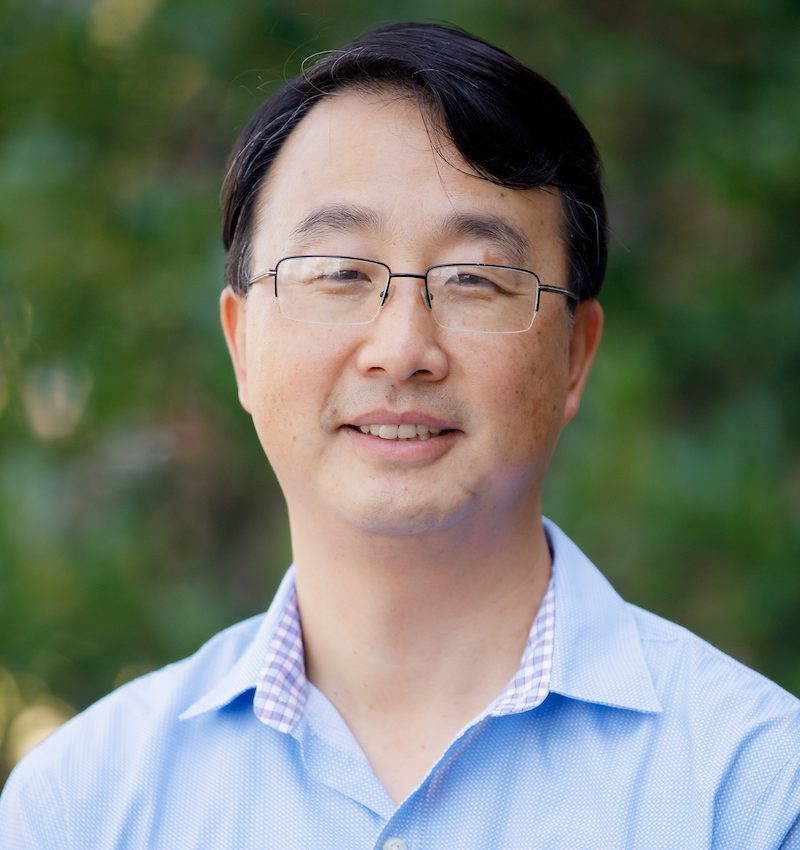
Begüm Güler is a Lecturer at Kırşehir Ahi Evran University , Faculty of Engineering and Architecture, Department of Genetics and Bioengineering. She has held academic positions since 2014, including roles at Ege University and Ahi Evran University. Education: PhD and MSc in Bioengineering from Ege University (2015, 2022; 2011, 2015) BS in Bioengineering from Ege University (2007-2011) and Economics/Management from Anadolu University (2009-2015) Her research focuses on plant tissue culture , biotechnology , and in vitro micropropagation , with applications in medicinal plants, stress tolerance, and synthetic seed technology. She has contributed to studies on tea plants, figs, and aromatic species. Recent publications highlight her work on synthetic seed storage , elicitor-induced metabolite production , and 3D technology in plant systems . She received the Biodesign for Aesthetics-Best Poster award in 2015. Key projects: TÜBİTAK-supported tea plant somatic embryogenesis (2020-2021), in vitro stress tolerance studies for basil (2024) She collaborates with researchers like Meltem Bayraktar and Halide Hande Güngör , and serves on administrative boards such as the Çevre Sorunları Application and Research Center (2025-).
Simon Kranzer is a Senior Lecturer and Head of Research Group at the Department of Information Technologies and Digitalisation, FH Salzburg. His work bridges academic research and practical application in digital transformation. Location: Campus Urstein, Room 425 Contact: simon.kranzer@fh-salzburg.ac.at | +43-50-2211-1316 Research Focus: Digital Twins for industrial systems Collaborative Robotics (Co-Bots) in retail Knowledge Transfer between academia and industry Operational Technology (OT) Security Data Acquisition and Visualization Programming Language Applications in industrial contexts Research Trends: Recent publications show expertise in retail automation (service robots, customer behavior analysis), industrial digital twins, and OT security. Earlier work spans GIS-SCADA integration, medical software implementation, and 3D microstructure analysis. Collaborative Projects: Active in interdisciplinary living labs, smart factory bootcamps, and 5G-based robotics exploration.
Professor Rafaela Hillerbrand is a leading scholar in philosophy of technology and ethics at the Karlsruhe Institute of Technology (KIT). She holds a professorship for Technology Ethics and Philosophy of Science with a focus on Assessment of Complex Forms of Knowledge at the Institute for Technology Assessment and Systems Analysis (ITAS). Additionally, she manages the KIT Academy for Responsible Research, Teaching, and Innovation (ARRTI) and heads the research group "Philosophy of Technology, Technology Assessment and Science" (PhilETAS). Her educational background includes dual doctorates: a Dr. phil. summa cum laude in Philosophy from Friedrich-Alexander-Universität Erlangen (2003) and a Dr. rer. nat. summa cum laude in Theoretical Physics from Westfälische Wilhelms-Universität Münster (2007). She also completed studies in Physics (Diplom) and Philosophy (Magister) at Universität Erlangen & University of Liverpool. Professor Hillerbrand's research spans the intersection of philosophy, technology assessment, and ethics. Her work focuses on the philosophical foundations of technology, environmental ethics (particularly regarding energy systems), epistemic aspects of risks and uncertainties, and ethical dimensions of computer simulations and AI. She approaches these topics through frameworks like the capabilities approach, virtue ethics, and value-sensitive design, examining how technological development intersects with human well-being and social justice. Her research often takes a transdisciplinary perspective, bridging philosophical analysis with practical applications in energy transition, mobility systems, and emerging technologies. Analysis of her recent publications reveals a clear trajectory toward addressing ethical challenges in emerging technologies, particularly AI and digital systems. Her work increasingly focuses on implementing ethical frameworks in practical contexts, from rescue robotics to energy systems. A significant thread throughout her scholarship examines how uncertainty and risk should be managed in technological decision-making, with growing attention to the epistemic dimensions of computer simulations. Her recent work also demonstrates an expanding focus on justice dimensions, particularly energy justice and capabilities approaches to technology assessment. Full member of the German Academy of Science and Engineering (acatech) since 2020 Delft Technology Fellowship, 2012-2015 Member of the Young Academy at the Berlin-Brandenburg Academy of Sciences and Humanities and the Academy of Natural Scientists Leopoldina (2009-2014) 2008 Science Prize of the Ingrid zu Solms Foundation PhD Scholarship from the University of Münster (2006) German Academic Scholarship Foundation (2002-2005) Dr. Heinz-Dürr Scholarship, Zeiss Foundation & German Academic Scholarship Foundation (2005) Lilli Bechmann-Rahn Prize (2005) Professor Hillerbrand actively mentors doctoral students, with recent PhD completions including Schweer, J. (2025) on "Computer Simulations and Explanations in the Nanosciences" and Grünke, P. D. (2023) on "Computer-based methods of knowledge generation in science." She has served as Ombudsperson for doctoral candidates at KIT (2015-2021) and participates in numerous grant review panels for major funding organizations including the German Research Foundation (DFG), National Science Foundation (NSF), and Fonds de la Recherche Scientifique Brüssel. Her research has been supported through various institutional roles including her leadership in the KIT Academy for Responsible Research, Teaching, and Innovation. As head of the PhilETAS research group at ITAS, Professor Hillerbrand leads a team examining the philosophical foundations of technology assessment. Her work connects closely with the KIT Academy for Responsible Research, Teaching, and Innovation (ARRTI), which she manages, creating a bridge between theoretical philosophical work and practical implementation of responsible innovation frameworks. Her research group collaborates extensively across disciplines, particularly with engineering departments at KIT and through the Heidelberg Karlsruhe Strategic Partnership (HEiKA).
Professor Helena Grehan is Vice Chancellor’s Professorial Research Fellow at the Western Australian Academy of Performing Arts (WAAPA), Edith Cowan University. Since joining WAAPA in February 2024, she brings more than two decades of leadership in theatre and performance studies, ethics, and digital cultural heritage. Education Doctor of Philosophy (Theatre Studies), Murdoch University, 1999 Research Interests Professor Grehan’s scholarship interrogates how contemporary performance, installation and digital arts negotiate ethics and responsibility . Through critical frameworks spanning climate disaster preparedness, post-digitisation futures for vulnerable HASS collections, and the politics of spectatorship, her work connects creative practice with urgent societal challenges. Recent projects explore how extreme weather events reshape artistic practice and how digital technologies can safeguard—and re-imagine—cultural heritage. Publications & Trends Across 2021–2024, Grehan’s output has clustered around four inter-related themes: climate futures, cyber-physical aesthetics, listening ethics, and activist dramaturgy. Book chapters and journal articles repeatedly deploy performative methodologies to examine how art mediates ecological crisis, political refusal, and community resilience, signalling a scholarly trajectory that merges critical theory with applied creative research. Awards & Recognition Fellow of the Australian Academy of the Humanities (2023) Australasian Drama Studies Association Joanne Tompkins Prize for Editing (2021) Murdoch University Vice Chancellor’s Award for Distinguished and Sustained Achievement in Research (2019) Marlis Thiersch Research Award (2011) Rob Jordan Book Prize (2010) Murdoch University Vice Chancellor’s Excellence in Teaching Award (2008) Doctoral Supervision & Grants Grehan has successfully supervised over 20 HDR candidates to completion and currently leads three doctoral projects as principal supervisor, alongside one as associate supervisor. She is Chief Investigator on the ARC Linkage project Life after Digitisation: Future-proofing WA's Vulnerable Cultural Heritage (AUD $1.13 M, 2022–2027), collaborating across performing arts, information science and climate humanities. Labs & Teams At WAAPA she anchors a growing research cluster on Performance, Climate & Digital Futures , convening interdisciplinary teams across performance, design, screen, and digital humanities to prototype new models of creative practice and cultural preservation.
Dr. Aijun Song is an Associate Professor in the Department of Electrical and Computer Engineering at the University of Alabama College of Engineering. He is affiliated with the Center for Water Quality Research and the Alabama Water Institute. His work bridges engineering, environmental science, and technology, with a focus on developing innovative underwater communication systems and autonomous vehicle technologies for water monitoring applications. Dr. Song's educational background includes: Ph.D. in Electrical and Computer Engineering from University of Delaware M.S. in Electrical and Computer Engineering from Xidian University, Xi'an, China B.S. in Electrical and Computer Engineering from Xidian University, Xi'an, China Dr. Song's research primarily focuses on underwater acoustic communications, signal processing, and autonomous vehicle technologies. His work addresses challenges in underwater wireless communications including channel modeling, equalization techniques, and full-duplex communication systems. He has made significant contributions to the development of underwater sensor networks, acoustic transceivers, and communication protocols for autonomous underwater vehicles. His research has important applications in environmental monitoring, ocean exploration, and water quality assessment. Dr. Song's recent publications demonstrate a strong trend toward practical implementations of underwater communication technologies, with increasing emphasis on reconfigurable intelligent surfaces, energy-efficient systems, and real-world testbed validation. His work spans theoretical development, simulation, and extensive field testing in lake and river environments. The research addresses critical challenges in underwater communication including channel variability, interference cancellation, and long-range transmission. Dr. Song has received notable recognition for his work: NSF CAREER Award from the National Science Foundation (2021) Outstanding Faculty/Staff-Initiated Engagement Effort by the Council on Community-Based Partnerships at the University of Alabama (2019) Outstanding Service Award from the 8th ACM International Conference on Underwater Networks & Systems (2013) Dr. Song actively mentors students and collaborates on interdisciplinary research projects. He serves as co-principal investigator for the USGS FLOW Academy, working with Dr. Lisa Davis and Dr. Steven Burian to provide hands-on water science education. His leadership in the Tuscaloosa MATHCOUNTS program has significantly impacted local STEM education, particularly for underserved populations and female students. Dr. Song's research has been supported by significant funding including an NSF CAREER award and collaborations with the US Geological Survey. Dr. Song leads a research team focused on underwater robotics and wireless communication technologies. His lab develops and tests autonomous underwater vehicles including JaiaBots and EcoMapper systems. The team is advancing underwater swarming technologies to enhance water monitoring capabilities, with an emphasis on creating open-source, low-cost solutions for automated water data collection and rapid flood disaster response. Recent field demonstrations at the Black Warrior River and Lake Tuscaloosa showcase the practical applications of his research.
Dr. Alexander Ferworn is a Professor at the Department of Computer Science, Toronto Metropolitan University, where he serves as Associate Chair, Graduate Program Director, and Senator. His work bridges technology and public safety, focusing on computational public safety , cybersecurity , and response robotics . PhD in System Design Engineering (1997), University of Waterloo MSc in Computer Science (1992), University of Guelph BTech (1988), Ryerson Polytechnical Institute His research explores technology’s role in crisis management, including robotic systems for disaster response and cybersecurity frameworks for public infrastructure. He actively engages in outreach, recognized as a 'Technology Ambassador' by PIR and a 'Science Slam' champion. Professional memberships include ACM , ASTM , and IEEE . He leads the Computational Public Safety Lab , emphasizing interdisciplinary collaboration. 2014 Partner In Research (PIR) national 'Technology Ambassador' 2013 EURAXESS 'Science Slam' Canadian champion 2011 NIST award for Contributions to Response Robot Evaluation Exercises 2009 'Information Technology Hero' by ITAC 2007 Ontario Government Showcase of Excellence (Gold and Diamond awards) 1992 Canadian Forces Decoration (CD)
Daniel Aloise is a Full Professor at the Department of Computer Engineering and Software Engineering, Polytechnique Montréal. He is a member of GERAD (Group for Research in Decision Analysis) and IVADO (Institute for Data Valorization), focusing on data science, optimization, and mathematical programming. His career spans institutions in Brazil and Canada, with significant contributions to clustering, classification, and operational research. Ph.D. in Exact algorithms for minimum sum-of-square clustering (HEC Montréal, 2009) Research Interests include data mining, optimization, mathematical programming, and algorithms. His work addresses challenges in big data, clustering algorithms, and classification models, applying these to diverse fields such as psychology, engineering, marketing, and disaster response. He explores polynomial-time algorithms for complex clustering problems and deep learning frameworks for unsupervised classification. Recent Articles emphasize optimization techniques (Benders decomposition, column generation), wireless signal prediction, bike-sharing inventory rebalancing, and serious games for disaster response data. These works integrate operations research, machine learning, and computational efficiency. Scientific Awards include the 2024 Omega Best Paper Award, 2023 CAPTRS Serious Games Award, and multiple CNPq Productivity Scholarships (2015–2018, 2012–2014). He received distinctions for his Ph.D. thesis and placement in international competitions. Supervision covers 7 Ph.D. and 12 Master's theses completed at Polytechnique Montréal, addressing topics like bug severity detection, anomaly analysis, and vehicle routing optimization. His lab collaborates with industry partners on real-time decision-making systems.
Tom S Richardson is Professor of Aerial Robotics in the School of Civil, Aerospace and Design Engineering at the University of Bristol, where he lectures in Flight Mechanics and Control. With over 105 research outputs and leadership in 7 projects including WildDrone (2023-2026) and WildBotics (2026-2029), his work bridges theoretical control systems and real-world UAV applications. His educational foundation includes an M.Eng. and Ph.D. from the University of Bristol, establishing his expertise in aerospace engineering. Research interests focus on control systems spanning classical flight control to high-level autonomy, with significant contributions to UAV swarm coordination, real-time decision-making, and applications in wildlife conservation and emergency response. His fingerprint highlights Unmanned Aerial Vehicle Engineering (100%), Fixed Wings Engineering (65%), and Real Time systems (50%). Recent publications demonstrate a clear trajectory toward practical implementations: wildlife monitoring via real-time visual tracking and firefighting UAV swarms using mutual shaping frameworks. These works emphasize interdisciplinary collaboration between engineering mathematics and conservation biology, showing strong growth in Kenya and Ohio field deployments. Scientific recognition includes: Engineer Technology & Innovation Awards 2010 for Autonomous Systems development Richardson has supervised 11 students, including Nguyen Ngoc, D. and Meier, K. on the WildDrone project. His grant portfolio features nature conservation-focused initiatives like WildDrone (with Bullock, Watson, Burghardt, and Mirmehdi) and the RAIN expansion project, totaling over £1.2M in active funding. Current advising emphasizes UAV applications for ecological monitoring and disaster response. He collaborates extensively through the University of Bristol's Dynamics and Control research group, with recent network activity spanning Guatemala (58%) and Kenya (33%) field sites. Public engagement includes The Sir Alan Cobham Lecture (2012) on UAV societal impacts.
Dr. Jun Li is a Senior Lecturer at the School of Computer Science, Faculty of Engineering and Information Technology, University of Technology Sydney (UTS), Australia. He received his Ph.D. in Computer Science from Queen Mary University of London in 2009 and is affiliated with the Australian Artificial Intelligence Institute (AAII) at UTS. His research spans multiple domains within artificial intelligence, with primary focus on Machine Learning applications in computer vision and 3D geometry. Dr. Li has published extensively in high-impact journals including IEEE Transactions (TPAMI, TIP, TNNSLS) and Pattern Recognition, with recent work expanding into interdisciplinary research in earth science and marine applications. His research output demonstrates consistent productivity with numerous publications each year across diverse AI application areas. Dr. Li's work shows strong thematic progression from foundational computer vision techniques to applied interdisciplinary research. Early work focused on face hallucination and video super-resolution, while more recent publications address environmental applications using Graph Neural Networks for wave prediction and damage classification for disaster response. His research consistently bridges theoretical AI advances with practical real-world applications across healthcare, autonomous systems, and environmental science. AI to assist disaster emergency response (2023-2026) Applying Generative Adversarial Network in Medical Image Analysis (2020-2021) Big Massive Open Online Course (MOOC) Data Retrieval (2017-2020) As an educator, Dr. Li teaches core courses including '31005 Machine Learning' and '32513 Advanced Data Analytics Algorithms' at UTS, and is available for Masters Research and PhD student supervision, contributing to the development of next-generation AI researchers.
Dr. Mukesh Prasad is an Associate Professor at the School of Computer Science , University of Technology Sydney (UTS). With expertise in Machine Learning , Artificial Intelligence , and Computer Vision , his research addresses applications in healthcare, biomedical science, and smart infrastructure. He holds a Ph.D. in Computer Science from National Chiao Tung University, Taiwan, and an M.S. in Computer and Systems Sciences from Jawaharlal Nehru University, India. Key research areas: Machine Learning, AI, Brain-Computer Interfaces, IoT, and Evolutionary Computation Industry experience: Principal Engineer at TSMC (2016-2017), Postdoctoral Researcher at National Chiao Tung University Dr. Prasad has secured competitive grants for AI applications in disaster response, conversational agents, and medical diagnostics. His work has been published in high-impact venues like IEEE , ACM Transactions , and Springer Nature , with over 200 peer-reviewed papers. He serves on editorial boards for journals including Frontiers in Neurorobotics and ACM Computing Surveys . Scientific Awards: Vice Chancellor Teaching and Learning Citation Award (2019) Alumni Fellowship for Ph.D. (2014) Golden Bamboo NCTU Fellowship (2010) Professional Members: IEEE (2011), ACM (2019)
Zheng Wen is an Associate Professor (non-tenure-track) at Waseda University, affiliated with the Faculty of Science and Engineering and the Global Center for Science and Engineering. His research spans multiple interdisciplinary domains at the intersection of information technology, security systems, and artificial intelligence applications. Dr. Wen received his Ph.D. from Waseda University between 2013 and 2019, following undergraduate studies at Wuhan University from 2005 to 2009. Dr. Wen's research interests focus on the convergence of emerging technologies for practical applications. His primary areas include Data Science , Internet of Things (IoT) , Blockchain , and Artificial Intelligence , with specific applications in communication networks, disaster management, and content-oriented networking. His work demonstrates a strong emphasis on solving real-world problems through technological innovation, particularly in security-critical domains. Analysis of Dr. Wen's publication record reveals a consistent research trajectory focused on applying machine learning and AI techniques to security and communication challenges. His recent work shows increasing emphasis on blockchain applications for IoT security, GNSS spoofing detection for drone systems, and millimeter-wave imaging for security applications. The interdisciplinary nature of his research connects computer science, electrical engineering, and practical security implementations. Dr. Wen is an active member of professional organizations including IEEE and IEICE, reflecting his engagement with the broader academic community in his fields of expertise. While specific details about his advising and grant activities are not provided in the available information, his extensive publication record across multiple domains suggests active research supervision and likely participation in collaborative research projects. His work on drone security, blockchain applications, and millimeter-wave imaging indicates potential industry partnerships and practical implementations of his research. Dr. Wen's research appears to be conducted within collaborative teams focusing on security systems, wireless communications, and AI applications, with frequent co-authorship patterns suggesting established research groups working on related projects in these domains.
Dr. Marianthi Leon serves as Associate Professor of Collaboration and Digital Innovation within the Department of Engineering, Design and Mathematics at the University of the West of England's Faculty of Environment and Technology. She leads the Smart & Sustainable Infrastructures research group focused on Civil Engineering applications, driving digital transformation across multiple sectors through cutting-edge research initiatives. Her academic credentials include a Dip.-Ing. (Diplom-Ingenieur), MSc, and PhD in Management & Digital Technologies, complemented by professional recognition as a Fellow of the Higher Education Academy (FHEA) and registration with the Architects Registration Board (ARB). Dr. Leon's research program centers on digital innovation for multidisciplinary collaboration, with Digital Twins as the cornerstone technology. Her work bridges the Built Environment industry and emerging sectors through: Digital Twin implementation across healthcare, manufacturing, and infrastructure Advanced Building Information Modeling (BIM) protocols for collaborative design Integration of Industry 4.0 principles in sustainable engineering Disaster management frameworks using multi-stakeholder collaboration 3D acquisition technologies for heritage conservation and asset management Analysis of her 2020-2025 publications reveals a strategic evolution toward cross-sector Digital Twin applications, with increasing emphasis on healthcare robotics, sustainable manufacturing, and pipeline disaster management in Nigeria. Her work consistently addresses real-world implementation challenges in collaboration frameworks and digital transformation. Dr. Leon maintains an active research profile with significant industry networking capacity and a rising track record in securing collaborative R&D funding. Her leadership extends to: Mentoring engineering students through problem-based learning approaches Developing sustainable engineering education curricula Facilitating international research partnerships with UCL, RGU, and European institutions The Smart & Sustainable Infrastructures research team operates at the intersection of civil engineering and digital innovation, with ongoing projects in NHS facilities management, oil pipeline safety, and virtual commissioning of manufacturing systems through strategic collaborations with Politecnico di Milano, Aristotle University of Thessaloniki, and Strathclyde University.
Anders Lyhne Christensen is a Professor at the Maersk Mc-Kinney Moller Institute, University of Southern Denmark (SDU), where he serves as a Professor at both the SDU Drone Center and SDU Climate Cluster. His academic work focuses on robotics, swarm intelligence, and drone technology applications. His research interests center around swarm robotics and multi-robot systems, with particular emphasis on drone swarm applications for wildlife monitoring, search and rescue operations, and environmental conservation. His work bridges computer science, robotics engineering, and practical field applications, developing solutions that address real-world challenges through innovative swarm intelligence approaches. Professor Christensen's recent publications reveal a strong focus on practical drone swarm implementations, with research spanning wildlife monitoring systems, search and rescue operations, communication protocols for UAV swarms, and efficient pathfinding algorithms for multi-agent systems. His work demonstrates a consistent trajectory toward developing robust, field-deployable swarm robotics solutions. He actively contributes to major research projects including WildDrone (2023-2026), CloudBrain (2020-2023), and SpikeDrone (2018-2021), focusing on drone swarm applications for environmental monitoring and complex task execution. His teaching portfolio includes courses on Bio-inspired Autonomous Systems, Reinforcement Learning for Robotics, and introductions to robotics, computer vision, and artificial intelligence.
Prof. Floris Ernst serves as Professor of Medical Robotics at the Institute for Robotics and Cognitive Systems, University of Lübeck, where he has been faculty since 2017 after joining as a research associate in 2013. He holds significant leadership roles including membership on the Steering Committee of the Graduate School 'Computing in Medicine and Life Sciences' and editorial positions with IEEE Robotics and Automation Letters and Frontiers in Robotics and AI. His research spans medical robotics , signal processing for biomedical applications , sensors for robotics , and augmented reality in surgery . Key projects include SonoBox (robotic ultrasound for pediatric fracture diagnosis), TWIN-WIN (digital supertwin technology), and robotics applications in rescue medicine. His work consistently bridges theoretical algorithm development with clinical implementation, focusing on real-world medical challenges. Prof. Ernst's recent publications (2023-2025) demonstrate strong activity across medical imaging, rescue robotics, and navigation systems. Trends show increasing focus on deep learning applications in medical imaging, real-time motion tracking for radiosurgery, and autonomous systems for emergency response. His work frequently appears in top robotics and medical imaging venues including IEEE conferences and journals. IEEE Senior Member Associate Editor, IEEE Robotics and Automation Letters (Medical Robotics) Associate Editor, Frontiers in Robotics and AI (Biomedical Robotics) As an active supervisor, Prof. Ernst guides students through courses like Medical Robotics (CS4270) and Bachelor/Master projects, with numerous publications co-authored with students. His lab maintains strong industry and clinical collaborations, particularly in medical device development and clinical robotics applications. The Robotics Laboratory (RobLab) serves as the primary research environment for his team's work on medical and rescue robotics systems.
Prof. Dr. Thomas Straßmann is a Professor specializing in robotics with a focus on rescue applications and emergency response systems. He is actively affiliated with the German Rescue Robotics Center (DRZ), contributing to the development of autonomous robotic solutions for hazardous disaster scenarios through interdisciplinary collaboration. His research spans Robotics, Autonomous Systems, and Emergency Response, emphasizing practical implementations like fire-extinguishing robots and multi-robot coordination in disaster zones. Work integrates advanced navigation, sensing, and control systems to enhance safety and operational efficiency in high-risk environments. Recent publications demonstrate consistent innovation in applying robotics to fire safety and emergency management, with strong emphasis on field-deployable systems and human-robot teaming under the DRZ initiative. Research trends show increasing sophistication in multi-robot coordination and sensor fusion for real-world disaster response. Prof. Straßmann is integral to the German Rescue Robotics Center (DRZ), a national consortium advancing robotic technologies for safety, security, and rescue operations. The DRZ fosters cross-institutional collaboration to address critical challenges in disaster response through integrated hardware, software, and operational frameworks.