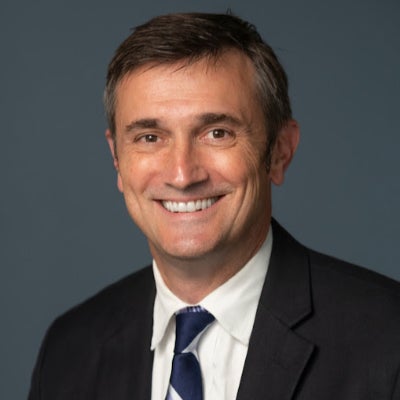
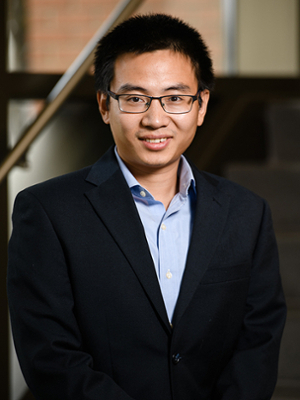
Professor Haijiang Li is a Chair in BIM for Smart Engineering at Cardiff University's School of Engineering. His roles include leading the Computational Mechanics and Engineering AI Research Group, directing the BIM for Smart Engineering Centre, and overseeing the BIM MSc programme. He holds editorial roles for journals like Construction Innovation and Automation in Construction , and chairs the European Group of Intelligent Computing in Engineering (EG-ICE). Research focuses on smart computational engineering platforms integrating BIM, AI, and big data for sustainable infrastructure. Key areas include digital twins, disaster management, and resilient urban systems. He has secured £40M in research funding, including £9M as PI, and led over 70 research staff and students. Prof. Li is a Standards Committee Technical Executive at buildingSMART, driving international BIM standards. His work includes co-authoring a book on BIM standards across China, the US, and the UK. Awards include Fellowships from the British Computer Society (FBCS) and the Higher Education Academy (FHEA). His research outputs span over 250 publications, covering topics like AI-driven bridge maintenance, ontology-based decision-making, and energy-efficient urban systems. Collaborations with industry and global partners emphasize practical applications of BIM and smart technologies.
Dr. Harwin de Vries is an Associate Professor at the Department of Technology and Operations Management, Rotterdam School of Management (RSM), Erasmus University Rotterdam. His research focuses on health and humanitarian logistics, particularly disaster relief logistics and improving access to essential medicines in low- and middle-income countries (LMICs). He explores the role of data analytics and new operational models in healthcare systems, such as mobile health service delivery. Before joining RSM, he worked at INSEAD as a postdoctoral researcher and manager of the INSEAD Humanitarian Research Group. He holds a PhD in Operations Research from Erasmus University. Education: PhD in Operations Research, Erasmus University Rotterdam His research interests include optimizing supply chain decisions in humanitarian contexts, with over 20 collaborations with health organizations. He teaches courses on Health & Humanitarian Logistics, Business Analytics, and Spreadsheet Modelling across BSc, MSc, and EMBA programs. Dr. de Vries has received notable awards including the 2021 ERIM Award for Young Researcher and a 2022 NWO VENI Grant. His work has been published in leading journals like Production and Operations Management and Manufacturing & Service Operations Management, and has been transformed into teaching cases. Grants: NWO VENI Grant (2022) He serves on the board of the POMS College of Humanitarian Operations & Crisis Management, actively contributing to academic and practical solutions in humanitarian logistics.
Magda Posani is an Assistant Professor in the Department of Civil Engineering at Aalto University, focusing on building physics, hygrothermal behavior of materials, and environmental sustainability. Her research explores the use of bio-based insulation, thermally massive stone and earth walls, and additive manufacturing techniques to enhance indoor comfort and address climate change challenges in Nordic regions. Integrated Master's Degree in 'Building Engineering and Architecture' from the University of Bologna (Italy) Ph.D. in Civil Engineering from the National Laboratory for Civil Engineering (LNEC) and the University of Porto (FEUP, Portugal) Postdoctoral Research at ETH Zürich (Switzerland) Her research integrates vernacular solutions with modern technology, such as combining additive manufacturing with super-hygroscopic materials to develop components for passive humidity regulation. She addresses critical issues like occupant comfort, health risks from improper humidity, and climate change impacts on traditional constructions. The articles highlight her work on low-carbon materials, 3D-printed building components, and strategies for enhancing hygrothermal performance in both modern and historic structures. Key themes include moisture buffering, thermal insulation compatibility, and climate-resilient renovation.
Professor Emily So serves as Deputy Head of the School of Arts and Humanities at the University of Cambridge and directs the Cambridge University Centre for Risk in the Built Environment (CURBE). A chartered civil engineer with extensive field experience, she holds leadership roles in the Open-Oxford-Cambridge AHRC Doctoral Training Partnership and chairs the Faculty EDI Committee. Her research focuses on urban risk and resilience , particularly in earthquake-prone regions. Combining structural engineering with epidemiological approaches, she develops innovative casualty estimation models and engages directly with affected communities worldwide. Her work spans seismic safety, disaster epidemiology, and remote sensing applications for rapid damage assessment. Professor So's publication trends reveal strong emphasis on machine learning for disaster risk modeling , with recent work featuring graph neural networks, deep clustering for urban morphology, and LSTM-based population forecasting. Her research bridges engineering, social sciences, and data science to address resilience in developing nations. 2010 Shah Family Innovation Prize (Earthquake Engineering Research Institute) Fellow of the Institution of Civil Engineers (FICE) Scientific Advisory Group for Emergencies (SAGE) member advising UK government As Director of CURBE, she leads interdisciplinary collaborations with EEFIT, Global Earthquake Model (GEM), World Bank, and USGS. Her field investigations following major earthquakes inform practical solutions for vulnerable communities, notably contributing to the 2017 World Building of the Year design in China. Current work includes sabbatical research for 2025-2026 focused on decolonizing architectural approaches to disaster resilience. Professor So maintains active roles in professional organizations and international disaster response frameworks, with her CURBE team developing methodologies now implemented globally for seismic safety improvements.
Alena Thiel is an Associate Professor at the Centre of African Studies within the Faculty of Social Sciences at the University of Copenhagen. Her research examines digital technologies' impact on state formation and knowledge systems across Africa, with primary field sites in Ghana, Senegal, Botswana, and Kenya. Her core research areas include: State knowledge systems (biometric ID, census histories, DHIS2 health records) Digital governance (addressing systems, payment solutions, disaster risk datafication) African/feminist AI development and implementation Anthropology of the state through Science and Technology Studies (STS) frameworks Recent publications (2024-2025) reveal concentrated analysis of health data infrastructures in Ghana, trust dynamics in Africa's global networks, and critical sociological examinations of digital identification. Her work consistently bridges anthropological theory with practical governance challenges in African contexts. As an active member of the Centre of African Studies, she maintains interdisciplinary collaborations across multiple African countries and European institutions, with particular emphasis on Ghanaian research partnerships and editorial leadership for Africa Spectrum journal.
Dr. Jérôme Verny is an Associate Professor specializing in transport, logistics, and supply chain management. He is the founder and director of the research institute in innovative transport and logistics, as well as the co-founder of the DISC Master's program (Digital & Innovative Supply Chain) in Paris and the Mobility Accelerator. His expertise spans digitalization in logistics, blockchain applications, and sustainable development. Educated at the University of Lille Nord de France (PhD in Economics and Management) and engineering schools like École Nationale des Ponts et Chaussées, he advises both public institutions (OECD, EU) and private enterprises on transportation strategies. Research Interests: Dr. Verny focuses on supply chain innovation, digital transformation, and strategic logistics. His work integrates blockchain technology for supply chain transparency, optimizes last-mile delivery in urban environments, and analyzes the impact of geopolitical actors like China on global trade networks. He also explores sustainable practices in transportation, including CO2 reduction strategies and pandemic response logistics. Awards: Recipient of the 2009 OECD-FIT Young Researcher Prize in Transport. His contributions bridge academic research with practical applications in industry, policy, and international trade. Key Activities: Co-founded the DISC Master’s program and leads research initiatives on blockchain adoption, Arctic shipping routes, and Mediterranean trade dynamics. He actively contributes to conferences such as the International Association of Maritime Economists (IAME) and publishes in journals like Structural Change and Economic Dynamics and International Journal of Shipping and Transport Logistics . Labs/Teams: Directs the Institut de Recherche en Transport et Logistique Innovante and collaborates with institutions like the OECD and European Commission on transport policy. His interdisciplinary approach involves engineering, economics, and data science to address global supply chain challenges.
Pawan Adhikari is a Professor of Accounting at Essex Business School, University of Essex , where he serves as Director of Impact and Enterprise and Director of Essex Accounting Centre . He is an Associate Editor of the Journal of Public Budgeting, Accounting and Financial Management and a Executive Board Member of the Comparative International Governmental Accounting Research Network (CIGAR) . Previously, he led accounting reforms at Nepal’s Accounting and Auditing Standards Board and lectured at Nord University, Norway. PhD, Nord University Business School Fellow of the Higher Education Academy His research focuses on public sector accounting in developing countries, particularly accounting reforms , public value creation , and climate accountability . He explores how accrual accounting and participatory budgeting can enhance transparency in South Asian and African contexts. His work has influenced policy-making in Nepal and is recognized with the 2023 Best International Research Impact award by the University of Essex. Recent publications analyze wellbeing economies (2025), NGO accountability in disasters (2024), and climate budgeting (2023). He collaborates with institutions like the World Bank , European Commission , and British Academy , focusing on projects related to financial resilience , circular economy , and health sector accountability . Supervising 8 current PhD students, his advisees have produced work on topics like accrual accounting in Bangladesh and NGO accountability in Palestine . World Bank/PEFA Research Award African Accounting and Financial Association (AAFA) Award ESRC IIA Impact Fund GCRF and SeNSS Grants 2019 Best Postgraduate Supervisor (Essex)
Paolo Gardoni is the Alfredo H. Ang Family Professor and an Excellence Faculty Scholar in the Department of Civil and Environmental Engineering at the University of Illinois Urbana-Champaign, with additional professorial appointments in Industrial & Enterprise Systems Engineering and Biomedical & Translational Sciences. He also serves as Director of the MAE Center and Editor-in-Chief of Reliability Engineering & System Safety. Education Ph.D. in Civil Engineering, University of California, Berkeley (2002) M.A. in Statistics, University of California, Berkeley (2001) M.Eng. in Structural Engineering, University of Tokyo (1997) Laurea (BS+MS equivalent) in Structural Engineering, Politecnico di Milano (1997) Research Interests Gardoni’s scholarship integrates probabilistic methods with large-scale infrastructure systems to advance reliability, risk, and life-cycle analysis. His work quantifies the performance of deteriorating systems under natural and anthropogenic hazards, models societal impacts of disasters, and develops decision frameworks for sustainable and resilient infrastructure. He also examines ethical, social, and legal dimensions of risk, and investigates optimal strategies for hazard mitigation, disaster recovery, and climate adaptation. Across more than 250 refereed journal papers, he has advanced sub-fields ranging from probabilistic mechanics and earthquake engineering to catastrophe bond pricing and engineering ethics, leveraging tools such as stochastic differential equations, Bayesian networks, and physics-informed machine learning. Awards & Honors Alfredo Ang Award on Risk Analysis and Management of Civil Infrastructure (ASCE, 2021) Best Paper Awards in ASCE Journal of Sustainable Water in the Built Environment (2019) and Geotechnical Research (2018 Telford Premium Prize) Fellowships and named professorships: Alfredo H. Ang Family Professor, Excellence Faculty Scholar, and courtesy or honorary professorships at Tsinghua, IIT Guwahati, Tongji, Jianghan, and Loughborough universities. Research Leadership & Funding Gardoni has secured over $58 million in research funding from NSF, DHS, NIST, USAID, Qatar National Research Fund, and other agencies. He directs the MAE Center—formerly an NSF Engineering Research Center—focused on multi-hazard engineering approaches, and is Editor-in-Chief of Reliability Engineering & System Safety (Elsevier, IF 9.4). He founded and formerly led the journal Sustainable and Resilient Infrastructure (Taylor & Francis) and serves on editorial boards of nine additional journals. Advising & Mentorship He has graduated 27 PhD and 35 Master’s students, many of whom now hold faculty positions worldwide. His group maintains an active pipeline of doctoral and post-doctoral researchers working on resilience analytics, infrastructure monitoring, and risk-informed decision-making. Laboratories & Collaborations He leads the MAE Center and is affiliated with the Critical Infrastructure Resilience Institute (CIRI) and the Biomedical and Translational Sciences group. International collaborations span the UK (Loughborough), India (IIT Guwahati), and China (Tsinghua, Tongji, Jianghan), fostering cross-disciplinary research in reliability and resilience engineering.
Thomas Hacker is a Professor in the Department of Computer and Information Technology at Purdue Polytechnic Institute, Purdue University. His research focuses on cloud computing, high-performance computing, operating systems, computer networking, and cyber infrastructure . He holds a Ph.D. and M.S. in Computer Science & Engineering from the University of Michigan, along with dual B.S. degrees in Computer Science and Physics from Oakland University. Education: PhD (Computer Science & Engineering), University of Michigan (2004) MS (Computer Science & Engineering), University of Michigan (1993) BS (Computer Science, Mathematics Minor), Oakland University (1989) BS (Physics), Oakland University (1989) Dr. Hacker's research spans cloud and grid computing, operating systems, and distributed systems , with applications in earthquake engineering data systems and AI-driven infrastructure analysis. His recent work explores extended layer 2 networking for bare-metal provisioning ( 2023 IEEE Cloud Summit ) and machine-supported bridge inspection using artificial intelligence ( Transportation Research Record, 2023 ). Notable scientific contributions include 15+ publications on topics like cyberinfrastructure for earthquake engineering, container-based virtualization, and data-intensive systems. His work has been recognized with awards such as the NSF CAREER Award (2010) and multiple Purdue Seed for Success Awards . Key Scientific Awards: NSF CAREER Award (2010) Purdue Seed for Success Awards (2008-2013) ASEE Information Systems Division Best Paper Award (2012) College of Technology Outstanding Faculty in Discovery Award (2010) He has held leadership roles at Purdue, including Department Head (2018-2021) and Interim Department Head (2011-2016) . His career spans academic positions at Indiana University, University of Michigan, and industry roles at Storage Technology Corporation.
Amir AghaKouchak is a Chancellor’s Professor in the Department of Civil and Environmental Engineering at the Samueli School of Engineering, University of California, Irvine (UCI). He directs the Center for Hydrometeorology and Remote Sensing (CHRS) and focuses on interdisciplinary research at the intersection of hydrology, climatology, statistics, and remote sensing. B.Sc. and M.Sc. in Civil Engineering (Water Resources), K.N. Toosi University of Technology, Tehran, Iran (2001, 2005) Ph.D. in Civil and Environmental Engineering, University of Stuttgart, Germany (2010) His research aims to leverage satellite data and ground observations to advance modeling of hydrologic extremes (droughts, floods, landslides) and develop decision-support systems for water resources management. Key areas include climate change impacts , stochastic modeling , and the water-energy nexus . Recent publications highlight his work on multi-hazard analysis, groundwater decline, wildfire resilience, and climate projections. Tools like MhAST and MvCAT demonstrate his methodological contributions to copula-based and multi-hazard modeling.
Kostas Bekris is a Professor in the Department of Computer Science at Rutgers University, specializing in Robotics and Artificial Intelligence. His research focuses on motion planning, autonomous manipulation, and robot control, with notable contributions to tensegrity robotics, perception-driven systems, and large-scale package handling. He leads a team conducting groundbreaking work in robotics, supported by grants from NSF, NASA, and industry collaborators like ExxonMobil. His group emphasizes interdisciplinary approaches, combining machine learning, topological methods, and differentiable physics modeling to advance robot capabilities in complex environments. Education details are not explicitly stated in the provided texts, but his academic career has included significant mentorship of PhD students and postdoctoral researchers. Key projects involve vision-driven manipulation pipelines, obstacle detection systems (PROBE), and resilient robot designs inspired by biological structures. He has been recognized for his work through prestigious awards including the NASA Early Career Grant and multiple NSF grants, as well as team achievements in robotics competitions like the Amazon Picking Challenge. Research interests span robotics subfields such as: Autonomous manipulation in cluttered environments Learning-based control for dynamic systems Topological data analysis for motion reasoning Tensegrity and soft robotics architectures Sim-to-real transfer in robotic tasks His team's work has produced open-source software tools and datasets, advancing benchmarks in manipulation and perception. Recent articles emphasize scalable solutions for industrial automation and robust navigation strategies in unstructured settings. Scientific achievements include: Development of PROBE for proprioceptive obstacle detection Advances in differentiable physics engines for tensegrity systems NSF-funded projects on robotic rearrangement and modular morphologies Advising contributions span over a decade, with current advisees focusing on topics like non-prehensile manipulation and large-scale storage optimization. Collaborations with industry (e.g., ExxonMobil) and academic partners (Yale University) reflect his commitment to applied robotics research. Labs and teams under his leadership include the Rutgers CS Robotics Group, contributing to projects like the ARIAC challenge platform and packing/industrial automation systems. Future work targets improved robot resilience in disaster scenarios and enhanced human-robot collaboration paradigms.
Megan S. Ryerson holds the UPS Chair of Transportation and serves as Associate Chair of City and Regional Planning at the University of Pennsylvania's Stuart Weitzman School of Design. Previously, she was Associate Dean for Research (2018–2023), demonstrating sustained leadership in academic administration while maintaining an active research profile focused on transportation systems integration. Her educational credentials include: Ph.D. in Civil and Environmental Engineering, University of California, Berkeley (2010) B.Sc. in Systems Engineering, University of Pennsylvania (2003) Ryerson's research pioneers the integration of intercity transportation into urban planning frameworks, with foundational work in aviation infrastructure planning , airline demand forecasting , and transportation resilience . She investigates airport competition dynamics across megaregions, airline disaster recovery protocols, and fuel-efficient flight planning methodologies. Her scholarship actively bridges civil engineering and urban planning disciplines to design transportation systems that are inherently safe , efficient , and resilient against disruptions. Analysis of her 15 most recent publications reveals a pronounced shift toward transportation equity since 2022, particularly examining driver education accessibility ('driver training deserts') and bikeshare infrastructure allocation. This equity focus coexists with continued aviation research, while pandemic-era studies on transportation behavior (2020–2023) demonstrate methodological adaptability through quasi-experimental designs and real-world crisis response analysis. Her scientific recognition includes: UPS Chair of Transportation (prestigious endowed professorship) Dr. Ryerson has significantly expanded urban planning pedagogy by incorporating megaregional transportation systems into core curricula. Her leadership as former Associate Dean for Research reflects active engagement with funding agencies and research administration, though specific grant details aren't documented in source materials. Current work emphasizes translating research into equitable policy frameworks, particularly for vulnerable transportation populations.
Christopher D.P. Baxter is a Professor and Department Chair of Civil and Environmental Engineering at the College of Engineering, University of Rhode Island , with expertise in geotechnical engineering, offshore wind energy, and coastal resilience. He holds a Ph.D. in Civil Engineering from Virginia Tech (1999), an M.S. from Purdue University (1994), and a B.S. from Tufts University (1990). Research Focus: Geotechnical characterization of marine sediments, liquefaction resistance analysis, fiber-optic sensing for infrastructure monitoring, and coastal protection systems. Recent Publications: 15+ articles (2011–2025) covering topics like shear wave velocity, offshore wind foundation dynamics, and tsunami hazard modeling. Grants: Led projects on offshore wind monitoring (2019–2024) and fiber-optic seismic sensing (2021–2023). Key Collaborations: Work with teams on submarine landslide analysis, coastal dune reinforcement, and Rhode Island infrastructure resilience. His work bridges experimental geomechanics with practical coastal engineering solutions.
Reed Maxwell is the William and Edna Macaleer Professor of Engineering and Applied Science in the Department of Civil and Environmental Engineering and the High Meadows Environmental Institute at Princeton University. He serves as Director of the Integrated Groundwater Modeling Center (IGWMC) and leads a research group comprising graduate students, postdoctoral researchers, and staff. His academic appointments include concurrent roles in both the School of Engineering and Applied Science and the High Meadows Environmental Institute. Maxwell's research focuses on understanding connections within the hydrologic cycle and how they relate to water quantity and quality under anthropogenic stresses. His work centers on hard problems in hydrology including groundwater, evapotranspiration and snow. His research group uses integrated hydrologic modeling, field observations, and remote sensing products to study terrestrial freshwater systems. Key research areas include surface water and the terrestrial hydrologic cycle; interactions of the land-surface, surface water and groundwater; and human health risk assessment. Maxwell has authored more than 185 peer-reviewed journal articles with an H-Index of 66 and over 19,000 citations. His recent work emphasizes machine learning applications in hydrology, continental-scale modeling, and physically rigorous scenario generation through projects like HydroFrame and HydroGEN. He teaches courses including CEE 306/ENV 318 Hydrology: Water and Climate and CEE 586/ENV 586 Physical Hydrology. 2020 Distinguished Henry Darcy Lecturer American Geophysical Union Fellow (2019) 2018 Boussinesq Lecturer Belle van Zuylen Chair (visiting), University of Utrecht 2017 School of Mines Research Award recipient Maxwell has mentored 17 PhD students and 20 MS thesis students throughout his career. His current research group includes multiple postdocs, research software engineers, and graduate students working on projects spanning continental-scale hydrologic modeling, groundwater-stream interactions, and machine learning applications in hydrology. The IGWMC maintains an active education and outreach program including STEM fairs, school visits, and digital educational tools like the HydroFrame Education Team's virtual sandtank aquifer model.
Dr. Yongjia Song is an Associate Professor in the Department of Industrial Engineering at Clemson University's College of Engineering, Computing and Applied Sciences. His research focuses on optimization under uncertainty, stochastic programming, and network interdiction with applications in disaster logistics, energy systems, and humanitarian operations. BS in Computational Mathematics (2009), Peking University MS in Industrial Engineering (2012), University of Wisconsin-Madison MS in Computer Sciences (2012), University of Wisconsin-Madison PhD in Industrial Engineering (2013), University of Wisconsin-Madison His work addresses complex systems under uncertainty through: Stochastic and robust optimization frameworks Integer programming for discrete decision problems Applications in disaster response and transportation networks Evacuation planning and shelter management Human trafficking disruption modeling Recent publications demonstrate trends in: Multistage stochastic programming for dynamic disaster response Bayesian preference elicitation for complex design problems Network interdiction models for security and trafficking disruption Integration of logistics and evacuation planning under uncertainty Adaptive algorithms for large-scale optimization Professional affiliations include: Institute for Operations Research and the Management Sciences (INFORMS) Mathematical Optimization Society (MOS) Society for Industrial and Applied Mathematics (SIAM) He teaches graduate courses in risk modeling (IE 8090) and actively works on practical implementations of optimization techniques in real-world systems.