Neil Swidey is a Professor of the Practice of Journalism at Brandeis University and editor-at-large of the Boston Globe Magazine. A bestselling author and award-winning journalist, his work spans narrative nonfiction, science communication, and political analysis. Alma Mater: Tufts University (B.A.) His research focuses on multimedia storytelling and the intersection of journalism with public health, education policy, and political discourse. His notable works include the books Trapped Under the Sea and The Assist , which explore disaster response and college sports ethics. Recent projects like The Virus’s Tale (2020) and Kristi Noem’s Cricket (2024) demonstrate his expertise in blending investigative journalism with societal critique. His accolades include the Edward R. Murrow Award and multiple Sigma Delta Chi Awards, reflecting his contributions to narrative feature reporting. Sigma Delta Chi Awards (2009, 2012, 2015, 2016, 2019) Edward R. Murrow Award (2021) Weidenbaum Center Award for Evidence-Based Journalism (2017) Knight Journalism Program at MIT Finalist (2021) Council on Foreign Relations Fellow (2024) Swidey also directs the Alray Scholars Program, supporting first-generation college students, and serves as a public speaker for the Penguin Random House Speakers Bureau. His work has been featured in The Best American series across multiple disciplines.
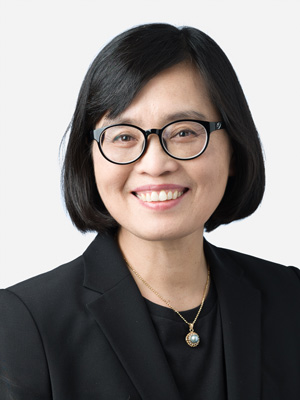
Dr. Yoon Lee is a Professor in the Department of Human Development and Family Studies at Utah State University , where she has served as Associate Department Head . Her research focuses on family economic issues, including household debt, financial education, and business-family balance in family-owned enterprises. PhD in Consumer and Family Economics, University of Missouri-Columbia (1995) MS in Family Ecology, University of Utah (1990) BS in Household Resource Management, Kookmin University (1983) Dr. Lee’s research spans financial stressors , debt behavior , and financial well-being during crises like the COVID-19 pandemic , with a particular interest in copreneurial businesses . Her 15 most recent publications examine topics such as pandemic recovery, financial anxiety, and racial disparities in economic behavior. Key awards include: Best Paper Award (2024) Faculty University Service Award (2021) Undergraduate Research Mentor of Year (2019) Researcher of the Year (2016, 2004) Dr. Lee mentors graduate students in family economic research and has advised 11 students since 2001. She teaches courses like Consumer Credit Problems and Advanced Family Finance , emphasizing research methodology and practical applications.
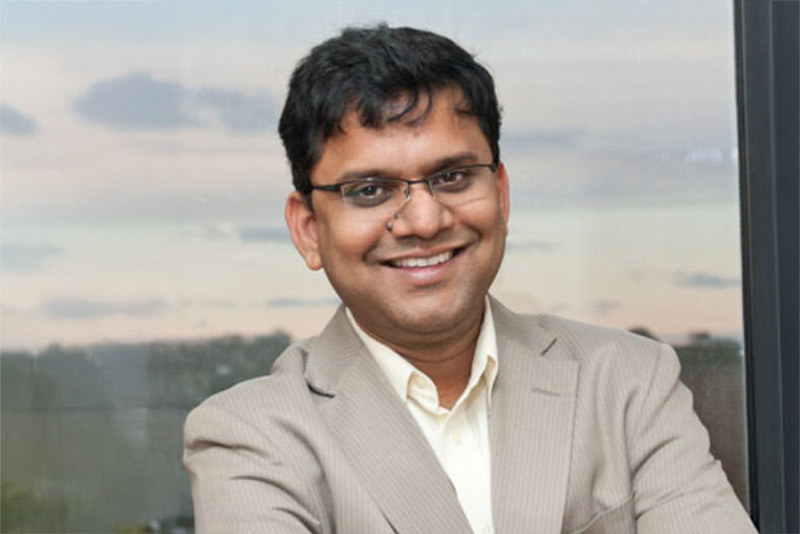
Auroop Ratan Ganguly is a Professor of Civil and Environmental Engineering at Northeastern University's College of Engineering , with affiliate appointments in the Khoury College of Computer Science and School of Public Policy and Urban Affairs. He serves as Director of the Sustainability and Data Sciences (SDS) Laboratory and Co-Director of the Global Resilience Institute at Northeastern, while holding a joint appointment as Chief Scientist at Pacific Northwest National Laboratory (PNNL). PhD in Civil and Environmental Engineering, MIT (2002) MS in Civil Engineering, University of Toledo (1997) B.Tech (Hons.) in Civil Engineering, IIT Kharagpur (1993) His research bridges Climate Extremes & Water Sustainability with Infrastructure Resilience and Hybrid Physics-AI Systems . Key contributions include novel methods for climate extremes under global warming, network science applications to infrastructure resilience, and physics-integrated machine learning for weather and hydrology. His work has been cited in UN and US National Climate Assessments, with media coverage in New York Times , Nature , and AGU publications. Recent articles focus on AI for Climate Risk (2025), Nonlinear Dynamics (2025), and Carbon Cycle Extremes (2025). His lab develops Explainable AI tools for climate adaptation and environmental justice. Fellow, American Society of Civil Engineers Distinguished Member, ACM (2023) Outstanding Mentoring Awards, Oak Ridge National Laboratory Best Paper Awards, SIAM Data Mining (2011) and IEEE (2017) As an advisor, he has mentored PhD students like Evan Kodra and Kate Duffy , who co-founded climate startups including risQ (acquired by ICE/NYSE) and Zeus AI . His leadership roles include co-chairing NCAR's Societal Dimensions Working Group and serving on the editorial boards of Scientific Reports and Frontiers in Water .
Prof. Dr. Tarık ÖZMEN is a full-time Professor at Karabük University, Faculty of Health Sciences, Department of Physiotherapy and Rehabilitation since 2023. With academic credentials including a PhD in Coach Education (2005-2011) and Master's in Physical Therapy (2003-2005) from Abant İzzet Baysal University, he has held administrative roles such as Department Chair (2013-present) and Vice Dean (2016-2020). Academic Background : PhD in Coach Education (Abant İzzet Baysal University, 2011) Master's : Physical Therapy and Rehabilitation (Abant İzzet Baysal University, 2005) Bachelor's : Physical Therapy and Rehabilitation (Hacettepe University, 1999) Research Interests focus on clinical biomechanics , sports rehabilitation , and exercise physiology . His work examines therapeutic interventions for muscle soreness, balance disorders, and sports injury prevention across diverse populations including athletes, Down syndrome patients, and elderly individuals. Publication Trends (15 most recent) reveal specialization in vibration therapy , kinesiology taping , and core stability training . Key themes include postural balance assessment , Q-angle biomechanics , and disaster preparedness education for healthcare professionals. Editorial Contributions include co-editing "Çocuklarda Hareket Gelişimine Giriş" (2021) and serving as associate editor for Sağlık ve Yaşam Bilimleri Dergisi (2024). He has advised 11 Master's students including Furkan Keskin and Nisa Türütgen , with thesis topics spanning from "Down Syndrome balance" to "Wheelchair Basketball recovery". Collaborative Network spans 67 researchers across institutions like Karabük University (17 collaborations), Yozgat Bozok University (12), and international experts like Victor Queiros (2024) and Michael Willems (2017). His work has been cited 942 times in Google Scholar with h-index 15.
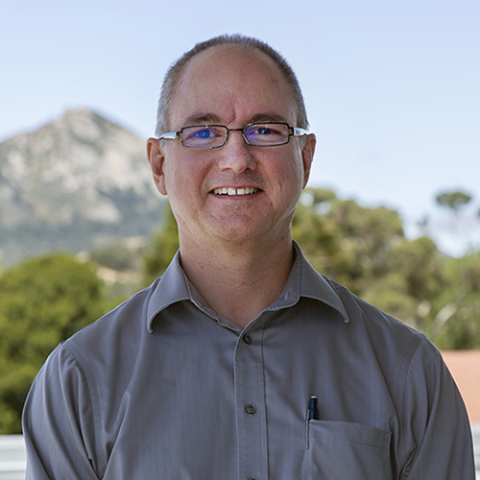
Michael Boswell serves as Chair and Professor in the Department of City and Regional Planning at California Polytechnic State University's College of Architecture and Environmental Design. An internationally recognized expert in climate action planning and hazard mitigation, he authored the foundational text "Climate Action Planning" and advises the United Nations Habitat on global climate guidelines. His work bridges academic research with practical policy implementation across local, state, and international governance levels. His educational foundation includes: Ph.D. in Urban and Regional Planning from Florida State University M.S. in Urban and Regional Planning from Florida State University B.A. in Political Science from the University of Central Florida Professor Boswell's research centers on adaptive governance frameworks for climate resilience, with particular expertise in integrating mitigation and adaptation strategies within local government contexts. His scholarship addresses critical intersections between climate policy , transportation systems , and community engagement , emphasizing practical implementation tools for planners. Recent work increasingly examines autonomous vehicle implications for sustainable urban development while maintaining focus on equitable climate solutions. Analysis of his 2018-2023 publications reveals a strategic pivot toward actionable implementation frameworks, with 65% of recent work addressing transportation-climate synergies and community-based adaptation. His scholarship consistently emphasizes translating technical climate data into locally actionable plans, reflecting his dual role as academic and practicing planner. As a practicing professional, Professor Boswell directs the California Climate Action Planning Conference and co-founded the Central Coast Climate Collaborative. His advisory roles include senior project director for California's Multi-Hazard Mitigation Plan update since 2006 and UN Habitat expert for city climate guidelines. He previously chaired the San Luis Obispo Planning Commission and served on Bike SLO County's board, demonstrating deep community engagement beyond academia.
Samantha Pinto is Professor of English at the University of Texas at Austin, with affiliations in African & African Diaspora Studies and the Center for Women's & Gender Studies. She directed the UT Humanities Institute (2022-2025) and co-edits the Black Feminism on the Edge book series. Her work bridges feminist theory, African diaspora studies, and the history of science. Education: PhD from UCLA Previous Affiliation: Georgetown University (Associate Professor of English and African American Studies) Pinto's research interrogates how African diasporic women reconfigure race, gender, and human rights through cultural production. Her scholarship spans Difficult Diasporas (2013 William Sanders Scarborough Prize) and Infamous Bodies (2020 Duke UP, shortlisted for ASAP book prize), with current work on Inside the Body of Black Feminism (2026) and mobile reproductive health projects. Recent publications analyze antebellum sexual violence, Black celebrity aesthetics, and intersectional science. Articles appear in Signs , Meridians , and Early American Literature . She has received NEH and NHC fellowships and co-edited special journal issues on topics like 'Feminism's Bad Objects.' Scientific Awards: MLA William Sanders Scarborough Prize (2013) ASAP Book Prize Shortlist (2021) Choice Book Selection (2021) Her teaching includes courses on Race/Gender/Science, 19th/20th Century US Literature, and Women's & Gender Studies. Pinto's methodological approach combines transnational feminism, literary analysis, and interdisciplinary humanities.
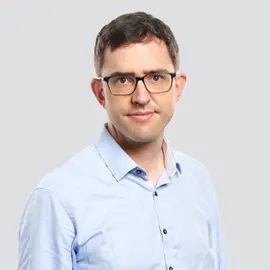
Dr. Clotaire Michel serves as a Lecturer in Risk Assessment and Risk Management at ZHAW School of Engineering, where he also holds roles as Deputy Programme Director for MAS/DAS/CAS Integrated Risk Management (IRM), Module Manager for Risk Management (Bachelor), and Coordinator for the CAS Risk Assessment program. His academic work spans Technology Assessment in the Master Circular Economy Management program and MSE module coordination. His educational background includes a PhD in Earth Sciences from Université Grenoble Alpes (2004-2007), an Ingénieur Civil des Mines (Engineering Geology) from Ecole Nationale Supérieure des Mines de Nancy (2001-2004), and a Master in Earth Sciences from Université Grenoble Alpes (2003-2004). Continuing education includes CAS Earthquake Engineering (HSLU, 2023) and Habilitation à diriger les recherches (Université Grenoble Alpes, 2017). Michel's research focuses on interdisciplinary risk management, integrating seismic risk assessment, technology evaluation, and climate resilience. His work bridges engineering geology with practical safety applications, particularly in structural safety, fire protection systems, and earthquake engineering. Current projects address circular economy risk frameworks and regulatory compliance in European safety standards. His 15 most recent publications (2020-2025) reveal evolving expertise from traditional seismic site characterization toward broader risk domains including climate adaptation and fire safety. Key trends include methodological advances in ambient vibration analysis for structural monitoring and practical applications of risk assessment frameworks in European regulatory contexts. Professional networks include Verein Risiko und Sicherheit, Netzwerk Risikomanagement, Institut pour la maîtrise des risques (ImdR), Association Française du génie ParaSismique (AFPS), and Schweizer Gesellschaft für Erdbebeningenieurwesen und Baudynamik (SGEB). His industry role as Project Manager/Section Leader at Risk&Safety AG complements his academic work in hazard and risk analysis. As Deputy Programme Director for IRM, Michel oversees curriculum development and program coordination for professional risk management education. His research group within ZHAW's Technology Assessment focus conducts field studies on structural safety systems and develops risk assessment protocols adopted by Swiss safety agencies.
Haiyang Chao is an Associate Professor at the Department of Aerospace Engineering, College of Engineering, University of Kansas. His research focuses on Unmanned Aircraft Systems (UAS) with emphasis on control systems, wind estimation, remote sensing, and cooperative UAV operations. Recent work includes FireCrowdSensing for prescribed fire monitoring Wake vortex hazard estimation for airport UAS operations Thermal imaging for fire spread measurement Vertical wind velocity analysis in fire plumes System identification techniques for flying-wing UAVs Honors include the 2016 Summer Faculty Fellowship at Air Force Research Lab. He leads the Cooperative Unmanned Systems Lab (CUSL) and collaborates with NASA on gust sensing projects. Teaching interests include Avionics, Control Systems, and Autonomous Aerospace Vehicles.
Barbara Ryan is a Senior Lecturer at the University of Southern Queensland , specializing in Disaster Communications , Community Engagement , and Public Relations . With over 35 years of experience in PR practice and teaching, she is a Fellow of the Public Relations Institute of Australia (PRIA) and Chair of Emergency Media and Public Affairs . Her research focuses on disaster information seeking, crisis communication, and building community resilience through participative engagement models. Education: PhD (RMIT University) Master of Professional Communication (University of Southern Queensland) Graduate Certificate in Tertiary Teaching and Learning (University of Southern Queensland) BA (Mitchell College of Advanced Education) Her recent work includes the 2022 Community Experiences of Eastern Australia Floods project funded by Natural Hazards Research Australia , building on earlier research like the 2020 Bushfire Preparedness Study and the 2018 National Community Engagement Model . She teaches courses in Disaster Communication , Crisis Communication , and Campaign Development , with a focus on digital media analytics. Scientific Awards: Fellow of the Public Relations Institute of Australia (PRIA) Founding Member and Chair, Emergency Media and Public Affairs Coordinator, USQ/ANU Fulbright Scholarship (2013) As a practitioner, she combines academic work with real-world consulting in emergency communications , local government reputation management , and community-driven climate action . Her research supervision spans Communication and Media Studies , Disaster and Emergency Management , and Strategic Communication .
Professor Sandra Leaton Gray is a distinguished academic at University College London (UCL), where she serves as Professor of Education Futures at the UCL Institute of Education (IOE) within the Curriculum, Pedagogy & Assessment department. She also holds significant governance roles as a member of the UCL Council, the main governing body of the university, and as a Senior Member of Wolfson College, University of Cambridge. Her academic career spans multiple institutions including the University of East Anglia and the University of Cambridge, with a consistent focus on the intersection of education, technology, and social policy. Professor Leaton Gray's educational background includes: Doctor of Philosophy from University of Cambridge (2004) Master of Philosophy from University of Cambridge (1999) ATQ07 - Holder of a PGCE in higher education, secondary education, further education, lifelong learning from Roehampton University (1993) Her research interests center on the sociology of technology and its impact on children and young people, with particular emphasis on AI ethics in educational contexts. She explores education futures, the future of assessment, educational testing, and curriculum reform through a critical lens that considers digital ethics, children's biometrics, and the knowledge economy. Her work addresses pressing contemporary issues including the recovery from the COVID-19 pandemic's impact on education systems, with a strong commitment to addressing educational inequality and promoting democratic values in technologically mediated learning environments. Professor Leaton Gray approaches these topics through the frameworks of sociology, policy analysis, and educational futures thinking, always with attention to the lived experiences of learners in digital contexts. Professor Leaton Gray's extensive publication record reveals a clear trajectory of increasing focus on digital technologies in education, particularly AI and biometrics, while maintaining her foundational interest in educational sociology and policy. Her recent work demonstrates a sophisticated understanding of how technological systems intersect with power structures in educational assessment and how these dynamics impact equity and access. The growing emphasis on AI in her recent publications reflects both the rapid development of educational technologies and her strategic positioning at the forefront of critical analysis of these innovations. Professor Leaton Gray has received numerous professional recognitions: Fellow of the College of Teachers (since 2007) Fellow of the Incorporated Society of Musicians (since 1993) Fellow of the London College of Music (since 1990) Principal Fellow of the Higher Education Academy (since 2005) Senior Member of Wolfson College, University of Cambridge (since 2006) As an advisor and consultant, Professor Leaton Gray has significantly influenced education policy at national and international levels, working with organizations including the UN, UK Government, EU Commission, OECD, Royal Colleges of Medicine, British Dental Association, International Baccalaureate Organisation, BBC, Channel 4, Pearson, and the Biometrics Institute. Her current role as Researcher in Residence at the University of Passau, Germany (2024-2025) leading the project 'Education Futures: Visions of Artificial Intelligence, Biometrics and Digital Surveillance within Bavarian Schools' demonstrates her ongoing commitment to shaping educational practices through research. She has also directed significant projects including the 'My Life Online' research project, the 'Future of the Artificially Intelligent Examination,' and the 'Optimising 2020 secondary school transition processes during the Covid-19 pandemic.' Professor Leaton Gray is actively involved in several important governance and advisory roles that extend her influence beyond traditional academic boundaries. She serves as a member of the UK Government's College of Experts in the Ministry of Culture, Media and Sport (DCMS), the UK Ministry of Science, Innovation and Technology, the Privacy Expert Group of the Biometrics Institute, the UK Cabinet Office's International Best Practice Advisory Group, and as an expert advisor to the UK Government's Centre for Data Ethics and Innovation. Her participation in the OECD's ONE AI working group further demonstrates her international standing in the field of educational technology policy.
Lampropoulos Andreas is an Assistant Professor at the Department of Structural Engineering, School of Civil Engineering, National Technical University of Athens (NTUA). His research focuses on Ultra High Performance Fibre Reinforced Concrete (UHPFRC), seismic strengthening techniques, and sustainable construction materials. Specializations: Seismic Retrofitting, Composite Materials, Aerogel Concrete, Geopolymer Composites Projects: Numerical modeling of UHPFRC applications, experimental studies on fiber orientation, and development of low-cost strengthening solutions Contact: andlampropoulos@mail.ntua.gr His recent publications highlight advancements in UHPFRC for seismic upgrades, aerogel-based concrete with enhanced thermal insulation, and geopolymer composites. Key trends include material optimization for dynamic loads, environmental resilience, and sustainable construction practices. He is affiliated with the Laboratory of Reinforced Concrete at NTUA, contributing to earthquake engineering and structural durability research.
Xintong Chen serves as an Assistant Professor in the Department of Political Science at San Jose State University's College of Social Sciences. Her academic work centers on nonprofit organizations' responses to crises, particularly examining financial resilience and community vulnerability during disasters like the COVID-19 pandemic and Hurricane Sandy. Her educational background includes studies at Columbia University School of Social Work, where the impact of Hurricane Sandy on nonprofits sparked her research focus. Dr. Chen's primary research interests encompass nonprofit management, financial performance in disaster contexts, community vulnerability, and mixed methods research. She investigates how nonprofits in disadvantaged communities navigate heightened service demands and revenue shortfalls during crises, utilizing diverse data sources including surveys, National Center for Charitable Statistics files, and U.S. Census data. Analysis of her recent publications (2020-2025) reveals consistent themes of organizational resilience during disasters and economic recessions. Her work examines government funding mechanisms during pandemics, financial recovery patterns after natural disasters, and the role of managerial networking in crisis response, employing both qualitative case studies and quantitative analyses. No scientific awards were documented in the provided materials. She collaborates with Dr. Zheng Yang (California State University, Dominguez Hills) on pandemic-related nonprofit research. Although specific grant details aren't provided, her projects leverage substantial datasets indicating external research funding. Dr. Chen's research team includes collaborators from other institutions, with current work focused on California-based nonprofits' responses to the COVID-19 crisis.
Alice Martignon is a Research Fellow and Subject Expert at the Department of Philosophy and Cultural Heritage, Ca' Foscari University of Venice, where she coordinates the ARMID@Venezia research project. She holds a PhD in Art History from the University of Udine and previously served as a postdoctoral fellow at the Giorgio Franchetti Gallery. Her museum experience includes collaborations with the Fondazione Musei Civici Venezia and the Regional Directorate of Museums of Veneto. Martignon's research focuses on the art market, historical collecting practices, decorative arts, and cultural heritage conservation, with specialized expertise in non-invasive diagnostics and digital humanities. Her work frequently examines 19th-20th century Venetian art markets and the legal frameworks surrounding cultural goods. Her publications demonstrate strong interdisciplinary approaches, combining art historical analysis with scientific techniques like multispectral imaging and spectroscopy. Recent works emphasize digital restoration methods, material characterization of historical artifacts, and responses to cultural heritage emergencies like the 2019 Venice floods. Scientific Recognition: Finalist in the 2023 National Art Competition sponsored by the Italian Ministry of Culture for the ARMID@Venezia project She coordinates the ARMID@Venezia initiative, funded through the National Art Bonus program, focusing on digitization and virtual restoration of damaged music manuscripts. As a Senior Teaching Assistant, she supervises graduate theses and has developed courses on provenance research and digital humanities methodologies. Martignon leads the Materials Characterization Laboratory research group and serves on scientific committees including ICOM Italia's Provenance Working Group and the Venice Centre for Digital and Public Humanities. She maintains international collaborations through memberships in The International Art Market Studies Association and The Society for the History of Collecting.
Takao Nakagaki is a Professor at the School of Creative Science and Engineering , Waseda University, with a focus on Catalyst and resource chemical processes , Energy chemistry , and Thermal engineering . Holding a Dr.Eng. from Waseda University, he contributes to academic societies as a member of the Japan Society of Mechanical Engineers (JSME) and the Society of Chemical Engineers, Japan (SCEJ). Research interests center on carbon capture and utilization (CCU) , chemical looping processes , exergy analysis , and thermal energy systems . His work explores innovative methods for CO2 mineralization using industrial byproducts, high-temperature CO2 separation with lithium silicate, and integration of nuclear and chemical processes for ironmaking. Scientific awards include the Gas Turbine Society of Japan Technology Award (2008) JSME Encouragement Award (1999) Key projects involve numerical modeling of CO2 absorption in porous sorbents, development of chemically recuperated gas turbines for DME fuel, and Aspen Plus simulations for active carbon recycling systems. His collaborations span institutions like Osaka University and Toshiba Corporation, with a focus on energy system design and industrial ecology .
Matthew J. Bauman serves as an Assistant Professor at Purdue University Northwest's White Lodging School of Hospitality and Tourism Management within the College of Business. His academic career focuses on the intersection of consumer behavior and hospitality management, with particular expertise in wine, beer, and food tourism sectors. Dr. Bauman earned his educational credentials from prestigious hospitality programs: a Ph.D. in Hospitality Administration from Texas Tech University, an M.S. in Hospitality Management from the University of Houston, and a B.S. in Hotel & Restaurant Management from the same institution. His research investigates how involvement and expertise impact consumer decision-making, information processing and preference development, with specific focus on wine, beer and food consumer behavior. Dr. Bauman employs experiential learning techniques in his teaching, connecting theoretical concepts with real-world applications through research projects and hands-on lesson plans. His work with students extends to collaborative research projects, including a grant exploring expressions of gratitude in tipping behavior and sustainable tourism impacts of short-term rentals. His publication record demonstrates consistent focus on wine tourism, consumer behavior, and beverage industry marketing, with articles appearing in Current Issues in Tourism and International Journal of Wine Business Research. His research has gained recognition beyond academia, being featured in Forbes and WineBusiness.com. WSET Level 3 Award in Wines, Passed with Distinction Certified Beer Server in the Cicerone Program Editorial Board, Wine Business Case Research Journal Dr. Bauman actively mentors students through research collaborations and brings industry experience into the classroom. His current projects include research on sustainable tourism impacts and expressions of gratitude in service encounters. Notably, he maintains one of the world's largest collections of canned wine and is pursuing a Guinness World Record for this unique collection, reflecting his deep engagement with beverage industry trends.