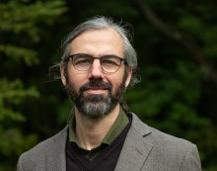
Amílcar Barreto is a Professor and Chair of the Department of Cultures, Societies and Global Studies at Northeastern University, with additional appointments in Political Science and International Affairs. His research focuses on nationalism, citizenship, and race and identity politics, particularly in Puerto Rican political contexts. He leads a book project examining race’s role in Puerto Rico’s political status debates and collaborates on cognitive science approaches to nationalism. Barreto’s work bridges academia and public discourse, including analyses of Hurricane María’s impact on Puerto Rican identity and systemic inequities in U.S. disaster responses. He has co-authored studies on economic nationalism, partisan identity dynamics, and citizenship hierarchies with undergraduates and global scholars. His affiliated research center, the Center for International Affairs & World Cultures, supports interdisciplinary global studies. Key publications include The Politics of Language in Puerto Rico Revisited (2020) and articles in Journal of Cognition and Culture , Peace Review , and Citizenship Studies . His mentorship has produced peer-reviewed co-authored works with students like Nicholas G. Napolio (2020) and Kyle Lozano (2017).
Andrew McGregor is a Professor at Macquarie University's School of Communication, Society and Culture, affiliated with the Ethics and Agency Research Centre and Centre for Environmental Law (CEL). His research focuses on human geography, societal transitions towards sustainable food systems, alternative proteins, and carbon forestry in Australia and Southeast Asia. He has supervised over 30 PhD/Master’s students and led projects such as "Rethinking food and development in the Anthropocene" and "Social Experiments in Urban Food: Investigating Environmental Food Networks in Sydney". His work integrates political ecology and transitions research, addressing topics like multispecies justice, food systems equity, and climate finance impacts. Key research programs include alternative protein futures (e.g., plant-based meats, cultivated meat), sustainable plant-based food systems, and carbon forestry dynamics in Indonesia. McGregor collaborates with organizations like CSIRO and Hort Innovation. He regularly engages in media commentary on topics like cattle methane emissions and meat alternatives, emphasizing interdisciplinary approaches to socioecological challenges. Recent projects include exploring dairy sector transitions in New Zealand and analyzing historical agrarian change in Cambodia. He has published widely on environmental justice, ecosystem services in Nepal, and governance of forest carbon programs. His teaching and research highlight ethical veganism, community economies, and participatory methods like photo-diaries to visualize socioecological dynamics.
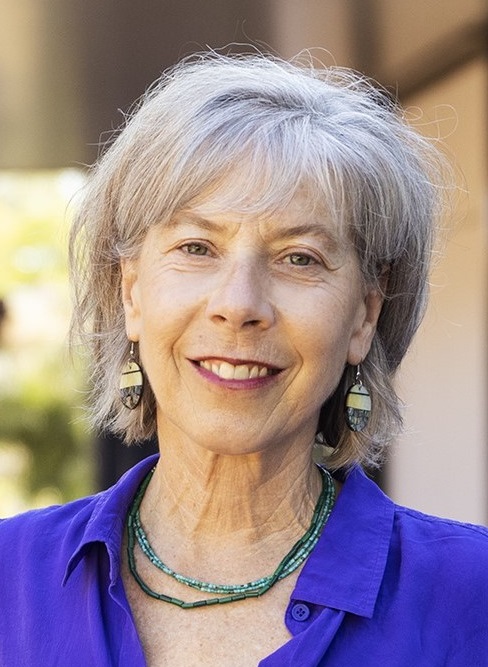
Christopher Lyon is a Research Fellow in the Department of Environment and Geography at the University of York. His interdisciplinary work integrates environmental science, social science, and humanities to address Anthropocene challenges, focusing on long-term human-environmental futures, climate adaptation, and sustainable food systems. Previously, he held postdoctoral roles at McGill University and the University of Leeds, with a PhD in Geography from the University of Dundee (2017). Education includes a PhD exploring 'Exploring power in the theory and practice of resilience' under Prof. Ioan Fazey, an MSc in Rural Sociology from the University of Alberta (2011), and a BA in International Development Studies from the University of Winnipeg (2008). His research combines empirical analysis with transdisciplinary collaboration, emphasizing actionable insights for policy and practice. Key projects include the White Rose-funded Refugia of Futures Past , modeling climate scenarios to 2500 to inform adaptation strategies. His work bridges climate science and societal adaptation, with contributions to journals like Global Change Biology and policy briefs for the Canadian Parliament. Media engagement includes The Conversation and international science news outlets. Research interests span climate change mitigation/adaptation, phosphorus use in food systems, resilience theory, and stakeholder-driven sustainability transitions. He advocates for extended temporal horizons in climate research and ethical governance in healthcare policies like Medical Assistance in Dying (MAiD).
Emma Waterton is a Leverhulme International Professor and Director of the Heritage for Global Challenges Research Centre at the University of York's Department of Archaeology. Her work critically examines heritage governance, focusing on anti-colonial politics, migrant heritage, and climate justice. She holds editorial roles at Landscape Research and International Journal of Heritage Studies . Education: Double Anthropology major (University of Queensland, 1999), MA Archaeological Heritage Management (University of York, 2004), PhD Heritage Studies (University of York, 2008). Research interests include heritage discourse analysis, affect theory, experimental methodologies, and heritage-society intersections. Major projects include the Heritage-Making in Parramatta study and the Langtang Heritage Trail initiative in Nepal. Awards include the Leverhulme International Professorship (2022–2027) and Geographical Society of NSW Fellowship (2022). Supervises PhDs on topics like post-disaster heritage reconstruction and Aboriginal cultural heritage representation. Active in international collaborations, including the Heritage and Arts Visitor Research Collaborative (HAVRC).
Prof. Petra Tschakert is an Adjunct Professor at Curtin University's School of Media, Creative Arts and Social Inquiry, within the Faculty of Humanities. She holds a MPhil from Karl Franzens Universitaet (Graz, Austria) and a PhD from the University of Arizona. Her research focuses on climate change adaptation, energy humanities, and transformative sustainability education, emphasizing justice and equity. She has served as Coordinating Lead Author for the IPCC's Special Report on Global Warming of 1.5°C and contributed to the Fifth Assessment Report (AR5). Her work spans over 30 years across Senegal, Ghana, Tanzania, India, Nepal, Panama, and Western Australia, employing participatory methods to strengthen resilience. She leads the Energy Humanities Initiative and the Australia-India Research Collaboration project on heatwaves, addressing energy insecurity and health disparities. Notable roles include Co-Chair of Australia's National Strategy on Just Adaptation (2022) and Principal Investigator for an ARC Discovery Project on climate-related loss. Teaching includes courses like 'Global Futures and Just Transformation' and 'Just Energy Transitions,' with a focus on participatory development and resilience. She has supervised over 40 students to completion, exploring topics like climate adaptation in Ghana and climate extremes in Pakistan. Awards include the Piers Sellers Award (2019) and recognition for teaching excellence. Key Projects: Energy Humanities Initiative, IPCC assessments, WA Healthy Environments and Lives (HEAL) network. Grants: ARC Discovery Project, WUN-funded projects on climate resilience and migration. Labs/Teams: Curtin's Institute for Energy Transition, Energy Humanities theme, and collaborations with IIT Delhi.
Dr. Amanda Bemer is a Professor and Department Chair in the Department of English, Philosophy, Spanish and Humanities at Southern Minnesota State University. Her academic focus lies in Technical Communication, Rhetoric, and Pedagogical Innovation. She has contributed significantly to interdisciplinary education through projects like creating collaborative online textbooks and exploring ecopreneurial strategies for sustainable academic programs. Her research spans pandemic program adaptation, writing center accessibility, and spatial rhetoric in academic spaces. Notable work includes analyzing post-disaster communication and redefining technical communication's disciplinary boundaries. While no scientific awards are explicitly noted, her publications reflect a commitment to bridging theory and practice in education. Bemer’s advising and grant activities are not detailed here, but her involvement in curriculum development and collaborative learning spaces underscores her dedication to academic innovation. No lab affiliations are mentioned, though her work often intersects with digital literacy and material culture studies.
Crystal Kolden serves as an Associate Professor in the Department of Management of Complex Systems at the University of California Merced, where she leads interdisciplinary research at the nexus of wildfire science, climate change, and human vulnerability. Her work examines how shifting fire regimes impact ecosystems and communities, with particular focus on western U.S. landscapes. Dr. Kolden's research spans wildfire exposure dynamics, fire ecology, climate-fire teleconnections, and socio-ecological resilience. She investigates human-wildfire interactions through lenses of disaster recovery (e.g., Paradise, CA gentrification), policy effectiveness, and climate adaptation, emphasizing the growing societal risks from escalating fire intensity and frequency. Her approach integrates remote sensing, field data, and global fire databases to model future scenarios under climate change. Analysis of her 15 most recent publications reveals a pronounced trend toward interdisciplinary synthesis, connecting biophysical fire processes with social consequences. Key themes include hydroclimatic whiplash amplifying fire risk, pandemic-driven ignition anomalies, and the minimal behavioral response to wildfire smoke in national parks. Her work consistently bridges empirical fire science with actionable policy insights for community resilience. While specific scientific awards are not documented in available sources, Dr. Kolden's contributions are evident through high-impact publications in leading environmental journals and leadership in global wildfire assessments like the annual 'State of Wildfires' reports. She actively shapes discourse on fire management through collaborative research addressing both historical patterns and future projections.
Dr. Victor Samwinga is an academic at Northumbria University with expertise in construction management, project management, and flood risk mitigation. Holding a PhD in Construction Management (2005) and a BSc from Copperbelt University (1993), he also gained the prestigious FHEA (Fellow of the Higher Education Academy) in 2005. His career spans consultancy work in infrastructure projects and academic research focusing on construction project uncertainties, flood resilience strategies, and pedagogical innovations in project management education. His research addresses critical issues like infrastructure sustainability, disaster recovery processes, and policy frameworks in developing nations. He has published extensively on topics ranging from sewer network vulnerability to post-flood property restoration. Research Interests: Construction management best practices, infrastructure project risk analysis, flood resilience in urban environments, and educational methodologies for project management training. His work often bridges theoretical research with practical applications in public and private sector projects. Awards: Fellow of the Higher Education Academy (2005) Background: Prior to academia, Dr. Samwinga worked in construction consultancy, delivering projects for both public and private sectors. This experience informs his research, which frequently integrates real-world challenges into academic discourse.
Peter Westoby is a Professor in the School of Public Health & Social Work within the Faculty of Creative Industries, Education & Social Justice at Queensland University of Technology. With over 70 scholarly publications spanning nearly two decades, he has established himself as a leading scholar in critical community development, social work, and dialogue theory. Westoby's research interests focus on community development praxis , critical social work education , popular education , and dialogue theory . His work consistently engages with philosophical frameworks, particularly drawing on Jacques Derrida's deconstruction theory to challenge conventional approaches to community practice. He has made significant contributions to understanding community development in contexts of disaster recovery, refugee resettlement, disability studies, and ecological practice. His extensive publication record includes numerous journal articles in top community development and social work journals, several authored books, and edited volumes including The Routledge Handbook of Community Development Research (2018) and Ethics, Equity and Community Development (2019). Westoby has developed innovative theoretical frameworks like 'community as dialogue' and 'dialogical community development,' which have influenced contemporary community practice approaches. Westoby's scholarly work demonstrates consistent engagement with 'wicked problems' in community contexts, particularly examining how community development approaches can address complex challenges related to climate change, neoliberalism in higher education, and social justice. His recent work has increasingly focused on the intersection of community development with ecological concerns and post-pandemic recovery. Throughout his career, Westoby has maintained a strong commitment to radical, critical approaches that challenge dominant paradigms while offering practical frameworks for community practitioners. His scholarship bridges theoretical rigor with practical application, making significant contributions to both academic discourse and community practice worldwide.
Stina Torjesen is an Associate Professor at the Department of Management and Innovation, School of Business and Law, University of Agder (UiA), Norway. She holds a BA in Social and Political Sciences from the University of Cambridge and an MPhil and DPhil in International Relations from the University of Oxford. Currently on partial leave from UiA, she serves as Sustainability Director at Morrow Batteries, a leading Norwegian battery initiative. Her academic and professional work bridges sustainability, international relations, and energy policy. BA, Social and Political Sciences – University of Cambridge MPhil, International Relations – University of Oxford DPhil, International Relations – University of Oxford Stina Torjesen's research centers on economic and political developments in post-conflict societies, with a focus on Tajikistan and Afghanistan, regional dynamics in Central and South Asia, and the shift toward sustainability and circular economy principles in southern Norwegian industries. She has conducted extensive interdisciplinary research, particularly in the energy and battery sectors, including the major research project BATMAN (2019–2022) on sustainable lithium-ion battery management. Her publications span topics such as post-conflict reintegration, energy governance, and ethical dimensions of emerging technologies. Her recent scholarly output reflects a strong trend toward sustainability and energy transition, especially in the context of global battery value chains, EV materials, and EU regulatory frameworks. Articles from 2022 to 2024 highlight her focus on lithium supply, carbon footprint reduction, and policy innovation in battery regulation, alongside continued engagement with geopolitical and ethical issues in global development. Stina has held significant academic leadership roles, including coordinating the AACSB accreditation for UiA’s School of Business and Law (awarded in 2019) and serving as Senior Editor for the International Journal of Emerging Markets (2014–2017). She has also contributed to public discourse through policy reports, media articles, and public service, including membership in the Labour Party’s national international committee and participation in Arendalsuka’s program committee (2020–2022). She has been actively involved in research groups such as RIST (Research Centre for Studies of Innovation for Sustainable Transition) and has collaborated with institutions like the Norwegian Institute of International Affairs (NUPI) and the United Nations. Her teaching includes Sustainable Capitalism, International Political Economy, and International Politics.
Max Helveston serves as an Assistant Professor at DePaul University College of Law in Chicago, Illinois, where he focuses on the intersection of law, technology, and consumer protection. His academic work bridges traditional legal frameworks with contemporary challenges posed by digital markets, big data, and evolving commercial practices. Professor Helveston's research spans several interconnected domains within legal scholarship. His primary interests include contract law theory, particularly examining bargaining power dynamics and adhesion contracts; tort law applications in digital contexts, especially regarding influencer liability and speech-torts; consumer protection mechanisms in the age of big data; and regulatory approaches to digital markets and post-disaster economic environments. His work demonstrates how traditional legal doctrines must adapt to address modern technological and economic realities while maintaining foundational legal principles. Analysis of his publication record reveals a consistent focus on how legal frameworks respond to market innovations and technological disruptions. His recent work on influencer speech-torts (2024) examines the tension between First Amendment protections and tort liability in social media contexts, while his research on post-disaster markets (2023) investigates regulatory responses to economic opportunism following crises. Earlier works established his expertise in contract law theory and consumer protection frameworks that continue to inform his current scholarship. Professor Helveston's scholarly contributions appear in prominent legal journals including the Georgetown Law Journal, Wake Forest Law Review, Washington University Law Review, and North Carolina Law Review. His collaborative work with scholars like Leah R. Fowler and Zoe Robinson demonstrates engagement with interdisciplinary approaches to legal problems. His research maintains practical relevance while contributing to theoretical legal discourse, particularly regarding how legal systems balance innovation, consumer protection, and market regulation in rapidly evolving economic landscapes.
Prof. Dr. Christian Kuhlicke is a leading academic in Environmental Risk and Extreme Events , currently serving as Head of Department Urban and Environmental Sociology at the Helmholtz Centre for Environmental Research (UFZ) and holding a Professorship for Sustainability and Environmental Risks at the University of Potsdam. He co-leads the Integrated Platform Sustainability Transformations and directs the Environmental Risks Working Group in Leipzig, Germany. His research focuses on systemic resilience , social vulnerability to climate extremes , and institutional challenges in climate science-policy interfaces. Key themes include flood risk management , co-production of adaptation strategies , and resilience paradoxes where increased flood experience correlates with reduced adaptive capacity. Recent publications demonstrate expertise in nature-based solution governance , drought impact cascades (2024), and cross-sectoral risk dynamics . Articles span transdisciplinary methodologies , text mining applications , and resilience measurement frameworks across environmental journals. He collaborates extensively with international researchers (Birkmann, Thieken, Merz) and leads projects on drought monitoring systems , urban resilience , and climate adaptation governance . The UFZ Drought Monitor and mHM hydrological model underpin his technical contributions to real-time environmental risk assessment .
Assoc. Prof. Özlem Duğan serves at Uşak University's Faculty of Communication, Department of Public Relations and Advertising since 2015, advancing from Assistant Professor to Associate Professor in 2020. Holding a PhD in Public Relations from Selcuk University (2015), she specializes in crisis communication, gender representation in advertising, and health communication within digital environments. Doctorate: Selcuk University, Institute of Social Sciences, Public Relations and Publicity (2011-2015) Undergraduate: Selcuk University, Faculty of Communication, Department of Journalism (1998-2002) Her research focuses on crisis communication dynamics during pandemics and disasters, gender stereotype deconstruction through advertising, and social media's role in health literacy. Current projects analyze generational gender perceptions in advertising and AI integration in public relations curricula. She investigates how organizations navigate trust-building during crises like the Israel-Palestine conflict and healthcare violence incidents through digital platforms. Her 70+ publications include the bibliometric analysis of 22 years of science communication research and studies on YouTube viewers' emotional responses to healthcare violence. This body of work reveals consistent exploration of media framing in risk societies, with increasing emphasis on digital native communication strategies post-2020. Managed EU-supported Act-Able Project (2020-2023) Currently leads TUBITAK-funded AI curriculum research (2025) Advised 8 graduate theses on digital literacy, crisis communication, and gender perceptions As Head of Uşak University's Graduate School of Education (2022-2024) and current Unit Quality Commission member, she bridges academic leadership with research innovation. Her non-academic background includes press management at Selçuk University Hospital and communications coordination at Selçuk University, providing practical grounding for her crisis communication expertise.
Dr. Thi Minh Phuong Nguyen is an ARC Laureate Postdoctoral Fellow at ANU's Fenner School of Environment & Society, specializing in urban sustainability, climate governance, and resilience. She serves as Chapter Scientist for the IPCC Special Report on Climate Change and Cities (Chapter 4). Previously, she held roles at Monash University, including Research Associate and lecturer in Corporate Sustainability Management. Her research focuses on sustainability transitions, urban resilience, and policy experimentation, with a strong emphasis on SDG localization and transformative innovation. Education: PhD in Urban Planning (University of Melbourne, 2023); BSc Urban & Regional Planning (University of South Australia, 2017). Research Interests: Urban sustainability experiments, climate governance, mission-oriented innovation, and SDG localization. Awards: ARC Laureate Postdoctoral Fellowship. Her recent work explores SDG localization frameworks and post-disaster adaptation strategies, with publications in top journals like Cities and Environmental Innovation and Societal Transitions . Collaborations span institutions globally, including the UK, Norway, and Canada.
James Mortensen is affiliated with the National Security College at the Australian National University (ANU), where he engages in research supervision and contributes to interdisciplinary studies. His work bridges national security, historical analysis, and policy development, with a focus on contemporary challenges such as domestic violence discourse, environmental security, and cyber governance. He has actively participated in collaborative research projects addressing issues like Bangladesh Coast Guard capabilities and coercive influence in the Indo-Pacific. Research interests include domestic violence in political contexts, geopolitical implications of Antarctica, disaster justice, and self-regulation in digital domains. His publications highlight intersections between historical trends and modern policy challenges, particularly in Australian security frameworks. Mortensen’s projects emphasize non-state actors and vulnerable states, reflecting a commitment to pragmatic security solutions. He collaborates on initiatives like 'Research Boots in Bowral' exploring military policy impacts and 'Countering Coercive Influence' in Indo-Pacific dynamics. While no awards are explicitly noted, his contributions to disaster justice and Antarctic security policy have gained academic traction.