Dr. Marianne Sison is an Honorary University Fellow at RMIT University's School of Media & Communication. Her research focuses on public relations ethics, corporate social responsibility (CSR), cultural studies, and global communication strategies, with a particular emphasis on Southeast Asia. She has supervised projects on city branding through social media and disaster communication in isolated communities, reflecting her interest in stakeholder engagement and community-driven approaches. Teaching interests include advocacy communication, diversity and inclusion, and the strategic use of public relations in multinational contexts. Her work often bridges theory and practice, addressing contemporary challenges such as workplace well-being for female professionals, ICT access in marginalized communities, and the ethical dimensions of global PR. Key research outputs include studies on CSR implementation in multinational companies, gender dynamics in workplaces during pandemics, and the role of public sector communicators in fostering global citizenship. Her interdisciplinary approach integrates cultural studies, organizational behavior, and international development perspectives.
J. Celeste Lay is a Professor in the Department of Political Science at Tulane University specializing in political behavior, socialization, and public opinion. Her research examines how children develop political attitudes, with particular focus on immigration and education policy impacts on voting behavior and party support. She founded Tulane's Summer Minor Program in U.S. Public Policy and previously served as Senior Associate Dean in Newcomb-Tulane College. Her scholarship centers on gendered political socialization processes, demonstrating how early exposure to gender stereotypes shapes political ambition—especially among girls—and influences perceptions of leadership. Work on post-Katrina New Orleans explores disaster impacts on political trust, while rural America studies analyze immigration's effect on political development. She investigates the critical interplay between policy knowledge and voting behavior across diverse contexts. Recent publications reveal consistent thematic threads: gender barriers in political ambition emerge as early as childhood; post-disaster governance (particularly in New Orleans) reshapes political efficacy; and education policy reforms create complex democratic trade-offs. Her innovative methods include children's drawings, comic-based civic education, and analysis of social studies materials to uncover how gendered narratives constrain political identity formation across generations.
Tracy Camp is a Professor in the Department of Computer Science at Colorado School of Mines, College of Applied Science and Engineering. With a distinguished career spanning over three decades, she has established herself as a leading researcher in wireless networking, mobility modeling, and computing education. Her work has evolved from foundational research in mobile ad hoc networks to impactful contributions in broadening participation in computing. Dr. Camp's research interests span wireless networking, mobility modeling, machine learning applications in networking, and computer science education. Initially focusing on mobility models for ad hoc networks, she published seminal work including the widely cited survey 'A survey of mobility models for ad hoc network research' (2002). More recently, her work has shifted toward computing education, particularly broadening participation in computing, K-12 teacher preparation, and supporting underrepresented students through scholarship programs like S-STEM. Her recent publications reveal a strong emphasis on machine learning applications for network security, particularly in analyzing encrypted messaging applications and smart device traffic. Simultaneously, she has become a national leader in departmental strategies for broadening participation in computing, developing frameworks for BPC (Broadening Participation in Computing) plans that are now required by the NSF. Dr. Camp has been instrumental in developing the CS@Mines program, creating successful scholarship ecosystems for low-income and underrepresented students, and leading Colorado's strategic approach to prepare K-12 computer science teachers. Her work bridges technical research with practical educational initiatives that address critical challenges in the computing field. She has served in leadership roles for major computing education conferences including SIGCSE, where she has contributed to shaping the national conversation about computing education, enrollment surges, and diversity in the field. Her collaborative work with organizations like CRA-W (Computing Research Association-Women) demonstrates her commitment to addressing systemic issues in computing.
Dr. Sharon Strover is the Philip G. Warner Regents Professor at the University of Texas at Austin, holding a dual affiliation in the School of Journalism and Media and the Department of Radio-Television-Film. Her research focuses on telecommunications policy, digital inequality, artificial intelligence ethics, and rural broadband strategies. She co-directs the Technology and Information Policy Institute, a hub for interdisciplinary policy research. Strover earned her degrees in communication studies, with a career spanning over three decades. She has held visiting scholar positions at institutions worldwide, including the Chinese University of Hong Kong and Stockholm University. Her work is supported by grants from the USDA, FCC, European Union, and tech companies like Google and Facebook. Her research examines how technology shapes communities—particularly rural areas—through studies on broadband's economic impact, disinformation strategies, and public library roles in digital inclusion. Key themes include bridging the digital divide, ethical AI governance, and the interplay between technology and social capital. Strover teaches courses on communication law, technology's cultural impacts, and AI ethics. Her recent publications analyze local surveillance policies, smart city frameworks, and the role of libraries in mitigating digital inequities. She collaborates internationally, contributing policy insights to governments and NGOs.
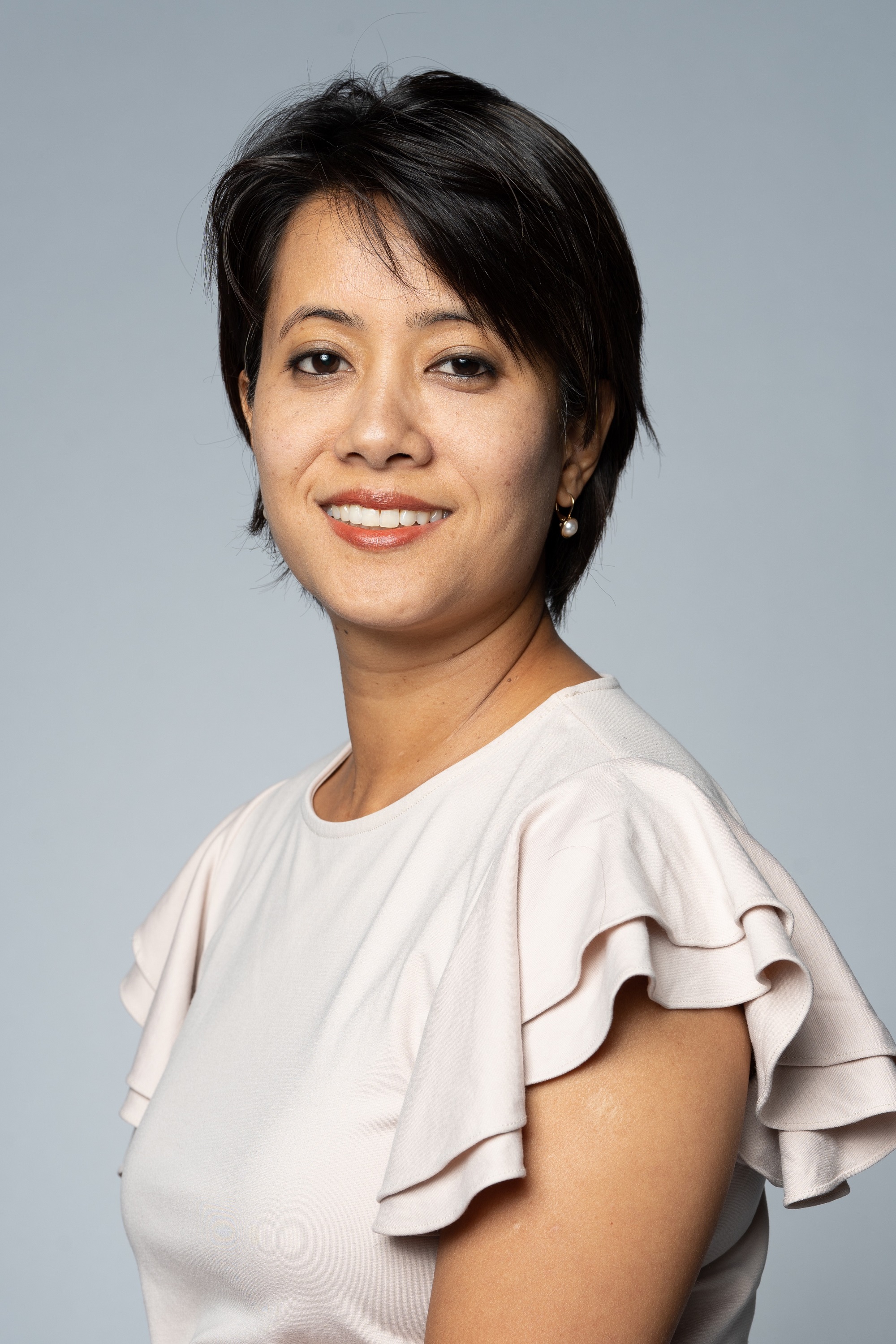
Yerina Ranjit is an Assistant Professor in the Department of Communication at the University of Missouri's College of Arts and Science. Her research focuses on health and crisis communication, particularly in marginalized populations such as sex workers, LGBTQ+ communities, and individuals affected by HIV/AIDS. She explores how communication technologies like mHealth can address health disparities, stigma, and substance use challenges. Her work spans multiple countries including Nepal, Malaysia, and India. Key research areas include: - mHealth strategies for vulnerable populations - Stigma management in healthcare contexts - Pandemic communication and crisis response - Substance use and HIV/AIDS prevention - Digital behavior among sex workers and youth Her recent studies examine topics like vaping norms among college students, mental health impacts of online harassment on sex workers, and opioid addiction interventions via text messaging. She has contributed to global health policy discussions through frameworks addressing cultural barriers and ethical research practices. Notable collaborations include projects with institutions in Southeast Asia and Eastern Europe, focusing on healthcare access for imprisoned women and LGBTQ+ groups. Her work emphasizes participatory approaches to combat stigma and improve health outcomes through effective communication strategies.
Shane Halse is an Assistant Professor at the University of Cincinnati in the School of Information Technology , specializing in crisis response and social media technologies for emergency communication. PhD in Information Science and Technologies, Pennsylvania State University (2019) MSE in Software Engineering, Pennsylvania State University (2014) BSP in Psychology and BSEE in Electrical Engineering, University of Central Florida (2008, 2011) His research focuses on enhancing emergency responders' decision-making through social media data analysis , trust detection , and information filtering during disasters. He has contributed to frameworks for multimedia emergency protocols and hyperlocal data collection . Recent publications analyze crisis social media dynamics (e.g., retweetability, trust metrics, sensor data integration), reflecting his expertise in sociotechnical systems for disaster management. Grants include collaborations with the National Science Foundation and Texas Tech University on Next-Generation 911 training and technology. Key contributions appear in journals like Information, Communication & Society and conferences such as ISCRAM and Hawaii International Conference on System Sciences .
Anne Templeton serves as a Senior Lecturer in Social Psychology at the University of Edinburgh's School of Philosophy, Psychology and Language Sciences. She holds a UKRI Future Leaders Fellowship and leads the research group Identities and Collective Behaviour . Her academic journey includes a PhD from Sussex, MSc from Surrey, and MA (hons) from St Andrews. Her research centers on applying social identity theory to crowd psychology, particularly examining how group dynamics influence safety during emergencies and mass events. Key focus areas include: psychological crowd modeling, first responder communication strategies, and incorporating social identities into evacuation simulations. She develops behavioral interventions to improve public adherence during crises through computational modeling and virtual reality experiments. Her 15 most recent publications reveal strong thematic consistency across emergency management, crowd dynamics, and social identity applications. Recent work emphasizes high-rise evacuation protocols, tunnel fire egress, COP26 protest support mechanisms, and bystander CPR interventions. The research demonstrates interdisciplinary integration of psychology, computational modeling, and public safety practice. Scientific Recognition: UKRI Future Leaders Fellowship (2022) Research Leadership: Principal Investigator for ESRC, DCMS, and Chief Nursing Office grants totaling over £1.8 million, including the £1.377m UKRI project on first responder communication strategies. Current supervision of four PhD students (Waleed Alhajri, Sam Vo, Sayaka Hinata, Kayleigh Smith). Her knowledge exchange extends through government advisory roles including the Scottish Government COVID-19 Behavioural Insights team (2021-2022), UK Department of Digital, Culture, Media and Sport Science Board (2021), and Sports Grounds Safety Authority consultation (2020). Media engagements feature BBC, Reuters, and The Conversation coverage of Hajj crowd safety and stadium atmosphere research.
Juliet Pinto is an Associate Professor in the Department of Journalism at The Pennsylvania State University's College of Communications. Her expertise spans Environmental Communication, International News Production, Science Communication, and Journalism. She holds a Bachelor's from Boston University, a Master's from the University of Miami, and a Ph.D. from the University of Miami. Her research focuses on climate change communication, environmental journalism, and media's role in addressing global challenges. Notable work includes analyzing synergistic climate effects reporting, social media messaging during dual crises, and climate misinformation resistance strategies. She has contributed to projects like 'Eyes on the Rise,' a citizen science initiative tracking sea level rise in South Florida. Dr. Pinto has received the Bart Richards Award for excellence in coverage of youth sports journalism. Her publications explore topics ranging from media framing of environmental disasters to the ethics of digital news editing. She actively engages in initiatives blending technology, education, and community involvement to address climate-related issues.
Dr. Curt Harris is an Associate Professor and Director of the Institute for Disaster Management (IDM) at the University of Georgia's College of Public Health. He holds concurrent appointments in Health Policy & Management and Epidemiology & Biostatistics. His roles include overseeing undergraduate and graduate educational programs, directing IDM's research and outreach initiatives, and serving as a liaison between the college administration and external partners. Dr. Harris earned a BS in Chemistry from Georgia College and State University and a PhD in Toxicology from UGA. His career at UGA spans over a decade, encompassing staff and faculty roles before becoming IDM Director. His research focuses on disaster management, public health preparedness, and emergency response systems, with recent emphasis on healthcare workforce resilience, nuclear event response, and pandemic preparedness. His recent publications highlight interdisciplinary approaches to disaster challenges, including nuclear fallout modeling, CNA staffing shortages, and integrating machine learning in burn patient outcomes. Dr. Harris leads major projects like the South Carolina Low Country Emergency Preparedness Program and the Southern Regional Disaster Response System. His work has been featured in media outlets like NPR, CBS46, and the Huffington Post. Dr. Harris teaches courses such as Introduction to Disaster Management and Public Health Crises and Disaster Management . He advocates for disaster education as a core competency in public health curricula. His professional service includes coordinating the CPH graduate program and advising on emergency medical protocols.
Kylie Message-Jones is a Professor of Public Humanities and Director of the ANU Humanities Research Centre at the Australian National University. She is also a Research Fellow of the National Museum of Australia and an Advisory Board Member of the Vietnamese Museum of Australia. With a career spanning over two decades, she works at the intersection of university and cultural sectors, committed to communicating humanities research to broad public audiences while analyzing contemporary cultural events and policies in scholarly contexts. Professor Message-Jones holds a PhD from the University of Melbourne (2003) and a BA (Hons) from the same institution. She has also completed the Oxford Cultural Leaders program at the University of Oxford. Her academic journey includes positions at Victoria University of Wellington in New Zealand, the University of Melbourne, and various leadership roles at the Australian National University. Her research focuses on the relationships between cultural organizations, citizenship, government, and political reform movements. Message-Jones is particularly interested in museum activism, curatorial practices, and the role of cultural institutions in multicultural policy climates since the 1970s. She has pioneered methodologies for building, translating, and evaluating knowledge about collaborative research practice in cultural settings. Her work examines how museums across the world have conducted contemporary collecting and been involved in sites of activism and controversy, with significant contributions to understanding the political history and impact of culture. Her extensive publication record includes influential books such as "Collecting Activism, Archiving Occupy Wall Street" (2019), "The Disobedient Museum: Writing at the Edge" (2018), and "Museums and Racism" (2018). These works consistently explore how museums engage with political exchange, social justice issues, and the documentation of curatorial activism within multicultural contexts. Her research output demonstrates a sustained focus on the relationships between museums, citizenship, and political reform movements. Research Fellow of the National Museum of Australia Professor Message-Jones has held numerous leadership positions including Associate Dean Research for the ANU College of Arts and Social Sciences (2019-22), Director of the Australasian Consortium of Humanities Researchers and Centres (2022-23), and Head of the ANU School of Archaeology and Anthropology (2013-15). She has secured significant research funding for projects examining cultural diversity, citizenship, and museum practice, including "Cultural Diversity, Collecting Institutions, and the Making of Citizenship in Australia since the 1970s" (2012-2017) and "Curatorial Activism: Archiving Occupy" (2018). As Director of the ANU Humanities Research Centre, she leads one of Australia's premier humanities research hubs, fostering interdisciplinary collaboration and public engagement with humanities research. She also serves as chief editor of "Humanities Research" and founding general series editor of the Routledge "Museums in Focus" book series, while maintaining active roles in international academic organizations including the Consortium of Humanities Centers and Institutes.
John-Erik HANSSON is a Researcher in the Department of Teacher Researchers at the University of Paris, specializing in British history from the 17th to 19th centuries. His work focuses on intellectual and cultural history, particularly intersections between literature and political radicalism. He has published extensively on William Godwin, anarchist thought, and transnational print culture. Key research interests include the history of political ideologies, radical movements, and the role of literature in shaping historical narratives. His recent work interrogates the French Revolution's impact on British political mobilization, post-war anarchist strategies, and mutual aid theories in disaster contexts. Publications span academic monographs, edited volumes, and peer-reviewed articles analyzing 18th-century childhood literature, print culture dynamics, and anarchist historiography. His interdisciplinary approach bridges political theory, literary studies, and historical methodology. No scientific awards are listed, but his scholarly contributions reflect sustained engagement with under-explored areas of British and transnational radical history. Current affiliations include the Laboratory of Comparative Research in Humanities (LARCA) at the University of Paris, where he maintains an active research profile.
Sarah Stafford is a Professor of Economics at the College of William & Mary, affiliated with the Department of Economics in the College of Arts & Sciences. She joined the faculty in 1998 after earning her Ph.D. in Economics from Johns Hopkins University and B.S. in Foreign Service from Georgetown University. Her research focuses on environmental regulations' impacts on firms and industries, with particular emphasis on coastal management, hazardous waste policy, and regulatory compliance mechanisms. Education: B.S. in Foreign Service, Georgetown University (1990) Ph.D. in Economics, Johns Hopkins University (1998) Her research interests span environmental economics, regulatory policy, and law and economics. Key areas include evaluating the effects of environmental regulations on business behavior, measuring social vulnerability to climate change, and designing effective compliance frameworks for hazardous materials. Recent work emphasizes coastal zone management, living shorelines, and the economic impacts of recurrent flooding in Virginia. Her publications analyze regulatory effectiveness, including studies on environmental audits, state-federal regulatory interactions, and community vulnerability indices. Research consistently bridges economic theory with practical policy applications, particularly in coastal resilience and environmental justice.
Malcolm Mistry is an Adjunct Professor at the Department of Economics, Ca' Foscari University of Venice. He specializes in climate change impacts, environmental epidemiology, and energy policy, focusing on sectors such as agriculture, health, and energy. His research integrates econometric methods, climate modeling, and large dataset analysis to assess climate-related risks and adaptation strategies. Education: PhD in Science and Management of Climate Change (Ca' Foscari University of Venice, 2017) MSc in Weather and Climate Modelling (University of Reading, UK, 2006) Bachelor of Information Technology (Indira Gandhi National Open University, India, 2004) Research Interests: Climate extremes and human health impacts Energy demand for adaptation (e.g., air conditioning) Climate datasets and modeling tools (e.g., R Climpact package) Policy-relevant assessments of climate change vulnerabilities Teaching: He teaches advanced courses on climate change economics, statistical computing (R/Python), and environmental epidemiology in PhD/MRes programs at Ca' Foscari and the London School of Hygiene & Tropical Medicine (LSHTM). Awards: His work on climate spillovers in the EU received the Best Paper Award in 2021. He leads or co-leads multiple research projects funded by the EU, UK Medical Research Council, and Belmont Forum. Grants & Collaborations: Principal Investigator: Marie Skłodowska-Curie Fellowship (MORDIC Project, 2022–2024) Co-Investigator: EXHAUSTION (EU H2020) and GA MR/V034162/1 (MRC) Consultant: Red Cross Red Crescent Climate Centre Labs & Teams: Member of the EHM Lab (LSHTM) and developer of the R Climpact package for climate extreme indices. Active in global health collaborations addressing heat-related mortality and environmental exposures.
Dr. Denise Voci is a Senior Scientist in the Department of Media and Communications at Alpen-Adria-Universität Klagenfurt. Her research focuses on sustainability communication, media ethics, and corporate social responsibility (CSR), with a particular emphasis on cross-border media dynamics and environmental discourse analysis. She holds a B.A. and M.A. and has published extensively on topics such as media economics, media management, and the role of sustainability in academic curricula. Education: B.A., M.A. (specific fields not explicitly stated) Her work explores the intersection of media practices and sustainability goals, including how media organizations frame environmental issues, the moral dimensions of sustainable consumption, and the transformative potential of communication in achieving the UN Sustainable Development Goals (SDGs). Key projects include analyzing cross-border media management strategies and the role of digitization in overcoming linguistic barriers in international markets. Her research also addresses challenges in media accountability, particularly in how media companies balance commercial interests with societal responsibilities related to sustainability and public service mandates. She has investigated media coverage of water scarcity crises and the ethical implications of sustainability messaging in corporate communication.
Prof. Emre Toros is a Professor at the Department of Communication Sciences, Faculty of Communication, Hacettepe University, Ankara, Turkey. He holds a PhD in Political Science from Bilkent University and has conducted post-doctoral research at Stanford University's Department of Political Science. His academic journey includes roles as Head of the Department of Political Science and Public Administration at Atılım University, and Visiting Professorships at King's College London and Malmö University. His research focuses on political communication, electoral integrity, Turkish politics, and the intersection of social media with democratic processes. Prof. Toros has authored influential works on electoral violence dynamics, media framing of protests, and the strategic use of negative campaigning. He has been awarded prestigious grants including the British Academy Newton Advanced Fellowship (2016–2019) and Swedish Institute Guest Researcher Scholarship (2005–2006). Key areas of expertise: Electoral Studies, Political Behavior, Comparative Politics, Media Analysis Teaching: Research Methods, Political Communication, Turkish Politics Language proficiency: Turkish (native), English (advanced), Swedish (basic) His recent work explores the impact of the 2023 earthquakes on Turkish elections and the psychological traits of autocratic leaders. He has contributed to over 20 peer-reviewed articles, blending quantitative methodologies with qualitative insights into political systems.