Robin Dunford is a Principal Lecturer at the University of Brighton's School of Humanities and Social Science, affiliated with the Inclusive Digital Societies Research Excellence Group and Centre for Applied Philosophy, Politics and Ethics. His academic profile centers on critical global ethics and political philosophy with emphasis on structural justice. His research spans four interconnected domains: Civilian Protection and Responsibility to Protect, critiquing conventional frameworks through works like Just War and the Responsibility to Protect: A Critique ; Human Rights and Transnational Resistance, particularly peasant rights advocacy via the UN Declaration on the Rights of Peasants; Decolonial Ethics, advancing 'pluriversality' as an alternative to cosmopolitanism in global ethics; Law, Ethics and Democracy, co-coordinating action-research against anti-democratic governance through the Law, Ethics and Democracy Collective. Recent publications (2019-2025) reveal consistent engagement with decolonial theory, food sovereignty movements, and curriculum transformation, frequently intersecting transnational activism with critical race and peasant studies. Dunford supervises PhD candidates including Afxentis Afxentiou (drone ethics), Marina Espinoza (Obama drone program), and current students exploring nonviolence, disability movements, Marxist imperialism, and feminist cosmopolitanism. He co-edits the 'Off the Fence: Morality, Politics, Society' book series and co-convenes the British International Studies Association's Ethics and World Politics working group.
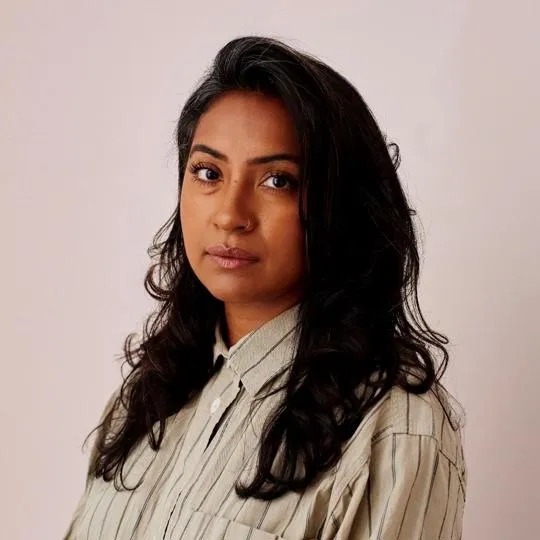
Renasha Khan is a Lecturer in Religion, Politics and Ethics at King’s College London, based in the Department of Theology & Religious Studies within the Faculty of Arts & Humanities. She holds a PhD in the Sociology of Religion from King’s College London. Her research focuses on digital religion, examining how social media shapes narratives of British Bangladeshi Muslim women’s agency, identity, and belonging through decolonial and feminist methodologies. She co-designed decolonised pedagogical modules at King’s, emphasizing lived experiences and challenging dominant epistemologies. Her teaching spans religion, politics, ethics, sociology, race, and gender at undergraduate and postgraduate levels, employing film and digital media to foster critical thinking. Beyond academia, she is an award-winning documentary filmmaker and media consultant for BBC, Sky Arts, and National Geographic. She co-founded Forward Culture to empower South Asian women and leads the Religion, Neurodiversity and Disability Network. Publications include Living the Muslim Atlantic: Race, Gender, and the Politics of Marginality (2020) and works addressing digital activism and Muslim women’s online identities. She actively engages in policy work on digital rights and inclusive futures through her roles at the British Sociological Association and King’s College London.
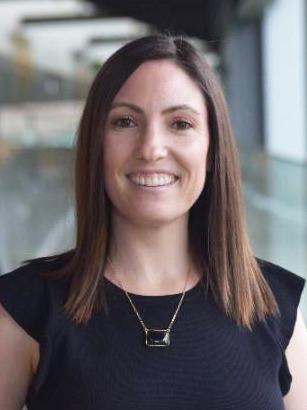
Jennifer D. Oliva is a Professor of Law at Indiana University Maurer School of Law where she holds the Val Nolan Faculty Fellow position. She maintains significant interdisciplinary affiliations as a Research Scholar at Georgetown University Law Center's O'Neill Institute for National & Global Health Law and as a Senior Scholar with the UCSF/UC Law Consortium on Law, Science & Health Policy. Her academic work bridges legal scholarship with practical health policy development, focusing on the intersection of constitutional protections, public health needs, and modern surveillance technologies. Professor Oliva's research interests center on health law, privacy law, and drug policy with particular expertise in prescription drug monitoring programs (PDMPs), health information privacy, and the legal dimensions of the opioid crisis. Her scholarship critically examines how law enforcement surveillance of prescription data impacts patient privacy rights, particularly for vulnerable populations including those with substance use disorders. She has developed significant expertise in how constitutional privacy protections apply to health data in the digital age, especially following the Supreme Court's decision in Carpenter v. United States. Her recent publications reveal a growing focus on algorithmic regulation in healthcare, examining how risk scoring systems and coverage algorithms can perpetuate health disparities. She has published extensively on the intersection of reproductive rights and health data privacy in the post-Dobbs landscape, analyzing how prescription monitoring systems could be weaponized against individuals seeking reproductive healthcare. Her work consistently connects doctrinal legal analysis with public health realities, advocating for evidence-based policy approaches that prioritize patient privacy and health equity over punitive enforcement. Dosing Discrimination: Regulating PDMP Risk Scores (2022) The "New" Drug War (2024) Prescription Drug Policing: The Right to Health Information Privacy Pre- and Post-Carpenter (2020) Opioid Multidistrict Litigation Secrecy (2019) Surveillance, Privacy, and App Tracking (2020) Professor Oliva actively engages with policymakers and has contributed to amicus briefs in significant cases including Ruan v. United States. Her scholarship has been cited in legal proceedings and she regularly presents at major academic conferences including the Association of American Law Schools Annual Meeting. She has collaborated with scholars across disciplines including public health researchers, medical ethicists, and data scientists to address complex challenges at the intersection of law, technology, and healthcare.
Ato Quayson is the Jean G. and Morris M. Doyle Professor of Interdisciplinary Studies and Professor of English and African and African American Studies at Stanford University, where he also chairs the Department of African and African American Studies. He previously held professorships at New York University (2017–2019) and the University of Toronto (2005–2017), where he was inaugural director of the Centre for Diaspora and Transnational Studies and became a University Professor (2016), the university's highest honor. His academic journey includes a B.A. (First Class Honors) in English and Arabic from the University of Ghana (1989) and a Ph.D. in English from the University of Cambridge (1995). He held a Junior Research Fellowship at Wolfson College, Oxford, and was a Reader in Commonwealth and Postcolonial Literature at Cambridge (1995–2005), concurrently directing the Centre for African Studies and serving as Pembroke College Fellow. Quayson’s research explores postcolonial literature, urban studies, disability studies, and cultural theory. His work bridges global and local contexts, with notable publications such as Oxford Street, Accra (Urban History Association Prize) and Tragedy and Postcolonial Literature (Warren-Brooks Prize). He co-edits the Cambridge History of Postcolonial Literature and chairs initiatives like Contours: The Cambridge Literary Studies Hour . His accolades include fellowships from the Ghana Academy of Arts and Sciences (2006), the Royal Society of Canada (2013), the British Academy (2019), and the American Academy of Arts and Sciences (2023). He has also served as President of the African Studies Association (2019–2020). Quayson curates the YouTube channel Critic.Reading.Writing , discussing literature and urban studies, and teaches courses on global Black diaspora studies and Toni Morrison’s work. His current projects include Accra Chic: A Locational History of Fashion and studies on exile in African literature.
Robert Thomas is a Professor of Public Law at the University of Manchester's School of Law. He holds a LL.B. from Cardiff University (1995) and a Ph.D. from Nottingham University (1998). His research focuses on administrative law, immigration/asylum law, and administrative justice, with particular emphasis on tribunals, judicial review, and institutional design. He has advised the UK Parliament on immigration reforms and authored influential works like Administrative Justice and Asylum Appeals (2011), which won the Peter Birks Prize. His recent projects include studies on AI in governance, constitutional history, and systemic administrative justice failures. Thomas is actively involved in legal education, co-authoring Public Law (5th ed., 2024) and supervising postgraduate research in public law and immigration law. Key research contributions include empirical analyses of asylum appeals, administrative tribunals, and ombudsman practices. He has addressed challenges in public sector digitalisation, outsourcing impacts on administrative justice, and the implications of pandemic governance. Thomas advocates for administrative fairness agendas in immigration systems and contributes to legal scholarship through peer-reviewed articles and edited volumes on topics ranging from judicial review to constitutional caricature history. His awards include the 2011 Peter Birks Prize for Outstanding Legal Scholarship. Thomas engages with policy-making through expert testimony, public commentary, and collaborative research funded by the British Academy and Nuffield Foundation. His work intersects law, policy, and social justice, emphasizing the practical implications of legal frameworks on vulnerable populations.
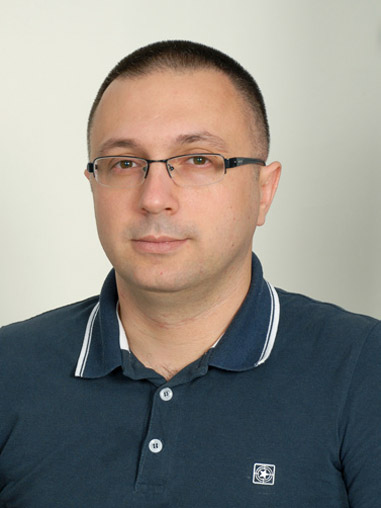
Prof. Dr. Dimitrije Ćeranić is an Associate Professor of Civil Law at the Faculty of Law, University of East Sarajevo. He has been a faculty member since 2005 and was promoted to Associate Professor in 2021. His primary teaching focuses on Inheritance Law, Family Law, Property Relations of Spouses, Children's Rights, and Notarial Law across undergraduate and graduate programs. He also guest lectures at the University of Belgrade and teaches Social Work at the Faculty of Philosophy in East Sarajevo. Education: LL.B. (2005) from University of East Sarajevo. Master’s (2008): University of Belgrade on will validity. PhD (2016): University of Kragujevac on inheritance effects of adoption. Research Interests: Civil Law with emphasis on family law, inheritance rights, adoption law, property rights, and legal conventions. He has published 42 articles, a monograph on inheritance legal consequences of adoption (2020), and a co-authored handbook on domestic violence protection (2021). Administrative Roles: Vice Dean for Research (since 2018), Head of Civil Law Department (since 2022), Editorial Secretary of the Faculty Yearbook, and former Library Board President. He actively contributes to legal reforms in Republika Srpska, including drafting family law and higher education legislation. Professional Activities: Member of national/international legal associations, trade unions, and supervisory boards. Serves as a reviewer for legal journals and proceedings. Fluent in English and Russian.
Dr. Susana Castro-Kemp is an Associate Professor in Psychology and Human Development at University College London's Institute of Education (IOE), where she serves as Director of the Centre for Inclusive Education (CIE) since September 2023. Previously, she was a Reader in Education at the University of Roehampton for eight years. Her work focuses on inclusive education policy and practice globally, with particular expertise in special educational needs and disabilities (SEND), early childhood intervention, and mental health in schools. The IOE has been ranked number one in the world for Education for several consecutive years, providing an ideal environment for her impactful research. Dr. Castro-Kemp holds a PhD in Psychology jointly awarded in 2012 by the University of Porto (Portugal) and the University of North Carolina at Chapel Hill (USA). Her doctoral research was fully funded by the Foundation for Science and Technology/European Commission and the Global Education and Development Studies scholarships. She is a Chartered Psychologist with the British Psychological Society, a Senior Fellow of Advance HE, and a Recognised Research Supervisor by the UK Council for Graduate Education. Dr. Castro-Kemp's research centers on policy regulating education, health, and welfare services for children, particularly those with support needs. She examines inclusive education practices from users' perspectives, policy models leading to effective inclusive pedagogy, and country-level policy impacts on outcomes for children with special educational needs. Her work moves away from diagnostic labels toward engagement and civic participation as educational outcomes. She also investigates inclusion and early intervention in low- and middle-income countries, mental health in schools, and quality of early childhood education. Her recent publications reveal several key trends in inclusive education research. There's growing emphasis on understanding educational experiences through the voices of children and families rather than diagnostic labels. Much of her work examines the implementation gap between inclusive education policy and classroom practice. She has conducted significant research on how children with special educational needs experienced the pandemic, revealing both challenges and unexpected "silver linings" for some groups. Her corpus analysis of Ofsted reports shows narrow focus in early childhood education inspections, while her work on SEND policy increasingly takes an international comparative approach. Dr. Castro-Kemp has received recognition for her impactful work, including: Best Digital Humanities Project for Community Engagement Prize (2023) from the National Institute of Humanities and Social Sciences of South Africa for her project "Optimising collaborations and reducing inequalities of Early Childhood Intervention in post-Covid-19 South Africa" Dr. Castro-Kemp has secured approximately £1.3 million in research funding from various sources including ESRC, British Academy/Leverhulme Trust, European Commission, and private sponsors. Her current major project is 'ScopeSEND' (2024-2026), funded by the Nuffield Foundation (£250,000), examining international SEND policies. She has led numerous projects including "Transdisciplinary provision for children with disabilities in the Global South" (£3,500), "Optimising collaborations in South Africa" (£47,200), and "Froebel meets Ofsted" (£19,185). As a supervisor, she mentors MA/MSc and PhD students in education policy, early childhood, and inclusive education, having been nominated for student choice awards for excellent feedback and outstanding research supervision. As Director of the UCL Centre for Inclusive Education since 2023, Dr. Castro-Kemp leads a team focused on advancing knowledge exchange and research in inclusion and special needs. The Centre works with schools, educators, parents, and early years settings to translate research into practice. Her international collaborations include work with the World Health Organization as a technical advisor on the use of the International Classification of Functioning, Disability and Health (ICF) system in educational contexts. She also serves on the SEN Policy Research Forum and has provided oral evidence to the House of Commons Education Select Committee.
William Ennis is an Associate Professor in the Arts and Humanities school at Gallaudet University. He holds a B.A. in History from Gallaudet University and both an M.A. and Ph.D. in History from the University of Iowa. His teaching portfolio includes American History surveys, specialized courses on Deaf community history, and research methods in history. Ennis' research focuses on Deaf history with particular attention to eugenics, Civil War experiences of deaf individuals, archival practices, and the intersection of disability and social policy. He has served in leadership roles including Chair of the Faculty Senate (2018-2020), Committee Member for Presidential Search (2015), and Coordinator for institutional programs (2016-2017). His scholarly contributions include groundbreaking work on eugenics' impact on Deaf communities and transnational sign language loyalty networks. Ennis actively participates in professional organizations like the American Historical Association and Deaf History International. Though no lab affiliations are explicitly listed, his collaborative projects involve archival partnerships and oral history initiatives in the Mid-Atlantic region. Ennis has advised numerous independent studies and maintains an active speaking schedule at academic conferences focusing on Deaf history and historiography.
Kristen Cole serves as an Associate Professor in the Department of Communication Studies within San Jose State University's College of Social Sciences. Her academic work centers on critical interrogations of health communication systems, disability justice, and the socio-linguistic construction of personhood, with particular attention to marginalized communities navigating healthcare barriers and systemic inequities. Her research is anchored in two foundational inquiries: how individuals negotiate health/illness meanings under cultural constraints, and how communication assumptions shape human categorization. Methodologically grounded in critical/cultural studies, disability frameworks, feminist/queer theories, and autoethnography, her work examines pandemic-era health communication dynamics, citizenship language in immigration processes, and pedagogical innovations for inclusive classrooms. Personal experiences with chronic illness and ELL instruction directly inform her commitment to health justice and communicative equity. Analysis of her 15 most recent publications reveals persistent thematic engagement with disability studies and health communication, featuring methodologies like duoethnography and critical discourse analysis. Key trends include socio-emotional disablism during COVID-19, feminist disability pedagogy through participation menus, and neuroqueering communication theory. Her scholarship consistently exposes how communication practices reinforce or challenge power structures in healthcare, education, and political discourse. While specific grant details remain unlisted in available materials, her research directly addresses urgent contemporary issues: health inequality in pandemic response systems and language-based exclusion in citizenship processes. Her chronic illness narrative and ELL classroom experiences demonstrate profound personal investment in dismantling communication barriers, particularly regarding how vulnerability categorization affects healthcare access and how language determines political inclusion.
Tania Burchardt is an Associate Professor of Social Policy at the London School of Economics (LSE) , where she serves as Deputy Director of STICERD and Associate Director of CASE (Centre for Analysis of Social Exclusion). Her work bridges theoretical frameworks like the capability approach with empirical analyses of inequality , disability policy , and applied welfare policy . Key Research Areas : Theories of justice, inequality measurement, time poverty, and social care systems Leadership Roles : Co-led projects on multidimensional inequality, intergenerational exchanges, and child poverty Her recent work explores intra-household resource allocation , social care inequities , and public engagement in policymaking . She has collaborated with organizations like the Nuffield Foundation and Sense about Science to translate research into practice. Scientific Contributions span empirical studies on: Long-term care funding reforms (2015–2020) Disability-related income disparities Time poverty intersections with economic hardship Data-driven policy recommendations for Roma/Gypsy/Traveller communities Multidimensional child poverty frameworks
Gabrielle Hodge is a Senior Lecturer in Sign Language Linguistics at the University of Edinburgh's School of Philosophy, Psychology and Language Sciences. A deaf researcher, she specializes in sociolinguistics related to deaf communities, sign languages, and multimodal communication. Her work incorporates corpus linguistics, applied linguistics, and semiotics methodologies. Education: PhD in Linguistics (Macquarie University, 2014), BA (Hons) in Linguistics (La Trobe University, 2008). Teaching includes undergraduate and postgraduate courses in sign language linguistics and sociolinguistics. She chairs the University BSL Plan Implementation Group (2024-2030) and actively supervises PhD and MSc students in deaf community research. Research focuses on accessibility, sign language corpus methods, and inclusive language theory. Notable projects include the Accessibility & Inclusion Toolkit for deaf Australians and Signing to Know & Survive , exploring deaf communication resilience. She develops training for educators and interpreters, emphasizing direct access without relay systems. Key contributions include advancing corpus-driven sign language research, analyzing deaf professionals' trust in interpreters, and creating climate change resilience resources in Auslan. Her work challenges traditional linguistic frameworks to better incorporate deaf perspectives and embodied communication practices.
Dr. Lisa Fernandes is a Lecturer in Inclusive Education and Programme Director for the MSc Inclusive Education at the University of Edinburgh's Moray House School of Education & Sport. She holds a Doctorate in Education from the University of Glasgow and specializes in autism inclusion, teacher education, and ethics of care. Prior to academia, she spent 15 years in post-compulsory education and led PGCE programmes in learning difficulties/disabilities. Education: Doctorate in Education (U Glasgow), Masters in Autism (Northumbria), PGCE (FE, Sunderland), BA Combined Studies (U Sheffield) Her research focuses on improving inclusive education practices for autistic learners, teacher training methodologies, and the role of Learning Support Assistants. She represents the University of Edinburgh in the Scottish University Inclusion Group and is a Fellow of the Higher Education Academy. Recent work includes exploring ethics-based pedagogy to reduce autistic learner exclusion and curriculum design for FE sectors. Teaching responsibilities include Comparative Approaches to Inclusive Education and Dissertation supervision for the MSc programme. Though not currently open to PhD supervision, she maintains active conference engagement through presentations at ECER and TEAN.
Professor Dan Goodley is a leading academic in Critical Disability Studies at the University of Sheffield , affiliated with the School of Education and co-director of the iHuman research center. His work bridges critical psychology , medical sociology , and posthuman theory to challenge ableist norms in education, healthcare, and society. He has secured major grants, including a £2.9m Wellcome Trust Discretionary Award and multiple ESRC-funded projects, focusing on themes like disablism , social justice , and inclusive research methodologies . Research Themes : Critical Disability Theory, Posthumanism, Dis/ability and Technology, Decolonizing Disability, Austerity and Dis/ability, Co-Production with Marginalized Communities. Grants : Wellcome Trust, ESRC, EPSRC, Research England, European Social Fund. Professional Roles : Visiting Professor at University of Ghent, Editorial Board Member for multiple journals, ESRC Peer Review College. His recent publications interrogate the intersections of disability , pandemic ethics , and autonomous technologies , often employing co-produced and participatory frameworks. He advocates for disabled voices in research and policy, emphasizing resilience and decolonizing praxis in global contexts.
Dr. Philip Kirby is a Senior Lecturer in the History of Education at King’s College London’s School of Education, Communication & Society. He joined in 2020 after roles at the University of Oxford, the Sutton Trust, and the University of Exeter. His research focuses on the historical and social dimensions of specific learning difficulties like dyslexia and dyspraxia, alongside children’s culture and education policy. His notable work includes Dyslexia: A History (2022, co-authored with Prof. Margaret J. Snowling) and entries in encyclopedias like Palgrave Encyclopedia of Disability . He also explores geopolitical themes in media, including film scores and video games. Recent projects include Delphi studies on dyslexia assessment and policy reform. His research spans education policy, private tuition dynamics, and the intersection of popular culture with disability ethics. He actively contributes to interdisciplinary initiatives like the Centre for Public Policy Research, addressing social justice in education and policy.
Martha Stiegman is an Associate Professor at the Faculty of Environmental and Urban Change, York University. Her research integrates Indigenous knowledge, food sovereignty, and arts-based methodologies to address issues of social, environmental, and disability justice. She is actively engaged in community-based research and public scholarship in Toronto and Mi’kma’ki (Nova Scotia). Her educational background includes a PhD from Concordia University’s Special Individualized Program and a BA in English Literature & Political Science from McGill University. This interdisciplinary foundation supports her work at the intersection of activism, research, and art. Stiegman’s research focuses on three interconnected domains: Indigenous/settler treaty relations, food sovereignty and justice movements, and participatory video and arts-based research. She emphasizes decolonizing methodologies and community-led knowledge production. Her work explores how arts-based approaches can deepen dialogues across communities and strengthen collective action for justice. Her recent publications and multimedia projects demonstrate a strong trend toward interdisciplinary, community-engaged scholarship that bridges Indigenous epistemologies, environmental justice, and disability justice. She frequently uses film, digital storytelling, and public art to mobilize knowledge and challenge colonial narratives. Co-creator of A Treaty Guide for Torontonians (2022) Lead on the Polishing the Chain project exploring Toronto’s treaty relationships Editor of the forthcoming Anti Colonial Food Systems (Routledge) Active collaborator with Indigenous scholars and artists including Dr. Sherry Pictou, Ange Loft, and Elder Kerry Prosper Stiegman has been involved in significant research grants such as the Atlantic Aboriginal Health Research Program. While specific advisees are not listed, her collaborative projects suggest active mentorship and supervision. She does not appear to lead a formal lab but works within research collectives and community partnerships.