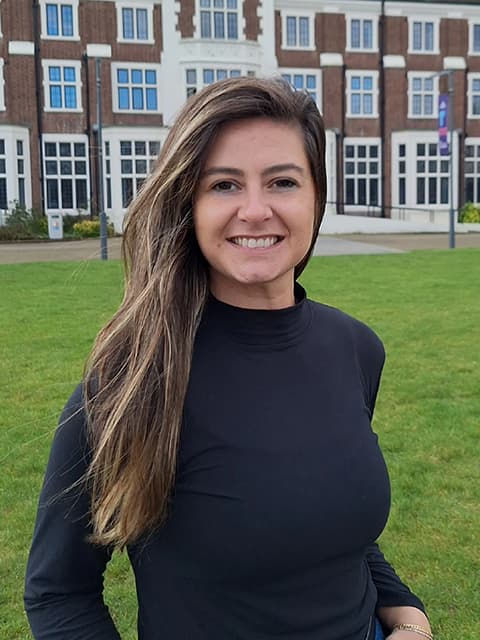
Sabrina Furtado is a Lecturer in Sport Management and Dean’s Associate Fellow at Loughborough University’s School of Sport, Exercise and Health Sciences. She holds a BSc, MSc, and PhD. Previously, she taught at the Federal University of Paraná and State University of Santa Catarina in Brazil, focusing on sport management, sports law, and entrepreneurship in the sports sector. Her research focuses on sports governance, strategic planning, and policy development in public and private sports entities. Key areas include Olympic and Paralympic federations, sports financing, and the impact of media representation on disability inclusion. She contributes to the Sport, Business and Society and Lifestyle for Health and Wellbeing research groups, as well as the Inteligência Esportiva Research Institute . Recent work analyzes governance structures in Santa Catarina municipalities, business intelligence applications in sports management, and modernization processes in Brazilian Olympic federations. Her publications span topics like Paralympic organizational roles, media stigma in disability sports reporting, and funding mechanisms for sports initiatives. No scientific awards are mentioned. Sabrina advises master’s students on sport management and policy but no grant details are provided. Her current projects aim to strengthen sports policies and enhance stakeholders’ engagement in the sport system.
Karyn Moffatt is an Associate Professor in the School of Information Studies at McGill University and holds the Canada Research Chair in Inclusive Social Computing. As Graduate Program Director for the PhD program, she leads the Accessible Computing Technologies Research Group (ACT Lab), focusing on designing inclusive computing applications that support social engagement across diverse lifespans and abilities. Her work bridges human-computer interaction, accessibility research, and real-world community impact. Educational background: PhD in Computer Science, University of British Columbia MSc in Computer Science, University of British Columbia BASc in Computer Engineering, University of British Columbia Research Interests: Dr. Moffatt's work centers on inclusive social computing with emphases on aging populations , disability access , and intergenerational communication . She investigates how technology can overcome barriers to social participation through co-design methodologies, particularly for older adults and individuals with cognitive or physical disabilities. Current projects explore AI-enhanced aging support, dementia-friendly social platforms, accessible financial technology, and respite care coordination systems. Her approach integrates participatory design with rigorous usability testing to create solutions that address real-world challenges in healthcare, finance, and community engagement. Publication Trends: Analysis of her 15 most recent publications reveals consistent focus on aging and accessibility (60% of works), with growing emphasis on AI ethics (2025), dementia support systems (30% of 2023-2024 works), and accessible financial technology (2024). Methodologically, 75% employ co-design or participatory approaches, while 40% involve longitudinal field studies. Key venues include CHI (33%), ASSETS (20%), and ACM Transactions on Accessible Computing (27%), demonstrating leadership in top-tier HCI and accessibility forums. Scientific Awards: Multiple Best Paper Awards from ASSETS, CHI, and CSCW conferences Canada Research Chair in Inclusive Social Computing Advising and Grants: Dr. Moffatt currently supervises PhD candidates Chong Hu and Muhe Yang, having graduated four students since 2022 including Maurício Fontana De Vargas (2023) and Carrie Dai (2023). Her active grants include: NSERC Discovery Grant (2024-2029) as PI: Ethical AI for active aging Canada Research Chair renewal (2022-2027) as PI McGill Nursing Collaborative grant (2023-2025) as Co-I: iRespite mHealth app for palliative care Labs and Teams: She directs the ACT Lab, which partners with healthcare providers, public libraries, and community organizations to develop and deploy inclusive technologies. Current initiatives include the QuickPic AAC system for speech therapy, dementia-focused social programs with Montreal libraries, and Quebec-wide respite care coordination tools, all developed through interdisciplinary collaboration with clinicians, caregivers, and end-users.
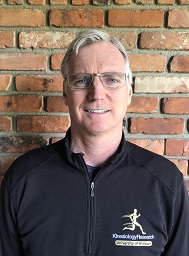
Professor Luke Prendergast is the Deputy Dean of the School of Computing, Engineering & Mathematical Sciences (SCEMS) at La Trobe University (LTU) and holds a Professorship in the Department of Mathematics and Statistics. He previously served as Head of Department (2014–2020) and led LTU's Statistics Consulting Platform. His research focuses on robust statistics, meta-analysis, dimension reduction, and applied statistics, leading the DRAMA research group. Collaborations span fields like endocrinology, disability studies, and respiratory health. He actively contributes to research grants, including projects on Prader-Willi syndrome and exercise for disability populations. Professor Prendergast's recent work emphasizes statistical software development (e.g., the rquest package) and applications in biostatistics, such as metabolomics analysis and health intervention fidelity. His articles address topics like quantile-based hypothesis testing, geospatial accessibility for disability care, and motivational interviewing efficacy. Professional roles include NHMRC grant review panels, editorial boards for Nutrients and Respirology , and leadership in the Statistical Society of Australia (SSA Vic). His teaching includes courses in meta-analysis, linear models, and data-based critical thinking. Grants funded projects on exercise programs for cerebral palsy populations and community-university partnerships for disability inclusion. Luke's work bridges statistical theory with real-world health challenges, emphasizing robust methodologies and interdisciplinary collaboration.
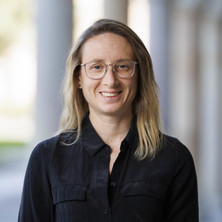
Dr. Abby Haynes is a Research Fellow at the Sydney School of Public Health, University of Sydney, affiliated with the Institute for Musculoskeletal Health and Faculty of Medicine and Health. Her work focuses on physical activity for healthy ageing and people with disability, employing qualitative research, systems thinking, and realist evaluation. Key research themes include: Healthy Ageing Disability and Physical Activity Implementation Science Knowledge Mobilisation Her recent publications analyze: Inclusive sports programs for children with disability Fall prevention in acute hospitals Telehealth physiotherapy for aged care Realist evaluations of yoga and dance interventions Systems thinking in public health policy These emphasize public health, gerontology, and health equity approaches. Grants include MRFF-funded projects on traumatic brain injury rehabilitation (2024), fall prevention (2023), and aged care mobility (2022).
Beth Smith, PT, DPT, PhD is an Associate Professor of Pediatrics and Biokinesiology & Physical Therapy at the University of Southern California. She directs the Infant Neuromotor Control Laboratory, where she leads research on neural control of movement during infancy and develops interventions for infants with or at risk for developmental delay. Dr. Smith's research focuses on several critical areas in pediatric development: Neural mechanisms underlying infant motor development Application of wearable sensor technology for objective movement measurement Early identification of developmental delays through quantitative analysis Evaluation of intervention effectiveness for at-risk infants Cross-cultural studies of infant development in diverse settings including rural Guatemala Her work demonstrates a strong integration of technology and clinical practice, with recent publications highlighting innovative approaches to measuring infant movement in natural environments. Dr. Smith's research on algorithmic detection of developmental disabilities using wearable sensors represents a significant advancement in early identification methods. Her studies on telehealth administration of developmental assessments have gained particular relevance following the COVID-19 pandemic, potentially expanding access to early intervention services globally. As director of the Infant Neuromotor Control Laboratory, Dr. Smith oversees a research program that bridges neuroscience, engineering, and clinical practice to improve outcomes for infants with developmental challenges. Her work has important implications for developing evidence-based interventions that can be implemented across diverse healthcare settings.
Rodrigo Fernandez Gonzalo is a Docent (Associate Professor) in Physiology and Principal Researcher at the Division of Clinical Physiology, Department of Laboratory Medicine, Karolinska Institutet. He leads the Space and Environmental Physiology research group focusing on skeletal muscle adaptation under various conditions including microgravity, aging, disease, and exercise. His research interests span skeletal muscle physiology, space physiology, and environmental physiology, with particular expertise in how skeletal muscle interacts with other physiological systems. His work employs diverse methodologies including human clinical studies, animal models, and cellular models to investigate functional, metabolic, morphological, molecular, and neural adaptations. Analysis of his recent publications reveals a strong focus on space physiology applications, particularly how microgravity affects skeletal muscle and immune systems, along with translational applications for clinical populations like those with cerebral palsy. His research integrates molecular analysis, imaging techniques, and physical performance outcomes to develop countermeasures for spaceflight effects. 4.5 MSEK funding from the Swedish National Space Agency (2020) Member of European Space Agency's Life Science Working Group (2022-2026) Member of Space Researchers Sweden (2021-) Dr. Fernandez Gonzalo serves as course responsible for Anatomy and Physiology in the nursing program (since 2018) and Advanced Human Physiology Research in the Master's programme in Translational Physiology and Pharmacology (since 2023). He also teaches Human Spaceflight at KTH and participates in the Erasmus Mundus Joint Master in Physiology and Medicine of Humans in Space and Extreme Environments. His laboratory utilizes facilities at Karolinska University Hospital and ANA Futura for human, animal, and cellular studies investigating space exposome effects.
Jack Peltz, PhD, serves as an Assistant Professor in the Department of Psychology, Philosophy, and Neuroscience Programs at the State University of New York at Brockport. His academic career focuses on the intersection of developmental psychopathology, sleep science, and family systems dynamics, with particular emphasis on adolescent and college-age populations. His educational background includes: PhD in Clinical Psychology (Concentration: Developmental Psychopathology; Certificate: Quantitative Methods), University of Rochester, 2013 MA in Clinical Psychology, University of Rochester, 2010 MA in Child Development (Concentration: Clinical and Developmental Psychology), Tufts University, 2007 BA in Japanese, Middlebury College, 1996 Dr. Peltz's research program centers on developmental psychopathology and sleep regulation , investigating bidirectional relationships between sleep disturbances and family functioning. As a clinical psychologist specializing in behavioral sleep health for children and families, he develops community-based interventions to promote sleep hygiene. His work uniquely bridges quantitative methodology with clinical applications, examining how economic stressors, social media influences, and developmental transitions impact sleep-wake patterns. Analysis of his recent publications (2023-2025) reveals three dominant research trajectories: (1) sleep as a mediator between adverse childhood experiences and psychological outcomes, (2) technology-mediated sleep disruptions (including wearable devices and social media), and (3) developmental transitions (puberty, college entry) affecting sleep-family dynamics. His methodological approach combines longitudinal designs, ambulatory EEG, and mixed-methods analysis to capture real-time sleep-family interactions across diverse populations including youth with visual impairments.
José Morales Aznar is a Full Professor in the Department of Physical Activity and Sport Sciences and Sports Management at the Faculty of Psychology, Educational Sciences and Sports, Ramon Llull University (Blanquerna). His academic work focuses on the intersection of physical activity, sport sciences, and adapted physical education, with a particular emphasis on judo applications for diverse populations. Dr. Morales Aznar's research interests span Physical Activity, Sport Sciences, Martial Arts (particularly judo), Adapted Physical Activity for people with disabilities, Autism Spectrum Disorders, Intellectual Disabilities, Physical Education, Motor Skills, and Heart Rate Variability. His work demonstrates a strong commitment to applying sport science principles to improve quality of life across different demographic groups, especially those with special needs. Analysis of his recent publications reveals a clear trend toward adapted judo programs, particularly for individuals with autism spectrum disorders and intellectual disabilities. His research combines practical applications with theoretical frameworks to develop evidence-based approaches in adapted physical activity. The publications also show growing interest in technology integration in physical education and the physiological aspects of martial arts training. Dr. Morales Aznar is actively involved in multiple research projects including KATAUTISM (Judo program for autistic children), JUDODI (Effects of judo for adolescents with intellectual disabilities), JIDP (Judo for Intellectual Disability Project), SAFE (Health, Physical Activity and Sports), and AUTJUDO (Adapted Judo for Children with Autistic Spectrum Disorders). These projects demonstrate his leadership in developing and implementing specialized physical activity programs for vulnerable populations while securing significant research funding from various agencies including the EACEA Education, Audiovisual and Culture Executive Agency and Agència de Gestió d'Ajuts Universitaris i de Recerca.
Anne-Sofie Helvik is a Professor at the Norwegian University of Science and Technology (NTNU) within the Department of Public Health and Nursing . Her research focuses on quality of life, coping mechanisms, aging, impairment, and disabilities, with a particular emphasis on older adults. Email: anne-sofie.helvik@ntnu.no Location: Øya Helsehus, 153.03.001, Øya, Håkon Jarls gate 11 Her work spans multiple domains: Health Promotion: Central to her research is improving health outcomes in older populations. Substance Misuse: Investigates alcohol and drug use among older adults and its impact on health. Mental Health: Studies depression, pain, and dementia in aging populations. Sensory Function: Explores olfactory and hearing impairments in older adults. Healthcare Systems: Evaluates treatment, care, and postoperative follow-up in both pediatric and geriatric contexts. Her methodological approach combines both quantitative and qualitative research , with a strong emphasis on longitudinal studies and population-based analyses. Currently, she supervises two doctoral students: Heidi Sivertsen – Researching depression among older community residents. Ingrid Torvik Heian – Investigating olfactory functioning. Her research unit, Allmennmedisinsk Forsknings Enhet (AFE) , focuses on aging and health in older adults, accessible via NTNU’s aging and health page.
Dr. Sean Horton is a Professor at the Faculty of Human Kinetics , University of Windsor , specializing in skill acquisition, aging studies, and adapted physical exercise. His work bridges expert performance maintenance across the lifespan with social determinants of physical activity in seniors. Ph.D., Queen’s University (2007) M.A., Queen’s University (2003) B.A., Queen’s University (1992) His research focuses on three core areas: lifelong skill maintenance (particularly in older athletes), age-related stereotypes affecting physical activity engagement, and adapted exercise programming for individuals with intellectual/developmental disabilities. Recent publications analyze pandemic impacts on caregiving systems and policy challenges in youth sports. Dr. Horton's collaborative work with Chad Sutherland and Community Living Essex County has produced the APEX program (Adapted Physical Exercise), addressing physical activity disparities for disabled populations. His 2018-2024 publications reveal interdisciplinary exploration of aging dynamics, social comparison, and policy frameworks. Email: hortons@uwindsor.ca | Office: H.K. Building, Room 110
Dr. Liza Rovniak is an Associate Professor at Penn State University's College of Medicine , with dual appointments in the Department of Medicine and Department of Public Health Sciences . Her work focuses on creating sustainable environments for health behavior change across diverse settings like workplaces, healthcare facilities, and neighborhoods. MPH - San Diego State University (2008) PhD - Virginia Tech (2003) BA - McGill University (1996) Research spans physical activity promotion , healthy eating interventions , and policy development using ecological frameworks. Key projects include: NIH-funded clinical trials PCORI-supported population health studies WalkLink email-based walking program SilverSneakers osteoarthritis intervention Her work contributes to UN Sustainable Development Goals related to health and well-being, with significant collaborations in transport policy and community health . Scientific recognition includes: Excellence in Research Award (2014) Scholarship in Education Award (2015)
Dr. Anna Hatton is a Senior Lecturer at the School of Health and Rehabilitation Sciences , The University of Queensland. As Co-Director of the UQ Centre for Neurorehabilitation, Ageing and Balance Research and Associate Editor for Gait & Posture , she leads interdisciplinary research into sensory-based rehabilitation technologies. Her work bridges clinical practice with engineering innovation, focusing on footwear devices for balance enhancement. Research themes: novel textured/vibratory insoles , neurological gait analysis , age-related mobility Key funding: NHMRC IDEAS Grants , Bionics Queensland Challenge , Diabetes Australia , PA Research Foundation Her Young Tall Poppy Science Award (2016) recognizes contributions to plantar sensory stimulation. Current supervised projects explore bionic insole neurophysiology , combat sports injury prevention , and sport performance optimization . Media engagements focus on electromyography , sensorimotor function , and footwear interventions .
Susan Aguiñaga serves as Associate Professor in the Department of Kinesiology and Community Health and the Center for Latin American and Caribbean Studies at the University of Illinois Urbana-Champaign. Her research bridges kinesiology, public health, and cultural studies to address health disparities in Latino communities through evidence-based physical activity interventions. Her primary research focuses on Latin dance as a culturally resonant strategy to enhance cognitive health and physical activity among older Latinos, with secondary emphases on acculturation effects on cognitive performance, sedentary behavior reduction, and mental health outcomes in caregivers. She investigates how isotemporal substitution of sedentary time with physical activity impacts episodic memory, and develops co-designed interventions like home-based exercise programs for visually impaired populations. Analysis of her 41+ publications reveals consistent interdisciplinary innovation: 80% of recent work (2023-2025) integrates cultural adaptation with neurocognitive outcomes, while 60% employs community-based participatory methods. Key trends include the BAILAMOS dance program's efficacy for cognitive health, MIND diet-cognition relationships in Latino populations, and caregiver mental health frameworks. Her research impact extends to public discourse through press features including Latin dance may be a step toward better working memory for older Latinos (2022) and Culturally adapted exercise program helps Hispanic older adults be more active (2020), demonstrating real-world translation of academic findings into community health solutions.
Evangelos Albanidis is a Professor at Democritus University of Thrace (Department of Physical Education and Sport Science). He specializes in the History of Physical Education and Sports, with a focus on ancient Greek athletics, Olympic studies, and sport's sociopolitical roles. He teaches courses like Sports Sociology and History of Physical Education. His research explores ancient Greek sport practices, Byzantine therapeutic uses of exercise, and modern Olympic Games' historical contexts. He has supervised multiple doctoral and postgraduate theses, including works on Greek athletics during dictatorships and ancient Macedonian games. He served as President of the European Committee for the History of Sport (2013-2017) and President of the Greek Academy of Physical Education (2017-2019). Albanidis has been an invited speaker at global conferences in India, Spain, Hungary, and Italy, discussing topics like ancient Olympic symbolism and racism in modern sport. He contributed to editorial boards of journals like European Studies of Sports History and Scientific of Dance. His 15 most recent articles (2015-2024) cover militarization of sports during Greek dictatorships, therapeutic sport uses in Byzantium, and ancient Macedonian Olympic variations. He has also written on wrestling traditions in Thrace and political uses of sport during the Greek Civil War.
Troy McDaniel is an Assistant Professor at Arizona State University's School of Manufacturing Systems and Networks, specializing in haptic interfaces and assistive technologies for people with disabilities. With over 50 peer-reviewed publications and two authored books, his work bridges engineering, computer science, and healthcare to develop innovative rehabilitation solutions. Ph.D. from Arizona State University His research focuses on haptic perception and human augmentation through wearable technologies, with emphasis on assistive devices for motor and cognitive rehabilitation. Key areas include vibrotactile communication systems, social robotics for elderly care, and machine learning applications for activity recognition. His work prioritizes user-centered design for real-world disability challenges. Recent publications (2023-2025) demonstrate strong trends in haptic neuro-spatial rehabilitation, executive function therapy apps, and social robot companionship systems. His research increasingly integrates privacy-preserving AI for smart city health applications while maintaining clinical validity through partnerships with institutions like Mayo Clinic. Multiple Top 5% teaching awards for faculty at the Ira A. Fulton Schools of Engineering Dr. McDaniel advises graduate students in manufacturing systems and robotics through dissertation committees (MFG 799, CSE 799), with recent projects spanning haptic training simulations to PERACTIV activity monitoring systems. His research funding includes significant NSF grants like the IGERT program on person-centered technologies for disabilities and collaborations with Intel Corp on smart stadium applications. He contributes to ASU's Smart Living Research initiative, developing haptic neuro-spatial rehabilitation devices and social robotics frameworks within interdisciplinary teams focused on translating lab innovations to community health solutions.