Gerald L. Neuman is the J. Sinclair Armstrong Professor of International, Foreign, and Comparative Law at Harvard Law School (HLS), where he serves as Director of the Human Rights Program. His expertise spans human rights, constitutional law, immigration law, and international legal frameworks. Previously, he taught at the University of Pennsylvania Law School (1984-1992) and Columbia Law School (1992-2006). Research Interests: Neuman's work focuses on: Human rights in populist and pandemic contexts Transnational constitutionalism Immigration law and extraterritorial constitutional rights Age discrimination as a human rights violation Impeachment's role in human rights protection Indirect discrimination analysis Selected Trends: His recent articles examine pandemic-era immigration policies ( Title 42 ), impeachment mechanisms for human rights violations, and age discrimination frameworks. Publications show consistent engagement with: Constitutional law intersections Comparative legal analysis Administrative law critiques Human rights treaty body applications Scientific Contributions: Neuman's work appears in leading journals like Harvard International Law Journal and Harvard Human Rights Journal . He has organized workshops on indirect discrimination related to: Sexual orientation/gender identity Chronological age Religious practice Disability rights Pandemic policy impacts He has served as a UN expert workshop organizer and contributed to international human rights literature through edited volumes and treaty analysis.
Laverne Jacobs, PhD, is a Full Professor at the University of Windsor's Faculty of Law where she holds the Research Chair in Disability Equality & Administrative Justice. She serves as the founder and Director of the Law, Disability & Social Change Project, a research and public policy center dedicated to fostering inclusive communities. Notably, Professor Jacobs was elected to the United Nations Committee on the Rights of Persons with Disabilities in 2022, becoming the first Canadian to serve on this UN Human Rights Treaty Body. She also serves as Co-Director of the Disability Rights Working Group at Berkeley Law's Center for Comparative Equality & Anti-Discrimination Law and previously held the position of Associate Dean (Research & Graduate Studies) for the Faculty of Law from 2018-2021. B.A. (Honours), McGill University, 1994 LL.B., McGill University, 1999 B.C.L., McGill University, 1999 Ph.D., Osgoode Hall Law School, York University, 2009 Professor Jacobs' research sits at the intersection of disability equality law and administrative law and justice, characterized by an interest in the everyday work of the administrative justice system and the lived experiences of people who use it, particularly persons with disabilities. Her work spans disability rights, administrative justice, human rights law, socio-legal theory, and empirical research methodologies. She has made significant contributions to understanding accessibility legislation, transportation inequality, post-secondary education access for students with disabilities, and the implementation of disability equality principles in administrative decision-making. Her scholarship bridges theoretical legal frameworks with practical applications, emphasizing citizen participation in policy development and the importance of inclusive design in legal systems. Analysis of Professor Jacobs' recent publications reveals a consistent focus on how administrative law can better serve persons with disabilities through inclusive design and accessible processes. Her work demonstrates growing attention to intersectional issues, particularly how women with disabilities experience administrative systems, and increasingly examines the implementation challenges of accessibility legislation across Canadian jurisdictions. She frequently employs empirical research methods to ground her legal analysis in real-world experiences of marginalized communities. Scientific Awards and Honors: Canadian Bar Association Touchstone Award (2021) Canadian Association of Law Teachers (CALT) Academic Excellence Award (2022) Hummingbird Award from the Disabled Women's Network of Canada (DaWN), 2022 Election to the United Nations Committee on the Rights of Persons with Disabilities (2022) Professor Jacobs has held significant leadership roles including service on the Board of Directors of the Income Security Advocacy Centre and the Canadian Institute for the Administration of Justice. Through her role as Director of the Law, Disability & Social Change Project, she has secured research funding to support policy-relevant scholarship on disability rights and administrative justice. Her work has influenced accessibility legislation development across Canada, particularly through her annotated version of the Accessible Canada Act. She provides expert consultation to government bodies and international organizations on disability rights implementation. The Law, Disability & Social Change Project serves as Professor Jacobs' primary research hub, bringing together interdisciplinary scholars, disability advocates, and policy makers to develop practical solutions for creating more inclusive legal and administrative systems. The project has produced numerous research reports, policy briefs, and public resources that translate academic research into actionable recommendations for improving accessibility and disability equality in Canadian society.
Professor Oliver Razum at Bielefeld University's Faculty of Health Sciences leads Working Group 3 in Epidemiology & International Public Health. He serves on multiple commissions including the Faculty Conference and Teaching Commission, and contributes to the Center for Statistics and Bielefeld Center for Data Science. His work focuses on Epidemiology of migration and health Refugee health inequalities Medical rehabilitation equity Othering processes in public health Gender-sensitive health research Recent articles explore 2026 medical rehabilitation for people with disabilities, 2025 refugee mental health frameworks, and 2024 pandemic equity research. Key scientific contributions include the 2025 Georg Forster Fellowship and leadership in diversity-sensitive healthcare initiatives. His research spans urban neighborhood health effects , digital rehabilitation , and structural racism in healthcare . Current projects address intersectional inequalities , post-migration stress , and gender as social determinant . Professor Razum maintains active collaborations with institutions like the German Research Foundation and DRV Westphalia.
Nancy Hirschmann is the Geraldine R. Segal Professor in American Social Thought at the University of Pennsylvania’s School of Arts & Sciences, Department of Political Science. Her work focuses on political theory, disability rights, feminist theory, and the intersection of gender with public policy. A former Vice-President of the American Political Science Association, she has held leadership roles in academic institutions and research centers globally. Her research examines freedom through a disability lens, analyzing how bodily constraints shape political thought. Key contributions include *Gender, Class, and Freedom in Modern Political Theory* (2008) and *The Subject of Liberty* (2003), which won the 2004 Victoria Schuck Award. Hirschmann has held prestigious fellowships at the National Humanities Center, Stanford University, and Princeton University’s Institute for Advanced Study. Teaching spans modern political theory, feminist theory, and disability studies. She previously taught at Cornell University and Swarthmore College. Her recent projects include exploring disability’s role in citizenship and analyzing populism’s impact on democratic processes. Office hours are available via email despite sabbatical leaves. Education Background: Extensive academic career with prior roles at Cornell and Swarthmore before joining Penn in 2002. Research Interests: Disability theory, gender policy, political thought history, and public policy frameworks. Awards: 2004 Victoria Schuck Award for *The Subject of Liberty*. Grants & Fellowships: ACLS, National Humanities Center, Stanford Center for Advanced Study. Labs/Teams: Collaborates with interdisciplinary groups on disability studies and feminist political theory.
Jennifer D. Oliva is a Professor of Law at Indiana University Maurer School of Law where she holds the Val Nolan Faculty Fellow position. She maintains significant interdisciplinary affiliations as a Research Scholar at Georgetown University Law Center's O'Neill Institute for National & Global Health Law and as a Senior Scholar with the UCSF/UC Law Consortium on Law, Science & Health Policy. Her academic work bridges legal scholarship with practical health policy development, focusing on the intersection of constitutional protections, public health needs, and modern surveillance technologies. Professor Oliva's research interests center on health law, privacy law, and drug policy with particular expertise in prescription drug monitoring programs (PDMPs), health information privacy, and the legal dimensions of the opioid crisis. Her scholarship critically examines how law enforcement surveillance of prescription data impacts patient privacy rights, particularly for vulnerable populations including those with substance use disorders. She has developed significant expertise in how constitutional privacy protections apply to health data in the digital age, especially following the Supreme Court's decision in Carpenter v. United States. Her recent publications reveal a growing focus on algorithmic regulation in healthcare, examining how risk scoring systems and coverage algorithms can perpetuate health disparities. She has published extensively on the intersection of reproductive rights and health data privacy in the post-Dobbs landscape, analyzing how prescription monitoring systems could be weaponized against individuals seeking reproductive healthcare. Her work consistently connects doctrinal legal analysis with public health realities, advocating for evidence-based policy approaches that prioritize patient privacy and health equity over punitive enforcement. Dosing Discrimination: Regulating PDMP Risk Scores (2022) The "New" Drug War (2024) Prescription Drug Policing: The Right to Health Information Privacy Pre- and Post-Carpenter (2020) Opioid Multidistrict Litigation Secrecy (2019) Surveillance, Privacy, and App Tracking (2020) Professor Oliva actively engages with policymakers and has contributed to amicus briefs in significant cases including Ruan v. United States. Her scholarship has been cited in legal proceedings and she regularly presents at major academic conferences including the Association of American Law Schools Annual Meeting. She has collaborated with scholars across disciplines including public health researchers, medical ethicists, and data scientists to address complex challenges at the intersection of law, technology, and healthcare.
Jonathan Santo is a Professor of Psychology at the University of Nebraska at Omaha (UNO), where he serves as Director of the Graduate Developmental Psychology Program and as a faculty member in the Office of Latino/Latin-American Studies. His research explores peer relations, cultural differences in self-esteem, and classroom-level influences on child and adolescent development, with a focus on improving school environments and fostering positive social interactions. ORCA Faculty Fellow His research spans broad areas including Developmental Psychology , Social Support Systems , and Cross-Cultural Peer Dynamics , with specific attention to peer victimization , self-continuity , school climate , and developmental trajectories in Brazilian and Colombian youth . Recent publications analyze topics like hikikomori experiences , friendship security , and HPA axis dysregulation in adolescents. Scientific awards include the ORCA Faculty Fellow recognition. His work often involves longitudinal assessments of peer relationships cross-cultural comparisons (Brazil, Colombia, China, Nigeria, Singapore, U.S.) policy-focused blog posts on family separations and school interventions
Dorothy L. Espelage is the William C. Friday Distinguished Professor of Education at the University of North Carolina at Chapel Hill, affiliated with the School of Education's Applied Developmental Science and Special Education (ADSSE) department. She holds joint appointments in Human Development and Family Science (HDFS) and School Psychology, and leads the Diverse and Resilient Educators Advised through Mentorship (DREAM) initiative. Her research focuses on translating empirical findings into prevention programs targeting bullying, teen dating violence, and school safety. Dr. Espelage advises U.S. Congress on anti-bullying legislation and has secured over $15 million in external funding. Education: Ph.D. in Counseling Psychology (1997), Indiana University M.S. in Clinical Psychology (1993), Radford University B.S. in Psychology (1991), Virginia Commonwealth University Research Interests: Prevention science, social-emotional learning interventions, bullying and cyberbullying prevention, school-based suicide prevention, and addressing violence against educators. Her work emphasizes policy development and community engagement, with a focus on marginalized youth such as LGBTQ+ adolescents and students with disabilities. Key Contributions: Developed evidence-based programs like Sources of Strength and DIAL (Disability Anti-Bullying Training). Authored influential books including Bullying in North American Schools and Handbook of Bullying in Schools . Her recent studies explore racial disparities in bullying-suicidality links and violence against school staff. Awards & Recognition: Lifetime Achievement Award (APA Division 17, 2023) 2023 BRNET-WABF Career Award Invited speaker at White House Bullying Summit (2011) Advising & Grants: Mentor for early-career researchers through the DREAM program. Current grants focus on school climate improvement, anti-bullying teacher training, and mental health equity initiatives. Collaborates with CDC, NIH, and NIJ on dissemination efforts. Labs & Teams: Leads transdisciplinary teams at UNC and previously at University of Illinois Urbana-Champaign (Gutgsell Professorship) and University of Florida. Engaged in global anti-bullying advocacy through organizations like the World Anti-Bullying Forum.
Louis S. Rulli is the Shuster Practice Professor of Law and Director of the Civil Practice Clinic and Legislative Clinic at Penn Carey Law School, University of Pennsylvania. He is a leading expert in public interest law, clinical legal education, legislation, and civil asset forfeiture, with a strong commitment to access to justice for low-income individuals. His research focuses on civil forfeiture reform, legal ethics, and the rights of indigent clients. He has written extensively on how civil asset forfeiture disproportionately impacts marginalized communities and has advocated for legal reforms to protect innocent property owners. His work emphasizes the need for legal representation in civil proceedings and the expansion of pro bono services. The 15 most recent publications highlight a consistent scholarly focus on civil forfeiture, access to justice, legal ethics, and public interest lawyering. These works span law reviews, policy testimony, and public advocacy, reflecting a career dedicated to legal reform and clinical education. Key themes include the abuse of civil forfeiture, the need for counsel in civil cases, and systemic barriers to justice for the poor. University-wide Provost’s Award for Distinguished Teaching (2006) Penn Carey Law’s Beacon Award for exemplary faculty commitment to pro bono service (2012) Community Legal Services’ Champion of Justice Award (2012) Villanova University’s Praxis Award in Professional Ethics (2015) AALS Father Robert Drinan Award (2019) Pennsylvania Bar Foundation’s Lifetime Achievement Award Rulli has supervised numerous law students through clinical programs, training them to represent indigent clients in civil forfeiture and legislative advocacy. He has also advised on policy initiatives, served on judicial ethics committees, and contributed to legislative reform efforts. His leadership in legal services governance includes past roles with Community Legal Services, Philadelphia Legal Assistance, and the Women’s Law Project. He currently serves as Hearing Officer for the City of Philadelphia’s Board of Ethics and Access to Justice Advisor to the Philadelphia Bar Association. He has directed clinical programs at Penn Law for over two decades, overseeing student representation in civil forfeiture cases, which has been featured in national media such as The New Yorker . His work bridges legal scholarship, clinical teaching, and public policy, making a significant impact on both legal education and justice reform.
Ari Schlesinger is an Assistant Professor of Computer Science at the University of Georgia (UGA), directing the Socially Responsible Tech Lab. She holds a PhD from the School of Interactive Computing at Georgia Institute of Technology. Her research focuses on anti-discriminatory computing, technology policy, and equitable sociotechnical systems. She advocates for reducing computing-enabled harm to advance justice in technology. Education : PhD in Human-Centered Computing (HCC), Georgia Tech Affiliations : ACM's U.S. Technology Policy Committee Her work spans Human-Computer Interaction (HCI), Artificial Intelligence (AI), and broader CS applications. Key interests include addressing algorithmic bias, inclusive design, and policy frameworks for ethical computing. She has developed strategies to mitigate discrimination in technical systems through frameworks like anti-discriminatory computing. Awards include the 2021 Outstanding Graduate Teaching Assistant Award and a Best Paper Award at CHI 2018. Her research has been featured in venues like CSCW and CHI, focusing on topics from chatbot ethics to decentralized social networks. Lab : Socially Responsible Tech Lab at UGA Grants/Advising : Advises graduate student Eddie Alexander Gomez Schieber. Active in policy advocacy and academic leadership roles.
Professor Luke Prendergast is the Deputy Dean of the School of Computing, Engineering & Mathematical Sciences (SCEMS) at La Trobe University (LTU) and holds a Professorship in the Department of Mathematics and Statistics. He previously served as Head of Department (2014–2020) and led LTU's Statistics Consulting Platform. His research focuses on robust statistics, meta-analysis, dimension reduction, and applied statistics, leading the DRAMA research group. Collaborations span fields like endocrinology, disability studies, and respiratory health. He actively contributes to research grants, including projects on Prader-Willi syndrome and exercise for disability populations. Professor Prendergast's recent work emphasizes statistical software development (e.g., the rquest package) and applications in biostatistics, such as metabolomics analysis and health intervention fidelity. His articles address topics like quantile-based hypothesis testing, geospatial accessibility for disability care, and motivational interviewing efficacy. Professional roles include NHMRC grant review panels, editorial boards for Nutrients and Respirology , and leadership in the Statistical Society of Australia (SSA Vic). His teaching includes courses in meta-analysis, linear models, and data-based critical thinking. Grants funded projects on exercise programs for cerebral palsy populations and community-university partnerships for disability inclusion. Luke's work bridges statistical theory with real-world health challenges, emphasizing robust methodologies and interdisciplinary collaboration.
Rachel Best is an Associate Professor and Director of Graduate Studies in the Department of Sociology at the University of Michigan. Her research focuses on the intersections of politics, culture, inequality, and health, with a particular emphasis on disease advocacy, disability discrimination, and the sociological implications of medical policy. She directs the Sociology graduate program and leads computational studies on disease stigma, advocacy strategies, and ADA litigation outcomes. Her work bridges medical sociology, legal studies, and public health, addressing how societal structures shape health outcomes and policy responses. Her research interests include analyzing how disease campaigns influence health policy, the political consequences of overestimating individual health control, and the role of stigma in disability rights litigation. Notable projects use computational methods to trace policy advocacy impacts and explore visibility dynamics in disability cases. Recent publications (2022–2025) highlight her focus on disease stigma’s societal effects, legal interpretations of invisible disabilities, and the evolving nature of advocacy in health policy. Her earlier works, such as Common Enemies: Disease Campaigns in America , critique single-disease advocacy frameworks and their unintended policy consequences. Rachel Best advises on graduate studies and collaborates with interdisciplinary teams. Her research has been supported by grants focusing on sociological methods in health policy analysis. She is affiliated with the University of Michigan’s Sociology Department and the LSA College, contributing to discussions on inequality and institutional sociology.
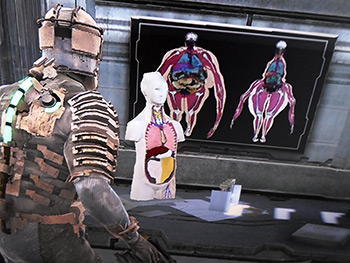
Diane Carr is a Professor of Media and Cultural Studies at the Institute of Education, University College London (UCL), where she serves as Director of the Digital Media MA Programme. Based in the Culture, Communication & Media department, Carr is an established scholar in game studies, media studies, and critical disability studies. Her work bridges academic research with practical applications in digital media education. Carr's research focuses on media studies and cultural studies perspectives on digital games and players, with particular emphasis on critical analysis, methodology, representation, and screen studies. During 2024-25, her research follows two key themes: developing ludic autoethnography to articulate real-world experiences of discrimination, and examining complicity with big tech, datafication, and AI in games and education. Her work consistently explores the intersection of disability studies with game studies, challenging normative representations of ability in digital spaces. Carr's publications reveal a sustained engagement with disability representation in games, particularly through analyses of titles like Dead Space and Deus Ex. Her research demonstrates how games function as cultural texts that both reflect and shape societal attitudes toward disability, ability, and bodily difference. She employs textual analysis and autoethnographic approaches to examine how games construct notions of normalcy and deviance. UCL Widening Participation community of practice awards (2022) ONE UCL Award for collegiality, 'Ways of Working/Working Together' (2021) UKLA Postgraduate Research Prize (2015) Carr has supervised numerous PhD students including Danielle Kleinerman (in progress), Angeliki Symeonidi (2020), Bruno de Paula (2019), and Angela Colvert (2015). Her research funding includes significant projects like 'Disability and Community: Dis/engagement, Dis/enfranchisement, Dis/parity and Dissent' (2016-2021) funded by the AHRC, 'Alternative Futures: Disability and Community' (2014-2015), and 'Digital Games: Representations of disability' (2013-2014). She has also led projects on AI education using science fiction and virtual worlds in higher education. As Director of the Digital Media MA Programme, Carr leads initiatives that connect game studies with critical media education. Her teaching includes research design and game studies on the MA Digital Media Critical Studies program. Notably, Carr is deaf, bringing lived experience to her critical disability studies work while actively contributing to academic discourse on accessibility and representation in digital spaces.
Thomas Grenier is an Associate Professor in the Department of Electrical Engineering at INSA Lyon and a member of the CREATIS laboratory (CNRS UMR 5220, INSERM U1294). He obtained his HDR (Habilitation à Diriger des Recherches) in 2023 and his Ph.D. in Image Processing from INSA Lyon in 2005. His research focuses on medical image segmentation, clustering, and filtering using feature space, scale-space, and deep learning approaches. Doctoral School: EEA (Electronics, Energy, and Automatics) Research Affiliation: CREATIS Lab (CNRS/INSERM/INSA Lyon/Université Lyon 1/Université Jean Monnet Saint-Etienne) He has contributed to 20 papers and co-supervised 5 PhD students, including Léo Dumortier and Florent Guépin. Grenier leads the annual Deep Learning for Medical Imaging (DLMI) school, which he co-founded, and has organized five editions across Lyon and Montreal since 2019. The school emphasizes practical deep learning applications in medical imaging for participants of all expertise levels. His work spans interdisciplinary domains such as medical imaging , deep learning , and image processing , with recent publications on generative AI for MRI synthesis, explainable networks, and segmentation of neurological pathologies in preclinical models. He manages pedagogical platforms, coordinates LabEx PRIMES project activities, and oversees lab room infrastructure for 200 hours/year across 10 training programs. Grenier also leads the MUSIC transversal project on Multiple Sclerosis since 2019.
Dr. Zhiying Ma is an Assistant Professor at the University of Chicago Crown Family School of Social Work, Policy, and Practice , with faculty affiliations at the Center for East Asian Studies, Center for the Study of Gender and Sexuality, and Global Studies Program. She holds a joint PhD in Comparative Human Development and Anthropology from the University of Chicago and bachelor's degrees in Psychology and Philosophy from Peking University. Research Focus: Examines biopolitical paternalism in China's mental health governance Develops peer support systems for persons with serious mental illnesses Investigates intersections of disability rights, care ethics, and welfare systems Conducts ethnographic fieldwork in psychiatric hospitals and community teams Key Projects: Led a CBPR pilot project (2019-2021) to create peer support manuals in Guangzhou, and currently scales services in Guangzhou/Yunnan with Cyrus Tang Foundation support. Collaborated with the WHO on community mental health models. Scientific Recognition: 2021 Ford Global Fellow Published in SSM-Mental Health , Cultural Anthropology , and Disability Studies Quarterly Advocacy & Impact: Combines scholarship and activism , consulting for NGOs on disability livelihoods and gender equality. Collaborates with China's community mental health teams to improve service fidelity and client satisfaction.
Dr. Anna Bobak is a Senior Lecturer in Psychology at the University of Stirling, UK. She holds a PhD from Bournemouth University (2016) and joined Stirling as a Research Assistant on an EPSRC project under Peter Hancock before transitioning to her current role. Her primary research focuses on individual differences in unfamiliar face recognition, particularly developmental prosopagnosia, and the reliability of face-processing assessments. She also investigates neurodiversity in women, emphasizing lived experiences of autism and ADHD, including camouflaging behaviors and societal awareness. Research Interests: Face Recognition: Examines perceptual strategies, diagnostic criteria (e.g., Balanced Integration Score), and technological applications in forensic contexts. Neurodiversity: Explores gender-specific manifestations of autism and ADHD, societal perceptions, and support mechanisms. Cognitive Methodology: Advances psychometric rigor in face-processing studies and critiques measurement validity. Her work bridges theoretical research and real-world applications, such as evaluating automated face recognition technology’s biases and collaborating on initiatives like #ScienceForUkraine to aid displaced academics. She is affiliated with the Cognition in Complex Environments research group and contributes to global security and resilience themes at Stirling.