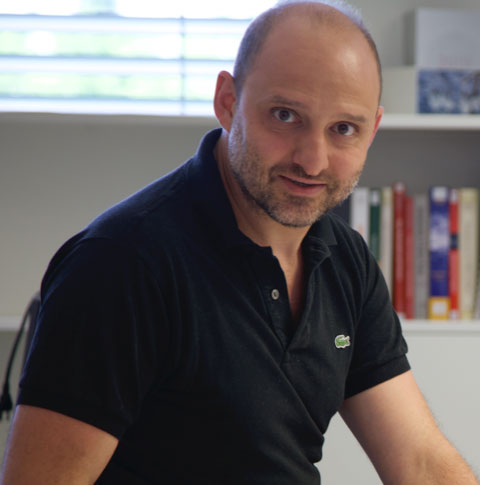
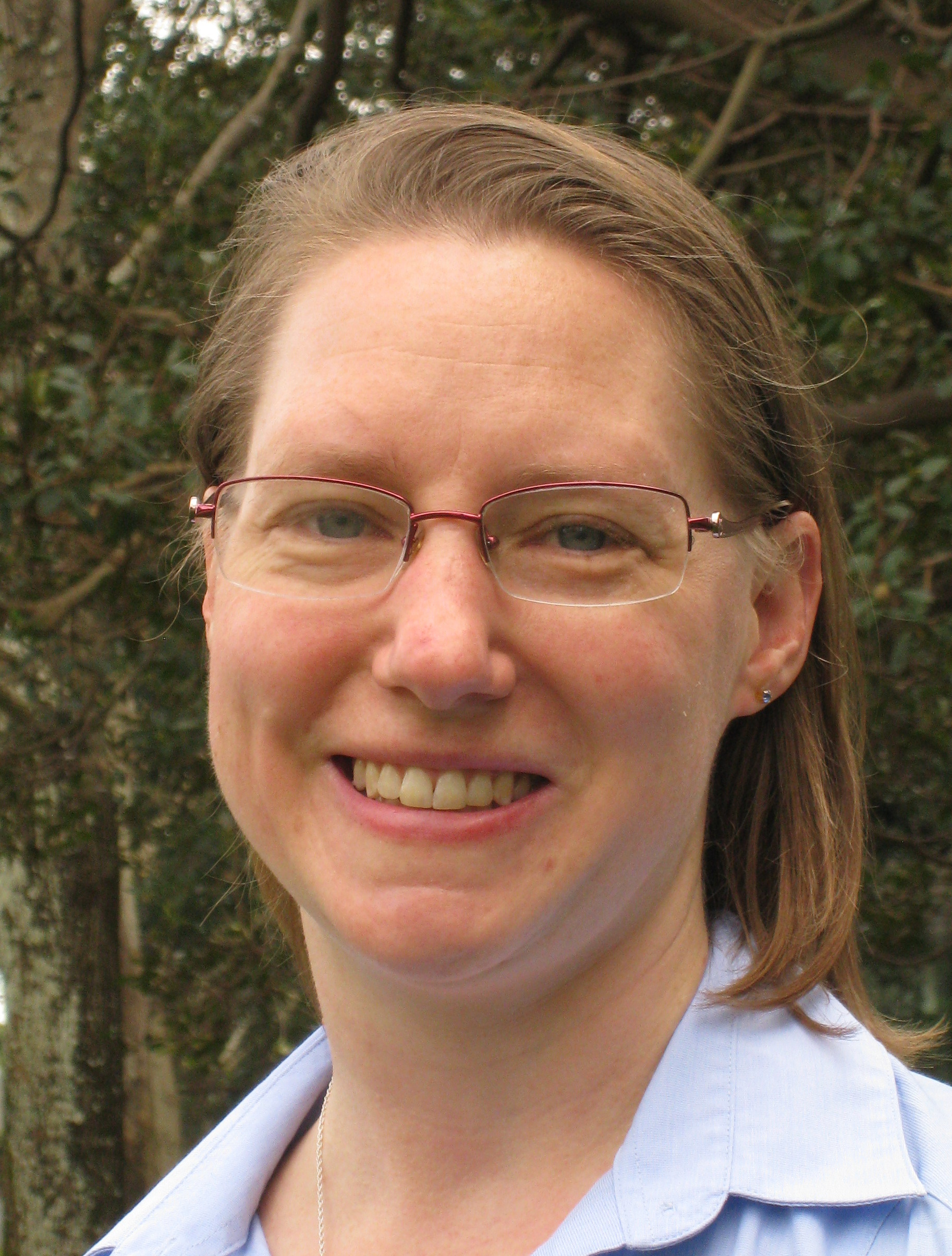
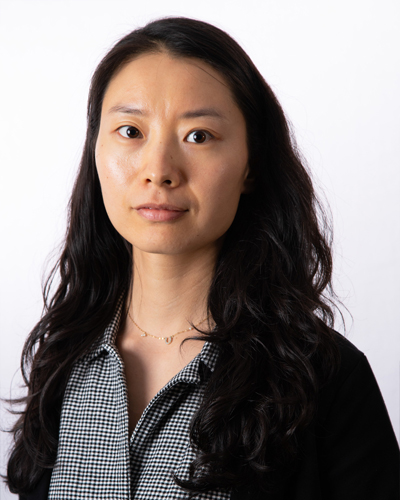
Ruth Kanfer is a Professor of Psychology at the Georgia Institute of Technology's School of Psychology, specializing in adult learning, motivation, and career development. Her research addresses the impacts of technological advancements, demographic shifts, and global economic changes on work and career trajectories. She co-directs the PARK Lab, focusing on topics such as self-regulation in job search, motivational dynamics, and the psychology of workplace environments. Dr. Kanfer holds a Ph.D. in Psychology from Arizona State University and has contributed to seminal works on aging and workforce diversity. She is a Fellow of prominent organizations including the Academy of Management and the American Psychological Association, and has received prestigious awards such as the SIOP's William R. Owens Scholarly Achievement Award. Her research employs mixed-methods approaches, including experimental studies and large-scale field research. Key themes include adult learning efficacy, team-based motivation, and the design of workspaces to enhance employee well-being. Dr. Kanfer has led projects funded by the Sloan Foundation and the National Academy of Sciences, emphasizing interdisciplinary collaboration. Notable contributions include studies on the future of work, the role of future time perspective in career decisions, and the application of a 'whole-person' framework to adult learning. Her work has been published in journals like Journal of Applied Psychology and American Psychologist . She actively participates in professional committees, including the Sloan Research Network on Aging and Work and the National Academy of Sciences' How People Learn II initiative.
Pietro de Anna is an Associate Professor at the Institute of Earth Sciences (ISTE), University of Lausanne, since August 2021. He holds an Italian nationality and completed a Master's in Theoretical Physics (2009) at the University of Florence, followed by a PhD in Earth Sciences at the University of Rennes 1 (2012). His research focuses on reactive transport in porous media, filtration, and interactions between bacteriological activity and flow dynamics. He directs the Environmental Fluid Mechanics Laboratory since 2015, employing microfluidics, numerical simulations, and theoretical models to study coupled physical, biological, and chemical mechanisms in confined systems. He has published 21 peer-reviewed articles, teaches environmental science courses at the Bachelor's and Master's levels, and supervised two PhD theses and four postdoctoral researchers. His work includes investigations into microbial biomass accumulation in porous media, diffusion-limited mixing, and biocementation processes. Key research themes are spatial heterogeneity effects, chemotaxis, and quorum sensing in microbial systems. He has pioneered methods combining microfluidics with microscopy to analyze transport at pore scales.
Associate Professor Judy Hart is a materials scientist at the School of Materials Science & Engineering, UNSW Sydney , specializing in the development of semiconducting materials for renewable energy applications. Her work integrates computational (DFT) and experimental approaches to understand composition-property relationships in systems like solid solutions , heterostructures , and doped materials for photocatalysis and solar cells . She leads projects funded by ARC Discovery and Linkage grants , including work on photo-electro-catalysis systems and stabilizing ceramic materials . Education: PhD in Materials Engineering (Monash University, 2007), BEng (Materials) (Monash, 2002) Professional Experience: Senior Lecturer (UNSW, 2017–), Lecturer (UNSW, 2013–2017), University of Bristol (2007–2012) Research Interests Her research focuses on designing materials for renewable energy , particularly photoelectrochemical water splitting and organic oxidation reactions . Key areas include Density Functional Theory (DFT) , defect engineering , band gap tuning , and nanostructured materials . She investigates ferroelectric polarization effects , metal oxide heterostructures , and stability of battery components , with applications in hydrogen production , CO2 conversion , and advanced battery materials . Scientific Awards Ramsay Memorial Fellowship (University of Bristol, 2007–2009) Teaching Contributions She is co-author of the 1st Australian & New Zealand edition of "Materials Science and Engineering: An Introduction" , and teaches courses on computational materials science , corrosion-resistant surfaces , mechanical behavior of metals , and materials design .
Robert Kosowski is Professor of Finance and Head of the Department of Finance at Imperial College Business School, Imperial College London. He holds a Ph.D. from London School of Economics, M.Sc. in Economics from London School of Economics, and B.A./M.A. in Economics from Trinity College, Cambridge University. His research examines asset management, risk management, machine learning applications in finance, hedge funds, and performance measurement. He has published in top finance journals including Journal of Finance, Journal of Financial Economics, and Review of Financial Studies. Awards include European Finance Association Best Paper Award (2007), four INQUIRE best paper awards, and British Academy Mid-Career Fellowship (2011-2012). Recent publications focus on machine learning in finance, regulatory impacts on funds, and innovative risk management approaches. Articles demonstrate consistent methodological rigor across quantitative finance topics with practical applications for investment management. Professor Kosowski is co-author of 'Principles of Financial Engineering' and directs executive education programs in Risk Management. He has industry experience as Head of Quantitative Research at Unigestion and previously worked at Goldman Sachs and Deutsche Bank.
Professor Julian Richards is a leading academic in security and intelligence studies at the University of Buckingham, where he serves as Director of the Centre for Security and Intelligence Studies (BUCSIS). He holds a PhD in Political Violence from the University of Cambridge (1993) and spent nearly two decades in British Government intelligence roles before transitioning to academia in 2006. His roles include Programme Director for three MA programmes and supervising BUCSIS’s MPhil/DPhil research students. Education: PhD in Political Violence (Cambridge University, 1993). Prior to academia, he held senior intelligence positions with the UK Government. Research focuses on global security, extremism/radicalization, intelligence analysis techniques, and cyber threats. He has authored four books and numerous articles, including works on counter-terrorism, cyber-warfare, and Far-Right extremism in Europe. His media commentary spans BBC, Sky News, and international outlets. His articles explore contemporary security challenges such as post-Brexit intelligence dynamics, cyber resilience, and extremist propaganda in digital spaces. He emphasizes interdisciplinary approaches, combining political science, technology, and ethical considerations in intelligence practices. Awards: None explicitly listed, though his contributions to security discourse are widely recognized. He advises on policy and has testified in government inquiries on privacy-security balances. Advising & Grants: Supervises doctoral researchers in security studies and leads BUCSIS’s research initiatives. His work intersects academia and policy, addressing real-world security challenges through rigorous analysis. Labs/Teams: Directs BUCSIS, fostering collaborative research on global security threats. The Centre hosts interdisciplinary projects on intelligence analysis, cyber security, and counter-extremism strategies.
Dr. Saiedeh Razavi is an Associate Professor and the inaugural Chair in Heavy Construction at McMaster University's Department of Civil Engineering, directing the McMaster Institute for Transportation and Logistics (MITL). She holds a multidisciplinary background with degrees in Computer Engineering (B.Sc., Sharif University), Artificial Intelligence (M.Sc., Iran), and Civil Engineering (Ph.D., Waterloo). Her research focuses on smart infrastructure, connected mobility, and construction safety, funded by NSERC and the Ontario Ministry of Transportation. Key areas include transforming construction management through AI, autonomous vehicles, and smart work zones. Education: B.Sc. (Sharif), M.Sc. (Iran), Ph.D. (Waterloo) Research Interests: Smart cities, connected vehicle systems, data fusion, risk analysis, and sustainable logistics Leadership Roles: Director of MITL, Associate Chair (Research), and lead of national/international multidisciplinary projects Her work bridges academia, government, and industry to enhance mobility and safety. Notable grants include NSERC funding for transformative transportation systems. Awards include teaching excellence and innovation in team-based projects. Grants & Projects: NSERC, Ontario Ministry of Transportation, and industry collaborations Labs/Teams: MITL, CPS-based construction safety initiatives, and autonomous vehicle research groups
Ke Yang serves as Assistant Professor in the Department of Computer Science at the University of Texas at San Antonio (UTSA), College of Sciences. He founded and leads the Cohort for AI REsponsibility (CAREAI) initiative, while also holding core faculty positions in UTSA's School of Data Science and MATRIX (AI Consortium for Human Well-being). Education: Ph.D. from New York University (supervised by Prof. Julia Stoyanovich) Research Focus: Dr. Yang's work centers on AI trustworthiness and responsibility , with specialized expertise in algorithmic fairness, data ethics, and human-centered data science. His research addresses critical challenges including Large Language Model hallucinations, explainable AI frameworks, and algorithmic accountability mechanisms. He actively develops open-source tools like Ranking Facts and FairDAGs to implement these principles in practical systems. Publication Trends: Recent work (2020-2025) demonstrates evolving focus from foundational fairness in ranking systems toward generative AI safety and medical applications. His publications show strong theoretical grounding combined with real-world implementation, particularly in privacy policy analysis and medical question-answering systems using causal inference techniques. Scientific Recognition: Pearl Brownstein Doctoral Research Award (NYU Tandon School of Engineering) CDS Postdoctoral Fellowship (University of Massachusetts) Professional Development: Dr. Yang has secured significant research funding including the CDS Postdoctoral Fellowship at UMass. His graduate work at NYU and Drexel University was fully supported by research assistantships, demonstrating consistent funding acquisition throughout his career. He actively contributes to academic community building through conference tutorials and educational initiatives. Research Ecosystem: He directs CAREAI at UTSA while collaborating across institutional boundaries through MATRIX and the School of Data Science. Previously, he contributed to the Data systems Research for Exploration, Analytics, and Modeling (DREAM) lab and Center for Data Science at UMass Amherst, maintaining continuity in his responsible AI research trajectory.
Marina Romeo Delgado is a Full Professor at the Department of Social Psychology and Quantitative Psychology, University of Barcelona. She directs the UB-ADECCO Chair for Labour Integration of People with Disabilities and leads the Consolidated Teaching Innovation Group GIDC-CAV. As Internal Coordinator of the Erasmus Mundus Work, Organizational and Personal Psychology (WOP-P) Master's program, she collaborates with universities in Bologna, Coimbra, and Valencia. She also coordinates the Interuniversity Doctorate in Psychology of Communication and Change. Her research focuses on psychosocial risks, organizational communication, and employee well-being with emphasis on disability inclusion in workplaces. She has led projects like 'Implementing Sustainable Development Goals (SDGs) in Psychology and Education Programs' (2022-2024) and 'Realizing Potential of EU Staff Mobility' (2016-2019). Awarded EuroPsy Specialist certification in Work and Organisational Psychology, she has authored over 20 peer-reviewed articles on telework motivation, job crafting effects, and disability employment policies. Her work bridges academic research with practical interventions through international collaborations and institutional initiatives.
Jeff Offutt is a Professor and Chair of the Department of Computer Science at the University at Albany, College of Nanotechnology, Software, & Engineering. Previously, he was a Full Professor with Tenure in Software Engineering at George Mason University since 2005. He received his PhD in Information & Computer Science from the Georgia Institute of Technology in 1988. His research spans software testing, mutation testing, model-based testing, automatic test data generation, web application testing, and software engineering education. He has led significant projects such as the NSF-funded integration of CS into K-5 classrooms and the Google-funded SPARC project for scalable CS1/CS2 instruction. The 15 most recent articles reflect a continued focus on mutation testing cost reduction, model-based testing oracles, educational innovations, and security aspects of web applications. Trends include empirical validation, industrial applicability, and bridging theory with practice in software testing and engineering education. John Toups Presidential Medal for Excellence in Teaching (2020) George Mason University’s Alumni Association Faculty Member of the Year (2020) Outstanding Faculty Award from the State Council of Higher Education for Virginia (2019) Best Paper Award at ICST 2021 10-Year Most Influential Paper Award at MODELS 2020 George Mason University Teaching Excellence Award (2013) ACM Notable Article Award (2013) Jeff Offutt has mentored numerous graduate students including Upsorn Praphamontripong, Nan Li, and Yu-Seung Ma, and has led major grant-funded projects such as the SPARC educational model and NSF initiatives on K-5 CS integration. His textbook Introduction to Software Testing (with Paul Ammann) is widely adopted globally. He led the MS in Software Engineering program at GMU and developed several new courses in software testing, web engineering, and usability. He pioneered innovative teaching methods using web technologies and asynchronous learning models. He also co-founded the IEEE International Conference on Software Testing, Verification and Validation (ICST) and served as Editor-in-Chief of Software Testing, Verification and Reliability from 2007 to 2019.
Prof. Dr. Lisa Schipper is Professor of Development Geography at the University of Bonn since 2023. Her research focuses on understanding vulnerability to climate change in the Global South and the barriers and enablers for adaptation. She has extensive experience working across Central and South America, East Africa, and South and Southeast Asia. Her educational background includes: BSc in Environmental Science (1997) from Brown University MSc in Environment and Development (2000) from the University of East Anglia PhD in Development Studies (2004) from the University of East Anglia Post-Doctoral Fellowship at the International Water Management Institute in Colombo, Sri Lanka (2005-2007) Post-Graduate Certificate in Teaching and Learning in Higher Education (Oxford, 2021) Prof. Schipper's research centers on socio-cultural dimensions of vulnerability to climate change, including gender, culture, and religion, as well as structural issues related to power, justice, and equity. Her work has demonstrated how understanding underlying development factors driving vulnerability is vital for identifying effective adaptation strategies, yet this knowledge is often absent in adaptation planning. She has made significant contributions to understanding maladaptation - when adaptation efforts inadvertently increase vulnerability rather than reduce it. Her research also explores how religious beliefs influence hazard perceptions and adaptation actions. As Co-ordinating Lead Author of Chapter 18 ("Climate Resilient Development Pathways") for the IPCC Working Group II Sixth Assessment Report, she has helped shape global understanding of how adaptation and mitigation must be integrated with sustainable development efforts. Prof. Schipper's scientific contributions have been recognized with several honors, including: Winner of Emerald Literati Network Award for Outstanding Paper (2017) Selected as one of Climate Policy's "Top 20 Papers" Ida Pfeiffer Visiting Professor appointment (2022/23, declined) She is actively engaged in mentoring and welcomes students interested in supervision, particularly those with research questions related to climate change adaptation and development. Prof. Schipper serves on the editorial boards of Climate and Development (where she is Co-Editor), World Development Perspectives, and Global Transitions - Health. She also participates in several advisory roles including the Science Committee of the Adaptation Futures Conference 2023 and the CLARE Advisors Group. Prof. Schipper leads the AG Schipper research group at the University of Bonn, which focuses on three main areas: Adaptation and Development (examining how development projects can best promote transformative climate change adaptation), Equity and the Politics of Knowledge (understanding how knowledge informs climate resilient development decisions), and Culture and Risk (exploring how clashing worldviews create barriers for policy making and knowledge sharing).
Slava Jankin is a Professor of Data Science and Government at the University of Birmingham’s School of Government, where he also serves as Deputy Director of the Institute for Data and AI and Founding Director of the Centre for Artificial Intelligence in Government. He is concurrently a Fellow and Founding Director of the Data Science Lab at the Hertie School in Berlin. Previously, he held a Professorship at the University of Essex and has worked at University College London (UCL) and the London School of Economics (LSE). His research bridges computational methods, governance, and climate policy, with a focus on AI applications in public institutions, climate-health surveillance, and misinformation resilience. Jankin earned a PhD in Political Science from Trinity College Dublin (2009), a Postgraduate Diploma in Statistics (2006), and a BSc from Belarus State Economic University (2002). **Education**: • PhD in Political Science, Trinity College Dublin (2009) • Postgraduate Diploma in Statistics, Trinity College Dublin (2006) • BSc Econ with Distinction, Belarus State Economic University (2002) **Research Interests**: Jankin’s work integrates AI and computational methods with governance challenges, including climate policy, health surveillance, and institutional effectiveness. He leads initiatives like the Lancet Countdown’s climate-health monitoring and the CATALYSE project on climate impacts. His research also explores digital twins for governance systems and the role of cultural diversity in societal resilience against misinformation. **Grants & Collaborations**: He advises the UN and EU on AI and data science, co-leads the Lancet Countdown, and collaborates with institutions like the Alan Turing Institute. His applied work includes developing AI tools for public service optimization and policy simulations. **Labs & Teams**: Directs the Centre for AI in Government (University of Birmingham) and the Hertie School’s Data Science Lab, fostering interdisciplinary teams to advance computational methods in public policy.
Marianna Ivashina is a Professor and Head of the Antenna Systems Research Group at Chalmers University of Technology's Department of Electrical Engineering . Her work focuses on array antennas , antenna integration with electronics , optimal beamforming , and over-the-air measurement methods . The group has achieved international recognition for innovations in ultra-wideband (UWB) feeds , Gap waveguide antennas , and Doherty-power-amplifier-integrated antennas for 5G/6G and radio telescope applications. Key projects include the SSF Sweden-Taiwan collaboration , EU Horizon 2020 MyWave , and VINNOVA ENERGETIC initiatives. Her recent publications emphasize millimeter-wave (mmWave) communication and reconfigurable intelligent surfaces (RIS) , with applications in 5G/6G networks , satellite communication (SatCom) , and advanced antenna testing chambers . She explores beamforming optimization , self-interference mitigation , and hybrid OTA environments to enhance wireless system performance. The group's work bridges theoretical advancements with practical implementations, including RFSoC testbeds and high-efficiency antenna arrays . Marianna leads major research programs funded by Ericsson , VINNOVA , and EUREKA EURIPIDES2 , addressing challenges in beamforming , antenna-IC integration , and automated design for 5G/6G . These projects highlight her role in advancing millimeter-wave communication and sensor integration technologies.
Professor David Taubman is a distinguished academic serving as Professor and Deputy Head of School (Research) at the School of Electrical Engineering and Telecommunications (EE&T) at the University of New South Wales (UNSW) in Sydney, Australia. He is also co-director of Kakadu Software Pty. Ltd. and its affiliates Kakadu R&D and Kakadu GPU. With a career spanning over three decades, Professor Taubman has made significant contributions to the field of image and video compression, most notably as the author of the EBCOT coding algorithm adopted in the JPEG2000 international standard. Professor Taubman earned his B.Sc. in Mathematics and Computer Science (1986) and B.E. (Medal) in Electrical Engineering (1988) from the University of Sydney, followed by an M.Sc. (1992) and Ph.D. (1994) in Electrical Engineering from the University of California at Berkeley. His professional journey includes engineering work at the Electricity Commission of N.S.W. (1988-1990), research positions at Hewlett-Packard Laboratories in Palo Alto (1994-1998), and an academic career at UNSW where he progressed from Senior Lecturer (1998-2003) to Associate Professor (2004-2009) and finally to Professor (2009-present). He has held various leadership roles including Head of the EE&T Telecommunications Research Group (2003-2014), Head of the EE&T Signal Processing Research Group (2014-present), Director of Research for the School of EE&T (2011-2016), and Deputy Head of School (Research) since 2017. Professor Taubman's research interests center on image and video compression, with particular expertise in JPEG2000 standards and implementations. His work spans signal processing, wavelet transforms, scalable video coding, motion modeling, and multimedia systems. He has pioneered numerous compression algorithms and frameworks, including the EBCOT coding algorithm that became central to the JPEG2000 standard. His recent research focuses on efficient motion modeling with cuboidal partitioning, learned lifting-based transform structures, and high-throughput implementations of JPEG2000 for video applications. His work bridges theoretical foundations with practical implementations, as evidenced by the commercially successful Kakadu Software tools that have garnered around 500 commercial licensees. Analysis of Professor Taubman's recent publications reveals a consistent focus on advancing compression technologies with particular emphasis on scalability, efficiency, and adaptability. His work spans traditional image compression (JPEG2000 extensions), video coding (cuboid-based partitioning for UHD/360-degree video), and emerging applications (nanopore sequencing data compression). A notable trend is the integration of machine learning techniques with traditional compression frameworks, as seen in his work on learned lifting-based transform structures. His research maintains strong connections to real-world applications across diverse domains including medical imaging, astronomical data processing, and genomic sequencing. IEEE Fellow Engineers Australia Fellow (by invitation) Professor Taubman has served as Associate Editor for the IEEE Transactions on Image Processing for two four-year appointments (2003-2005 and 2010-2013). He has been actively involved in numerous research grants focused on image and video compression technologies, particularly those related to the JPEG2000 standard and its extensions. His work has received significant industry support, reflected in his consultancy with various U.S., Japanese, and Australian corporations. He has also contributed to international standards development as a member of Standards Australia Technical Committee MS-065 (mirroring ISO TC42 on Digital Photography) and as a constitutional member of Standards Australia Technical Committee IT-029 (Coded Representation of Picture, Audio and Multimedia/Hypermedia Information). Professor Taubman co-directs Kakadu Software Pty. Ltd. and its research affiliates Kakadu R&D and Kakadu GPU, which have developed the commercially successful Kakadu Software tools for JPEG2000. His research group at UNSW focuses on advanced image and video compression techniques, with particular expertise in wavelet-based methods, scalable coding, and motion modeling. The group maintains strong industry connections and has contributed significantly to the development and standardization of image compression technologies worldwide.
Aideen Quilty is Associate Professor of Gender Studies and Social Justice at University College Dublin (UCD), where she also serves as Head of School for the School of Social Policy, Social Work and Social Justice and as Associate Dean of Social Sciences. With academic responsibility for all social science undergraduate degrees and programs at UCD, she plays a significant leadership role in one of the university's largest academic units. Her educational background includes a BEd, M Equality Studies, and PhD from Maynooth University, along with a Diploma in Public Relations from the Public Relations Institute of Ireland. Her academic journey reflects a deep commitment to social justice, equality, and community engagement. Professor Quilty's research is profoundly interdisciplinary, weaving together gender studies, queer theory, human geography, and adult education. Her work centers on two major strands: LGBTQI+ experiences in higher education and society, and widening participation in higher education through spatial theory and critical pedagogies. She approaches her scholarship as a form of critical civic practice, seeking to challenge normative structures and promote social change through education. Her research consistently addresses issues of intersectionality, particularly how gender, sexuality, and spatial positioning affect educational access and outcomes. Her publication record demonstrates a consistent focus on LGBTQI+ issues, particularly youth homelessness and educational inclusion. The most recent articles show an increasing emphasis on spatial justice and the intersections of gender, sexuality, and place. Her work consistently applies queer and feminist theoretical frameworks to practical educational and social contexts, with a strong focus on Irish society while maintaining a European perspective through transnational collaborations. Professor Quilty has received numerous prestigious awards recognizing her excellence in teaching and commitment to student learning: University teaching excellence award (2022) Research Fellowship in teaching and learning from UCD (2019-2021) University Award for Outstanding Contribution to Student Learning (2017) College Teaching and Learning excellence award (2017) UCD Values in Action (VIA) award for her work on the Active Bystander Programme As an advisor, Professor Quilty supervises PhD students working in LGBQI+ and transgender scholarship and EDI in higher education. Her grant activity includes significant projects such as the first nationally funded qualitative research investigation into LGBTQI+ Youth Homelessness in Ireland (2018-2020) and a transnational ERASMUS+ research project developing an LGBTQI+ Inclusion Index for Higher Education Institutions in Europe (2020-2023), which she leads as Principal Investigator. She was also Co-PI on the EU-funded DAPHNE programme (2013-15) exploring LGBTQ youth empowerment. Professor Quilty co-directs the innovative research centre for Gender, Feminisms and Sexualities (CGFS) and works closely with community outreach partners, particularly the Women's Collective Ireland (WCI), as a trusted 'critical friend.' Her work bridges academic research with practical community engagement, creating meaningful connections between university resources and social justice initiatives. She is currently conducting a cross-university impact evaluation research project on the Bystander Programme (2021-22) and serves on the Royal Irish Academy's interdisciplinary committee of social sciences.
Danel Ahman is an Associate Professor at the Institute of Computer Science , University of Tartu , Estonia, specializing in programming language theory . His research focuses on dependent/refinement types , computational effects , and verified software . Education PhD in Theoretical Computer Science (University of Edinburgh, 2017) MPhil in Advanced Computer Science (University of Cambridge, 2012) BSc in Informatics (Tallinn University of Technology, 2010) Research Interests : Danel investigates programming languages with algebraic effects and effect handlers for verified software, exploring denotational/operational semantics and fibrational approaches to effects. His work bridges theoretical computer science with practical formal verification. Scientific Awards : Estonian Research Council grant (2025) Marie Skłodowska-Curie Fellowship (2019) PhD dissertation prize (2018) Google/Citrix dissertation awards (2012) Teaching & Supervision : He teaches courses like Logic in Computer Science and Functional Programming at the University of Tartu, and supervised BSc/MSc theses on topics including asynchronous effects and formal verification. Danel also organizes research seminars and guest lectures on F*.