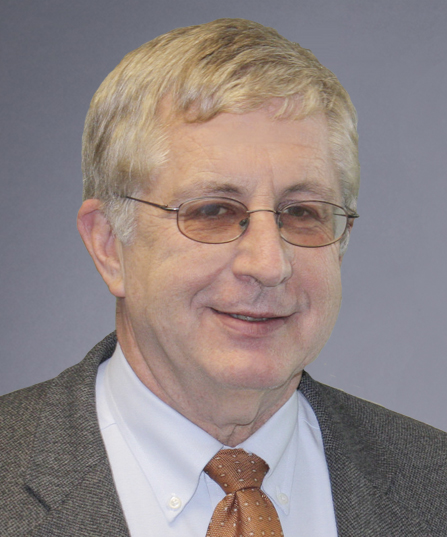
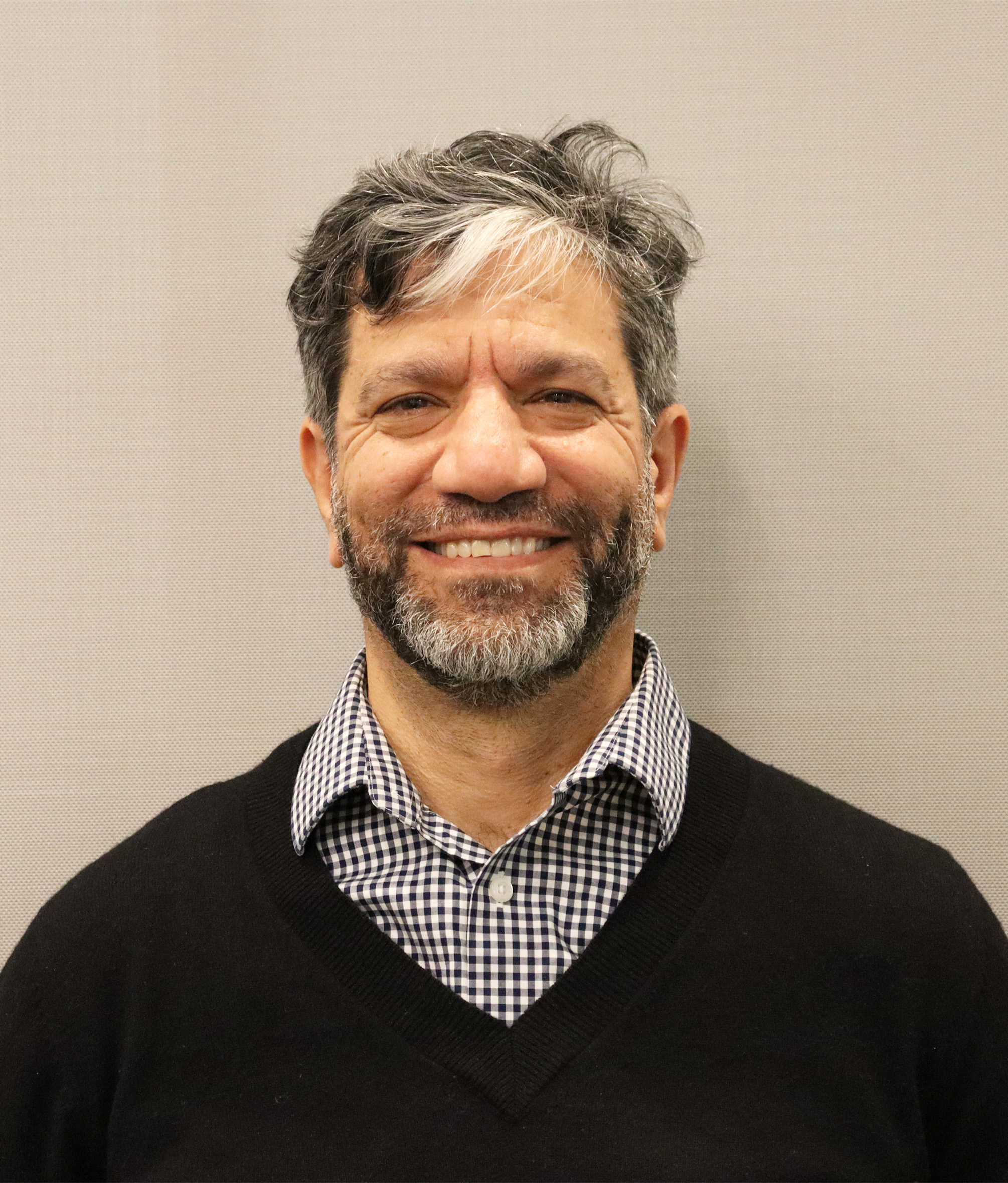
Danai Koutra is an Associate Professor in Computer Science and Engineering at the University of Michigan, Ann Arbor, and an Amazon Scholar. Her research focuses on large-scale graph mining, graph neural networks, and interpretable machine learning methods for understanding complex networks. Key roles include leading the GEMS Lab and contributing to projects like DeltaCon (graph similarity) and VoG (graph summarization). She holds a PhD from Carnegie Mellon University and has authored over 80 publications in top venues like KDD, SDM, and NeurIPS. Educations: PhD in Computer Science, Carnegie Mellon University (2015) MS in Computer Science, Carnegie Mellon University (2015) Diploma in Electrical & Computer Engineering, National Technical University of Athens (2010) Research Interests: Her work spans graph mining, anomaly detection, knowledge graph completion, and applications in neuroscience, healthcare, and social networks. Recent projects include MAGNET (multi-agent graph networks) and GT2VEC (multimodal graph-text encoders). Grants & Awards: Recipient of the 2025 PECASE award, NSF CAREER Award (2019), and the 2016 ACM SIGKDD Dissertation Award. Active in organizing conferences like KDD and ECML/PKDD. Labs & Teams: Directs the GEMS Lab, collaborating on projects like FIDDLE (clinical data preprocessing) and SpecGreedy (dense subgraph detection). Engages in interdisciplinary efforts, including M-DICE (urban mobility analysis with Detroit).
Gyu Tag Lee is a Professor in the International Studies Department at George Mason University Korea, specializing in Cultural Studies with a focus on K-Pop, media criticism, and the globalization of culture. He holds a PhD in Cultural Studies from George Mason University (2013), an MA in Communication from Seoul National University, and a BA in English Language and Literature from the same institution. Having completed three years of military service in the Republic of Korea Air Force, he has been teaching at George Mason University Korea since 2014. His research interests span Cultural Studies, Media Criticism, Popular Music, K-Pop and Hallyu, Globalization of Culture, and Music Industry studies. Professor Lee is particularly recognized for his expertise on K-Pop's global expansion, cultural appropriation issues within the industry, and the relationship between Korean cultural identity and global pop music markets. His extensive publications reflect a consistent focus on K-Pop's evolution, from its historical roots to contemporary challenges and future directions. His work examines the tension between local Korean identity and global appeal, the role of digital platforms in fan engagement, and the cultural politics surrounding K-Pop's international success. Professor Lee's research demonstrates how K-Pop functions as both a cultural product and economic phenomenon with significant implications for understanding transnational cultural flows. As a respected commentator in the field, he serves on the selection committee for the Korean Music Awards and has been featured in numerous international media outlets including Wall Street Journal, South China Morning Post, Netflix's documentary Explained, and major Korean broadcasters such as KBS, MBC, and SBS. His insights on cultural appropriation in K-Pop have been particularly influential in shaping discussions about cultural sensitivity and global cultural exchange. Professor Lee teaches courses including Media Criticism, Globalization and Culture, K-Pop, Hallyu, and Korean Society, and Korean Popular Culture in a Global World, bringing his scholarly expertise directly into the classroom to educate the next generation of cultural critics and analysts.
Stephan Conermann serves as Professor of Islamic Studies and Dean of the Faculty of Arts and Humanities at the University of Bonn, where he has held continuous academic appointments since 2003. His institutional leadership includes directorship of the Annemarie Schimmel Kolleg (2010-2022), Bonn Center for Transcultural Narratology, and significant administrative roles culminating in his current deanship since 2023. Academic Background: Doctorate in Oriental Philology/Islamic Studies (Kiel University, 1996, magna cum laude) Magisterstudium in Asian History, Oriental and Slavic Philology (Kiel University, 1992) Conermann's research examines pre-modern Islamic societies through narrative strategies in historiography, with specialized focus on Mamluk Sultanate governance (1250-1517), Delhi Sultanate/Mughal transitions, and Transottomanica mobility dynamics. His work uniquely connects asymmetrical dependencies (particularly slavery systems), power structures, and global entanglements across South Asia, Middle East, and Eastern Europe. His extensive publication portfolio shows consistent thematic evolution toward comparative frameworks analyzing slavery beyond Eurocentric models, narrative construction of power across cultures, and mobility as historical catalyst. Recent scholarship increasingly integrates transcultural methodology with digital humanities approaches. Academic Leadership: Supervised 290+ theses (59 PhD, 96 Magister, 47 Master, 88 Bachelor) Acquired ~9 million euros in third-party funding (DFG, BMBF, DAAD) Editor of 15+ publication series including Mamluk Studies and Dependency and Slavery Studies Conermann directs the Bonn Center for Transcultural Narratology and co-leads the EXC 2036 'Beyond Slavery and Freedom' cluster, fostering interdisciplinary research on pre-modern dependency systems through international collaborations across Europe, Asia, and the Americas.
Ulf Hanefeld is a Full Professor and Section Leader in the Department of Biotechnology at the Faculty of Applied Sciences , Delft University of Technology (TU Delft) , where he leads the Biocatalysis research section. His work integrates chemistry and biology to develop sustainable synthetic methodologies using enzymes. PhD from Georg-August-Universität zu Göttingen (1993) Postdoctoral experience at Imperial College London, University of Cambridge, and TU Delft Recipient of a Royal Netherlands Academy of Arts and Sciences (KNAW) fellowship His research interests center on biocatalysis , particularly enzymes that enable difficult chemical transformations such as C–C bond formation , enantioselective hydration , and ozonolysis . He focuses on enzyme discovery, engineering, immobilization, and application in flow chemistry to achieve sustainable and efficient synthesis. His work spans from fundamental enzyme mechanism studies to industrial applications in green chemistry . The publication trends reveal a consistent focus on enzyme immobilization , flow reactor systems , and chemo-enzymatic cascades . His recent work emphasizes the use of hydroxynitrile lyases , aldolases , and methyltransferases for the synthesis of chiral intermediates under environmentally benign conditions. The integration of biocatalysis with continuous manufacturing highlights a strong commitment to industrial applicability and process sustainability. Scientific contributions and recognition : Active contributor to high-impact journals in chemistry and biotechnology Coordinated research in the CassaFLOW project (international academic-industrial collaboration) Author of influential reviews, e.g., in Chemical Society Reviews (2022) Teaching and supervision : He teaches Catalysis (Bachelor) and Advanced Biocatalysis (Master), and supervises numerous Master’s theses (MEP) and Bachelor’s projects (BEP) . Students in his group are actively involved in research and often become co-authors on scientific papers. Projects center on green chemistry, enzyme engineering, and spectroscopic analysis of biochemical systems. Laboratory and research environment : The Ulf Hanefeld Group operates within the Biocatalysis section, a multidisciplinary environment fostering collaboration on enzyme discovery, immobilization, and cascade reactions. The group emphasizes practical innovation, with strong links to industry and international research networks.
Daniele Caramani is a Part-time Professor at the Robert Schuman Centre for Advanced Studies at the European University Institute, where he holds the Ernst B. Haas Chair in European Governance and Politics and co-directs the European Governance and Politics Programme. He also serves as a professor and Head of Department at the University of Zurich, holding the Chair of Comparative Politics. His academic journey began with BA and MA degrees from the University of Geneva, followed by a PhD from the European University Institute. Dr. Caramani's research focuses on comparative politics, European integration, and globalization, with particular emphasis on political cleavages, electoral systems, and democratization processes. His work bridges historical analysis with contemporary political challenges, examining how territorial and functional divisions shape political landscapes across different eras and regions. His approach combines theoretical innovation with empirical rigor, drawing connections between 19th century mass democratization and current debates about European integration and global governance. Caramani's publications reveal a consistent trajectory of increasingly complex analyses, moving from national political systems to European integration and then to global comparative frameworks. His work demonstrates strong methodological expertise in comparative and quantitative analysis, with a particular focus on large cross-national datasets and historical electoral results. The evolution of his research shows a clear progression from national-level analysis to transnational and global comparative frameworks. Stein Rokkan Prize for Comparative Social Science Research (for The Nationalization of Politics ) APSA Lijphart-Przeworski-Verba Dataset Award (for Constituency-Level Elections Archive) As an educator and academic leader, Caramani has supervised numerous students and edited influential textbooks in comparative politics. His leadership extends to directing major research projects, including an ERC Advanced Grant on global cleavages across world regions. At the University of Zurich, he serves as Head of Department, demonstrating administrative leadership alongside his research and teaching responsibilities. His Constituency-Level Elections Archive (CLEA) represents a significant contribution to the field, providing essential data for comparative electoral research.
Dr. Young Yun Kim is a Professor in the Department of Communication at the University of Oklahoma's Dodge Family College of Arts and Sciences, where she has developed nationally recognized Intercultural Communication graduate programs since joining in 1988. Her academic journey spans continents, beginning in Seoul, Korea, and continuing through significant scholarly institutions in the United States. B.A.: Seoul National University, Seoul, Korea M.A.: University of Hawaii (East-West Center Communication Institute) Ph.D.: Northwestern University, Evanston, Illinois Dr. Kim's research pioneers the theoretical foundations of cross-cultural adaptation and interethnic communication. Her Integrative Communication Theory of Cross-Cultural Adaptation positions communication as the central mechanism for achieving internal equilibrium in new cultural environments, while her Contextual Theory of Interethnic Communication examines associative and dissociative behaviors across ethnic boundaries. Her work uniquely bridges personal transformation with systemic cultural dynamics, emphasizing how intercultural experiences foster expanded human understanding. Analysis of her recent publications reveals consistent theoretical refinement with increasing focus on identity transformation, synchrony in communication, and the emergence of intercultural personhood beyond traditional cultural boundaries. Her scholarship demonstrates remarkable continuity in core themes while progressively incorporating globalization's impact on individual and collective identity formation. Scientific Awards Fellow of the International Communication Association (2002) Top Scholar Award for Lifetime Achievement, Intercultural Communication Division, International Communication Association (2006) Dr. Kim has directed numerous doctoral theses and collaborated on significant cross-cultural research projects examining adaptation patterns among diverse populations including Korean and Indonesian expatriates, Hispanic youth, international students, and refugees. Her research funding includes a two-year study of Indochinese refugees (1978-1980) sponsored by the U.S. Department of Health and Human Services, reflecting sustained external validation of her methodological rigor and theoretical significance. As a foundational leader in intercultural scholarship, Dr. Kim serves on 11 editorial boards including Journal of Communication and Human Communication Research, and has held executive positions in the International Communication Association and International Academy for Intercultural Research, culminating in her presidency (2013-2015) of the latter organization.
James J. O’Hara is the George L. Paddison Professor of Latin at the University of North Carolina at Chapel Hill. His academic journey includes a B.A. from the College of the Holy Cross and a Ph.D. from the University of Michigan. He has held significant roles, such as Department Chair (2003-2007), Director of Graduate Studies, and President of the Vergilian Society. His research focuses on Greek and Latin poetry, with a special emphasis on the Augustan period, epic, didactic literature, and satire. Education highlights include studies at the College of the Holy Cross (A.B., 1981) and the University of Michigan (Ph.D., 1986). He taught at Wesleyan University before joining UNC in 2001, where he has contributed extensively to teaching and scholarship. Research interests span Latin poetry, particularly Vergil, Catullus, Lucretius, and Ovid. Notable works include Death and the Optimistic Prophecy in Vergil’s Aeneid (1990), True Names: Vergil and the Alexandrian Tradition of Etymological Wordplay (1996), and Inconsistency in Roman Epic (2007). Current projects explore teaching authority in didactic and satirical works. Publications include over 40 articles and book reviews, with a focus on Vergilian studies, Lucretian analysis, and classical pedagogy. Recent lectures address topics like Aeneid Book 8 and Horace’s Ars Poetica . Grants/Awards: James Gilmore Fletcher Whitton Faculty Fellowship (2012), Loeb Classical Library Fellowship (2015-2016), SUTASA Teaching Award (2013). Students: Directed 15+ M.A. and Ph.D. theses, including works on Lucan, Lucretius, and Vergilian reception. Labs/Teams: Collaborative projects include the Focus-Hackett Aeneid commentary series and editorial work for Vergilius . Active in professional organizations like the Vergilian Society and Classical Association of the Middle West and South.
William Yang Wang serves as the Mellichamp Professor of Artificial Intelligence at the University of California, Santa Barbara (2019-present). He directs the UCSB Center for Responsible Machine Learning, the Mind and Machine Intelligence Initiative, and the UCSB NLP Group. His research focuses on theoretical foundations and practical algorithms for AI, particularly in NLP, LLMs, and neuro-symbolic reasoning. PhD in Computer Science from Carnegie Mellon University Active in AI theory and applications (2016-present) Research interests span multiple AI domains, with special emphasis on NLP and responsible machine learning. He has pioneered datasets like HybridQA, TabFact, and VaTeX, enabling advancements in multi-hop QA, fact verification, and video-language tasks. His work combines statistical relational learning with modern deep learning paradigms. Recent publications center around multimodal reasoning, knowledge graph integration, and responsible AI development. He has received numerous accolades including the IEEE SPS Pierre-Simon Laplace Award (2024) and NSF CAREER Award (2021). Karen Sparck Jones Award (2022) DARPA Young Faculty Award (2018) IBM Faculty Award Mentoring 15+ PhD and postdoc researchers who now hold positions at Microsoft Research, Amazon, Meta GenAI, and academic institutions like Arizona and Rutgers. His lab maintains active collaborations with industry partners through initiatives like ChipAgents.ai, which he founded as CEO.
Professor Matthias Mann is a world-leading scientist serving as Director of the Proteomics and Signal Transduction department at the Max Planck Institute of Biochemistry in Martinsried, Germany, and Director of the Proteomics department at the Novo Nordisk Foundation Center for Protein Research, Faculty of Health Sciences, University of Copenhagen, Denmark. With an h-index exceeding 277 and over 350,000 citations, he is recognized as the highest cited German researcher and one of the most influential scientists globally in proteomics. His educational background includes: Ph.D. in Chemical Engineering from Yale University (1988) Master's Degree in Physics from Georg August University Göttingen (1984) Bachelor's of Arts in Mathematics from Georg August University Göttingen (1982) Professor Mann's research focuses on advancing mass spectrometry-based proteomics to understand biological systems at the protein level. His work spans technological developments in mass spectrometry, bioinformatics and computational analysis, signal transduction and posttranslational modifications, and clinical proteomics applications for disease diagnosis and treatment. The Mann lab has pioneered groundbreaking methods like SILAC for quantitative proteomics and MaxQuant for proteome data analysis. Their vision is to translate proteomics knowledge into clinical practice for predictive, diagnostic, and preventive medicine, with recent work focusing on AI-guided platforms for analyzing proteomes from minimal tissue samples. Analysis of Professor Mann's recent publications reveals a strong trend toward clinical applications of proteomics, particularly in cancer research, metabolic diseases, and neurodegenerative disorders. His work increasingly integrates spatial proteomics, single-cell resolution techniques, and artificial intelligence approaches to uncover disease mechanisms and identify potential biomarkers, with a clear shift from basic technology development toward direct clinical applications and personalized medicine. Professor Mann has received numerous prestigious awards throughout his career: 2025: Elected member of the American National Academy of Sciences 2024: Dr. H.P. Heineken Award for Biochemistry and Biophysics 2023: Otto Warburg Medal 2019: Nominated member of the Bavarian Academy of Sciences 2013: Elected member of Leopoldina German National Academy of Sciences 2012: Körber European Science Award, Louis-Jeantet Foundation Prize for Medicine, Ernst Schering Prize, and Leibniz Prize Professor Mann leads a highly collaborative research team involved in multiple international networks including the Bill & Melinda Gates Foundation, Michael J. Fox Foundation for Parkinson's Research, CLINSPECT-M, and Munich Heart Alliance. His lab has mentored numerous successful researchers, with several former postdocs receiving prestigious ERC Starting Grants. The Mann group has developed innovative clinical proteomics pipelines for analyzing archived tissue specimens and body fluids, aiming to identify protein markers for early detection of diseases such as diabetes and cancer. The Mann lab operates across two major research centers with state-of-the-art mass spectrometry facilities. Their Clinical Knowledge Graph platform integrates multi-omics data with extensive metadata, creating an ecosystem for machine learning applications in proteomics. Current research focuses on developing highly sensitive methods that can profile thousands of proteins from minimal cell samples, enabling the identification of critical disease-related proteins and supporting the development of individualized therapies.
Myriam Dunn Cavelty serves as Deputy Head of Research and Teaching at the Center for Security Studies (CSS) at ETH Zurich, where she leads significant academic initiatives in cybersecurity and digital governance. She holds formal affiliations as an associate researcher at the Center for Advanced Security Theory at the University of Copenhagen, and has held prestigious visiting positions at Brown University, the University of Darmstadt (as a Mercator Fellow), and the Central European University. Her research expertise centers on how digital technologies influence political behavior and societal values, with particular attention to governance arrangements for digital technologies and their embedding in social, political, and economic processes. Her scholarly contributions span cybersecurity politics, cyber warfare, critical infrastructure protection, and strategic foresight, reflecting an interdisciplinary approach that bridges political science, international relations, and technology studies. Dunn Cavelty's publication record demonstrates remarkable consistency and impact, with works spanning from 2008 to the present. Her research shows an evolution from early analyses of cyber-threat construction to contemporary examinations of AI in security contexts and the political dimensions of cybersecurity governance. Her work consistently addresses the intersection of technological capabilities and political constraints, examining how states and other actors navigate security challenges in the digital domain. Mercator Fellow at the University of Darmstadt Editor-in-Chief of Contemporary Security Policy Advisory work for governments, international institutions, and corporations As an academic leader, she has advised numerous doctoral students and supervised research projects examining the political dimensions of cybersecurity. Her work with the Center for Security Studies involves directing research programs that connect academic inquiry with policy relevance, particularly in the areas of risk analysis and strategic foresight. She has established herself as a leading voice in European cybersecurity scholarship, with particular expertise in the Swiss context and broader European security frameworks.
Professor Eugene O'Brien serves as Professor of Civil Engineering within the School of Civil Engineering at University College Dublin's College of Engineering and Architecture. His research focuses on critical structural assessment methodologies for long-span bridges, with particular expertise in traffic load modeling and bridge safety evaluation. His research interests center on structural engineering challenges related to bridge infrastructure, specifically traffic load assessment for long-span bridges , structural health monitoring systems , and sustainable infrastructure management . Professor O'Brien pioneered camera-based monitoring techniques to overcome limitations of traditional Weigh-in-Motion sensors during congested traffic conditions, enabling more accurate safety assessments of aging bridge infrastructure. His work addresses the critical gap in quantifying traffic loading on bridges with spans up to 2 kilometers, where conventional methods fail during stop-and-go traffic scenarios. Analysis of his 15 most recent publications reveals a consistent research trajectory focused on probabilistic modeling of traffic loads, with increasing sophistication in handling extreme events and long-term infrastructure performance. His work spans fundamental statistical methods for load effect prediction, practical applications in real-world bridge assessments, and environmental considerations regarding infrastructure carbon footprints. The research demonstrates strong methodological evolution from basic traffic modeling to comprehensive lifetime assessment frameworks incorporating sustainability metrics. As co-founder and director of Roughan O'Donovan's subsidiary Innovative Solutions (ROD-IS), Professor O'Brien has translated research into practice through significant projects including the Malahide Railway Viaduct assessment (2009), EU-funded bridge lifespan simulation tools (2011), vibration reduction systems for bridge cables, and structural assessments for major international projects including the Ting Kau Bridge in Hong Kong, the Forth Road Bridge in Scotland, and the Chacao Channel Bridge in Chile. His consultancy work demonstrates direct application of academic research to critical infrastructure challenges worldwide. Professor O'Brien's research group operates at the intersection of structural engineering and sustainable infrastructure management, with particular emphasis on extending bridge service life through accurate safety assessment. Their work on the Chacao Channel Bridge demonstrates practical implementation of traffic monitoring systems using toll data to manage truck loads, while their environmental impact analysis shows how accurate safety assessments reduce unnecessary bridge replacements, thereby lowering the carbon footprint of transportation infrastructure through extended service life of carbon-intensive materials like concrete and steel.
John B. Taylor is the Mary and Robert Raymond Professor of Economics at Stanford University and the George P. Shultz Senior Fellow in Economics at the Hoover Institution. He directs the Stanford Introductory Economics Center and has held leadership roles at the Stanford Institute for Economic Policy Research (SIEPR). His academic expertise spans macroeconomics, monetary economics, and international economics, with a focus on policy frameworks and central banking. **Education**: Taylor earned a B.A. in Economics from Princeton University (1968) and a Ph.D. in Economics from Stanford University (1973). He previously taught at Princeton, Columbia, and Yale Universities. **Research Interests**: Taylor’s work emphasizes the foundations of monetary policy, including the Taylor Rule and its global applications. He examines policy responses to crises, inflation targeting, and the role of rules in stabilizing economies. His research integrates theoretical models with real-world policy analysis, addressing topics like financial regulation, fiscal activism, and international coordination. **Awards**: Taylor has received prestigious honors such as the Bradley Prize, Adam Smith Award, and Guggenheim Fellowship. Notable awards include the Alexander Hamilton Award for leadership in international finance and the Hoagland Prize for teaching excellence. **Advising & Grants**: Taylor has advised governments and institutions globally, including the U.S. Treasury, the Federal Reserve, and the OECD. His advisory roles include membership in the President’s Council of Economic Advisers and California’s Governor’s Council. His work often focuses on policy design and crisis management. **Labs/Teams**: Taylor leads initiatives at SIEPR and the Hoover Institution, fostering collaborations on economic policy and global finance. His research frequently engages with central banks and policymakers to translate academic insights into actionable frameworks.
Dr. Eli Strauss is a behavioral ecologist and Assistant Professor in the Department of Integrative Biology at Michigan State University , where he is establishing a lab focused on the evolution and ecology of social behavior. He co-directs the Mara Hyena Project , a long-term study of hyena behavior and ecology in Kenya. His research spans dominance hierarchies, longitudinal studies of animal societies, and computational methods for analyzing social dynamics. He has developed tools like the DynaRankR R package for inferring longitudinal dominance hierarchies and DomArchive for compiling dominance data. His work addresses challenges such as mismatched timescales in behavioral studies and demographic drivers of hierarchy dynamics, often using spotted hyenas as a model species. Dr. Strauss is currently recruiting lab members for graduate student, postdoc, and technical roles, with lab establishment planned for late 2025–Fall 2026. His publications reflect interdisciplinary interests in behavioral ecology, animal societies, and data-driven approaches to understanding dominance and social networks.
Barry Naughton is the So Kwan Lok Chair of Chinese International Affairs at the School of Global Policy and Strategy (GPS), University of California, San Diego, where he has been a faculty member since 1988 and was appointed to his named professorship in 1998. As a globally recognized authority on China's economic transformation, his work bridges academic rigor and policy relevance through decades of analysis of market reforms, industrial development, and international economic relations. His academic foundation includes: Ph.D. in Economics from Yale University (1986) M.A. in International Relations from Yale University (1979) B.A. in Chinese Language and Literature from the University of Washington (1975) Naughton's research centers on China's transition from planned to market economy, with emphasis on industrial restructuring, foreign trade dynamics, and regional development disparities. His scholarship uniquely connects historical analysis of reform milestones with contemporary policy challenges, particularly examining how state-market interactions shape technological advancement and global economic integration. This dual focus on institutional evolution and sectoral transformation has established him as a critical interpreter of China's development model for both academic and policy audiences. Analysis of his 2020-2024 publications reveals a decisive shift toward examining China's industrial policy architecture and state capitalism mechanisms. Key thematic clusters include the conceptualization of 'Grand Steerage' in state-economy relations, the restructuring of science-technology systems, and the sectoral implementation of industrial policies. These works collectively document China's evolving governance approach—from market liberalization to targeted state direction—while analyzing implications for global trade and innovation ecosystems. His scholarly recognition includes: Ohira Memorial Prize for 'Growing Out of the Plan: Chinese Economic Reform, 1978-1993' (1996) Administrative leadership has been integral to Naughton's career, serving as Associate Dean of GPS (1992-1995, 2001-2003) and Chair of UCSD's Chinese Studies Program (1998-2000). His policy engagement extends through the Research Grants Council of Hong Kong (1998-2003) and U.S. academic committees on Chinese studies. Current research examines regional growth patterns and foreign investment linkages while completing a new edition of his seminal textbook 'The Chinese Economy: Transitions and Growth,' which remains the field's authoritative reference. Though not leading a formal laboratory, Naughton shapes discourse through China Leadership Monitor's quarterly economic assessments and collaborative networks like the edited volume 'State Capitalism, Institutional Adaptation and the Chinese Miracle' (2015), which mobilized leading scholars to analyze China's institutional innovation within global capitalism.
Walid A. Saleh is a Professor of Islamic Studies at the University of Toronto , holding appointments in both the Near and Middle Eastern Civilizations department and the Department for the Study of Religion . His scholarship focuses on the Qur’an , Quranic exegesis (Tafsir), Islamic apocalyptic literature , and Biblical reception in Islam . PhD from Yale University (2001) Recipient of Mellon New Directions Fellowship (2014) and Konrad Adenauer Fellow (2017) Editor of the Routledge Qur’an Series His research analyzes Quranic chronology , manuscript traditions , and Islamic intellectual history . Recent publications examine periodization in Sunni tafsir, late Ottoman book culture, and the reception of al-Bayḍāwī's Anwar al-tanzīl . Articles explore topics from Quranic death narratives to medieval Islamic cosmology . Key article themes: Quranic identity formation , Islamic manuscript studies , exegetical methodology He has edited critical texts like al-Biqa`i's Bible treatise and serves on editorial boards for the Journal of the American Academy of Religion and Journal of Qur'anic Studies . His teaching includes advanced courses in Arabic paleography and Quranic hermeneutics .