Paul V. Braun is a Grainger Distinguished Chair in Engineering and Professor of Chemistry at the University of Illinois. He also holds appointments in Mechanical Sciences and Engineering, Materials Science and Engineering, and Chemical and Biomolecular Engineering. His research focuses on materials chemistry, energy storage, polymers, self-assembly, and photonics. Braun earned his B.S. from Cornell University and his Ph.D. in Materials Science and Engineering from the University of Illinois. He leads the Braun Group, pioneering advanced materials with nano/mesoscale architectures for applications in batteries, optics, and self-healing systems. His work has produced over 350 publications, multiple patents, and founded four companies. Notable awards include Fellowships from AAAS and the National Academy of Inventors, the Grainger Award for Translational Research, and the MRS Fellowship. Braun’s research integrates synthesis, characterization, and application of functional materials. Recent projects include solid-state battery innovation, low-thermal-conductivity polymers, and 3D optical devices via direct laser writing. He directs the Materials Research Laboratory and has served on advisory boards for the U.S. Army and DARPA. Education: B.S., Cornell University; Ph.D., University of Illinois (Materials Science & Engineering) Affiliations: Beckman Institute (Part-Time), Grainger College of Engineering Funding: NSF, DOE, DOD, and industry partnerships Lab Focus: Electrochemical energy storage, polymer science, advanced optics, self-healing materials
Gemma Fargas Ribas is an Associate Professor in the Department of Materials Science and Engineering at the School of Engineering of Barcelona East (EEBE), part of the Polytechnic University of Catalonia (UPC). She leads research in advanced materials fabrication, particularly focusing on additive manufacturing techniques for ceramic and metallic materials. Her work spans multiple research groups including CIEFMA (Centre d'Integritat Estructural, Fiabilitat i Micromecànica dels Materials), CCEM (Centre de Recerca en Ciència i Enginyeria Multiescala de Barcelona), and CER-H2 (Centre de Recerca de l'Hidrogen de la UPC). Her primary research interests encompass Materials Science, Ceramic Engineering, Additive Manufacturing (particularly Direct Ink Writing), Catalysis, Corrosion Science, Biomaterials, Mechanical Properties of Materials, and Microstructure Characterization. Her work demonstrates a strong interdisciplinary approach, bridging fundamental materials science with practical applications in energy, healthcare, and industrial processes. Recent research has focused on developing novel ceramic structures for hydrogen production, CO2 conversion, and biomedical applications through advanced manufacturing techniques. Analysis of her recent publications reveals a consistent focus on optimizing additive manufacturing processes for ceramic materials, particularly zirconia and alumina-based systems. Her research shows strong trends in developing functional materials for catalytic applications, with increasing emphasis on sustainable energy solutions like hydrogen production and carbon capture. The work also demonstrates growing interest in biomedical applications of 3D printed ceramics, particularly for tissue engineering scaffolds. Dr. Fargas Ribas has been actively involved in educational innovation through projects like RevCEM (Revolució Educativa en Ciència i Enginyeria de Materials), which focuses on active learning methodologies and innovative educational projects in Materials Science and Engineering education. She has successfully secured competitive research funding from various national and European programs to support her work in materials development and characterization. Her research is conducted within multiple collaborative frameworks, including the CIEFMA-PROCOMAME group focused on Microstructural Design and Advanced Manufacturing of Materials, and the IMEM-BRT group working on Biomaterials for Regenerative Therapies. These collaborations enable her to address complex materials challenges from multiple perspectives, combining fundamental research with practical applications.
Dr. Ali Mohammadi is a Senior Lecturer in the Department of Electronic & Electrical Engineering within the Faculty of Engineering & Design at the University of Bath. He leads innovative research in Micro-electromechanical Systems (MEMS) and serves as an Associate Editor for IEEE Sensors. His work is supported by multiple EPSRC-funded research projects with strong industry collaboration, totaling over £1.5 million across five projects. Dr. Mohammadi is embedded within several key research units: Electronics Materials, Circuits & Systems Research Unit (EMaCS), The Foundry: Centre for Digital, Manufacturing & Design, Centre for Bioengineering & Biomedical Technologies (CBio), and the Bath Institute for the Augmented Human. Dr. Mohammadi's academic background includes postdoctoral research at the Department of Engineering Science, University of Oxford (2016-2017) and the Department of Electrical and Computer Systems Engineering, Monash University, Australia (2014-2016). This foundation has enabled his interdisciplinary approach to micro/nano-electromechanical systems and electronic circuit design. His research program addresses fundamental challenges in micro/nano-electromechanical transducers and electronic interface circuits, with specific innovations in on-chip atomic force microscopy, implantable energy harvesters, and high precision coupled resonator sensors. These contributions span multiple UN Sustainable Development Goals, particularly advancing clean energy technologies and healthcare solutions. Dr. Mohammadi's work uniquely bridges electrical engineering, mechanical systems, and materials science to develop next-generation sensing and energy harvesting technologies with real-world applications. Analysis of his 48 research outputs reveals a clear trajectory from fundamental MEMS device development toward integrated sensor systems with practical applications. His most recent publications (2023-2025) demonstrate increasing integration of machine learning with precision sensing technologies, particularly for manufacturing condition monitoring and biomedical applications. The research shows progression from individual components to complete systems, with growing emphasis on real-time data processing at the sensor edge and human-machine interfaces. Dr. Mohammadi's professional standing includes: Member of the Institute of Electrical and Electronics Engineers (IEEE) Associate Editor of IEEE Sensors Journal As a doctoral supervisor, Dr. Mohammadi actively mentors students in Microelectromechanical Systems and Electronic Integrated Circuits. His research portfolio includes two active EPSRC projects: 'Transforming the use of Ansys simulation software within engineering curricula' and 'SENSYCUT- Sensor Enabled Systems for Precision Cutting,' demonstrating strong industry-academic collaboration. These projects focus on practical engineering solutions for manufacturing optimization, condition monitoring, and human-computer interaction, with direct applications in industrial settings. Dr. Mohammadi's research ecosystem spans multiple interdisciplinary centers at Bath. Within EMaCS, he advances fundamental electronic materials and circuit design. Through The Foundry, he contributes to digital manufacturing innovation. His CBio affiliation enables medical applications of his sensor technologies, while the Bath Institute for the Augmented Human provides context for human-centered applications of his tactile display research. This multi-faceted institutional integration allows his work to progress from laboratory prototypes to real-world implementations across healthcare, manufacturing, and human augmentation domains.
Tony Valayil Varghese serves as Senior Research Scientist and Assistant Research Professor at Boise State University, holding dual appointments in the Micron School of Materials Science and Engineering and the Electrical and Computer Engineering Department. His interdisciplinary work bridges advanced materials science with practical applications in energy harvesting and flexible electronics systems. Dr. Varghese's educational foundation includes: Ph.D. in Material Science and Engineering from Boise State University (2019) M.S. in Nanoscience and Technology from National Institute of Technology, India (2012) B.S. in Mechanical Engineering from Mahatma Gandhi University, India (2010) His research program centers on additive manufacturing of 2D nanomaterials with particular emphasis on flexible thermoelectric devices for energy harvesting. Key investigation areas include MXene-based materials development, advanced printing techniques for flexible electronics, and nanomaterial ink formulation. His work spans multiple disciplines including materials science, electrical engineering, and environmental monitoring, with strong connections to UN Sustainable Development Goals related to clean energy and climate action. Analysis of his publication record (2011-2025) reveals an accelerating research trajectory with increasing focus on practical applications of nanomaterials. Recent work demonstrates sophisticated integration of aerosol jet printing, laser-induced graphene techniques, and plasma deposition methods to create next-generation energy harvesting and sensing devices. His research shows particular innovation in developing stable nanomaterial inks and improving manufacturing processes for real-world implementation. Dr. Varghese actively collaborates with Prof. David Estrada's research group and maintains an extensive publication record with 18 research outputs, an h-index of 7, and 431 citations. His work has gained attention from multiple news outlets, academic blogs, and social media platforms including Bluesky and X, with significant readership on Mendeley. His laboratory specializes in advanced additive manufacturing techniques for nanomaterials, particularly focusing on creating flexible electronic components and energy harvesting devices using colloidal nanocrystals and 2D materials. Current projects appear to emphasize triboelectric nanogenerators, MXene supercapacitors, and flexible electrochemical sensors for environmental monitoring applications.
Joaquim Minguella Canela is a Senior Lecturer in the Department of Mechanical Engineering at the Escola Tècnica Superior d'Enginyeria Industrial de Barcelona (ETSEIB), part of the Universitat Politècnica de Catalunya (UPC). He is actively involved in cutting-edge research within the TECNOFAB Research Group and the DigiFACT Advanced Digital Factory Network, focusing on advanced manufacturing technologies. His research interests are centered around additive manufacturing, 3D printing, multi-material fabrication, rapid prototyping, and digital manufacturing, with applications spanning mechanical engineering, medical devices, and Industry 4.0. His work emphasizes functional integration, material development, and process optimization. His recent publications demonstrate a strong trend in developing multi-material 3D printed systems with embedded sensing capabilities, particularly for robotics and medical applications. He also contributes significantly to the advancement of ceramic and metal additive manufacturing processes, including direct ink writing and powder bed fusion, with a focus on industrial and biomedical use cases. Premi Nacional al Partenariat Publicoprivat en R+I 2019 Minguella Canela has participated in numerous competitive R&D+i projects and has collaborated with various research groups and industrial partners. He has also contributed to academic journals as a collaborator and served on scientific committees for international conferences, indicating active engagement in the academic and industrial communities. His work often involves interdisciplinary collaboration, particularly in the fields of robotics, biomedical engineering, and materials science. He is affiliated with key research groups including UPC TECNOFAB - Research Group in Manufacturing Technologies and DigiFACT - Network of Centers for the Advanced Digital Factory (TECNIO Network / CIT UPC), which are central to his research activities in advanced production technologies.
Sara Nocentini is a Researcher at the National Institute of Metrological Research (INRiM) in Turin, working in the Division of Metrology of Innovative Materials and Life Sciences. She holds an International PhD in Atomic and Molecular Photonics from the European Laboratory for Nonlinear Spectroscopy (LENS) in Florence (2017) and completed postdoctoral positions at LENS and CNR-INO. Her academic background: International PhD in Atomic and Molecular Photonics, LENS, Florence (2017) Postdoctoral Researcher, LENS (2017-2019) Postdoctoral Researcher, CNR-INO (2019) Nocentini's research integrates smart polymers with photonic systems to create autonomous responsive materials. She pioneers work in liquid crystal polymers, two-photon direct laser writing, and nonlinear photonic materials for applications in microrobotics and optical cryptography. Her focus on low-power nonlinear optical effects enables breakthroughs in integrated photonics and cryptographic functions. Her scientific contributions have earned the Woman in Science Fellowship at Humboldt University (2022) and an ERC Starting Grant for '3DnanoGiant' (2024). Additional recognition includes national and international scholarships supporting her photonics research. Nocentini leads major initiatives as coordinator of a metrology project, the national PRIN 2022 project 'Photag', and the ERC-funded '3DnanoGiant' project developing nano-porous 3D-printed polymer networks with liquid crystals. She serves as a reviewer for high-impact journals in material science and photonics. At INRiM, her team fabricates 2D/3D photonic structures for all-optical logic gates, ultrafast nonlinear activation, and self-oscillating photonic crystals. Current work explores soliton propagation in 3D+1 space to pioneer unsupervised bottom-up 3D printing technologies for next-generation photonic devices.
Lauren Zarzar is a Professor in the Department of Chemistry at Penn State University, affiliated with the Eberly College of Science. Her research intersects chemistry, materials science, and fluid dynamics, focusing on microscale systems and advanced synthesis techniques. Key research themes include surfactant chemistry , direct laser writing , and structural color . She explores nonequilibrium droplet systems, hybrid materials, and interfacial actuation mechanisms, with applications in water sustainability and energy systems. Recent publications highlight innovations in nanophase engineering , multi-bounce interference optics , and active droplet patterning . Trends show a strong emphasis on catalysis , microscale manufacturing , and dynamic emulsion systems . 2022 : Camille Dreyfus Teacher-Scholar Award 2025 : Presidential Early Career Award for Scientists and Engineers (seed grant recipient) 2022 : Eberly Distinguished Faculty Mentoring Award (seed grant recipient) Zarzar’s work involves collaborations with interdisciplinary teams across materials synthesis, optical engineering, and environmental research. Her lab develops lithography methods and photonic materials with support from grants like the NSF CAREER award (2021) and Penn State seed grants.
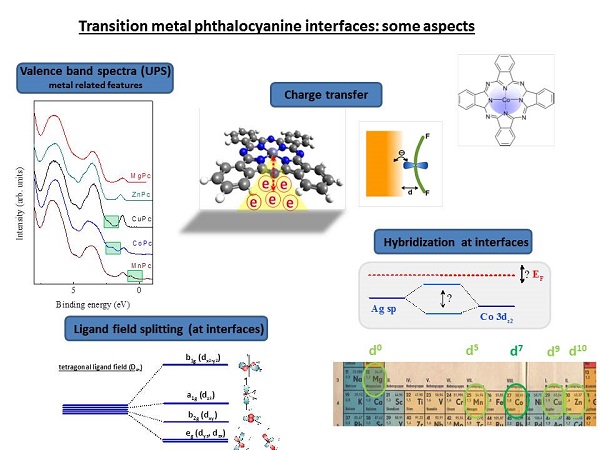
Heiko Peisert is Adjunct Professor (außerplanmäßiger Professor) of Physical Chemistry at the University of Tübingen, Faculty of Science, Institute of Physical and Theoretical Chemistry. Since 2003 he has been a permanent senior scientist leading the Physical Chemistry of Condensed Matter group and, after his Habilitation in 2011, gained the venia legendi in Physical Chemistry. Education & Career 1987–1992: Studies of Chemistry (Theoretical and Physical Chemistry), University of Leipzig 1992–1997: PhD, University of Leipzig, Wilhelm-Ostwald-Institut Thesis: “Characterization of chemically modified InP surfaces” 1998–2003: Scientific co-worker, Leibniz-Institute for Solid State and Materials Research Dresden, group “Surfaces and Interfaces” 2003–present: Permanent scientific co-worker (senior scientist), University of Tübingen April 2011: Habilitation (venia legendi) in Physical Chemistry October 2016: Appointment as außerplanmäßiger Professor (Adjunct Professor) Research Focus His research centres on the fundamental interface physics of organic semiconductors with metals and 2-D materials. Using synchrotron-based photoemission spectroscopy (XPS/UPS), X-ray absorption (NEXAFS/XAS), scanning tunnelling microscopy (STM) and Raman spectroscopy, his group investigates energy-level alignment, charge-transfer mechanisms and molecular orientation in thin films of phthalocyanines, acenes, low-band-gap polymers and perovskites. Recent projects include the growth and electronic structure of heptacene and peri-tetracene monolayers, tuning MoS₂ interfaces via functional phthalocyanines, and interface engineering for flexible perovskite photovoltaics. Scientific Service & Recognition Referee for >20 international journals 2012–2018: Member, Scientific Selection Panel, Helmholtz-Zentrum Berlin 2013–2015: Member, International Users’ Committee, ANKA Synchrotron, Karlsruhe 2020–present: Member, HZB User Committee (BESSY Berlin) Teaching & Mentoring Professor Peisert lectures in Physical Chemistry I & II, leads the advanced practical course in Physical Chemistry, and offers a master-level course Organic Semiconductors . His group currently advertises PhD and Bachelor/Master projects in collaboration with synthetic and theory partners.
Deng Weiwei is a Professor and Department Head of the Department of Mechanics and Aerospace Engineering at Southern University of Science and Technology (SUSTech) in Shenzhen, China. Previously, he served as an Associate Professor with tenure at Virginia Tech (2015-2017) and as an Assistant Professor at the University of Central Florida (2010-2015). He completed his postdoctoral training at Yale University (2008-2010) after earning his Ph.D. in Mechanical Engineering from Yale in 2008. His educational background includes: Bachelor of Engineering Mechanics from Tsinghua University (1995-1999) Master of Engineering Mechanics from Tsinghua University (1999-2001) Ph.D. in Mechanical Engineering from Yale University (2003-2008) Deng's research focuses on experimental fluid dynamics of micro- and nanoscale systems , particularly examining droplets, jets, and thin films. His work bridges fundamental fluid mechanics with practical applications in printing technologies, solar cell fabrication, and advanced manufacturing. He has made significant contributions to understanding electrohydrodynamic phenomena, droplet impact dynamics, and the controlled generation of microstructures through electrospray techniques. His laboratory has discovered novel fluid dynamics phenomena, including the resonance between light pressure perturbations and droplet instability, leading to uniform droplet splitting. The team also pioneered "electrofluidic disk atomization," using high-frequency AC electric fields to control jet instabilities. These discoveries have enabled more precise control over droplet generation processes, with applications in microfabrication and printing. Deng's scholarly output shows a clear progression from fundamental electrohydrodynamics to applied manufacturing technologies. His early work focused on basic electrospray mechanisms and droplet generation, while more recent publications emphasize applications in solar cell fabrication, flexible electronics, and advanced printing techniques. The consistent thread throughout is the manipulation of microscale fluid phenomena for technological advancement. His notable recognition includes: NSF CAREER Award (2015) Deng leads an active research group that has secured multiple major grants, including a National Natural Science Foundation of China special project (2020), a key project (2019), and a general project (2018). Prior to returning to China, he led three National Science Foundation projects in the United States. His student entrepreneurial team won first prize in the Southeast region of the Clean Energy Entrepreneurship Competition sponsored by the U.S. Department of Energy, receiving $100,000 in startup funding and an invitation to visit the White House. The DENGLab at SUSTech focuses on experimental fluid mechanics research with emphasis on microscale phenomena. The lab regularly hosts photography competitions to document fluid phenomena visually, demonstrating Deng's commitment to both scientific rigor and creative presentation of research findings.
Dr. Haoran Ren is a Research Fellow at Macquarie University and currently serves as an ARC DECRA Fellow at Monash University . His research focuses on Nanophotonics , with expertise in metasurfaces, orbital angular momentum, and holography. Education : PhD in Optics from Swinburne University of Technology (2013-2017). Dr. Ren's work explores advanced optical materials and nanotechnology for fundamental light-matter interactions and photonic applications. His research outputs include breakthroughs in orbital angular momentum holography, metasurface design, and chip-scale light manipulation. Scientific Awards include the Chinese Government Prize (2016), OSA Foundation Travel Grant (2015), Victoria Fellowship (2018), Humboldt Fellowship (2019), and major fellowships from Macquarie University and ARC . Dr. Ren has secured significant grants, including the ARC DP ($350k), ARC DECRA ($434k), and Macquarie Research Infrastructure Schemes . He is an Associate Investigator for the ARC Centre of Excellence for Transformative Meta-Optical Systems (TMOS) and actively contributes to scientific communities as an editor, reviewer, and seminar organizer.
William E. Bentley is the Robert E. Fischell Distinguished Professor of Engineering at the University of Maryland, College Park, where he serves as the Inaugural Director of the Robert E. Fischell Institute for Biomedical Devices and Director of the Maryland Technology Enterprise Institute (Mtech). He holds dual appointments in the Fischell Department of Bioengineering and the Department of Chemical and Biomolecular Engineering, with additional affiliation at the Institute for Bioscience and Biotechnology Research. Dr. Bentley earned his Ph.D. in Chemical Engineering from the University of Colorado at Boulder in 1989, following a Master of Engineering and Bachelor of Science in Chemical Engineering from Cornell University. His academic journey began at the University of Maryland in 1989, where he has remained throughout his distinguished career, founding the Fischell Department of Bioengineering and establishing himself as a leader in the field. His pioneering research focuses on the interface between biology and electronics, developing methodologies to interrogate and control molecular signaling both inside and outside of cells. Dr. Bentley's lab uses metabolic engineering and synthetic biology to rewire genetic circuits, with particular emphasis on bacterial quorum sensing systems and redox-based communication between biological systems and electronic devices. His groundbreaking work has established the field of 'electrogenetics,' which enables electronic control of biological function through redox signaling pathways. Current research explores creating 'smart' cellular systems that can recognize, compute, actuate, and deliver therapeutic agents in a programmed manner. Dr. Bentley's recent publications demonstrate a strong trend toward developing bidirectional communication between biological systems and electronic devices, with applications in protein analysis, biosensors, and therapeutic delivery systems. His work increasingly focuses on redox-based information processing and the development of 'biohybrid' systems that bridge the gap between electronics and biology, representing a paradigm shift in how we interface with biological systems. Among his numerous honors are: Distinguished University Professor (2016) Robert E. Fischell Distinguished Chair of Engineering (2016) Charles Thom Award, Society of Industrial Microbiology and Biotechnology (2013) AIChE Food, Pharmaceutical and Bioengineering Division Award (2012) University System of Maryland Regents' Faculty Award for Research (2011) Fellow of the American Chemical Society, American Academy of Microbiology, AAAS, and AIMBE Dr. Bentley has mentored more than 40 PhD students and 15 postdocs, many of whom now hold leadership positions in industry, federal agencies, and academia. His research has been continuously supported by major grants from NIH, NSF, DOD, DOE, FDA, and USDA, reflecting the interdisciplinary nature and significance of his work. He co-founded Chesapeake PERL, a protein manufacturing company based on insect larvae as mini bioreactors, demonstrating his commitment to translating research into practical applications. He leads the Biomolecular and Metabolic Engineering Laboratory, which has developed innovative approaches to biofabrication and electro-bio interfaces. Current research focuses on creating systems that enable 'programming' of biological function through redox communication, with applications in treating bacterial infections, developing next-generation biosensors, and advancing our understanding of cellular communication networks. His laboratory maintains active collaborations with industry partners and international research groups, particularly with institutions in Italy through the UMD-Trento partnership.
Peter Kofinas serves as Professor and Chair of the Department of Chemical and Biomolecular Engineering at the University of Maryland, with affiliate appointments in Bioengineering, Materials Science and Engineering, and the Fischell Institute for Biomedical Devices. Previously, he held roles as Associate Dean of Faculty Affairs and Graduate Programs in the A. James Clark School of Engineering and Associate Chair of the Fischell Department of Bioengineering. His educational background includes B.S., M.S., and Ph.D. degrees in Chemical Engineering and Materials Science from the Massachusetts Institute of Technology. After completing postdoctoral research at MIT, he joined the University of Maryland faculty in 1996. Research Focus: Kofinas directs the Functional Macromolecular Laboratory , specializing in functional polymers for medical, energy, and electronics applications. His work spans polymer electrolytes for lithium-ion batteries , additive manufacturing of magnetodielectric nanocomposites , biodegradable surgical sealants for adhesion prevention and wound healing, and structural color biosensors for pathogen detection. Recent projects include sprayable surgical materials, hemorrhage control hydrogels, and point-of-care diagnostic devices. His publications reveal a strong emphasis on energy storage materials (30% of recent work), surgical biomaterials (25%), and printable electronics (20%), with growing interest in point-of-care diagnostics and antimicrobial wound dressings. Senior Outstanding Research Award (2012) Two Outstanding Invention of the Year Awards (2007, 2001) National Science Foundation CAREER Award (1999) Engaged Faculty Award (2011) University of Maryland Keystone Professorship (2005–2012) Kofinas has graduated 23 PhD students (3 now in faculty positions), 9 MS thesis students, and mentored over 100 undergraduates. His entrepreneurial activities include founding startup companies commercializing laboratory innovations. He directs the Functional Macromolecular Laboratory, which integrates polymer synthesis, nanomaterials engineering, and biomedical device development across multiple collaborative projects with clinical and industrial partners.
Dr. Vytautas Dūdėnas is a Researcher at the Institute of Theoretical Physics and Astronomy (ITPA) within the Faculty of Physics at Vilnius University. His primary research focuses on particle physics theory and phenomenology, with specific expertise in quantum field theory, renormalization techniques, and beyond standard model physics. His work bridges theoretical frameworks with experimental applications in laser physics and optics. Dr. Dūdėnas' research interests span particle physics theory, quantum field theory, renormalization methods, and beyond standard model physics. His recent publications demonstrate a significant focus on laser-matter interactions, nonlinear optics, and advanced optical techniques. His work explores fundamental aspects of particle interactions while applying these principles to cutting-edge optical technologies and material processing techniques. The consistent theme across his research is the investigation of fundamental physical phenomena through both theoretical frameworks and experimental applications. Analysis of his recent publications reveals a strong emphasis on Bessel beams, supercontinuum generation, femtosecond laser processing of materials, and advanced optical techniques. His work demonstrates expertise in both theoretical physics concepts and their practical applications in photonics and materials science. The interdisciplinary nature of his research connects fundamental particle physics with applied optical technologies. Dr. Dūdėnas teaches advanced physics courses including Quantum Field Theory II and Mechanics, contributing to the education of future physicists at Vilnius University. His ORCID profile (0000-0001-9405-9959) provides access to his complete publication record, while his research outputs are extensively documented on INSPIRE-HEP.
Dr. Domas Paipulas is an Associate Professor at Vilnius University , affiliated with the Laser Research Center (LRC) . His work focuses on laser microprocessing of materials , integrated optics , and modification of optical properties , with applications in sensing and photonic device fabrication. Research Highlights: Ultrashort pulse interactions, hybrid glass-polymer microsystems, GRIN microoptics development Projects: EU-funded femtosecond laser microprocessing (2020-2023), Lithuanian Research Council grants He has supervised 1 PhD graduate and currently mentors 1 PhD student . Teaching includes Optical Systems (Master's), Optical Systems Design , and foundational physics courses. As a Faculty Council member , he contributes to academic governance.
Zeinab Hajjarian, Ph.D., is an active Assistant Professor of Biomedical Engineering at the University of Massachusetts, Lowell within the Francis College of Engineering. Her research program bridges soft-matter physics, engineering, and medical diagnostics to develop advanced optical imaging platforms for understanding disease pathophysiology, with particular focus on breast carcinoma. Her educational background includes a Ph.D. in Electrical Engineering from Pennsylvania State University (2009), an M.S. in Electrical Engineering from the University of Tehran, and a B.S. in Electrical Engineering from Sharif University of Technology in Tehran, Iran. Hajjarian's research centers on developing optical imaging and sensing technologies that characterize biomechanical and optical properties of tissues, particularly in cancer microenvironments. Her work applies laser speckle micro-rheology to map mechanical properties in tumor microenvironments, investigate cardiovascular conditions, and develop point-of-care coagulation testing devices. She has pioneered techniques for characterizing tissue micromechanical properties using laser speckle fluctuations and has developed multiple apparatus and algorithms for mechano-pathology investigation. Her publication portfolio demonstrates consistent advancement in laser speckle rheology applications, with recent work focusing on tissue granularities, viscoelastic spectra of biological tissues, and tumor microenvironment characterization. The research trajectory shows evolution from fundamental optical communications during her doctoral work to sophisticated biomedical applications in disease diagnostics. Selected Awards and Honors: Eleanor & Miles Shore Foundation Fellowship (2020) American Society for Laser Medicine and Surgery Research Grant (2019) Biomedical Engineering Society Career Development Award (2018) MGH Office of Women's Career Scholarly Writing Award (2017) Gordon Research Conference Best Poster Award (2016) Hajjarian has an exceptional record of innovation with over 20 original manuscripts (14 as first author), two invited review articles, and more than 15 patent applications (6 granted). Her research has significant translational potential for improving diagnostic pipelines and patient outcomes through integration of optical technologies in clinical settings. She previously held positions at the Wellman Center for Photomedicine at Massachusetts General Hospital and was promoted to Instructor in the Department of Dermatology at Harvard Medical School in 2013. Her laboratory focuses on developing novel optical microscopes and sensing devices for characterizing biophysical properties of soft tissues and biofluids, with emphasis on translating these technologies to clinical diagnostic applications.