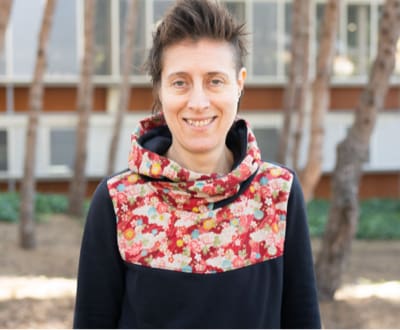
John E. Straub is a Professor in the Department of Chemistry at Boston University (BU), where he leads the Straub Lab. His work focuses on molecular dynamics and thermodynamics of complex biomolecular systems, particularly protein aggregation and amyloid formation. He has authored influential books, including Proteins: Energy, Heat and Signal Flow and Mathematical Methods for Molecular Science , and has held leadership roles such as Chair of the Department of Chemistry at BU (2007-2012) and President of the Telluride Science Research Center (2006-2008). Education: BS in Chemistry (University of Maryland, 1982, advisor: Millard Alexander) MA (Columbia University, 1984) MPhil (Columbia University, 1986) PhD in Chemical Physics (Columbia University, 1987, advisor: Bruce Berne) NIH Postdoctoral Fellow in Chemistry (Harvard University, 1987-1990, advisor: Martin Karplus) His research interests span computational methods for enhanced sampling, reaction dynamics, and the interplay between protein structure and aggregation. He has pioneered studies on amyloid precursor proteins and cholesterol interactions in lipid bilayers, emphasizing the role of monomer structural ensembles in aggregation mechanisms. Articles from his lab highlight advancements in understanding lipid phase separation, amyloid fibril formation, and computational techniques like machine learning-derived variables and replica exchange methods. His work bridges theory and experiment, with collaborations across institutions globally. Scientific Awards: NIH Postdoctoral Fellowship (Harvard University, 1987-1990). Professor Straub has advised numerous students, many of whom hold academic positions at leading institutions, including Jianpeng Ma (Rice University) and Nicolae-Viorel Buchete (University College Dublin). His lab actively explores projects in computational biophysics, with ongoing work on lipid mixtures, sterol-derived Raman tags, and membrane protein interactions.