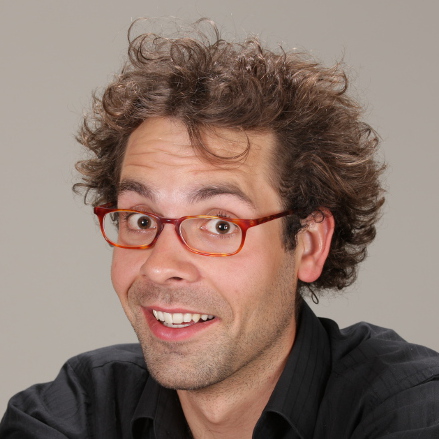
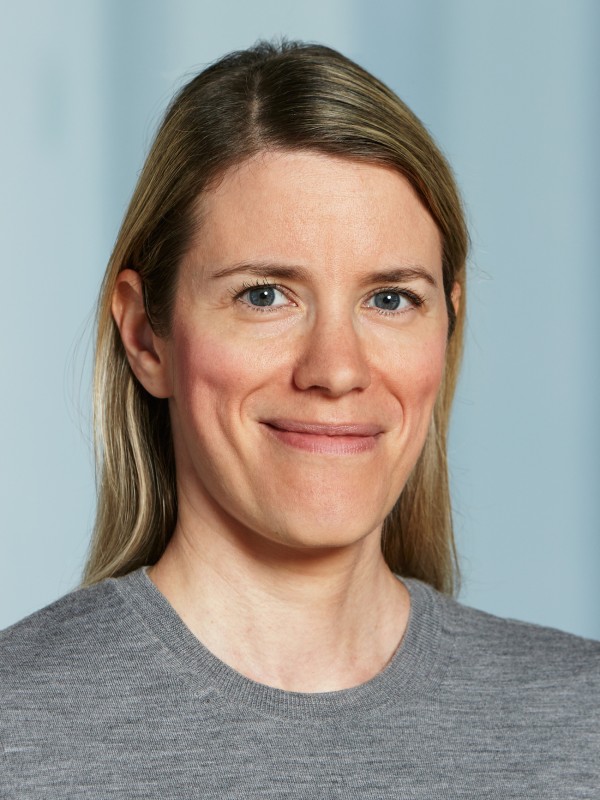
Christina Antonie Reh is a Lecturer at the Lucerne School of Business (HSLU), affiliated with the Institute of Communication and Marketing (IKM MM). Her roles include academic teaching and research in digital marketing and sustainability. She holds a PhD from WHU - Otto Beisheim School of Management and has professional experience in data science and marketing at companies like LOréal and SevenVentures. Education: PhD (tbc 2024), WHU; M.Sc. (2016), LMU Munich; B.Sc. (2013), LMU Munich Her research focuses on digital marketing effectiveness , sustainability in advertising , and consumer behavior . Notable projects include studies on long-term brand equity and sustainable product messaging. Recent work explores the impact of climate pledges on consumer trust. Publications highlight her contributions to media measurement modeling and online coupon strategies. Key awards include the Amazon Research Awards (ARA 2023) and MassChallenge recognition (2024). Advising: No formal students listed; however, co-founded baybies GmbH and Aiko Pet Foods GmbH. Grants: $28,000+ from Amazon Research Awards. Labs/Teams: Co-founder of startups baybies and Aiko Pet Foods, focusing on sustainable consumer products and pet food innovation.
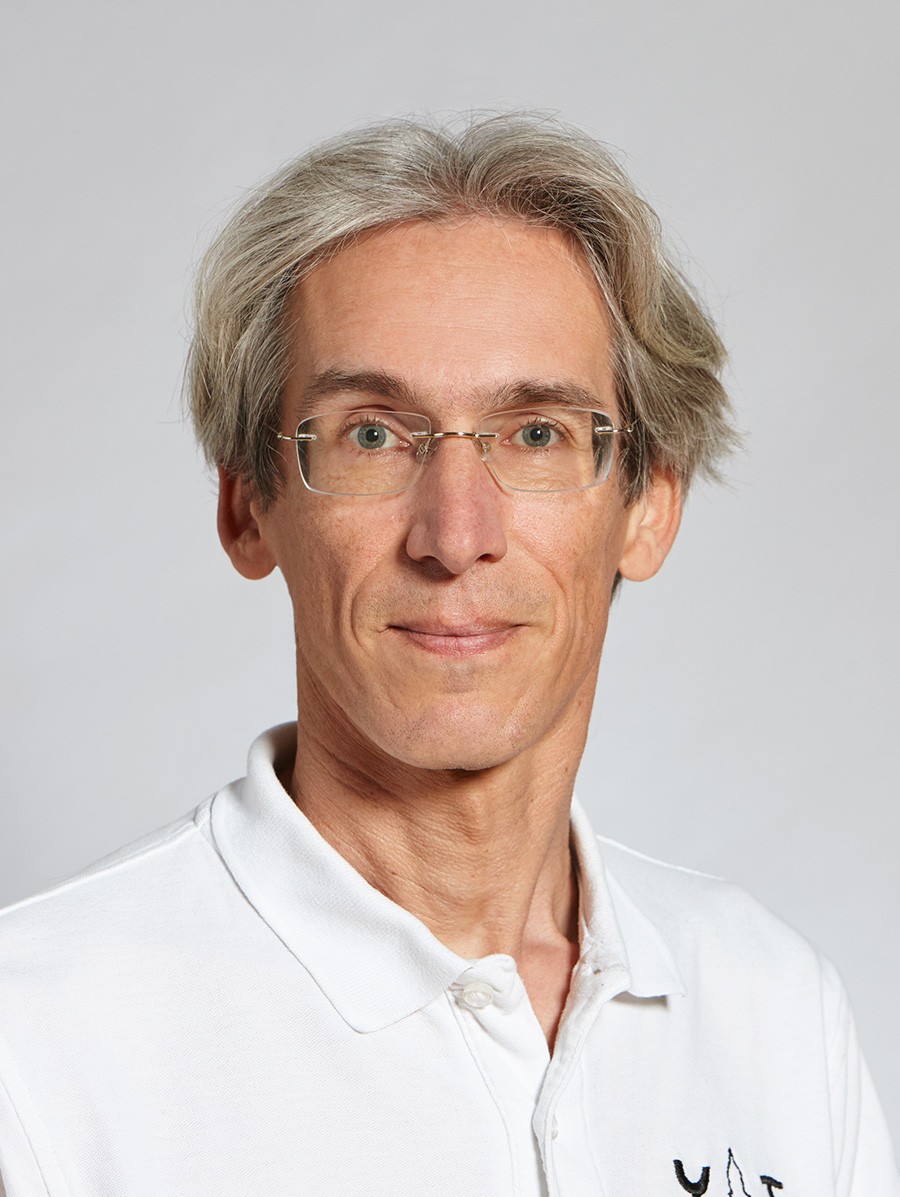
Robert West is an Associate Professor at EPFL (École polytechnique fédérale de Lausanne) in the School of Computer and Communication Sciences , leading the Data Science Lab (dlab) . His research focuses on Natural Language Processing , Machine Learning , and Computational Social Science , analyzing human-generated data from the web, social media, and online platforms. Education : PhD in Computer Science (2016) - Stanford University MSc in Computer Science (2010) - McGill University BSc in Computer Science (2007) - Technische Universität München Research Interests : West develops algorithms for analyzing large-scale web data, with emphasis on multilingual NLP , social network analysis , and AI ethics . His work bridges machine learning with social science to understand digital human behavior. Scientific Awards : ICWSM’22 Adamic–Glance Distinguished Young Researcher Award Google Faculty Research Award Facebook Research Award Multiple Outstanding Paper Awards at ICWSM and WWW Advising & Grants : He advises 12 PhD students and has secured funding from the Swiss National Science Foundation , Swiss Data Science Center , and industry partners. His lab maintains collaborations with Microsoft Research and CROSS . Labs & Collaborations : West leads the Data Science Lab at EPFL, which focuses on web-scale data analysis , privacy-preserving machine learning , and AI for social good . The lab develops tools like Wikispeedia and Quotebank for public data exploration.
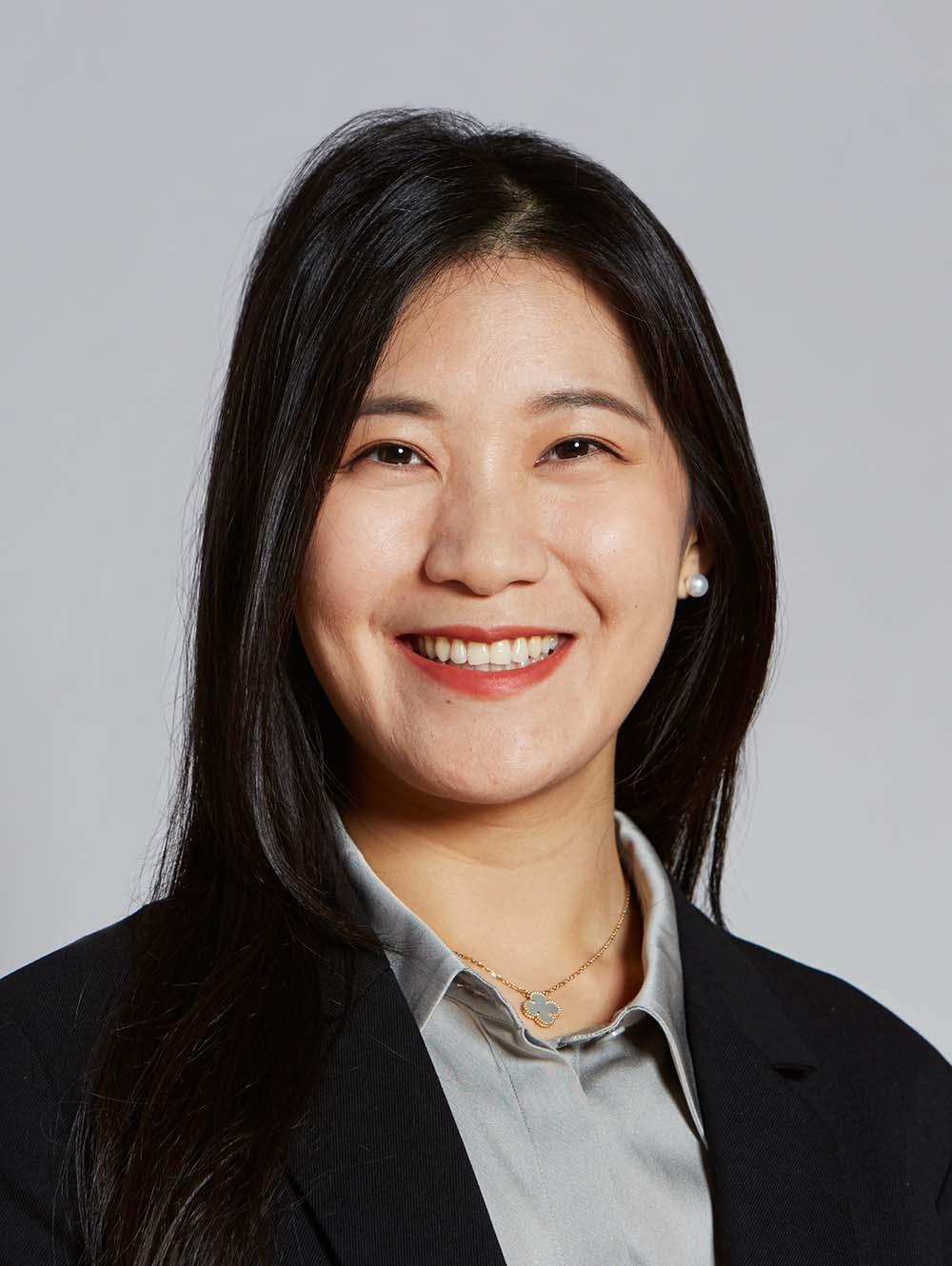
Prof. Konrad Schindler holds the position of Full Professor at the Department of Civil, Environmental and Geomatic Engineering at ETH Zürich. He is also the Head of the Institute of Geodesy and Photogrammetry (IGP), leading research and educational activities in geomatics and computer vision. His career spans roles as a Photogrammetric Engineer, scientific assistant, postdoc researcher, and academic faculty across institutions including Graz University of Technology, Monash University, and TU Darmstadt before joining ETH Zürich in 2010. Education: Undergraduate studies in Geodesy (1992–1995), Graz University of Technology, Austria MEng in Photogrammetry and Geoinformation (1995–1999), Vienna University of Technology, Austria PhD in Computer Science (2001–2003), Graz University of Technology, Austria Research focuses on Photogrammetry , Remote Sensing , Computer Vision , and Image Understanding with interdisciplinary applications in environmental monitoring, geospatial analysis, and disaster response. He develops computational methods for 3D reconstruction, fusion of multi-modal data, and AI-driven solutions for satellite imagery interpretation. His work bridges geomatic engineering and machine learning to address challenges in urban mapping, climate modeling, and biological systems analysis. Publications reflect expertise in geospatial AI, diffusion models, and benchmarking datasets for disaster resilience. Notable works include Marigold (image analysis adaptation) and BRIGHT (building damage assessment). His research emphasizes practicality and scalability, such as affordable depth estimation and global biomass datasets. He has received the 2013 Marr Prize Honourable Mention (IEEE) and the 2012 U.V. Helava Award (ISPRS), alongside several Best Presentation Awards. His contributions span technical leadership, editorial roles (ISPRS Journal), and service to Swiss remote sensing commissions. Advising and grants: While no specific advisee names or grant details are listed, his career trajectory includes mentoring postdocs and junior faculty. He teaches advanced courses in Photogrammetry , Image Interpretation , and Machine Vision , integrating cutting-edge AI techniques into curricula. His research group collaborates on global-scale projects like canopy height mapping and satellite-based climate variable assessments. Labs/Teams: As Institute Head, he oversees the IGP lab at ETH Zürich, with prior affiliations including the Digital Perception Lab (Monash University) and the Computer Vision Lab (ETH Zurich). His work often involves multi-institutional collaborations focused on geospatial AI and environmental science.
Prof. Hedan Bai is an Assistant Professor at the Department of Materials, ETH Zürich, specializing in robotics materials, bio-inspired systems, and soft robotics. Their research focuses on developing advanced materials for sensing, energy-efficient systems, and biomedical applications. Notable projects include the SmartSuit architecture for space exploration and self-healing optical sensors for soft robots. Research interests span bioelectronics, stretchable sensors, haptic interfaces, and biomimetic materials. Bai's work integrates material science with robotics to create adaptive, sustainable, and intelligent systems. Key areas include wireless implants for neuromodulation, environmental-responsive textiles, and energy-harvesting devices. Publications highlight innovations in optical waveguides, self-healing materials, and wearable technologies. Their interdisciplinary approach bridges robotics, biomedical engineering, and aerospace applications. No formal awards are listed, but contributions to next-gen materials for robotics are prominent. Advising and grants are not detailed in the text, but Bai's lab focuses on projects like SmartSuit for extravehicular activities and synthetic afferent neural networks. Collaborations likely involve aerospace and biomedical sectors.
Prof. Dr. Roland Büchi is a Professor at the School of Engineering, Zurich University of Applied Sciences (ZHAW), specializing in control systems engineering and applied AI. His affiliation includes leadership roles in research projects such as the ongoing 'Digital Bridge to Computer Science' initiative. With a career spanning decades, he maintains active research output and industrial collaborations. Research Interests: Büchi focuses on control systems optimization , particularly PID controller tuning using AI methods, system identification, and applications in robotics and drone technology. His work bridges theoretical control theory with practical implementations in mechatronics. Recent efforts explore machine learning for hysteresis modeling and swarm optimization for control systems. Publication Trends: His 15 most recent works (2018-2024) emphasize AI-driven control optimization , drone technology advancements, and engineering education. Dominant themes include PID parameter tuning for time-delayed systems, drone telemetry, and adaptive learning algorithms. A notable shift toward AI/ML applications in control engineering emerged post-2020. Labs and Teams: Büchi collaborates with researchers like Lukas Gruber and has historical ties to ETH Zurich’s robotics projects. His work involves experimental validation at ZHAW’s engineering facilities, with patents in turbocharger magnetic bearing systems.
Luca Benini is a Full Professor at the Department of Information Technology and Electrical Engineering at ETH Zurich. He works at the Institute for Integrated Systems, located at Gloriastrasse 35, 8092 Zurich, Switzerland. His contact number is +41 44 632 66 64. Research Interests: Focus on VLSI design and FPGA-based systems development. Teaching: Offers the course VLSI 1: HDL Based Design for FPGAs in the Fall semester 2025. Contact: lbenini@iis.ee.ethz.ch
Pascal Frossard is a Full Professor at the Department of Electrical Engineering in the School of Engineering (STI) at EPFL, with a courtesy appointment in the School of Computer and Communication Sciences. He founded and directs the LTS4 laboratory since 2003, co-leads the EPFL AI Center and Swiss Data Science Center, and serves as Associate Dean for Research at STI. Research Focus: Machine Learning, Graph Signal Processing, AI Applications in Healthcare, Computer Vision Academic Leadership: IEEE Fellow, ELLIS Fellow, Conference Chair roles Key Projects: Digital Pathology for Oncology, Cardiac Digital Twins, Robust Machine Learning Research Interests: His work bridges signal processing, machine learning, and applied mathematics, emphasizing biomedical applications. Recent research includes adversarial robustness in classifiers, network representation learning, and 360-degree video analysis. Scientific Awards: IEEE Fellow ELLIS Fellow Leadership in IEEE technical committees Advising & Grants: Supervised 20+ PhD students and postdocs. Secured major grants from PHRT, Hasler Foundation, FNS-Sinergia, Armasuisse, Google, and Cisco.
Olga Sorkine-Hornung is a Professor of Computer Science at ETH Zurich and head of the Institute of Visual Computing. She leads the Interactive Geometry Lab, focusing on theoretical and practical advancements in digital content creation, geometry processing, and shape modeling. Current position: ETH Zurich, Department of Computer Science Previous roles: Courant Institute (NYU), Technical University of Berlin Education: BSc and PhD from Tel Aviv University, postdoc at TU Berlin Her research spans shape representation, digital fabrication, computer animation, and fundamental geometry processing. Key contributions include Laplacian surface editing, as-rigid-as-possible deformation, and generalized winding numbers. She works on applications in VR, AR, and autonomous systems. Awards include Test of Time Awards (2024), ACM Fellow (2020), ERC Consolidator Grant (2020), and EUROGRAPHICS Young Researcher Award (2008). She has supervised numerous students and co-developed software libraries like libigl and Instant Meshes . Co-chair roles for SIGGRAPH, Eurographics, and Pacific Graphics Editorial board member for ACM Transactions on Graphics and other journals Keynote speaker at VMV, CVPR, and SIAM conferences Her work bridges mathematical rigor with practical implementation, advancing computer graphics and geometry processing through intuitive algorithms that maintain surface detail while enabling efficient computation.
Mathieu Salzmann is a Senior Scientist and Lecturer at École Polytechnique Fédérale de Lausanne (EPFL), affiliated with the Computer Vision Laboratory (CVLAB) in the School of Computer and Communication Sciences (IC). He also holds a courtesy appointment with the EPFL College of Humanities and serves as Deputy Chief Data Scientist at the Swiss Data Science Center (SDSC). He has held concurrent roles in teaching units including SIN, SODH, and SSC, reflecting his interdisciplinary engagement. His research focuses on the intersection of machine learning and computer vision, particularly in deep learning for 2D and 3D visual scene understanding, efficient and robust models, domain adaptation, and interpretable AI. These interests are evident across his extensive publication record in top-tier venues. His recent publications (2023–2024) show a consistent trend in advancing deep learning methods for visual recognition, with strong representation at CVPR, ICCV, ECCV, ICML, ICLR, and NeurIPS. Topics include domain generalization, 3D understanding, model robustness, and multimodal learning, often with applications in real-world systems. His editorial roles as Associate Editor for IEEE TPAMI and Action Editor for TMLR further highlight his leadership in the field. Area Chair: ICML 2023, CVPR 2023, ICCV 2023, NeurIPS 2023, AAAI 2024, ECCV 2024 Associate Editor: IEEE Transactions on Pattern Analysis and Machine Intelligence (TPAMI) Action Editor: Transactions on Machine Learning Research (TMLR) Mathieu Salzmann has supervised numerous PhD students at EPFL, both current and past, including Bouquet Yann Yanis, Javed Saqib, Li Shuangqi, and others. He has also been involved in research grants and collaborative projects, such as his work with S. Süsstrunk and R. Baroni on comics reconfiguration. His part-time role as Senior GNC Engineer at ClearSpace (2020–2024) illustrates his applied research engagement in aerospace systems. He is actively involved in EPFL’s data science and AI research ecosystem through SDSC and multiple labs.
Prof. Srdjan Capkun is a Full Professor in the Department of Computer Science at ETH Zurich and Director of the Zurich Information Security and Privacy Center (ZISC). He holds a Dipl.Ing. from the University of Split (1998) and a Ph.D. from EPFL (2004). His research focuses on system and network security, including wireless security (e.g., secure positioning), trusted computing, blockchain technologies, and privacy-preserving systems. He co-founded 3db Access (acquired by Infineon) and Sound-Proof, addressing secure distance measurement and authentication. Notable achievements include an ERC Consolidator Grant (2016), ACM Fellowship, and IEEE Fellowship. Education: Dipl.Ing., Electrical Engineering / Computer Science, University of Split, 1998 Ph.D., Communication Systems, EPFL, 2004 Research Interests: Wireless security (e.g., UWB, GNSS, cellular) Trusted execution environments (TEEs) Blockchain and cryptocurrency systems Privacy-preserving technologies Awards & Grants: ERC Consolidator Grant (2016) ACM Fellow and IEEE Fellow Leadership of ZISC Advising & Labs: Leads the System Security Group at ETH Zurich Guided postdoctoral researchers and graduate students in security and privacy Companies: 3db Access (secure distance measurement) Futurae (online authentication)
Kevin O'Sullivan is a Researcher at the Professorship for Information Management within ETH Zürich , a leading Swiss institution specializing in science, technology, and business innovation. His research focuses on Information Management , emphasizing Data Governance , Digital Transformation , and Business Informatics .
Prof. Dr. Frank Ulbrich is a Lecturer and Programme Director for the BSc Business Administration at the Lucerne School of Business (HSLU). He holds a PhD in Business Administration from the Stockholm School of Economics. His academic career spans roles at universities in Sweden, the UK, Canada, and Switzerland, alongside IT & Management consulting experience. Research focuses on management education, project management, information management, and organizational change. He has published extensively in areas like shared services, digital transformation, and curriculum development. Notable awards include multiple Emerald Literati Awards and a Fellowship from the Higher Education Academy. Education: PhD in Business Administration (Stockholm School of Economics) Affiliations: Institute of Business and Regional Economics at HSLU Teaching Subjects: Academic Methods, Higher Education Management, Project Management, Digital Transformation Recent presentations include discussions on bridging academia-industry gaps, curriculum integration of SDGs, and data-driven learning strategies. His work emphasizes aligning education with labor market needs and advancing evidence-based teaching practices.
Prof. Dr. Günther Dissertori is a Full Professor and Rector of ETH Zurich, where he oversees teaching and academic affairs. His academic journey began at the University of Innsbruck, followed by a doctoral position at CERN, and he joined ETH Zurich as an Assistant Professor in 2001 before becoming a Full Professor in 2007. Academic Role: Full Professor of Particle Physics Institutional Leadership: Rector of ETH Zurich (since 2022) Contact: guenther.dissertori@sl.ethz.ch Research Interests: Dissertori's work spans Particle Physics and Experimental Physics , notably contributing to the CMS experiment at CERN, which was instrumental in the Higgs boson discovery. His group also developed cost-effective PET devices, leading to the spin-off Positrigo AG . Research keywords include Detector Development , Medical Imaging , and Quantum Physics . Teaching Excellence: Recognized with multiple Golden Owl awards (2005–2020) and the Credit Suisse Award for Best Teaching (2013), Dissertori is celebrated for his pedagogical impact in the Department of Particle Physics. Scientific Contributions: His publications include advancements in CMOS technology, quantum dynamics, and medical applications, reflecting interdisciplinary expertise in high-speed electronics, environmental science, and architectural history.
Prof. Olga Sorkine Hornung is a Full Professor of Computer Science at ETH Zürich, leading the Interactive Geometry Lab. She holds a BSc and PhD from Tel Aviv University (2000 and 2006) and conducted postdoctoral research at Technical University Berlin. Her research focuses on computer graphics, geometric modeling, and geometry processing, with applications in shape editing, digital fabrication, and animation. She has received numerous accolades, including the ACM Fellowship (2020), ERC Consolidator Grant (2020), and the Golden Owl Teaching Award (2021). Her work bridges theoretical foundations and practical algorithms, addressing challenges in parameterization, surface compression, and interactive design tools. Her research interests span: Computer Graphics & Visualization Geometric Modeling & Processing 3D Content Creation & Digital Fabrication Garment Design & Simulation Human Motion Analysis & Animation Awards and grants include: 2024: Best Paper Honorable Mention (EUROGRAPHICS) 2023: Member of Swiss Academy of Engineering Sciences (SATW) 2020: ERC Consolidator Grant 2017: Rössler Prize (ETH Zurich) Her lab focuses on developing novel methods for interactive geometry processing, with recent advancements in garment modeling (e.g., AIpparel, Rags2Riches) and motion retargeting systems like WalkTheDog. She actively collaborates on interdisciplinary projects, including biomedical applications and sustainable fashion technology.
Prof. Jean-Philippe Thiran is a Full Professor at École Polytechnique Fédérale de Lausanne (EPFL), where he serves as Director of the Signal Processing Laboratory (LTS5) and Director of the Institute of Electrical and Micro Engineering. He also maintains a part-time Associate Professor position with the Department of Radiology of the University Hospital Center (CHUV) and University of Lausanne (UNIL). Born in Namur, Belgium in 1970, he received his Electrical Engineering degree and PhD from the Université catholique de Louvain (UCL), Belgium, in 1993 and 1997 respectively. He joined EPFL in 1998 and has established himself as a leading researcher in computational imaging. His research focuses on computational imaging , with significant contributions to medical image analysis (particularly diffusion MRI, ultrasound imaging, and digital pathology) and computer vision . His recent work integrates advanced modeling, simulation, and machine learning techniques to extract microscopic tissue information from macroscopic MRI signals. This approach combines hyper-realistic synthetic tissue models, advanced Monte-Carlo simulations, and ML-based estimation techniques for brain microstructure analysis with potential applications to other tissues. Senior Member of IEEE Fellow of the European Association for Signal Processing (EURASIP) Prof. Thiran has authored or co-authored 1 book, 9 book chapters, 250 journal papers and over 270 peer-reviewed conference papers, and holds 12 international patents. He previously served as Co-Editor-in-Chief of the Signal Processing journal (2001-2005) and associate editor of IEEE Transactions on Image Processing. He has chaired major conferences including EUSIPCO 2008 and IEEE ICIP 2015. His laboratory at EPFL brings together interdisciplinary researchers to develop innovative imaging techniques that bridge macroscopic measurements and microscopic tissue properties, with significant potential for medical diagnostics and treatment planning applications.