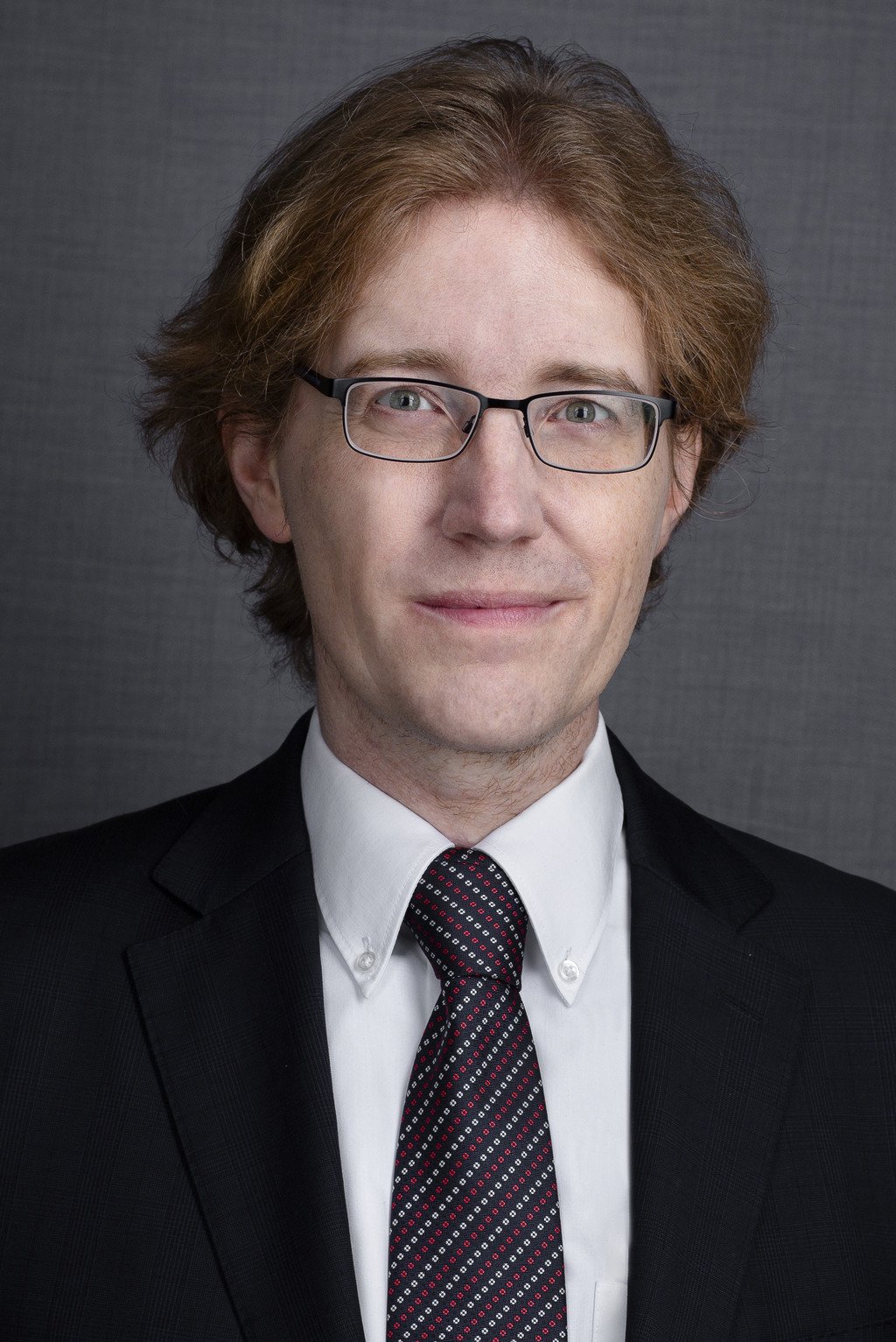
Prof. Dr. Michael Beurskens is a faculty member at the Faculty of Law of the University of Passau , holding the Chair of Private Law, especially Business Law and Digitalisation . His work integrates Private Law , Competition Law , and Intellectual Property Law with Digitalization challenges, focusing on AI regulation, data access, and GDPR compliance. Academic Background: LL.M. in Intellectual Property Rights (University of Chicago) LL.M. in Gewerblicher Rechtsschutz Attorney-at-Law (New York) Habilitation: University of Düsseldorf, 2007 His research interests span the legal frameworks governing online platforms (Digital Markets Act, Digital Services Act), data trading (Data Act, Data Governance Act), AI regulation (AI Act), and copyright (InfoSoc Directive, DSM Directive). He emphasizes practice-oriented research and team-based academic collaboration , including social activities like weekly lunches and access to central ice cream supplies. Key teaching activities include courses on Corporate Law , Commercial Law , Law of Obligations , and Intellectual Property , with a focus on e-learning projects such as Schuldrecht AT Online and Gesellschaftsrecht Online. He advocates for student-led research and early publication opportunities . The chair actively promotes women in science through preferential employment and intensive supervision. It also develops legal tech tools like Visilex (jurisprudence flashcards) and CASIM (case simulation software).
Dr. Katharina Graf is a Research Fellow at the Institute of Cultural Anthropology and European Ethnology, Faculty of Linguistics, Cultures and Arts, Goethe University Frankfurt. She leads the DFG-funded ethnographic research project Cyborg Cook – Domestic Cooking in the Digital Age , investigating how digital technologies transform domestic cooking practices, knowledge reproduction, and socio-political negotiations around gender, class, and race in German households. Previously, she was a Postdoctoral Research Fellow at the SOAS Food Studies Centre, University of London, where she conducted research on bread as a measure of urban stability in Morocco, funded by the AXA Research Fund. Her educational background includes a PhD in Social Anthropology from SOAS, University of London (2016), with fieldwork in Marrakech, and a Diplom in Geography from the universities of Tübingen, Bonn, and Cologne, focusing on water supply in rural Morocco. Katharina Graf’s research lies at the intersection of cultural anthropology, food studies, gender, urban life, and science and technology studies. She explores how everyday practices—especially cooking—reflect and shape broader social, political, and technological transformations. Her work emphasizes the entanglement of material culture, digitalization, and human agency, particularly in domestic spaces. She investigates how food serves as a lens for understanding political legitimacy, social change, and human-machine relations. Her recent publications and blog posts from the Cyborg Cook project reveal a strong trend toward understanding digital domesticity through ethnographic, sensory, and feminist lenses. Themes include the role of mothers as technological pioneers, the disruption of routines by smart devices, and the multisensory experience of digital cooking practices. Her earlier work on bread in Morocco highlights how food security and culinary practices are deeply tied to political stability and state-society relations. Postdoctoral Fellowship, AXA Research Fund Principal Investigator, DFG-funded 'Cyborg Cook' project Dr. Graf has supervised undergraduate and postgraduate students at SOAS and Goethe University. While no specific grants beyond DFG and AXA are named, her role as principal investigator indicates leadership in competitive research funding. She is actively involved in academic service, including as associate book reviews editor for the FoodAnthropology Blog (Society for the Anthropology of Food and Nutrition) and former co-convenor of the Anthropology of Food Network at EASA. She disseminates research through innovative public formats such as photo exhibitions, cookery classes, and comedy clubs, reflecting a commitment to engaged scholarship. She is affiliated with the Cyborg Cook research team at Goethe University, an interdisciplinary group using ethnographic methods to study digital kitchen technologies. The project emphasizes collaborative, sensory, and participatory research approaches, often involving co-creation with participants through shared meals and observational cooking sessions.
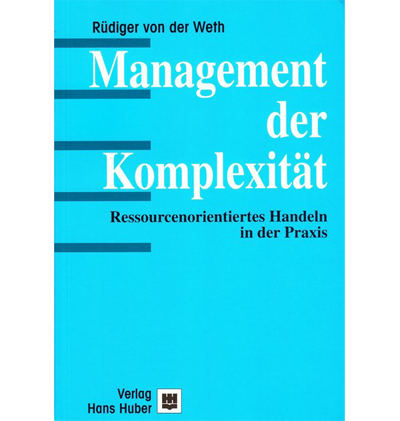
Prof. Rüdiger von der Weth holds a professorship in Business Administration / Human Resources Management and Labour Sciences at Dresden University of Applied Sciences (HTW Dresden) , specifically within the Faculty of Business Administration . His academic career includes prior roles as a professor at HTW Dresden since 2003 and earlier at HfT Stuttgart (2000–2003). He specializes in work psychology, knowledge management, and complexity management, with a focus on human-centric digitalization strategies in complex organizational environments. Education: Studied Psychology (Diploma) and Software Engineering at TU Berlin (1979–1985). His habilitation (1999) focused on complexity management at TU Dresden. Professional experience includes roles as a management trainer (1991–1995) and academic positions at the University of Bamberg. Research Interests: Examines digitalization’s impact on work efficiency, motivation, qualification needs, and health consequences. Develops strategies for technology integration in SMEs, recruitment/qualification strategies, and human-oriented digitalization frameworks. Collaborates with companies like Infineon and academic institutions through the Human Factors and Resources working group with the HR Management chair. Teaching Responsibilities: Offers modules such as Work and Organisational Psychology, Knowledge Management, Ergonomics, and Management of Complex Leadership Tasks across multiple programs including Business Administration, Production Engineering, and International Management. Courses emphasize practical application in technical and organizational contexts. Advising & Collaboration: Supervises theses on digitalization’s societal impacts, technology implementation strategies, and SME innovation. Oversees cooperative doctoral projects and serves as university supervisor for FH Nordwestschweiz. Active in research projects funded through third-party collaborations.
Toon Tierens is an external doctoral researcher at the Faculty of Psychology and Educational Sciences, KU Leuven, affiliated with the Methodology of Educational Sciences Research Group. He works on the SMASCH (Smart Schools) project under the supervision of Prof. Mathias Decuypere, Prof. Sigrid Hartong, and Dr. Samira Ali Reza Beigi. Research Focus: Platformisation of schools, digitalisation of education, private-public partnerships, and qualitative research methodologies His recent publications explore digital education's impact on teacher professional identity, edtech startup valuation dynamics, and temporal governance in education policy. Key themes include platformisation, socio-technical systems, and critical analyses of digital educational governance.
Manfred Seifert is Professor of European Ethnology / Cultural Studies at Philipps-Universität Marburg (Faculty of Social Sciences and Philosophy, Fb03) since October 2013. He simultaneously serves as speaker of the DGEKW-Commission “Work Cultures” and is a member of the Scientific Advisory Board of the Germanisches Nationalmuseum (since 2018) and of Germany’s former expert committee on Intangible Cultural Heritage (2013-2022). From 2006-2013 he was head of the European-Ethnology department at the Institute for Saxon History and European Ethnology e.V. in Dresden. Education & Academic Career 1984-1989 Studies of European Ethnology, Psychology and History at Universities of Passau, Tübingen and Vienna (Master 1989) 1994 Dr. phil. (European Ethnology), University of Passau – Dissertation on National Socialist cultural policy in the Reichsarbeitsdienst 2002 Habilitation (European Ethnology), University of Passau – Thesis on domestic heating as cultural technology 2009 Appointment as Associate Professor, University of Passau 2013-present Full Professor, Philipps-Universität Marburg Research Interests Manfred Seifert’s work is driven by an ethnographic and historical interest in the cultural constitution of everyday life. Central thematic axes include: Work Cultures & Economy: digitalisation, neoliberal management, flexibility, precarity, emotions and empathy in labour life. Space & Landscape: perception, emotion, atmosphere, construction of landscape and urban space. Home & Identity: belonging, mobility, globalisation, plural identities, emotional geographies. Popular Music & Culture: folk music cultivation, musical identity, festivals and competitions. NS Cultural Policy: Reichsarbeitsdienst, Thingspiel movement, propaganda and everyday culture. Theory & Method: biography research, ethnography of space, cultural theory, digital archives. Publications Seifert’s publication corpus (more than 120 articles plus numerous monographs and edited volumes) reveals a consistent trajectory from historical studies of National Socialist cultural work to contemporary analyses of flexible labour, digital work cultures, and the emotional dimensions of economy and home. Recent outputs (2020-2025) foreground interdisciplinary perspectives on post-Fordist work, intangible heritage policy, and the cultural semantics of home in late modernity. Memberships & Advisory Roles Member, Scientific Advisory Board, Germanisches Nationalmuseum (since 2018) Former member, Independent Expert Committee on Intangible Cultural Heritage (2013-2022) Speaker, DGEKW-Commission “Work Cultures” Editorial activity for Zeitschrift für Empirische Kulturwissenschaft Research Infrastructure & Teams At Marburg, Seifert teaches and conducts research within the Institute for Critical Studies in Culture and History , fostering interdisciplinary dialogue between European ethnology, sociology, history and cultural geography. He has also co-initiated digital heritage and biography projects, including the Lebensgeschichtliches Archiv für Sachsen and online editions of Adolf Spamer’s works.
Dr. Julia Pohle is Co-head of the Research Group "Politics of Digitalization" at the WZB Berlin Social Science Center since May 2024, where she has served as Senior Researcher since April 2015. She concurrently holds positions as Associate Researcher at the CNRS Centre Internet and Société in Paris (since January 2025) and Senior Associate Researcher at the Center for Digitalisation, Democracy and Innovation (CD2I), Brussels School of Governance (since October 2021), establishing her as a leading transnational scholar in digital governance. Her academic journey includes a PhD in Communication Studies from Vrije Universiteit Brussel (2016), a Magister Artium in Cultural Studies, Computer Science, and Philosophy from Humboldt-Universität zu Berlin (2004-2007), and foundational studies at Universität Bremen and Università di Bologna. Her research critically examines the tension between nation states and global digital cooperation through the lens of digital sovereignty, geopolitics, and communication governance. Pohle's extensive publication record reveals a decisive shift from multistakeholder internet governance frameworks toward critical analyses of digital sovereignty discourses since 2019. Her interdisciplinary work bridges communication studies, political science, and law, with recurring themes including power dynamics in internet architecture, gendered dimensions of data privacy, and the geopolitical implications of EU regulatory initiatives. Recent articles demonstrate increasing engagement with Global South perspectives and sustainability concerns in digital policy. Her scientific recognition includes: Fellow of the Global Governance Futures Program (Robert Bosch Foundation Multilateral Dialogues) (2014-2015) PhD fellow of the Research Foundation Flanders (FWO) (2010-2015) As Academic Editor of Internet Policy Review since 2020 and Co-Chair of IAMCR's Communication Policy and Technology Section, she actively shapes scholarly discourse. Her leadership extends to steering committees of the Internet Governance Forum Germany (2016-2022) and Global Internet Governance Academic Network (2013-2016), demonstrating sustained engagement with policy communities. At WZB, she leads the "Politics of Digitalization" research group and drives multiple high-impact projects including "Re-claiming Digital Sovereignty in discourse, policy and practice (ClaimSov)", "Forging Successful AI Applications for European Economy and Society (FORSEE)", and "Balancing Acts: European digital policy amidst economic, normative and security competition", positioning her at the forefront of critical digital policy scholarship.
Anna Maria Zouhar is an academic staff member at the History Department of the University of Education Ludwigsburg, specializing in digitalisation in teaching, studies, and continuing education. Her primary responsibilities include teaching and advising, with office hours available by appointment via email. Education: First state examination for teaching at secondary schools (Political Science, German, and History), 2020, University of Education Ludwigsburg Research Interests: Anna Maria Zouhar's research and professional focus lies in the intersection of History education and digital transformation. Her work emphasizes integrating digital tools and methodologies into teaching practices, particularly for secondary school instruction in German and Political Science contexts.
Dr. Stefan Thiemann is a faculty-level researcher at the University of Hamburg, serving since 2017 as head of the Center for Sustainable Research Data Management and since 2016 as the university’s Open-Access officer. He represents Hamburg in the National Research-Data Infrastructure (NFDI) and is a principal investigator in the Cluster of Excellence "Understanding Written Artefacts" (Research Field F: Data Linking). Education: Diplom in Meteorology & Computer Science, University of Hamburg (1990) Dr. rer. nat. in Geosciences, University of Hamburg (1996, dissertation on Arctic boundary-layer convection) Research interests: Thiemann’s work sits at the intersection of digital infrastructure and the humanities. He designs sustainable research-data repositories, federated information systems and on-demand transformer models that allow scholars to re-use humanities data at scale. Current themes include FAIR data implementation, AI-assisted transcription & annotation of manuscripts, and open-science policy development. His recent articles (2023-2025) cluster around two trajectories: building reusable, AI-ready data infrastructures (federated repositories, sustainable viewers, chatbots fine-tuned for humanities queries) and fostering humanities-centred AI workflows (automatic linking of manuscript metadata, large-scale text mining, and user-friendly annotation tools such as the TAMAR platform). Service & awards: Member, University of Hamburg Research Infrastructure Council (2020-) Member, Steering Group on Digitalisation in Research (2020-) Open-Access Officer, University of Hamburg (2016-) Former Faculty Information Officer, Faculty of Humanities (2012-2017) Teaching & grants: He regularly teaches Bachelor seminars on digital research-data management and Internet competence. He leads or co-leads major third-party projects including the DFG-funded SFB 950 “Manuscript Cultures”, the Hamburg Open Science initiative, and infrastructure grants that established the university’s research-data repository and DOI services. Labs & teams: Thiemann heads the Center for Sustainable Research Data Management and is a core member of the Data Linking Research Unit within the UWA Cluster of Excellence. He coordinates interdisciplinary teams developing the UHH research-data repository, FUNDus! collection portal, and manuscript-culture databases hosted at the CSMC.
Dr. Evelyn Reinmuth serves as a Researcher at the University of Hohenheim's Working Group on Renewable Resources in the Bioeconomy and leads the Bioeconomy Hohenheim Office. Her work bridges academic research with practical implementation in sustainable agricultural systems across Europe. Her research spans bioeconomy development, digital transformation in agriculture, and soil sustainability. She investigates how digital technologies enhance organic farming systems, develops educational frameworks for bioeconomy awareness, and creates assessment tools for agricultural resilience. Current projects focus on municipal soil health and digital solutions for European agroecological farming. Dr. Reinmuth actively contributes to high-impact publications in journals like Technology in Society and Advanced Sustainable Systems , with recent work examining multi-stakeholder digital adoption in farming and bioeconomy education frameworks. Her leadership in the "Healthy Municipal Soils" and "Paving the Way towards Digitalisation Enabling Agroecology" projects demonstrates commitment to translating research into practical agricultural solutions through ongoing collaborations from 2023-2025.
Prof. Martin Matzner is a Full Professor at Friedrich-Alexander University Erlangen-Nuremberg, leading the Department of Digital Industrial Service Systems. Previously, he held positions as Research Assistant and Academic Rat at the University of Münster. His expertise spans Business Process Management, Service Systems, and Cyber-Physical Systems, with notable contributions to peer-to-peer charging infrastructure and collaborative consumption platforms. He completed a Habilitation (2016) and PhD (2012) in political science and business informatics. Education: Habilitation in Business Informatics (2016), PhD in Political Science (2012), Diplom in Business Informatics (2007) from University of Münster, with studies at Turku School of Economics (2005). Research focuses on digital service innovation, including projects like CrowdStrom (P2P electric vehicle charging) and smartmarket² (location-based retail solutions). Awards include the Best Prototype Award (2017) and Emerald Citations of Excellence (2015). Advised students include Christian Rest (2015 Master’s thesis on sharing platforms). Key projects include FOKUS:SE (service engineering network), RISE_BPM (EU-funded BPM innovation), and federal initiatives in e-Government (FIM project). Active in international collaborations with Brazil and Russia.
Sabine Junginger serves as the Head of the Competence Center for Research into Design and Management at Lucerne University of Applied Sciences and Arts (LUASA) in Switzerland. She co-leads the research area 'organisations and leadership' within the interdisciplinary theme cluster 'digital transformation of the work environment.' Her work focuses on human-centered design in policymaking and digitalisation in public services. She holds roles as Chairwoman of Politics for Tomorrow, Co-founder of the Swiss Service Design Network, and academic advisor to initiatives such as GovLab Austria, the European Forum Alpbach, and the German University of Public Administration Sciences. Since 2009, she has been a Hertie School Fellow in Berlin. Her research emphasizes design thinking in public sectors, as exemplified in her book Transforming Public Services by Design: Re-Orienting Policies, Organizations and Services around People (Routledge, 2017). Her advisory work spans innovation labs and projects addressing digital governance and public sector modernization.
Nikolaus Poechhacker is a Research Fellow at the Department of Innovation and Digitalisation in Law , University of Vienna, and a Postdoctoral researcher at IDea_Lab, University of Graz. He holds a PhD in Sociology from the Technical University of Munich and earned an MA in Science and Technology Studies (STS) and BA in Sociology from the University of Vienna. Prior to his academic career, he worked as an IT professional. Education: PhD in Sociology (Technical University of Munich) MA in STS (University of Vienna) BA in Sociology (University of Vienna) Research Interests span algorithmic systems, machine learning, legal technologies, and the social theory of digital societies. His work critically examines the intersection of law, technology, and democratic governance, with a focus on ethical design, accountability frameworks, and sociotechnical imaginaries. Recent Publications (2021–2025) explore topics such as democratic recommender systems, AI regulation, algorithmic risk assessment in legal systems, and the sociopolitical implications of sensing technologies. Key trends include algorithmic accountability, digital infrastructure politics, and equitable AI development. Scientific Awards : STS Austria Early Career Award (2021) for his PhD thesis Rule(s) of Recommendation Teaching includes courses on Algorithms and Democracy (University of Klagenfurt), Legal Design Sprint (University of Vienna), and workshops on grounded theory and datafication. He co-organized conferences like the STS Graz 2023 and European Workshop for Algorithmic Fairness (EWAF) 2025 . Labs and Teams : Active in IDea_Lab (Graz) and STS Austria, he collaborates on sociotechnical system analyses and digital governance challenges. His work bridges academic research with public policy interventions.
Professor Tatjana Thimm is a Professor for Tourism Management at the Constance University of Applied Sciences (HTWG Konstanz) since 2007, where she has made significant contributions to tourism research and education. She serves as a representative of the Faculty of Economics and Social Sciences in the Sustainability Council of the HTWG Konstanz and is actively involved in numerous research projects focusing on sustainable tourism development. Her academic journey includes a Doctorate in Philosophy from the Georg-August University of Göttingen in 2002, following studies in Economic Geography, Romance Studies, Economics and International Cooperation at the University of Trier and RWTH Aachen. Prior to her current position, she served as Head of the Office for University Development, Law and Research at the Hamburg University of Applied Sciences (2003-2007) and held various positions in press and public relations at cultural institutions and universities. Professor Thimm's research interests span Sustainable Tourism, Cultural Tourism, Constructivism (New Cultural Geography), Destination Management, Tourism Marketing, Tourism Experience Management, Travel Writing, Regional Development, Service Management, and Mobility, with regional expertise in India, Lake Constance, Spain, Argentina, New Zealand, Canada, Australia, Oman, and Uzbekistan. Her work particularly emphasizes sustainable development approaches in tourism, cultural heritage preservation, and innovative destination management strategies. Her recent publications and presentations reveal a strong focus on cultural mapping, indigenous tourism, accessible tourism, e-mobility in tourism destinations, and the impacts of climate change on tourism. She has developed frameworks for indigenous ecotourism projects, examined Finnish tango dance tourism as embodied space, and investigated cultural sustainability in Aboriginal tourism contexts. Her research often employs participatory GIS and digital storytelling methods to understand cultural perceptions of tourist destinations. APSA Pacific Studies Association AK Tourism Research of the DGfG (Member of the Extended Board 2013-2016) BEST Education Network (Sustainable Tourism) DGT German Society for Tourism Studies Association of Geographers at German Universities (VGDH) gate Joint Working Group for Tourism and Ethnology IAF Institute for Applied Research at the HTWG Konstanz German Society for Geography IGU Commission on Tourism, Leisure and Global Change Professor Thimm serves on the scientific advisory board of the journal via@ and acts as a reviewer for multiple prestigious journals including the Journal of Tourism Studies, Europa Regional magazine, Journal of Heritage Tourism, and Journal of Rural and Community Development. She has received recognition including third place in the Best Contribution Award for her work on Finnish Tango Dance Tourism and admission to the Baden-Wuerttemberg Doctoral Association in 2022. Her current research projects include "East-West Dialogue" focusing on Uzbekistan (funded by DAAD) and "Utopia Auroville?" (funded by HTWG, SRP). She has led numerous completed projects such as Cultural Mapping 4.0, Accessible Tourism at Lake Constance, Digitalisation in the Leisure Industry, PredTour, and E-Destination, often in collaboration with international partners like ZHAW (Switzerland). Professor Thimm maintains an active international research presence with recent research stays in Australia, New Zealand, the Seychelles, and Uzbekistan. She frequently presents her work at major international conferences including CAUTHE, IGU, and AAG, demonstrating her global engagement in tourism scholarship.
Stephan Bohn is an associated researcher in the Innovation, Entrepreneurship & Society group at the Alexander von Humboldt Institute for Internet and Society (HIIG) and a lecturer at Freie Universität Berlin and the University of Salzburg. His academic focus spans organizational change, digitalization, and sustainability, with expertise in institutional theory and machine learning methodologies. Education: PhD in Organization Studies, Friedrich Schiller University Jena (research on sustainability implementation in tech firms) Research Interests: Bohn investigates institutional and organizational transformations driven by digitalization, open-source ecosystems, and green innovations. His work integrates qualitative methods with computational approaches like topic modeling to analyze fields such as platform economies, energy transitions, and digital organizing. Key themes include corporate political responsibility, sustainable entrepreneurship, and the societal impact of disruptive technologies. Publications Overview: His recent articles (2018–2025) explore institutional complexity, digital marketplaces, and sustainability transitions. Methodologically, they emphasize topic modeling, frame analysis, and comparative studies, often addressing German and European contexts in energy, mobility, and platform governance. Awards: Fellow, Transatlantic Doctoral Academy on Corporate Responsibility Projects & Leadership: Bohn leads the 'Digital Organizing' task force at HIIG and has directed projects on corporate accountability in platform economies (e.g., 'Increase corporate political responsibility') and sustainable digitalization (e.g., 'Digitalisation and Climate'). He has collaborated on DFG-funded initiatives examining institutional complexity in energy transitions. Academic Engagement: He regularly presents at EGOS and Academy of Management conferences, organizes interdisciplinary workshops (e.g., on digital rainforest conservation), and contributes to policy debates via media outlets like LSE Impact Blog.
Overview Prof. Daniel Buhr is an Associate Professor of Policy Analysis and Political Economy at the University of Tübingen, leading the associate professorship focused on comparative policy analysis and political economy. His work examines how policies emerge and their societal impacts, with special emphasis on digitalization, welfare state transformations, and social innovation. He holds a prominent role in interdisciplinary projects like the LebensPhasenHaus, which explores aging societies and smart living environments. Research Interests Buhr's research spans comparative policy analysis , political economy , digital transformation , and welfare state adaptation . Key themes include Industry 4.0's socio-economic implications, health policy modernization, and participatory innovation models. His work bridges academic research with practical policy implementation through living lab initiatives and international collaboration networks. Awards & Recognition Deutsche Alterspreis 2016 : Awarded for the LebensPhasenHaus project, recognizing innovative solutions for aging societies. Grants & Projects LebensPhasenHaus : A 10-year interdisciplinary project funded by Baden-Württemberg state ministries, developing smart living solutions for aging populations. ITHACA : EU-funded project fostering social and technological innovation in healthcare across Europe. Regions4PerMed : Collaboration on digital health governance in Mediterranean regions. Teaching & Academic Leadership Buhr oversees the Policy Analysis and Political Economy program at Tübingen, offering courses on innovation policy, digital society, and comparative welfare systems. He actively advises doctoral students in the Hans-Böckler Foundation's program and collaborates with institutions worldwide.