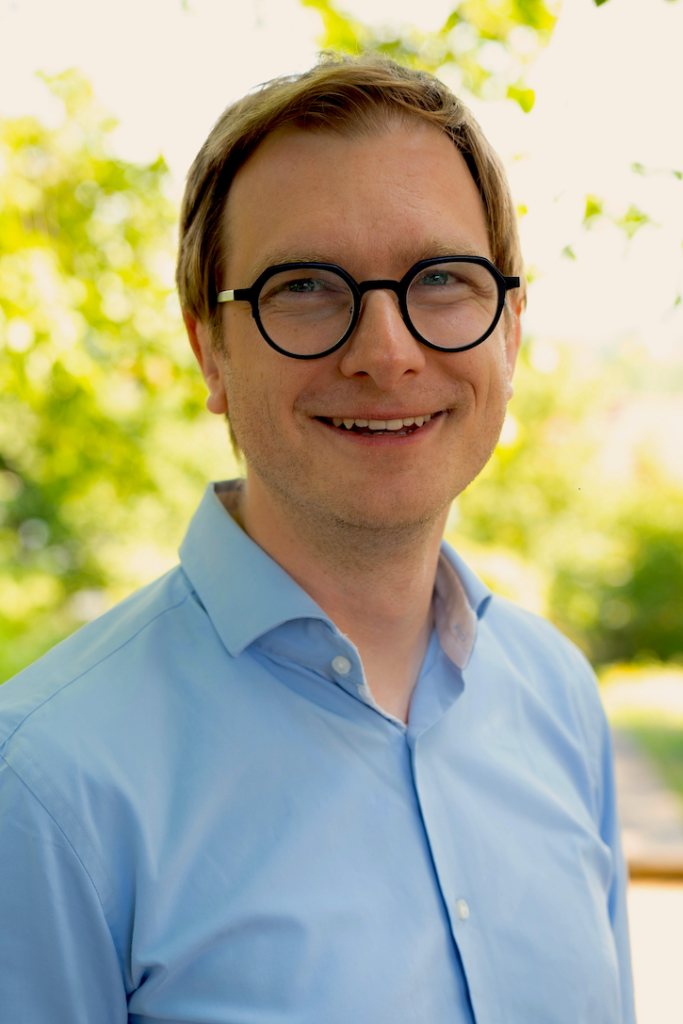
Dr. Rob Zwitserlood is an Affiliated Researcher at the Humanities Institute for Language Sciences at Utrecht University and Senior Researcher at the Hogeschool Utrecht, Lectoraat Logopedie: Participatie door Communicatie . He has over 30 years of experience in special education for children with Developmental Language Disorders (DLD) at the Royal Dutch Auris Group. His research focuses on diagnostics, interventions, and metalinguistic therapies for DLD/Speech-Language Impairment (SLI). Education : Supervised MA/BA students in Speech Therapy Science, focusing on pronoun errors, narrative skills, and dummy verbs in SLI children. Research Interests : Morphosyntactic development, speech disfluency, metalinguistic training, and tablet-based interventions for DLD children. Activities : Invited speaker at international conferences (European Speech and Language Association, IASCL), organizer of academic events, and presenter of randomized controlled trials on language therapy tools.
Nienke Endenburg is an Associate Professor at the Faculty of Veterinary Medicine , Utrecht University, Netherlands. She works within the Department of Population Health Sciences , focusing on the Human-Animal Bond , Animal Welfare , and Veterinary Behavioral Medicine . Her career spans over 30 years, with roles in research, teaching, and clinical practice. Specializes in Human-Animal Interaction and Companion Animal Welfare Teaches Child Development , Animal-Assisted Interventions , and Grief Counseling in Germany since 2001 Co-founder of the Certipet Foundation (2010) and member of the World Small Animal Veterinary Association (2011) Active in Veterinary Forensic Expertise and Animal Welfare Policy globally Her research explores the psychological impact of companion animals on children , animal abuse and domestic violence links , and stress physiology in service animals . Key methodologies include longitudinal studies, physiological measurements (e.g., cortisol), and cross-cultural surveys. Notable recent publications address global veterinary education trends , service dog efficacy for PTSD , and forensic animal abuse indicators . She contributes to WSAVA guidelines on animal welfare and professional wellness.
Ignacio Blanco Alfonso is a Professor of Journalism at CEU San Pablo University and Vice Dean of Research, Postgraduate Studies, and Teaching Staff at the Faculty of Humanities and Communication Sciences. He directs the Ortega-Marañón Foundation's Center for Ortega Studies and the interdisciplinary journal Doxa Comunicación , while leading the Master's Degree in Cultural Journalism. His career spans three CNEAI six-year terms with ANECA/ACAP accreditation and visiting scholar appointments at universities in Italy, Peru, the UK, and Argentina. PhD in Journalism (2003) with honors Specialized in Ortega y Gasset's media philosophy Pioneer of Spain's first digital verification postgraduate program (2020-2023) His research bridges Social Communication and Philosophy , focusing on Fake News , Post-Truth , and Ortega y Gasset's Legacy . Articles explore Twitter hate speech, digital star mythology, and media's democratic role. Key keywords include Communication, Social Sciences, and Cultural Studies. Award highlights: Life Member, Clare Hall College (Cambridge) Fellow, The Bogliasco Foundation His work involves 14 research projects (10 competitive, 4 private) and leadership in media literacy initiatives, including the Fundación Ortega-Marañón and Doxa Comunicación journal.
Ruth Delaforce is a Lecturer in Criminology and Policing at Charles Sturt University's Australian Graduate School of Policing and Security (AGSPS), with expertise in military-crime nexus, intelligence processes, and state security arrangements. She contributes to the AGSPS Public Safety and Security Group, serves as Associate Editor of Salus Journal , and participates in AGSPS committees for research and learning. PhD in International Relations & Security (Griffith University, 2015) Masters in International Relations & Asian Politics (University of Queensland, 2010) Bachelor of Arts (Australian & Comparative Studies) (Griffith University, 1996) Her research addresses organized crime, intelligence privatization, and security governance, aligning with UN Sustainable Development Goals for peace and justice. Recent grant funding supports collaborative criminological research, while her 2025 work explores liminal war-crime dynamics. Professional engagements include defense conferences, policy inquiries, and editorial responsibilities. Key collaborations span Charles Sturt University's Criminology Theme, Parliament of Australia's security legislation review, and Pacific regional law enforcement forums. Her work demonstrates interdisciplinary connections between criminology, military analysis, and security policy implementation.
Garofalo Giovanni is Full Professor of Spanish Language and Translation at the Department of Foreign Languages, Literatures, and Cultures at the University of Bergamo. He joined the department in 2004 as Assistant Professor, became Associate Professor in 2014, and was promoted to Full Professor in 2020. His career includes affiliations with the Center for Research on Specialized Languages (CERLIS), Asociación de Lingüística del Discurso, AISPI (Associazione Hispanicisti Italiani), and AELINCO (Asociación Española de Lingüística de Corpus). His research focuses on Corpus-Assisted Discourse Analysis (CADS) Legal and Political Communication Discursive Construction of Gender in Spanish Legal Terminology and Lexicography Biomedical Discourse in Multicultural Contexts Prof. Garofalo's recent publications analyze textual complexity in legal corpora, hate speech in social media, and diachronic evolution of constitutional language, with methodological contributions to corpus linguistics. He has authored monographs on Spanish legal communication in criminal law and legislative language, including Géneros discursivos de la justicia penal and La Ley Orgánica 4/2000 de Extranjería . His academic leadership includes memberships in international research associations and collaborations with Spanish universities. He supervises advanced courses in Spanish linguistics and translation at the University of Bergamo, emphasizing corpus-based methodologies and specialized language analysis.
Benjamin Gerhard Engst is an Associate Professor of Political Science within Public Policy and Administration at the Norwegian University of Science and Technology (NTNU), Department of Sociology and Political Science. His research focuses on comparative politics, particularly the interaction between politics, law, and society in a cross-European context, with additional interests in US politics and societal dynamics. Engst earned his PhD in Political Science from the University of Mannheim's Center for Doctoral Studies in Social and Behavioral Sciences, where he also completed his BA and MA in Political Science. His graduate studies included a year at Johns Hopkins University and a guest scholarship at Emory University during his doctoral research. His research spans comparative political behavior, political institutions, and public policy, emphasizing judicial-political bargaining, constitutional courts, and democracy under pressure. Methodologically, he employs quantitative analysis, computational text mining, survey experiments, and game theory to examine how courts influence legislative processes and policy outcomes in Europe and the United States. Publication analysis reveals a dominant focus on German constitutional court dynamics, with key contributions in top journals like the Journal of Politics and Journal of Law and Courts. While primarily a political scientist, his 2021 otology co-publications demonstrate interdisciplinary reach, though his core work centers on judicial behavior and European policy agendas. He received the Dissertation Award of the German Political Science Association (DVPW) and leads major initiatives: The Constitutional Court Database tracking court-legislature interactions The German section of the Comparative Agendas Project analyzing policy priorities As Chair of the ECPR Standing Group on Law & Courts Steering Committee, he shapes international research collaboration. His career includes postdoctoral roles at Konstanz (2021-2024) and Mannheim (2018-2021), plus research positions at Göttingen and Hannover, reflecting deep European academic integration.
Anaïs Rameau, MD MPhil is an attending laryngologist and Associate Professor of Otolaryngology at Weill Cornell Medical College. She serves as the Chief of Dysphagia at the Sean Parker Institute for the Voice and founded the Laryngology Innovation Lab , focusing on transdisciplinary collaborations with engineers and social scientists. Her work bridges clinical expertise in Swallowing disorders Voice restoration Airway rehabilitation Artificial intelligence diagnostics Education: M.Phil., Cambridge University (2017) M.D., McGill University (2010) M.Sc., London School of Economics (2005) B.A., Cornell University (2004) M.S., Weill Cornell Medical College (2022) Research focus: Outcomes studies for dysphagia interventions, AI-driven diagnostic tools, and preventative measures for aspiration in dementia patients. She leads NIH-funded projects including Bridge2AI-Voice consortium Mobile app for gender-affirming voice training Low-cost endoscopy simulators Scientific contributions: First otolaryngology recipient of Paul B. Beeson Award Co-developed AI frameworks for vocal fold pathology classification Advocated for improved telehealth equity in laryngology Authored consensus statements on high-resolution manometry Developed open-source medical device protocols Pioneered cough airflow analysis post-injection laryngoplasty Global impact: Maintains active collaboration with the University of Zimbabwe's Otolaryngology Department while advancing equitable AI development practices.
Daniela Bahn is a researcher at the Institute for German Linguistics, Faculty of German Studies and Art History, Philipps University of Marburg. Her work focuses on the interplay between emotional and language development in children, including those with developmental language disorders. She employs behavioral methods, training studies, and eye-tracking in her research. Primary affiliation: Institute for German Linguistics, Philipps University of Marburg Research focus: Emotional-cognitive development, language disorders, and cross-modal perception studies Her research investigates how age, language proficiency, and personality traits influence emotional event processing. Key methodologies include eye tracking and behavioral experiments , with cross-disciplinary applications in neurolinguistics and developmental psychology . Publications span topics like scene grammar analysis in language-impaired children and multimodal emotion categorization . Recent work includes studies on implicit/explicit measures in developmental disorders and auditory-visual emotion priming . She collaborates with Prof. Dr. Constanze Spieß and Prof. Dr. Gerd Schwarzer on projects like C3 Emotionskategorisierung über die Lebensspanne , contributing to the 'Zur Debatte' event series on social discourses.
Carlo Rasmus Schwarz is an Assistant Professor in the Department of Economics at Bocconi University. He holds a PhD in Economics from the University of Warwick and teaches courses including AI Methods for Economic Research and Advanced Econometrics. PhD in Economics, University of Warwick Dr. Schwarz's research focuses on applied microeconomics with particular emphasis on policy-relevant questions. His work uniquely combines causal inference strategies with text analysis, machine learning, and data science techniques to address pressing societal issues. He is particularly interested in how digital platforms shape political behavior and social dynamics. His publication portfolio reveals a strong trend toward investigating the societal impacts of social media, with increasing focus on hate speech, political polarization, and electoral outcomes. The research demonstrates methodological innovation through the development of specialized Stata commands for text analysis, bridging computational linguistics and traditional economic inquiry. Dr. Schwarz actively contributes to advancing methodological approaches in economics through his software development work, creating tools that enable more sophisticated text-based economic research. He maintains an active research agenda exploring the complex relationship between digital communication platforms and real-world socioeconomic phenomena, with recent work examining how online discourse translates to offline behaviors including hate crimes and voting patterns.
Christophe Pereira is a Professor of Arabic Linguistics at the National Institute of Oriental Languages and Civilizations (INALCO) in Paris, France. He specializes in Maghrebi Arabic dialects, with particular focus on Libyan and Moroccan Arabic. His academic roles include Director Adjunct of LACNAD (Languages and Cultures of North Africa and Diasporas), and responsibility for the Master's program in LLCER (Languages, Literatures, and Foreign Civilizations) with a specialization in Maghrebi Arabic. His educational background includes a Master's degree (2001) on "L'arabe de Tripoli (Libye): État des lieux et nouvelle approche," a DEA (Diplôme d'Études Approfondies) in 2002 on "La transmission de l'arabe dialectal en France," a PhD in 2008 on "Le parler arabe de Tripoli (Libye): phonologie, morphosyntaxe et catégories grammaticales," and an HDR (Habilitation à Diriger des Recherches) in 2018 on "Dialectologie, linguistique et sociolinguistique de l'arabe maghrébin: approches comparatives." Professor Pereira's research interests span multiple areas of Arabic linguistics. His primary focus is on Dialectology of Maghrebi Arabic, particularly Libyan and Moroccan varieties. He has conducted extensive fieldwork on Tripoli Arabic, documenting its phonology, morphology, and syntax. His work in Sociolinguistics examines language variation and change in North African contexts, including urbanization effects on dialects. More recently, he has made significant contributions to Gender Studies through his research on masculinity construction in Libyan Arabic. He is also deeply involved in the study of Andalusi Arabic , co-authoring multiple volumes of the Encyclopédie Linguistique d'Al-Andalus. His research often bridges traditional linguistic analysis with contemporary sociocultural contexts, particularly focusing on how language reflects and constructs social identities. His publication record demonstrates consistent output across multiple formats - monographs, edited volumes, encyclopedia entries, and journal articles. His research trajectory shows an evolution from detailed dialect description toward broader comparative and theoretical frameworks, while maintaining empirical grounding in North African Arabic varieties. Recent work increasingly engages with gender studies and sociolinguistic variation, showing interdisciplinary reach beyond traditional linguistic boundaries. Among his notable achievements are the coordination of the CorpAfroAs project, which created a corpus for Afro-Asiatic languages including detailed documentation of Tripoli Arabic, and his leadership in the Association Internationale de Dialectologie Arabe (AIDA), where he serves as Vice-President. His work has been recognized through invitations to edit special journal issues and conference proceedings. Professor Pereira has supervised numerous graduate students, directing multiple Master's theses on Maghrebi Arabic varieties across North Africa, and co-directing several PhD dissertations on topics including linguistic urbanization in Morocco, language policy in the Maghreb, and sociolinguistic aspects of the Hirak movement in Algeria. His mentorship extends to HDR (post-PhD qualification) candidates as well. His research is primarily conducted through the LACNAD research team at INALCO, where he collaborates with colleagues on projects related to North African languages and cultures. He has been instrumental in developing digital resources for Arabic dialectology, including annotated corpora that facilitate comparative research across Maghrebi varieties.
Dr Saeed Sharif is an Associate Professor in the Computer Science department at the School of Architecture, Computing and Engineering , University of East London . He leads the Intelligent Technologies Research Group and serves as Course Leader for MSc Computer Science programs. With a PhD in artificial intelligence from Brunel University London , his work bridges Artificial Intelligence , Medical Technology , and Smart Infrastructure . His research interests span Medical Image Analysis , Intelligent Diagnosis Systems , Big Data Analysis , and IoT Security . Collaborations with NHS Trusts and global institutions focus on improving healthcare systems through machine learning and biomedical signal processing. 2018-2022: £268,000 KTP project with Innovate UK Multiple Research Internship Schemes at UEL (2017-2021) European Research Centre collaboration (2015) As a technical committee member for conferences like IEEE CIT and a journal Guest Editor , he drives academic discourse. He has supervised numerous PhD students and served on examination panels, while maintaining 53+ publications in venues including IEEE Access , Applied Soft Computing , and Computer Methods and Programs in Biomedicine .
Dragana Špica is an Assistant Professor at the Department of Asian Studies , Juraj Dobrila University in Pula . She specializes in Japanese language education and intercultural communication, teaching undergraduate and graduate courses including Japanese language through media, conversational practice, and intercultural communication. Her research focuses on Phonetic challenges in Japanese language acquisition Cross-linguistic comparisons between Japanese and Croatian Lexicography and bilingual dictionary development Online language teaching methodologies Adjective-verb interactions in Japanese Recent publications examine vowel length perception, nasal sound articulation, and educational technology applications. She supervises student projects related to Japanese language and culture. Contact: dragana.spica@unipu.hr
Narah Lee is a Lecturer in Korean at the School of Languages and Cultures, University of Queensland. She earned her PhD in linguistics from the Australian National University and has taught Korean language and culture at multiple institutions. Her research focuses on pragmatics, discourse analysis, and sociolinguistics, particularly within Korean language contexts. Bachelor of Arts, Sogang University Masters (Research), Sogang University Doctor of Philosophy, Australian National University Lee’s research explores the pragmatic dimensions of Korean language use, including politeness, speech acts, and referential choices. Her work spans both native and second-language speakers, with a particular emphasis on socio-pragmatic competence in Korean as a foreign language. Recent studies analyze digital discourse in YouTube comment sections, highlighting impoliteness and toxic communication patterns. Her publications include analyses of subject expression/omission in spoken Korean, kinship terms, and cross-cultural comparisons with Japanese and Chinese. She is available for supervision and leads projects such as 'The perception and realisation of (im)politeness in Korean' and 'Person referencing in discourse as an interpersonal strategy.' Lee has received funding from the Academy of Korean Studies (2022-2023) for politeness research. She actively presents at international conferences, including the International Pragmatics Conference and Japanese/Korean Linguistics Conference, focusing on topics like apology strategies and hybrid word interpretation.
Mary Pietrowicz is a Teaching Assistant Professor in the Department of Biomedical and Translational Sciences at the University of Illinois and a Senior Research Scientist at the Illinois Applied Research Institute. Her interdisciplinary research integrates computational methods with health sciences, focusing on acoustic and behavioral signal analysis for conditions like ALS, schizophrenia, and depression. She earned a Ph.D. in Computer Science from the University of Illinois, an M.S. in Computer Science from Florida Atlantic University, and a B.S. in Electrical Engineering from Purdue University. Her research explores computational modeling of human expression through speech, movement, and creativity to develop scalable health assessment tools. Key areas include: Machine learning for disease state detection via vocal and kinetic biomarkers Deployable telehealth systems using ubiquitous devices (phones, sensors) Cross-disciplinary applications in neurology, psychiatry, and addiction science Cultural computing through interactive art and sonic installations Her publications reveal a consistent focus on acoustic signal processing applied to neurodegenerative/psychiatric disorders, with innovations in laughter analysis, verbal fluency testing, and real-time health monitoring. Trends include machine learning refinement for clinical diagnostics and multimodal data fusion. She contributes to patented technologies in sensor security, geolocation systems, and speech characterization. At the Illinois Applied Research Institute, she develops deployable health-assessment frameworks and collaborates on interdisciplinary projects bridging engineering, medicine, and digital art.
Victoria Johansson is a Professor in The Teaching and Learning of Swedish at the Faculty of Education, Kristianstad University. She leads the research environment Learning in Language and Literature (LiLL) and serves as subject representative for Swedish. Her affiliations include Lund University’s Centre for Language and Literature, where she held roles such as Deputy Director of the Humanities Laboratory (2018–2021) and Researcher in General Linguistics. PhD in Developmental Aspects of Text Production, Lund University Reader in General Linguistics, Centre for Language and Literature External positions at Lund University (2016–2024) Her research spans language production, cognitive aspects of writing, and interdisciplinary collaborations with fields like psychology, speech pathology, and cognitive science. Key methodologies include keystroke logging and eye-tracking. Recent projects include "Based on a True Story?" (2020–2025) and "Will Writing Ever Be the Same?" (VR-funded AI and writing study). Recent publications focus on cognitive effort in writing/speech, L2 writing processes, and multimodal analysis. She supervises doctoral students at Lund and Kristianstad Universities, including Kajsa Gullberg (Spoken/Written Processes) and Kristina Lundgren (Teacher Self-Efficacy). She engages in educational outreach via Läslyft, teacher guidance programs, and popular science lectures for schools, speech therapists, and policymakers. Her leadership roles include board memberships at Kristianstad University’s Forskningsplattformen Lärande I Samverkan and Lund University’s Language Acquisition, Multilingualism, and Teaching (LAMiNATE) platform. Her work contributes to the UN Sustainable Development Goal of Quality Education through literacy research, methodological innovation, and teacher training initiatives.