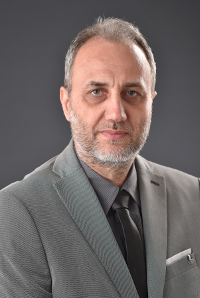
Julian Fierrez is a Full Professor at the School of Engineering, Universidad Autonoma de Madrid. With an h-index of 74 and over 20,000 citations, his work spans biometrics, signal/image processing, artificial intelligence, and human-computer interaction. Key research areas include: Biometric anti-spoofing and DeepFakes detection Mobile and behavioral biometrics Bias/fairness in AI systems Biometric applications in e-health and education Security in multimodal biometric systems His recent publications show strong focus on deep learning applications for biometric security, with specific subfields including fake detection, keystroke authentication, facial analysis for Parkinson detection, and privacy-preserving AI. He serves as Associate Editor for multiple IEEE and Elsevier journals. Scientific distinctions include: IAPR Young Biometrics Investigator Award (2017) Miguel Catalan Award to Best Researcher under 40 (2017) EURASIP Best PhD Award (2012) EBF European Biometric Industry Award (2006) Prof. Fierrez leads the BiDA Lab and supervises students like Ruben Tolosana and Aythami Morales. Current projects include BBforTAI (Biometrics and Behavior for Unbiased & Trustworthy AI) and PRIMA (Privacy Matters). He also contributes to standardization efforts in biometric evaluation.
Elina Mäkinen serves as Professor of Science, Technology, and Organization at Tampere University's Faculty of Management and Business. She concurrently holds a docentship at the University of Helsinki's Faculty of Social Sciences and serves on editorial boards including the Journal of Organizational Change Management. Her institutional affiliations reflect deep engagement with organizational studies across Nordic academic networks. Her academic background includes a B.Sc. and M.Sc. in Sociology from the University of Helsinki and a Ph.D. in Organization Studies from Stanford University. This foundation supports her research at the intersection of institutional theory and scientific practice. Mäkinen's research centers on interdisciplinary knowledge production, examining how academic careers evolve at disciplinary boundaries. She investigates ethical regulation in science, academic entrepreneurship, and team science dynamics, with particular focus on boundary work and knowledge integration processes. Her work reveals how researchers navigate institutional constraints while pursuing translational science. Analysis of her publication trajectory shows consistent focus on boundary phenomena in science, evolving from early work on clinical recruitment to recent studies of ethical governance. The corpus demonstrates methodological diversity across ethnographic, interview-based, and network analysis approaches within organizational sociology frameworks. As principal investigator, she leads two major projects: The Emergence of Health and Life Science Innovations (HeLSI) and Competing Imaginaries of Ethical Science (IMAGES), funded by the Foundation for Economic Education (2020-2023) and Emil Aaltonen Foundation (2023-2025). These projects examine structural and ethical dimensions of contemporary science. Her laboratory work centers on transdisciplinary collaboration, particularly through the New Social Research unit, where she investigates how researchers build shared epistemic frameworks across disciplinary divides. Current efforts focus on ethical regulation systems in non-medical research contexts.
Liu Shan is a Professor in the Department of Radio and Television at Tongji University's School of Art and Media, serving since 2002 with a PhD in Modern and Contemporary Literature from Fudan University. His international academic engagements include visiting positions at City University of Hong Kong, University of Illinois at Urbana-Champaign, and University of Utah under China's Ministry of Education program. His educational trajectory features: Postdoctoral Fellowship, Journalism & Communication, Fudan University (2000-2002) PhD in Modern & Contemporary Literature, Fudan University (1997-2000) MA in Literature & Aesthetics, Xiamen University (1994-1997) BA in Chinese Language & Literature, Hunan Huaihua University (1989-1992) Specializing in media culture and new communication's societal impact , his research examines audience psychology, media representation, and cultural identity formation. Key contributions include analyzing WeChat public spheres, hip-hop subcultures, and historical media narratives, consistently bridging traditional scholarship with digital age phenomena through rigorous textual and audience analysis. His 15 most recent publications (2006-2021) reveal evolving focus from foundational media theory to contemporary digital culture, with increasing attention to Chinese social dynamics. Early works address news reform and audience theory, while recent studies tackle WeChat public life, cosmetic surgery commodification, and underground hip-hop, demonstrating methodological versatility across historical analysis, ethnography, and critical discourse studies. Major recognitions include: Shanghai Philosophy & Social Sciences Award (2006 monograph) Shanghai Academic Year Conference Excellent Paper Awards (2006, 2007) Tongji University 'Famous Course & Excellent Teacher' (2015) Multiple Excellent Thesis Supervisor Awards (2006-2022) 14th Shanghai College Student TV Festival Instructor Award (2021) As Master's Supervisor, he has mentored numerous students evidenced by eight Tongji University thesis awards (2006-2022). His research is funded by National Art Science projects ('Television Audience Theory Research') and Ministry of Education key initiatives ('Contemporary Art Practice & Cultural Competitiveness'). He serves as Editor-in-Chief of Media Criticism and SSCI journal reviewer for CSMC, while contributing to academic governance as Ministry of Education Degree Committee expert. He actively participates in the School's Omnimedia Research Institute and Media Experiment Teaching Center, collaborating with the University Film & Television Association's Media Culture Committee to advance China's media studies landscape through conferences and publications.
Miloš Racković serves as a full Professor in the Department of Mathematics and Informatics at the University of Novi Sad, Serbia. He maintains active academic engagement through the Laboratory for the development of information systems, with his office located in the Information technologies and systems office (DMI&DF) on the second floor, room 49. Contact is available via telephone (485)-2868 or email rackovic@dmi.uns.ac.rs, and his personal website (http://www.is.pmf.uns.ac.rs/rackovicm/) provides additional resources. His research spans foundational and applied computer science, with seminal contributions in fuzzy database systems including PFSQL query language development and prioritized fuzzy logic for relational databases and XML. He has pioneered deep learning methodologies through innovative classification techniques using negative and missing features in convolutional neural networks. Additional expertise includes high-performance computing implementations of Lattice Boltzmann methods using OpenCL, robotics (symbolic modeling and trajectory planning), and blockchain applications for Industry 4.0 production processes. His sports analytics work applies neural networks to basketball player and referee movement analysis. Analysis of his 2012-2025 publications reveals a strategic evolution toward interdisciplinary applications, particularly in industrial transformation (blockchain-enabled traceability) and sports analytics. His work consistently bridges theoretical computer science with practical implementations, demonstrating increasing focus on real-world problem solving while maintaining strong foundations in database theory and computational methods. Professor Racković leads the Laboratory for the development of information systems, which focuses on advancing information system methodologies through formal modeling extensions (including Petri net innovations) and practical implementations for uncertainty management. The laboratory's work spans from foundational research in fuzzy logic systems to applied projects in high-performance computing and blockchain integration, fostering innovation in information technology development.
Robert Hamilton is a Professor in the Department of Communication Studies & Media Arts at McMaster University's Faculty of Humanities in Hamilton, Canada. With an extensive career as both an academic and practicing artist, he has established himself as a significant figure in contemporary media arts education and creation since joining McMaster University. Hamilton holds dual MFA degrees from the Art Institute of Chicago and the Jan van Eyck Academie in Maastricht, Netherlands, complemented by a Diploma from the Alberta College of Art + Design. His academic journey spans from 1981-1985 at the Alberta College, followed by advanced studies from 1991-1993 at the Jan van Eyck Academie. His research and creative practice centers on visual media with particular focus on video art, photography, and animation. Hamilton's work consistently explores themes of identity, community, and the evolving urban environment, often reflecting on societal events and contemporary issues. His artistic approach combines technical mastery with conceptual depth, resulting in works that challenge viewers' perceptions of everyday spaces and social structures. He has developed a distinctive methodology that blends documentary techniques with artistic interpretation, creating works that are simultaneously observational and transformative. Hamilton's recent body of work demonstrates a clear trajectory toward examining human relationships with urban spaces, particularly during times of societal transformation like the pandemic. His projects increasingly incorporate digital technologies and AI elements while maintaining a strong foundation in traditional media arts. The thematic continuity across his work reveals a persistent concern with how individuals navigate and make meaning within constructed environments. German Video Art Prize Silver Hugo Award at the Chicago Film Festival Work featured in National Gallery of Canada collection As an educator, Hamilton has mentored numerous students through senior thesis projects and specialized courses in media production. His teaching portfolio spans animation, video art, digital cinema, photographic techniques, and emerging media. While specific grant information isn't detailed in the available materials, his sustained creative output suggests successful acquisition of research funding to support his artistic practice. His work has been exhibited internationally at venues including Maison des Arts de Laval, Museum of Contemporary Art in Castello, Spain, and Transmediale in Berlin. Hamilton maintains an active studio practice that directly informs his teaching approach. His creative process involves both digital and traditional techniques, often experimenting with the intersection of physical and virtual spaces. He has developed specialized approaches to documenting urban environments that reveal hidden patterns and structures within everyday landscapes, creating what might be described as visual commentaries on contemporary life.
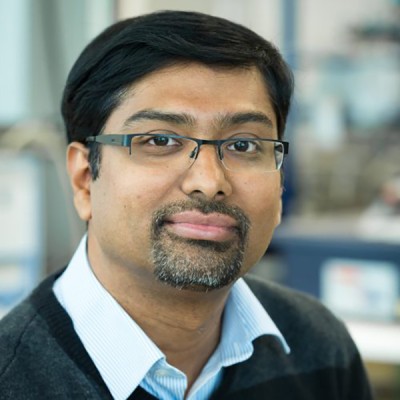
Bhushan Gopaluni is a Professor in the Department of Chemical and Biological Engineering at the University of British Columbia, where he also serves as Associate Dean for Education and Professional Development in the Faculty of Applied Science. He holds associate faculty positions in multiple interdisciplinary institutes including the Institute of Applied Mathematics, Institute for Computing, Information and Cognitive Systems, Pulp and Paper Center, and Clean Energy Research Center. He previously held the Elizabeth and Leslie Gould Teaching Professorship from 2014 to 2017. Education: Ph.D. in Chemical Engineering, University of Alberta (2003) Bachelor of Technology in Chemical Engineering, Indian Institute of Technology, Madras (1997) Research Interests: Professor Gopaluni's research spans several critical areas at the intersection of chemical engineering, machine learning, and process control. His primary focus includes the development of advanced process control strategies using reinforcement learning and machine learning techniques. He has made significant contributions to battery technology research, particularly in capacity estimation and remaining useful life prediction for lithium-ion batteries. His work also encompasses sustainable energy systems, industrial process monitoring, fault diagnosis, and the application of digital twin technology in chemical processes. His research methodology emphasizes the integration of data-driven approaches with fundamental process understanding, leading to practical solutions for complex industrial challenges. This includes the development of interpretable machine learning models for industrial applications, real-time optimization strategies, and advanced monitoring systems for process industries. Publications and Research Impact: Professor Gopaluni's recent publications demonstrate a strong focus on cutting-edge applications of machine learning in chemical engineering. His work prominently features battery technology and energy systems, with multiple papers addressing lithium-ion battery capacity estimation and management. He has also contributed significantly to process control applications, including drilling process monitoring, greenhouse gas reduction in marine transport, and renewable carbon tracking in biofuel processing. His research extends to advanced computational methods including deep learning, reinforcement learning, and causal discovery in industrial processes. Awards and Recognition: Killam Teaching Prize (University of British Columbia) Dean's Service Medal (University of British Columbia) D.G. Fisher Award in Process Control (Canadian Society for Chemical Engineers) Elizabeth and Leslie Gould Teaching Professor (2014-2017) Professional Service and Editorial Roles: Professor Gopaluni currently serves as Associate Editor for three prestigious journals: Journal of Process Control, The Journal of Franklin Institute, and Results in Control and Optimization. His service to the academic community extends through his role as Associate Dean for Education and Professional Development, where he oversees educational initiatives across the Faculty of Applied Science. Industry Experience: From 2003 to 2005, Professor Gopaluni worked as an engineering consultant at Matrikon Inc. (now Honeywell Process Solutions), where he designed and commissioned multivariable controllers for British Columbia's pulp and paper industry and implemented controller performance monitoring projects across oil & gas and chemical industries.
Dr. Shabnam Sadeghi Esfahlani is an Associate Professor in Robotics at the School of Engineering and the Built Environment, Anglia Ruskin University , where she serves as Deputy Leader of the BORI research group and leads the Automation & Robotics MSc program. Her interdisciplinary expertise spans mechatronics, artificial intelligence, virtual reality, and serious games , with a focus on applications for rehabilitation, medical training, and autonomous systems . As a Chartered Engineer and Senior Fellow of the Higher Education Academy , she has secured significant funding from Innovate UK, Horizon 2020, and GCRF , with grants exceeding £3 million. Education PhD in Mechanical Engineering, Anglia Ruskin University BSc (First Class) in Statistics & Mathematical Science, Shahid Beheshty University Her research integrates AI with robotics for societal impact, exemplified by the open-source SROBO ground robot and projects like Rehabgame and the Assistive Feeding Robot . She has published over 45 peer-reviewed articles and contributes to academic communities as a journal guest editor and conference organizer . Key collaborations include IET, IMechE, and the Nuffield Foundation as a mentor for young students. Scientific Awards & Recognitions: Chartered Engineer (CEng), Engineering Council UK Senior Fellow (SFHEA), Higher Education Academy Student-Voted 'Made a Difference Award' (2018) Post-Graduate Certificate in Higher Education
Jouni Punkki is a Professor of Practice at Aalto University's Department of Civil Engineering. His work bridges academia and industry, focusing on concrete material technology and its practical applications in construction. His research interests span concrete durability, sustainability in construction, digitalization in concrete production, and quality control systems. These areas reflect his commitment to advancing both theoretical understanding and industry practices through innovative technologies. Punkki's publications highlight interdisciplinary approaches to concrete engineering, including non-destructive testing, porosity analysis, and automation in material characterization. His work often intersects with structural integrity and environmental resilience.
Natalia Imad Khalaf, MD, MPH, FACP is an Assistant Professor in the Department of Medicine at Baylor College of Medicine with dual appointments as Clinical Investigator in the Clinical Effectiveness and Population Health Program and Core Faculty in the Health Policy, Quality & Informatics Program at the Center for Innovations in Quality, Effectiveness and Safety (IQuESt) at Michael E. DeBakey VA Medical Center. Her academic trajectory spans clinical gastroenterology, epidemiology, and health services research with focus on cancer outcomes. Her educational foundation includes: BA in Biological Sciences from Rice University (2007) MD from Baylor College of Medicine (2011) Internal Medicine Residency and Chief Medical Residency at Baylor College of Medicine (2014-2015) Gastroenterology & Hepatology Fellowship at Brigham and Women's Hospital (2018) MPH in Epidemiology from Harvard T.H. Chan School of Public Health (2018) Dr. Khalaf's research program centers on pancreatic cancer epidemiology, with emphasis on early detection biomarkers (particularly new-onset diabetes), metabolic risk factors, and healthcare system interventions. Her work integrates clinical gastroenterology with population health methodologies to address diagnostic delays, racial disparities in treatment, and implementation of evidence-based guidelines in gastrointestinal cancers. She actively develops risk prediction tools using health informatics and deep learning approaches. Analysis of her recent publications reveals a concentrated focus on pancreatic cancer pathophysiology and outcomes, with significant contributions to understanding pre-diagnostic metabolic changes, emergency presentation consequences, and diabetes-cancer linkages. Her colorectal cancer work examines screening adherence barriers and medication risk associations, while quality improvement research targets guideline implementation for gastric intestinal metaplasia. Her scientific recognition includes: AGA Academy of Educators Elected Member (2018) Bob Parsons Inaugural Fellow in Pancreatic Cancer Research (2017-2018) American Gastroenterological Association Early Career Investigator Recognition (2017) Soma Weiss Award for Clinical Teaching Excellence (2017) Dean of Medical Education Outstanding Resident Teacher Award (2013) Phi Beta Kappa Honor Society (2007) Dr. Khalaf directs multiple federally funded research initiatives including: VA Career Development Award: Health Informatics Approaches to Improve Early Diagnosis of Pancreatic Cancer ($1.09M, 2022-2026) National Academy of Sciences: Clinical Quality Measures for Gastrointestinal Cancers (2022-2027) Gordon and Betty Moore Foundation: Implementing Digital Quality Measures (2024-2025) American Pancreatic Association Young Investigator Grant (2019-2021) She operates within the IQuESt research ecosystem at the Michael E. DeBakey VA, leveraging the Clinical Effectiveness and Population Health Program infrastructure for her work on cancer diagnostic excellence, veteran health outcomes, and implementation science projects targeting gastrointestinal cancer care pathways.
Xin Li is a Professor in the Department of Electrical and Computer Engineering at Duke University and serves as the Associate Vice Chancellor at Duke Kunshan University. He holds a Ph.D. from Carnegie Mellon University (2005) and has held leadership roles in research consortia like the FCRP Focus Research Center and the Center for Silicon System Implementation (CSSI). His research bridges integrated circuits , machine learning , and cyber-physical systems , with applications in autonomous driving, battery lifetime prediction, and smart buildings. Education : Ph.D., Carnegie Mellon University (2005); M.S., Fudan University (2001); B.S., Fudan University (1998) His work emphasizes robust design methodologies for analog/RF circuits, data-driven predictive modeling , and Bayesian inference for high-dimensional variation spaces. Recent publications focus on generative adversarial networks for circuit design, multi-view imputation for incomplete data, and knowledge-driven autonomous systems . He has received numerous accolades, including the NSF CAREER Award (2012) , IEEE Donald O. Pederson Best Paper Awards (2013, 2016) , and IEEE Fellow (2017) . He has served as Editor for journals like IEEE Transactions on Biomedical Engineering and as Chair for conferences including ISVLSI and CAD/Graphics.
Fengqing Maggie Zhu is an Associate Professor at the Elmore Family School of Electrical and Computer Engineering within Purdue University , West Lafayette campus. Her research spans image processing , video compression , computer vision , and smart health , with notable contributions to learned image compression , 3D reconstruction , and nutrition analysis via computer vision . Educational background: BS in Electrical Engineering, Purdue University (2004) MS in Electrical and Computer Engineering, Purdue University (2006) PhD in Electrical and Computer Engineering, Purdue University (2011) Her work focuses on developing machine learning-based compression techniques for 2D/3D images and videos, with applications in food portion estimation , wearable dietary monitoring , and virtual reality facial expression tracking . She explores structured pruning , mixed precision quantization , and continual learning to create efficient, robust systems for edge-cloud collaboration. The 2025-2024 article collection reveals concentrated efforts in learned image compression (with 8 papers on quantization, pruning, hierarchical VAEs), food-related computer vision (12+ papers on portion estimation, databases, classification), and 3D reconstruction (MetaFood3D dataset, ICP-3DGS algorithm). Emerging themes include privacy-preserving AI for wearable cameras and class-incremental learning frameworks. Contact: zhu0@purdue.edu
Professor David Scott Taubman is a faculty member and Deputy Head of School (Research) at the School of Electrical Engineering and Telecommunications (EE&T) at UNSW Sydney, Australia. He is also co-director of Kakadu Software Pty. Ltd. and its affiliates Kakadu R&D and Kakadu GPU. He earned his academic credentials from the University of Sydney and University of California at Berkeley: B.Sc. in Mathematics and Computer Science, University of Sydney, 1986 B.E. (Medal) in Electrical Engineering, University of Sydney, 1988 M.Sc. in Electrical Engineering, University of California at Berkeley, 1992 Ph.D. in Electrical Engineering, University of California at Berkeley, 1994 Professor Taubman's research interests span multiple domains within electrical engineering and telecommunications, particularly focusing on: Image Compression (EBCOT algorithm, JPEG2000 technologies) Video Compression (scalable video compression, motion compensated temporal lifting) Image and Video Processing (motion and depth estimation, demosaicing of digital color images, medical image analysis) Multimedia Communication (JPIP standard for interactive imaging, scalable communication systems) He has received numerous scientific awards and honors, including best paper awards from IEEE Signal Processing Society, IEEE Circuits and Systems Society, and IEEE Int. Conf. Image Processing. He has also received teaching awards from UNSW and was recognized with the NSi Inventor of the Year Award. Professor Taubman has contributed significantly to industry standards: Author of the EBCOT coding algorithm adopted in the JPEG2000 standard in November 1998 Author of Verification Model and associated documentation for JPEG2000 Central contributor to IS15444-1, IS15444-4, IS15444-9, IS15444-15 and IS15444-17 Developer of the commercially successful Kakadu Software tools for JPEG2000 He has held various leadership positions at UNSW including Head of the Telecommunications Research Group, Head of the Signal Processing Research Group, and Director of Research at School of EE&T.
Justin Harvey is a Lecturer at the University of Technology Sydney (UTS) within the Faculty of Design, Architecture and Building, specializing in Media Arts and Production. He is an active member of the Creative Practice Research Group and serves on the Faculty Board and Faculty Research Committee. Harvey holds a PhD in Media Art & Design from the University of New South Wales and a Bachelor of Arts in Communication (Media Arts & Production) with First Class Honors from UTS. Harvey's research interests focus on creative uses of generative Artificial Intelligence, experimental approaches to media art making, and creative practice led research. His artistic practice spans moving image, installation, and virtual reality experiences, with a particular fascination for human-machine interaction and the creative potentials of digital technologies. He explores glitch aesthetics, digital video feedback, and imagery generated using diffusion models, often collaborating with AI systems in unexpected ways. Harvey has exhibited his work internationally at venues including VIVID Sydney, ISEA (International Symposium on Electronic Art) in Vancouver, Hong Kong, and South Korea. His 2023 collaboration with generative AI, Unprompted Studies 1-3 , was a finalist in the Fisher's Ghost Art Award. In 2024, he was selected as a Scholar in the Sydney Powerhouse Museum's Research Scholars Program for the "Knit Forward" project, which reimagines historical garments using generative AI and seamless knitwear technology. His research on creative applications of GenAI directly informs his teaching in Experimental Media and Creative Project Development. Harvey has extensive studio-based teaching experience since 2010, covering subjects such as Situated Media Installation Studio, Drama Production, and Experimental Media. Fisher's Ghost Art Award (2023 finalist) Powerhouse Museum Scholars Program funding (2024) UTS ECR Capability Development Initiative funding (2024) FASS ECR Funding (2024) Harvey supervises PhD and Masters of Research students in creative practice research and has mentored hundreds of students through capstone projects in drama, documentary, animation, and media arts installation. His current research projects include collaborations with Dr. Doris Li on reimagining historical garments using AI, and exploring the intersection of Surrealist techniques with generative AI in works like Oneironaut , exhibited at VIVID Sydney 2025.
Dr. Alireza Ahmadian Fard Fini is an Associate Professor at the University of Technology Sydney within the Faculty of Design and Society. With over 23 years of experience in the construction industry, his work bridges professional practice, teaching, and research, focusing on construction automation and workforce management . His research aims to enhance construction productivity through digital technologies and personalized workforce solutions. Education: PhD, University of New South Wales, Australia MEng, University of Calgary, Canada MSc, Iran University of Science and Technology, Iran BSc, Shiraz University, Iran Dr. Fini’s research spans construction automation (off-site processes, digital integration) and workforce management (skill development, safety). His recent publications highlight deep learning applications for progress monitoring, drone technology in material handling, and sustainable practices in timber construction. Collaborative projects with industry partners emphasize data analytics and cloud-based deployment for practical outcomes. Scientific grants include the CRC-P Industrialization of Nail-Laminated Timber , Beverly Homes’ Industrialization of Dowel Laminated Timber , and Edwards Scholarship for prefabricated timber systems . His teaching portfolio includes Design Team Management , Site Establishment , and Time Management at UTS. Future work will focus on standardizing timber panel stability , expanding UAV applications , and aligning mental health research with policy frameworks.
Philipp Koehn is a Professor in the Department of Computer Science at Johns Hopkins University, with additional affiliation at the University of Edinburgh. His primary research focuses on statistical and neural machine translation, specifically developing methods to leverage large-scale digital information for cross-lingual communication. He leads the Machine Translation Research Group and maintains key resources like the Moses toolkit and Europarl corpus. His research interests span: Core machine translation techniques (statistical/neural approaches) Low-resource and unsupervised translation methods Cross-lingual representation learning Speech-to-speech translation systems Large-scale parallel data mining and alignment Evaluation methodologies for generated text Koehn's recent publications demonstrate strong focus on improving translation efficiency (dynamic compression, streaming models), robustness (noise handling, error correction), and accessibility (low-resource languages, radio speech processing). Key trends include multilingual generalization, document-level coherence, and human-centered evaluation. Significant scientific recognition includes: ACL Fellow (2024) IAMT Award of Honor (2015) European Inventor Award Finalist (2013) He currently advises PhD students Rachel Wicks, Elina Baral, Bismarck Odoom, and Weiting Tan. His Machine Translation Group develops widely-used open-source tools and organizes major conferences including WMT and MT Marathon.