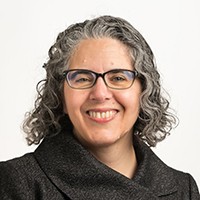
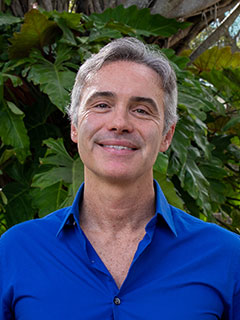
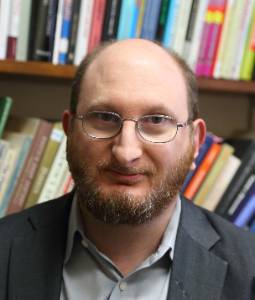
Lillie Padilla is an Assistant Professor of Spanish Linguistics at Sam Houston State University's Department of World Languages and Cultures. Holding a Ph.D. and M.A. in Spanish Linguistics from Arizona State University alongside a Bachelor of Arts from the University of Ghana, her research explores interdisciplinary connections between: Afro-Latinx representation in educational materials Discourse analysis and language ideologies Sociolinguistic studies in Equatorial Guinea Critical race theory applications in language teaching Her work focuses on Spanish subject pronoun expression patterns in multilingual contexts and curriculum development for inclusive pedagogy. Recent publications examine: Representation gaps in Spanish language textbooks Methodological challenges in Equatorial Guinea research Critical discourse analysis of Netflix's Elite series Intersectional representation of Afro-Latinx women Scientific achievements include: Finalist for American Association of Linguistics 2025 award for co-edited volume Representation, Inclusion and Social Justice in World Language Teaching Padilla's research continues to shape conversations about linguistic diversity and marginalized voices in language education through both empirical studies and theoretical frameworks.
Mark Liberman is a Trustee Professor at the University of Pennsylvania , holding appointments in the Department of Linguistics and Department of Computer and Information Science . He serves as Director of the Linguistic Data Consortium and Faculty Director of Ware College House . His career spans linguistics, speech technology, and computational methods. Education: Harvard University (1965-1969), MIT (M.S. 1972, Ph.D. 1975) Professional Experience: AT&T Bell Laboratories (1975-1990), University of Pennsylvania (1990-present) His research interests include: Corpus-based Phonetics : Analyzing speech patterns via large-scale datasets. Clinical Applications : Developing speech biomarkers for neurodegenerative diseases. Tonal Phonology : Studying lexical tone and intonation in languages like Yoruba and Mandarin. Formal Annotation Models : Creating frameworks for linguistic data standardization. Recent publications highlight automated speech analysis, cross-linguistic prosody, and digital biomarkers for conditions like ALS-FTD and Alzheimer’s. His collaborations span computational linguistics , neurology , and cognitive science . Scientific awards include the IEEE James L. Flanagan Award (2017), Antonio Zampolli Prize (2010), and fellowships from the AAAS and Linguistic Society of America . He advises PhD students May Chan and Jonathan Him Nok Lee and contributes to editorial boards for journals like Cognition and Annual Review of Linguistics . His work bridges speech science , language technology , and neurocognitive research .
Professor Jo Barraket is a leading academic and researcher in social equity, social innovation, and public policy. As Director of the Melbourne Social Equity Institute and member of the Dilun Duwa Centre for Indigenous Business Leadership, she focuses on improving social equity through organizational innovation, cross-sector collaboration, and policy design. Her research addresses social procurement, health equity, digital inclusion, and employment pathways for marginalized groups. Her work includes landmark projects such as the Australian Digital Inclusion Index and evaluations of Commonwealth Social Enterprise Development Funds. She has secured over $11M in research grants, including multiple ARC grants, and produced over 75 scholarly publications. Her current projects compare social procurement policies in Australia and Scotland, and study youth unemployment in construction via employment-focused procurement. Key research themes include: social enterprise scaling strategies, cross-sector partnerships for policy implementation, and the role of philanthropy in equitable housing. She advises governments and OECD on inclusive employment policies and chairs major research initiatives like the Social Enterprise Impact Lab. Prof Barraket’s transdisciplinary approach combines rigorous academic research with practical outputs like policy guides and digital tools to maximize societal impact. She previously founded the Centre for Social Impact Swinburne, now a global leader in social economy research.
Andrew Lynch serves as Professor and Associate Dean for Program Development in the Department of Modern Languages & Literatures within the College of Arts and Sciences at the University of Miami. His academic leadership extends beyond teaching responsibilities to include significant administrative contributions to program development across the institution. Lynch's research interests center on sociolinguistics with particular focus on Spanish language dynamics in Miami, heritage language socialization, bilingualism, and language ideology. His work examines how language functions within specific social contexts, especially in workplace environments where Spanish heritage speakers navigate linguistic demands. He investigates the complex interplay between language, identity, and social structures in postmodern urban settings, with special attention to the Cuban diaspora experience in South Florida. His publication record reveals consistent scholarly engagement with heritage language education, Spanish language variation, and the sociolinguistic landscape of global cities. Lynch's research demonstrates how language practices in Miami reflect broader patterns of linguistic adaptation and resistance within diasporic communities. His work often addresses the tension between linguistic heritage and social integration, examining how language ideologies shape educational practices and community identity. Lynch's scholarly contributions span multiple formats, including single-authored books, co-authored publications, handbook chapters, and journal articles in both English and Spanish. His work frequently appears in high-impact sociolinguistics and language education journals, reflecting his interdisciplinary approach that bridges theoretical linguistics with practical educational implications.
Joseph A. November is an Associate Professor in the Department of History at the University of South Carolina, affiliated with the McCausland College of Arts and Sciences. His research focuses on the history of biomedical computing, distributed computing, and the intersection of technology and medicine. He holds a Ph.D. from Princeton University (2006), an M.A. from the University of Chicago (2002), and a B.A. from Hamilton College (1997). His work includes the award-winning book Biomedical Computing: Digitizing Life in the United States (2012), which explores the co-development of biomedicine and computing technologies. Current projects include Revolutions@home , examining distributed computing in protein folding research, and a biography of computing pioneer Robert S. Ledley. He has received grants from the NSF, NIH, and the Charles Babbage Institute. Teaching interests span the history of science and technology, including courses on the history of medicine, digital humanities, and the role of games in historical education. He actively contributes to professional organizations like SHOT and the History of Science Society. Awards include the Computer History Museum Prize (2013) and the National Institutes of Health DeWitt Stetten Fellowship (2007-2008). His research bridges historical analysis with contemporary issues in technology and biomedical ethics.
Prof. Ingmar Posner is a leading figure in applied artificial intelligence at the University of Oxford, where he serves as Principal Investigator for the Applied Artificial Intelligence Lab (A2I) and founding Director of the Oxford Robotics Institute. His work focuses on enabling robots to operate effectively in complex real-world environments through experience-driven learning. Key research areas: robot learning, scene interpretation, data-efficient learning, and transfer learning Applications in manipulation, autonomous driving, logistics, and space exploration His team has produced groundbreaking work in world models, sim-to-real transfer, and constraint-based manipulation systems (e.g., COMBO-Grasp). Notable contributions include the TWIST distillation framework and foundational research in tactile data generation (TactGen). He has received multiple best paper awards at top robotics venues. Publications reveal evolving research themes: 2025 work emphasizes language-conditioned learning (Lumos) and multi-agent decision-making, while 2024 focused on diffusion models for locomotion and differentiable simulators. Earlier work spans from urban scene analysis to physically plausible scene synthesis (RELATE).
Elizabeth M. Belding is a Professor in the Department of Computer Science at the University of California, Santa Barbara (UCSB). She holds leadership roles as an Associate Dean and Faculty Equity Advisor in the UCSB College of Engineering, and serves as Associate Director of the Center for Information Technology and Society (CITS). Her research focuses on mobile/wireless networking, network measurement, and ICTD, with a focus on improving Internet accessibility in underserved regions globally. She has authored over 180 technical papers and led the development of the AODV routing protocol, foundational to standards like 802.11s and Zigbee. Education: Ph.D./M.S. in Electrical and Computer Engineering from UCSB (2000/1997). Awards include ACM and IEEE Fellowships, the 2018 ACM SIGMOBILE Test-of-Time Award, and mentoring accolades. She directs the MOMENT Lab, exploring broadband measurement, rural connectivity, and satellite networks. Recent projects include the NSF-funded PuebloConnect initiative and analysis of US broadband inequities via the Connect America Fund. Research emphasizes socially impactful solutions, including tribal community internet access, disaster communication (e.g., refugee camps), and combating gender-based violence via social media analysis. She has held leadership roles in the UCSB CS department and campus-wide initiatives, including the Chancellor's Advisory Committee on the Status of Women. Key grants include NSF, Bill & Melinda Gates Foundation, and industry partnerships (e.g., ViaSat). Notable students include Udit Paul (2024 SIGCOMM Dissertation Award) and Jiamo Liu. The MOMENT Lab's work spans technical innovations in mesh networks, cellular coverage, and policy-driven broadband analysis.
Dr. Diyi Yang is an Assistant Professor in the Computer Science Department at Stanford University. She leads the Social and Language Technologies (SALT) Lab, affiliated with the Stanford NLP Group, Stanford HCI Group, Stanford AI Lab (SAIL), and Stanford Human-Centered Artificial Intelligence (HAI). Her research focuses on socially aware natural language processing, large language models (LLMs), and human-AI interaction, aiming to improve human-human and human-computer communication through socially grounded AI systems. Education: Ph.D. in Language Technologies Institute, Carnegie Mellon University (2013–2019) B.S. in ACM Honored Class, Shanghai Jiao Tong University (2009–2013) Research Interests: Dr. Yang’s work bridges computational social science and NLP. She explores how AI can understand social contexts in language use and develop systems that respect cultural norms, ethical standards, and human values. Her lab’s projects include AI companions for skill training (e.g., Rehearsal Dialects), norm-aware LLMs (NormBank), and frameworks for human-AI collaboration (Co-Gym). Recent efforts address bias in AI, societal impacts of LLMs, and ethical evaluation of human-AI systems. Awards & Honors: 2024: Sloan Research Fellowship, ONR Young Investigator Award 2023: Adamic-Glance Young Distinguished Award (ICWSM), Kavli Fellow (NAS) 2022: NSF CAREER Award, Microsoft Research Faculty Fellow 2020: IEEE AI’s 10 to Watch Advising & Grants: Dr. Yang advises over 10 PhD students and postdocs, co-leading projects on LLM evaluation (SWE-bench/SWE-smith), human-AI ethics, and culturally aware NLP. Her research is supported by NSF, Amazon, DARPA, Google, and Stanford’s HAI initiative. Labs & Teams: The SALT Lab collaborates across disciplines, with projects spanning computer science, linguistics, and social sciences. Current initiatives include developing AI tools for mental health support (AI Partner & Mentor) and auditing societal impacts of LLMs.
Yuri Bobbert is a Professor of Information System Science at Antwerp Management School (AMS), part of the University of Antwerp. He holds dual PhDs from Radboud University and the University of Antwerp, focusing on IT performance measurement. His career includes roles as Global Group CSO of NN Group and UWV (Government), leading cybersecurity integrations during mergers like NN Group and Delta Lloyds. As CEO of B-ABLE (IT consultancy), he developed cybersecurity frameworks. Currently, he advises on NIS2 compliance and Zero Trust strategies. His research spans cybersecurity ROI, regulatory frameworks (e.g., NIS2), and leadership in digital security. Education PhD in Information Systems (Radboud University) PhD in Cybersecurity (University of Antwerp) Research Interests Cybersecurity governance and compliance ROSI (Return on Security Investment) CISO leadership and board communication Zero Trust architecture Risk quantification in digital ecosystems Publications & Books Authored books: Strategic Approaches to Digital Platform Security Assurance , Cybersecurity in 60 Minutes , and Digital Security Leadership Over 100 peer-reviewed publications on cybersecurity performance and governance Grants & Awards Recipient of NIS2 implementation research grants Contributor to EU cybersecurity policy discussions Labs & Teams Leads AMS cybersecurity education programs and collaborates with ON2IT on global cybersecurity strategies.
Adrian Weller is a prominent researcher and academic at the University of Cambridge, serving as a Director of Research in Machine Learning within the Department of Engineering. He holds multiple significant leadership roles including Programme Director for Trust and Society at the Leverhulme Centre for the Future of Intelligence (CFI), and previously served as Programme Director for AI at The Alan Turing Institute, the UK national institute for data science and AI. His work bridges theoretical machine learning research with practical applications and societal implications of artificial intelligence. Weller's research interests span a broad spectrum of AI and machine learning topics with a particular focus on ensuring beneficial societal outcomes. His work encompasses explainability, fairness, robustness, scalability, privacy, safety, and ethics in AI systems. He has made significant contributions to trustworthy machine learning, including developing frameworks for AI governance, certification, and human-AI collaboration. His research group actively investigates neuro-symbolic approaches, privacy-preserving techniques, and methods for improving the reliability and interpretability of AI systems. His recent publications demonstrate a strong trend toward addressing the practical challenges of deploying AI systems in real-world contexts, particularly focusing on certification frameworks, governance mechanisms, and human-centered approaches. His work spans theoretical advances in machine learning architectures while maintaining a strong connection to societal impact, with publications appearing in top venues across AI, machine learning, and interdisciplinary applications. Scientific Awards: MBE for services to digital innovation (2022 Queen's Birthday Honours) Turing AI Fellowship for Trustworthy Machine Learning Weller actively supervises a large group of PhD students and postdocs, with current students including Juyeon Heo, Yanzhi Chen, Katie Collins, Isaac Reid, Yichao Liang, Herbie Bradley, and Shoaib Siddiqui. His former students have gone on to positions at leading institutions including Google DeepMind, ETH Zurich, NYU, and MPI-IS Tübingen. He has served on numerous advisory boards including the Centre for Data Ethics and Innovation, UNESCO's expert group on AI ethics, and the World Economic Forum's Global Future Council on AI. His research has been supported through his Turing AI Fellowship and various collaborative projects focused on safe and ethical AI development. Weller leads a vibrant research group focused on trustworthy machine learning, which actively organizes workshops and conferences including ICML 2024 (where he served as Program Chair), multiple workshops on responsible AI, and events through the ELLIS network. His group collaborates extensively across disciplines, working with researchers in computer science, social sciences, law, and policy to address the multifaceted challenges of developing beneficial AI systems.
Furong Huang is an Associate Professor at the University of Maryland's Department of Computer Science, with affiliations at the Institute for Advanced Computer Studies, Center for Machine Learning, Maryland Robotics Center, and Applied Mathematics, Statistics, and Scientific Computation Program. Her research bridges trustworthy machine learning, sequential decision-making, and foundation models for robotics, emphasizing reliability, interpretability, and ethical standards. Research Interests: Trustworthy AI Generative AI Reinforcement Learning AI Security Algorithmic Fairness Foundation Models for Robotics Recent Publications span leading conferences (NeurIPS, ICML, ICLR, CVPR) and journals, focusing on: Robustness in Vision-Language Systems Trustworthy Generative AI Foundation Models for Sequential Decision-Making AI Security and Watermarking Scientific Awards MIT TR35 Innovator Under 35 (Asia Pacific 2022) Best Paper Award, AdvML Frontier Workshop, NeurIPS 2024 NSF NAIRR Pilot Awardee Microsoft Accelerate Foundation Models Research Award (2023) JP Morgan Faculty Research Awards (2019–2022) Advising and Grants : Her lab has graduated students to roles at OpenAI, Google, Meta, and Netflix. Research funded by DARPA, NSF, ONR, AFOSR, and industry partners like Microsoft, Adobe, and Capital One. Labs & Teams : Leads research groups focused on Trustworthy AI and Robotics at the University of Maryland, collaborating with the Maryland Robotics Center and Applied Mathematics Program.
Andrew Mitchell is a Professor at the Faculty of Law, Monash University, and a member of the WTO Dispute Settlement Panelists Indicative List. He has extensive legal practice experience with Allens Arthur Robinson and consults for governments, international organizations, and the private sector. Mitchell has taught law in Australia, Canada, Indonesia, Singapore, and the US. He holds law degrees from the University of Melbourne, Harvard Law School, and a PhD from the University of Cambridge. His research focuses on international economic law, public international law, and digital trade governance, with a particular emphasis on the intersection of trade law and public health. Mitchell has secured six major grants, including an Australian Research Council Future Fellowship, and has authored over 170 books and articles. He serves as an editor for Edward Elgar’s International Economic Law Series and multiple journal editorial boards. Recent projects include 'Safeguarding Health in International Investment Agreements' (2022–2025) 'Maritime Cooperation for a Sustainable Indo-Pacific' (2021–2022) 'Global E-Commerce and Cottage Industries in India' (2020–2021) He has contributed to policy submissions on bilateral investment treaties and delivered lectures on data sovereignty and digital trade. His awards include editorial leadership roles at journals like the Journal of World Investment and Trade and Asia Pacific Law Review .
David Mazières is a Professor at Stanford University , affiliated with the School of Engineering and the Department of Computer Science . He serves as a software engineer at the Stellar Development Foundation . His work bridges academic research and industry applications in distributed systems and security. University: Stanford University Academic Rank: Professor Email: dm@scs.stanford.edu Research Interests: David Mazières' research focuses on distributed systems , cryptocurrencies , and computer security . Key areas include consensus protocols (e.g., Stellar ), low-latency scheduling ( Syrup , Shinjuku ), and cryptographic techniques for privacy and security ( SafetyPin , CCFI ). Key Achievements: His notable works include: TCP-ENO (RFC 8547) for secure transport protocols Stellar Consensus Protocol for decentralized finance SOSP 1999 Best Paper for 'Separating key management from file system security' Teaching Contributions: He has taught core and advanced courses at Stanford since 2005, including CS212 (Operating Systems) , CS240h (Functional Systems in Haskell) , and CS251 (Cryptocurrencies and Blockchain Technologies) . Previously taught courses at NYU (2001-2005).
Dr. Camila Aquino serves as Assistant Professor in both the Department of Clinical Neurosciences and Department of Community Health Sciences at the University of Calgary's Cumming School of Medicine, and is a Full Member of the Hotchkiss Brain Institute. As Medical Director of the Deep Brain Stimulation Program, she specializes in Parkinson's disease, essential tremor, dystonia, and chorea management, including EMG-guided botulinum toxin injections. Her educational background includes: M.D. in Medicine from Escola Superior de Ciencias da Santa Casa (2005) M.S. in Neurosciences from Federal University of Sao Paulo (2012) Ph.D. in Neurosciences from Federal University of Sao Paulo (2019) M.S. in Health Research Methods, Clinical Epidemiology from McMaster University (2020) Dr. Aquino's research addresses unmet needs in movement disorders through innovative clinical trial designs for Parkinson's disease, focusing on precision-medicine approaches, early intervention, and outcome optimization. She actively evaluates neuromodulation therapies including Deep Brain Stimulation, Spinal Cord Stimulation, and MRgFUS, with emphasis on expanding indications and improving patient outcomes. As an International Parkinson and Movement Disorder Society member, she chairs the web-based learning committee and serves on evidence-based medicine and outcome measure committees. Analysis of her 15 most recent publications (2021-2025) reveals a cohesive research trajectory centered on Parkinson's disease management, with dominant themes in motor fluctuation treatments, deep brain stimulation methodology, and clinical trial innovation. Her work bridges fundamental clinical practice guidelines with advanced neuromodulation technologies, demonstrating consistent commitment to evidence-based solutions for movement disorders. Her scientific recognition includes: Parkinson Canada research grant Mohammed Al Zaibak Foundation scholarship CAPES scholarship from Brazilian Ministry of Education Dr. Aquino has secured significant research funding supporting clinical trials in Parkinson's disease neuroprotection and neuromodulation therapies. While specific student advisees aren't listed, her leadership of the DBS Program and active clinical trial portfolio indicate substantial mentorship responsibilities. Her grant portfolio emphasizes translational research with direct clinical impact. She directs the University of Calgary's Deep Brain Stimulation Program and contributes to the MRI-guided focused ultrasound initiative. Through her International Parkinson and Movement Disorder Society committee roles, she shapes global educational standards and evidence-based practices in movement disorders.
Dr. Laura Channing serves as Assistant Professor in Economic History within the Department of History at Durham University, concurrently holding roles as Department Representative and Fellow of the Durham Research Methods Centre. Her academic foundation includes a History degree from King's College London, followed by an MPhil in Economic and Social History (2017) and PhD in History (2021) from the University of Cambridge. Distinguished appointments include the Jane Eliza Procter Fellowship at Princeton University (2019-2020), Economic History Society Anniversary Fellowship at the Institute of Historical Research, and Visiting Fellowship at LSE's Department of Economic History. Channing's research pioneers interdisciplinary analysis of West African economic development from the 19th-20th centuries, specializing in colonial taxation systems, labor dynamics, and living standards. Her methodological innovation integrates qualitative archives with newly digitized quantitative sources from British and African repositories, currently culminating in a monograph on taxation-representation relationships in West African colonies. Recent publications reveal consistent focus on fiscal governance within composite colonial states and African agency in humanitarian frameworks. Jane Eliza Procter Fellow at Princeton University Economic History Society Anniversary Fellow at the Institute of Historical Research Her teaching expertise in African and Economic History, demonstrated during LSE appointments, complements active contributions to the Durham Research Methods Centre's interdisciplinary initiatives in historical methodology and data analysis.