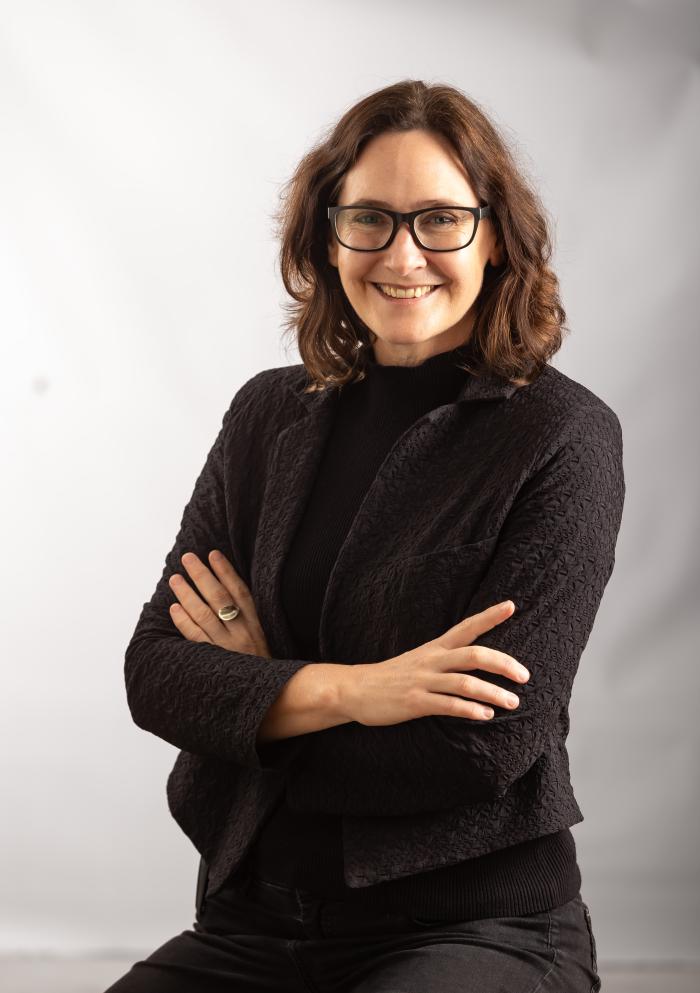
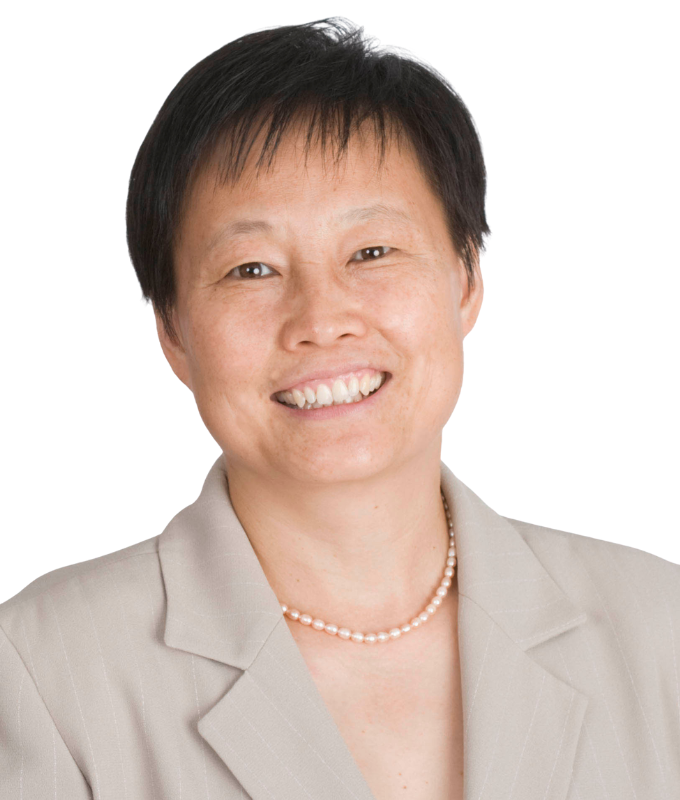
Claire Bowern is Professor of Linguistics at Yale University specializing in historical linguistics, language documentation, and Australian Indigenous languages. Her research employs computational phylogenetics to study language evolution and supports language revitalization through digital archives and fieldwork methodologies. Recent publications address: Phylogenetic signal in lexical evolution across language families Digital infrastructure for endangered language documentation (FLEx software analysis) Decolonizing linguistics pedagogy and research practices Her work consistently integrates linguistic, anthropological, and computational approaches to analyze language diversity and change. She contributes to global databases including Grambank and D-PLACE, examining links between linguistic, cultural, and environmental patterns.
Andrew Mitchell is a Professor at the Faculty of Law, Monash University, and a member of the WTO Dispute Settlement Panelists Indicative List. He has extensive legal practice experience with Allens Arthur Robinson and consults for governments, international organizations, and the private sector. Mitchell has taught law in Australia, Canada, Indonesia, Singapore, and the US. He holds law degrees from the University of Melbourne, Harvard Law School, and a PhD from the University of Cambridge. His research focuses on international economic law, public international law, and digital trade governance, with a particular emphasis on the intersection of trade law and public health. Mitchell has secured six major grants, including an Australian Research Council Future Fellowship, and has authored over 170 books and articles. He serves as an editor for Edward Elgar’s International Economic Law Series and multiple journal editorial boards. Recent projects include 'Safeguarding Health in International Investment Agreements' (2022–2025) 'Maritime Cooperation for a Sustainable Indo-Pacific' (2021–2022) 'Global E-Commerce and Cottage Industries in India' (2020–2021) He has contributed to policy submissions on bilateral investment treaties and delivered lectures on data sovereignty and digital trade. His awards include editorial leadership roles at journals like the Journal of World Investment and Trade and Asia Pacific Law Review .
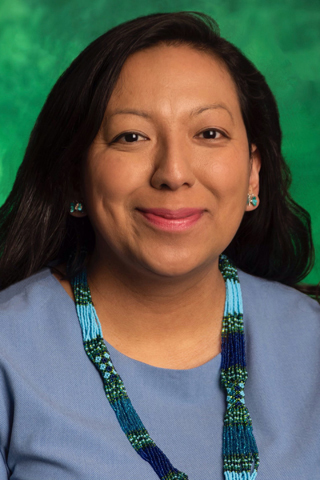
Maile Arvin is a Kanaka Maoli feminist scholar and Assistant Professor at the Department of Ethnic Studies, University of Hawaiʻi at Mānoa. Her research and teaching focus on Indigenous relationships to land, histories of race and settler colonialism in Hawaiʻi, Oceania, and the United States. Previously, she was faculty in History and Gender Studies at the University of Utah and founding director of the Center for Pasifika Indigenous Knowledges. PhD in Ethnic Studies, University of California San Diego (2013) MA in Ethnic Studies, University of California San Diego (2009) BA in English, Swarthmore College (2005) Her research examines: Colonial production of racial categories, particularly Polynesians as an 'almost white race' in historical social science History of incarceration of Native Hawaiian children in government institutions (1865–1960s) Intersection of settler colonialism and Indigenous feminisms Critique of eugenics and genomic studies in the Pacific Community-engaged memorialization projects in Hawaiʻi Recent scholarly trends include analyses of Indigenous sovereignty, critiques of settler colonial whiteness, and interdisciplinary studies of race-gender dynamics. Arvin's publications explore Polynesian racialization, decolonial feminism, and the socioeconomic impacts of colonial institutions. NEH Chair's Grant for Nā Lei Poina ʻOle ACLS Digital Justice Seed Grant Arvin leads Nā Lei Poina ʻOle (Beloved Children Never Forgotten), a community history project about reformatories and industrial schools in Hawaiʻi. In collaboration with Kawela Farrant and the North Shore Community Land Trust, this project uses archival and oral histories to confront the legacy of child incarceration. She also critiques the nonprofit-industrial complex's role in limiting Indigenous sovereignty.
Prof. Srdjan Capkun is a Full Professor in the Department of Computer Science at ETH Zurich and Director of the Zurich Information Security and Privacy Center (ZISC). He holds a Dipl.Ing. from the University of Split (1998) and a Ph.D. from EPFL (2004). His research focuses on system and network security, including wireless security (e.g., secure positioning), trusted computing, blockchain technologies, and privacy-preserving systems. He co-founded 3db Access (acquired by Infineon) and Sound-Proof, addressing secure distance measurement and authentication. Notable achievements include an ERC Consolidator Grant (2016), ACM Fellowship, and IEEE Fellowship. Education: Dipl.Ing., Electrical Engineering / Computer Science, University of Split, 1998 Ph.D., Communication Systems, EPFL, 2004 Research Interests: Wireless security (e.g., UWB, GNSS, cellular) Trusted execution environments (TEEs) Blockchain and cryptocurrency systems Privacy-preserving technologies Awards & Grants: ERC Consolidator Grant (2016) ACM Fellow and IEEE Fellow Leadership of ZISC Advising & Labs: Leads the System Security Group at ETH Zurich Guided postdoctoral researchers and graduate students in security and privacy Companies: 3db Access (secure distance measurement) Futurae (online authentication)
London School of Economics and Political Science (LSE)United Kingdom
Professor Andrew Murray is a leading academic in Law with expertise in New Media and Technology Law. He holds the position of Professor of Law at the LSE Law School and directs the LSE Law, Society and Technology Group. His research focuses on digital rights, AI ethics, and regulatory frameworks for emerging technologies. Murray has held roles including Fellow of the Royal Society for the Arts and advisor to the Saudi Arabian government on e-commerce law. He has advised parliamentary committees, including the House of Lords Communications Committee on digital regulation, and delivered the prestigious TMC Asser Lecture on AI and human agency. Education: LL.B. Hons from Edinburgh University (1994), followed by academic roles at Stirling University and LSE since 2000. Professional memberships include the Society of Computers and Law (SCL) and the Higher Education Academy (HEA). He has been a visiting professor at Amsterdam Law and Technology Institute and Sciences Po Paris. Research interests span cyberspace regulation, AI governance, and the intersection of technology with human rights. Key publications include Human Rights in the Digital Age (2004) and The Regulation of Cyberspace (2007). Awards include recognition as an Independent Expert in Nominet UK dispute resolution (2001–2008) and a 2024 Leibniz Prize reviewer. Advocacy includes contributions to EU e-commerce directives and UK surveillance law debates. His work emphasizes balancing innovation with legal accountability in digital spaces.
Professor Elaine Fahey is a leading scholar in EU law and global governance at the City Law School, City St George's, University of London, where she serves as Professor of EU Law and Deputy Head of Department (academic programmes). She is co-convener of the Institute for the Study of European Law (ISEL) and the UACES James Madison Trust EUFUtures initiative (2022–2025). Her academic career includes visiting professorships at Washington College of Law (American University), Keio University, and NYU, as well as fellowships at the European University Institute and the University of Graz. LLB, Trinity College Dublin LLM, Sidney Sussex College, University of Cambridge PhD, Trinity College Dublin Barrister-at-Law, Honorable Society of King’s Inns, Ireland Attorney-at-Law, State of New York Senior Fellowship, Higher Education Authority UK Her research focuses on the intersection of EU law with global governance, digital regulation, transatlantic relations, and the Area of Freedom, Security and Justice. She explores how the EU navigates legal frameworks beyond the nation-state, particularly in digital trade, cybersecurity, and data protection. Her work critically examines the EU’s role as a global regulatory actor and its interactions with international institutions. Her extensive publication record includes the monograph The EU as a Global Digital Actor (Hart, 2022) and numerous articles on digital sovereignty, data transfers, and transatlantic cooperation. Recent research analyzes the EU–US Trade and Technology Council (TTC), the evolution of the Privacy Shield, and strategic litigation in digital rights. Her work reveals a strong trend toward understanding how soft law, institutional design, and judicial decisions shape EU external relations and digital governance. Erasmus+ Jean Monnet Chair in Law & Transatlantic Relations (2019–2022) Emile Noël Fellow, NYU Law School Max Weber Fellow, European University Institute Senior Land Steiermark Fellow, University of Graz Senior Fellowship, Higher Education Authority UK Professor Fahey has supervised multiple PhD students, including Isabella Mancini, Giulio Kowalski, and Christos Karetsos, on topics such as algorithmic collusion, digital markets, and investment law. She has led significant research projects, including the ESRC-funded TRILATTRADE grant and the Marie Curie ITN on EU and Transatlantic Investment and Trade (EUTIP). She previously held leadership roles as Associate Dean (International) and interim Associate Dean (Research) at the City Law School. She is an elected member of the EU Studies Association (EUSA) Executive (2021–2025). She has also contributed to public policy through briefings for the Welsh Parliament and reports on CJEU litigation in Ireland. She is associated with research initiatives such as the Institute for the Study of European Law (ISEL) and has collaborated on interdisciplinary projects on Facebook regulation, transatlantic relations, and EU technological sovereignty. Her work bridges legal scholarship, policy, and international academic collaboration.
Christophe Bisson is an Associate Professor at SKEMA Business School (Paris campus) specializing in Strategy, Innovation & Entrepreneurship. His research examines augmented anticipatory systems, competitive intelligence, AI governance, and strategic early warning frameworks. He directs the MSc International Strategy and Influence program and leads research at the SKEMA Center for Artificial Intelligence. Bisson holds a PhD in Competitive Intelligence from Aix-Marseille University and a Postgraduate Certificate in AI from the University of Helsinki. His professional experience includes international strategy consulting and academic positions at universities in Turkey and France. Awards & Honors: Inducted into Council of Competitive Intelligence Fellows (2023) SCIP International Academic Award (2017)
Lisa Ford is an Endowed Professor of Modern British Imperial History at the University of New South Wales. Her research focuses on legal history, settler colonialism, and the British Empire's legal frameworks. She holds a PhD from Columbia University and has authored/co-authored influential works such as *Settler Sovereignty* and *The King’s Peace*. Ford’s expertise spans the British Empire’s legal order, colonial governance, and Indigenous jurisdictions. **Education**: Columbia University (MA, MPhil, PhD) and University of Queensland (BA, LLB, MA). **Research Interests**: Legal history of the British Empire (1760–1840), settler colonialism, and the legal dimensions of early American and Australian settlements. Her work bridges legal theory with colonial practices, emphasizing the intersection of law, power, and Indigenous resistance. **Awards**: Dalton Award, Australian Academy of the Humanities Fellowship, Thomas J. Wilson Prize, and Bancroft Dissertation Prize. Her publications explore imperial legal reforms, colonial commissions, and the legacy of settler sovereignty. **Grants & Advising**: Recipient of Australian Research Council grants, including the Future Fellowship (2019–2024). She co-edits *The Cambridge Legal History of Australia* and collaborates on projects analyzing colonial legal systems and Indigenous governance. **Labs/Teams**: Involved in interdisciplinary initiatives on empire and law, including digital scholarship on colonial commissions and collaborative research with institutions like the University of Western Sydney.
Jack Bowman is a Teaching Fellow in Modern History at the University of Warwick, School of Arts, Department of History. He teaches modules such as "Britain in the Twentieth Century" and "Race, Racism, and Resistance in Modern Britain," and serves as an Academic Writing Adviser and Teaching Representative for the Social Inclusion and Diversity Committee. PhD in History, University of Warwick (2019–2023) MA in Modern History, University of Warwick (2018–2019) BA (Hons) in History, University of Warwick (2015–2018) His research focuses on anti-colonial print cultures, particularly within the British Empire and the Pan-African movement. He specializes in book history, global histories of empire, queer histories, and visual media. His work explores the role of political publishing in anti-colonial activism and the intellectual networks of figures like V. K. Krishna Menon and Ras T. Makonnen. The recent publications and presentations reflect a strong engagement with transnational anti-colonial movements, Black radicalism, and the material culture of print. His work spans historical biography, archival research, and critical reviews of scholarship in visual culture, decolonization, and global knowledge systems. He frequently contributes to public history through outreach and digital media. University of Warwick, History Department Doctoral Scholarship (2019–2023) Jack Bowman advises undergraduate students and contributes to academic governance through committee roles. He is also involved in public engagement, including outreach to school children as the historian for George Padmore and creating educational resources for GCSE and A-Level students. He is a Convenor of the Modern British History Reading Group and a member of the Global History and Culture Centre and Manuscript and Print Cultures Research Group at Warwick. He is currently working on a new book project on the League Against Imperialism and maintains an active public presence through Twitter (@DrJackBowman) and podcast contributions, such as with Shoga Films on the Harlem Renaissance.
Jennifer Gómez Menjívar is Professor and Director of the M.A. in Media Industries and Critical Cultural Studies at the University of North Texas. Her research examines historical and ethno-linguistic movements influencing text production, circulation, and reception across print media, screen cultures, and digital communities. With over 18 years of teaching experience, she previously held positions at international organizations including the UNECE and UNDP. Her scholarly interests span media linguistics, film adaptation, digital activism, hemispheric animation histories, Indigenous sovereignty media, and Spanish-language media. Her publications demonstrate interdisciplinary work bridging media studies, cultural history, and postcolonial theory. Her extensive publication record includes books such as Tropical Tongues: Language Ideologies, Endangerment, and Minority Languages in Belize (2018) and Black in Print: Plotting the Coordinates of Blackness in Central America (2023), as well as co-edited volumes on Indigenous technology and hemispheric Blackness. She received a Senior Research Fellowship at Freie University Berlin for her upcoming work on Indigenous sovereignty media. Gómez Menjívar teaches courses including Introduction to Graduate Studies in Media Arts, Women in Film, and Global Media. She also mentors students in critical media analysis and serves as faculty advisor for media research projects.
The Chinese University of Hong Kong (CUHK)Hong Kong SAR
Jyh-An Lee is a Professor and founding Executive Director of the Centre for Legal Innovation and Digital Society (CLINDS) at The Chinese University of Hong Kong (CUHK) Faculty of Law. He leads the New Ventures Legal Team (NVLT) and holds advisory roles at institutions like the European Center for E-Commerce & Internet Law and National University of Singapore. Education : JSD (Stanford), LLM (Harvard), MBA & LLB (National Taiwan University) Admissions : Practicing lawyer in Taiwan His research interests focus on Intellectual Property , AI and the Law , Law & Digital Technology , and Asian Law . He has contributed to landmark studies on NFTs, metaverse legal frameworks, cybersecurity, and IP litigation in Asia. The scientific awards he has received include: CUHK PhD IMPAC Award (2024-25) CUHK Vice-Chancellor’s Exemplary Teaching Award (2023, 2019) CUHK Outstanding Research Impact Award (2022-23) Numerous other university and faculty-level honors His work has been cited by major international courts and agencies. He is also a TRAIL Academic Fellow and active in policy advisory roles for Creative Commons and IP offices in Taiwan and Hong Kong.
Kären Wigen is the Frances and Charles Field Professor in History at Stanford University, specializing in Japanese history and the history of cartography. She holds a Ph.D. in Geography from the University of California, Berkeley (1990). Her research spans: Historical geography of East Asia Early modern Japanese regional economies Geographies of the imagination Transnational maritime histories Critical cartography and spatial analysis Her publications include eight major works from 1992-2025 analyzing spatial transformations in Japan and global metageography, with recent projects focusing on temporal dimensions in cartographic representation. She co-edited Seascapes (2007) and Cartographic Japan (2016), and serves as Director of Stanford’s Mellon Fellowship of Scholars in the Humanities since 2022.
Jacky Bourgeois is an Assistant Professor of Data-Centric Design at Delft University of Technology's Faculty of Industrial Design Engineering (IDE), leading the Data-Centric Delft Design Lab. His work bridges Human-Computer Interaction, Data Science, and Participatory Design, focusing on methods like data donation to empower collaborative data exploration. He holds a computer science background, previously researching ubiquitous technologies for domestic energy practices of 'energy farmers' (solar households). Key projects include the PROMISE study on patient-led oncological care and the Data Donation initiative promoting ethical data practices. Education: Background in Computer Science; academic focus on sustainable design engineering and IoT. Teaching includes courses like 'Data-Centric Design for...' (2024) and 'Digital Product Development' (2023). Research Interests: Data as subjective inquiry material, data intimacy, data commons, and human-data interaction in home contexts. Notable contributions include PAIRcolator for collaborative data reflection and Tangi for 360° video insights. Awards include Best Paper at CHI 2025 and DIS '24 Best Paper. Grants & Collaborations: NWO-funded research on hospital sounds (2024), IoT Rapid Proto Labs for industry-academia partnerships, and ancillary role as a scientific employee at The Open University (2025–2027). Labs & Teams: Director of the Data-Centric Delft Design Lab; collaborates with the HCI Data & Design SIG. Current projects address ethical frameworks for data donation and patient-centered healthcare systems.
Jinyan Li serves as Professor of Tax Law at Osgoode Hall Law School, York University, where she previously held the position of Interim Dean and currently co-directs the LLM Tax program while serving as academic director of the Professional Graduate Studies Program. Her educational qualifications include: BA from UIBE (China) LLB from University of Toronto LLM from Queen's University DJur from Osgoode Hall Law School She is an active member of the Bar of Ontario. Professor Li's research spans tax law and policy with specialized expertise in international taxation frameworks, social income support systems, Chinese tax evolution, and e-commerce taxation challenges. Her scholarly work has significantly shaped legal discourse, with multiple citations by Canadian judicial authorities including the Supreme Court of Canada in landmark cases such as Deans Knight Income Corp. and Alta Energy . Her publication history demonstrates consistent focus on comparative tax systems and policy development, particularly examining Chinese tax structures and global digital economy implications. This trajectory reflects deepening engagement with international tax coordination mechanisms and equity considerations in fiscal policy. Her distinguished recognition includes: Tax Excellence Award (2021) from the Ontario Bar Association Lifetime Contribution Award (2017) from the Canadian Tax Foundation Academic Excellence Award (2007) from the Canadian Association of Law Teachers D.J. Sherbaniuk Distinguished Writing Award (1999) York University Research Leader (2017) Teaching Awards (2004, 2014) Professor Li actively supervises LLM and PhD candidates specializing in tax law and social income support policy, maintaining close mentorship with students including Lawrence, Sonia McCamus, and John D. Her externally funded research has received substantial support from governmental bodies including the Department of Finance and National Revenue, alongside international institutions such as the IMF, OECD, and Asian Development Bank where she served as consultant. She leads research initiatives through the LLM Tax program and organizes high-impact academic events, recently co-hosting the 2022 Pillar Two symposium and Women with Disabilities: Income Security and Tax Policy conference, demonstrating ongoing commitment to contemporary tax challenges and inclusive policy development.
Marcus Smith is an Associate Professor in Law at the Charles Sturt University , where he teaches LAW222 Technology Law and directs the Bachelor of Laws program. He holds advanced degrees from the Australian National University (PhD, LLM) and the University of Cambridge (MPhil). His research spans technology law and regulation , focusing on genomic data governance biometric identification AI ethics blockchain policy cybersecurity surveillance law He leads the Contemporary Threats to Australian Security research group and serves as Chief Investigator on an NHMRC-funded project (MRF2015531) addressing genomic dataset governance. His recent work analyzes algorithmic bias in facial recognition AI in healthcare blockchain's regulatory challenges post-pandemic cybercrime surveillance ethics data security frameworks He actively supervises PhD and honours students in technology law and contributes to law reform through submissions to international bodies like the UN Human Rights Council .