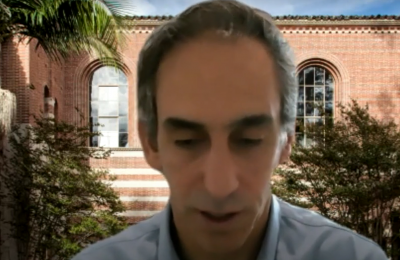
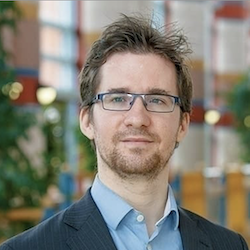
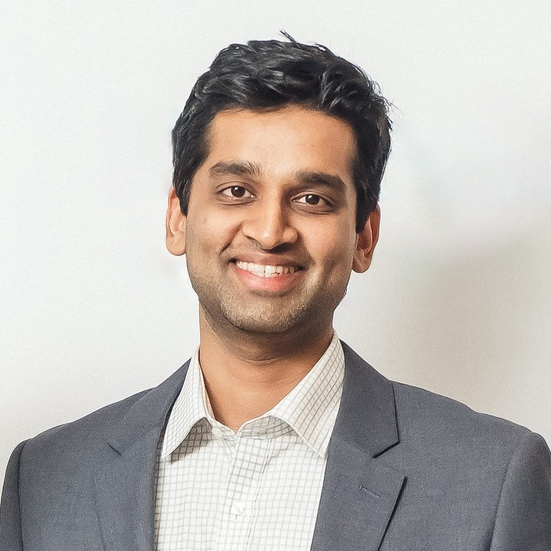
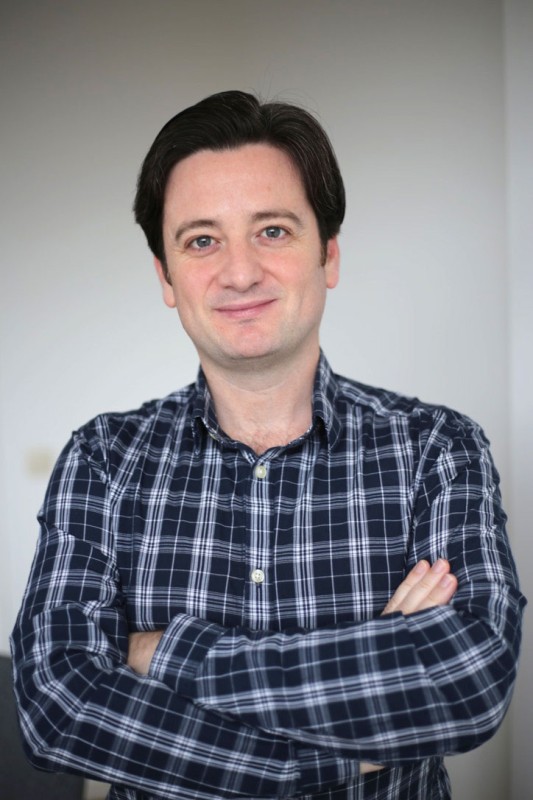
Abhijit Banerjee is a Professor in the Department of Economics at the Massachusetts Institute of Technology (MIT). His research focuses on development economics, public health policy, and social protection programs, particularly addressing poverty and inequality in low- and middle-income countries. He has conducted large-scale experiments evaluating interventions such as conditional cash transfers, universal basic income, and healthcare policies. Key areas of interest include the design and implementation of anti-poverty programs, behavioral economics, and the long-term health impacts of infectious diseases like COVID-19. His work often integrates experimental methods to assess policy effectiveness, with contributions to global health studies and economic development strategies. Notably, his research on the RECOVERY trial evaluates treatments for hospitalized COVID-19 patients, while other studies explore financial spillover effects of electronic government transfers in Indonesia and savings behavior interventions in Chile. Banerjee has collaborated on projects analyzing post-COVID-19 health outcomes, labor market dynamics in India, and the role of trusted messengers in public health communication during crises. Despite the breadth of his contributions, specific details about his educational background, grants, or lab affiliations are not explicitly provided in the source text.
Jiaxuan You is an Assistant Professor at the Siebel School of Computing and Data Science, University of Illinois at Urbana-Champaign, leading the U Lab focused on achieving Artificial General Intelligence (AGI) in digital environments. His research spans graph neural networks (GNNs), relational data, foundation models, and machine learning systems. PhD and MS in Computer Science from Stanford University (2021) Developed GraphGym and PyTorch Geometric (PyG) for graph learning Core member at Kumo AI (2021-2023) His research explores: Graph-enhanced LLMs: Integrating relational structures into foundation models AGI Development: Self-optimizing AI agents and tool utilization ML Systems: Scalable architectures and redundancy-free computation Interdisciplinary Applications: Financial networks, crop yield prediction, and metro systems Recent publications focus on temporal reasoning, multi-agent dynamics, and hybrid architectures for LLMs. He actively develops open-source tools like DBGYM and GraphRouter. Scientific recognition includes: JPMC PhD Fellowship Baidu Scholarship Best Student Paper at AAAI 2017 World Bank Big Data Innovation Challenge winner He mentors PhD and intern students, emphasizing machine learning systems expertise. His lab collaborates on AGI workshops (e.g., ICLR 2024) and industry projects.
Hernan Galperin is a Professor of Communication and Director of Doctoral Studies at the USC Annenberg School for Communication and Journalism. His expertise lies in Internet policy, digital inequality, and the intersection of technology adoption with social stratification. He holds affiliations with institutions like the Annenberg Research Network on International Communication (ARNIC) and the USC Annenberg Innovation Lab. Galperin has authored four books and published in leading journals such as Telecommunications Policy and New Media & Society. His research, funded by organizations like the Pew Charitable Trust and the Inter-American Development Bank, focuses on broadband accessibility, digital inclusion, and policy impacts. Notable awards include membership in the World Economic Forum’s Global Future Council and top paper awards from the International Communication Association (2020, 2022). Education background: While not explicitly detailed in the provided text, his academic roles and publications imply advanced training in communication studies, public policy, or related fields. His work integrates quantitative methods with policy analysis to address global challenges in technology access. Research highlights include studies on broadband’s role in poverty reduction (Ecuador), geographic discrimination in the gig economy, and the gender digital divide in Latin America. He has contributed policy briefs on the Affordable Connectivity Program and digital inclusion in public housing, demonstrating real-world policy impact. His affiliations with global institutions reflect a focus on international collaboration in addressing digital divides. Grants and awards: His funding sources include the Pew Charitable Trust, IDRC-Canada, and the Internet Society. Awards highlight his contributions to cyberpolicy and global media governance. His work often bridges academic research with actionable policy recommendations, particularly in underserved regions. Labs and teams: He directs ARNIC and collaborates with the USC Annenberg Innovation Lab and USC Price Center for Social Innovation, fostering interdisciplinary approaches to communication and technology challenges.
David Stillwell serves as Professor of Computational Social Science at Cambridge Judge Business School and Academic Director of The Psychometrics Centre, University of Cambridge. His research leverages big data to understand human psychology and behavior, with significant contributions in personality prediction from digital footprints and personalized advertising applications. His educational background includes: BSc in Psychology from the University of Nottingham (2007) MSc in Research Methods from the University of Nottingham (2008) PhD in Decision Making from the University of Nottingham (2012) Dr. Stillwell's research centers on computational social science and psychometrics, pioneering the myPersonality Facebook application that collected data from over 6 million users. His work demonstrates computers can predict personality as accurately as spouses, reveals psychological targeting's advertising effectiveness, and establishes links between personality-matched spending and life satisfaction. He also explores linguistic honesty markers through profanity analysis and personality-based dating patterns. His recent publications (2019-2025) reveal a strong trajectory toward AI evaluation using psychometric frameworks, particularly in medical and general-purpose AI assessment. Key themes include fairness metrics in language models, crisis emotional responses through social media, and computational personality recognition - demonstrating consistent innovation at the psychology-technology intersection. He has received significant recognition: Top 10 most influential papers of 2013 by Altmetric Nieman Journalism Lab highlight of 2013 Named in 'top 30 thinkers under 30' by Pacific Standard Magazine Dr. Stillwell maintains active industry engagement through consultancy with Barclays, Hilton, and Ubisoft on projects spanning computer-adaptive testing systems to interactive experiences like Predictive World for Watch Dogs 2. His policy impact is substantial, with citations by the European Data Protection Supervisor, World Bank, and multiple national governments, leading to speaking engagements at the European Parliament and Bank of England. As Academic Director of The Psychometrics Centre, he leads a global hub for advancing psychological assessment through innovative methods including Concerto open-source software, collaborating with organizations ranging from the European Commission to major corporations on psychometric applications in people analytics and digital behavior.
Prof. Dr. Frank Ulbrich is a Lecturer and Programme Director for the BSc Business Administration at the Lucerne School of Business (HSLU). He holds a PhD in Business Administration from the Stockholm School of Economics. His academic career spans roles at universities in Sweden, the UK, Canada, and Switzerland, alongside IT & Management consulting experience. Research focuses on management education, project management, information management, and organizational change. He has published extensively in areas like shared services, digital transformation, and curriculum development. Notable awards include multiple Emerald Literati Awards and a Fellowship from the Higher Education Academy. Education: PhD in Business Administration (Stockholm School of Economics) Affiliations: Institute of Business and Regional Economics at HSLU Teaching Subjects: Academic Methods, Higher Education Management, Project Management, Digital Transformation Recent presentations include discussions on bridging academia-industry gaps, curriculum integration of SDGs, and data-driven learning strategies. His work emphasizes aligning education with labor market needs and advancing evidence-based teaching practices.
Dr. Sezgin Ayabakan is an Associate Professor in the Department of Management Information Systems at the Fox School of Business and Management, Temple University . He holds a PhD in Management Science from the University of Texas at Dallas, with a focus on Management Information Systems (MIS), an MS in Industrial and Systems Engineering from the University of Florida, and a BS in Industrial Engineering from Bilkent University in Turkey. His research focuses on healthcare analytics , particularly exploring how health information technology (HIT) impacts healthcare costs, quality, and utilization. Key research interests include data analytics applications in healthcare and social media, the business value of information systems, and open-source production strategies. He has examined topics such as telehealth efficacy, electronic health record (EHR) adoption challenges, hospital readmission reduction programs, and the interplay between healthcare IT and clinician well-being. Dr. Ayabakan teaches undergraduate and graduate courses in information systems, including MIS 2101: Digital Systems and SBM 3586: Diamond Peer Teachers - Internship II . His work has been published in top-tier journals like MIS Quarterly and Health Services Research and Management Epidemiology , with recent studies addressing telehealth utilization, EHR strategy impacts, and the role of organizational routines in clinician satisfaction. While no formal awards are listed, his contributions to healthcare IT research demonstrate significant academic impact. His advisory and grant activities are not detailed in the provided text, but his research often intersects with practical healthcare system challenges, suggesting potential collaborations with healthcare institutions and policy organizations.
Gert Cauwenberghs is a Professor of Bioengineering at the University of California San Diego (UCSD), affiliated with the Jacobs School of Engineering. He co-directs the Institute for Neural Computation and holds a visiting professorship at MIT. His research focuses on neuromorphic engineering, energy-efficient neural interfaces, and wearable biosensors. Key contributions include silicon-based adaptive neural circuits, implantable neural recording systems, and in-ear biosensing devices. Education: M.Eng. in Applied Physics (University of Brussels, 1988), M.S. and Ph.D. in Electrical Engineering (Caltech, 1989–1994). Prior roles include Professorships at Johns Hopkins University and Visiting Professor at MIT. Research Interests: Biomedical integrated circuits, neuromorphic computing, brain-machine interfaces, and energy-efficient neural systems. His work bridges neuroengineering and clinical applications, emphasizing adaptive intelligence and low-power designs. Recent Work: Development of femtojoule-efficient neural chips, high-density neural interfaces, and closed-loop wearable systems. Projects include neurobench benchmarking frameworks and RRAM-based neuromorphic hardware. Awards: NSF Career Award (1997), ONR Young Investigator (1999), PECASE (2000), IEEE Distinguished Lecturer (2003–2004). Grants & Labs: Active in NIH and DoD-funded projects, co-directs the UCSD Institute for Neural Computation. Collaborates with industry on neural interface technologies. Labs/Teams: Cauwenberghs Lab at UCSD focuses on integrated neuroengineering systems, including neural recording systems and neuromorphic computing architectures.
Karthik R. Narasimhan is a Professor at Princeton University's School of Engineering and Applied Science in the Department of Computer Science. Previously, he earned his PhD from MIT under Regina Barzilay and served as a visiting research scientist at OpenAI during 2017-18. His research focuses on the intersection of language and decision-making, building autonomous agents that learn from both experience and human knowledge. His research spans multiple high-impact areas including language agents (Text-DQN, CALM, ReAct, Tree of Thoughts), reinforcement learning (h-DQN, Multi-Objective RL), and AI safety (Toxicity in ChatGPT, DataMUX). He has developed critical datasets and benchmarks such as WebShop, InterCode, SWE-bench, and SILG that have become standard evaluation tools in the field. Current work emphasizes agent capabilities, software engineering automation, and multimodal interaction. His publication trends show strong focus on practical agent deployment (SWE-agent, Tree of Thoughts), safety evaluation (Probing AI Safety), and efficiency improvements (DataMUX). Recent work increasingly addresses real-world challenges in software engineering, security, and human-AI collaboration through rigorous benchmarking. Co-author of foundational GPT (2018) paper Key developer of Text-DQN (2015), CALM (2020), ReAct (2022), Tree of Thoughts (2023) Creator of influential benchmarks: WebShop (2022), SWE-bench (2023), InterCode (2023) He actively advises students through Princeton's computer science program, with research supported by multiple grants focused on autonomous agent development and language-based decision systems. His GitHub repositories (nlp-datasets, text-world-player) demonstrate strong community engagement in open-source research tools. Current projects include advancing language agent capabilities through Reflexion (2023) and Tree of Thoughts (2023) frameworks while addressing critical safety and efficiency challenges.
Subodha Kumar is the Paul R. Anderson Distinguished Chair Professor of Statistics, Operations, and Data Science at Temple University’s Fox School of Business. He serves as the Founding Director of the Center for Business Analytics and Disruptive Technologies and has a secondary appointment in Information Systems. His roles include Ph.D. Program Concentration Director for Operations and Supply Chain Management. With over 240 publications, he ranks #1 globally in Information Systems Research publishing and holds a robotics patent. His research focuses on AI, blockchain, healthcare analytics, and cybersecurity, with notable contributions to digital transformation and operations management. Awards include the INFORMS ISS Distinguished Fellow and POMS Fellow. He advises major journals like Production and Operations Management and organizes conferences like POMS 2018. Media mentions span NYT, WSJ, and CBS. Education: University of Washington faculty Texas A&M University faculty Research Interests: Dr. Kumar explores AI applications, blockchain in fintech, healthcare system optimization, and supply chain analytics. He investigates cybersecurity’s operational impacts and data mining strategies. His work bridges theory and practice, addressing challenges in digital transformation and platform economies. Publications Trends: Recent work emphasizes digital platforms (e.g., blockchain adoption, telemedicine impact), organizational behavior (real-time feedback systems), and healthcare operations (personalized treatment algorithms). He frequently collaborates internationally, with studies appearing in Management Science, Information Systems Research, and Decision Sciences. Awards & Recognition: Changjiang Scholars Chair (China) ISB Visiting Professorship POMS Executive Editor Grants & Labs: Secured NIH grants for health analytics projects. Leads Temple’s analytics center fostering industry partnerships. Active in editorial roles (e.g., Production and Operations Management Journal Deputy Editor). Teaching: Offers courses in data science, optimization methods, and innovation entrepreneurship at graduate/undergraduate levels.
Prof. Dr. Gonzalo Guillén Gosálbez is a Full Professor at the Department of Chemistry and Applied Biosciences , ETH Zürich. He holds a PhD in Process Systems Engineering (UPC, 2005) and has held academic positions at Imperial College London (Reader), University of Manchester (Senior Lecturer), and Universitat Rovira i Virgili (Assistant/Associate Professor). His research focuses on Sustainable Chemical Processes , integrating life cycle assessment, optimization techniques, and planetary boundary analysis to evaluate and design low-carbon technologies. Current position: Full Professor, ETH Zürich (2019–present) Prior roles: Imperial College London (2016–2019), University of Manchester (2014–2016), URV Spain (2008–2014) Education: PhD (UPC, 2005), MEng/BEng (University of Murcia) His research explores CO2 valorization , green methanol synthesis , circular marine fuels , and planetary boundary compliance in energy and chemical systems. Recent work emphasizes machine learning for process modeling, single-atom catalysis , and decentralized ammonia production . Scientific contributions include 15+ peer-reviewed articles (2023–2025) in journals like Nature Chemical Engineering , ACS Sustainable Chemistry & Engineering , and Energy & Environmental Science . Key themes: Optimization of hybrid fossil/renewable carbon systems Environmental impacts of energy transitions Catalyst design for sustainable chemistry Life cycle assessment of emerging technologies Awarded UPC Top Doctoral Student Award and Top National Student Award , he combines process systems engineering with sustainability metrics to address global challenges in chemical and energy systems.
Andreas Geiger is a Professor and Head of the Department of Computer Science at the University of Tübingen, Germany. He leads the Autonomous Vision Group (AVG) within CyberValley and is a core faculty member of the Tübingen AI Center. His roles also include PI in the ML in Science Excellence Cluster and the CRC Robust Vision, as well as ELLIS Fellow and coordinator of the ELLIS PhD program. He specializes in machine learning models for computer vision, robotics, and autonomous systems, with applications in self-driving cars, VR/AR, and scientific document analysis. Educational background: While not explicitly detailed, his positions imply a Ph.D. in Computer Science or related field. His work spans interdisciplinary collaborations with institutions like ETH Zürich, Microsoft, and the University of Bonn. Research focuses on 3D scene understanding, Gaussian splatting, generative models, and reliable autonomous systems. Notable contributions include the KITTI dataset and foundational work in neural radiance fields. Awards include the Sage 10-Year Impact Award (2024), ERC Starting Grant (2019), and IEEE PAMI Young Researcher Award (2018). Key projects include the Scholar Inbox paper recommender platform, ReSim (reliable world simulation), and advancements in 3D scene generation (e.g., UrbanCAD, PrITTI). His lab maintains a strong focus on open-source tools and datasets, such as the CARLA Route Generator. Grants and funding include support from Vector Stiftung (MINT innovation program) and EU initiatives like the ML in Science Cluster. His team collaborates internationally, with recent work presented at CVPR, SIGGRAPH, and NeurIPS.
Michele Zorzi is a Professor of Telecommunications at the School of Engineering, University of Padova, Italy, where he has held a faculty position since 2003. He leads the SIGNET (Signal processing and Networking) Research Group, focusing on cutting-edge wireless networking challenges including mmWave communications and underwater networks. His extensive publication record exceeds 600 papers in top-tier journals and conferences, reflecting significant contributions to the field through both theoretical and experimental work. He received his Laurea Degree (1990) and Ph.D. (1994) in Electrical Engineering from the University of Padova. Prior academic appointments include Politecnico di Milano (1993-1996), University of California San Diego (1995-1998), and University of Ferrara (1998-2003), where he progressed from Associate Professor to full Professor. His educational trajectory demonstrates deep roots in Italian academia with international exposure. Professor Zorzi's research spans wireless communications and networking, with current emphases on mmWave networking for vehicular systems, underwater acoustic/optical communications, non-terrestrial networks, and AI-driven networking solutions. His group conducts experimental validations including at-sea trials for underwater systems and testbeds for vehicular networks. Key projects include PRATA for predictive QoS in autonomous driving and IoT-based environmental monitoring of the Venice Lagoon, demonstrating practical applications of theoretical work. Analysis of his 2022-2025 publications reveals strong trends in applying artificial intelligence to networking challenges across diverse environments. There is significant emphasis on vehicular networks (predictive QoS, teleoperated driving), underwater systems (acoustic/optical communications, AUV swarms), and satellite networks (Starlink integration, NTN security). Experimental validation in real-world scenarios like the Venice Lagoon monitoring project and underwater sea trials characterizes his applied research approach. His scientific accolades include: IEEE Fellow (2007) IEEE Communications Society Best Tutorial Paper Award (2008, 2019) Stephen O. Rice Best Paper Award (2018) Multiple best paper awards at IEEE conferences (2005-2020) As principal investigator for numerous European and US research projects plus 20+ industry-funded initiatives, Professor Zorzi has mentored over 35 PhD students and post-docs. Graduates now hold prominent positions at institutions including Stanford, UCSD, CTTC, and Huawei. His SIGNET group maintains active international collaborations and contributes to open-source networking tools via GitHub, demonstrating commitment to community engagement. The SIGNET Research Group, housed within the Department of Information Engineering, operates specialized experimental facilities for mmWave and underwater communications. Current initiatives include AI-based predictive QoS frameworks for vehicular networks, underwater optical communication systems using ultraviolet light, and large-scale IoT deployments for environmental monitoring. The group's GitHub presence indicates strong open-science practices, while recent sea trials confirm hands-on experimental capabilities beyond theoretical work.
Dr. Jonathan Bright is a Senior Research Fellow and Associate Professor at the Oxford Internet Institute, University of Oxford , specializing in computational approaches to the social and political sciences. His research explores how digital technologies reshape political participation and how new data sources enhance governmental decision-making. Research Interests: Focused on social media, political behavior, computational social science, and big data , Bright’s work addresses digital governance, algorithmic bureaucracy, and the dynamics of political fragmentation online. His empirical studies span open government data usage, crowdsourced geographical information, and the impact of neighborhood effects on data completeness. Scientific Contributions: Leading studies on algorithmic governance in UK local authorities (2020) Investigating geodemographic biases in crowdsourced platforms like OpenStreetMap (2018) Mapping political fragmentation in social media ecosystems (2018) Grants & Collaborations: Funded by UK taxpayers, ESRC, and Google, his work intersects with projects on vaccine misinformation, hate speech monitoring, and digital economies. Formerly held positions as Research Fellow and Research Associate at OII from 2013 to present.
Peter A. Flach is Professor of Artificial Intelligence at the Intelligent Systems Laboratory, School of Computer Science, University of Bristol, where he has been faculty since 1997 and was promoted to Professor in 2003. He currently directs the UKRI AI Centre for Doctoral Training in Practice-Oriented Artificial Intelligence and serves as Vice-President of the European Association for Data Science (EuADS), having previously served as its President. His research centers on rigorous evaluation and improvement of machine learning systems, with seminal contributions to classifier calibration (including Beta Calibration and Precision-Recall-Gain curves), explainable AI frameworks, and data science methodology. He pioneered the extension of CRISP-DM to data science trajectories and developed Explainability Fact Sheets for systematic assessment of XAI approaches. His work bridges theoretical foundations with practical deployment in real-world systems. Analysis of his recent publications reveals a dominant focus on interpretable and reliable machine learning, with strong emphasis on performance evaluation metrics, model calibration techniques, and human-centered explainability. His research increasingly addresses healthcare applications through projects like SPHERE and clinical decision support systems, while maintaining core contributions to fundamental ML theory. His scientific recognition includes prestigious fellowships: Fellow of the European Lab for Learning and Intelligent Systems (ELLIS) Fellow of the European Association for Artificial Intelligence (EurAI) Professor Flach has secured major research funding including UKRI Centre for Doctoral Training grants and EU network funding (TAILOR). He leads extensive collaborations across Engineering, Population Health Science, and international institutions (Monash University, Polytechnic University of Valencia), plus over 20 industry partners in the Practice-Oriented AI CDT including LV= and QinetiQ. His work with the SPHERE project demonstrates successful translation of AI research into residential healthcare settings. He leads the Intelligent Systems Laboratory at Bristol, which develops influential open-source tools including the FAT Forensics Python toolbox for algorithmic fairness and the Explainability Fact Sheets framework. His lab maintains strong connections with the European AI community through ELLIS and EurAI, positioning Bristol as a hub for human-centered and methodologically rigorous AI research.
Shiri Azenkot is an Associate Professor at the Jacobs Technion-Cornell Institute at Cornell Tech and Cornell University, affiliated with the Information Science Department and Technion’s Computer Science Department. Her research focuses on accessibility innovations in emerging technologies, particularly addressing needs of people with vision impairments and neurodiverse populations. She holds a PhD from the University of Washington, advised by Richard Ladner and Jacob Wobbrock, and has been recognized with prestigious awards including the NSF Graduate Research Fellowship. Education: PhD in Computer Science & Engineering from University of Washington (advisors: Richard Ladner, Jacob Wobbrock). Research interests include VR/AR accessibility, assistive technology design, inclusive education tools, and ethical AI applications. Current projects explore social VR avatars for invisible disabilities, AR navigation aids, and AI moderation systems against ableist hate speech. Her work is funded by NSF, AOL, Verizon, and Facebook. Recent publications address video accessibility for ADHD users, AI-driven scene descriptions for blind users, and tactile learning materials co-designed with educators. She leads the XR Access initiative promoting inclusive virtual/augmented reality. Awards include the UW Graduate Medal (2020), NSF CRII Award (2017), and AT&T Labs Fellowship (2014). Her research bridges academic innovation with industry impact through collaborations with tech companies and disability advocacy groups.