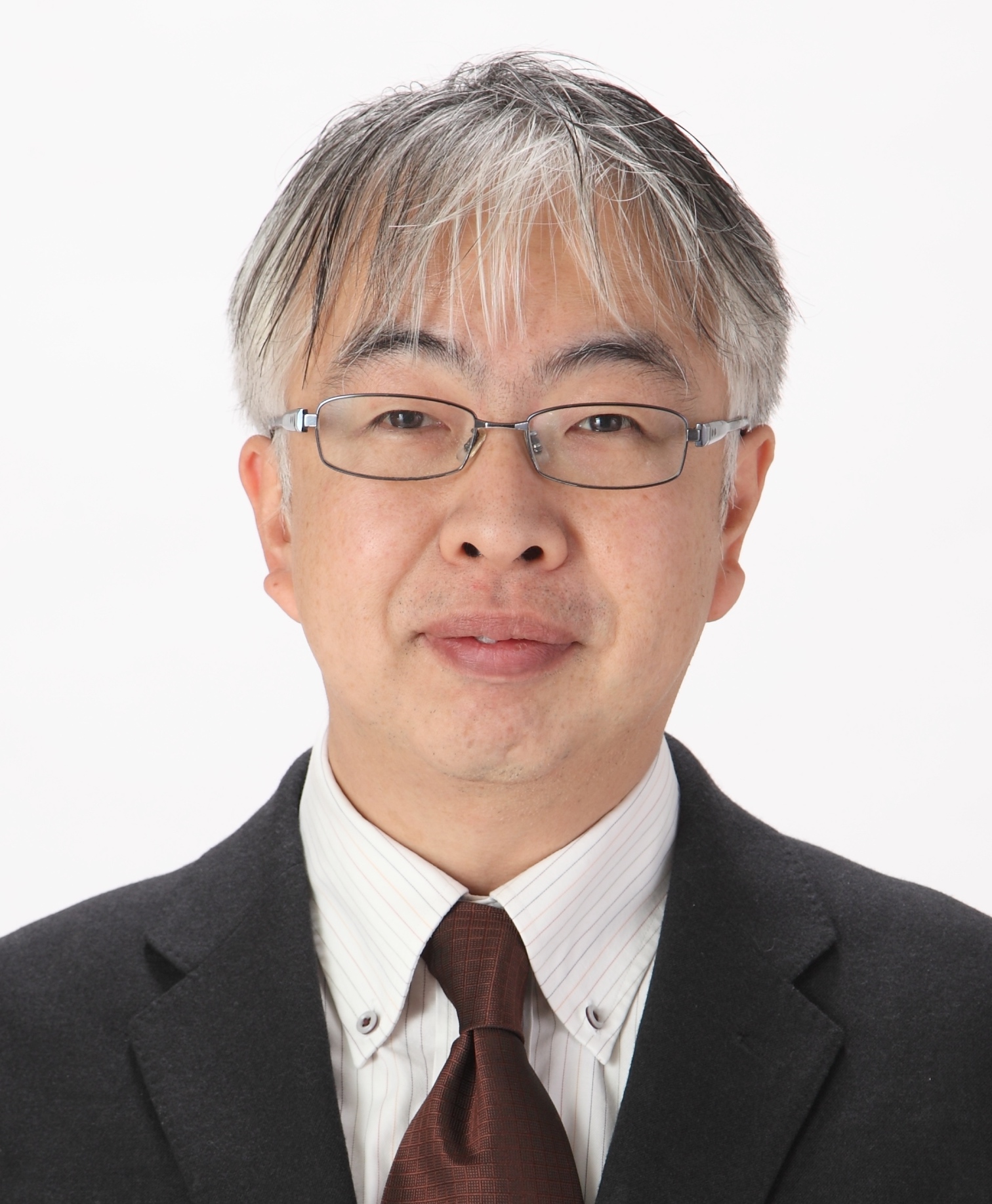
Masao Yanagisawa is a Professor at Waseda University's School of Fundamental Science and Engineering, with over 25 years of academic experience since 1998. An IEEE and ACM member, he holds a Doctor of Engineering degree from Waseda University.
Reiko HishiYama is a Professor at WASEDA University's Faculty of Science and Engineering, School of Creative Science and Engineering. With a Doctor of Informatics from Kyoto University (2005), she has established herself as a leading researcher in intelligent informatics, safety engineering, social systems engineering, and educational technology. Her educational background includes: Doctor of Informatics from Kyoto University (2005) HishiYama's research spans multiple interdisciplinary fields with a strong focus on the intersection of technology and society. Her primary research interests include artificial intelligence, social informatics, business informatics, communication design, computer vision, mobile computing, and IoT (Internet of Things). She particularly focuses on how these technologies can be applied to community management, tourism development, and cultural preservation through innovative approaches such as augmented reality and network analysis. Analysis of her recent publications reveals a consistent focus on applying network motif analysis to diverse domains including tourism, luxury goods markets, and community management. Her work increasingly integrates augmented reality technologies with traditional cultural experiences and demonstrates a strong commitment to practical applications that address real-world community challenges, particularly in low-digitalized environments. Her scientific achievements have been recognized with numerous prestigious awards: The 12th FOST Award (2019) The 6th WASEDA e-Teaching Award (2018) The 7th Career Development Essay Contest for Young Professionals and Women Engineers (2015) The 4th FOST Award (2011) Pacific Rim International Workshop on Multi‐Agents PRIMA Runner Up Paper Prize (2004) The 1st KK-MAS Competition Grand Prize (2001) As an educator and researcher, Professor HishiYama has been instrumental in developing innovative teaching methods, particularly in AI ethics education using the case method. Her professional engagements extend beyond academia through various committee memberships including SoftBank Corp. External Director, HAYAO NAKAYAMA Foundation for Science & Technology and Culture Planning Committee, and ASAHI INTELLIGENCE SERVICE CO., LTD. External Director. She maintains active roles in numerous professional societies including IEICE, IEEE, and ACM. Her research laboratory (HishiYama Lab) focuses on developing social support systems through the designable evaluation network framework, with applications in community management, tourism development, and multilingual communication. The lab has produced numerous publications and practical applications that bridge theoretical research with real-world implementation.
Youki Kadobayashi is a Professor at NAIST, specializing in cybersecurity and network engineering. He holds a Ph.D. in Computer Science from Osaka University. His research focuses on Internet infrastructure evolution, cybersecurity education, and standards development. He collaborates with industry and academia on projects like creating technologies for failure recovery and infrastructure co-creation. Research interests include: Internet engineering, web security, cybersecurity education standards, and privacy-preserving systems. His work addresses challenges in smart home security, federated learning for fraud detection, and secure edge computing. Publications span topics like differential privacy, federated learning frameworks, and authentication protocols. He contributes to consortia such as WIDE and organizes competitions like CDMC and Hardening Zero. His lab explores advanced cybersecurity tools and datasets.
Professor Tadashi Wadayama serves in the Department of Computer Science within the Faculty of Engineering at Nagoya Institute of Technology. He holds a full professorship position and leads research initiatives in coding theory, signal processing, and deep learning applications for next-generation communication systems. Professor Wadayama received his B.E., M.E., and D.E. degrees from Kyoto Institute of Technology in 1991, 1993, and 1997 respectively. He began his academic career at Okayama Prefectural University in 1995 as a research associate and spent 1999-2000 as a visiting researcher at Essen University in Germany. He joined Nagoya Institute of Technology as an associate professor in 2004 and was promoted to full professor in 2010. He maintains active memberships in IEEE and the Institute of Electronics, Information and Communication Engineers (IEICE). His research spans multiple interconnected domains with primary focus on Coding Theory , Signal Processing for Wireless Communications , and Deep Learning applications . Professor Wadayama has made significant contributions to LDPC codes, MIMO signal detection, and the emerging field of deep unfolding techniques that bridge neural networks with traditional signal processing algorithms. His work increasingly incorporates physics-aware modeling of communication channels governed by partial differential equations. Recent research demonstrates strong interdisciplinary integration between information theory, machine learning, and communication engineering principles. Analysis of his recent publications reveals a clear trajectory toward developing foundational technologies for post-Shannon communication architectures. His work emphasizes ultra-large-scale coding, goal-oriented communication, digital homeostasis mechanisms, physics-embedded signal processing, and dual-process learning systems that combine fast reactive processing with deliberative meta-learning using LLM orchestrators. Fundamentals Review Best Author Award, IEICE, 2022 SRC 2010 Paper Award, Storage Research Promotion Organization, 2011 Professor Wadayama has successfully led multiple competitive research grants including JSPS Grant-in-Aid projects. He currently serves as Principal Investigator for the JST CRONOS project "Digital Cybernetics: Towards Next-Generation Communication Architecture" (2025-2031), which aims to develop foundational technologies supporting autonomous, adaptive, and robust large-scale AI systems. As IEEE Information Theory Workshop General Co-chair (2020-2021) and former chair of IEICE's Information Theory Research Committee (2020-2022), he maintains active leadership roles in the academic community. He leads the Wadayama Group at Nagoya Institute of Technology, which focuses on digital cybernetics and communication physics. The group develops physics-aware signal processing implementations, dual-process learning systems, digital homeostasis mechanisms, and system integration for next-generation communication architectures. His team collaborates with researchers from Kyoto University, Hiroshima University, Institute of Science Tokyo, and Tokyo University of Science, creating a robust research ecosystem focused on post-Shannon communication frameworks.