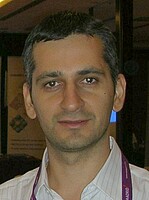
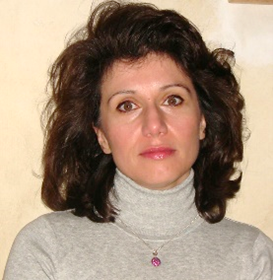
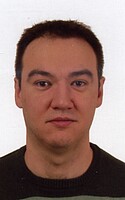
Amalia Foka is an Assistant Professor in Computer Science Applications for the Arts at the Department of Fine Arts & Art Sciences , School of Fine Arts , University of Ioannina , Greece. She has held academic positions at the University of Patras (2005-2013), University of Ioannina (2005-2008), and Computer Technology Institute & Press "Diophantus" (2014-2015). Her research bridges Artificial Intelligence with Digital Art , focusing on Generative AI , Social Media Mining , and Human-Computer Interaction within artistic contexts. Education: BEng in Computer Systems Engineering (1998) from the University of Manchester Institute of Science & Technology (UMIST) , UK MSc in Advanced Control (1999) from UMIST PhD in Robotics (2005) from the Department of Computer Science , University of Crete Her artistic research includes projects like Bushwalking (StyleGAN2 landscape generation), Breaking the Silence (NLP analysis of taboo topics), and The Invisible Structures of the Artworld (social media-driven network visualization). She leads the Multimedia Lab at the University of Ioannina, focusing on AI in Creative Processes and Digital Interaction methodologies.
Kyprianos Papadimitriou is a Researcher at the Microprocessor and Hardware Laboratory within the School of Electrical and Computer Engineering at the Technical University of Crete . He holds a PhD in Electronic and Computer Engineering (2012) and has been involved in teaching laboratory courses such as Logic Design , Computer Architecture , and VLSI/ASIC Circuit Design . Research Areas : His work spans Reconfigurable Systems , Hardware Design , Computer Architecture , RFID Systems , and Real-Time Systems . He has developed innovative approaches in FPGA-based dynamic reconfiguration, MPSoC security, and 3D stereo vision for surveillance. Key Trends : Runtime reconfiguration for FPGAs Security frameworks for NoC-based MPSoCs Low-cost embedded vision systems Optimization of reconfiguration overhead Hardware task scheduling methodologies Genetic algorithm implementations on FPGAs Scientific Contributions : 1 USA patent (2005) Co-author of VLSI-SoC 2013 paper nominated for 1st Prize Active member of scientific committees (FPL, ReConFig) Peer reviewer for IEEE, Elsevier, and Springer journals Session chair at IEEE CNS and HPCC conferences Grants & Projects : Participated in competitive European and national programs, serving as scientific manager, coordinator, and technical coordinator. Developed spin-off company (2003-2005) to commercialize master's thesis research. Laboratory & Teaching : Affiliated with the Microprocessor and Hardware Laboratory , focusing on practical training in digital systems, processor-based systems, and VLSI design.
Scott Mahlke is a Professor and Associate Chair in the Electrical Engineering and Computer Science Department at the University of Michigan. He is affiliated with the Advanced Computer Architecture Laboratory and the Software Systems Laboratory, where he leads the Compilers Creating Custom Processors (CCCP) research group. His research focuses on compilers, computer architecture, and high-level synthesis, with particular emphasis on designing next-generation computer systems that overcome challenges in performance, power consumption, and reliability. His work bridges the gap between hardware and software through innovative compiler technology that enables customized processors and accelerators. Mahlke's publications demonstrate a strong focus on compiler techniques for exploiting instruction-level parallelism, memory system optimization, and application-specific processor design. His research spans from fundamental compiler algorithms to practical implementations in both general-purpose and embedded systems. National Science Foundation CAREER Award (2003) Morris Wellman Faculty Development Assistant Professor (2004) 2006 ISCA Most Influential Paper Award Multiple best paper awards at major architecture conferences As an advisor, Mahlke has chaired numerous Ph.D. dissertations and actively mentors graduate students in the CCCP group. His research is generously funded by the National Science Foundation, Gigascale Systems Research Center, ARM Ltd., Samsung Advanced Institute of Technology, and other major organizations. The CCCP group maintains strong industry partnerships that facilitate the transfer of research innovations to practical applications.
Professor Alexiou Aggeliki is a faculty member at the Department of Digital Systems, University of Piraeus, specializing in 'Wireless Communication Systems.' She holds a Diploma in Electrical & Computer Engineering from the National Technical University of Athens (1994) and a PhD in Electrical Engineering from Imperial College, University of London (2000). Previously, she worked at Bell Laboratories (now Nokia Bell Labs) from 1999 to 2009, first as a Researcher and later as Technical Manager. Her research focuses on advanced wireless systems, including smart antennas, MIMO, 5G/6G networks, and machine learning applications. She leads the H2020 projects TERRANOVA (Coordinator) and ARIADNE (Technical Coordinator), and chairs the Wireless World Research Forum's Radio Communication Technologies and High Frequencies Radio Communication Technologies working groups. She is a member of IEEE, IET, and the Greek Engineers Association.
Labros Bisdounis is a Professor at the Department of Electrical and Computer Engineering, University of the Peloponnese, Greece. He previously held positions at the Technological Educational Institute of Western Greece, including Associate Professor, Full Professor, and Dean of the School of Technological Applications (2016–2018). He has extensive industry experience as a senior research engineer and project manager at Intracom S.A. (2000–2008), focusing on VLSI circuits and telecom applications. His research interests include CMOS circuit timing/power modeling, low-power/high-speed design, MOSFET modeling, and sensor applications. He has authored over 30 papers with 740+ citations and is an IEEE member. Education: Diploma in Electrical Engineering (1992), University of Patras Ph.D. in Electrical Engineering (1999), University of Patras Research Interests: CMOS circuit timing and power dissipation modeling Deep-submicron/nano-CMOS circuit design MOSFET device modeling Low-power embedded systems and SoC Sensor applications and organic electronics Leadership Roles: Dean of the School of Engineering, University of the Peloponnese (2023–present) Director of Training & Lifelong Learning Centre (2019–2019) Board Member, Hellenic NARIC (2016–2019) Collaborations: Active at the Hellenic Open University as a tutor in Computer Architecture and Digital Systems modules. Co-developed the AETHER framework for pervasive computing and contributed to energy-aware SoC designs for 5 GHz WLANs.
George N. Karystinos is currently a Professor and Dean of the School of Electrical and Computer Engineering at the Technical University of Crete , Greece. He joined TUC in 2005 and was promoted to full Professor in 2019. His academic journey began with a Ph.D. in Electrical Engineering from SUNY Buffalo (2003) and a Diploma in Computer Engineering and Science from the University of Patras (1997). Specialty: Communication theory, coding theory, adaptive signal processing Key research areas: Wireless communications, signal waveform design, L1-norm principal component analysis Leadership: Dean of School of ECE (2021–present) His work focuses on noncoherent detection for RFID/IoT systems and L1-norm PCA for robust signal processing. Recent publications explore power line communication and low-complexity sequence detection . Scientific Awards: 2003 IEEE Transactions on Neural Networks Outstanding Paper Award 2001 IEEE ICT Best Paper Award 2018 IEEE MOCAST Best Student Paper Award 2015 IEEE ICASSP Best Student Paper Award 2013 IEEE ISWCS Best Paper Award 2011 IEEE RFID-TA Second Best Student Paper Award He is affiliated with the Telecommunications Laboratory at TUC and has supervised award-winning research in wireless systems and signal processing.
Aggelos Bletsas Aggelos Bletsas is a Professor at the School of Electrical and Computer Engineering (ECE) at the Technical University of Crete (TUC). He holds a PhD from MIT and has expertise in wireless communication, backscatter radio, and IoT. His research focuses on ultra-low-cost sensor networks and ambiently-powered systems. Education PhD in Media Arts and Sciences, MIT (2005) MSc in Media Arts and Sciences, MIT (2001) 5-year Diploma in Electrical & Computer Engineering, Aristotle University of Thessaloniki (1998) Research Interests Bletsas' work spans scalable wireless networks, backscatter radio, RFID systems, and energy harvesting. He pioneers batteryless IoT devices and environmental sensing technologies. His lab develops hardware and algorithms for low-cost, long-range communication. Awards & Recognition IEEE Fellow (2023) 2012-2013 TUC Research Excellence Award Multiple Best Paper Awards (ISWCS, RFID-TA, SENSORS) IEEE ComSoc and RFID Council Distinguished Lecturer (2022-2025) Labs & Projects Bletsas leads the Telecommunications Laboratory at TUC, focusing on batteryless sensors, scatter radio, and robotic inventory systems. Key projects include 'Internet of Plants' and ambiently-powered inference networks.
Paschalis Antonis is a Professor at the Department of Informatics and Telecommunications, National and Kapodistrian University of Athens. His research focuses on hardware architectures for space systems, embedded systems, and image compression standards such as CCSDS. He specializes in FPGA implementations, radiation-hardened electronics, and biomarker development for immunogenic responses to cancer therapies. Research Interests: High-performance FPGA-based hardware accelerators Space-grade embedded systems and data compression CCSDS standard implementations for aerospace applications Molecular biomarkers for immunotherapy response prediction Recent Trends: His work emphasizes resilient systems against radiation effects (e.g., SEUs in FPGAs), high-throughput image compression cores for space missions, and interdisciplinary research linking computational hardware with medical diagnostics via prothymosin α analysis. Grants & Labs: Leads the ASPIICS coronagraph project for ESA's Proba-3 mission, involving advanced optical instrumentation and formation flying systems. Collaborates on COTS FPGA utilization in extreme environments.
Emmanouil Z. Psarakis is an Associate Professor at the Department of Computer Engineering & Informatics , University of Patras, Greece. Born in 1963, he has been affiliated with the university since 2005 and is a member of the Signal Processing and Communications Lab . His academic journey includes teaching courses such as Signals and Systems Theory , Digital Signal Processing , and Computer Vision and Graphics . PhD in Computer Engineering and Informatics, University of Patras (1991) Dr. Psarakis is renowned for his research in image processing , computer vision , and signal processing , with applications in biomedical imaging , seismology , and robotics . His work spans deep learning , filter design , and 3D reconstruction , reflecting a multidisciplinary approach. His 15 most recent publications (2020–2025) focus on sign language recognition , adversarial defense , 3D shape analysis , and medical imaging . These works integrate machine learning , stochastic modeling , and computer vision to address challenges in video summarization , image inpainting , and seismic signal analysis . Dr. Psarakis has supervised over 10 PhD students , including Fotini Fotopoulou (2016–2019) and Panagiotis Georgantopoulos (2020–2023). He has participated in EU-funded , Hellenic , and bilateral R&D projects related to biomedical signal processing , robot vision , and forest fire monitoring . He leads the Signal Processing and Communications Lab , which collaborates with institutions like the Computer Technology Institute and international universities. His contributions include filter design , image alignment , and stereopsis techniques , with a focus on practical implementations in telecommunications and medical diagnostics .
Dr. Vivi Tornari is a Research Fellow and head of the Holography laboratory at IESL/FORTH, specializing in optical metrology and cultural heritage preservation. She has held this position since 1996 and has coordinated major EU projects such as E-RIHS and CHARISMA . Her work focuses on developing holographic interferometry techniques for structural diagnosis of artworks, fraud detection, and environmental impact assessment. She holds a PhD in Applied Science from the University of Sunderland and has authored over 70 scientific publications. Education: Postdoctoral Fellow in Optical Holography, Royal College of Art (RCA), London (1990) PhD in Applied Science, University of Sunderland, UK (2009) MSc in Chemical Engineering/Material Science, National Technical University of Athens (1996) Research interests include laser-based structural analysis, speckle interferometry, and the integration of optical methods for heritage preservation. She has pioneered non-invasive diagnostic tools such as the Applied Holography Metrology Laboratory and has advised on EC projects as an evaluator. Funding highlights include: Leadership in EU projects totaling over €20M Coordinator of SYDDARTA (FP7) and CLIMATE FOR CULTURE (FP7) PI for HOLOAUTHENTIC (FP5) and LASERACT (FP6) Her publications emphasize interdisciplinary collaboration, combining optical engineering with conservation science. Key innovations include: Development of DHSPI (Digital Holographic Speckle Pattern Interferometry) Integration of thermography with interferometry for defect analysis Laser ablation studies on polymer substrates Labs/Teams: Lead the Holography Lab at IESL, collaborating with international institutions like the V&A Museum and Imperial College London. Current projects focus on European research infrastructures (E-RIHS) and climate change impacts on heritage materials.
Ioannis Andreadis is a Professor in the Department of Electrical and Computer Engineering at the School of Engineering, Democritus University of Thrace. He has been a faculty member since 1993, following his appointment as a Visiting Professor at the School of Technological Applications of TEI Kavala (1991-1992). His academic journey began with a Diploma in Electrical Engineering from Democritus University of Thrace (1983), followed by an M.Sc. in Electrical Engineering & Electronics (1985) and a Ph.D. in Instrumentation & Analytical Science (1989), both from the University of Manchester. Professor Andreadis's research spans the Design and Implementation of Electronic Systems with particular emphasis on Intelligent Systems and Machine Vision . His work has resulted in over 230 publications in international journals, book chapters, and conference proceedings. He has made significant contributions to image processing, particularly in mathematical morphology, color image processing, and real-time implementation of image processing algorithms. His research has practical applications in seismic signal processing, crowd management systems, and 3D reconstruction technologies. The analysis of his recent publications reveals a strong focus on advanced image processing techniques, with increasing integration of deep learning approaches. His work spans both theoretical foundations (such as entropy estimation and moment calculations) and practical applications (including image stabilization, multi-focus image fusion, and crowd management systems). The interdisciplinary nature of his research connects electrical engineering, computer vision, and signal processing with applications in safety engineering, structural analysis, and robotics. Among his notable achievements are the IET Image Processing Premium Award (2009) , Best Paper Award at PSVIT 2007 , and Best Paper Award at EUREKA 2009 . He was elected Fellow of the Institute of Engineering & Technology (IET) in 2006 and Fellow of the Institute of Measurement & Control (InstMC) in 2021. He has also served as Subject Editor of the IET Electronics Letters and as Guest Editor for special issues of Pattern Recognition journal. Professor Andreadis has supervised 14 PhD theses , 21 Master's theses , and 88 Diploma works , demonstrating his commitment to academic mentoring. His research has been supported by significant grants including the EDUnet project (€280,000), wireless network implementation (€37,000), laboratory infrastructure development (€120,000), school information systems support (€478,000), the RESCUER project (€350,000 as Deputy P.I.), and the EDUSAFE project (Marie Curie Actions). He leads the Electronics Laboratory at Democritus University of Thrace, which has undergone significant infrastructure development through multiple funding sources. His work on the RESCUER project demonstrates collaboration with European partners on emergency risk management systems, while his EDUSAFE involvement shows commitment to advanced AR/VR safety systems development. His research group applies computational intelligence techniques to diverse challenges from seismic analysis to pedestrian evacuation modeling.
Konstantinos G. Arvanitis is a Professor in the Department of Natural Resources Management & Agricultural Engineering at the Agricultural University of Athens, affiliated with the Agricultural Engineering Laboratory. He holds a PhD in Electrical and Computer Engineering from the National Technical University of Athens and has held diverse research and teaching roles across Greek institutions. Teaches courses on electrical engineering, sensors, automation, and AI in agriculture Supervised 2 PhD, 9 MSc theses, and guides 6 ongoing PhD projects Member of FEANI, EurAgEng, and IFAC Technical Committee (2000-2017) His research integrates IoT, machine learning, and cyber-physical systems into agricultural practices, focusing on precision agriculture and sustainability. He contributes to editorial boards of journals like Sensors and Energy , and has published over 342 technical works with significant citation metrics. His recent work explores quantum technologies, edge computing, and 3D printing in agricultural systems, emphasizing energy efficiency and educational innovation. He actively reviews for 130+ journals and conferences.
Dr. Dimitrios Bakalis is an Assistant Professor at the Department of Physics, University of Patras, specializing in Digital Electronic Circuits and Systems. He joined the faculty in 2004 and focuses on the design and control of digital circuits, emphasizing low-power testing and built-in self-test (BIST) methodologies. His academic roles include teaching courses such as Computer Programming I, Digital Electronics, and Microcomputer Architecture at both undergraduate and postgraduate levels. Education: Diploma in Computer Engineering and Informatics (University of Patras) Master’s Degree in Computer Science and Technology (University of Patras) PhD in Computer Engineering and Informatics (University of Patras) Research Interests: His work revolves around VLSI design, arithmetic circuits, and low-power techniques. Key areas include modulo arithmetic circuits, fault-tolerant systems, and reconfigurable computing architectures. He has published over 50 papers in top-tier journals and conferences, contributing to advancements in digital circuit efficiency and reliability. Teaching: He instructs core courses in digital electronics and computer architecture, integrating cutting-edge research into his pedagogy. His MSc courses focus on FPGA-based digital system design, emphasizing practical applications. Labs/Teams: His research aligns with the Electronics & Computers sector within the Department of Physics, collaborating on projects involving arithmetic core optimization and low-power testing strategies.
Panagiotis G. Zervas is an Associate Professor at the Department of Electrical and Computer Engineering, University of Peloponnese (since 2020). His expertise spans audio signal processing, music information retrieval, and natural language processing for knowledge extraction. He teaches courses including Signals & Systems, Digital Signal Processing, and Machine Learning. His research focuses on AI-driven applications in sound analysis, music feature extraction, and multimodal information processing. Education: PhD (2007) in Electrical Engineering from the University of Patras, specializing in Greek prosody modeling for text-to-speech systems. Previous roles include Assistant Professorships at Hellenic Mediterranean University (2015–2020) and Technical Educational Institute of Crete (2008–2015). Research Interests: Natural Language Processing (NLP) for text analysis and large language models (LLMs) Audio signal processing, voice analysis, and embedded systems AI applications in job market analytics and skills frameworks Machine learning for music information retrieval Notable Projects: Principal Investigator in EU projects EU-ALMPO (2025–), Train4Blue (2025–), GROWTH4BLUE (2024–), and MICROIDEA (2024–) World Bank consultant (2023–) for AI-driven employment systems in Greece and Pacific Islands Publications in journals like 'Acoustics' and conferences like WAC 2022 and Forum Acusticum 2023 Office: Building K, Office K2.07 | Contact: pzervas@uop.gr
Athanasios G. Kanatas is a Professor at the Department of Digital Systems, University of Piraeus, Greece, and Director of the Telecommunication Systems Laboratory. He holds a Ph.D. in Mobile Satellite Communications from NTUA (1997), and has held roles such as Dean of the School of Information & Communication Technologies (2013–2017) and IEEE Communications Society Chairperson (1999). Education: Diploma in Electrical Engineering (NTUA, 1991), M.Sc. in Satellite Communication Engineering (University of Surrey, 1992), Ph.D. in Mobile Satellite Communications (NTUA, 1997). Research focuses on V2X communications, UAV-assisted networks, antenna design, stochastic geometry, and cybersecurity. He has published over 200 papers and authored 6 books, and leads projects in 5G/6G systems and integrated sensing-communication networks. His work includes pioneering contributions to aerial relay placement, fluid antenna systems, and hybrid beamforming techniques. He serves as Editor of IEEE Transactions on Wireless Communications, Associate Editor of IEEE Transactions on Antennas and Propagation, and is a Senior IEEE Member since 2002. Recent activities include extending the deadline for M.Sc. program applications and promoting internships for students. Labs/Teams: Directs the Telecommunication Systems Laboratory, collaborating on projects like ARGOS RFI monitoring and UAV corridor-assisted IoT networks. His research emphasizes practical implementation through prototyping and experimentation, with applications in aerospace, IoT, and intelligent transport systems.