
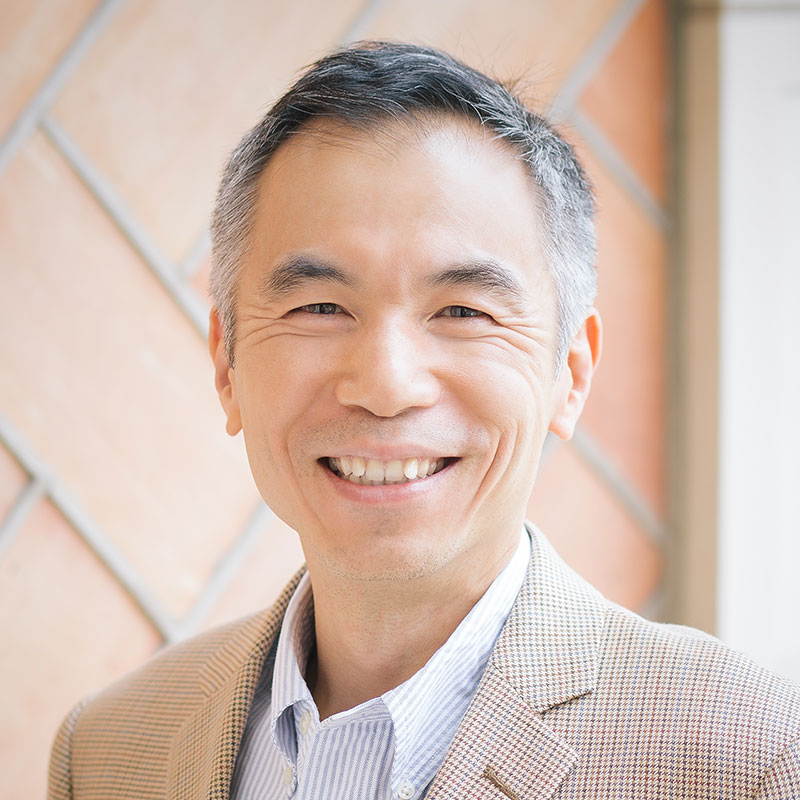
James C. Hoe is Professor of Electrical and Computer Engineering at Carnegie Mellon University (College of Engineering). He is on sabbatical at MangoBoost and directs research in computer architecture, reconfigurable computing, and high-level hardware design. Education Ph.D., Electrical Engineering and Computer Science, MIT (2000) M.S., Electrical Engineering and Computer Science, MIT (1994) B.S., Electrical Engineering and Computer Science, UC Berkeley (1992) Research Interests Professor Hoe’s work spans computer architecture , reconfigurable computing , FPGA architectures , and high-level hardware synthesis . His group created the CoRAM abstraction for virtualized FPGA computing and leads efforts in power-efficient accelerators, in-network computing, and security-oriented FPGA systems. Scientific Awards IEEE Fellow (2013) Intel Outstanding Researcher Award (2021) Research Funding & Projects Intel / VMware Crossroads 3D-FPGA Academic Research Center – co-leading exploration of FPGA roles in future datacenters. DARPA BRASS program ($2.7 M, 4 years) – ensuring long-lived software systems remain robust to resource changes. Pigasus open-source IDS – world’s fastest FPGA-accelerated intrusion-detection system (100 Gb/s on one server). Labs & Teams He heads activities within the Computer Architecture Lab at Carnegie Mellon (CALCM) , supervising graduate researchers on CoRAM++, SPIRAL autotuning, and FPGA overlays for stream processing.
جستجوی استاد راهنمای دانشگاهی
برای مسیر پژوهشیتان، استاد راهنما، استاد دانشگاه و پژوهشگر مناسب را پیدا کنید و با آنها ارتباط بگیرید.
نمایش ۱-۱۵ از ۱۹۹ استاد راهنما
اطلاعات پروفایلها از صفحات عمومی دانشگاهها گرفته شده و ممکن است بهروز نباشد.
Shiyu Suمشاهده پروفایل
استادیار
Shiyu Su is an Assistant Professor in the Department of Electrical and Computer Engineering at the University of Waterloo. His research focuses on high-speed data converters, wireless transceivers, digital phase-locked loops (PLL), and AI-assisted analog/mixed-signal design automation. He holds a Ph.D. from the University of Southern California (2019) and teaches courses such as ECE 340 (Electronic Circuits 2) and ECE 432 (Radio Frequency Integrated Devices and Circuits). Education: B.S. from Beijing University of Post and Telecommunication (China) and Queen Mary, University of London (UK), 2011; M.S. and Ph.D. from USC, 2013 and 2019, all in electrical engineering. Research Interests: High-speed ADCs/DACs RF/mm-wave transceivers Time-approximation filters (TAF) Analog/mixed-signal design automation Memristor-based computing Biomedical interfaces Key Awards: IEEE SSCS Predoctoral Achievement Award (2017–2018) Best Student Paper Award at IEEE RFIC (2022) Ming Hsieh Institute Scholar (2019–2020) Lab Focus: The Shiyu Su Lab develops integrated circuits for communications, sensing, and computing, with a focus on AI-driven methodologies and digital-analog co-design. Collaborations include work with Prof. Wei Wu (USC) on memristor-based systems.
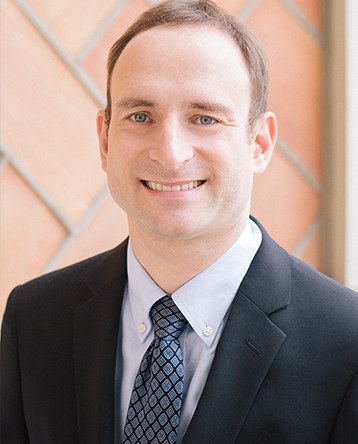
Franz Franchetti is the Kavčić-Moura Professor of Electrical & Computer Engineering at Carnegie Mellon University. He serves as Associate Dean for Research and Director of the Engineering Research Accelerator at CMU. Education: Ph.D. in Computational Mathematics (Vienna University of Technology, 2003) M.Sc. in Technical Mathematics (Vienna University of Technology, 2000) His research interests focus on automatic performance tuning and program generation for emerging parallel computing platforms , including multicore CPUs , GPUs , and 3DIC chip design . He leads the SPIRAL effort to automate highly optimized software libraries and explores domain-specific compiler transformations in HPC applications for smart grids and material sciences . Recent work extends SPIRAL to quantum computing . The scientific awards Franchetti has received include the Gordon Bell Prize (2006) , HPC Challenge Class II Award (2010) , and the CIT Dean's Early Career Fellowship (2013) . He and his students have won multiple Best Paper Awards at HPEC, DAC, and ISPA ACM TODAES Best Paper (2014) Student Research Competition wins (PACT 2024, CGO 2023) Franchetti has advised students like Richard Veras and Thom Popovici . He has secured significant grants from agencies such as DARPA, DOE, NSF, and industry partners (Intel, NVIDIA, Mercury). He co-founded SpiralGen, Inc. and holds leadership roles in organizations like ASciNA Western Pennsylvania and as Honorary Consul of Austria in Pittsburgh.
Nicola Nicolici is a Professor in the Department of Electrical and Computer Engineering at McMaster University. His research focuses on methods and algorithms for the design of digital integrated circuits and systems, with significant contributions in manufacturing test, post-silicon validation and debug. His work has expanded to include embedded systems, low-energy computing, and custom hardware-accelerated computing systems. Professor Nicolici's research interests span multiple areas of digital system design and validation. His early work focused on manufacturing test methodologies and power-aware testing strategies for integrated circuits. More recently, he has made significant contributions to post-silicon validation techniques, including constrained-random stimuli generation, trace signal selection, and bit-flip detection. His research has evolved to address emerging challenges in embedded computing systems, low-energy design, and specialized hardware acceleration for various applications including deep neural networks and signal processing. His recent publications reveal a strong trend toward hardware acceleration for specialized computing tasks. The research spans matrix multiplication algorithms (Strassen and Karatsuba), memory system optimization (DDR5 calibration), FPGA-based radar processing, and neural network acceleration. His work consistently bridges theoretical algorithm development with practical hardware implementation considerations, particularly focusing on precision analysis, fault tolerance, and energy efficiency. The research demonstrates a clear progression from traditional digital circuit testing to more complex system-level validation and acceleration techniques. Professor Nicolici has been actively involved in teaching courses related to system-on-chip design and test, digital systems, and embedded systems. His teaching portfolio includes advanced courses such as System-on-Chip (SOC) Design and Test and Digital Systems Design , reflecting his expertise in the field. While specific grant information isn't detailed in the provided text, his extensive publication record suggests ongoing research funding support. His research has contributed significantly to the fields of digital circuit testing, post-silicon validation, and hardware acceleration. The work has practical applications in semiconductor manufacturing, embedded systems design, and specialized computing architectures. His recent focus on neural network acceleration and memory system optimization reflects the evolving landscape of computer architecture research.
- Optical fiber communication
- Space-division multiplexing (SDM)
- Wavelength-division multiplexing (WDM)
- +۵ مورد دیگر
Itsuro Morita is Professor in the School of Fundamental Science and Engineering, Faculty of Science and Engineering, Waseda University, Tokyo. Before joining Waseda in 2022 he spent 23 years at KDDI R&D Laboratories, advancing from researcher to executive research fellow, and has been a visiting researcher at Stanford University. He is an IEEE Fellow and IEICE Fellow recognized for pioneering large-capacity, long-haul optical transmission systems. Education: 2004 – 2005 Tokyo Institute of Technology, Graduate School of Science & Engineering, Department of Electrical and Electronic Engineering (Doctoral coursework) 1990 – 1992 Tokyo Institute of Technology, Graduate School of Science & Engineering, Department of Physical Electronics (M.E.) 1986 – 1990 Tokyo Institute of Technology, School of Engineering (B.E.) Research Interests: Morita’s work sits at the intersection of optical fiber communication and software-defined networking. He explores ultra-high-capacity transmission via space-division multiplexing (multi-core/few-mode fibers), real-time MIMO digital signal processing for modal crosstalk mitigation, and SDN/NFV orchestration of disaggregated optical networks. Additional interests include quality-of-transmission estimation using machine learning, telemetry-enabled control planes (gRPC/gNMI), and metro-embedded edge/cloud architectures for IoT services. Publication Trends: Recent articles emphasize two converging themes: (i) petabit-per-second SDM/WDM experiments using novel fiber geometries and real-time DSP, and (ii) cloud-native SDN control frameworks that integrate machine-learning-based QoT prediction, YANG/NETCONF modeling, and open APIs (TAPI/OpenConfig) for multi-domain, partially disaggregated networks. These works collectively push both the physical capacity frontier and the agility of next-generation optical infrastructure. Scientific Awards: C&C Prize 2024 (NEC C&C Foundation) – contributions to WDM optical submarine cable systems IEICE Achievement Award 2021 – pioneering research on 10-Pbit/s ultra-large-capacity SDM transmission Telecom System Technology Award 2021 – 10.16-Pbit/s dense SDM/WDM transmission record IEEE Fellow (2021) – contributions to large-capacity high-speed transmission systems IEICE Fellow (2020) – research on trans-oceanic high-speed optical signal transmission Ichimura Industrial Award – Contribution Prize 2018 – development of terabit-class submarine cable systems Maejima Hisoka Award 2012 – proposal and demonstration of distributed-control soliton communication Minister of Economy, Trade and Industry Award for Advanced Technology 2006 – 160 Gbit/s ultra-high-speed optical transmission technology Advising & Grants: At Waseda University Morita advises graduate students on experimental photonic networking and leads externally funded projects on petabit SDM transmission and SDN orchestration. While specific grant numbers are not disclosed, his continuous industry-university collaborative testbeds (with KDDI, CTTC, and others) indicate substantial competitive funding. Labs & Teams: He heads the Optical Space-Division-Multiplexing Laboratory at Waseda, maintaining joint experimental facilities with KDDI Research and international partners (e.g., CTTC, Spain). The group operates real-time coherent MIMO testbeds, multi-domain SDN controllers, and fiber-level SDM prototypes capable of petabit-per-second demonstrations.
Prof. Vesa Välimäki is an Audio Signal Processing Professor at Aalto University's School of Electrical Engineering, leading the Audio Signal Processing Research Group within the Aalto Acoustics Lab. He also serves as Vice Dean for Research and Head of the Doctoral Programme at the university. His research focuses on digital signal processing, machine learning, and their applications in audio, acoustics, and music technology, particularly in artificial reverberation, audio filter design, and virtual analog modeling. He has pioneered techniques like velvet noise for reverberation synthesis and contributed to open-source tools like FLAMO. His academic accolades include IEEE, AES, and AAIA Fellowships, along with multiple best paper awards at venues like DAFx and ICASSP. He has advised numerous students, including recipients of prestigious awards like the Huawei Master's Thesis Award. Prof. Välimäki has held editorial roles at the Journal of the Audio Engineering Society and organized major conferences such as SMC-17. His work extends to applied projects like acoustic optimization for early childhood education facilities and immersive audio in virtual reality (e.g., the 'Space Walk' project). Key Projects: NordicSMC (Nordic University Hub for Sound and Music Computing), Aalto Acoustics Lab, FLAMO library Grants: NordForsk funding (2018–2023), Foundation for Aalto University Science and Technology His research spans both theoretical advancements (e.g., diffusion models for audio restoration) and practical implementations (e.g., real-time equalizers, headphone compensation systems). He collaborates internationally, contributing to acoustic measurement techniques and noise reduction strategies for diverse environments.
Scott Mahlke is a Professor and Associate Chair in the Electrical Engineering and Computer Science Department at the University of Michigan. He is affiliated with the Advanced Computer Architecture Laboratory and the Software Systems Laboratory, where he leads the Compilers Creating Custom Processors (CCCP) research group. His research focuses on compilers, computer architecture, and high-level synthesis, with particular emphasis on designing next-generation computer systems that overcome challenges in performance, power consumption, and reliability. His work bridges the gap between hardware and software through innovative compiler technology that enables customized processors and accelerators. Mahlke's publications demonstrate a strong focus on compiler techniques for exploiting instruction-level parallelism, memory system optimization, and application-specific processor design. His research spans from fundamental compiler algorithms to practical implementations in both general-purpose and embedded systems. National Science Foundation CAREER Award (2003) Morris Wellman Faculty Development Assistant Professor (2004) 2006 ISCA Most Influential Paper Award Multiple best paper awards at major architecture conferences As an advisor, Mahlke has chaired numerous Ph.D. dissertations and actively mentors graduate students in the CCCP group. His research is generously funded by the National Science Foundation, Gigascale Systems Research Center, ARM Ltd., Samsung Advanced Institute of Technology, and other major organizations. The CCCP group maintains strong industry partnerships that facilitate the transfer of research innovations to practical applications.
Barry Cardiffمشاهده پروفایل
استادیار
Dr. Barry Cardiff is an Assistant Professor in the School of Electrical and Electronic Engineering at University College Dublin (UCD), where he has been a member of academic staff since September 2013. His career spans both industry and academia, with significant experience at Nokia Mobile Phone (UK) Ltd and Silicon & Software Systems (S3 group) before returning to complete his PhD at UCD. Education: B.Eng (1992), M.Eng.Sc. (1995), PhD (2011) from University College Dublin Professional Experience: Design Engineer at Nokia (1993-2001), Systems Architect at S3 group (2001-2007, 2011-2013) Current Position: Assistant Professor at UCD School of Electrical and Electronic Engineering Dr. Cardiff's research focuses on Digital Signal Processing applications in communication systems, with particular emphasis on theoretical analysis and practical implementation. His work bridges traditional communication theory with emerging biomedical applications, especially in wearable IoT sensors. He has made significant contributions to power/complexity reduction techniques in circuit design, specifically DSP algorithms for digitally assisted analog circuits. His research program addresses critical challenges in biomedical signal processing, sensor fusion, and efficient data transmission for healthcare applications. His recent publications demonstrate a strong trend toward biomedical applications of signal processing techniques, with a focus on ECG analysis, atrial fibrillation detection, and respiratory rate estimation using multimodal sensor fusion. The research shows a clear progression from traditional communication systems toward healthcare applications, with an emphasis on edge computing solutions that reduce power consumption in wearable devices. IEEE BioCas best paper award (2024) IEEE senior member since 2019 Active reviewer for multiple IEEE journals including Transactions on Biomedical Circuits and Systems, Circuits and Systems, and VLSI Systems Dr. Cardiff has supervised numerous research projects and has been instrumental in developing curriculum for digital communications, signal processing, and wireless systems. His teaching philosophy emphasizes open, friendly, and hands-on approaches that encourage independent thinking. He coordinates multiple modules including Communication Theory, Digital Electronics, DSP Technology, and Wireless Systems, demonstrating his commitment to both theoretical foundations and practical applications of electrical engineering principles. His research group works at the intersection of signal processing, machine learning, and biomedical engineering, developing innovative solutions for wearable healthcare monitoring. Current projects focus on event-driven processing architectures, decentralized classification systems, and signal quality-aware fusion techniques that enable robust performance in noisy real-world environments.

Paolo Prandoni is a Lecturer at École Polytechnique Fédérale de Lausanne (EPFL) in the School of Computer and Communication Sciences (IC). He serves as a Scientist in the Audiovisual Communications Laboratory (LCAV) and teaches in the SSC-ENS and SIN-ENS units, focusing on signal processing theory and practical applications in audiovisual communications. He earned his PhD from EPFL after completing all prior education there, driven by childhood fascination with long-distance telephony. His doctoral work established foundations in communication systems that continue to inform his research. Prandoni's research spans audio/image processing, machine learning for media analysis, and DSP education. Key areas include computational photography (e.g., spectral imaging, stained glass rendering), speech quality assessment via transfer learning, music information retrieval (e.g., fingering prediction), and audience analytics through his company Quividi. His work consistently bridges theoretical signal processing with real-world implementation. Recent publications reveal a strategic shift toward machine learning integration in signal processing tasks, particularly non-intrusive speech assessment and lensless imaging reconstruction. Simultaneously, he advances DSP pedagogy through MOOC development and hands-on teaching tools using off-the-shelf hardware, emphasizing accessibility and practical skill development. No scientific awards are documented in the provided materials. He has advised PhD student Thanikachalam Niranjan (thesis: Image Based Relighting of Cultural Artifacts , 2016) and teaches Communication Systems and Computer Science courses. His educational impact extends through the open-access textbook Signal Processing for Communications (2008) and tools like MultiPub for maintainable online classes. Industry engagement includes Quividi co-founding (2006) and ongoing CSO role in attention analytics. As a core LCAV laboratory member, he collaborates on interdisciplinary projects including cultural heritage digitization, embedded signal processing systems, and real-time audience measurement, leveraging EPFL's infrastructure for both academic and commercial applications.
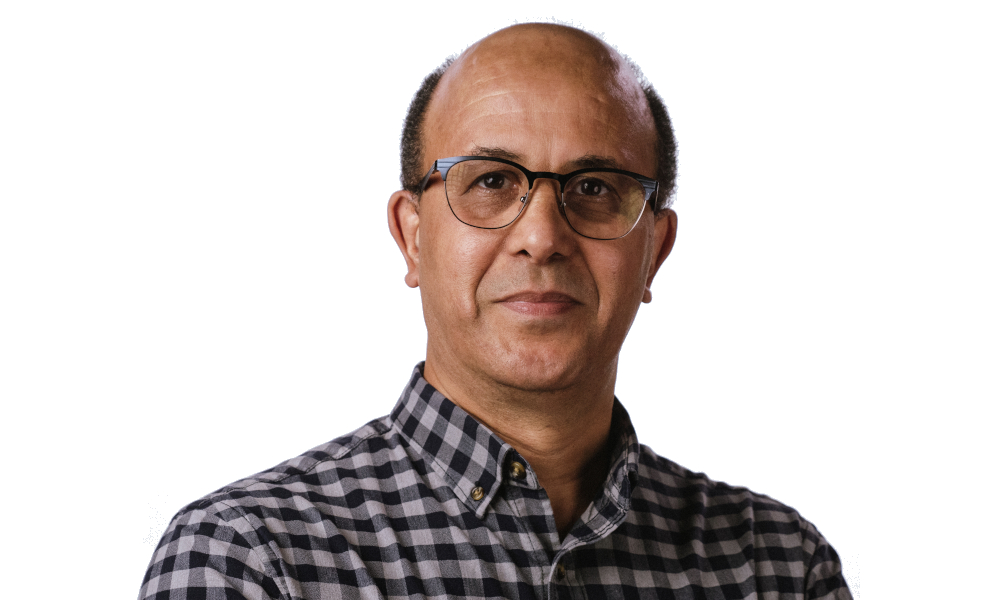
Azeddine Kaddouri serves as a Full Professor in the Department of Electrical Engineering at the Faculty of Engineering, University of Moncton. His academic appointment is based at the Moncton campus with office location in Phase 2 of the Faculty of Engineering building. His research expertise spans critical domains of electrical control engineering: Identification and control of piezoelectric motors Design of non-linear controllers for motors and variable speed drives Real-time implementation using Digital Signal Processors (DSPs) Development of specialized software applications for electrical engineering systems Professor Kaddouri maintains active academic operations with direct contact channels including email (azeddine.kaddouri@umoncton.ca) and phone ((506) 858-4000 ext. 2073). No laboratory facilities, research grants, or student supervision details were specified in the available documentation.
Jose Miguel Espi Huerta is an Associate Professor in the Department of Electronic Engineering at the School of Engineering, University of Valencia. He is an active researcher in power electronics and control systems, contributing significantly to grid-connected converters, renewable energy integration, and digital control techniques. His research interests include: Power Electronics and Inverter Control Predictive and Robust Control Strategies Renewable Energy Systems (Photovoltaic and Wind) Induction Heating Technologies Remote and Web-Based Educational Labs The analysis of his recent publications reveals a strong focus on improving the efficiency and reliability of grid-connected power converters using advanced control methods such as predictive current control and MPPT strategies. His work spans both industrial applications and academic education, particularly in developing remote laboratory platforms for control systems. Scientific awards and honors: No awards listed in the provided text. He has supervised academic theses and is affiliated with the LEII (Laboratory of Industrial Electronics and Instrumentation) research group. While no formal grants are listed, his extensive publication record indicates sustained research activity. He has contributed to the development of educational tools such as air levitation systems accessible via PLC and web interfaces, promoting innovative teaching methods in engineering education. The LEII research group focuses on industrial electronics, instrumentation, and power systems, providing a collaborative environment for applied research in energy conversion and control technologies.
Sergiu Nisioiمشاهده پروفایل
دانشیار
Sergiu Nisioi is an Associate Professor at the Faculty of Mathematics and Computer Science, University of Bucharest, with expertise in computational linguistics, machine translation, and text simplification. He bridges cognitive science with NLP through eye-tracking and EEG research, while also exploring sound art and digital autonomy via initiatives like HYPHA.ro. Current projects include PN-IV-P2-2.1-TE-2023-2007 (text complexity/readability), Legal Document Processing , and Europarl Dialectal Corpora Research spans computational psycholinguistics , LSTM-based translation models , and algorithmic composition for sound art His work integrates interdisciplinary methodologies, combining EEG signal processing for architecture data with the University of Architecture, and DSP for ecological projects at chlorophylla.live.
Dr. Vishnu Unnikrishnan is an Assistant Professor at the Department of Electrical Engineering, Tampere University, within the Faculty of Information Technology and Communication Sciences. His research focuses on energy-efficient high-performance analog/digital/RF integrated circuits and systems in nanometer-scale CMOS technologies. Key areas include time-based data conversion, high-speed serial links, and 5G/6G wireless transceivers. He leads research on analog interfaces using digital/switch components and collaborates with the SoC Hub ecosystem to bridge academic and industrial interests in system-on-chip design. He has secured significant funding, including an EU Marie Curie ITN grant (SMArT) worth €818k and an Academy of Finland Project (2021) of €821k. His work spans over 40 peer-reviewed publications, emphasizing innovations in time-based ADCs, beamforming receivers, and RF system design. Dr. Unnikrishnan actively supervises doctoral and postdoctoral researchers, offers paid master's theses and summer jobs in IC design, and collaborates with industry through the SoC Hub. His research aims to advance cross-technology portable analog interfaces and high-performance mixed-signal systems.
Tom Mitchell is a Professor of Audio and Music Interaction at the University of the West of England (UWE), Bristol . As leader of the Creative Technologies Laboratory , his research focuses on interactive technologies for creative expression, blending computer science, music, and artificial intelligence. He is the principal investigator for the UKRI Future Leaders Fellowship project "Sensing Music Interactions from the Outside-In" and co-investigator for the Bridge , a £3M creative technology facility. His research spans digital musical instrument design , GPU-accelerated audio processing , and sonification of scientific data . Recent work includes accessibility improvements in virtual environments, AI-driven DMI development, and interdisciplinary collaborations like the MiMU Gloves with Imogen Heap. He also contributes to robotics teleoperation through auditory feedback systems. Selected publications highlight trends in GPU acceleration for audio , generative AI in musical contexts , and human-robot collaboration via sonification. As a software developer , he specializes in C++ and the Juce library , with applications in live performance systems and scientific visualization projects like Soma and danceroom Spectroscopy . UKRI Future Leaders Fellow Active in AHRC and WECA-funded projects Best paper nominations at EvoMUSART and International Faust Conference Mitchell collaborates with institutions including the Bristol Robotics Laboratory , Computer Science Research Centre , and Pervasive Media Studio . His work bridges academic research with commercial applications through ventures like May Productions and x-io Technologies.
David Maciiمشاهده پروفایل
دانشیار
David Macii is Associate Professor at the Department of Industrial Engineering, University of Trento, Italy, where he teaches "Digital Signal Processing for Mechatronics" and co-leads the "Laboratory of Internet of Things." His core expertise lies in digital signal processing, measurement science, smart-grid instrumentation, indoor positioning and industrial IoT applications. Research interests revolve around four pillars: (i) advanced estimation algorithms for frequency, ROCOF and synchrophasors to enhance power-quality monitoring in future smart-grids with high PV and EV penetration; (ii) design and metrological characterisation of low-cost PMU and smart-meter solutions; (iii) radar- and RFID-based indoor localisation and tracking for robotics and assisted-living scenarios; and (iv) embedded, IoT-enabled measurement systems bridging DSP, mechatronics and industrial electronics. Recent publications (2023-2025) reveal a clear methodological trend: development of fast, uncertainty-aware DSP algorithms (interpolated DFT, Kalman filtering, harmonic whitening) validated against real-world noise, interference and contingency conditions, followed by their embedding into resource-constrained hardware platforms for EV charging coordination, grid-support converters and robotic navigation. Although the supplied text does not list specific grants or doctoral students, the steady stream of joint publications with European colleagues and his leading teaching role in two inter-departmental master courses indicate an active, well-integrated research and educational profile within the University of Trento.