Julia Kuhlin is a Research Fellow in digital humanities at Humlab, Umeå University, leading research on Swedish Free Churches' visual communication on Instagram and religious digital creatives. Her work bridges religious studies and digital media analysis. Research focuses on: Digital religion and social media engagement Lived religion in Pentecostal communities Interreligious relations and gender aspects World Christianity with regional focus on India and Sweden Publications demonstrate consistent focus on religious adaptation to digital platforms and ethnographic studies of Christian communities. Recent work emphasizes deconstruction of religious narratives through new media formats like podcasts.
Emma Martin is Senior Lecturer in Museology at the University of Manchester's School of Arts, Languages and Cultures, where she serves as Associate Director for Research (Impact and Knowledge Exchange). With over 25 years of professional experience including 17 years as Senior Curator for National Museums Liverpool (2003-2020), her work bridges academic research and museum practice. Her current research focuses on colonial-era Tibetan collections, contemporary museum activism, and dissident curatorial practices in exile contexts. Dr. Martin's research interests sit at the critical intersection of colonialism, Tibetan Studies, and material culture studies. She examines how colonial-era museum collections continue to shape contemporary representations of Tibet while exploring pathways for Tibetan agency in museum decision-making. Her practice-led research includes serving as curatorial advisor to the Dalai Lama Centre for Tibetan and Ancient Indian Wisdom (2024-25) and leading the development of the Tibet Museum for the Central Tibetan Administration (2017-2023). She co-convenes the international Tibetan Materiality Network, fostering cross-border collaboration on Himalayan material culture research. Her publication trends reveal a sustained focus on decolonizing museum practices through historical analysis of Tibetan material culture. Early work examined colonial collecting networks and diplomatic gift exchanges, while recent publications address contemporary issues like digital sovereignty, museum representation of diaspora communities, and dissident curatorial methodologies. Her scholarship consistently connects archival research with practical museum interventions, demonstrating how historical understanding can inform ethical contemporary practice. Fellow, Royal Asiatic Society Fellow, Higher Education Academy Dr. Martin has supervised four completed PhDs and currently mentors five doctoral students working on topics spanning South Asian, Himalayan, and Tibetan museology. Her research project "Object Lessons from Tibet and the Himalayas" involves international collaboration with institutions in Copenhagen and explores how material culture can challenge colonial narratives. Her impact work includes developing new museological approaches for representing Tibet, referenced in Wikipedia and cited by policy makers addressing cultural restitution. She leads the Tibetan Materiality Network connecting European and Asian researchers, and her current monograph "The Dissident Museum: Oppositional Curating at the Tibet Museum" (Routledge) documents innovative curatorial practices developed during the Tibet Museum project. Her external roles include curatorial advisory positions with Tibetan cultural institutions and examination duties at UCL and University of Westminster.
Annechen Bahr Bugge is a sociologist and Researcher I at Consumption Research Norway (SIFO), Oslo Metropolitan University. Her work focuses on food culture, culinary heritage, and sustainable consumption patterns, with particular emphasis on Norwegian dietary traditions and their evolution from the 16th century to present day. PhD in Sociology (2005) from Norwegian University of Science and Technology (NTNU) Current leader of FoodStories project (2025-2028) examining Norwegian food heritage Previously led FoodLessons project (2021-2024) connecting culinary history with future food development Her research explores: dietary transitions, plant-based diets, food policy interventions, and the sociocultural dimensions of food consumption. She has published extensively on Norwegian food culture, including the book Fattigmenn, tilslørte bondepiker og rike riddere (2019) and upcoming Food Cultures of Norway: Cuisines, Customs, and Issues (2025, co-authored with Henry Notaker). Recent publications focus on: food heritage revitalization, sustainable diets, retail interventions for healthier choices, and digital marketing influences on youth consumption patterns. Her work combines historical analysis with contemporary food challenges to inform future sustainable food systems. For a complete overview of her research and publications, see her Cristin profile: Cristin Profile
Alessandra Maria Paola Broccolini is an Associate Professor at the Department of Social and Economic Sciences (DISSE), Sapienza University of Rome. She specializes in cultural anthropology, with a focus on intangible cultural heritage, ecomuseums, and urban/rural territorial studies. Since 2016, she has led the Italian Society for Museography and Demo-Ethno-Anthropological Assets (SIMBDEA) and coordinates national research projects like PRIN 2022 on local museums and PRIN 2020 on marginal Italian territories. Current affiliations: Sapienza University of Rome, Ecole Française de Rome [2021-2026] Research themes: Identity politics, festivals/rituals, traditional knowledge, migration-heritage intersections Key projects: Ecomuseo Casilino Ad Duas Lauros, UNESCO cultural heritage nominations Fieldwork: 5-year study in Naples' Pallonetto district (1994-1999), Bolsena Lake fisheries, Irpinia carnivals Collaborations: ICCD, Regione Lazio, Universidad de Huancayo (Peru) Her publications address heritage regimes in Italy, UNESCO's 2003 Convention implementation, and ethnographic case studies on Mediterranean festivals, urban ecomuseums, and agricultural biodiversity. She teaches Cultural Anthropology and Anthropology of Territory at Sapienza's Faculty of Political Science, Sociology, and Communication.
Signy Lynch is an Assistant Professor in English and Drama at the University of Toronto Mississauga (UTM) and a graduate faculty member at the Centre for Drama, Theatre and Performance Studies. Her research focuses on contemporary intercultural/diasporic performance, Black theatre, participatory performance, audience research, and critical theatre criticism in Canada. Education : PhD and MA from York University, Hon. BA from Queen’s University Her work explores the intersections of digital media and intercultural performance, including immersive theatre practices and audience dynamics in pandemic-era performances. She co-edits Canadian Theatre Review and investigates epistemic violence in traditional criticism frameworks. In the 15 most recent publications , Lynch examines topics like racial dynamics in theatre criticism, intermedial performance technologies, audience complicity in Indigenous storytelling, and pandemic-era performance adaptations. Her articles appear in Theatre Research in Canada , Contemporary Theatre Review , and New Theatre Quarterly . Awards : Barbara Godard Prize (2021), Governor General’s Gold Medal (2022), CTCA Outstanding Critical Essay runner-up (2022) Lynch co-directs the Centre for Spectatorship and Audience Research and serves on Cahoots Theatre’s board. Her SSHRC-funded research addresses hiring equity in Canadian theatre academia and reimagines critical dramaturgy for digital futures.
Secil Ugur Yavuz is a Professor at the Faculty of Design and Arts, Department of Design, at Free University of Bozen-Bolzano. Her academic work spans eco-social design, research through design, and tangible human-technology interactions, with a particular focus on sustainable materials and collective making practices. She teaches courses including Design 3 for the Master in Eco-social Design and doctoral programs in Experimental Research through Design, Art and Technologies. Professor Yavuz's research explores the intersection of analog and digital through tangible human-technology interactions, with significant contributions to sustainable material systems. Her FERAL WOOL project investigates ecological and cultural dimensions of wool, while her work with biomaterials like microbial cellulose and open-source bioreactors addresses circular production systems. She employs embodied and speculative approaches to examine microplastic emissions, children's nature engagement through tools like TREESENSE, and social play with interactive toys. Her recent publications reveal a strong thematic focus on material culture, sustainability, and human-centered design across multiple scales. The research demonstrates consistent exploration of how digital and physical realms interact to create meaningful user experiences while addressing ecological challenges. Key trends include the use of embodied interaction methods, speculative design for cultural critique, and co-creative processes that bridge technological innovation with social and environmental responsibility. Yavuz leads the Design Friction Lab, which investigates the philosophical foundations of design through customizable interfaces and DIY approaches. Her work with doctoral students in Experimental Research through Design emphasizes reshaping technologies through collective making processes. The FERAL WOOL research project represents a significant current initiative exploring sustainable textile futures through both ecological and cultural lenses.
Adam T. Smith is Distinguished Professor of Arts and Sciences in Anthropology at Cornell University, where he has been faculty since 2011. He is a leading scholar in Eurasian archaeology with a focus on the South Caucasus, particularly Armenia. Smith co-founded Project ArAGATS, a long-term archaeological program in Armenia, and co-directs the Aragats Foundation and Caucasus Heritage Watch, organizations dedicated to heritage preservation in the region. His educational background includes: Ph.D. (1996) in Anthropology from the University of Arizona M.A. (1993) in Anthropology from the University of Arizona M.Phil. (1991) in Social and Political Science from the University of Cambridge B.A. (1990) in Anthropology and Political Science from Brown University Smith's research centers on the role of material culture in political life, examining how objects, landscapes, and built environments shape political procedures and values. His work spans archaeological theory, political anthropology, and heritage studies, with a particular focus on the South Caucasus region. He investigates the long-term social and political dynamics from the Bronze Age to contemporary times, exploring themes of sovereignty, heritage preservation, and the political dimensions of material culture. His approach integrates theoretical frameworks with empirical fieldwork to understand political power through material evidence. His recent publications demonstrate a consistent focus on the archaeology of power and politics in Eurasia, with increasing attention to contemporary heritage issues. Smith's work bridges theoretical frameworks with empirical research, particularly through his long-term fieldwork in Armenia and the Caucasus region. His scholarship shows a progression from studies of ancient political systems to contemporary issues of cultural heritage and political violence, with a strong emphasis on ethical engagement with archaeological practice and heritage management. Smith has received numerous prestigious awards including: 2023-2025 Fellow, Milstein Program in Technology and Humanity, Cornell University 2023 Finalist, Falling Walls Science Breakthrough of the Year, Social Sciences and Humanities 2023 Certificate of Communal Partnership, St. James AME Zion Church, Ithaca NY 2010-2011 John Simon Guggenheim Memorial Foundation Fellow 2010-2011 Fellow, Cornell University Society for the Humanities 2006-2007 Fellow, Howard Foundation Smith has directed multiple field seasons and collaborative research projects in Armenia, involving both American and Armenian scholars. His work with Project ArAGATS has received continuous support over two decades, while Caucasus Heritage Watch represents a newer initiative addressing urgent heritage preservation needs through satellite monitoring. He has supervised numerous graduate students and secured significant research funding for his projects, demonstrating strong leadership in both academic and community-engaged research contexts. Smith leads several research initiatives including Project ArAGATS, the Aragats Foundation, and Caucasus Heritage Watch. His Landscapes and Objects Laboratory at Cornell serves as a hub for material culture studies, while his work with the St. James AME Zion Community Excavations demonstrates his commitment to community-engaged archaeology. These teams bring together interdisciplinary scholars to address complex questions about political power, material culture, and heritage preservation across time, with particular attention to how archaeological practice can engage with contemporary political issues and community needs.
Pamela Klassen is a Professor and Chair in the Department for the Study of Religion at the University of Toronto, with a cross-appointment in the Department of Anthropology. She has taught at the University of Toronto since 1997 and has been a full professor since 2011. Her academic leadership includes serving as Chair & Graduate Chair of her department (2020-present) and as Vice-Dean, Undergraduate & International in the Faculty of Arts & Science (2016-2020). In 2022-2023, she served as the William Lyon Mackenzie King Visiting Professor of Canadian Studies at Harvard University. Professor Klassen's research focuses on colonialism, treaties, museums, and public memory. Her work spans several interconnected areas: Anthropology of religion, secularism, and mediation (including digital humanities) Christianity, colonialism, and land in North America & Turtle Island Religion, ritual, and public memory (including museum studies) Religion, spirituality, and gender Her scholarship demonstrates a consistent engagement with how religious practices, memories, and institutions intersect with questions of power, land, and identity in settler colonial contexts. Klassen's work often bridges historical and ethnographic approaches, examining both contemporary religious practices and their historical formations. Professor Klassen's publications reveal a trajectory of increasingly focused attention on the intersections of religion, land, and colonialism, with recent work emphasizing Indigenous perspectives and decolonial approaches to religious studies. Her scholarship moves fluidly between theoretical interventions in religious studies and concrete engagements with public memory projects. Scientific Awards & Honors 2022-2023: William Lyon Mackenzie King Visiting Professor of Canadian Studies, Harvard University 2019: Fellow of the Royal Society of Canada 2015-2020: Anneliese Maier Research Award, Alexander von Humboldt Foundation 2015: Northrop Frye Award of Excellence for Integration of Research and Teaching 2014-2017: Distinguished Visiting Professor in Anthropology of Modern Religion, University of Tübingen 2012: American Academy of Religion Award of Excellence for Spirits of Protestantism Professor Klassen has successfully secured significant research funding, including the prestigious Anneliese Maier Research Award which supported her collaborative work with the Kay-Nah-Chi-Wah-Nung Historical Centre. She has supervised numerous graduate students in religious studies and anthropology, with many going on to successful academic careers. Professor Klassen leads several major collaborative projects including Kiinawin Kawindomowin Story Nations, a digital storytelling initiative with the Rainy River First Nations, and Treaty Conversations, an educational resource about treaty relationships in Ontario. These projects exemplify her commitment to community-engaged scholarship that bridges academic research with public education and reconciliation efforts.
Dr Crispin Branfoot is a Reader in the History of South Asian Art and Archaeology at SOAS University of London, affiliated with the School of Arts and the Department of History of Art and Archaeology. He holds a BA in Ancient History and Archaeology from Manchester University, and an MA and PhD in Art and Archaeology from SOAS. His research focuses on the arts of southern India from the 14th to 20th centuries, with emphasis on Hindu temple architecture, colonial-era renovations, and the intersection of photography, archaeology, and conservation. He has supervised four PhD students examining topics ranging from temple iconography to colonial paper-making practices. His work explores how sacred spaces like the Minakshi-Sundareshvara temple in Madurai were reconfigured through colonial and post-colonial interventions, while also analyzing pilgrimage routes, portraiture traditions, and the legacy of the Vijayanagara Empire. He has contributed to major publications such as India: A History in Objects (2022), and his research bridges material culture studies with postcolonial theory. He previously worked at De Montfort University and the British Museum, where he gained expertise in South Asian art curation and historical documentation.
Professor Stephen Taylor is a leading historian specializing in early modern British history, particularly the religious and political history of seventeenth- and eighteenth-century England. He is affiliated with the Department of History at Durham University, where he holds the rank of Professor in Early Modern British History. His scholarly work spans topics such as Anglicanism, court culture, party politics, and the relationship between church and state. Professor (Early Modern British History), Department of History, Durham University Co-Director, The Clergy of the Church of England Database 1540–1835 Co-Founder, Durham University IMEMS Press His research interests include the identity of Anglicanism, religious conformity during the English Revolution, the Hanoverian monarchy and court culture (especially Queen Caroline of Ansbach), the Church of England from the 16th to 19th centuries, the Revolution of 1688, and news culture in the later seventeenth century. He has also studied figures such as John, Lord Hervey, and Edmund Gibson. Professor Taylor’s recent publications reflect a consistent focus on ecclesiastical history, political theology, and archival scholarship. His work often analyzes religious identity, state formation, and the interplay between monarchy and church. He has contributed to major scholarly editions and databases, demonstrating a commitment to both interpretive and infrastructural academic work. His editorial roles in volumes like The Nature of the English Revolution Revisited and National Prayers underscore his leadership in the field. His scholarly recognition includes multiple visiting fellowships at prestigious institutions such as the Huntington Library, Folger Shakespeare Library, and the Harry Ransom Center. These awards reflect the high esteem in which his work is held internationally. 2024: Visiting Fellow, The Huntington Library, California 2012: Woodward and Bernstein Endowment Fellow, Harry Ransom Humanities Research Center 2011: Visiting Fellow, Peterhouse, Cambridge 2009: Visiting Fellow, Folger Shakespeare Library 2007: Pforzheimer Fellow, Harry Ransom Humanities Research Center 2007: Visiting Fellow, Folger Shakespeare Library Professor Taylor actively supervises postgraduate research, with students working on topics such as the Earl of Danby, the transmission of taste, John Pearson, obedience and subversion under the late Stuarts, and William Laud’s economic thought. He has been involved in significant grant-funded projects, including the AHRC-supported Cultural Heritage 360 report and the long-term Clergy of the Church of England Database . His editorial and collaborative work indicates strong leadership in shaping future directions in arts and humanities research. He is a key figure in the Institute of Medieval and Early Modern Studies (IMEMS) and has helped establish Durham University IMEMS Press, further cementing his role in advancing scholarship in medieval and early modern studies.
Mitchell L. Stevens is a Professor at Stanford University’s Graduate School of Education and holds a courtesy appointment in the Department of Sociology. He co-directs the Stanford Center on Longevity and leads the Pathways Network and Futures Project on Education and Learning for Longer Lives . His research bridges organizational sociology and educational innovation, focusing on equity in academic pathways, data-driven institutional practices, and the sociology of higher education. Education: PhD in Sociology (Northwestern University, 1996); BA in Sociology (Macalester College, 1988). Stevens’ scholarly work examines alternative schooling , educational policy , gendered academic decision-making , and lifelong learning . His recent publications analyze the intersection of machine learning and enrollment trends , merit rituals in admissions , and the marketization of higher education . He employs mixed methods, including large-scale data analysis and comparative-historical frameworks. Stevens mentors doctoral students and postdoctoral researchers, with advisees including Daniela Ganelin, Philip Hernandez, Hansol Lee, Léon Marbach, Melanie Shimano, Joao M. Souto-Maior, Bernardo Mackenna, and Katie Spoon. His lab, the Pathways Network , develops analytics tools to enhance educational equity and institutional practices. Current teaching includes courses on Higher Education , Stanford’s Historical Context , and Organizational Analysis .
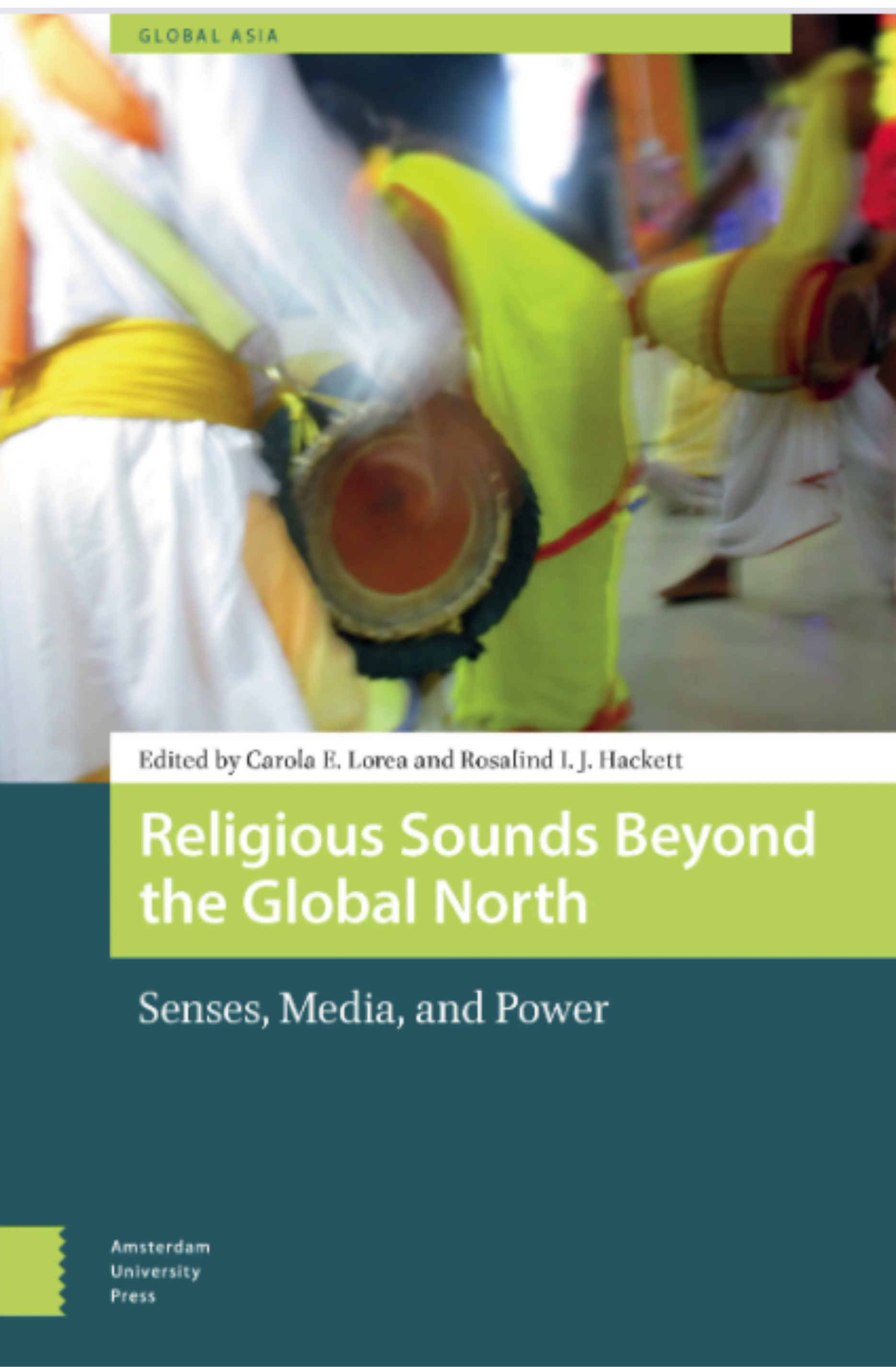
Dr. Carola Lorea is a Junior Professor at the Institute for Religious Studies, Faculty of Philosophy, University of Tübingen (since 2023) and former Senior Research Fellow at NUS's Asia Research Institute (2022-2023). Her work bridges religious studies, cultural anthropology, and digital humanities with a focus on South/Southeast Asian borderlands. PhD in South Asian Studies (2015, La Sapienza University of Rome) 2023 Habilitation Venia Legendi in religious studies and cultural anthropology Research centers on Matua traditions , Baul oral cultures , religion and pandemics , and sensory scholarship . She pioneered the CoronAsur research blog (2020) and leads the MANTRAMS project with ERC Synergy Grant (2023). Key contributions include: Digital Archive of Baul Songs (EAP1247 PI) Theoretical work on bricolage thinking in borderland communities Critical analysis of caste dynamics in post-Partition Andaman settlers Sonic approaches to religious studies Teaching includes courses on Religious Sounds (Tübingen 2024), Religion and South Asian Society , and Bengali language instruction. She founded the Digital Archive 'Songs of the Old Madmen' and co-edits volumes on global religious sound studies.
John Kelly is a Lecturer in the Sociology of Sport at the Moray House School of Education and Sport, University of Edinburgh. He is part of the Institute for Sport, Physical Education & Health Sciences (ISPEHS) and a joint convenor of the Edinburgh Critical Studies in Sport (ECSS) research group. His research focuses on intersections between sport, society, and power dynamics, including topics like militarism, sectarianism, ethnicity, and gender. He has advised governmental bodies in Europe and media organizations globally, and his work spans international journals and book publications. John holds a PhD in Sociology of Sport from Loughborough University (2003–2007), following MA (University of Brighton) and BA (University of Wales Institute, Cardiff) degrees. His teaching includes undergraduate and postgraduate courses on sport sociology, media, and research methods. He actively supervises PhD students exploring topics like sport and social integration, national identity, and body image in China. His research interests emphasize sociological theory, civil-military relations, and the role of sport in shaping identities. Current projects include studies on power in sport research, commemorations in sport, and Irish diaspora communities. John is also a joint editor of the Asia Pacific Journal of Sport and Social Science , reflecting his commitment to advancing critical academic discourse in sport studies.
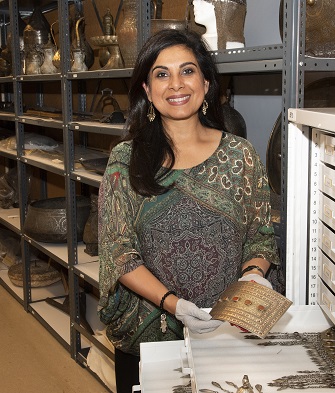
Fahmida Suleman is Senior Curator of Islamic Art & Culture at the Royal Ontario Museum (ROM) and holds a non-budgetary cross-appointment as Associate Professor at the University of Toronto (Department of Near and Middle East Civilizations and Art History). She specializes in medieval and contemporary Islamic art, with a focus on the Fatimid period , Shi‘i material culture , and Islamic iconography , particularly textiles and jewelry from the Middle East and Central Asia. Education : DPhil and MSt in Islamic Art & Archaeology from the University of Oxford; BA Hons in Islamic and Religious Studies from the University of Toronto. Her research integrates fieldwork on female silversmithing traditions in Oman and exhibitions like Being and Belonging (2023–2024), Picnics and Pastimes (2024–2025), and the forthcoming The Indian Ocean: Monsoon Worlds (2026). She co-founded the Islamic Art and Material Culture Collaborative (IAMCC) to promote interdisciplinary research and curated the Albukhary Foundation Gallery of the Islamic World at the British Museum. Her work bridges medieval Islamic art with modern diasporic narratives, emphasizing marginalized voices and cultural preservation. At the University of Toronto, she teaches courses on curating Islamic material culture and Islamic iconography . She is currently documenting the Widad Kawar Collection of Arab Dress and Heritage Arts and exploring food and hospitality cultures in the Middle East through material culture.
Eric Chalfant is an Adjunct Assistant Professor in the Department of Film and Media at Queen’s University. He has previously taught at Elon University and Portland Community College. He earned his PhD from Duke University (2016), MA from Wake Forest University (2011), and BA from Whitman College (2008). Research Interests: Intersections of media studies, religious studies, and affect theory; material media analysis; sound culture studies; interface studies; algorithmic and network culture. Key Projects: A book-length study on media archaeology of North American atheist media (print, broadcast, digital) and another project exploring media, religion, and affect studies through the lens of 'noise' and divination. Media Archaeology: Examines how changing media forms (print, radio, digital) shaped atheist subjectivity, from 19th-century openness to Reddit's networked speed. Advising: Serves as MA and PhD Co-Supervisor.