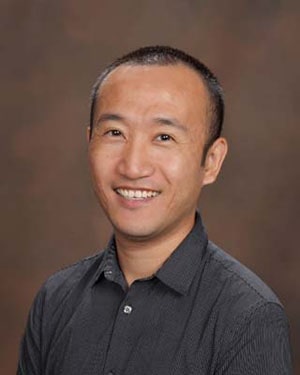
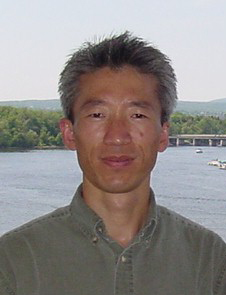
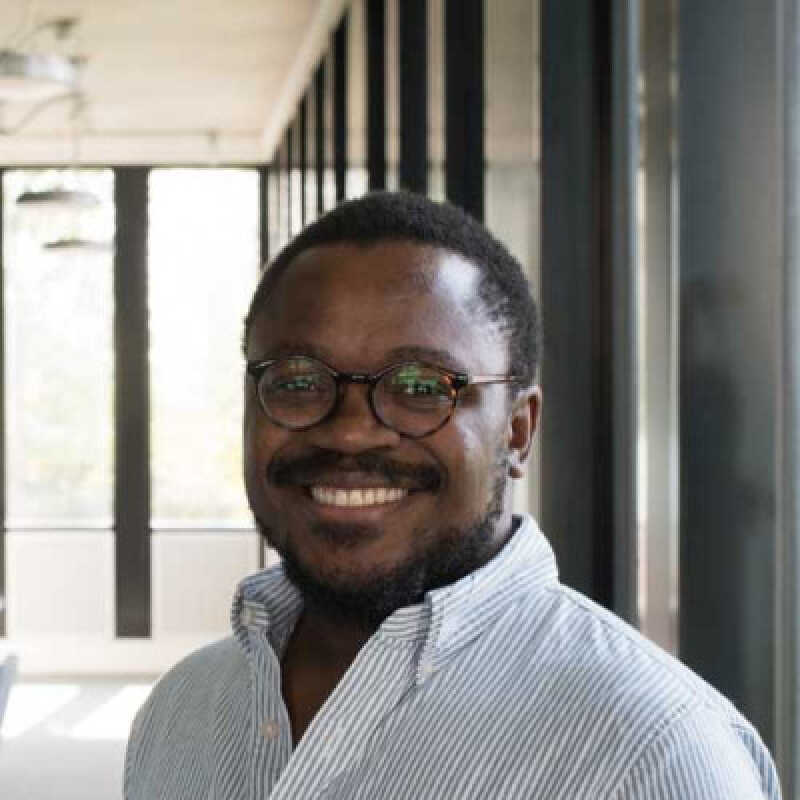
Lu Peng holds the Yahoo! Founder Chair in Science and Engineering at Tulane University. His research spans computer architecture with focus on GPU optimization, quantum computing, and blockchain acceleration. Peng develops specialized hardware architectures for emerging computing paradigms, including quantum processors, blockchain processing units (BPUs), and efficient GPU memory systems. Recent innovations include GeauxTrace blockchain contact tracing and high-throughput GPU database indexing techniques. Awarded the ORAU Powe Award (2007) and IEEE conference best papers (2019, 2001), Peng maintains active research in computer systems design. He teaches graduate and undergraduate courses in computer architecture while directing research on next-generation computing paradigms.
Elizabeth Mustaine is a Professor of Sociology at the University of Central Florida's College of Sciences. She holds a Ph.D. in Sociology and Criminology from The Ohio State University. Her research focuses on violence against women, stalking, criminal victimization patterns, sex offender policies, child abuse, and crime location analysis. She collaborates with law enforcement agencies like the Brevard County Sheriff’s Office to develop victim support programs, including a therapy dog initiative for child sexual abuse victims. She also provides community training on identifying child abuse and lectures on behavioral forensics. Her academic contributions span over 50 publications in criminology and criminal justice journals. Key research themes include social disorganization theory applications to crime patterns, residential relegation of sex offenders, and evaluation of criminal justice policies. She teaches courses such as Sociology of Murder and Violence in Society, integrating her research into pedagogy. Mustaine’s work bridges academic research with practical interventions. Recent projects include analyzing cryptocurrency software networks and GitHub collaborative communities, demonstrating her interdisciplinary approach. While no explicit awards are noted, her active grant collaborations and community outreach reflect her impact in applied criminology.
Mark Yampolskiy is an Associate Professor in the Department of Computer Science and Software Engineering at Auburn University's Samuel Ginn College of Engineering. His research focuses on cybersecurity in additive manufacturing (AM), internet of things (IoT), and computer networks. Yampolskiy leads efforts to secure AM processes against cyber-physical attacks, including sabotage and data theft. He has received prestigious awards such as the ASTM International Additive Manufacturing Young Professor Award and led high-profile grants totaling over $685,000. Education: Ph.D. in Computer Science, Ludwig Maximilian University M.S. in Computer Science, Technical University Munich B.S. in Applied Mathematics, Moscow State Institute of Radiotechnics, Electronics and Automation Research Interests: Cybersecurity of digital & additive manufacturing IoT security and network defense Cyber-physical system vulnerabilities 3D printing integrity and sabotage detection Key Contributions: Developed frameworks for AM security awareness and threat modeling Pioneered studies on side-channel attacks in manufacturing Co-organized ASTM AM Security Working Groups and AMSec workshops Advocated for legal standards in AM intellectual property protection Awards: ASTM International Additive Manufacturing Young Professor Award America Makes Award ($260k+ for cybersecurity training) NSF Grant ($425k for sabotage prevention research) Labs/Initiatives: Active in Auburn's National Center for Additive Manufacturing Excellence (NCAME), McCrary Institute for Cyber and Critical Infrastructure Security.
May Fong Cheong is a Senior Lecturer in Law at the Thomas More Law School, Faculty of Law and Business. Her research spans Contract Law, Competition Law, Consumer Protection, and Malaysian/Singaporean legal systems, with a strong focus on gender equity and socioeconomic justice. She has published extensively on topics such as financial disengagement of Indigenous Australians, gender diversity in corporate governance, and legal reforms in Asian jurisdictions. Her work demonstrates a consistent emphasis on: Comparative analysis of common law systems (Australia, Malaysia, Hong Kong) Statutory interpretation and legislative innovation Socioeconomic factors in legal frameworks Consumer rights and corporate accountability Notably absent are mentions of awards, students, or external grants in the available data.
Hui Li is the FSU Provost McKenzie Professor in the Electrical and Computer Engineering Department at the FAMU-FSU College of Engineering. She holds a Ph.D. from the University of Tennessee (2000) and degrees from Huazhong University of Science & Technology (B.E.E., 1992; M.S., 1995). Her research focuses on power electronics, including bi-directional dc-dc converters, micro-grid inverter control, and Wide Bandgap (WBG) device integration for renewable energy systems. Her current projects include DOE-funded work on WBG-based PV converters targeting cost reduction and reliability improvements. She serves as an Associate Editor for the IEEE Transactions on Power Electronics and has received the NSF Career Award (2007). Her work emphasizes high-power density converters, fault protection, and smart grid technologies. Key research trends in her articles include advancements in SiC MOSFET applications, grid-tied inverter stability, and novel modulation techniques for modular converters. Recent studies address challenges like dv/dt suppression, partial discharge mitigation, and sensorless control strategies. Scientific Awards: NSF Career Award (2007) Grants & Projects: DOE Next Generation Power Electronics Innovation Institute, WBG device integration in PV systems Labs/Teams: Leads the FSU team in the DOE-funded Power Electronics Innovation Institute, focusing on WBG device applications and high-performance power systems.
Dr. Xiaokun Yang is an Associate Professor of Computer Engineering in the College of Science and Engineering at the University of Houston-Clear Lake. With extensive industry experience at AMD and CEC, his research bridges hardware design and AI acceleration. Research focuses on FPGA acceleration for AI/ML, hardware/software co-design, and IoT system architectures. Publications demonstrate innovations in neural network accelerators, hardware-efficient AI, secure SoC design, and edge computing solutions. Recent work explores ReRAM-based accelerators, blockchain-secured hardware, and federated learning systems. Awards include Best Ph.D Forum Paper at ISVLSI 2014. Education includes a Ph.D. in Electrical and Computer Engineering from Florida International University (2016) and dual M.S. degrees from FIU and Beihang University. Courses taught include Advanced Digital Systems Design, Electronics, and Senior Project. Current research projects investigate FPGA-based AI acceleration and IoT architectures.
Dr. Erin Stone is Professor and Chair of the Department of History and Philosophy at the University of West Florida. She specializes in Latin American history, particularly indigenous/Spanish relations during colonization, indigenous slavery in the Atlantic World, and the War of Arauco's impact on Mapuche ethnogenesis. Education: University of Miami (B.A.), University of North Florida (M.A.), Vanderbilt University (Ph.D., Atlantic World history) Her research spans colonial Latin America, Caribbean history, and indigenous studies. She has conducted extensive archival research in Spain, the Dominican Republic, Colombia, and Puerto Rico, supported by grants like the Fulbright Hayes. Dr. Stone's publications reveal trends in Atlantic World slavery systems, indigenous resistance, and colonial legal frameworks. Her work bridges historical analysis with contemporary education research, demonstrated through co-authored studies on e-learning pedagogy. Scientific Awards: Fulbright Hayes grant She serves as President of the Gulf South Historical Association and advisory board member of La Florida Digital Archive. Her teaching includes courses on the Caribbean, Andes, and comparative slaveries in the Atlantic World.
Professor Cameron Parsell is an ARC Industry Fellow and ARC Mid-Career Industry Fellow at the School of Social Science, University of Queensland. His research spans three interconnected areas examining social problems, societal responses to these problems, and visions for a society that prevents and ends social problems. Partnering with Micah Projects through his ARC Industry Fellowship, Professor Parsell has established himself as a leading scholar in homelessness research and social policy analysis. Professor Parsell's primary research interests include: Homelessness and housing instability Poverty and welfare systems Charity and social responses to poverty Social cohesion and competing ideas in society Identity formation among marginalized populations Qualitative and ethnographic research methods Professor Parsell has authored three influential books: "The Homeless Person in Contemporary Society," "Charity and Poverty in Advanced Welfare States" (co-authored with Andrew Clarke and Francisco Perales), and "Homelessness" published by Polity Press, which argues that homelessness is "a punishing, predictable, yet solvable social problem." His research demonstrates how representations of homelessness inform policy agendas that he characterizes as suffering from "a poverty of ambition." His recent work shows a strong focus on digital-era evaluation in social services, the experiences of people with homelessness, and the intersection of domestic violence with housing instability. Professor Parsell's research often employs qualitative and ethnographic methods to understand the lived experiences of marginalized populations, examining topics from ontological pleasure to spatial control in marginalized spaces. His publication record demonstrates consistent scholarly output across sociology, social work, and housing studies journals. Professor Parsell has received significant recognition through his ARC Industry Fellowships and has published extensively in top journals. His work bridges academic research with practical applications in social service delivery, particularly through his partnership with Micah Projects and collaborations with St Vincent de Paul Society. As an active researcher, Professor Parsell leads and collaborates on numerous projects examining homelessness responses, housing policy, and social service evaluation. His work with organizations like Micah Projects and St Vincent de Paul Society demonstrates his commitment to translating research into practice, with recent projects focusing on families in motels, disaster assistance programs, and assertive outreach models for rough sleeping.
Jiying Zhao is a Professor at the School of Electrical Engineering and Computer Science (EECS) at the University of Ottawa. He holds a Ph.D. in Engineering from Keio University (Japan) and multiple engineering degrees from North China Electric Power University (China). His academic career includes roles as an instructor and associate professor at Thompson Rivers University (Canada) before joining the University of Ottawa in 2001, where he advanced to full professor in 2009. Dr. Zhao's research focuses on image/video processing , multimedia communications , and digital watermarking . Notable contributions include advancements in video super-resolution techniques, perceptual quality assessment of stereoscopic images, and robust watermarking algorithms resistant to geometric attacks and compression. His professional affiliations include IEEE, IEICE, and membership in Professional Engineers Ontario. While no specific awards or grants are listed, his extensive publication record demonstrates significant contributions to multimedia and signal processing fields. Advising and student mentorship details are not provided in the available text. Research interests are centered around 3D imaging , haptic communication , and content security , with applications in telepresence systems and video authentication. He maintains an active research website linked to the School of EECS.
Hye Jin Rho is an Assistant Professor at the School of Human Resources and Labor Relations within Michigan State University's College of Social Science. She holds a PhD in Management from MIT Sloan School of Management with specialization in labor relations research. Her work examines alternative work arrangements, multi-layered labor contracting structures, and their impacts on employment equity and worker disparities. She employs mixed-methods research at the intersection of labor economics and organizational sociology. Education: PhD in Management, MIT Sloan School of Management (IWER) MS in Management Research, MIT BA in Political Science and International Studies, Northwestern University Research focuses on labor market transformation with particular attention to algorithmic management in service industries, gig economy dynamics, and pandemic-era labor precarity. Her work has been funded by the Alfred P. Sloan Foundation and Russell Sage Foundation. She explores topics like gendered recruitment practices, worker voice mechanisms during crises, and frontline workforce demographics through both quantitative analysis and qualitative case studies. Grants and funding include support from major social science foundations. Her research has informed policy discussions around paid sick leave, occupational safety, and nonstandard work arrangements. She maintains active research collaborations in labor policy and workplace equity initiatives.
Lara Mauri is a Postdoctoral Researcher in Computer Science at the Department of Computer Science, University of Milan, where she is a member of the SEcure Service-oriented Architectures Research Lab. She currently oversees the HH4AI project at Human Hall, focusing on AI-human rights impact assessment frameworks. Her educational background includes a Ph.D. in Computer Science (dissertation in Machine Learning security), a Master's degree in Information Security, and a Bachelor's degree in Computer Science, all earned summa cum laude from the University of Milan. Dr. Mauri's research spans several critical areas at the intersection of artificial intelligence and security. Her primary interests include Artificial Intelligence security , Adversarial Machine Learning , Distributed Ledger Technology , and Data Protection and Privacy . Her work demonstrates particular expertise in developing security frameworks for machine learning systems and analyzing blockchain technologies. Analysis of her publication record from 2018-2025 reveals a clear research trajectory moving from foundational blockchain analysis toward increasingly sophisticated AI security frameworks, culminating in her current work on human rights impact assessment for AI systems under the EU AI Act. Her research shows consistent contributions to both theoretical security frameworks and practical implementation approaches. Her scientific contributions focus on cybersecurity and AI ethics, with particular emphasis on: Machine Learning security frameworks Blockchain and distributed ledger technologies AI ethics and regulatory compliance Critical infrastructure protection As lead researcher on the HH4AI project, Dr. Mauri directs interdisciplinary work connecting technical AI development with human rights considerations, particularly within the context of the European regulatory landscape. Her research lab focuses on developing methodological approaches to assess potential human rights impacts of AI systems before deployment.
Mr. Linus Hoffmann is a Lecturer in the Law department at the University of Strathclyde, affiliated with the Faculty of Humanities & Social Sciences. His research employs law & economics frameworks to analyze competition, commodification, and distribution dynamics in the digital economy. Key focuses include digital platforms' strategies for controlling and monetizing information, competition law enforcement's impact on market landscapes, and the broader commodification of digital resources. Recent work explores how the separation of 'noise' from relevant information in cyberspace becomes a commercialized asset. He teaches courses on competition law, law & economics, and company law, including specialized seminars like 'Competition Law and the Digital Economy' and 'Law & Economics for Digital Markets.' His publications span academic journals and policy contributions, including analysis of the EU Digital Markets Act and House of Lords Digital Assets Bill evidence. Hoffmann seeks interdisciplinary collaborations with computer scientists specializing in NLP for future projects.
Naomi Creutzfeldt is Professor of Law and Society and Co-Director of Research at Kent Law School. Her comparative socio-legal research examines access to justice with focus areas in alternative dispute resolution, administrative justice systems, digitalization impacts on vulnerable populations, and health-justice partnerships. She currently leads a Leverhulme-funded project on Digital Justice Journeys. Her work investigates how users navigate justice systems across different societies, exploring the interplay between legal cultures and institutional structures. Recent projects analyze post-pandemic trust in justice systems and digital exclusion risks for vulnerable users.
Lisa Dickson serves as Head of Kent Law School and Reader in Law at the University of Kent, specializing in cybercrime, privacy, and forensic evidence in criminal trials. Her teaching spans Privacy, Data Protection, Cybersecurity Law, and Criminal Law modules. She holds an LLB, LLM, and PGCHE from the University of Southampton, establishing her foundation in legal theory and pedagogy. Dickson's research interrogates privacy through cultural and technological lenses, examining legal objects like the Mashrabiya screen and blockchain systems. Her work bridges law with cybersecurity, emphasizing GDPR compliance and privacy-aware design in digital ecosystems. As a Kent Centre for Cyber Security member (GCHQ-recognised Academic Centre of Excellence), she integrates technical and legal perspectives to address evolving cyber threats. Her publication trajectory reveals sustained focus on privacy-law intersections, particularly in blockchain communications (2020), cultural privacy metaphors (2017), and forensic evidence admissibility (2013). These works collectively critique procedural gaps in regulating emerging technologies while advocating for culturally responsive privacy frameworks. Dickson actively supervises research in privacy, data protection, and cybercrime contexts. She contributes to the EPSRC-funded PriVELT project developing privacy-aware data management for leisure travellers, demonstrating commitment to applied, interdisciplinary solutions. She operates within the Kent Centre for Cyber Security and NeCS CESTN Cyber Security Training Network, collaborating on national cybersecurity initiatives that shape policy and practitioner training through GCHQ-recognised research excellence.
Dr. Will R Mbioh is a Senior Lecturer in Law at Kent Law School, University of Kent. Their research focuses on the intersection of law, technology, and social justice, examining data processing, surveillance, and content moderation impacts on user well-being and fundamental rights. They teach modules including European Union Law and Regulation of Platform/Surveillance Capitalism. Dr. Mbioh supervises PhD students exploring legal and socio-ethical dimensions of technology governance, emphasizing interdisciplinary approaches and social justice. Research Interests: Affective violence, digital labor, AI ethics, post-colonial legal frameworks, and regulatory enforcement in digital spaces. Teaching: European Union Law, Platform Regulation, Public Law, Equity and Trusts. Publications analyze gaps in global digital regulations, such as GDPR and DSA compliance, while advocating for human-centered legal frameworks. Their work bridges legal theory with sociological critiques, particularly in Global South contexts.