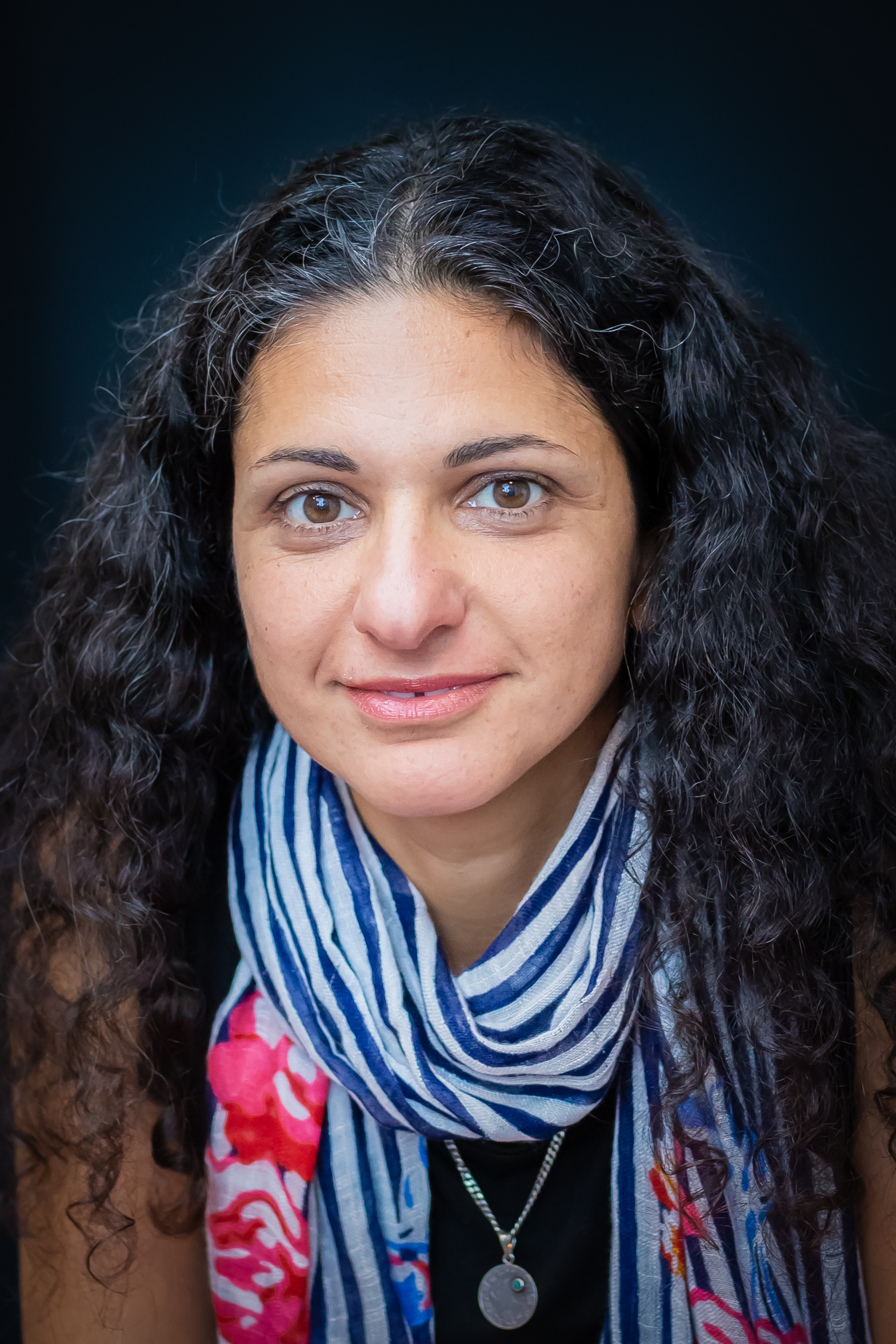
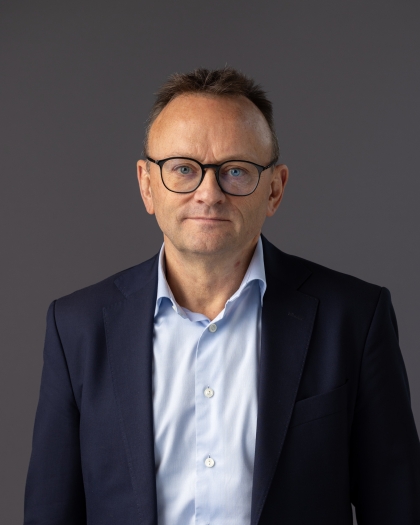
Velina Ninkova is an Associate Professor at Oslo Metropolitan University's Faculty of Teacher Education and International Studies, affiliated with the Department of International Studies and Interpreting Education. Her work focuses on Indigenous education, ethnographic research, and cultural studies. Research areas include Indigenous methodologies, hunter-gatherer communities, and critical multicultural education Active in international collaborations, particularly with San and Ju|'hoansi communities in Namibia Key themes: education policy implementation, ontological politics, and cultural resilience Recent publications examine San childhood education dynamics (2024), tortoise shell artifacts (2025), and colonial encounters (2022). She contributes to journals like Review of Educational Research and Journal of the Royal Anthropological Institute , often collaborating with Jennifer Hays, Monika Abels, and Noah Lavi. Her research emphasizes decolonizing educational frameworks and validating Indigenous knowledge systems.
Amanda Margaret Machin is a Professor at the Department of Sociology and Social Work within the University of Agder . She is affiliated with research groups including CeDiT - Center for Digital Transformation , European Integration and Transnational Governance , and Sociological Theory Development and Analysis . Research Focus: Environmental politics, radical democracy, climate discourses, political imaginaries, food policy, citizens' assemblies, and the politics of statues. Key Collaborations: Work with institutions like Zeppelin University, Witten/Herdecke University, and the University of Westminster. Publication Trends: Recent work analyzes the European Green Deal , climate activism , statue politics , and democratic theory in the Anthropocene. Her publications span journals like Environmental Politics , Democratic Theory , and Contemporary Political Theory , alongside monographs with Routledge , Zed Books , and Transcript Verlag . Edited Works: Co-editor of the Handbook of Environmental Political Theory in the Anthropocene (forthcoming, Edward Elgar) and special issues on sustainability politics and political identification in Europe .
Geir Olav Dyrkolbotn is an Associate Professor at the Norwegian University of Science and Technology (NTNU), affiliated with the Center for Cyber and Information Security (CCIS). He leads the NTNU Malware Lab and the Cyber Defence research group. His expertise bridges academic research with military experience from over 25 years in the Norwegian Armed Forces. PhD in Information Security from Gjøvik University College MSc in Computer Science from Norwegian Institute of Technology (NTH) His research focuses on cyber defense , reverse engineering , and malware analysis , with significant work in side-channel attacks and machine learning . He has contributed to hardware security, IoT vulnerabilities, and digital forensics through publications spanning 2006–2024. Recent publications highlight trends in malware detection via low-level features , hardware reverse engineering , and IoT security , reflecting his interdisciplinary approach to cyber threats. Collaborative works with institutions like IEEE and Springer demonstrate his industry and academic impact. Geir supervises PhD student Sergii Banin , leads critical research labs, and contributes to education through courses like Reverse Engineering and Malware Analysis. His work emphasizes practical applications in military and civilian cyber infrastructure defense.
Filip Holik is an Associate Professor at the Department of Information Security and Communication Technology at Norwegian University of Science and Technology (NTNU). He works remotely at the University of Glasgow, Scotland, and is actively involved in cybersecurity research for critical infrastructure. Key research areas: eBPF-based programmable data planes, Smart Grid security, Digital Substations, Software-Defined Networking. Major projects: Multidisciplinary Research group on Privacy and data protection (MR PET) , ECoDiS - Engineering and Condition monitoring in Digital Substations , InterSecure - Security of supply in smartgrids . Publications focus on eBPF security frameworks, digital substation threat modeling, and smart grid cybersecurity. His work addresses security of supply in interconnected digital systems and develops adaptive learning mechanisms for attack detection. Technical contributions include developing simulation models for Digital Substations, serving as a Smart Grid Simulation Model developer , and Digital Security instructor for industrial network training programs.
Ruth Haug is a Professor of International Development Studies at the Norwegian University of Life Sciences (NMBU), affiliated with the Department of International Environment and Development Studies (Noragric) within the Faculty of Landscape and Social Sciences (LANDSAM). She has held significant leadership roles, including Deputy Vice Chancellor (2008–2013) and Head of Department (2005–2008), and has been a central figure in shaping development research and policy in Norway and internationally. Her research expertise spans food systems, food security, climate change, agricultural extension, gender issues, forced migration, and humanitarian action . She has conducted extensive fieldwork in Africa and Asia and has collaborated with major institutions such as NORAD, the World Bank, FAO, and CGIAR. Ruth Haug has also served on international boards, including the IFPRI Board of Trustees and the ICARDA Board, and represented Norway in CGIAR and CFS meetings. The recent publication record reveals a strong focus on seed systems, equitable food systems, climate resilience, and agricultural innovation in Sub-Saharan Africa . Her work often examines policy implementation, gender dynamics, and the socio-political dimensions of food and agricultural systems. She has contributed to both academic and policy-oriented outputs, including Norad-funded reports and international policy dialogues. Scientific and Policy Engagement: Member, Agricultural Research in the Dry Areas (ICARDA) Board Former member, IFPRI Board of Trustees Representative of Norway in CGIAR, CFS, and FAO meetings Former member, Svalbard Seed Vault Council Research and Teaching: Supervision of numerous M.Sc. and PhD students in development studies Course leadership in Global Food Systems and Food Security Extensive involvement in PhD programs and academic committees Active participation in national and international research projects (e.g., ACCESS, FoodMa) Labs and Research Groups: Core member of Noragric’s research environment on sustainable food systems and development Involved in NMBU’s Sustainable Food Systems Arena Contributor to interdisciplinary research on climate, agriculture, and equity
Katrien De Moor is an Associate Professor at the Department of Information Security and Communication Technology, Norwegian University of Science and Technology (NTNU), with research focusing on socio-technical approaches in ICT. Her work bridges user experience, digital ethics, and cybersecurity, particularly in immersive environments and next-generation networking. Co-Editor-in-Chief, Quality and User Experience (Springer) Steering Committee, QoMEX Member, Young Academy of Norway Her research spans Quality of Experience (QoE) , User Engagement , and Digital Ethics , with projects like TufiQoE (2020-2024) on ecological validity in immersive media evaluation, and Digital Carbon Footprint studies. Since 2023, she leads NTNU's 5-year Master program in Cybersecurity and Data Communication. She supervises multiple PhD students including Camille Sivelle (Secure XR Experiences), Kaja Ystgaard (Smart Environments), and Ole Martin Edstrøm (Cryptology Modeling). Current projects like Amplify (EU-funded) and Societal Security and Digital Identities (NFR-funded) emphasize ethical AI and human agency. Scientific Recognition: Founding member, Young Academy of Norway Editorial roles in TOMM and QoMEX Conference leadership at ACM IMX and MMSys Her lab collaborates with the Department of Sociology and Political Science at NTNU on cryptology's social dimensions, while mentoring early-career researchers through the PERSEUS Doctoral Programme.
Kristin Skare Orgeret is a Professor at the Institute of Journalism and Media Studies , Faculty of Social Sciences, OsloMet – Større Oslo universitet. Her work focuses on media and conflict , freedom of speech , media's societal role , and power relations . She leads the MEKK (Media in War and Conflict) research group and the NFR-funded DD-MAC project (Decoding Digital Media in African regions of Conflict), as well as international collaborations under NORPART and Intpart programs. Research Themes : Digital journalism in conflict zones, fact-checking under authoritarian regimes, journalist safety, and media's role in democratic transitions. Projects : DD-MAC (2021–2025), NORPART (Tanzania, Uganda, Nicaragua, Colombia), Safety Matters (Brazil, South Africa, USA). Awards : OsloMet Communication Prize 2022. Expertise : Media in conflict, digital disinformation, African media dynamics, and press freedom. Her recent publications analyze social media weaponization in Mali, disinformation trends, and the evolution of digital journalism globally. She actively contributes to public debates on media ethics and freedom.
Thale Kvernberg Andersen is a Professor and Head of Department at NTNU Business School , Norwegian University of Science and Technology. She focuses on ICT integration , organizational change , workplace safety , and socio-technical systems . University: Norwegian University of Science and Technology School: NTNU Business School Email: thale.andersen@ntnu.no Her research explores how digitalization and automation impact organizational behavior , workplace health , and employee dynamics . She investigates power structures in technology adoption and inclusive practices for minority groups in labor settings. Her publications span 2004–2025 , emphasizing ICT implementation , work-life balance , and public sector innovation . Key subfields include agile team dynamics , occupational stress , and regulatory compliance in Norwegian industries. She collaborates extensively with institutions like SINTEF , NHO , and Abelia , contributing to reports on leadership practices , safety protocols , and technological innovation across sectors.
Arnfinn Aas Eielsen is an Associate Professor in Electrical Engineering at the University of Stavanger, Faculty of Science and Technology, Department of Energy and Petroleum Technology. His research focuses on control systems and signal processing in precision mechatronics, particularly digital-to-analog converters (DACs), nanopositioning devices, and piezoelectric actuators. Key research areas include: Glitch mitigation in DACs using dithering and model predictive control Thermal protection for piezoelectric actuators Nonlinear damping and robust repetitive control for nanopositioning State and parameter estimation for precision systems Low-noise transimpedance amplifier design Recent publications (2023-2025) emphasize error compensation in DACs, thermal modeling, and advanced control strategies for nanoscale positioning. His work often involves collaborations with researchers in Australia and Norway, with applications in atomic force microscopy and industrial precision engineering. Current affiliations: University of Stavanger Faculty of Science and Technology Department of Energy and Petroleum Technology
Nadia Saad Noori is an Associate Professor at the Department of Information and Communication Technology at the University of Agder (UiA). Since 2016, she has conducted research and teaching at CIEM - Centre for Integrated Emergency Management , and joined NORCE Norwegian Research Center as a Senior Researcher in 2018. Her work bridges industry experience (Cisco, hi-tech startups) with academic rigor , focusing on technology integration in crisis management , cybersecurity , and industrial monitoring systems . Her educational background includes: B.Sc. & M.Sc. in Computer Systems Engineering M.A.Sc. in Technology Innovation Management Ph.D. in Electronic and Information Systems Engineering Research interests span machine learning , autonomous systems , and security frameworks through: Disaster response coordination systems Industrial condition monitoring Humanitarian technology solutions Cyber-physical systems Recent publications demonstrate technical breadth : 2024: Thermal gesture recognition and UAV navigation in industrial spaces 2023: Cybersecurity frameworks and ecological pattern recognition 2022: Industrial seal diagnostics and autonomous systems She leads research groups in: Autonomous and Cyber-Physical Systems (ACPS) CIEM - Integrated Emergency Management Communication and System Security
Laszlo Tibor Erdodi is an Associate Professor in the Department of Digital Security at the University of Oslo. He specializes in cybersecurity, ethical hacking, and exploit prevention, with a focus on critical infrastructure and power grid security. His work bridges theoretical research and practical applications, addressing vulnerabilities in cyber-physical systems and developing mitigation strategies. Research Interests : Erdodi’s research emphasizes cybersecurity challenges in industrial systems, including power grids, IoT, and critical infrastructure. He investigates advanced persistent threats (APTs), exploit techniques like Return-Oriented Programming (ROP) and Jump-Oriented Programming (JOP), and the development of secure protocols and testbeds for vulnerability assessment. His work often explores stealthy data integrity attacks and defense mechanisms for smart grids. Recent Publications Trends : Erdodi’s recent articles (2024) highlight contributions to cybersecurity in power systems, including APT attack simulations on IEC 61850 substations, multidomain cyber-physical testbeds, and data integrity threats in wide-area monitoring systems. Earlier work (2015–2017) focused on exploit techniques, minimal shellcode development, and gadget-based attacks. Affiliations : Erdodi is affiliated with the Digital Security (SEC) research group and the P4C Partnership for Cybersecurity initiative. He also contributes to centers under the University of Oslo’s Board, focusing on cybersecurity education and policy.
Tore Lunde is a Professor of Law at the University of Bergen's Faculty of Law, specializing in competition law, intellectual property law, trademark law, marketing law, and property law. He is actively engaged with multiple research groups including the Research Group for Civil Procedure and Conflict Resolution, Research Group for European Law, and Research Group for Property Law. Professor Lunde's research focuses on competition law with particular attention to vertical competition restrictions stemming from the EU Commission's block exemption from 2022, with emphasis on the 'online platform economy.' His work bridges theoretical legal frameworks with practical applications in commercial contexts. His research interests span European competition policy, intellectual property protection mechanisms, and the evolving landscape of marketing regulations in digital environments. Lunde's publications demonstrate a consistent focus on the intersection of competition law and intellectual property, with particular attention to how traditional legal frameworks adapt to digital marketplaces. His recent scholarship shows increasing emphasis on EU regulatory frameworks and their implementation in Norwegian law, particularly regarding vertical agreements and platform economies. As an educator, Professor Lunde teaches Property and Intellectual Property Law (JUS215), General Property Law (JUS243), Competition Law (JUS258-2-B), Trademark Law (JUS260-2-C), and Marketing Law (JUS260-2-D), shaping the next generation of legal professionals in these specialized fields. His professional activities extend to providing expert commentary on Norwegian legislation, regularly updating legal commentaries for Karnov and other legal publications, and participating in academic discussions on current legal challenges in competition and intellectual property law.
About Mohammad Derawi Mohammad Derawi is a Professor at NTNU's Department of Electronic Systems, part of the Faculty of Information Technology and Electrical Engineering. He leads the Smart Wireless Systems (SWS) Research Group and directs the IoT-Lab at NTNU Gjøvik. His academic journey includes a PhD from NISLab (Norway) and CASED (Germany), alongside BSc/MSc degrees in Informatics from DTU (Denmark). Research Interests Derawi specializes in Smart Wireless Systems (IoT), Information Security (Biometric Systems), Digital Electronics, and Machine Learning applications in activity recognition and e-learning. His work bridges theoretical advancements with practical implementations, emphasizing secure and efficient IoT solutions. Research Projects Notable projects include IoT-Safetraffic (RFF Innlandet), Ambulance Drone (NTNU), Wireless ECG (Innovation Norway), and the EU-funded TURBINE project. These projects focus on IoT security, healthcare applications, and smart transportation systems. Awards & Recognition Recipient of NTNU's Quality in Education Award (2017) Honored as Norway's Youngest Professor (2016) Received multiple best paper awards from IEEE/ACM/Springer Invited to the Crown Prince Couple's 50th Birthday Celebration (2023) Grants & Leadership Led multi-institutional initiatives funded by RFF Innlandet, Innovation Norway, and EU grants. His research group collaborates with industry partners to develop cutting-edge IoT and wireless communication solutions. Labs & Teams Scientific Director of NTNU's IoT-Lab, fostering innovation in IoT ecosystems and smart city technologies. Active in mentoring students and industry professionals through workshops and conferences.
Sule Yildirim Yayilgan is a Professor at the Department of Information Security and Communication Technology (IIK) within the Faculty of Information Technology and Electrical Engineering at Norwegian University of Science and Technology (NTNU). With over 30 years of academic experience, she leads the MR PET research group focused on Privacy and Data Protection. PhD in Artificial Intelligence (2002) MSc in Computer Engineering (1995) Her research spans: AI/ML for health, energy, education, and security Cybersecurity & Federated Learning Explainable AI & Bias Reduction Blockchain & Multilingual NLP Recent projects include: VIPADELF : Vineyard Leaf Disease Detection with Federated Learning METICOS : EU Horizon2020 Border Control Platform LITHME : Human-Machine Era Language Technologies (COST Action CA19102) She serves on scientific boards for: NTNU Data Science Strategic Area 3DMT European Master’s Program
Diego Praino is an Associate Professor of Public Law at Oslo Business School, Oslo Metropolitan University, within the Department of Public Administration and Governance, Faculty of Social Sciences. He teaches Labour Law, EU Law and Politics, Immigration Law, and Labour Law in Change Processes, and serves as the academic international coordinator. His research focuses on immigration legislation, European integration, and forms of government. His work has been published in journals such as Nordic Journal of Migration Research , Journal of European Integration , Kritisk Juss , and Revista Catalana de Dret Públic . His recent publications span topics including EU free-movement rules, medically assisted death, electoral reforms, and digital security in public-private healthcare collaborations. The analysis of his articles reveals a consistent engagement with constitutional and administrative law, particularly in the EU and EEA context. His scholarship bridges legal doctrine, political science, and public policy, with a strong emphasis on migration, governance structures, and labor rights. He frequently collaborates with scholars across Europe and contributes to both academic and public discourse through textbooks, research reports, and dissemination activities. Diego Praino holds a PhD in Law and Economics with a focus on Constitutional Law, awarded by Scuola Normale Superiore and the University of Naples Federico II. He has co-authored a textbook titled Oppgaver i Arbeidsrett and has contributed to academic dissemination through lectures and roundtables at institutions including the University of Ljubljana and the University of Naples Federico II. He is actively involved in pedagogical innovation, particularly in active learning methods in legal education. He is affiliated with research groups focused on Organization and Management in the Public Sector and Public Administration and Governance, contributing to interdisciplinary projects on public law and policy.