Dr. Joseph Bosco Bangura is a Senior Researcher in Religious Studies & Missiology at the Evangelical Theological Faculty (ETF Leuven) and Senior Researcher in Intercultural Theology at the Protestant Theological University, Groningen. He serves as a Part-Time Lecturer at Aachen University and has held roles at institutions in Sierra Leone, Germany, South Africa, and Uganda. His work bridges Pentecostalism, missiology, and intercultural theology across Africa and Europe. Education: Ph.D. in Theology and Religious Studies (ETF Leuven & Vrije Universiteit Amsterdam, 2013) M.Th. (ETF Leuven, 2007) M.Phil. (Fourah Bay College, 2004) Post-Graduate Certificate in Ecumenical Studies (Ecumenical Institute Bossey, 2001) B.Th. (Evangelical College of Theology, 1997) Research Interests focus on African Pentecostalism, contextual theology, secularization in Africa and Europe, interfaith engagement, and the cultural adaptation of migrant churches. His work explores the intersection of religion with environmental disasters, gender dynamics, and digital media in African Christianity. Selected Articles highlight eco-theology in Sierra Leone, gender and leadership in diaspora churches, and the impact of secularization on Pentecostal communities. His publications also address urban missiology, transnational practices, and the historical evolution of African churches. Academic Memberships: European Academy on Religion and Society American Society of Missiology GloPent Research Network Lamin Sanneh Institute (University of Ghana)
Wei-Cheng Lin is Associate Professor of Art History and the College at the University of Chicago , specializing in Chinese art and architecture. He serves as Faculty Director of the Dispersed Chinese Art Digitalization Project , sits on the steering committee of the Center for the Art of East Asia , and acts as Architectural Studies Advisor. His office is located in CWAC 268 with weekly office hours on Wednesdays. Educational background details are not explicitly provided in the text; however, he held an appointment as Assistant Professor of East Asian Art and Architecture at Iowa State University during 2006–2007. Lin’s research interrogates the intersections of visual and material culture in medieval Chinese Buddhist art and architecture and the ritual dimensions of Chinese funerary practices . Current book projects include Performative Architecture of China , which explores how architecture enacts meaning through historical performance, and Necessarily Incomplete: Fragments of Chinese Artifacts , which investigates the active roles of fragmentary artifacts in shaping multivalent cultural significance. Across more than twenty publications, Lin’s scholarship ranges from detailed studies of Mount Wutai and Dunhuang to theoretical inquiries into architectural historiography , materiality , and contemporary Chinese art . His work bridges art history, architectural history, religious studies, and digital humanities. Grants & Digital Initiatives: Faculty Director, Dispersed Chinese Art Digitalization Project (DCADP) — supported by the Cyrus Tang Foundation Manages DCADP publication series, including Beijing Zhihua Temple (2024) and Exhibiting East Asian Art in a Global Context (2025, co-edited with Chelsea Foxwell) Laboratories & Teams: Lin leads collaborative efforts through the Center for the Art of East Asia and the UChicago Center in Beijing , organizing exhibitions, international conferences, and digital humanities workshops that integrate art-historical research with cutting-edge visualization technologies.
Wojciech Czakon is a Full Professor and chair of the Strategic Management Department at Jagiellonian University in Poland. He has held leadership roles as Head of the Management Theory Department (University of Economics in Katowice) and Professor at the Higher Schools of Banking in Poznan. His academic career spans multiple institutions, including visiting positions at Universita delli Studi di Roma 2 Tor Vergata. Education: PhD in Management (2002) Habilitation in Management (2007) Professor title in Economics (2013) His research focuses on organizational behavior, strategic management, coopetition, family business dynamics, and qualitative research methodologies. Recent work explores digital transformation, strategic myopia, and the behavioral antecedents of coopetition. Publication Trends: His 2014-2022 papers on coopetition strategies—covering trust, behavioral factors, and performance metrics—have received significant citations. Recent projects analyze innovation ecosystems and entrepreneurial failure. Scientific Awards: 2022 Best book award (Organization and Management Committee of the Polish Academy of Sciences) 2021 Outstanding research achievement award (Prime Minister of Poland) Honoris causa doctor (Wroclaw University of Business and Economics) Top 5 global scholar in coopetition research Community Service: He has served as Vice-president of the European Academy of Management, co-chair of EURAM doctoral colloquium, and organizer for conferences like EURAM, EIASM, and IFERA. He also co-edits anthologies and special issues in journals such as Long Range Planning and Industrial Marketing Management.
Dr. Araz Taeihagh is an Assistant Professor at the Lee Kuan Yew School of Public Policy, National University of Singapore (NUS), where he also serves as Principal Investigator at the Centre for Trusted Internet and Community (CTIC) and NUS Cities. He previously chaired the PhD Programme in Public Policy (2020-2023). Taeihagh holds a DPhil from the University of Oxford and has over two decades of consulting experience in energy, environment, transportation, and technology domains. His research focuses on policy design and governance of emerging technologies , with expertise spanning autonomous systems, AI governance, sharing economies, and smart cities. Key research areas include: Decision support systems and complexity approaches to public policy Infrastructure and sustainable development (energy/environment/transport) Socio-technical systems and technology governance Recent publications demonstrate strong focus on AI governance frameworks , autonomous systems regulation , and smart city development , particularly examining policy innovation in Singapore and comparative Asian contexts. Research frequently addresses tensions between technological innovation and regulatory oversight. Major recognitions include: Ranked Top 2% Scientist worldwide for energy (2023) and citation impact (2020-2022) Best Paper Award from Transport Reviews (2020) Research Excellence Awards (2019-2022) Faculty Research Fellowships from LKYSPP and NUS Humanities & Social Sciences He serves on editorial boards of Technological Forecasting and Social Change , Policy and Society , and other leading journals, and co-chairs scientific committees for AI Singapore's governance initiatives.
Fernando De la Torre is a Courtesy Professor in the Department of Electrical and Computer Engineering at Carnegie Mellon University, with an affiliation to the Robotics Institute where he has been a research faculty member since 2005. He holds a Ph.D. in Electronic Engineering from Ramon Llull University (2002). His research focuses on machine learning and computer vision, with applications in human health, augmented/virtual reality, generative models, and data-centric methodologies. He directs the Human Sensing Laboratory, which explores technologies for human behavior analysis and health monitoring. Notable contributions include founding FacioMetrics LLC (acquired by Meta), advancing facial recognition and 3D human digitization, and developing frameworks for robust visual models. His work bridges theory and practice, with over 225 peer-reviewed publications and editorial roles, including Associate Editor for IEEE Transactions on Pattern Analysis and Machine Intelligence. Recent research trends emphasize generative AI applications in satellite imagery analysis, VR/AR rendering optimizations (e.g., Gaussian splatting), and clinical motion recognition for healthcare. His projects often intersect with industry, addressing challenges in wearable health monitoring and immersive technologies. His lab collaborations span academia and industry, focusing on scalable solutions for 3D human modeling, adversarial robustness, and multimodal data fusion. Key achievements include pioneering work on 3D face animation from speech and garment reconstruction from single images.
Edwin van der Heide is a part-time Lecturer and researcher at Leiden University, affiliated with the Leiden Institute of Advanced Computer Science (LIACS) and the Academy for Creative and Performing Arts (ACPA). His work bridges sound, space, and interaction through installations, performances, and environments. Key roles include: Co-head of ArtScience Interfaculty (Royal Conservatoire & Royal Academy of Art, The Hague) until 2016 Edgard Varèse Guest Professor at TU Berlin (2009) Invited artist at Le Fresnoy (France) and HKB Bern University of the Arts (2019) Research Interests: Spatial sound composition, audience interaction, interdisciplinary art, and the intersection of technology with auditory perception. Notable projects include Whispering Wind (permanent installation at Leiden University) and Spiral of Time (MACBA, Barcelona). Recent Articles & Exhibitions (2023–2024): Focus on large-scale installations like Pneumatic Sound Field and Spiral of Time , emphasizing public engagement and spatial acoustics. Awards: Witteveen+Bos Art+Technology Award (2009), Best Paper Award for BAI (摆) (2018). Grants & Labs: Collaborations with institutions like NCCA (Russia), MAXXI (Italy), and involvement in projects like Evolving Spark Network (global sound art initiatives).
Reiko Heckel is a Professor of Software Engineering at the University of Leicester, serving as Director of Postgraduate Teaching for Computing degrees and Data Analytics Lead at the Leicester Innovation Hub. She previously held academic roles at the Technical Universities of Dresden and Berlin before joining Leicester in 2004. Her research focuses on graph transformation systems, model-based development, stochastic modeling, and formal methods in software engineering. She earned her PhD (Dr.-Ing.) in Computer Science from TU Berlin in 1998. Her research interests span software engineering pedagogy, formal specification techniques, and applications of graph grammars in system modeling. Recent work explores stochastic graph transformations for social networks, transparency engineering in AI systems, and blockchain-based smart contract frameworks. Her contributions bridge theoretical foundations with practical applications in cybersecurity, data integration, and human-centric systems design. Key contributions include advancements in automated test case generation via graph transformations, visual contracts for software reverse engineering, and formal methods for complex system analysis. Her work frequently intersects with industry through collaborations via the Leicester Innovation Hub, emphasizing data analytics and technology transfer. Education: MSc Computer Science, Technical University of Dresden PhD (Dr.-Ing.), Computer Science, TU Berlin (1998) Leadership Roles: Head of Department (2014-2018) Director of Postgraduate Teaching (Ongoing) Research Themes: Model-Based Development Stochastic Systems Analysis Graph Neural Networks Trustworthy AI Her publications reflect a focus on formal methods, with recent trends in applying graph transformation techniques to social network modeling, blockchain smart contracts, and educational pedagogy.
Brooke Erin Duffy is an Associate Professor in the Department of Communication at Cornell University, with affiliations in the College of Agriculture and Life Sciences (CALS), the Graduate Field of Feminist, Gender, and Sexuality Studies, and Media Studies. Her research investigates digital and social media industries, gender and identity dynamics, the gig economy’s impact on creative labor, and algorithmic governance in cultural production. She is a prominent voice in feminist media studies, blending academic rigor with public engagement through outlets like The Atlantic , Vox , and The New York Times . Education : Ph.D. in Communication (University of Pennsylvania, 2011), M.A. (University of Pennsylvania, 2008), B.A. in Communications (Penn State University, 2002) Her work highlights the gendered politics of digital labor , focusing on social media influencers, platform precarity, and the tension between authenticity and visibility. Recent research examines algorithmic systems, platform paternalism, and the visibility bind in creator economies. Duffy’s academic contributions include leadership in organizations like the American Influencer Council and Content Creator Scholar Network. She received multiple honors, including the 2021 Top Student-Led Paper award and the 2014 Lillian Lodge Kopenhaver Outstanding Woman Junior Scholar Award. Teaching : Courses on New Media & Society , Gender and Media , and Platform Labor and Precarity Public Impact : Regular commentary in global media and a 2024 contributor role at Forbes
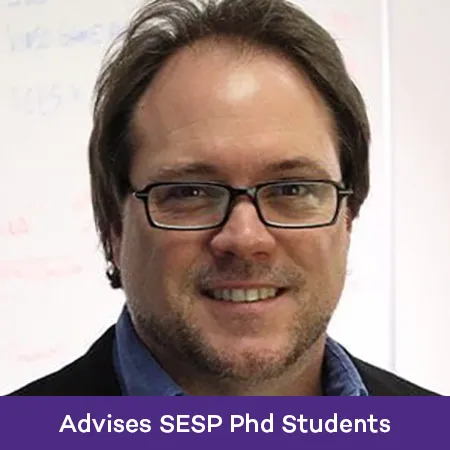
Reed Stevens is a Professor in the Learning Sciences department at Northwestern University's School of Education and Social Policy (SESP). He holds a PhD in Cognitive Studies in Education from UC Berkeley (1999), an MA from UC Berkeley (1994), and a BA in Mathematics from Pomona College (1987). His research focuses on understanding learning across diverse settings including classrooms, workplaces, and museums, emphasizing how mathematical and technological practices shape cognition. Stevens develops tools like VideoTraces for media annotation and designs innovative educational models such as FUSE Studios to create scalable, interest-driven learning environments. His work bridges cognitive science and sociocultural studies, employing methods like audio-video ethnography and conversation analysis. Key themes include spatial reasoning in making activities, teacher adaptation to facilitator roles, and the diffusion of educational innovations. Stevens collaborates with industry partners to integrate real-world practices into school curricula, addressing challenges in scaling STEAM initiatives and fostering equitable participation. His research has implications for teacher training, curriculum design, and the development of technology-mediated learning tools. Stevens' recent work explores civic data science applications, professional learning in trades like coffee roasting, and the redefinition of scientific practices in education. He actively contributes to debates on expanding what counts as valid scientific inquiry and has published extensively on learning pathways, institutional adoption of innovations, and the role of agency in student-driven projects.
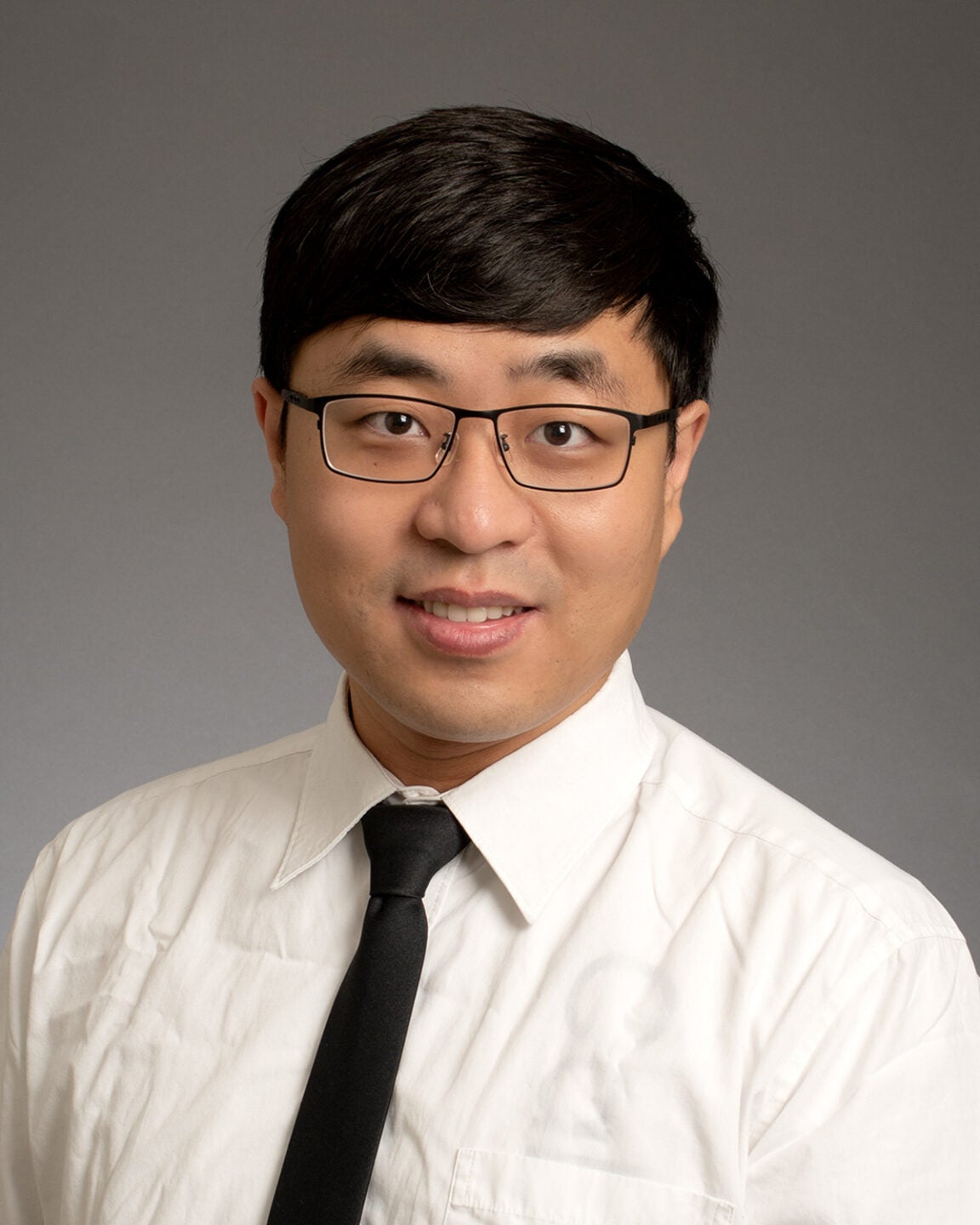
Jun Zhuang is an Assistant Professor in the Department of Computer Science at Boise State University. He holds a Ph.D. from Indiana University-Purdue University Indianapolis (IUPUI), M.S. degrees in Computer Science (University at Buffalo) and Finance (Rochester Institute of Technology), and a B.E. in Safety Engineering (South China University of Technology). His research focuses on trustworthy and robust AI systems, Bayesian inference, generative models, quantum computing, and medical imaging. Education: Ph.D., Computer Science, IUPUI (2023) M.S., Computer Science, University at Buffalo (2018) M.S., Finance, Rochester Institute of Technology (2013) B.E., Safety Engineering, South China University of Technology (2011) Research Interests: Jun investigates robust machine learning algorithms, particularly in quantum information, medical imaging, and graph-based systems. He emphasizes mitigating adversarial attacks, enhancing model interpretability, and integrating blockchain for AI security. His work spans theoretical foundations and practical applications, including generative adversarial networks (GANs) and trustworthy AI frameworks. Recent Articles: His recent work addresses jailbreaking vulnerabilities in large language models (LLMs), quantum computing optimization challenges, and robust graph structure learning. These studies highlight interdisciplinary approaches to advancing AI reliability and security. Awards & Grants: Recipient of the SIGIR Student Travel Grant for CIKM 2022. Active in grant activities through research collaborations and institutional funding. Advising & Labs: Advisor to Ph.D. student Maqsudur Rahman and M.S. students Chia-Ying Wu and Shipra Kumari. Leads the T rustworthy and R obust AI L ab (TRAIL), focusing on developing resilient AI systems.
Yuri Levin is a Professor at the Smith School of Business, Queen’s University, where he holds the Stephen J.R. Smith Chair of Analytics and serves as Founding Executive Director of the Smith School of Business Analytics and AI. He also leads the Scotiabank Centre for Customer Analytics. His research focuses on Analytics & AI, with expertise in revenue management, dynamic pricing, and strategic consumer behavior. Levin holds a Ph.D. in Operations Research from Rutgers University and degrees in Economics and Applied Mathematics from Belarus State University. Levin’s academic contributions include co-winning the 2013 INFORMS Revenue Management and Pricing Practice Prize and the 2009 INFORMS COIN-OR Cup. He has advised companies like Scotiabank, Loblaws, and McDonald’s on pricing strategies and consumer analytics. As an Associate Editor of Operations Research , he shapes academic discourse in operations research and pricing strategies. Education: Ph.D. in Operations Research, RUTCOR, Rutgers University (2001) B.S. in Economics, Belarus State University (1998) M.S. (Honours) in Applied Mathematics, Belarus State University (1998) His research explores dynamic pricing models under social influence, strategic consumer behavior, and revenue management in hospitality and retail industries. He has pioneered methodologies for optimizing pricing strategies in networked markets and developed algorithms for cargo capacity management. Awards: 2010 Queen’s School of Business Award for Research Achievement 2003 New Researcher Achievement Award Levin’s teaching spans MBA, Master of Management Analytics (MMA), and executive education programs, covering analytical decision-making and pricing optimization. His advisory work includes roles as a Visiting Professor at the Skolkovo Moscow School of Management and the University of Cambridge’s Judge School of Business.
Filip Biljecki is an Assistant Professor jointly appointed at the Department of Architecture within the College of Design and Engineering and the Department of Real Estate at the NUS Business School, National University of Singapore. He is the founder and principal investigator of the NUS Urban Analytics Lab and was awarded the prestigious NUS Presidential Young Professorship in 2020. With over 150 peer-reviewed publications, his research bridges geomatic engineering, geospatial technologies, and urban data science to advance digital twins and data-driven urban planning. Dr. Biljecki's educational background includes: PhD in 3D GIS (cum laude), Delft University of Technology, Netherlands (2017) MSc in Geomatics, Delft University of Technology, Netherlands (2010) BSc in Geodesy and Geoinformatics, University of Zagreb, Croatia (2008) His research interests focus on emerging urban data sources, particularly urban imagery, and their application in 3D city modeling, digital twins, and GeoAI. He explores how crowdsourcing and open science can inform cutting-edge techniques for urban sensing and analytics at city-scale. His work significantly contributes to establishing smart cities through innovative methods that integrate recent advancements in computer science, geomatics, and urban data science. Analysis of his recent publications reveals a strong focus on street view imagery applications for urban analytics, digital twin development, and geospatial AI. His research spans multiple domains including urban morphology, environmental assessment, public health applications, and urban comfort analysis. The interdisciplinary nature of his work is evident in collaborations with researchers from diverse fields, producing impactful studies that address complex urban challenges through innovative methodological approaches. His notable scientific achievements include: Annual Teaching Excellence Award (ATEA), 2025 College Educator Award AY2023/2024, 2025 Urban Informatics Paper of the Year Award, 2023 Top 2% scientists worldwide (Stanford University), 2021 Presidential Young Professorship (NUS), 2020 As an educator, Dr. Biljecki has supervised dozens of students leading to publications in leading journals and placements at top universities and organizations. He has delivered talks at over 120 universities and organizations worldwide including MIT, Stanford, Harvard, and ETH Zurich. His research is supported through various grants and affiliations including his role as Principal Investigator at the Future Cities Lab Global at the Singapore-ETH Centre. The NUS Urban Analytics Lab, which he established, brings together scholars from diverse disciplines to drive research on making cities smarter and more data-driven. The lab has developed innovative tools like ZenSVI for street view imagery analysis and has produced influential research on urban digital twins, urban morphology, and GeoAI applications. Through his leadership, the lab continues to pioneer methods that advance data-driven urban planning and smart city development.
Javier Franco Aixelá **Roles and Affiliations**: Full Professor of Translation and Interpreting at the University of Alicante, Director of the Department of Translation and Interpretation (2017–2021). Coordinates the Master's in Institutional Translation (Legal and Economic). Active in teaching Translation Theory, Professional Ethics, and Advanced Literary Translation. **Education**: PhD in English Philology (University of Alicante, 1996), Licenciatura in English Philology (Complutense University of Madrid, 1986), Expert in Translation (Complutense University of Madrid, 1991). **Research**: Specializes in translation theory, cultural aspects of translation, and bibliometrics. Founded the BITRA database (70,000 entries by 2017), a comprehensive online bibliography on translation and interpreting. Recent focus on bibliometric analysis of translation studies, including advertising translation, open access in academia, and cognitive approaches. **Teaching**: Taught courses like Professional Ethics, Advanced Literary Translation, and Translation of Research Genres. Supervised over 125 theses in the last five years, including high-impact works on medical neologisms (Habiba Chbab El Fakhi) and gender-neutral translation (María López Medel). **Awards**: Coordinator of the University of Alicante's Translation Doctoral Program, which received a quality distinction from the Ministry of Education. His theses have been awarded "Excellent Cum Laude" by the university. **Projects**: Led competitive research projects such as the 2021–2025 bibliometric study on economic translation and the BITRA database expansion (2007–2010). Collaborated on international initiatives like the 5th ICEBFIT Conference (2023). **Publications**: Authored 40+ books (e.g., *La traducción condicionada de los nombres propios*), co-edited *ENTI: Encyclopedia of Translation and Interpreting*, and published widely in journals like *META* and *Translation & Interpreting*.
Rong Pan is a Professor at the School of Computing and Augmented Intelligence, Arizona State University (ASU). He holds a Ph.D. in Industrial Engineering from Pennsylvania State University (2002), an M.S. from Florida A&M University (1999), and a B.S. in Materials Science from Shanghai Jiao Tong University (1995). His research focuses on quality and reliability engineering, design of experiments, time series analysis, and statistical learning theory. Key projects involve NSF-funded research on reliability prediction, accelerated life testing, and degradation modeling. He serves as an Associate Editor for the Journal of Quality Technology and has authored over 80 publications. Courses taught include Reliability Engineering, Design of Experiments, and Statistics for Data Analysts. His academic service includes roles as a referee for IEEE Transactions and IIE journals. Research interests emphasize statistical methods for reliability improvement, with recent work on Bayesian inference models, optimal experimental design, and machine learning applications in industrial systems. Grants include collaborations with the NSF, Arizona Department of Transportation, and Science Foundation Arizona. His work bridges theoretical advancements and practical applications in manufacturing, energy systems, and semiconductor reliability. Education: Ph.D. (2002), M.S. (1999), B.S. (1995) Key Research Areas: Reliability Engineering, Bayesian Methods, Time Series, DOE Active Grants: NSF CMMI, SUNY IT Visiting Scholar Program Teaching: IEE 573 Reliability Engineering, DSE 501 Statistics Service: Journal of Quality Technology (Associate Editor), IEEE Transactions (Referee)
Dr Yong Lin is an Associate Professor in Operations and Supply Chain Management at the Department of Management, Birmingham Business School, University of Birmingham. He joined the university in September 2021, having previously held academic positions at the University of Greenwich and Huazhong University of Science & Technology. He has also served as a visiting researcher at the Institute for Manufacturing (IfM), University of Cambridge, and as a research assistant at the Hong Kong University of Science & Technology. PhD in Management Science and Engineering, Huazhong University of Science & Technology, 2002 MSc in Industrial Engineering and Management, Huazhong University of Science & Technology, 1999 Dr Lin’s research focuses on digital transformation and sustainability strategies in operations and supply chains. His key interests include supply chain risk and resilience, digital logistics platforms, business ecosystems, and manufacturing strategies. He explores how digital technologies such as blockchain and RFID can enhance transparency, efficiency, and sustainability across supply networks. His recent publications reflect a strong trend toward digitalization, resilience, and sustainability in supply chains, with studies on modular resilience in multinational platforms, blockchain in remanufacturing, and digitalization in healthcare logistics. His work frequently appears in top-tier journals such as International Journal of Operations and Production Management , Journal of Cleaner Production , and Technological Forecasting and Social Change . Senior Fellow of the Advance HE (Higher Education Academy) Certified Management and Business Educator, Chartered Association of Business Schools (CABS) Chartered Fellow, Chartered Institute of Logistics and Transport (CILT) Dr Lin has led and coordinated several research projects funded by the National Natural Science Foundation of China (NSFC), the 863 Program, and the European Regional Development Fund. He actively engages in industry consulting to transfer research outcomes into practical business solutions. He welcomes PhD applicants interested in digital transformation, sustainability, logistics platforms, and business ecosystems. He is also involved in advising and mentoring graduate researchers in these domains. Dr Lin is affiliated with the Department of Management at Birmingham Business School, where he contributes to research, teaching, and knowledge exchange in operations and supply chain management. His work bridges academic rigor with real-world application, particularly in digital and sustainable supply chain innovation.