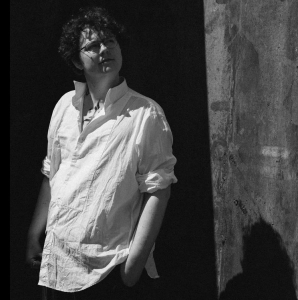
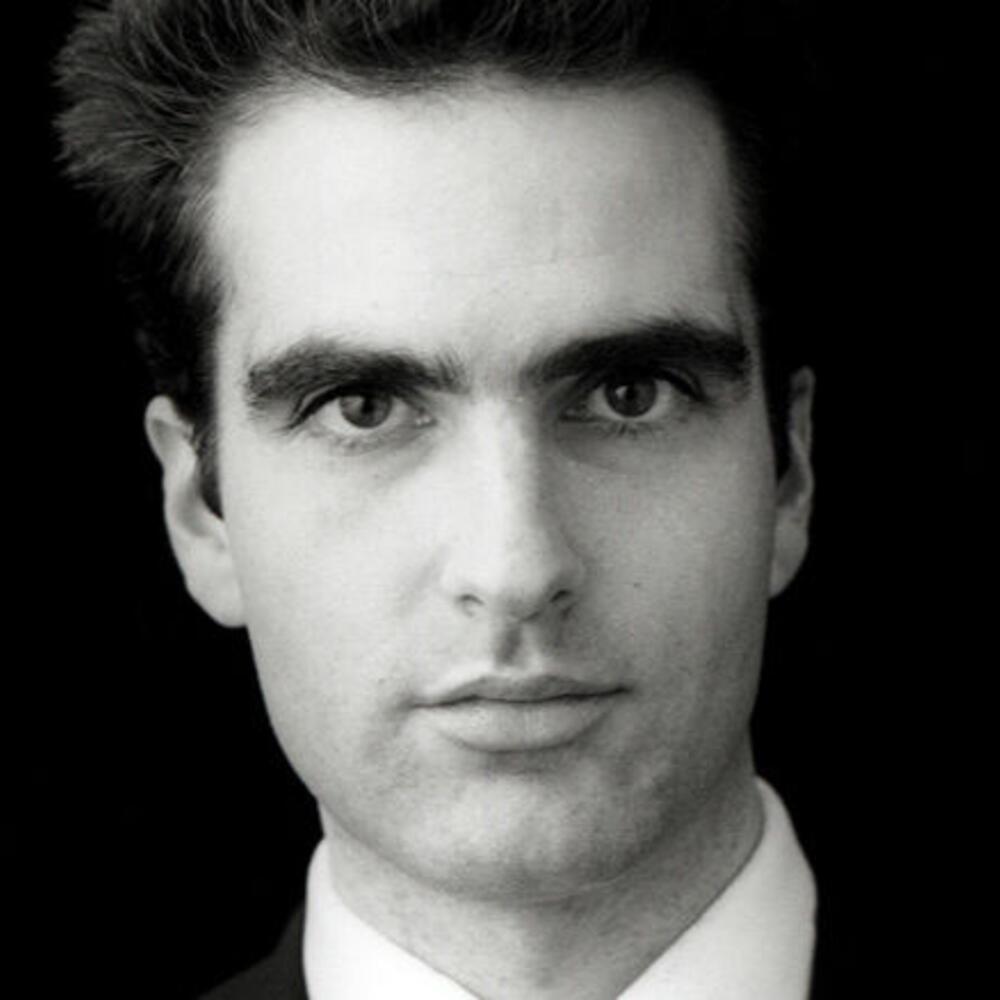
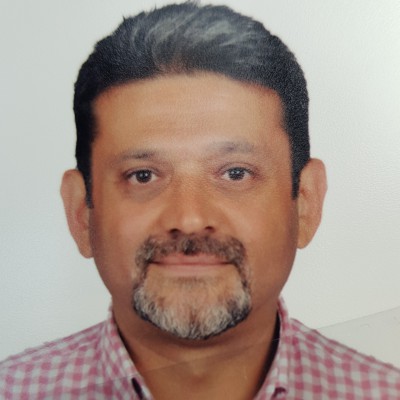
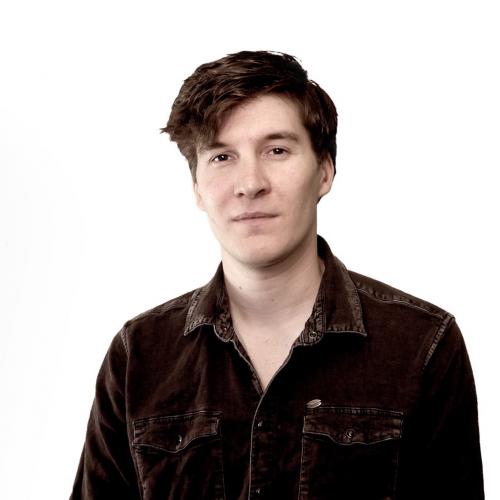
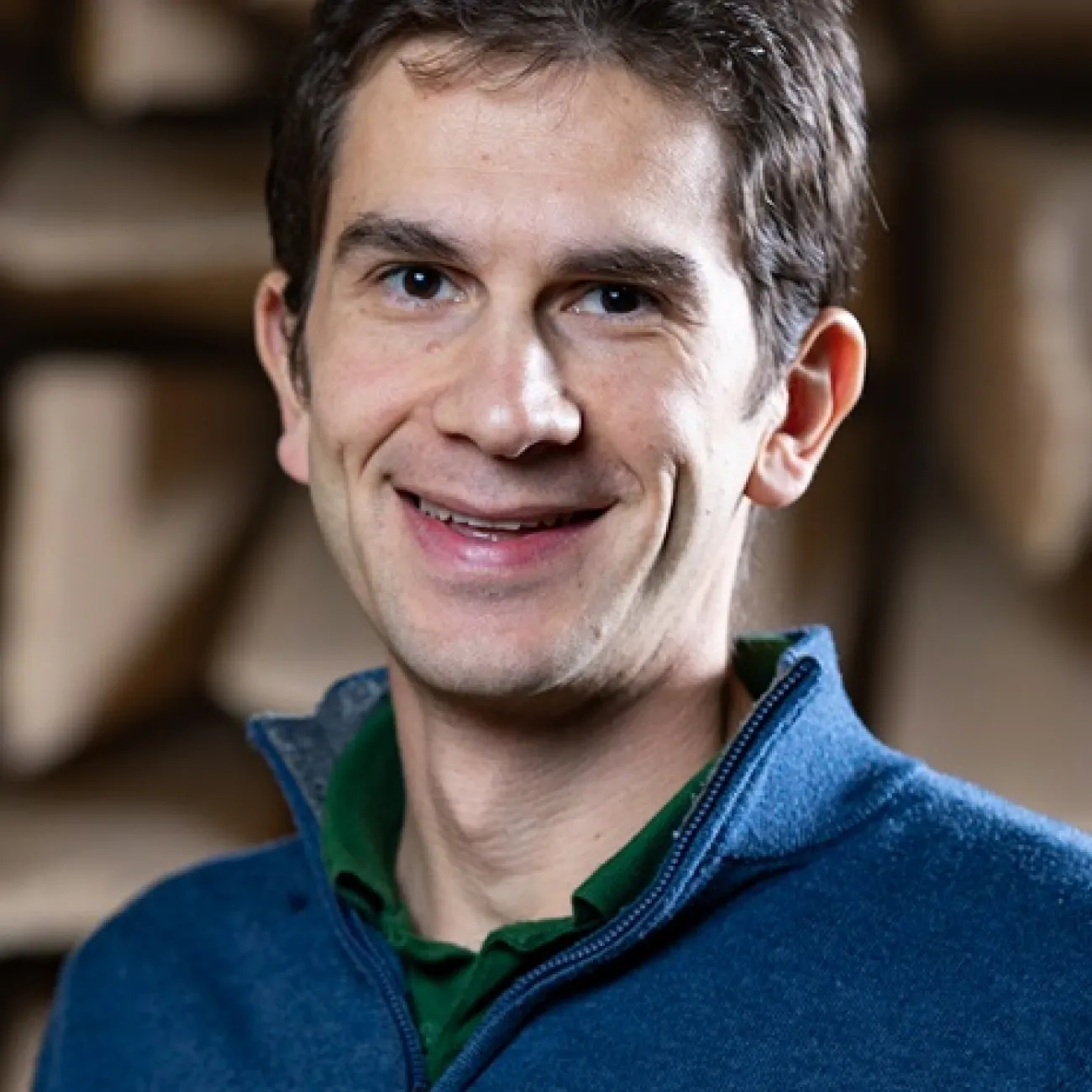
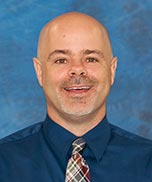
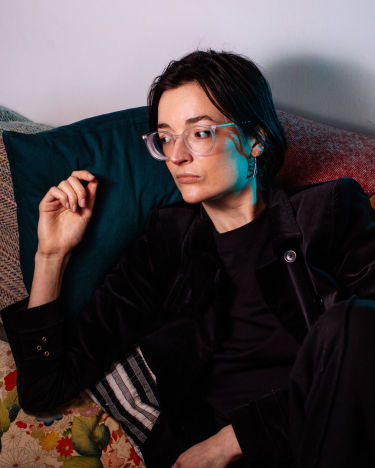
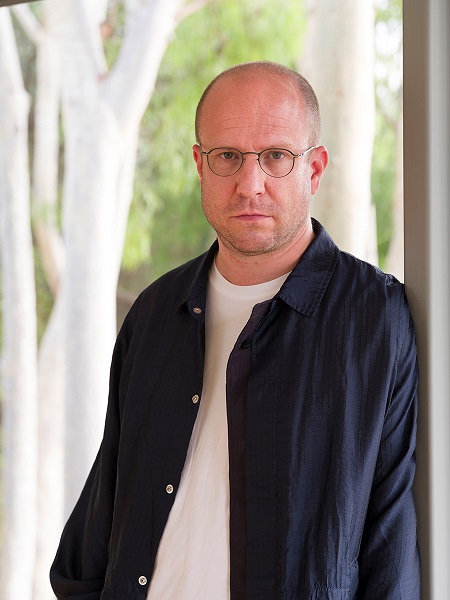
Angelika Güsewell is a Research Professor at HEMU (Haute École de Musique) within the HES-SO university system. She specializes in music accessibility, music therapy, and interdisciplinary education. Her work bridges music, healthcare, and technology, with a focus on inclusive practices for individuals with disabilities and mental health support. Key Projects: Leadership in projects like Concert inclusif (2024–2025) and SensiMUS exploring haptic feedback for hearing-impaired audiences. Co-created a care game ( a[µz]e-toi ) for adolescents in mental health care (2022–2024). Studied music's impact on workplace well-being ( Musicdrops@work , 2021). Conducted longitudinal studies on jazz graduates' career paths (Alumni Jazz projects, 2021–2023). Research Interests: Music's role in social inclusion, mental health, and pedagogical innovation. Collaborates with institutions like CHUV, HESAV, and international partners. Funding: Secured CHF 1.7M+ across projects from HES-SO, FNS, Innosuisse, and private entities. Active in grant-writing and international partnerships.
Cee Haines (they/them) holds the position of Professor of Sound Art and Composition with Technology at the Royal Northern College of Music (RNCM). Their work focuses on surreal and fantastical electronica, electro-acoustic music, and multimedia projects that blend live instrumentation with digital innovation. In 2019, they won the prestigious Oram Award for innovation in music and sound technologies. Teaching responsibilities include undergraduate courses on Composition with Synthesis and Found Sound and Electro-acoustic Composition and Live Improvisation to Moving Image , alongside postgraduate modules exploring internet culture's impact on music creation and foundational sound design in gaming platforms like Unity. Notable collaborations include extensive work with the London Contemporary Orchestra, producing electro-acoustic compositions premiered at venues such as the Royal Albert Hall (BBC Proms 2018) and Tate Modern. Their album The King (2018) received critical acclaim, described by The Wire as 'vast in scope, rich in execution.' Professional activities include membership on Brighter Sound’s EDI Board and advisory roles with Launchpad:Leeds. Their research explores interactive audio systems for video games, composition for emerging electronic instruments, and interdisciplinary multimedia practices.
Florian Birsak-Hayer is a Professor of Harpsichord, Basso Continuo, and Ensemble Direction at Mozarteum University's Department of Keyboard Instruments. He holds the title of Univ.-Prof. and serves as Deputy Department Head. His work focuses on Early Music performance, specializing in period instruments like harpsichord, fortepiano, and clavichord. Education and Training: While specific academic degrees aren't detailed, his extensive performance career and professorship imply advanced degrees in musicology and performance. He has conducted workshops and masterclasses globally, including at the Musicum Salzburg and Mozarteum Foundation. Research Interests: Dedicated to resurrecting forgotten Baroque and Classical repertoire, he explores historical performance practices, instrument authenticity (e.g., Anton Walter fortepiano), and interdisciplinary projects like the Mozart Fragments CD series. His work bridges musicology and performance, emphasizing contextually accurate interpretations. Recent Projects: Key works include recordings of Bach's Harpsichord Concertos, Mozart's Clavierkonzerte for multiple keyboards, and Haydn's Marianna Martinez concerto. He leads ensembles like ensemble federspiel and Petit Trianon , focusing on period instruments and collaborative chamber music. Awards: While no explicit prizes are mentioned, his contributions to Early Music revival and academic leadership are notable. He received the August Everding Prize (2003) with Isolde Hayer for their cello-piano duo work. Grants and Labs: Involved in projects like the Digital Mozart Edition (KV 457&475) and collaborations with institutions such as the Camerata Salzburg and Salzburg Festival. His research lab focuses on instrument restoration and performance pedagogy.
Assoc. Prof. Dr. Metin Baş is an Associate Professor at the Department of Electronic Commerce and Management, Faculty of Applied Sciences, Dumlupınar University in Kutahya, Turkey. He holds a PhD in Business from Dumlupınar University (2010) and has held academic positions since 1999, including Research Assistant, Lecturer, and roles in university administration such as Deputy Head of Department and Vice Dean. His research focuses on statistical analysis, financial performance evaluation, econometric modeling, and corporate sustainability. He has authored/co-authored over 30 books and peer-reviewed articles, with recent work emphasizing grey relational analysis, logistic regression, and multi-criteria decision-making techniques. Notable projects include sustainability examinations of university campuses and analyses of Turkey's economic and export dynamics. He received the TURKUAZ Achievement Award in 2023. His academic contributions span interdisciplinary studies in music research methodology, social sciences, and energy policy. He has served as an editor for multiple journals, including the Dumlupınar University Journal of Social Sciences. Key areas of expertise include quantitative decision methods, financial crisis impacts on banking sectors, and the application of statistical tools in organizational performance analysis. Education: Bachelor's in Statistics (Anadolu University, 1995) Master's in Numerical Methods (Anadolu University, 1999) PhD in Business (Dumlupınar University, 2010) Research Themes: Financial modeling, technostress in professions, energy efficiency, and organizational governance. Awards: Kütahya Dumlupınar University TURKUAZ Achievement Award (2023). Grants/Projects: 2015-2017 Sustainability Examination of Dumlupınar University Campus.
Prof. Dr. Özlem Coşkun is a full-time faculty member at Süleyman Demirel University's Department of Electrical and Electronics Engineering within the Faculty of Engineering and Natural Sciences. She holds a PhD in Physics and has extensive academic qualifications including degrees from the same university. Education: Bachelor's in Electronics and Communications Engineering (2002) Master's in Electronics and Communications Engineering (2005) Doctorate in Physics (2009) Research Focus: Her work centers on bioelectromagnetics, electromagnetic effects on biological tissues, medical electronics, and antenna design. Key research areas include: Electromagnetic exposure safety assessments Biotelemetry and implantable device design Antenna systems for wireless communication Health monitoring technologies Recent Article Trends: Recent publications emphasize: Electromagnetic field effects on biological systems (testicular tissue, blood cells) Advanced antenna designs (MIMO, patch, implantable) Arduino-based biomedical instrumentation Health monitoring systems for elderly care Grants & Labs: While specific grants aren't listed, her work suggests involvement in: Biomedical engineering research facilities Electromagnetic field measurement labs Collaborations with clinical institutions
Valentin Oman is a Lecturer for Piano at the Faculty of Music at JAM Private University for Jazz and Popular Music. He has been teaching since 2017 and previously held positions at the Amstetten Music School (2003–2013) and Vienna Conservatory (2013–2016). His artistic and pedagogical background includes studies in keyboard instruments of popular music at the University of Music and Performing Arts Vienna with Prof. Heribert Kohlich (1998) and a concert diploma from the Vienna Conservatory (1999). His research and teaching focus on jazz, popular music, and piano pedagogy. He actively collaborates with artists such as Andy Middleton, Lionel Lodge, and Nina Proll, and has produced albums like Raw (2021) and Grooveyard Vienna (2018). He also contributed to theater productions including der gezähmte Widerspenstige (2012) and die Fledermaus (2019) at the Wiener Metropol. Oman’s work spans live performances, studio recordings, and educational initiatives. His YouTube channel Grooveyard Vienna showcases collaborative projects, while his albums explore groove-based and experimental piano techniques. He remains active in both academic and performance contexts, blending pedagogical innovation with artistic creativity.
Gerald Peter is a Guest Lecturer in the Piano Department at JAM Music Lab University, blending his expertise in music performance, technology, and composition. He holds an MSc in Multimedia and Software Engineering from FH Technikum Wien and a BSc in Media Informatics from TU Wien, focusing on computer graphics and digital image processing. His research spans music technology innovation (e.g., MIDI-reactive visualizations, expressive digital instruments like ROLI Seaboard), genre fusion (progressive rock, jazz, cinematic scoring), and interdisciplinary multimedia art . Gerald pioneers hybrid approaches where algorithmic visualizations respond to live musical input, creating immersive audiovisual experiences. Recent creative works exhibit strong cinematic and progressive rock influences, often featuring complex arrangements and collaborations with vocalists/instrumentalists. Awards include placement in the Top 12 of the 2014 CINE Film Scoring Competition. As a performer and educator, Gerald has led international workshops for ROLI, Audio Modeling, and GeoShred across Europe and North America. He maintains active collaborations with industry innovators like Jordan Rudess (Dream Theater) and performs with projects including The Gerald Peter Project.
Dr. Giacomo Squicciarini is an Associate Professor in the Faculty of Engineering and Physical Sciences at the University of Southampton, affiliated with the Institute of Sound and Vibration Research (ISVR). He joined the ISVR in 2012 as a research fellow, later becoming a New Frontiers Fellow (2015), Lecturer (2019), and Associate Professor (2023). He leads the MSc in Acoustical and Vibration Engineering since 2020. His research focuses on railway noise and vibration, piano acoustics, and vibroacoustic modeling, with over 30 journal publications in these fields. Education: Graduated in Mechanical Engineering (Politecnico di Milano, 2008), PhD in piano soundboard vibroacoustics. Active projects include EU-funded initiatives like QuieterRail and ROLL2Rail , addressing railway noise mitigation and acoustic modeling. Teaching responsibilities include Dynamics, Acoustical Engineering Design, and Noise Control modules, employing innovative methods like in-class experiments and digital tools. Advising and grants: Supervises multiple PhD students and contributes to funded projects with sponsors like the European Union and Science and Technology Facilities Council. His work spans interdisciplinary collaborations in mechanical engineering, acoustics, and materials science. Labs/Teams: Integral member of ISVR, collaborating within the Dynamics Group. Research interests include theoretical noise modeling, piano acoustics experiments, and railway noise measurement techniques using microphone arrays.
Brent Edstrom is a Professor of Music at Whitworth University, teaching since 1995. His expertise includes jazz studies, composition, theory, and aural skills development. Education: M.M., Eastman School of Music B.M., Washington State University Edstrom's research centers on jazz improvisation and composition, with emphasis on transcribing and analyzing jazz piano masters like Oscar Peterson. He bridges traditional music scholarship with digital innovation through works like Musicianship in the Digital Age , exploring technology's role in modern music education and production. His creative output reveals dual trajectories: scholarly transcription projects documenting jazz piano techniques and original compositions spanning jazz ensemble works to orchestral pieces. Recent compositions like and there was light demonstrate symphonic ambition, while arrangements for entities like the Spokane Jazz Orchestra and American Idol concerts showcase versatility across performance contexts.
Pierre Michaud is an Associate Professor of Mixed Composition at the Faculty of Music of the University of Montreal, where he has been teaching since 2012. He serves as co-director of the Laboratory for Technology Integration in Music (LITEM) and is an active member of the Artistic Committee of the Société de musique contemporaine du Québec, the Canadian Music Centre, and the Canadian League of Composers. His professional activities are supported by major research agencies including the Quebec Research Funds (FQRSC), Canada Council for the Arts, and Quebec Arts Council. Michaud's research focuses on comprovisation, composer-performer collaboration, interdisciplinarity, interactive spaces, and new forms of musical representation. His work bridges traditional composition with electronic and digital technologies, exploring the relationship between acoustic instruments and electronic media. He has developed innovative approaches to mixed composition that incorporate algorithmic processes, interactive systems, and cross-cultural musical elements, particularly from Balinese gamelan traditions. His compositional output shows a clear trajectory toward increasingly sophisticated integration of technology with traditional musical forms, with recent works exploring non-linear narrative structures, hauntological concepts, and the relationship between Cuban popular music and electronic elements. The interdisciplinary nature of his work is reflected in collaborations across artistic disciplines and technological domains. Finalist, CBC Radio Young Composers Competition (2001) Opus Prize from Quebec Music Council for 'Le rêve de Grégoire' (2014) Michaud has supervised numerous graduate students through master's and doctoral programs, with thesis topics spanning mixed composition techniques, interactive music systems, cross-cultural musical integration, and theoretical approaches to contemporary composition. His research projects include the interdisciplinary Observatoire interdisciplinaire de création et de recherche en musique (OICRM) and initiatives focused on mixed composition pedagogy and technological sustainability in mixed music creation. He leads the Laboratory for Technology Integration in Music (LITEM), which serves as a hub for interdisciplinary research and creation at the intersection of music, technology, and other artistic disciplines.
Christopher Reali is an Associate Professor of Music (Music Industry) at Ramapo College of New Jersey's School of Contemporary Arts , joining in 2017. His work bridges popular music studies and music industry analysis , with a focus on regional cultural hubs like Muscle Shoals, Alabama. Ph.D. in Musicology, University of North Carolina at Chapel Hill M.A. in Musicology, Hunter College, CUNY M.S. in Music Education K-12, Aaron Copland School of Music, CUNY B.A. with Honors, Gallatin Division, New York University Reali's research examines local music scenes and their national impact, particularly through integrative frameworks combining musicology, ethnomusicology, sociology, and African-American studies . His 2022 monograph Music and Mystique in Muscle Shoals redefines the cultural legacy of this iconic recording community. His publications span journals like MEIEA Journal , Rock Music Studies , and Southern Cultures , while his conference presentations engage institutions such as the American Musicological Society and Society for American Music . As a practitioner, Reali brings hands-on experience from touring as a guitar technician and tour manager for artists like Chris Whitley and David Gray, enriching his teaching of courses such as History of Rock 'n' Roll , Advanced Business of Music , and Marketing and Management in the Music Industry . His scholarly work has been recognized with research grants from the Rock and Popular Music Institute and fellowships at the Library of Congress and the University of Alabama . Research Fellowship, Center for Popular Music Studies, Case Western University Dissertation Completion Fellowship, UNC Chapel Hill Lucas Miller Glass Summer Research Fellowship, UNC Chapel Hill James W. Pruett Summer Research Fellowships, Library of Congress
Ruzbeh Smiley is a PhD Research Fellow in Music Performance at the University of Agder, specializing in Artificial Intelligence applications within music production and audio engineering. His work bridges traditional analog methods with AI-driven tools to analyze their impact on creativity, innovation, and authenticity in music production. University: University of Agder Department: Department of Popular Music Smiley holds a Master's Degree in Music Business and Management from the University of Agder, a Degree in Music Production and Sound Recording from the University of Stavanger, and a foundational background in computer science and artificial intelligence. His research employs creative practice, autoethnography, and qualitative methods to study producer-AI interactions in contemporary recording studios. Research Trends: Smiley's work focuses on the intersection of AI, music technology, and artistic integrity. His 2024 publications analyze AI's transformative role in popular music production, while earlier works (2021-2024) document his technical contributions to live and studio recordings across genres like jazz, classical, and progressive rock. Professional Activities: Beyond research, Smiley is a progressive rock drummer, producer, and audio engineer with extensive experience in commercial album production. He has guest lectured on NFTs in the music industry and utilizes state-of-the-art studios and production technologies at the University of Agder. Labs & Infrastructure: Smiley works within the Popular Music Studies research group, leveraging advanced university facilities including high-end recording studios and production equipment to investigate AI's evolving role in modern music creation.
Dr Anna Appleby is a composer, performer, and educator based at the University of Sheffield as a Lecturer in Composition within the School of Languages, Arts and Societies . Her work bridges opera , ballet , and electronic music with a focus on community engagement and music education . She holds a first-class Music degree from the University of Oxford , where her studies were rooted in St Hilda's College’s feminist and musical history. Education: First-class degree in Music from University of Oxford Academic Affiliation: University of Sheffield (current), Royal Northern College of Music (Affiliate) Anna’s research interests combine collaborative composition , queer narratives , and neurodivergent representation in the arts. She explores multimedia performance , electronic integration in orchestral and operatic contexts, and music’s role in social cohesion . Her work often involves community co-creation and educational outreach . Her recent publications include Ghost (2024) , a digital Gesamtkunstwerk, and Bridges (2023) and Sonnet 43 (2023) focusing on emotional and instrumental interplay. Earlier works like Drought (2022) and Pay the Piper (2022) highlight collaborations with the BBC Philharmonic and youth ensembles. 2024: Associate Artist at Royal Northern College of Music 2022: YAM Awards for Best Opera for Young Audiences Anna mentors emerging composers and choreographers , with residencies at Rambert Dance Company (2016/17) and Joss Arnott Dance. She has secured grants from Arts Council England , PRS Foundation , and the RPS Drummond Fund . Her collaborations span Dane Hurst , Julie Cunningham , and Carolyn Bolton , with a consistent thread of innovative music-dance interplay .
Florian Hecker is a Professor at the Academy of Fine Arts Munich (AdBK Munich), where he leads the Sound and Experiment program, a cross-class initiative supported by the Bavarian Top Professorship Program. His work bridges sound art, digital synthesis, and auditory philosophy, with a focus on non-traditional sonic experiences and experimental listening. His research interests include synthetic sound, algorithmic composition, auditory perception, and the philosophical dimensions of sound. Hecker investigates sound as both abstract structure and sensory phenomenon, often working at the intersection of technology, art, and cognition. His practice emphasizes off-the-grid software environments, critical listening, and the materiality of sound media. The recent body of work and publications reflects a strong trend in machine-generated sound, formal systems, and the deconstruction of auditory norms. His projects often explore how sound shapes space, perception, and meaning beyond linguistic frameworks, utilizing experimental synthesis and spatial audio techniques. Florian Hecker has presented his work internationally at venues such as Galerie Neu (Berlin), Roy and Edna Disney CalArts Theater (Los Angeles), and Simian (Copenhagen), establishing himself as a leading figure in contemporary sound art. He has an extensive discography with labels including Editions Mego, Etat, GRM, and Pan, reflecting both artistic and research-oriented outputs. Notable works include Syn As Text [AC] , Statistique Synthétique , and Inspection II , which demonstrate rigorous engagement with formal and synthetic sound processes. He advises students interested in experimental sound practices through the Sound and Experiment platform, encouraging cross-disciplinary collaboration and independent research. The program hosts lectures and performances by prominent figures in sound and media theory, fostering a vibrant intellectual and artistic environment. Hecker's work is deeply embedded in a lab-like studio practice, where sound is treated as a medium for conceptual and sensory experimentation. The Sound and Experiment program functions as a dynamic research platform, integrating artistic production, philosophical inquiry, and technological innovation.
Jay Walls is an Associate Professor and Department Chair in the Department of Music at Harding University. He teaches a range of courses including Introduction to Music Composition, Counterpoint, Composition Lessons, and Hymnology. He is also the Director of the Arts & Life Series, contributing to the cultural and artistic life of the university community. His research and creative work focus on music composition across diverse styles—from avant-garde instrumental solos to neo-romantic choral and orchestral works. Influenced by his years in Florence, Italy, Walls integrates international cultural experiences into his pedagogy and artistic output. He actively mentors composition students, accompanying them on educational trips to meet professional composers and industry figures. The available publications reveal a strong emphasis on creative compositions, including orchestral works inspired by scientific discovery and song cycles rooted in historical themes. His works span vocal, chamber, and orchestral genres, reflecting both technical mastery and interdisciplinary curiosity. Jay Walls has not been listed as receiving any scientific awards in the provided materials. He advises music composition students and supports their professional development through experiential learning, though specific advisee names are not listed. There is no mention of external grants or funded research projects in the provided content. There is no information available regarding labs, research teams, or collaborative research groups associated with Jay Walls.