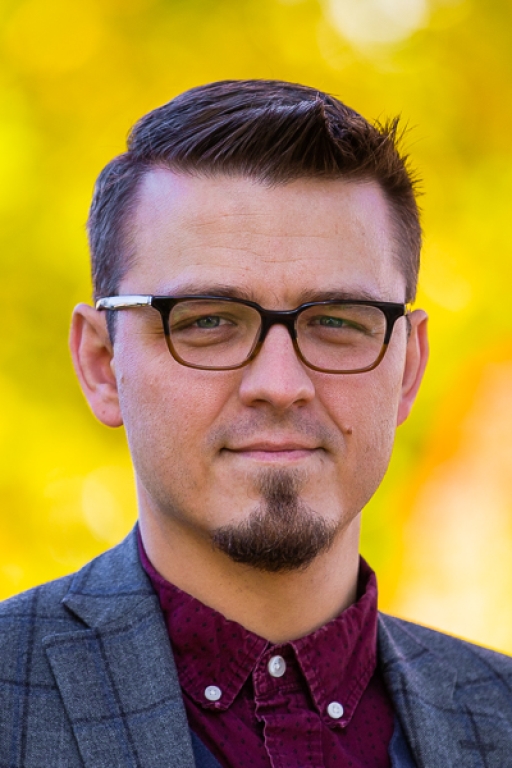
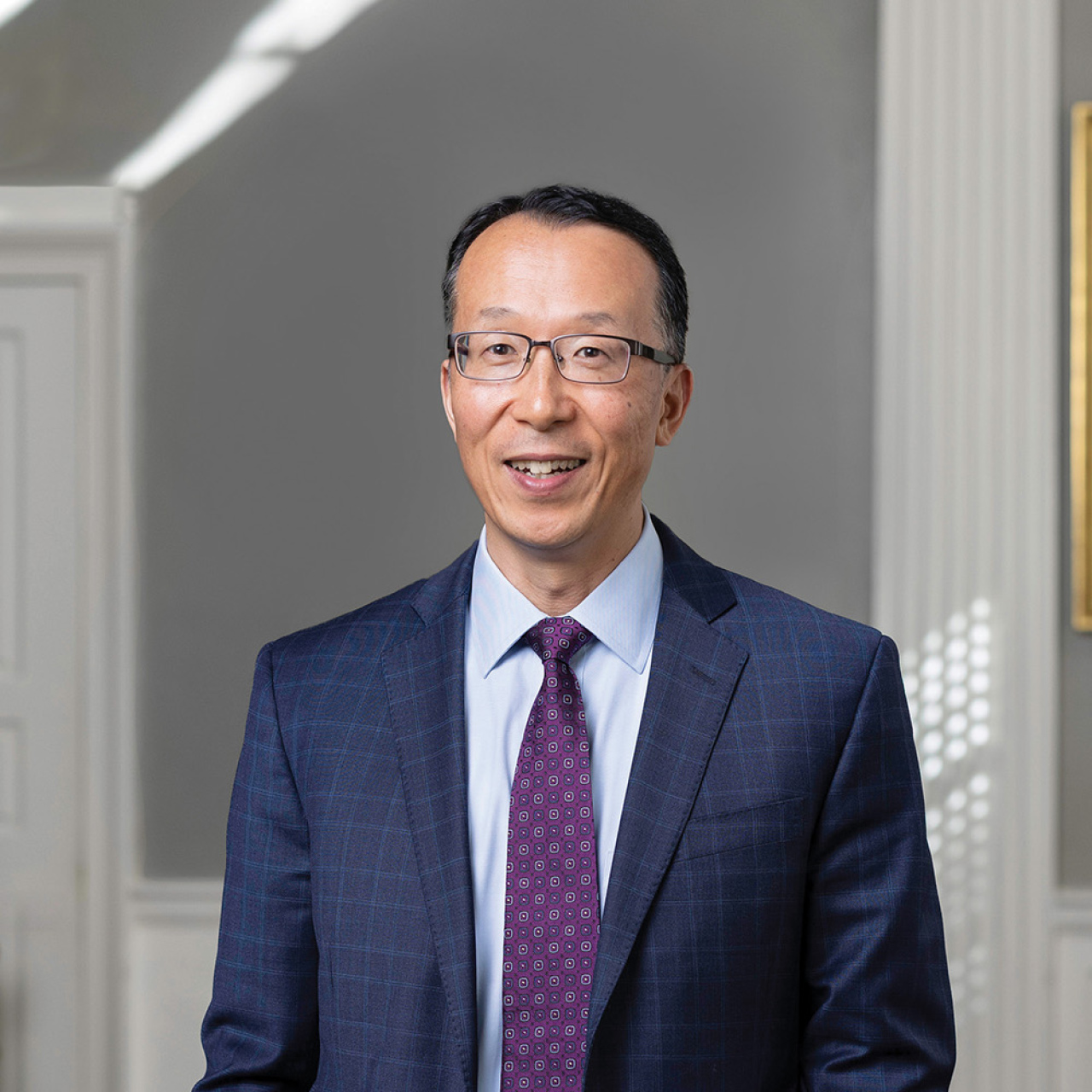
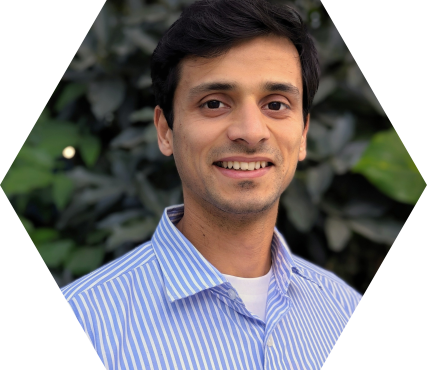
Wojciech Jarosz is an Associate Professor of Computer Science at Dartmouth College, affiliated with the College of Engineering and Computer Science. His research focuses on computer graphics, particularly light transport simulation, rendering algorithms, and digital fabrication. He co-founded the Visual Computing Lab and previously led the rendering group at Disney Research Zürich. Jarosz holds a Ph.D. and M.S. from UC San Diego and a B.S. from the University of Illinois Urbana-Champaign. His educational background includes studies in computer science and engineering, with a strong emphasis on graphics and rendering. Research interests span light transport simulation, Monte Carlo methods, appearance capture, and fabrication. Notable achievements include the Eurographics Young Researcher Award (2013) and the NSF CAREER Award (2019). Jarosz's work integrates theoretical rigor with practical applications, such as real-time rendering techniques and volumetric light transport. His lab develops tools for artistic authoring, including intuitive metaphors for volumetric lighting in animated films. Recent projects explore wave-optics BSDF models, optical heterodyne rendering, and unifying radiative transfer models. Key awards include the SIGGRAPH 2024 Best Paper Award and Neukom Institute prizes. His teaching includes courses on rendering algorithms, computer graphics, and computational photography. Jarosz collaborates with industry (e.g., Disney, NVIDIA) and advocates for diversity in computer graphics research.
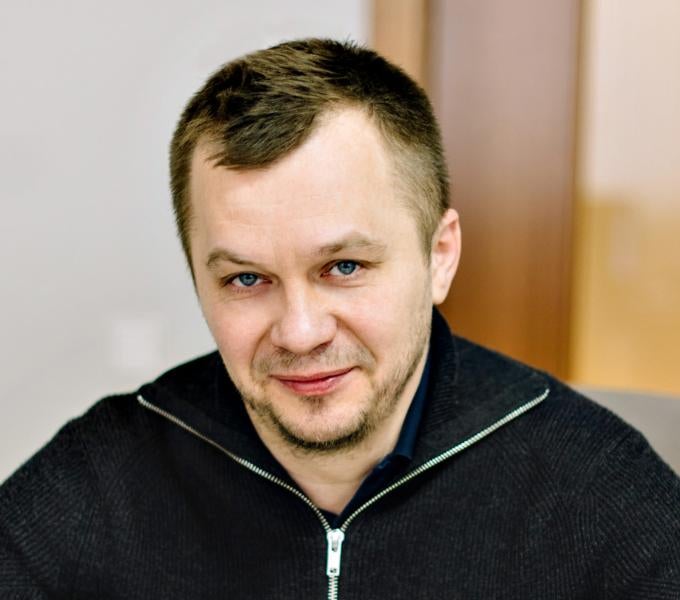
Tymofiy Mylovanov is an Associate Professor of Microeconomics at the University of Pittsburgh. His research focuses on political economy, macroeconomic policy design, blockchain applications in governance, and post-conflict reconstruction strategies with a particular emphasis on Ukraine and Eastern Europe. His work bridges theoretical economics with practical policy analysis, addressing issues such as public procurement reforms, sanctions impact on businesses, and the design of fiscal frameworks for war-torn economies. Mylovanov has extensively studied the economic consequences of geopolitical conflicts, including the Russia-Ukraine war, and advocates for institutional reforms to ensure democratic stability and economic resilience. Key research themes include: Optimal mechanisms for foreign aid allocation Blockchain's role in public sector transparency Anti-corruption frameworks in post-authoritarian states Economic policy responses to hybrid warfare Mylovanov's recent publications analyze Ukraine's macroeconomic challenges, the effectiveness of international sanctions, and innovative governance models leveraging technology. His work frequently appears in high-impact policy journals and is cited in global policy discussions about Eastern European development.
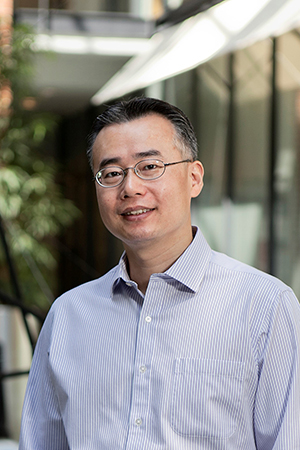
Jing Zeng is an Assistant Professor of Computational Communication Science at the University of Zurich, Switzerland. She holds a PhD in Media and Communication from Queensland University of Technology (2017), an MSc in Social Science of the Internet from the Oxford Internet Institute (2013), and a BA in International Communications from the University of Nottingham (2012). Her research focuses on digital platforms, computational social science, AI governance, and misinformation dynamics. She has held academic appointments at Utrecht University (2022–2024) and fellowships at institutions including the Max Planck Institute for the History of Science and the Weizenbaum Institute. Zeng is a leader in digital media research, serving on editorial boards for journals such as Big Data & Society and Convergence , and co-editing the Technology, Power & Society book series. Her work bridges critical platform studies with empirical analyses of conspiracy theories, climate communication, and TikTok culture. Zeng’s research has been recognized through awards including the ICA Computational Methods Interest Group Top Paper (2020) and the Utrecht University Teaching Award (2023). She actively engages in public discourse through media commentaries in The Guardian , The Atlantic , and Science|Business , addressing topics like AI ethics, platform governance, and disinformation. Her current projects explore AI imaginaries, visibility moderation on TikTok, and cross-cultural digital activism. Education: PhD (QUT), MSc (Oxford), BA (Nottingham) Affiliations: Association of Internet Researchers (AoIR Executive Board), IPIE Scientific Network
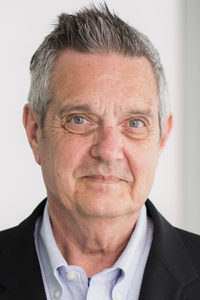
Austin Rovinski is an Assistant Professor in the Department of Electrical and Computer Engineering at New York University’s Tandon School of Engineering. He specializes in chip design, electronic design automation (EDA), and open-source hardware methodologies. His research focuses on VLSI design, domain-specific accelerators, and chiplet-based systems. Prior to NYU, he held a postdoctoral position at Cornell University and earned all his degrees (Ph.D., M.S., and B.S.) from the University of Michigan. Education: Ph.D., Electrical Engineering, University of Michigan - Ann Arbor Master’s, Electrical Engineering, University of Michigan - Ann Arbor Bachelor’s, Electrical Engineering, University of Michigan - Ann Arbor Research Focus: Developing open-source EDA frameworks like OpenROAD Optoelectronic interconnect systems for 2.5D packaging Agile hardware design methodologies Reconfigurable sparse matrix accelerators RISC-V-based manycore processors (e.g., Celerity project) Key Contributions: Austin led the development of the OpenROAD RTL-to-GDS flow and contributed to the Sirius and Celerity projects. His work emphasizes reproducibility, democratizing chip design through open-source tools. Awards: IEEE Micro Top Picks (2015) Michigan EECS Outstanding Research Award (2016) NSF Graduate Research Fellowship Honorable Mention (2017, 2018) Advising & Grants: Actively mentors graduate students in chip design and EDA. His research is supported by NYU’s Tandon School of Engineering and collaborations with industry partners. Labs & Teams: Core contributor to the OpenROAD project, part of NYU’s hardware design and EDA initiatives, and collaborator on the Celerity manycore processor project.
Xiaolei Fang is Associate Professor in the Edward P. Fitts Department of Industrial and Systems Engineering at North Carolina State University. His research develops advanced statistical learning, deep learning, and optimization methods for industrial applications involving high-dimensional data, with particular focus on condition monitoring, failure prognostics, and system performance optimization. He holds a PhD in Industrial Engineering and MS in Statistics from Georgia Tech. Professor Fang's research integrates machine learning with industrial engineering to solve complex problems in predictive maintenance, quality control, and energy systems. His methodological innovations include federated learning approaches for privacy-preserving prognostics, distributionally robust machine learning models, and tensor-based statistical methods for manufacturing quality diagnostics. He has received multiple prestigious awards including the ISE Outstanding Research Award (2024), Sigma Xi Best PhD Thesis Award (2019), and SAS Data Mining Best Paper Award (2016). His research has been funded by NSF, Cisco Systems, and the US Department of Energy. Professor Fang teaches courses in Quality Design & Control, Statistical Models for Systems Analytics, High-Dimensional Data Analytics, and Optimization Models. He has supervised 9 PhD students to completion and currently advises 7 graduate students working on projects spanning federated learning for prognostics, tensor-based quality control, and machine learning applications in manufacturing and energy systems.
Quan Zhou is a Professor leading the Robotic Instruments Group at the Department of Electrical Engineering and Automation, School of Electrical Engineering, Aalto University, Finland. He holds an M.Sc. in Control Engineering and a Dr.Tech. in Automation Technology from Tampere University of Technology. His research focuses on miniaturized robotics, robotic manipulation using contact, acoustic, magnetic, interfacial, and fluidic methods, integrating physics, mechatronics, and machine learning to address challenges in dexterous manipulation with applications in biomedicine, materials science, and industrial technologies. He directs the Master’s Programme in Automation and Electrical Engineering (AEE) at Aalto and coordinates the European Robotics Association’s Topic Group on Miniaturized Robotics. He has led the EU FP7 project FAB2ASM and chaired international conferences like MARSS 2019. Notably, he received the 2018 Anton Paar Research Award for Instrumental Analytics and Characterization. His research spans fundamental methodologies and practical applications, emphasizing interdisciplinary innovation. Recent work includes advancements in fluid-driven manipulation, biomimetic robotics, and acoustic particle control. His contributions bridge theoretical frameworks and real-world automation solutions, with publications in journals like Advanced Intelligent Systems , Nature , and Physical Review E . Prof. Zhou’s leadership roles include coordinating the EIT Digital Master's Programme in Autonomous Systems and chairing IEEE Finland robotics chapters. His work has been recognized through grants and awards, reflecting his impact on robotics and automation research and education.
Dr. Lauren Hammond serves as Lecturer in Teacher Education at the Institute for Education, Teaching and Leadership within the Moray House School of Education and Sport at the University of Edinburgh, a position she assumed in August 2022 after eight years at IOE, UCL's Faculty of Education and Society. Her academic career bridges secondary school teaching in London and Singapore with higher education expertise in geography teacher education, curriculum development, and doctoral supervision. Her educational background includes a PhD in Geography Education from University College London (2020), an MA in Geography Education from the Institute of Education (2009), a PGCE in Secondary Geography from the University of Bristol (2006), and a BA (Hons) in Geography from King's College London (2004). This foundation supports her interdisciplinary research at the intersection of children's geographies, geography education, and geographies of education. Dr. Hammond's research centers on children's rights, urban educational spaces (particularly London), and empowering young people through geography. She employs participatory methods including storytelling and mapping with youth, investigating how educational spaces reproduce social injustices and how geographical concepts illuminate educational processes. Her work critically examines geography's construction in schools and universities while exploring teacher education for complex socio-political contexts. Her recent publications reveal strong thematic continuity in children's geographies and geography education, with growing emphasis on race, climate change, and pandemic research ethics. Key trends include participatory methodologies, urban justice frameworks, and critical analyses of teacher development in volatile educational landscapes. Dr. Hammond holds significant professional recognition including: Fellow of the Royal Geographical Society (FRGS) Senior Fellow of the Higher Education Academy (SFHEA) She actively supervises postgraduate students and has secured competitive research funding including UCL's Centre for Teachers and Teaching Research grant (£3,500) for race and educational spaces (2023), an IOE Early Career Impact Fellowship (£1,000) on children's urban rights (2021), and seed funding for PGCE mentoring evaluation (£8,317.50, 2017). Her collaborative approach extends to organizing major conferences and leading cross-institutional networks. As deputy secretary of the RGS's Geography and Education Research Group and membership officer of the Geographies of Children, Youth and Families Research Group, she actively shapes research communities. Her leadership extends to the Geography Education Research Collective and Geographical Association's special interest groups, fostering national and international scholarly collaboration.
Olof Bälter is a Professor in Computer Science at KTH Royal Institute of Technology, affiliated with the Division of Media Technology and Interaction Design within the School of Electrical Engineering and Computer Science. He is the founder of the Technology-Enhanced Learning research group and holds a focus on learning engineering and human-computer interaction. His research interests center on technology-enhanced learning , question-based learning , learning analytics , AI in education , and inclusive pedagogy . A consistent theme in his work is improving efficiency in education and daily life through digital tools. He developed the Pure Question-Based Learning (Pure QBL) methodology, a digital Socratic approach that enhances student engagement and learning outcomes. His work extends to wellness in education through initiatives like walking seminars, and he investigates digital interventions for mental health, such as online Cognitive Behavioral Therapy (CBT) courses. His recent publications highlight trends in AI-generated educational content , learning efficiency , digital pedagogy , and inclusive course design , with applications in computer science education, language instruction, and global development. His research often employs experimental and data-driven methods, including randomized controlled trials and learning analytics. Teacher of the Year at the Surveying program KTH's Pedagogical Prize Higher Education Hero STINT Excellence in Teaching Scholarship (2008 and 2013) Olof Bälter has supervised numerous courses in programming, computer science, media technology, and learning engineering. He has collaborated with institutions such as Stanford University, Williams College, Region Stockholm, Stockholm University, and organizations like Promobilia and Begripsam. His projects aim to scale effective learning methods globally and make education more accessible and efficient. He leads research on the effectiveness of Pure QBL for students with ADHD and is involved in developing digital tools for health literacy and professional development in Ethiopia and Rwanda. His work bridges theory and practice, aiming to transform educational delivery through innovation and evidence-based design.
William B Gartner serves as the Bertarelli Foundation Distinguished Professor of Family Entrepreneurship at Babson College's F.W. Olin Graduate School of Business, where he also directs research at the Bertarelli Institute for Family Entrepreneurship. Having joined Babson's faculty in 2017, Gartner brings over 40 years of experience studying entrepreneurial phenomena, with particular expertise in family entrepreneurship dynamics. He previously held distinguished chairs at the University of Southern California and Clemson University, establishing himself as a leading scholar in the field. Gartner earned his PhD, MBA, and BBA from the University of Washington, forming the foundation for his extensive research career. His academic journey began during entrepreneurship's early days in the late 1970s when he took one of the first entrepreneurship courses as an MBA student at the University of Washington, when only six students initially enrolled in the class. Gartner's research primarily explores how families act entrepreneurially, examining topics including entrepreneurial legacy, intergenerational knowledge transfer, and the transformation of family businesses across generations. His work bridges entrepreneurship theory with practical applications, particularly focusing on how entrepreneurial legacies can drive innovation in family businesses. He is particularly interested in the linguistic innovations entrepreneurs employ and how storytelling shapes entrepreneurial identity and practice. His scholarship has evolved to incorporate humanities perspectives, recognizing that literature, philosophy, and history provide valuable insights into entrepreneurial thinking and behavior. Analysis of Gartner's recent publications reveals a strong emphasis on family entrepreneurship as an ongoing process rather than a static state, with increasing attention to methodological innovation in entrepreneurship research. His work demonstrates growing interest in the role of narrative, visual methods, and qualitative approaches to understand complex entrepreneurial phenomena. The research shows consistent focus on family business succession as transformation rather than simple transfer, with increasing attention to adolescent entrepreneurial development and the influence of parenting styles. 2025 — Top 1% of Scholars in all subjects, Stanford/Elsevier's Top 2% Scientist Rankings 2024 — The FamCap25 – The Top FamilyEnterprise Academics, FAMILY CAPITAL MAGAZINE 2022 — Justin G. Longnecker Fellow, United States Association of Small Business and Entrepreneurship 2016 — Dedication to Entrepreneurship Award, Entrepreneurship Division, Academy of Management 2013 — Foundational Paper Award, Entrepreneurship Division, Academy of Management 2005 — International Award for Entrepreneurship and Small Business Research Gartner actively mentors doctoral students and early-career researchers, frequently collaborating on publications addressing complex family business dynamics. His editorial roles as Special Issue Editor for Entrepreneurship and Regional Development and Academy of Management Perspectives demonstrate his influence in shaping research agendas. He has secured significant research funding supporting studies on entrepreneurial legacy, family business succession, and adolescent entrepreneurial development, though specific grant amounts aren't detailed in the available materials. As Director of Research at the Bertarelli Institute for Family Entrepreneurship, Gartner leads initiatives connecting academic research with practical applications for family businesses. His work emphasizes the transformative potential of entrepreneurship within family contexts, challenging traditional notions of family business succession as mere transfer of ownership. Through workshops and seminars, he helps families explore how entrepreneurial legacies can lead to new innovations while preserving core values across generations.
Dr Joanna Anderson is a Senior Research Associate in the Department of Psychiatry at the University of Cambridge and a Chartered Psychologist specializing in clinical and neuropsychology. Since completing her PhD in 2004, she has integrated academic research with clinical practice focused on children and young people with special educational needs and disabilities. Her research centers on child and adolescent mental health through: School-based intervention development and evaluation Early identification systems for mental health difficulties Wellbeing program implementation in community settings Digital mental health technologies for personalized care She employs mixed-methods approaches to design complex interventions that improve access to mental healthcare and outcomes for young populations. Dr Anderson is affiliated with the Child and Adolescent Resilience and Mental Health (ChARM) research group and supervises PhD students, though no consultancy services are available. Her work bridges academic research with practical healthcare applications to address critical gaps in youth mental health support.
Olga Kokshagina serves as an Associate Professor in Innovation & Entrepreneurship at The University of Sydney, with adjunct research appointments at Monash University's Emerging Technology Lab and the UNU Hub - Learning Planet Institute. She is also an active member of the French Digital Council. Her research program investigates technology-mediated collaboration in complex innovation systems, focusing on healthcare transformation, deep tech commercialization, and co-design methodologies. Kokshagina has led high-impact projects with global institutions including the World Health Organization, OECD, STMicroelectronics, Vall d’Hebron Hospital, and Roche, demonstrating strong translational research capabilities. Her scholarly work centers on value-based healthcare innovation, digital platform governance, and AI-enhanced collaborative systems. She examines how organizational capabilities evolve during technological transitions, particularly in healthcare ecosystems, and investigates regulatory frameworks for algorithmic control in digital markets. Kokshagina's research bridges theoretical innovation management with practical applications, evidenced by her co-founding of Ninti—an initiative advancing women's health in workplace environments—and her Open Covid-19 crowdsourcing campaign that mobilized global expertise during the pandemic. Analysis of her 2021-2025 publications reveals a cohesive trajectory examining innovation in socio-technical systems. Key themes include value digitalization in healthcare, mission-oriented interdisciplinary collaboration, and the impact of big data on technology management. Her work consistently addresses grand challenges through mixed-methods approaches, spanning conceptual frameworks in journals like Research Policy to applied studies in Technovation and R&D Management, with increasing focus on quantum readiness and AI-augmented learning systems. No scientific awards are documented in the provided materials. Kokshagina currently holds a 2025 research grant for "Co-designing societal readiness and scenario building for quantum" through the University of Sydney Nano Institute/Catalyst program. While no student supervision activities are mentioned, her collaborative projects involve multi-institutional teams across industry, government, and academic sectors. Kokshagina maintains active roles within the University of Sydney Nano Institute and contributes to international policy discourse through the French Digital Council. Her Ninti initiative exemplifies her commitment to human-centered innovation, while ongoing collaborations with healthcare providers like Roche and Vall d’Hebron Hospital demonstrate sustained engagement with real-world implementation challenges in value-based care systems.
Eero Vaara serves as a Visiting Distinguished Professor in the Department of Management Studies at Aalto University, where his research centers on organizational and strategic change through discursive and narrative lenses. His work critically examines strategy processes, radical transformations like mergers and acquisitions, institutional legitimation, multinational corporation dynamics, and historical perspectives on management. His research interests encompass organizational change, strategic discourse, narrative analysis, institutional theory, and multinational corporate identity. Vaara investigates how language constructs organizational realities during crises, mergers, and cross-cultural interactions, with particular attention to power dynamics in identity politics and the role of historical narratives in strategic renewal. His scholarship bridges theoretical rigor with practical implications for managing complex change in global contexts. Recent publications (2020-2022) reveal consistent thematic focus across top management journals including Academy of Management Journal and Strategic Management Journal. Key trends include the interplay of language and social inequality during global crises like COVID-19, entrepreneurial phenomena in isolated economies such as North Korea, strategic ambiguity in organizational protection, and national identity construction within multinational corporations. His methodological innovations integrate critical discourse analysis with computational approaches like structural topic modeling. Scientific awards highlight his scholarly impact: Best Article Finalist 2023 (Academy of Management Discoveries) 2014 OMT Best Published Paper Award for advancing theoretical understanding of organizations While specific advising relationships and grant funding details aren't documented in the source material, Vaara's collaborative publications demonstrate extensive international research partnerships. His work with scholars across Europe and North America indicates active supervision of doctoral research and leadership in multinational research consortia, particularly in discourse-focused organizational studies. Though laboratory affiliations aren't specified, his methodological work suggests engagement with digital humanities research groups and discourse analysis laboratories, especially evident in publications combining computational text analysis with critical theoretical frameworks.
Prof. Dr. Johanna Heitzer is a University Professor for Mathematics Education at RWTH Aachen University since 2011. She leads the Teaching and Research Area of Mathematics Education within the university's mathematics department. Her office is located in Room 352 of the Kreuzherrenstraße 2 building in Aachen. She serves as co-editor of the journal 'mathematik lehren,' co-author of the 'Mathematics - New Ways' textbook series, and holds numerous committee positions including membership in the Faculty Advisory Board and Structural Commission of the Center Council. 1989: High school diploma 1989-1994: Mathematics and Physics Teacher Training at RWTH Aachen 1994-1996: Traineeship at Aachen Teacher Training College 1997: Research assistant at University of Münster 1998-2007: Mathematics and Physics teacher at Korschenbroich Gymnasium 2007-2010: Scientific assistant and doctorate at RWTH Aachen 2011-present: University Professor at RWTH Aachen Professor Heitzer's research focuses on the training and further education of mathematics teachers, development of contemporary teaching materials, applied and interdisciplinary mathematics, and the transition from school to university. Her work emphasizes concept formation, linguistic communication in mathematics, and the historical development of mathematical ideas as teaching resources. She investigates mathematics-specific learning and cognitive processes through multiple research projects including the Aachen school-university project iMPACt. Her recent scholarly output demonstrates a strong trend toward integrating digital technologies in mathematics education, particularly 3D printing and e-learning tools. She has increasingly focused on the social relevance of mathematics, exploring concepts of fairness, sustainability, and citizen empowerment through mathematical modeling. Her work bridges theoretical mathematics education with practical classroom applications, maintaining a strong connection to both historical perspectives and contemporary educational challenges. Special prize from Sparkasse Bad Hersfeld-Rotenburg for best mathematics Abitur (1989) Borchers Plaque for doctoral examinations passed with distinction (2011) DMV honor as Mathemaker of the Month (2013) Brigitte Gilles Prize 2013 for the MINT-L4 Center Professor Heitzer has supervised numerous doctoral students, serving as primary or secondary advisor for at least nine PhD dissertations between 2016-2021. Her research projects include the School-University Project MathePlus Aachen (iMPACt), e-Learning 'Mathematics for Civil Engineers,' and the development of mathematics items for StudiChecks NRW. She has secured funding through the Quality Initiative for Teacher Education (both phases) and participates in the ComeIn project focused on digitalization in teacher training. Her grants consistently emphasize practical applications of mathematics education research with direct impact on classroom practice. As a founding member of the MINT-L4@RWTH center and initiator of the working group Mathematical Education for Sustainable Development, Professor Heitzer has established significant collaborative structures. She participates in the Subject Didactics Forum at the Teacher Training Center of RWTH Aachen and has served in leadership roles including Chair of the Center Council (2014-2016) and Board member of the Teacher Training Center (2014-2017). Her work connects with national and international networks through her membership in the Society for Mathematics Education (GDM), the German Association for Mathematics and Science Education (MNU), and the German Mathematical Society (DMV).
James S. Kim is a Professor of Education at Harvard University's Graduate School of Education, where he conducts policy-relevant research focused on improving literacy outcomes for low-income students and struggling readers. With an Ed.D. from Harvard University (2002), he leads the READS Lab (Research Enhances Adaptations Designed for Scale in Literacy), a research team that partners with school districts to solve literacy challenges through evidence-based interventions. Dr. Kim's research centers on understanding how building students' domain knowledge and reading engagement can foster long-term improvements in reading comprehension. His work emphasizes experimental design and evidence-based interventions, with a particular focus on addressing educational inequality. His research interests include early education, education policy, evidence-based intervention, human development, inequality and education gaps, informal and out-of-school learning, language and literacy development, and teachers and teaching. Kim's most significant contribution is the Model of Reading Engagement (MORE), a spiraled and sustained content literacy intervention co-developed with schoolteachers that has been shown to improve first to third-grade students' reading comprehension in science, English language arts, and math. Notably, research on MORE meets WWC (What Works Clearinghouse) standards without reservation, and long-term follow-up suggests the intervention's impact persists through fourth grade. His publications reveal a consistent focus on content literacy, domain knowledge development, and transfer effects in reading comprehension. Research on MORE meets WWC standards without reservation Long-term effects of MORE persist through fourth grade Commitment to Open Science principles (open data, open materials, preregistration) As a servant leader, Kim builds long-term partnerships with school districts to implement literacy interventions at scale. His READS Lab promotes open science practices while developing practical solutions to literacy challenges. His research on summer reading interventions, parental text messaging, and classroom-based content literacy approaches demonstrates his commitment to translating research into practice. Kim's current work includes scaling the MORE intervention to improve reading comprehension for high-needs students in moderate to high poverty schools through a Department of Education-funded project (2024-2028).
Karthik Menon serves as an Assistant Professor with a joint appointment in the Woodruff School at Georgia Institute of Technology and the Coulter Department of Biomedical Engineering. His research integrates fluid mechanics, computational modeling, and data-driven methodologies to address critical challenges in healthcare, renewable energy, and bio-inspired engineering systems. His academic credentials include: Ph.D. in Mechanical Engineering, Johns Hopkins University (2021) M.S. in Mechanical Engineering, Johns Hopkins University (2019) B.E. in Mechanical Engineering, Birla Institute of Technology and Science, Pilani, India (2015) Menon's research program centers on three interconnected domains: cardiovascular flows for personalized treatment of heart disease, fluid-structure interactions in biological systems like heart valves and bio-mimetic robots, and vortex-dominated flows for renewable energy applications. His approach combines high-fidelity computational modeling with machine learning to uncover fundamental physics and develop clinical solutions, such as cardiovascular digital twins for non-invasive risk assessment. Current projects focus on patient-specific hemodynamics using CT imaging and uncertainty quantification to improve surgical planning. Analysis of his 15 most recent publications (2023-2025) reveals a dominant focus on advancing multi-fidelity computational frameworks for cardiovascular applications. Key trends include Bayesian uncertainty quantification, zero-dimensional solver development, and integration of clinical imaging data to create predictive digital twins. His work bridges fluid dynamics with clinical cardiology, targeting improved outcomes in coronary artery disease and Kawasaki-related complications through physics-informed machine learning. Menon's scholarly contributions have been recognized through competitive awards: WCCM-PANACM 2024 Travel Award, U.S. Association for Computational Mechanics (2024) Future Faculty Symposium Travel Award, Society of Engineering Science Conference (2023) Mark O. Robbins Prize in High-performance Computing, Johns Hopkins University (2021) Corrsin-Kovasznay Outstanding Paper Award, Johns Hopkins University (2020) Prosperetti Travel Award, Johns Hopkins University (2017) Mechanical Engineering Departmental Fellowship, Johns Hopkins University (2016) As principal investigator of the ComBiNE Fluid Dynamics Lab, Menon mentors graduate students in developing computational tools for fluid-structure interaction problems. His collaborative projects with cardiologists at Stanford and Emory hospitals translate engineering principles into clinical applications for cardiovascular disease management. Current grant activities focus on NSF and NIH-funded initiatives for uncertainty-aware cardiovascular modeling and bio-inspired flow energy harvesting. The ComBiNE Fluid Dynamics Lab operates as an interdisciplinary hub where engineers, clinicians, and data scientists collaborate on fluid mechanics challenges. Current lab initiatives include developing real-time hemodynamic simulators for surgical planning, creating reduced-order models for cardiac device optimization, and investigating vortex dynamics in fish schooling for underwater vehicle design. The lab maintains strong partnerships with Children's Healthcare of Atlanta and the Parker H. Petit Institute for Bioengineering and Bioscience.