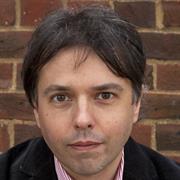
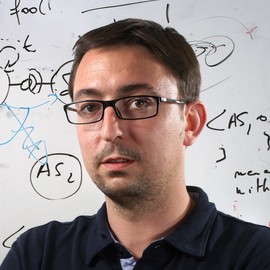
Professor George Buchanan is a leading researcher in human-computer interaction and digital libraries at RMIT University . His work bridges information science, digital humanities, and health informatics, focusing on usability in sensitive contexts like healthcare and misinformation. Deputy Dean, Research at RMIT University Former Director, University of Melbourne iSchool Research Interests: Digital information interaction Health and aging informatics Disinformation analysis Mobile interface design Digital library systems Key Contributions: Developed mobile web usability benchmarks, spatial hypertext tools, and thermal feedback interfaces. Currently seeking PhD students for 2025 projects on digital browsing and view change dynamics. Awards: Over twenty best paper awards and Honorary Life Fellow of the Royal Society of Arts. Advising: Accepting Masters/PhD supervision in information interaction and digital health domains.
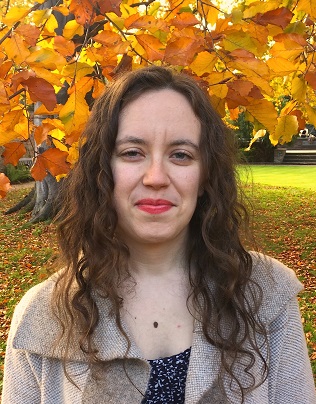
Elizabeth Archibald is a Teaching Associate Professor in the Department of History at the University of Pittsburgh's Kenneth P. Dietrich School of Arts and Sciences. She specializes in medieval European cultural and intellectual history, particularly focusing on education, literacy, and the history of the book. Her research bridges academic scholarship with public engagement through her blog 'Ask the Past' and popular book of historical advice. PhD in History from Yale University Visiting Assistant Professor at Johns Hopkins University (2010–2016) Her research interests include Carolingian educational networks, medieval pedagogical methods, women's book ownership in early modern Europe, and the reception of classical texts. She has published widely on topics such as medieval schoolbooks, dialogue-based teaching, and the modern perception of medieval history. Dr. Archibald has received awards including the Beinecke Library Fellowship and Yale Dissertation Fellowship. Her work appears in journals like Journal of Medieval Latin and edited volumes such as Learning Latin and Greek from Antiquity to the Present Day . Organized international conferences and academic workshops Contributed to digital humanities projects analyzing medieval manuscripts Curated exhibitions on medieval book history
Professor Ian Ruthven is a Professor of Information Seeking and Retrieval in the Department of Computer and Information Sciences at the University of Strathclyde. He chairs the Scottish Library and Information Council (SLIC) and the Steering Committee of the Information Seeking in Context (ISIC) conference series. His research focuses on human information interaction, including information seeking in health, migration, and cultural heritage contexts. He authored Dealing With Change Through Information Sculpting , proposing a theory explaining how people use information behaviors to adapt during life transitions. Education: PhD in Abduction, Explanation, and Relevance Feedback (University of Glasgow, 2001), MSc (University of Birmingham, 1993), BSc in Computing Science (University of Glasgow, 1992). Research Interests: Information seeking theory, interface design for information access, user studies. His work bridges human-computer interaction with socio-technical systems, emphasizing ethical and inclusive design. Publications: Over 170 peer-reviewed papers, including influential works on information resilience, digital divides, and pandemic impacts on international students. Recent work includes Grey Digital Divide: Factors Associated with Older People’s Use of the Internet for Financial Transactions (2025) and Information Avoidance: A Critical Conceptual Review (2025). Awards: Tony Kent Strix Memorial Award (2020), Fellow of the Royal Society of Arts (2010), and multiple best paper awards. His contributions span academic and policy realms, addressing societal challenges through information science. Projects: Co-investigator in the Participatory Harm Auditing Workbenches and Methodologies (PHAWM) project (2024–2028) and leader of the Scottish Network on Digital Cultural Resources Evaluation (ScotDigiCH) (2015–2016). These projects emphasize participatory design and cultural heritage evaluation. Professional Activities: Editorial roles for major conferences, visiting researcher at the University of Pretoria (2021), and advisory roles in library and information science initiatives. His work fosters collaboration between academia and cultural institutions.
Dr Estara Arrant is a Cambridge University Library Leverhulme Early Career Research Fellow and Trinity Hall Postdoctoral Research Associate. She merges Semitic linguistics with data science to study medieval Jewish and Islamic textual cultures. PhD (University of Cambridge, 2021): Computational analysis of Cairo Genizah Torah codices MPhil (University of Oxford, 2018): Linguistic structure of Qur’ānic creation narratives BA: History & Modern Hebrew Her groundbreaking work combines machine learning and bioinformatics algorithms to analyze textual evolution. Current projects include: Developing the first NLP model for medieval Judaeo-Arabic Creating digital tools for computerized stemmatology She actively teaches Python and R as an Cambridge Digital Humanities associate, and her research has been published by Open Book Publishers and Brill .
Jodi Schneider is an Associate Professor at the University of Illinois Urbana-Champaign , with affiliate appointments at the Beckman Institute , Health Care Engineering Systems Center , European Union Center , and Center for Health Informatics . She directs the Information Quality Lab and focuses on the science of science through argumentation and evidence analysis. PhD in Informatics (National University of Ireland, Galway) M.S. in Library and Information Science (UIUC) M.A. in Mathematics (UT-Austin) B.A. in Liberal Arts (St. John's College) Her research examines how scientific controversies persist through citation patterns, the role of knowledge brokers in public policy, and information quality in biomedical contexts. She has developed semantic frameworks for micropublications and knowledge maintenance in digital libraries. Recent publications include citation integrity studies in Scientometrics , retraction indexing in STI Conference , and argumentation mining in Human Language Technologies . Collaborative projects span institutions like Harvard Radcliffe Institute and RWTH Aachen . NSF CAREER Award IMLS Early Career Award Senior Member, Association of Computing Machinery Marie Curie Fellow She advises graduate students in information quality and knowledge representation , with funding from the Alfred P. Sloan Foundation , NIH , and European Commission . Her lab develops tools to combat scientific misinformation and improve public health informatics .
Michael Pyrcz is a Professor in the Hildebrand Department of Petroleum and Geosystems Engineering and holds the rank of Associate Professor in the Jackson School of Geosciences at the University of Texas at Austin. He is the recipient of the B. J. Lancaster Professorship in Petroleum Engineering and the George H. Fancher Centennial Teaching Fellowship in Petroleum Engineering. His research focuses on subsurface data analytics, geostatistics, and machine learning applications in energy systems and CO2 sequestration. Pyrcz teaches widely, including through online lectures and GitHub workflows, and has authored over 50 peer-reviewed publications and a textbook on spatial data analytics. His work integrates machine learning with geoscience challenges, such as uncertainty quantification in reservoir modeling and CO2 storage site evaluation. He leads initiatives in energy data analytics through the Freshman Research Initiative and collaborates with industry on workflow development. Key research areas include generative AI for subsurface models, stochastic methods for fracture networks, and anomaly detection in geologic monitoring. Education: Background in petroleum engineering and geosciences (details not explicitly provided). Grants/Advising: Extensive industry collaboration and mentorship roles at Chevron prior to UT Austin. Labs/Teams: Maintains active GitHub repositories (GeostatsGuy), YouTube lecture series (GeostatsGuyLectures), and social media outreach (X/GeostatsGuy).
Professor Ruth Ahnert holds a Chair in Literary History & Digital Humanities at Queen Mary University of London, affiliated with the School of English and Drama and the Digital Environment Research Institute (DERI). Her research bridges early modern literary studies, digital humanities, and data science, focusing on epistolary culture, surveillance, and interdisciplinary collaboration. She leads the UKRI-funded Living with Machines project, exploring the social impact of 19th-century technology through computational methods. Educated at the University of Cambridge (BA, MPhil, PhD), she has published widely on topics including Tudor networks, prison literature, and quantitative history. Her work emphasizes collaborative methodologies, as seen in projects like Networking Archives (integrating early modern correspondence metadata) and the interactive Tudor Networks visualization. Awards include grants from the AHRC, Folger Shakespeare Library, and the British Library-Alan Turing Institute partnership. She supervises PhD students examining early modern communication networks and deviance, and her teaching reflects her commitment to blending traditional humanities with computational innovation. Ruht Ahnert’s interdisciplinary approach has been featured in documentaries, radio programs, and public engagement initiatives, including Niall Ferguson’s BBC/PBS series Networlds . Her recent publications include The Network Turn (2020, co-authored) and the forthcoming Tudor Networks of Power (2023). She co-edits the Text Technologies series at Stanford University Press, bridging book history and digital scholarship.
Konstantinos Pelechrinis is an Associate Professor in the Department of Informatics and Networked Systems at the University of Pittsburgh's School of Computing and Information. He holds a Ph.D. in Computer Science from the University of California, Riverside. His research focuses on network science, urban informatics, and sports analytics. He has been recognized with the Army Research Office Young Investigator Award for his contributions. Education: Ph.D. in Computer Science, University of California, Riverside Research Interests: Urban mobility patterns and infrastructure analysis Sports performance quantification and strategy Data-driven decision-making in transportation systems Network science applications in social and urban systems His recent work explores topics such as implicit biases in sports refereeing, anomaly detection in NFT markets, and optimizing bike-sharing systems using predictive models. He also investigates urban infrastructure resilience through projects like the Epui platform for experimental urban informatics. Awards: Army Research Office Young Investigator Award He contributes to academic outreach through courses like TELCOM2125 (Network Science and Analysis) and collaborates on initiatives like the Healthy Ride Pittsburgh bike-sharing study. His lab focuses on bridging theoretical models with real-world urban and sports datasets.
Arash Joorabchi is an Assistant Professor at the Department of Electronic and Computer Engineering, Faculty of Science and Engineering, University of Limerick, Ireland. His research focuses on the intersection of machine learning, educational technology, and digital library systems, with particular emphasis on automated assessment, text mining, and knowledge organization techniques. Research Trends: Analysis of his publications reveals sustained contributions to automated short-answer grading, Arabic text classification, and semantic integration of Wikipedia with academic resources. Key methodologies include sentence transformers, hybrid text representation models, and citation-based indexing techniques. Technical Domains: His work spans natural language processing, educational data mining, metadata management, and semantic web technologies. Specific applications include Q&A platform analysis, library resource discovery, and curriculum development systems.
Jonathan Schroeder is a Lecturer in the Department of Literary Arts and Studies at the Rhode Island School of Design (RISD). Trained as an Americanist at the University of Chicago, his research and teaching focus on histories of race, colonialism, emotion, and the movement of Enlightenment knowledge systems to the Americas. He combines literary scholarship with interdisciplinary approaches in affect theory, historical epistemology, and environmental humanities. Education: AB, Dartmouth College MA, Brown University PhD, University of Chicago Schroeder's work bridges literary history with the materialist turn, examining how frameworks of knowledge justified colonial hierarchies and shaped modern subjectivity. His research also explores the intersections of democracy, tyranny, and kinship through the biographical lens of the Jacobs family. Scientific Awards: Anisfield-Wolf Book Award for Nonfiction (2025) National Endowment for the Humanities Fellowship American Antiquarian Society Fellowship John Carter Brown Library Fellowship Huntington Library Fellowship Library Company of Philadelphia Fellowship Schroeder’s publications and grants reflect a commitment to uncovering marginalized narratives, particularly in African American literature and transnational migration studies. He currently serves as a fellow at the Radcliffe Institute for Advanced Study.
Ana Paulina Lee is an Assistant Professor of Writing and Digital Humanities in the Comparative Literature, English, and Creative Writing Department at the American University of Paris. She joined AUP in 2025 after teaching Latin American literature and culture at Columbia University for eight years and serving as a Mellon Postdoctoral Fellow at Tulane University. Her interdisciplinary scholarship bridges literature, history, law, and urban studies with particular focus on marginalized narratives in the Americas. Ph.D. from University of Southern California M.A. from New York University B.A. from Binghamton University Professor Lee's research examines how stories—archival, fictional, oral—shape legal imagination, social life, and urban experience in the Americas. She specializes in the intersections of magic, law, and literature in Latin America, with particular focus on Asian and African diasporas in Brazil. Her work traces how narrative functions as both historical record and catalyst for social transformation, exploring themes of slavery, emancipation, colonial legacies, and urban memory. She approaches these topics through interdisciplinary lenses combining literary analysis with histories of labor, migration, and performance. Lee's recent publications reveal a consistent focus on marginalized narratives and their impact on social structures. Her scholarship connects legal history with cultural production, showing how magical thinking and narrative practices shape urban spaces and social relations. Works like 'Urban Sorcery, Segregation, and Spectacle in Twentieth-Century Rio de Janeiro' and 'Black Magic City' demonstrate her innovative approach to understanding the relationship between occult logics and legal frameworks in Brazilian contexts. Her research on diasporic communities, particularly Chinese and Japanese experiences in Latin America, contributes significantly to transnational and comparative race studies. David B. Larson Fellowship in Health and Spirituality, Kluge Center, United States Library of Congress (2025-2026) National Endowment for the Humanities Fellowship (2025) Social Sciences Research Council, Inaugural Recipient of Interdisciplinary Projects in the Social Sciences (2020-2023) Institute for Ideas and Imagination Fellowship, Columbia University in Paris, France (2021-2022) Provost's Tsunoda Senior Fellowship, Visiting Scholar, Waseda University, Tokyo, Japan (2019) Heyman Center Fellow, The Heyman Center for the Humanities, Columbia University (2017-2018) Fulbright, Lisbon, Portugal (2013-2014) Professor Lee's scholarly activities have been generously supported by major research grants from the National Endowment for the Humanities, the Social Sciences Research Council, and the Library of Congress. Her work demonstrates a commitment to interdisciplinary approaches that bridge humanities and social sciences, particularly through projects examining intersections of race, migration, and cultural production in the Americas. Her publication 'Socially Engaged Oral History Pedagogy Amid the COVID-19 Pandemic' indicates a strong commitment to innovative teaching methods and community-based research. While specific details about current advisees aren't provided, her research program suggests engagement with graduate students interested in diaspora studies, urban history, and literary-cultural analysis. Though not explicitly mentioned in the available information, Professor Lee's research on urban spaces, magic, and law in Brazil likely involves collaborative work with scholars across disciplines. Her participation in centers like the Institute for Ideas and Imagination at Columbia University suggests engagement with interdisciplinary research communities focused on global cultural production and social transformation. Her work contributes to ongoing conversations about how narrative practices shape legal frameworks and social structures in the Americas, particularly regarding racial formation and diasporic experiences.
Benoit Combemale is a Full Professor of Software Engineering at the University of Rennes , currently on leave as Research Director at Inria . He is affiliated with the DiverSE research team (joint between IRISA and Inria) and the SM@RT team at IRIT. He serves as Editor-in-Chief of the Springer-Nature journal Software and Systems Modeling (SoSyM) and holds leadership roles in academic conferences like ACM SIGPLAN Intl. Conference on Software Language Engineering and MODELS . Education : Habilitation (2015) and PhD (2008) in Software Engineering from University of Rennes and University of Toulouse, respectively. Research : Focuses on Model-Driven Engineering , Digital Twins , and ICT for Sustainability , with applications in cyber-physical systems, scientific computing, and industrial systems. Recent Publications highlight trends in digital twin modeling, energy-aware software engineering, polyglot programming, and formal verification for heterogeneous systems. His scientific awards include: Editor-in-Chief of SoSyM Steering Committee member of ACM SIGPLAN Intl. Conference on Software Language Engineering General Chair for ICT4S 2023 and MODELS 2016 PC Chair for MODELS 2024, ECMFA 2019, and SLE 2014 Coordinator of Dagstuhl Seminars and Bellairs workshops Advising includes 30+ students in topics ranging from digital twin engineering to software testing and language design. He leads the GEMOC Initiative and contributes to projects like SciHook and GEMOC Studio .
Autumn M. Womack is an Associate Professor in the Department of African American Studies and the Department of English at Princeton University. Her work bridges literary scholarship, archival research, and curatorial practice, with a focus on 19th- and 20th-century African American literary culture. She teaches courses on African American literature, race and media, and Toni Morrison’s creative process, often incorporating the Toni Morrison Papers housed at Princeton University Library. Her research centers on the intersections of literature, visual technologies, and archival practice. She is particularly interested in how material evidence—such as photographs, letters, and manuscript drafts—reveals new dimensions of black life and aesthetic production. Her pedagogy emphasizes critical engagement with primary sources, encouraging students to let archival objects guide their inquiry rather than imposing preconceived theses. Womack’s recent publications and projects reflect a strong focus on African American literary history, data and racial representation, and the creative process of major writers like Toni Morrison and Charles Chesnutt. Her work spans archival exhibitions, scholarly monographs, critical editions, and public-facing essays in venues like The Paris Review , Los Angeles Review of Books , and The Times Literary Supplement . Modern Language Association’s William Sanders Scarborough Prize (2022) Shortlisted for the Modernist Studies Association’s First Book Prize She has advised numerous students through her courses and research supervision, though specific names are not listed. Her curatorial leadership of the exhibition Toni Morrison: Sites of Memory exemplifies her commitment to public scholarship and interdisciplinary collaboration. She is currently working on a book titled The Wanderer , exploring Morrison’s creative process, and co-editing a volume on Morrison and Black archival practice with Kinohi Nishikawa. Womack’s lab or research team includes graduate students and collaborators engaged in archival research, literary analysis, and curatorial projects centered on the Toni Morrison Papers. Her future work continues to expand the understanding of black literary life through material culture and narrative innovation.
Thorsten Koch serves as Head of the Department of Applied Algorithmic Intelligence Methods within the Division of Mathematical Algorithmic Intelligence at Zuse Institute Berlin (ZIB). His research spans mathematical optimization, energy systems modeling, quantum computing applications, and scientometrics. Koch leads significant research projects including FAN (focusing on AI in scholarly communication), UNSEEN (energy scenarios), HPO-NAVI (research software visibility), and Multi-Energy Models for European Energy System Planning. Koch's research interests center on developing advanced optimization algorithms for complex systems, particularly in energy networks and scientific data analysis. His work bridges theoretical mathematics with practical applications in gas network optimization, wind farm design, portfolio management, and quantum computing. He has pioneered methods for large-scale mixed-integer programming, scenario generation, and the integration of machine learning with traditional optimization techniques. His recent publications demonstrate growing emphasis on quantum optimization, scientometrics, and the application of AI to scientific communication infrastructure. His publication trends reveal a strategic expansion from traditional mathematical optimization into quantum computing applications and scientific data infrastructure. Recent work shows increasing collaboration across disciplines - connecting energy systems analysis with financial modeling, integrating machine learning with optimization solvers, and applying computational methods to scientometrics. The 15 most recent articles highlight three major thrusts: quantum optimization (33%), energy systems modeling (27%), and scientific data infrastructure (40%), reflecting his leadership in both theoretical algorithm development and practical implementation for societal challenges. Koch actively contributes to research infrastructure through leadership roles in projects like KOBV (Berlin-Brandenburg Cooperative Library Network), HDC (Humanities Data Centre), and CIB (future library networks). His work on the DeepGreen initiative focuses on establishing legally secure workflows for implementing open-access components in scientific publication licensing agreements, demonstrating his commitment to open science principles and research data management.
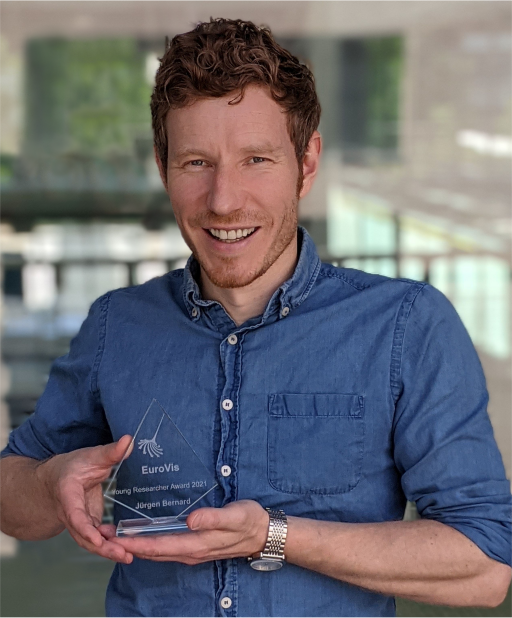
Jürgen Bernard is an Assistant Professor of Computer Science at the University of Zurich , leading the Interactive Visual Data Analysis (IVDA) Group . He is associated with the Digital Society Initiative (DSI) and holds a PhD in Computer Science from Technische Universität Darmstadt (2015) with a focus on time-oriented data analysis. His academic journey includes postdoctoral research at TU Darmstadt and the University of British Columbia. Education : Diploma in Computer Science (2009, TU Darmstadt) PhD in Computer Science (2015, TU Darmstadt) Research Interests : Dr. Bernard specializes in interactive visual data analysis , explainable machine learning , and human-centered AI . His work explores time series analysis , multivariate data exploration , and user-driven preference elicitation . He develops visual analytics systems for domains like healthcare , digital humanities , and industrial applications , with a particular focus on responsible AI and transparency in algorithmic systems . Research Trends : His publications emphasize interactive machine learning workflows , visual analytics for healthcare , and time-stamped event sequence analysis . Recent work includes LLM validation frameworks (Human-Data-Model Interaction Canvas) and personalized ranking systems funded by the Swiss National Science Foundation. He integrates temporal data with multivariate analysis across applications from medical manufacturing to chronic disease management . Scientific Recognition : EuroGraphics Young Researcher Award (2022) EuroVis Young Researcher Award (2021) Best Paper Awards at IEEE VIS (2021), EuroVA (2021, 2025) Dirk Bartz Prize (2017), Hugo-Geiger Preis (2016) Teaching & Grants : He teaches Interactive Visual Data Analysis (6 ECTS), Digital Health Seminars , and People-Oriented Computing . Currently leads a SNF Grant on Personalized Visual Analytics for multi-criteria decision support (2024-2028) with ETH Zurich's Prof. M. El-Assady.