Prof. Dr. Tobias Gemmeke is a University Professor at RWTH Aachen University's Faculty of Electrical Engineering and Information Technology, leading the Chair of Integrated Digital Systems and Circuit Design. His work focuses on neuromorphic computing, hardware accelerators, and energy-efficient electronics. He has pioneered advancements in FPGA-based computational neuroscience simulators, neuromorphic processor architectures, and sensor integration for industrial and medical applications. Research interests include time-domain computing, ReRAM reliability, and co-optimization of neural networks with hardware. Notable contributions include the neuroAIx framework for accelerated neuroscience simulations and energy-efficient ASIC designs for post-quantum cryptography. He actively explores memristive devices and domain generalization techniques for edge computing. Recent publications highlight innovations in spiking neural networks, sensor systems for plain bearings, and time-domain compute-in-memory engines. His work bridges theoretical neuroscience with practical hardware implementations, emphasizing scalability and real-time performance.
Niamh Pattwell is Associate Professor and Head of School at the School of English, Drama and Film, University College Dublin. She holds a PhD from Trinity College Dublin and has been a faculty member at UCD since 2004, progressing from Lecturer in Old and Middle English to her current role. Her academic leadership extends to curriculum development, postgraduate teaching, and serving on university committees, including the Board of Trustees for UCD Volunteer Overseas. Her educational background includes a BA, H.Dip.Ed., H.Dip.T.Rel.Ed., and MA from University College Cork, and a PhD from Trinity College Dublin. She taught secondary school in Co. Wexford and Co. Cork before transitioning to higher education, holding teaching fellowships at Queen’s University Belfast and Trinity College Dublin. Niamh Pattwell's research focuses on the circulation and transmission of vernacular religious prose in the late Middle Ages. She has developed expertise in codicology, palaeography, and manuscript fragment studies, particularly through her work with Marsh's Library and the Index of Middle English Prose at Trinity College Dublin. Her scholarship explores the production, readership, and theological context of both orthodox and Wycliffite texts. Her recent publications show a consistent focus on Middle English religious prose, manuscript provenance, and the material culture of books. She has contributed to the Year's Work in English Studies and published on fragments, personal notebooks, and devotional texts, reflecting a deep engagement with the material and spiritual dimensions of medieval manuscripts. National Digital Learning Resources Award (2012) Broad Curriculum Post-doctoral Teaching Fellow, Trinity College Dublin (2003–2004) Irish Research Council for the Humanities and Social Sciences Postgraduate Scholarship (1999–2002) Niamh Pattwell has successfully supervised postgraduate students to MA and PhD completion and has led curriculum innovation at UCD, including the development of research-based modules on medieval manuscript fragments. She has secured internal research grants such as the HoS Research Support Scheme and has been actively involved in organizing major academic events, including the Early Book Society Biennial Conference in 2019 and 2023. Her teaching includes modules on King Arthur, medieval literature, and animal narratives, emphasizing student engagement with primary texts. She collaborates with institutions such as Marsh's Library and Trinity College Dublin and has contributed to public engagement through radio appearances and public lectures. Her work bridges academic research, teaching innovation, and cultural heritage preservation.
Claudia Berger is a Visiting Assistant Professor at the School of Information, Pratt Institute, and serves as the Digital Humanities Librarian at Sarah Lawrence College. They are actively engaged in digital scholarship, critical making, and interdisciplinary research at the intersection of libraries, technology, and the humanities. Education: MSLIS and Advanced Certificate in Digital Humanities, School of Information, Pratt Institute MA in Classics & Ancient History, University of Exeter BA in Electronic Media & Art and Classics, Bard College at Simon’s Rock Their research focuses on innovative methodologies in digital humanities, particularly data physicalization, digital environmental humanities, and critical engagement with data through craft and tactile experiences. They explore how digital tools can be reimagined through embodied and inclusive practices, often integrating queer perspectives and ecological awareness into scholarly work. Their recent publications reflect a strong trend toward interdisciplinary making, environmental justice, and pedagogical innovation in library and information science. Themes include countermapping, plant-human relations, craft-based digital scholarship, and inclusive professional identity formation. Their work bridges technical practice with critical theory, emphasizing accessibility and material engagement. Professional Service: Editor, dh+lib and dh+lib Review Deputy Secretary, Association for Computers and the Humanities (ACH) Former Librarian, The Mellon Foundation (supporting research in higher learning, arts and culture, public knowledge, and humanities in place) Claudia Berger is deeply involved in mentoring and shaping the future of information professionals through curriculum analysis, editorial work, and collaborative projects. While no formal grants or advising relationships are listed, their leadership in digital humanities education and community-building initiatives demonstrates significant scholarly impact. They maintain an active public research presence through a Zotero repository on physical data visualization.
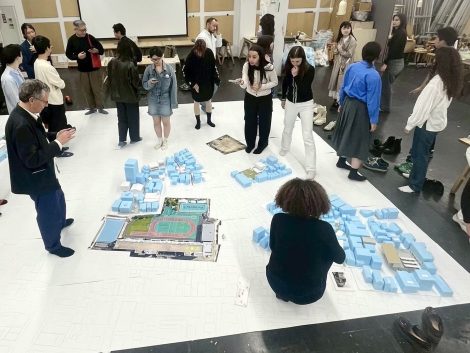
Keigo Kobayashi is an Associate Professor at Waseda University's Faculty of Science and Engineering, School of Creative Science and Engineering, Department of Architecture. He has served in this position since 2016, previously holding the rank of Assistant Professor from 2012 to 2016. His professional journey includes significant experience at the Office for Metropolitan Architecture (OMA) in Rotterdam, where he worked as a Senior Architect and Project Architect from 2007 to 2012. His educational background includes a Master of Architecture II from Harvard University's Graduate School of Design (2005), a Master of Architecture from Waseda University's Graduate School of Science and Engineering (2003), and a Bachelor's degree in Architecture from Waseda University's School of Science and Engineering (2002). Kobayashi's research focuses on architectural planning and city planning, with particular interests in food-related architecture, spatial behavior, and sustainable design. His work explores the intersection of architecture with everyday life, examining how spatial configurations influence human behavior and community formation. Recent research has investigated food systems in urban contexts, playful approaches to spatial design, and the relationship between architectural form and environmental performance. His publications demonstrate a strong focus on practical applications of architectural theory, with projects spanning from food truck design in Shodoshima to zero-energy housing solutions and innovative approaches to architectural education. His work shows a consistent interest in how architecture can respond to contemporary social challenges while maintaining theoretical rigor. Excellence in Concrete Construction Award 2019, American Concrete Institute (ACI), Qatar National Library / OMA Kobayashi actively contributes to architectural education through various committee memberships, including serving as Chief of the Subcommittee on Strategies for International Compatibility in Architectural Education at the Architectural Institute of Japan and leading the Caberra Accord Correspondence Subcommittee at the Japan Accreditation Board for Engineering Education. His teaching portfolio at Waseda University is extensive, covering architectural design studios from undergraduate to doctoral levels. He leads several research initiatives, including the Wakusei Project in Tosa, Kochi, NPO PLAT (Platform for Architectural Thinking), and the European Thinkbelt/McDonald's Radio University project which represents an innovative approach to architectural education and community engagement, particularly in contexts of migration and cultural exchange.
Thomas Riechert is a Professor at the Leipzig University of Applied Sciences (HTWK Leipzig), specifically within the Faculty of Computer Science and Media. He serves as Dean of Media Informatics, Chairman of the Media Informatics Study Commission, and Academic Advisor for Media Informatics. Additionally, he is a Member of the Faculty Council, Faculty representative in the IT committee, and Library Commission. He also acts as Spokesperson of the Institute of Computer Science at the HTWK. Appointed in 2014 in the field of information systems and data management, Riechert holds a doctorate from the University of Leipzig (2012, magna cum laude) and graduated as a computer scientist from TU Dresden in 2000. Professor Riechert's research focuses on information systems, data management, Semantic Web technologies, knowledge engineering, and Linked Data. His work bridges computer science with digital humanities, particularly in creating knowledge graphs for historical research. He has made significant contributions to RDF vocabulary management, ontology editing tools, and academic history databases. His research demonstrates a strong emphasis on practical applications of semantic technologies in information management systems. Analysis of his recent publications reveals a consistent trajectory in semantic web technologies applied to knowledge representation and historical data. His work shows progression from foundational semantic technologies toward increasingly sophisticated applications in digital humanities, particularly in academic history research. The Heloise project appears to be a major focus, developing common research models for collaborative historical research using Linked Open Data. His publications span both technical aspects of semantic technologies and their application in humanities contexts. Professor Riechert actively contributes to academic community building through conference organization and student engagement. His leadership roles in the Faculty of Computer Science and Media demonstrate his commitment to shaping computer science education. His research integrates practical software development with theoretical advancements in knowledge representation. As Dean of Media Informatics, Riechert oversees academic programs and research initiatives in this field. His work with the Heloise network demonstrates leadership in interdisciplinary research connecting computer science with historical scholarship. His office hours are held on Mondays from 10:00 to 11:00 in room ZU 407 at HTWK Leipzig.
Javier Franco Aixelá **Roles and Affiliations**: Full Professor of Translation and Interpreting at the University of Alicante, Director of the Department of Translation and Interpretation (2017–2021). Coordinates the Master's in Institutional Translation (Legal and Economic). Active in teaching Translation Theory, Professional Ethics, and Advanced Literary Translation. **Education**: PhD in English Philology (University of Alicante, 1996), Licenciatura in English Philology (Complutense University of Madrid, 1986), Expert in Translation (Complutense University of Madrid, 1991). **Research**: Specializes in translation theory, cultural aspects of translation, and bibliometrics. Founded the BITRA database (70,000 entries by 2017), a comprehensive online bibliography on translation and interpreting. Recent focus on bibliometric analysis of translation studies, including advertising translation, open access in academia, and cognitive approaches. **Teaching**: Taught courses like Professional Ethics, Advanced Literary Translation, and Translation of Research Genres. Supervised over 125 theses in the last five years, including high-impact works on medical neologisms (Habiba Chbab El Fakhi) and gender-neutral translation (María López Medel). **Awards**: Coordinator of the University of Alicante's Translation Doctoral Program, which received a quality distinction from the Ministry of Education. His theses have been awarded "Excellent Cum Laude" by the university. **Projects**: Led competitive research projects such as the 2021–2025 bibliometric study on economic translation and the BITRA database expansion (2007–2010). Collaborated on international initiatives like the 5th ICEBFIT Conference (2023). **Publications**: Authored 40+ books (e.g., *La traducción condicionada de los nombres propios*), co-edited *ENTI: Encyclopedia of Translation and Interpreting*, and published widely in journals like *META* and *Translation & Interpreting*.
Alexandra Gillespie is a Professor at the University of Toronto Mississauga (UTM), where she also serves as Vice-President and Principal. She is a leading scholar in book history and medieval literature, with a focus on the interplay between text technologies, literary theory, and cultural heritage. Her work bridges disciplines, connecting historical and global perspectives through collaborative research. Hons. BA, Victoria University of Wellington MSt and DPhil in English, University of Oxford Her research spans medieval and early modern literary studies, book history, and digital humanities. She has co-edited major publications on premodern text production and authored the seminal monograph Print Culture and the Medieval Author , which remains highly cited in the field. Gillespie co-founded the Old Books New Science Lab (OBNS) at UTM and St George campuses, fostering interdisciplinary research in medieval bookbinding, computational humanities, and manuscript studies. Her recent scholarship focuses on the global history of the book, including the Mellon-funded Hidden Stories project, which involves over 130 collaborators from 60 institutions. Key themes in her publications include manuscript-aesthetic form, print invention, and philological approaches to medieval texts. She has contributed to foundational handbooks in Chaucer and novel studies. At UTM, Gillespie mentors undergraduate research assistants, graduate students, and postdoctoral fellows, integrating pedagogy with her research on textual materiality. She actively collaborates with international networks and institutions, such as the Aga Khan Museum, where her work on The Book and the Silk Roads was exhibited.
Brian Kwok is an Associate Professor at The Hong Kong Polytechnic University's School of Design, where he serves as Programme Leader of BA Communication Design and heads the Information Design Lab. His academic foundation includes an MA in Design from PolyU, complemented by an MA in Visual Culture Studies and MPhil in Communication from the Chinese University of Hong Kong. With over a decade of tenure at PolyU, Kwok co-founded the Information Design Lab in 2011 to advance research in practical design applications. Kwok's research explores the intersection of visual communication, cultural heritage, and urban environments. Primary domains include: Neon Signage Studies : Documentation and semiotic analysis of Hong Kong's vanishing neon landscapes Healthcare Communication : Typographic legibility for medication labeling targeting senior citizens Urban Ethnography : Spatial practices of street vendors and visual narratives in public spaces Cultural Preservation : Archival projects on Hong Kong's typographic heritage and vernacular design His publication corpus (2015-2023) demonstrates consistent focus on Hong Kong's visual culture evolution, with recurring themes: cultural identity in urban signage, typographic accessibility for vulnerable populations, and cinematic representations of urban change. Methodologically, he blends empirical studies (e.g., user testing of medicine labels) with visual semiotics and historical documentation. Awards recognize both scholarly and practical impact: GRF-funded research on neon sign preservation (2023) Arts Go Digital grant for cultural documentation (2021) HKDA Global Design Excellence Award (2017) Outstanding Paper Award for neon signage research (2017) As Lab Leader, Kwok oversees projects including medicine label optimization, wayfinding systems, and the Fading of HK Neon Visual Culture Project. He actively engages with public institutions through roles on the Public Libraries Advisory Committee and as external examiner for academic programs.
Prof. Dr. Ute Fendler holds the Chair of Romance Literature and Comparative Studies with Special Emphasis on Africa at the University of Bayreuth. Her academic journey includes a 2006 Habilitation and 1992 PhD from Saarland University, with research spanning Francophone African literatures , intermedial phenomena , and postcolonial cinematic analysis . She coordinates the Bayreuth Academy of Advanced African Studies as Vice-Director and serves on multiple editorial boards. 2006-Present: Professor at University of Bayreuth 2011-2015: Director of Institute for African Studies 2015-Present: Vice-Director of Bayreuth Academy of Advanced African Studies Her research interrogates urban ecotonal spaces through African music videos, transnational cinematic flows in African and Afro-Asian contexts, and mediated memory practices . Recent publications explore post-apocalyptic storytelling and decolonial aesthetics in music videos and films. Scientific contributions include: 2025: Staging Atmosphere: Urban Ecotonal Spaces in African Music Videos (Brill) 2024: Co-edited Asia-Africa: Multifaceted Engagement (Palgrave Macmillan) 2022: Animating the Future: Superheroes in Africa (Brill) 2020: Ghosts as Mediators: Memory and Hauntology (iwalewabooks) 2019: K-Pop Fandom in Germany (Korea University Press) She received the Faculty Enrichment Award from the Canadian Embassy in 2005 and serves on multiple academic committees including the University Library Commission (2007-2016).
Bruce S. Hall is an Associate Professor at the University of California, Berkeley specializing in the intellectual and social history of West Africa's Sahel region. His research focuses on Muslim intellectual culture, slavery, race, and economic history in Mali, Niger, and Mauritania, with particular attention to Timbuktu and the Niger Bend through Arabic manuscript analysis. Education: PhD, University of Illinois at Urbana-Champaign, 2005 MA, Queen's University (Canada), 1995 BA, University of Toronto, 1994 Research Interests: Hall's work centers on the intersection of Muslim intellectual culture and social structures in pre-colonial and colonial West Africa. He examines how Arabic manuscripts document racial ideologies, slavery systems, and commercial networks, particularly through Timbuktu's 19th-century correspondence. His research reveals how Islamic legal frameworks interacted with social hierarchies and colonial disruptions in circum-Saharan societies. Publications Trends: Hall's scholarly output (2010-2020) consistently analyzes Arabic manuscripts to reconstruct West African intellectual history. Dominant themes include slavery emancipation processes, Islamic legal interpretations of commerce, race conceptualizations across Muslim societies, and Timbuktu's role as a scholarly hub. His work demonstrates increasing engagement with film studies and vernacular media while maintaining core focus on manuscript-based historiography. Scientific Awards: Martin A. Klein Prize (2012) for A History of Race in Muslim West Africa, 1600-1960 Conover-Porter Award (2016) for contribution to Arabic Literature of Africa. Volume 5 Advising and Projects: Hall serves as general editor of the West African Arabic Manuscript Database (WAAMD), a major bibliographic initiative cataloging Arabic materials across West Africa. While specific student advisees aren't listed, his leadership in WAAMD demonstrates extensive collaborative project management involving international scholars and library professionals focused on manuscript preservation and accessibility. Labs and Teams: Hall directs the WAAMD project team housed at UC Berkeley Library, coordinating researchers who catalog and analyze Arabic manuscripts from Mauritania, Mali, and Niger. This digital humanities initiative creates critical infrastructure for West African manuscript studies while training specialists in Arabic paleography and historical methodology.
Steve Whittaker is Professor of Human-Computer Interaction at the University of California at Santa Cruz. He conducts interdisciplinary research at the intersection of social science and computer science, focusing on how technology affects human memory, communication, and personal information management. His current research explores human-centric AI systems, mental health technologies, and digital identity. His research interests center on designing interactive systems that support human needs in digital environments. He investigates how people manage digital information, remember personal experiences through lifelogging, and interact with conversational agents and social robots. His work emphasizes computational well-being, affective computing, and the social implications of technology use. He has made foundational contributions to the fields of personal information management (PIM), computer-mediated communication (CMC), and human-robot interaction. The recent publications reflect a strong trend toward mental health technology, human-AI interaction, and digital well-being. His work spans from theoretical models of emotion and memory to practical systems for mental health apps, chatbots, and immersive visualization. He frequently publishes in top-tier venues such as CHI, CSCW, and IUI, often in collaboration with researchers across disciplines. Lifetime Research Achievement Award from SIGCHI Fellow of the Association for Computational Machinery (ACM) Member of the CHI Academy Lasting Impact Award from ACM CSCW Best Paper Award at CSCW10 Best Paper Award at CHI07 Honourable Mention at ACM CHI 2020 Multiple best paper nominations at CHI, CSCW, and IUI MIT Siegel Prize Steve Whittaker has supervised numerous PhD and Master’s students, though specific names are not listed in the provided text. His research has been funded by major grants from NSF, NIH, and industry partners, enabling long-term studies on digital behavior and system development. He is Editor of the journal Human Computer Interaction and has authored over 200 peer-reviewed publications. His most recent book, The Science of Managing Our Digital Stuff (MIT Press), co-authored with Ofer Bergman, synthesizes decades of research on personal information management. He leads a vibrant research lab at UC Santa Cruz that focuses on human-centered computing, where students and collaborators work on projects involving AI, mental health, digital memory, and social interaction. The lab has produced influential work on lifelogging, email management, telepresence robots, and algorithmic transparency. The team employs mixed methods, combining qualitative studies with system design and evaluation.
Mykola Oleksiyovych Zhuravel serves as a Senior Lecturer at Zaporizhia Polytechnic National University within the Department of Occupational Safety and Environmental Protection, part of the Faculty of Construction, Architecture and Design. With over 37 years of service since 1987, he has established himself as a dedicated educator and researcher in occupational safety, civil defense, and environmental protection fields. His research interests span occupational safety, civil defense, environmental safety, life safety, industrial safety, ergonomics, and risk management. Zhuravel's scholarly work consistently addresses practical safety concerns in Ukrainian industrial and educational settings, with a particular focus on regional environmental challenges in Zaporizhzhia. His publications demonstrate a progression from foundational safety principles to contemporary concerns like ecological energy security and digital workplace safety. Analysis of his 15 most recent publications reveals a strong emphasis on practical applications of safety science, with recurring themes in environmental protection, workplace hazard mitigation, and emergency preparedness. His work bridges theoretical safety frameworks with practical implementation strategies, particularly relevant to Ukrainian industrial contexts. Zhuravel maintains active professional development, with numerous certifications through 2024 in occupational safety, civil defense, and academic integrity. He is an associated member of the European Community for Occupational Safety and Health (EUOP register number 13823000211, registered June 12, 2023). As an educator, he teaches multiple safety-related disciplines including Safety of Life of a Specialist with Basics of Labor Protection, Protection of Human Living Environment and Occupational Safety, and Civil Protection and Occupational Safety in Industry. His teaching approach integrates theoretical knowledge with practical safety applications relevant to Ukrainian industrial contexts.
David Burn is a Professor and Program Director of the POC Archeologie, Kunstwetenschappen en Musicologie (AKM) at the Faculty of Arts, KU Leuven. His research focuses on Heinrich Isaac and Renaissance musicology, with specializations in polyphony, liturgical chant, and source-critical studies. He leads multiple projects on medieval and Renaissance courtly song, Jesuit musical heritage, and multilingualism in early song. Burn supervises doctoral research and teaches courses on music history, analysis, and digital musicology. His editorial work includes co-editing the Journal of the Alamire Foundation . Research Interests: Polyphony, liturgical music, 15th–16th century Imperial lands, source studies, early music analysis. Teaching: Courses include 'Analysis in Context: Music to 1750', 'Music of the Middle Ages and Renaissance', and 'Research Colloquia in Musicology'. Projects: Promoting studies on Trouvère music, Jesuit musical inheritance, and Scottish polyphony. He actively contributes to academic conferences and publishes on topics like Czech National Library manuscripts and Low Countries musical traditions.
Dr. Samuel Cheng is an Associate Professor at the Gallogly College of Engineering , University of Oklahoma , specializing in Electrical and Computer Engineering . He holds a Ph.D. in Electrical Engineering from Texas A&M University (2004), preceded by M.S. and M.Phil. degrees from the University of Hawaii and Hong Kong University of Science and Technology. Education: B.S. (University of Hong Kong, 1995), M.Phil. (HKUST, 1997), M.S. (University of Hawaii, 2000), Ph.D. (Texas A&M, 2004) Professional Experience: Senior Research Engineer at Advanced Digital Imaging Research (2004-2005), prior internships at Microsoft Asia and Panasonic Technologies His research focuses on Information Theory , Signal and Image Processing , and Pattern Recognition , with applications in remote sensing, urbanization analysis, and disaster monitoring. His publications span topics including urban impervious surface mapping , nighttime light analysis , and machine learning for environmental data . His work often integrates multi-source datasets (e.g., Landsat, LiDAR, social media) for spatiotemporal modeling. Technical Expertise: Spectral unmixing, machine learning, thermal remote sensing, GIS integration Key Applications: Power outage detection, vegetation-crime correlation, PM2.5 estimation, smart meter data fusion Dr. Cheng holds three US patents in digital watermarking and is affiliated with IEEE, Sigma Xi, and AAAS. His recent articles demonstrate a trend toward leveraging AI for remote sensing challenges and analyzing urbanization impacts on ecosystems.
Ralf Bierig joined Maynooth University's Computer Science Department in 2017, teaching topics including information retrieval, software testing, interaction design, and virtual reality. He is the programme director of the Higher Diploma in Human-Computer Interaction (HCI) and User Experience (UX). He earned his BSc (2002) from University of Furtwangen and PhD (2008) from Robert Gordon University. Research Interests His work spans information retrieval, interactive information retrieval, personalisation, information search behavior, usability (UX), and virtual reality (VR). Recent publications focus on multimodal concept indexing, hybrid IR approaches, and contextual adaptation in search systems. Publication Trends His research combines statistical semantics, graph modeling, and multimodal data analysis across academic collaborations in Austria, Germany, and international venues like ECIR and SIGIR.