Teresa Hirzle is a Tenure Track Assistant Professor at the Department of Computer Science , University of Copenhagen , specializing in Human-Centred Computing . Her research focuses on Human-Computer Interaction (HCI) , Virtual Reality (VR) , Extended Reality (XR) , and Gaze-Based Interaction . Research Interests: Designing interaction techniques for immersive environments Eye movement analysis for educational applications Addressing digital eye strain in interactive systems Evaluating user experience in VR/AR Recent Research Trends: Her recent publications examine AI representation in VR co-creation, VR sickness in locomotion, eye strain in gaze-driven systems, and hybrid applications of comics/AR. She also explores pedagogical implications of eye tracking in remote learning. Contact: Email: tehi@di.ku.dk Office: Sigurdsgade 41, 2200 København N.
Gina Bloom is a Professor of English at the University of California, Davis, with affiliations in the PhD programs in Education and Performance Studies. Her research spans Shakespeare, early modern drama, gender theory, and digital humanities, focusing on games, performance, and educational technologies. PhD, MA, and Certificate in Women's Studies from the University of Michigan BA from the University of Pennsylvania Her work includes the award-winning digital game Play the Knave and a decolonial pedagogy curriculum for teaching Shakespeare. She collaborates with UC Davis’s ModLab and DataLab, emphasizing social justice and immersive learning. Awards include Best AR/VR Game (2022) and Shakespeare Publics Award (2025). Her publications blend game studies, theater history, and feminist theory, with recent articles addressing decolonial education and digital embodiment. Winner, Shakespeare Publics Award (2025) Finalist, GEE! Learning Game Award (2023) Winner, Best AR/VR Game Award (2022)
Charity Nyelele is an Assistant Professor in the Environmental Sciences department at the University of Virginia. Her research bridges human well-being and environmental systems, focusing on biodiversity, climate change, and ecosystem services through the lens of environmental justice and equity. Specializes in urban forestry and socio-ecological synthesis Active in climate justice, carbon sequestration, and stormwater management Nyelele's recent work integrates machine learning and social media data to map recreational ecosystem services and optimize tree planting frameworks. She has developed multi-objective decision support tools to address urban ecosystem service trade-offs and leads research in fire-driven ecosystem restoration across Western US forests. She teaches courses on Environmental and Climate Justice , Management of Forest Ecosystems , and co-instructs Politics, Science, and Values . Contact: hbt3mb@virginia.edu
Donna Gallo is an Assistant Professor of Music Education at the University of Illinois Urbana-Champaign (UIUC), School of Music. She previously held faculty positions at Westminster Choir College, where she coordinated the Kodály Certification program, and taught K-6 general/choral music in Fairfax County Public Schools (VA) and Simsbury Public Schools (CT). Gallo’s academic background includes a Ph.D. from Northwestern University, an MME from Silver Lake College, a BME from Indiana University, and training at the Kodály Institute in Hungary, where she received the International Kodály Society Scholarship . Her research focuses on: Inservice teacher learning through collaborative professional development structures. Creative music-making and the integration of popular music practices in elementary education. Community partnerships as critical experiences for preservice teacher training. Quantitative research methodologies in music education. Educational equity through culturally responsive teaching and service learning. Teaching strategies for neurodivergent and physically divergent students. Gallo has secured grants for professional development programs and community partnerships with local music educators and school districts. Notably, she collaborated with the School of Music and College of Engineering on a UIUC grant to address systemic racism and social injustice. She has published in leading journals such as the Journal of Research in Music Education , Music Education Research , and International Journal of Music Education , and authored book chapters in The Routledge Companion to Creativities in Music Education and Toward Equity in School Music . Scientific Awards: International Kodály Society Scholarship (Kodály Institute, Hungary). In advising and grants, Gallo emphasizes culturally responsive teaching and first-year teacher support through service learning. Her work bridges music education with interdisciplinary initiatives, leveraging technology and partnerships to drive equity-focused innovation. She is actively involved in editorial roles, including past editor of AOSA Echo (2012–2016) and current editorial board member of the Music Educators Journal . Her collaborations span the UIUC School of Music and College of Engineering, as well as local schools and community artist mentors. Gallo’s efforts aim to transform music education through inclusive curricula, technology integration, and systemic change.
Katherine McDonough is a Lecturer in Digital Humanities at Lancaster University's Department of History and Senior Research Fellow at The Alan Turing Institute. Her research focuses on 18th-century France, combining historical scholarship with computational methods. She earned her PhD in History from Stanford University (2013) and has held roles at Bates College, Western Sydney University, and Stanford's Center for Interdisciplinary Digital Research. Research Interests: Infrastructure history, spatial humanities, digital mapping tools (e.g., MapReader), Enlightenment geography Key Projects: Living with Machines (industrialization history via data), Machines Reading Maps (text analysis on historical maps) Her monograph Public Work: Making Roads and Citizens in Eighteenth-Century France examines the corvée labor system in Brittany. She has developed award-winning software for historical map analysis and collaborates internationally on geospatial humanities initiatives. Awards include the American Historical Association's Roy Rosenzweig Prize (2023) and fellowships from the Royal Historical Society and Software Sustainability Institute.
Jessica Roberts is an Assistant Professor in the School of Interactive Computing at Georgia Tech. She holds a PhD in the Learning Sciences and directs the Technology-Integrated Learning Environments (TILEs) Lab. Her work focuses on technology-mediated learning in informal environments like museums and citizen science projects, emphasizing geospatial analysis, data visualization, and accessibility. Prior to academia, she was a middle school teacher. Education: PhD in Learning Sciences (specific institution not listed) Postdoctoral research at Carnegie Mellon University's Human-Computer Interaction Institute Postdoctoral work at Northwestern University's Tidal Lab Research Interests: Dr. Roberts explores how interactive technologies can foster inclusive, socially meaningful learning experiences. Her projects include: Data sonification systems for visually impaired audiences AI literacy frameworks for K-12 classrooms Citizen science platforms that democratize environmental data exploration Embodied interaction designs to enhance public engagement with scientific data Article Trends: Recent work highlights innovations in AI education, climate data visualization, and accessibility technologies. Over half of her 2023-2025 publications address data sonification systems for marginalized audiences or AI literacy challenges in K-12 contexts. Awards: Brook Byers Institute for Sustainable Systems Faculty Fellow Advising & Grants: Leads the TILEs Lab, which collaborates with institutions like the Field Museum of Natural History. Projects have been exhibited at major science museums, indicating significant external partnerships. Labs/Teams: Director of the TILEs Lab, affiliated with GVU Center at Georgia Tech. Collaborates with interdisciplinary teams across education, computer science, and environmental science domains.
Dr. Yongjie Jessica Zhang is a Professor at Carnegie Mellon University, holding appointments in both the Department of Mechanical Engineering and the Department of Biomedical Engineering . She received her B.S. and M.S. in Engineering Mechanics from Tsinghua University, followed by an M.S. in Aerospace Engineering and a Ph.D. in Computational Engineering and Sciences from the University of Texas at Austin. After a postdoctoral fellowship at ICES, she joined CMU in 2007, advancing from assistant to full professor by 2016. Research Interests : Image-based geometric modeling, mesh generation, finite element analysis (FEA), isogeometric analysis, and applications in computational biomedicine, materials science, and computer-assisted surgery. Leadership Roles : Chair of Solid Modeling Association (2019-2020), USACM Executive Committee Member-at-Large (2017-2021), and ELATE Fellow (2017-2018). Her work addresses the critical challenge of automating high-fidelity geometric modeling and mesh generation for complex domains (e.g., human anatomy), which traditionally consumes ~80% of FEA time. Her group develops AI-driven methods for multiscale modeling (molecular to organ), with applications in neuroscience , biomechanics , and 4D printing . Notable awards include the Presidential Early Career Award (PECASE) , NSF CAREER Award , and ASME Van C. Mow Medal (2025) . Dr. Zhang’s publications span over 170 peer-reviewed articles, focusing on truncated hierarchical B-splines , polycube meshing , and neurite transport modeling . She has advised more than 40 students, including PhD candidates and postdoctoral fellows. Her editorial roles include Associate Editor of Computer Aided Geometric Design and editorial board memberships in Computer-Aided Design and Engineering with Computers .
Dr. Misa Faezipour is an Associate Professor in the Department of Engineering Technology at Middle Tennessee State University (MTSU) and director of the Systems Engineering Lab (SEL). She holds a Ph.D. and M.Sc. in Industrial Engineering and Engineering Management from the University of Texas at Arlington and a B.Sc. in Software Engineering from Islamic Azad University North Tehran Branch. Her research focuses on system dynamics modeling, healthcare systems engineering, complex systems, and sustainability optimization. Dr. Faezipour has advised numerous graduate students in M.S. and Ph.D. programs, focusing on topics such as healthcare disparities, AI robustness, and policy impact analysis. She teaches courses including Engineering Economy, Operations Management, and Engineering Management Systems. Her work spans collaborations with institutions like NASA, the Systems Engineering Research Center, and healthcare organizations. Her recent publications emphasize AI-driven healthcare solutions, system dynamics applications in policy analysis, and optimizing healthcare delivery through data-driven models. She actively contributes to professional organizations such as INCOSE, IEEE, and the System Dynamics Society. Dr. Faezipour’s lab, SEL, develops innovative tools for healthcare informatics, including diagnostic recommenders and policy simulation frameworks. Her research bridges systems engineering with healthcare challenges, addressing issues like racial health inequities and pandemic response strategies.
Dr Rita Borgo is a Professor in Data Visualization and Head of the Human Centred Computing Group at King's College London's Department of Informatics. She holds a leadership role within the Faculty of Natural, Mathematical & Engineering Sciences and is affiliated with the Centre for Urban Science and Progress (CUSP) London. Her research focuses on interdisciplinary visualization challenges, including human-computer interaction, AI trust calibration, and epidemiological modeling. Education details are not explicitly stated in the provided text. Her work spans over 58 publications, emphasizing visualization techniques for large datasets, trust in AI systems, and urban science applications. Key projects include RAMPVIS (visual analytics for pandemic response) and Trusted Autonomous Systems Hub (AI ethics and human-machine partnerships). Research interests include data visualization, human factors, generative AI, and policy simulation. Recent articles explore trust calibration in AI, time-series visualization, and ethical clinical decision support systems. She has led grants totaling £multi-million, including EPSRC-funded initiatives. Collaborations with organizations like ContactEngine Limited highlight her industry engagement. Labs/Teams: Leads the Human Centred Computing Group and contributes to CUSP's urban data initiatives. Supervised student work includes a notable BSc thesis by Munkhtulga Battogtokh. Current projects address visualization in nuclear policy, social media mental health correlations, and trustworthy autonomous systems.
Hubert Zangl is a Professor at the University of Klagenfurt and Head of the Institute for Intelligent System Technologies . He serves as Chairman of the Information Technology Curricular Commission and participates in the Faculty Conference of the Faculty of Technical Sciences. Key research areas include: Sensor technology Electrical measurement technology Robotics Signal processing Electronics Recent research trends focus on: High-fidelity FMCW radar simulation frameworks Energy-efficient sensor systems Printed electronics for structural health monitoring Uncertainty propagation in measurement science Modular robotics with secure transducer identification Capacitive tactile sensing for robotic grasping Contact: Hubert.Zangl@aau.at
Amanda Morris is a Research Professor and Director at the CDU Academy of the Arts within Charles Darwin University's Faculty of Arts and Society, specializing in Creative Industries and Innovation. She holds a PhD from The University of Sydney (1989) and a Graduate Diploma in Direction from The National Institute of Dramatic Art (1984). Her research integrates performing arts, interdisciplinary studies, and emerging technologies, focusing on pedagogical systems design, screen-based drama, and ecological arts. She has supervised postgraduate research and led innovative projects such as CellF, a neuron-driven synthesiser in performance. Education: PhD (University of Sydney), Graduate Diploma in Direction (NIDA) Key Roles: Editorial board member for The New Platform Papers , Member of Creative Industries Ministerial Advisory Council Notable Activities: Organised Voice and Speech Teachers Association (VASTA) conference (2017), delivered invited talks on online learning design (2021) Her awards include multiple Gold Medals for interactive multimedia (1998–2000) and recognition for educational technology innovations. Morris’s work bridges arts, technology, and pedagogy, emphasizing interdisciplinary collaboration in higher education.
Ryo Suzuki is an Assistant Professor at the ATLAS Institute within the University of Colorado Boulder's Computer Science department. His research focuses on innovative intersections of Human-Computer Interaction (HCI), Augmented Reality (AR), and robotics. He explores systems that blend AI, haptics, and shape-changing interfaces to create enriched user experiences. Key areas of investigation include embedding interactivity into static educational materials (e.g., textbooks), developing AI-driven AR tools for procedural instruction, and creating shape-changing robotics for tactile feedback. His work often emphasizes practical applications in education, remote collaboration, and creative industries. Recent projects include MapStory (LLM-driven map animation), RealityEffects (3D volumetric video augmentation), and HoloDevice (holographic cross-device collaboration).
Fabrício Benevenuto is an Associate Professor in the Computer Science Department at Federal University of Minas Gerais (UFMG), where he conducts interdisciplinary research at the intersection of social media analysis, data science, and computational journalism. His work spans complex networks, machine learning, and natural language processing with strong societal impact. His research focuses on social media dynamics, particularly in Brazilian contexts, with major contributions to hate speech detection, fake news analysis, and political discourse monitoring. He leads large-scale projects against misinformation, including development of systems like WhatsApp Monitor, Media Bias Monitor, and Purple Feed. His work combines technical innovation with real-world applications for election transparency and public discourse integrity. Benevenuto's recent publications demonstrate strong trends in multilingual NLP for social media analysis, with emphasis on Brazilian Portuguese contexts. His team produces both theoretical contributions and practical systems addressing hate speech, misinformation, and media bias. Notable methodological approaches include combining network analysis with linguistic features, developing culturally-aware detection systems, and creating large annotated datasets for understudied languages. CAPES award for best Brazilian computer science thesis (2010) Humboldt Foundation scholarship recipient (2017-2018) Member of TikTok Safety Advisory Council WWW'20 Best Paper Nominee & CNIL-INRIA Privacy Protection Prize winner Multiple best paper awards at CEAS, WBC, and ICWSM conferences Test-of-Time Award at ICWSM'20 Benevenuto actively mentors PhD and MSc students, with numerous advisees securing academic positions at Brazilian universities and research roles at institutions like Max Planck Institute. His projects often receive funding supporting interdisciplinary collaborations across computer science and social sciences. Current work includes large-scale analysis of Telegram political groups, real-time election monitoring systems, and developing culturally-aware NLP tools for Portuguese. He leads research teams working on social media analysis systems with societal impact, particularly focused on Brazilian digital ecosystems. Projects involve cross-institutional collaborations with researchers from MPI-SWS, Max Planck Institute, and various Brazilian universities, emphasizing practical applications for public discourse integrity.
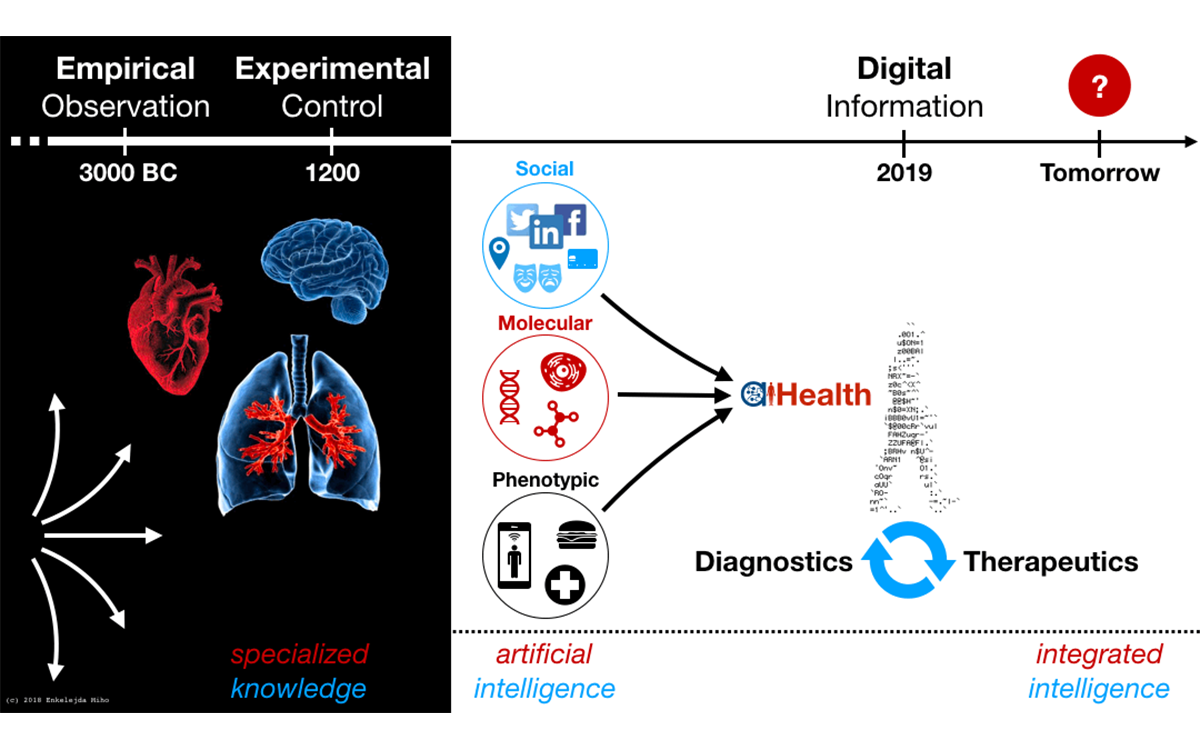
Prof. Enkelejda Miho is a Professor of Digital Life Sciences at the School of Life Sciences, FHNW, leading the aiHealthLab. Her work bridges computer science/AI with life sciences, focusing on drug discovery, personalized medicine, and immunology. She holds roles as Team Leader at aiHealthLab and Group Leader at the Swiss Bioinformatics Institute. Research Interests : She applies machine learning to analyze immune repertoires, antibody engineering, and autoimmunity diagnostics. Her lab develops computational tools like the RWD-Cockpit for real-world data analysis and synthetic antibody-antigen models (Absolut!) to advance biotherapeutics. Her work on dengue immunity and monoclonal gammopathies highlights translational applications. Key Projects : The aiHealthLab focuses on AI-driven diagnostics and therapeutics. Her contributions include AI frameworks for antibody specificity prediction, age-related immune repertoire changes, and large-scale network analysis of antibody repertoires. Labs/Teams : Leads aiHealthLab and collaborates with the Swiss Bioinformatics Institute, integrating computational and experimental immunology.
Dr. Michael Tissenbaum is an Associate Professor at the University of Illinois, Urbana-Champaign, holding appointments in the College of Education’s departments of Curriculum & Instruction, Educational Psychology, and the Siebel School of Computing and Data Science. His research focuses on collaborative learning environments, technology-enhanced STEM education, and computational literacies. He previously worked at MIT's App Inventor lab, developing the 'computational action' framework to empower youth through computing. Key roles include affiliations with the National Center for Supercomputing Applications (NCSA) and the Siebel Center for Design. His work emphasizes designing transformative learning spaces combining physical and digital tools. Notable projects include the REACH Projector for remote collaboration and studies on maker identity development. Tissenbaum has contributed to journals like Computers and Education and International Journal of Computer-Supported Collaborative Learning , with a focus on real-time classroom orchestration and sociomaterial theories in education.