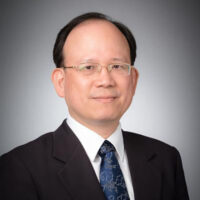
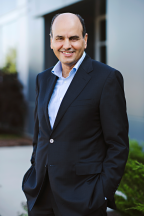
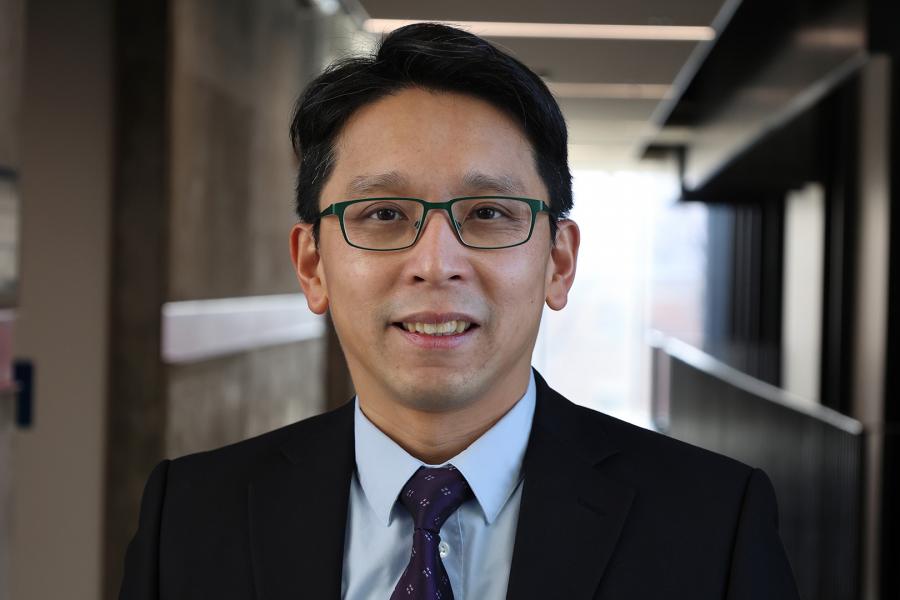
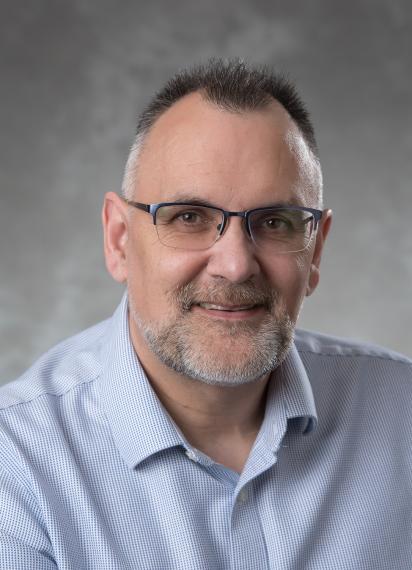
Shiyu Su is an Assistant Professor in the Department of Electrical and Computer Engineering at the University of Waterloo. His research focuses on high-speed data converters, wireless transceivers, digital phase-locked loops (PLL), and AI-assisted analog/mixed-signal design automation. He holds a Ph.D. from the University of Southern California (2019) and teaches courses such as ECE 340 (Electronic Circuits 2) and ECE 432 (Radio Frequency Integrated Devices and Circuits). Education: B.S. from Beijing University of Post and Telecommunication (China) and Queen Mary, University of London (UK), 2011; M.S. and Ph.D. from USC, 2013 and 2019, all in electrical engineering. Research Interests: High-speed ADCs/DACs RF/mm-wave transceivers Time-approximation filters (TAF) Analog/mixed-signal design automation Memristor-based computing Biomedical interfaces Key Awards: IEEE SSCS Predoctoral Achievement Award (2017–2018) Best Student Paper Award at IEEE RFIC (2022) Ming Hsieh Institute Scholar (2019–2020) Lab Focus: The Shiyu Su Lab develops integrated circuits for communications, sensing, and computing, with a focus on AI-driven methodologies and digital-analog co-design. Collaborations include work with Prof. Wei Wu (USC) on memristor-based systems.
Manoj Sachdev is a Professor in the Department of Electrical and Computer Engineering at the University of Waterloo, Faculty of Engineering. His research focuses on semiconductor devices, low-power electronics, and secure hardware systems. He leads projects in flexible electronics, nanotechnology, and radiation-hardened circuits, with applications in displays, memory technologies, and biomedical sensors. His work integrates advanced materials science with circuit design to address challenges in energy efficiency and security. Education: Not explicitly stated in provided text. Research interests span thin-film transistors (TFTs), resistive switching memories, neuromorphic computing, and physically unclonable functions (PUFs). Recent efforts include developing low-power circuits for flexible substrates and secure microprocessors. His contributions to semiconductor device physics and integration techniques have advanced applications in wearable electronics and medical diagnostics. Publications highlight innovations in low-power flip-flops, energy-efficient display drivers, and memristor-based systems. He collaborates on interdisciplinary projects combining photonics, nanoelectronics, and biomedical engineering. Awards: None explicitly listed in provided text. Grants and advising: Advises on semiconductor fabrication, secure hardware design, and radiation effects in electronics. Leads research groups focused on next-generation memory technologies and flexible integrated systems. Labs/Teams: Active in the University of Waterloo's semiconductor and flexible electronics research clusters, contributing to both academic and industry partnerships.
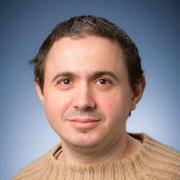
Lan Wei is an Associate Professor in the Department of Electrical and Computer Engineering at the University of Waterloo, Canada. She leads the Waterloo Emerging Integrated Systems Group, focusing on device-circuit co-optimization, cryogenic CMOS for quantum computing, and emerging technologies like GaN, RRAM, and low-dimensional materials. Her work bridges nanoelectronics and system-level applications, with notable contributions to the MIT Virtual Source GaN HEMT (MVSG) compact model, an industry-standard tool. Education: B.S. in Microelectronics and Economics, Peking University (2005) M.S. and Ph.D. in Electrical Engineering, Stanford University (2007, 2010) Research Interests: Nanoelectronic devices Cryogenic CMOS for quantum computing GaN-based circuits and systems RRAM-based neuromorphic computing Device-circuit interactive design Publications reflect her expertise in GaN modeling, quantum computing hardware, and RRAM applications. Recent work emphasizes scalable quantum control circuits and error-resilient neural networks using emerging technologies. Awards include the 2019 Ontario Early Researcher Award and the 2020 UWaterloo President's Excellence Award in Research. She has served on technical committees for IEDM, DATE, and ICCAD, and contributed to the ITRS roadmap. Teaching includes courses like ECE 240 (Electronic Circuits) and ECE 730 (Solid State Devices). Her group actively seeks graduate students with interest in integrated systems and nanoelectronics.
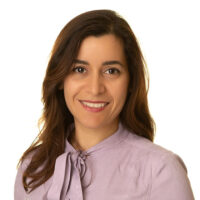
Dr. Chih-Hung (James) Chen is a Professor in the Department of Electrical & Computer Engineering at McMaster University. His research focuses on noise-related issues in semiconductor devices, low-noise circuit design for medical and communication applications, and thermal noise characterization in nano-scale transistors. He holds senior member status in IEEE and is a licensed Professional Engineer in Ontario. Education: Ph.D., McMaster University, 2002 M.A.Sc., Simon Fraser University, 1997 B.Sc., National Central University, Taiwan, 1991 Research interests include biomedical technologies, microelectronics & VLSI, and digital/smart systems. He has collaborated with companies like Sony Corporation, United Microelectronics Corporation, and Focus Microwaves. His work is supported by grants from the Canada Foundation for Innovation (CFI), NSERC, and the Ontario Innovation Trust (OIT). Notable achievements include serving on the International Advisory Committee of the International Conference on Noise and Fluctuations (2015) and as an editor for the Journal of Low Power Electronics and Applications since 2022. Teaching includes courses like Analysis and Design of RF ICs for Communications and Electronic Devices and Circuits 2. His research lab focuses on advancing noise measurement techniques and designing ultra-low-power analog circuits for emerging applications.
Dr. Mahesh Tripunitara is a Professor in the Department of Electrical and Computer Engineering at the University of Waterloo, serving as Associate Chair for Undergraduate Studies. He holds a PhD (2005) and Master's (1995) in Computer Science from Purdue University, along with a BSc (1993) in Computer Science from Dalhousie University. His research focuses on information security, authorization mechanisms, cryptographic key management, and hardware security, with industry experience at Motorola's R&D labs and Silicon Valley. His work spans theoretical advancements like access control policy analysis and practical applications such as secure payments systems and IoT device reliability. Notable awards include the Best Student Paper at Usenix Security 2013 and Best Paper at ACM SACMAT 2013. He actively serves on program committees for major security conferences including CCS, CODASPY, and SACMAT. Recent publications highlight innovations in cellular security (SUCI-Catchers defense), role-mining optimization, and blockchain smart contract auditing. Teaching includes advanced algorithm design courses (ECE 406/606) and digital computation (BME 121). His research emphasizes balancing security rigor with usability in authorization systems and hardware protection mechanisms.
Nicola Nicolici is a Professor in the Department of Electrical and Computer Engineering at McMaster University. His research focuses on methods and algorithms for the design of digital integrated circuits and systems, with significant contributions in manufacturing test, post-silicon validation and debug. His work has expanded to include embedded systems, low-energy computing, and custom hardware-accelerated computing systems. Professor Nicolici's research interests span multiple areas of digital system design and validation. His early work focused on manufacturing test methodologies and power-aware testing strategies for integrated circuits. More recently, he has made significant contributions to post-silicon validation techniques, including constrained-random stimuli generation, trace signal selection, and bit-flip detection. His research has evolved to address emerging challenges in embedded computing systems, low-energy design, and specialized hardware acceleration for various applications including deep neural networks and signal processing. His recent publications reveal a strong trend toward hardware acceleration for specialized computing tasks. The research spans matrix multiplication algorithms (Strassen and Karatsuba), memory system optimization (DDR5 calibration), FPGA-based radar processing, and neural network acceleration. His work consistently bridges theoretical algorithm development with practical hardware implementation considerations, particularly focusing on precision analysis, fault tolerance, and energy efficiency. The research demonstrates a clear progression from traditional digital circuit testing to more complex system-level validation and acceleration techniques. Professor Nicolici has been actively involved in teaching courses related to system-on-chip design and test, digital systems, and embedded systems. His teaching portfolio includes advanced courses such as System-on-Chip (SOC) Design and Test and Digital Systems Design , reflecting his expertise in the field. While specific grant information isn't detailed in the provided text, his extensive publication record suggests ongoing research funding support. His research has contributed significantly to the fields of digital circuit testing, post-silicon validation, and hardware acceleration. The work has practical applications in semiconductor manufacturing, embedded systems design, and specialized computing architectures. His recent focus on neural network acceleration and memory system optimization reflects the evolving landscape of computer architecture research.
Sara Nabil is an Assistant Professor at Queen's University's School of Computing within the Faculty of Arts and Science. She leads the HCI Design Studio and previously held a postdoctoral position at Carleton University's Creative Interactions Lab. Her research focuses on integrating interior design, fashion, and product design with interactive technologies, emphasizing e-textiles, smart materials, and shape-changing interfaces. She holds a PhD from Newcastle University and prior experience as an HCI Lecturer, interior designer, and senior software developer. Education: PhD in Computing, Newcastle University (2019) MSc in Computing BSc in Computing Research interests include designing computational spaces, wearable technology, and e-textile interactions. Her work explores sustainable fabrication methods, user-centered design for smart environments, and bridging traditional crafts with digital technologies. Notable projects include exhibitions like 'Living with Adaptive Architecture' and 'Persuasive Pharmacy Space,' showcasing interactive wearables and spaces. Her recent articles (2023–2025) emphasize e-textile innovations, sustainable design, and human-building interactions. Key themes include smart materials in fashion, modular wearables, and community-driven interaction systems. Awards: None explicitly mentioned. Advising/Grants: No details provided. Labs/Teams: Head of HCI Design Studio and part of iStudio Lab, focusing on interioraction design.
Dr. Ian Bruce is a Professor in the Department of Electrical and Computer Engineering at McMaster University, Hamilton, ON, Canada. He has been with the department since 2002, conducting interdisciplinary research that bridges electrical engineering with auditory neuroscience. His work has significant implications for hearing technologies and auditory rehabilitation. Education: B.E. (electrical and electronic) from The University of Melbourne (1991) Ph.D. from the Department of Otolaryngology, The University of Melbourne Dr. Bruce's research program focuses on auditory modeling, hearing aids, cochlear implants, tinnitus, neural coding of speech, and digital speech processing. His work centers on understanding the physiological mechanisms of auditory processing and applying this knowledge to develop improved hearing technologies. He has pioneered computational models of the auditory periphery that accurately predict speech intelligibility for hearing-impaired listeners, directly informing hearing aid and cochlear implant design. Analysis of Dr. Bruce's recent publications (2019-2025) reveals a consistent focus on cochlear implants and auditory nerve modeling, with increasing integration of machine learning techniques. His work demonstrates a sophisticated balance between physiological accuracy and computational efficiency, with recent papers exploring WaveNet-based approximations of cochlear models and DNN-based auditory processing. A significant portion of his research examines the relationship between neural responses and perceptual outcomes in hearing-impaired individuals, particularly regarding temporal processing and speech understanding. Scientific Awards and Recognitions: Fellow of the Acoustical Society of America Member of the Association for Research in Otolaryngology Registered Professional Engineer in Ontario Associate Editor of the Journal of the Acoustical Society of America Dr. Bruce has mentored numerous graduate students through various capstone design projects across multiple engineering disciplines including biomedical, electrical, mechanical, and software engineering. His teaching portfolio includes specialized courses in biomedical signals and systems, cellular bioelectricity, models of the neuron, and advanced signal processing. He has consistently supervised M.Eng. projects and independent studies, demonstrating commitment to training the next generation of engineers in auditory technology development. Dr. Bruce's research is conducted within McMaster University's interdisciplinary biomedical engineering framework, collaborating with clinicians and researchers in otolaryngology and audiology. His laboratory work focuses on developing and validating computational models that simulate auditory nerve responses to both natural and prosthetic stimulation, with direct applications to improving cochlear implant performance and hearing aid algorithms for real-world listening environments.
Stephen Brown is a Professor at the University of Toronto within the Department of Electrical and Computer Engineering under the Faculty of Applied Science and Engineering. He earned his B.A.Sc and M.A.Sc in Electrical Engineering from the University of Toronto and New Brunswick, respectively, and a Ph.D. in Electrical Engineering from the University of Toronto (1992). His career spans over two decades in academia and industry collaboration. Education : B.A.Sc, University of New Brunswick M.A.Sc, University of Toronto Ph.D, University of Toronto Professor Brown’s research focuses on field-programmable gate arrays (FPGAs) , CAD algorithms , and computer architecture , with applications in machine learning and high-level synthesis . He is a principal investigator in the LegUp project , an open-source high-level synthesis framework that bridges software and hardware design. His work also extends to optimizing FPGA interconnect delays, physical synthesis, and logic block architectures. Key trends in his publications include advancements in high-level synthesis tools, FPGA architecture evaluation, and timing-driven design methodologies. His contributions often intersect with design automation , resource sharing , and embedded systems . Scientific Awards : NSERC 1992 Doctoral Prize Hart Professorship for Innovation in Teaching (2017) Multiple teaching excellence awards Best Paper Award at ICCAD 1990 Best Paper Award nomination at Canadian Conference on VLSI (1989) As Director of the FPGA University Program at Intel Corporation, he leads industry-academia initiatives. His teaching portfolio includes courses like ECE253 (Digital Logic) and ECE1733F (Switching Theory).
Dr. Marjan Alavi is an Assistant Professor at McMaster University's W Booth School of Engineering Practice and Technology, affiliated with the Mechanical Engineering department as an Associate Member. She holds a Professional Engineer (P.Eng.) license in Ontario and has over 15 years of academic and industrial experience in electrical engineering. Her research focuses on model-based and data-driven approaches for fault diagnosis, prognosis, and fault-tolerant control in hybrid systems, with applications in power electronics, energy systems, and smart infrastructure. Education: B.Sc. (2004) from K.N. Toosi University of Technology, M.Sc. (2007) from Sharif University of Technology, Ph.D. (2014) from Nanyang Technological University (Singapore), and a Postdoc (2015) at the University of Toronto's Energy Systems Group. Teaching: Instructs courses on Real-Time Systems (SEP 6ES3, SFWRTECH 4ES3), Smart Cities and Communities (SMRTTECH 4SC3), integrating real-world engineering challenges with theoretical frameworks. She emphasizes hands-on learning through remote labs and experiential projects. Professional Contributions: Serves as IEEE Toronto Section Executive Member, Technical Reviewer for IEEE Transactions on Industrial Electronics, and Vice Chair of IEEE Industrial Applications Society (2015). Founded Intelligent Diagnosis Corporations, a Canadian startup focused on research and innovation in diagnostics technologies. Key Projects: Developed fault diagnosis strategies for electro-hydraulic actuators, vehicle-mounted infrastructure monitoring systems, and remote laboratory platforms for emergency traffic control. Research spans predictive maintenance, smart city technologies, and railway systems certification benefits. Awards: Recipient of the Singapore International Graduate Award (SINGA) 2010. Recognized for her work in bridging academic research with industrial applications, particularly in enhancing system reliability through advanced control methodologies.
Otman Basir is a Professor in the Department of Electrical and Computer Engineering at the University of Waterloo. He serves as Associate Director of the Waterloo Institute for Health Informatics Research and Associate Director of the Pattern Recognition and Machine Intelligence Laboratory. Additionally, he is Director of Urban Informatics Corporation and founder/president/CEO of Intelligent Mechatronic Systems (IMS), a leader in telematics and infotainment technologies. Education: PhD in Systems Design Engineering (University of Waterloo, 1993), MSc in Electrical Engineering (Queen's University, 1989), BSc in Computer Engineering (Al-Fateh University, Libya, 1984). Research focuses on intelligent embedded systems, sensory systems design, biologically inspired systems, and human-computer interfaces. He has authored over 400 publications and holds 121 patents. Recent work includes blockchain applications, vehicular communication systems, and cybersecurity frameworks for IoT. His research emphasizes real-world applications in transportation and healthcare. Key awards include the Ontario Premier Research Excellence Award and Canada Foundation Innovation Award. Teaching includes courses like ECE 124 (Digital Circuits) and ECE 659 (Intelligent Sensors). IMS innovations drive connected car technologies, emphasizing driver safety and sustainability. Patents: 121 issued/pending Grants: Multiple awards supporting health informatics and intelligent systems research Labs: Pattern Recognition Lab, Waterloo Health Informatics Research
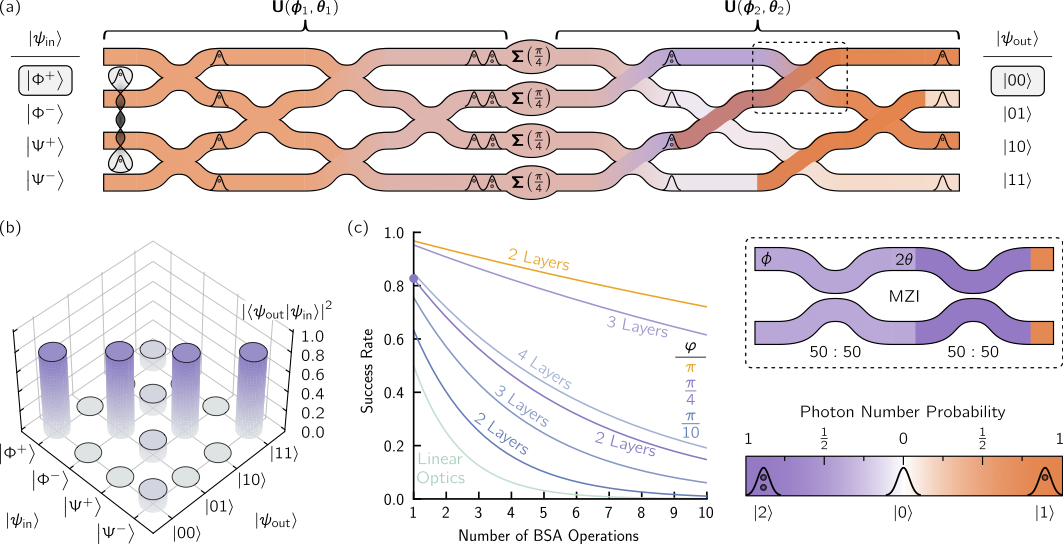
Bhavin J. Shastri is an Assistant Professor in the Department of Physics, Engineering Physics and Astronomy at Queen's University in Canada. His research explores the physics of light for computing , pushing frontiers in information and signal processing through photonic computing and quantum/neuromorphic photonics . He is affiliated with the Centre for Nanophotonics and NUCLEUS , a pan-Canadian photonic computing program funded by NSERC CREATE, bridging artificial intelligence and quantum information . Canada Research Chair & Principal Investigator Faculty Affiliate at Vector Institute (2020-) Editorial Board Member of JPhys Photonics (2019-) Member of IEEE Photonics Society Technical Affairs Council (2019-) Visiting Researcher Scholar at Princeton University (2018-) Shastri Lab members have access to world-class shared facilities, including the Centre for Nanophotonics (CFI-Innovation Fund), Nanofabrication Kingston , the Centre for Advanced Computing , and the Digital Research Alliance of Canada . The lab takes an interdisciplinary approach combining nanophotonics with complex systems on emerging substrates. His research focuses on silicon photonics , nanophonic processors , and photonic integrated circuits with applications to deep learning , nonlinear programming , and quantum information science . His articles show consistent exploration of quantum photonic neural networks , photonic memory systems , and optical signal processing for machine learning and quantum technologies . 2020 IUPAP Young Scientist Prize in Optics 2014 Banting Postdoctoral Fellowship 2012 D. W. Ambridge Prize 2011 IEEE Photonics Society Graduate Student Fellowship 2011 NSERC Postdoctoral Fellowship Multiple Best Student Paper Awards Shastri's lab supervises Ph.D. candidates and postdoctoral fellows working on quantum photonics , neuromorphic computing , and photonic AI systems . His recent work includes photonic tensor cores for scientific computing , quantum photonic neural networks , and all-optical memory systems. Shastri Lab designs programmable nanophotonic processors with potential to outperform microelectronic processors in energy efficiency and computational speeds by seven and four orders of magnitude respectively. Their work spans from device design to system-level implementations in optical computing for machine learning and quantum information processing .
Dr. Carl Ho (Ngai Man) is a Full Professor and Canada Research Chair in Efficient Utilization of Electric Power at the University of Manitoba's Price Faculty of Engineering, Department of Electrical and Computer Engineering. Appointed Associate Head (Electrical Engineering) in July 2021, he leads the Renewable-energy Interface and Grid Automation (RIGA) Lab established with CFI funding in 2014. His educational background includes: PhD in Electronic Engineering (2007), City University of Hong Kong MEng in Electronic Engineering (2002), City University of Hong Kong BEng in Electronic Engineering (2002), City University of Hong Kong Dr. Ho's research focuses on power electronics applications for sustainable energy systems, with particular expertise in power conversion technologies for electric vehicles, renewable integration, and smart grid infrastructure. His work bridges industrial application and academic innovation, evidenced by over 40 IEEE journal publications, 80 conference papers, and 20+ patents. Current research emphasizes wide-bandgap semiconductor applications, power hardware-in-loop validation, and DC microgrid architectures for remote communities. Analysis of his recent publications reveals a strong trend toward practical implementation of power electronics solutions, with increasing focus on GaN/SiC devices, grid-forming converters, and modular architectures for microgrids. His work consistently addresses real-world challenges in efficiency, reliability, and cost-effectiveness across renewable integration, electric transportation, and power quality domains. Notable awards include: Second Place Winner for 2018 IEEE Transactions on Power Electronics Prize Paper Multiple IEEE JESTPE Star Associate Editor Awards (2022-2023) IEEE TPEL AE Excellence Award (2023) Best Student Team Regional Award in IEEE Empower a Billion Lives 2019 As an active mentor, Dr. Ho supervises numerous graduate students across multiple cohorts and leads significant research initiatives including NSERC Discovery Grants, MITACS collaborations with Power Integrations Inc., Research Manitoba Innovation Proof-of-Concept Grants, and Natural Resources Canada projects on zero-emission heavy vehicles. His RIGA Lab serves as a hub for industry-academic collaboration with Manitoba Hydro and transportation sector partners. The RIGA Lab, completed in 2016 and renovated in 2019, houses specialized equipment for power electronics prototyping, real-time simulation, and hardware-in-loop testing. Current projects include advanced wireless EV charging, GaN-based controller development, and DC microgrid solutions for remote communities, with recent recognition including a visit from Prime Minister Justin Trudeau in April 2023.
Gary Grewal is an Associate Professor at the School of Computer Science , University of Guelph. His research focuses on developing intelligent Computer-Aided Design (CAD) tools for Field Programmable Gate Arrays (FPGAs) , integrating classical optimization techniques with machine learning and deep learning to address challenges in placement and routing for heterogeneous devices. He has received the Michal Servit Award (2017, 2018) for outstanding FPGA research and the University of Guelph Faculty Association Distinguished Professor Award for Excellence in Teaching (2017) . Grewal has held NSERC Discovery Grants annually from 1999 to 2023. Co-founder of the Guelph FPGA CAD Group Key collaborator with institutions like Ryerson University , University of Toronto , and University of British Columbia His work extends to health technology through the IronTracker mobile app , developed with Andrew Hamilton-Wright and students (A. D'Angelo, J. Carter, F. Liu, R. Pattison) to manage Hereditary Hemochromatosis (HHC) . The app, available in four languages and adopted in 100+ countries, was recognized at Parliament Hill and the Ontario Legislature. Scientific Awards : Michal Servit Award (2018) Michal Servit Award (2017) Distinguished Professor Award for Teaching (2017) NSERC Discovery Grants (1999-2023) His recent publications highlight trends in machine learning for FPGA CAD , including reinforcement learning for partitioning, deep learning for congestion estimation, and adaptive algorithms for placement. Grewal remains active in teaching courses like Discrete Optimization (CIS*6070) and Digital Systems I (CIS*3120).
Dr. Vijay K. Sood is a Professor in the Department of Electrical, Computer and Software Engineering at Ontario Tech University. He holds a PhD in Power Electronics from Bradford University (UK), and has extensive experience in power systems, power electronics, and renewable energy integration. His research focuses on High Voltage Direct Current (HVDC) systems, Flexible AC Transmission Systems (FACTS), power electronics converters, and grid protection. He has received numerous awards, including Life Fellow of IEEE, Emeritus Fellow of the Canadian Academy of Engineers, and the 2000 IEEE Third Millennium Medal. Dr. Sood has authored/co-authored over 100 publications, including peer-reviewed articles in top journals like IEEE Transactions on Power Electronics and International Journal of Electrical Power & Energy Systems. His work addresses challenges in grid stability, renewable energy integration, and advanced control strategies for power systems. Education: PhD (Power Electronics), Bradford University, UK (1977) MASc (Electrical Machines), Strathclyde University, Scotland (1969) BSc (Electrical Engineering), Nairobi University, Kenya (1967) Awards: IEEE Third Millennium Medal (2000) Canadian Pacific Railway Engineering Award (2002) IEEE Regional Activities Board Achievement Awards (2001, 2006) His research emphasizes practical solutions for modern power systems, including HVDC controller design, synthetic inertia control for renewable grids, and advanced fault detection techniques. He has collaborated internationally on projects like the Energy System Observatory of Honduras and grid architecture models for multi-terminal DC systems.