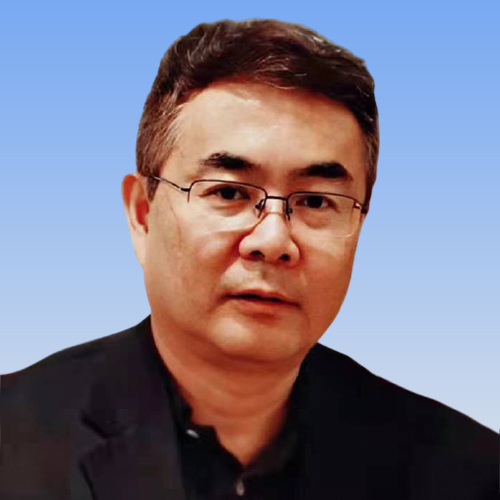
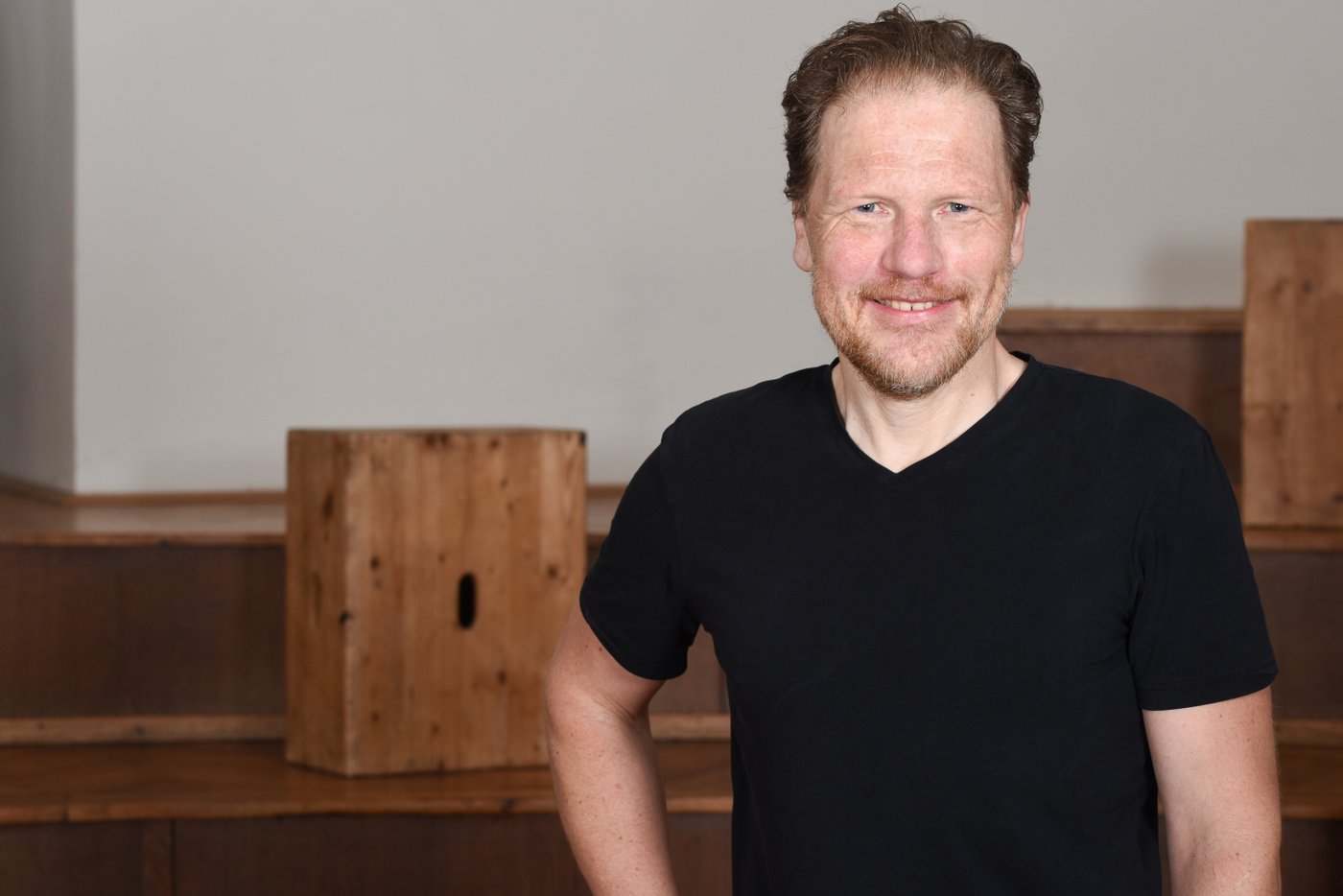
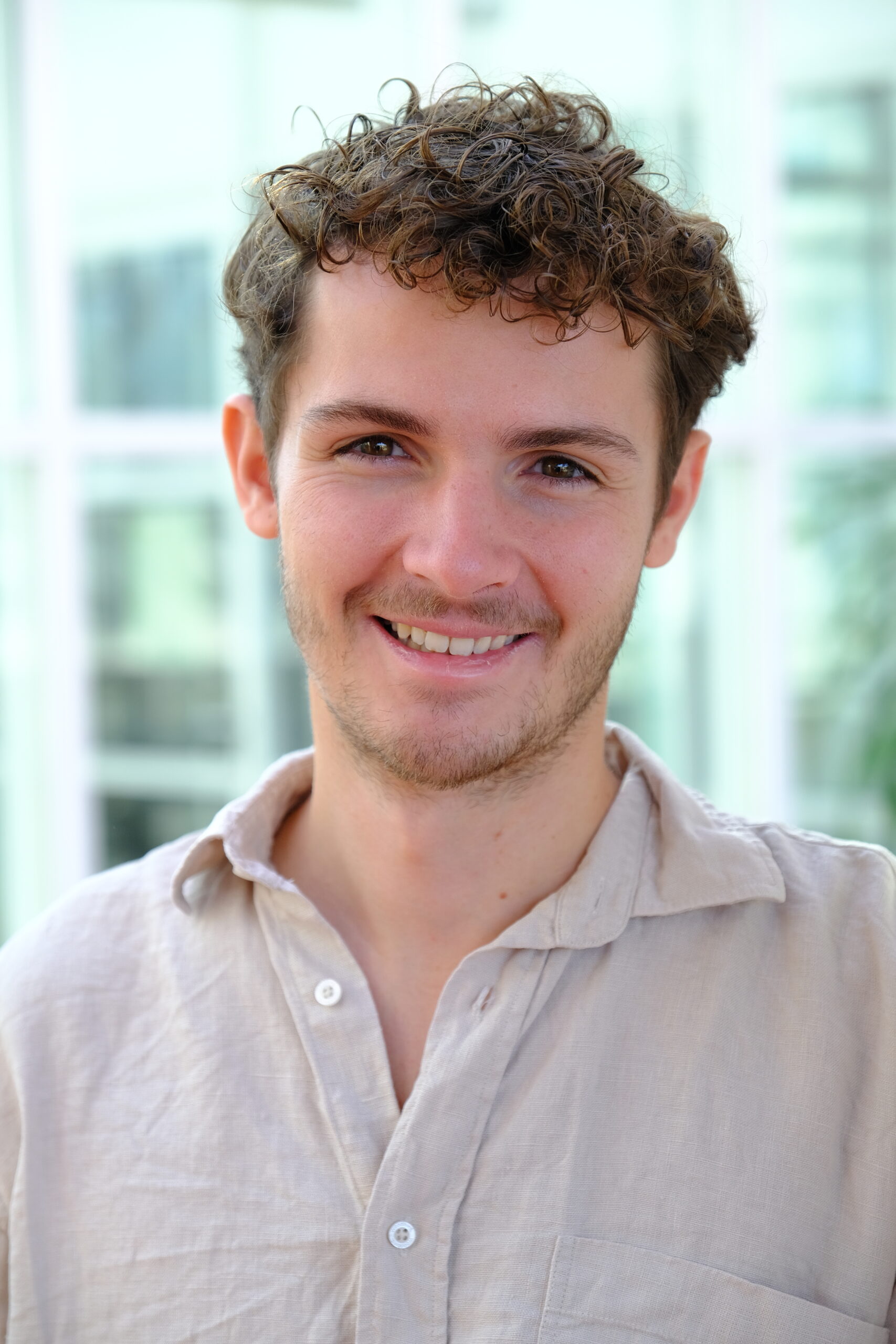
Jiebo Luo is a Professor of Computer Science at the University of Rochester, where he has held this position since 2014. He earned his BS and MS in Electrical Engineering from the University of Science and Technology of China (1989 and 1992) and a PhD in Electrical Engineering from the University of Rochester (1995). Prior to academia, he spent 15+ years at Kodak Research Laboratories as a Senior Principal Scientist. His research focuses on computational social science, natural language processing, digital health, computer vision, data mining, and multimedia. Dr. Luo’s work has been recognized through numerous awards, including the ACM SIGMM Technical Achievement Award (2021), Fellowships from ACM, AAAI, IEEE, IAPR, and SPIE. He has authored over 500 peer-reviewed papers, holds 90+ patents, and serves as Editor-in-Chief of the IEEE Transactions on Multimedia. He actively contributes to conference organization (e.g., ACM Multimedia, CVPR) and editorial roles for top journals. Key contributions include pioneering work in social media analytics, sentiment analysis, and digital health, as well as foundational research in multi-label classification and action recognition datasets like UCF 101. His labs and collaborations span the Goergen Institute for Data Science and the Greater Rochester Data Science Industry Consortium.
Thomas Bauer is affiliated with the Institut für Wasserbau und Ingenieurhydrologie at TU Wien. He holds a Mag.rer.nat. and Dr.nat.techn. His research focuses on environmental engineering, soil science, and agricultural ecology with applications in hydrology and ecosystem management. Recent work includes studies on soil-vegetation interactions using satellite data, vineyard management impacts on biodiversity, and soil physical properties in viticultural contexts. Notable projects involve analyzing Sentinel-1 satellite observations for soil and vegetation parameters, developing image analysis systems for soil cover estimation, and evaluating ecosystem services in vineyards through meta-analysis. Bauer collaborates with researchers across disciplines including environmental science, geomatics, and agricultural technology. No scientific awards are listed in the provided materials. His research portfolio demonstrates a strong focus on applied environmental research with interdisciplinary collaboration. No grants or student advisement records are explicitly mentioned in the available data.
Dr. Anna Breger is a Research Fellow at the University of Cambridge, affiliated with the Department of Applied Mathematics and Theoretical Physics and Gonville & Caius College. She leads the iDeal project (FWF Hertha Firnberg Fellowship) focusing on image quality assessment for medical applications and AI-driven cultural heritage preservation. Her work bridges theory and practice in image processing, machine learning, and interdisciplinary collaborations. Research interests include medical imaging analysis, historical document reconstruction (e.g., degraded sheet music), and AI applications in cultural heritage. Major projects involve collaborations with the Fitzwilliam Museum, Cambridge University Library, and the Cultural Heritage Imaging Laboratory (CHIL). She also co-founded the AI for Cultural Heritage Hub (ArCH) in Cambridge. Awarded the City of Vienna 2024 STEM Promotion Award and multiple fellowships, Breger has published extensively on image processing and authored a Springer textbook on mathematical image analysis. She is co-editor of the new German Springer series Vielfalt der Mathematik (Diversity of Mathematics), showcasing diverse mathematicians' careers and research. Current roles include PI on a Cambridge Centre for Data-Driven Discovery grant ( AI meets Cultural Heritage ), advisory work with STEM Fatale, and contributions to initiatives like Her Math’s Story promoting women in mathematics. Her office is at the Centre for Mathematical Sciences, Cambridge.
Manfred Gronalt is a Professor at the University of Natural Resources and Life Sciences, Vienna (BOKU), within the Department of Economics and Social Sciences. He leads research in Production Management and Logistics, with a focus on the wood industry, industrialized housebuilding, and sustainable supply chains. He is based at Feistmantelstraße 4, 1180 Vienna, and can be contacted via email at manfred.gronalt@boku.ac.at. His research interests include Production Management , Logistics , Operations Research , Supply Chain Management , Simulation and Optimization , and Sustainable Resource Management , particularly in the forest-wood and construction sectors. His work emphasizes process improvement, performance measurement, and digital resilience in industrial contexts. The recent publications highlight a strong trend in applying simulation-optimization techniques to construction logistics, industrialized housebuilding, and disaster resilience. His work spans from discrete event simulation of prefab production lines to system dynamics modeling of internet outages in healthcare. A recurring theme is the integration of advanced modeling methods with real-world logistics and production challenges. His scientific awards include: Best Paper Award at HMS 2015 Austrian State Prize for Transport (2007) Prof. Gronalt has supervised numerous university theses and is actively involved in academic service as a reviewer for journals such as the International Journal of Production Research and the International Journal of Simulation and Process Modelling . He has collaborated on various research projects focusing on intermodal logistics, disaster relief, and sustainable wood supply chains, although no currently ongoing projects are listed. His work is deeply integrated with industry applications and policy-relevant issues in transport and resource management.
Prof. Allan Hanbury is a full professor at TU Wien's Faculty of Informatics, leading the E-Commerce Research Area. His work focuses on domain-specific systems for information extraction and retrieval, with expertise in machine learning, natural language processing, and medical informatics. Key projects include developing tools like CRUISE-Screening for systematic literature reviews and VoMBaT for high-recall search evaluation. He coordinates initiatives in transparent automated content moderation and image mining for patents. His research bridges theoretical advancements with practical applications in healthcare, legal domains, and digital humanities. Publications span over 240 works, emphasizing reproducibility, explainability in AI, and cross-lingual systems. Active in organizing conferences like PatentSemTech and contributing to CLEF challenges. Advises on thesis topics involving hate speech detection, legal text analysis, and graph-based methods. Collaborates internationally on projects like CSMeD (clinical trial matching) and BRISE (legal corpus development). His work integrates NLP, IR, and data mining to address real-world challenges in information access and AI transparency.
Arne Nothdurft is a University Professor for Forest Monitoring at the University of Natural Resources and Life Sciences (BOKU) in Vienna, Austria, where he chairs the Institute of Forest Growth within the Department of Forest and Soil Sciences. With a career spanning over two decades in forest research and academic leadership, he has established himself as a leading expert in advanced forest inventory techniques and forest growth modeling. Professor Nothdurft's research focuses on the application of cutting-edge technologies in forest monitoring, particularly LiDAR and personal laser scanning systems for forest inventory. His work bridges the gap between traditional forestry practices and modern digital solutions, with emphasis on mixed species forest management, climate change adaptation, and the development of smart forestry systems. His research interests encompass forest growth modeling, tree species classification using point cloud data, and the development of spatial prediction models for forest inventory parameters. His recent publications demonstrate a strong trend toward integrating artificial intelligence with forestry applications, particularly in the analysis of 3D point cloud data from laser scanning technologies. His work spans both theoretical advancements in spatial statistics and practical applications for forest managers, with a particular focus on improving the accuracy and efficiency of forest inventory systems. Thurn und Taxis Förderpreis für die Forstwissenschaft (2008) Professor Nothdurft has supervised numerous master's and doctoral theses, primarily focused on the application of laser scanning technologies in forestry, forest inventory optimization, and growth modeling. His research is supported by multiple ongoing projects funded by Austrian research agencies and federal ministries, with a strong emphasis on practical applications for forest management. He leads the Institute of Forest Growth, which maintains the Lehrforst Rosalia long-term forest monitoring site, and collaborates extensively with the Institute of Forest Engineering on smart forestry initiatives.
Richard Hilbert is a Lecturer in the Department of Fine Arts at the Academy of Fine Arts Vienna, actively teaching three courses for the Summer Semester 2025: Course 060375 (Image Processing / Digital Representation I) within Design Classes, Course 050118 (Technical Basics of Digital Media II) as a Lecture-Exercise, and Course 050079 (Apparative Techniques B) as a Lecture-Exercise. His institutional affiliation includes direct contact via phone (+43 (1) 58816 - 6142) and email. His research interests focus on the integration of digital technologies in fine arts education, particularly: Digital Media as a core discipline for contemporary artistic practice Advanced Image Processing techniques for visual creation Digital Art methodologies in representation and design Media Technology applications in apparatus-based artistic techniques No scientific awards or honors are documented in the provided materials. Hilbert's responsibilities include structured lecture-exercises and design instruction, though the text lacks specifics about graduate student advising, grant funding, or external collaborations. His role centers on technical and representational aspects of digital media rather than theoretical art history. No laboratories, research teams, or institutional partnerships are referenced in the source content.
Jan-Christoph Otto is an Associate Professor in the Department of Geography and Geology at the Paris Lodron University of Salzburg, where he conducts research and teaches in the fields of geomorphology, natural hazards, and climate change impacts on high mountain landscapes. His work combines field-based quantitative and qualitative methods with shallow geophysics, GIS, and remote sensing to understand landform dynamics, sediment transport, and societal implications of environmental change. Academic Rank: Associate Professor Institution: Paris Lodron University of Salzburg School: Faculty of Natural Sciences Department: Department of Geography and Geology Email: Jan-Christoph.Otto@plus.ac.at ORCID: https://orcid.org/0000-0002-4552-3011 Research Interests: His scientific focus lies in the evolution of high mountain landscapes, particularly those influenced by glaciers, permafrost, and climate change. He investigates natural hazards and risks, sediment dynamics in mountain river basins, and the interplay between geomorphological processes and biodiversity. His research spans both the European Alps and the Andes, integrating geoscientific and archaeological perspectives on human-environment interactions. Recent Research Trends: Analysis of his recent publications reveals a strong emphasis on climate change impacts in alpine regions, including glacier retreat, permafrost degradation, and the formation of hazardous glacial lakes. He also explores wetland and peatland ecosystems using innovative techniques like sedaDNA, and investigates early human occupation in high-altitude environments. His work increasingly adopts transdisciplinary approaches, combining geosciences with ecology and social sciences. Scientific Activities and Recognition: While no formal awards are listed, Otto is highly active in the scientific community with 88 publications, 17 research projects (many ongoing), and 97 recorded activities including peer review, conference presentations, and public outreach. He frequently contributes to media discussions on climate change and natural hazards. Teaching and Advising: Otto teaches field and laboratory courses on geomorphological and geological techniques, GIS applications, and lectures on geomorphology, natural hazards, and risks. He supervises student field trips and contributes to academic service through examination committees and editorial activities. Although specific advisees are not listed, his leadership in multiple research projects suggests he mentors junior researchers. Labs and Research Teams: Otto leads and participates in several collaborative research initiatives such as CLIMB, AlpLake-Change, and AlpsChange. He is involved in maintaining the scientific website www.geomorphology.at, indicating leadership in digital knowledge dissemination. His research integrates interdisciplinary teams across geosciences, biology, and archaeology, particularly in transdisciplinary projects addressing climate change in alpine environments.
Dr. Natalie Baumgartner-Hirscher is a Senior Lecturer at the University of Salzburg's School of Education, based in the Department of Educational Science, School Research and School Practice since March 2018. She holds a doctorate from Paris Lodron University Salzburg (2017) in the field of media and sex education. With over 15 years of teaching experience, she has been a secondary school teacher for Mathematics, Biology, and Environmental Studies in Salzburg since 2007. Her research focuses on educational heterogeneity, differentiation strategies, sexual education, and health promotion. In 2021, she was nominated for the prestigious Ars Docendi State Prize for Excellence in Teaching and featured in the Atlas of Good Teaching . Since 2020, she has taught in the Higher Education Didactics+ program. Her current research includes an Erasmus+ project launching in 2024 titled Bringing Authenticity Into the Course Room , developing inquiry-based learning materials for teacher education. Key publications include works on student health perceptions, differentiation tools in science education, and body image in digital media contexts. Teaching Focus: Teacher training, educational methodology, and science pedagogy Grants & Projects: Erasmus+ project (2024), Salzburg Education Lab initiatives Labs/Teams: Part of the Department’s research groups on empirical socialization and teaching-learning processes
Dr. Christopher Hoehn is a Senior Lecturer in Biological Psychology and Methodology at the Department of Psychology , University of Salzburg , where he is affiliated with the Faculty of Natural and Life Sciences. He conducts research in the Laboratory for Sleep and Consciousness Research and serves as a key member of the Methodology group. PhD in Imaging the Mind (2024), University of Salzburg M.Sc. in Psychology (2020), University of Salzburg B.Sc. in Psychology (2018), University of Salzburg Dr. Hoehn's research focuses on sleep, consciousness, memory consolidation, and EEG-based brain state analysis . His work integrates biological psychology with advanced methodological and statistical approaches. He investigates the impact of modern lifestyle factors—such as smartphone use and artificial light—on circadian rhythms and cognitive performance, employing both experimental and computational techniques. His recent publications highlight trends in neurophysiological markers of sleep-wake states , including spectral slope and Lempel-Ziv complexity, as well as the cognitive consequences of pharmacological and environmental interventions. These studies are published in high-impact journals such as Brain Communications , eNeuro , and Clocks & Sleep . Dr. Hoehn has been actively involved in teaching methodology and statistics at both the bachelor’s and master’s levels and has served in various academic roles including tutor, research associate, and PhD student at the Centre for Cognitive Neuroscience. Senior Lecturer, University of Salzburg (2024–present) PhD Student, Laboratory for Sleep and Consciousness Research (2020–2024) Research Associate (2019–2020) Tutor in Methodology and Statistics (2017–2020) He leads research projects within the Methodology group / Laboratory for Sleep and Consciousness Research , contributing to interdisciplinary efforts in cognitive neuroscience and psychological methodology.
Roland Perko is a university lecturer, project manager, and key researcher at the Institute of Geodesy at Graz University of Technology. His work focuses on remote sensing, photogrammetry, and computer vision, with specific expertise in stereo matching, SAR and optical imagery analysis, and vision-based localization. R&D areas include multiple view geometry for SAR and optical imagery Specializations: subpixel techniques, digital aerial cameras, image registration
Andreas Uhl is a University Professor in Artificial Intelligence and Human Interfaces at the Department of Computer Science, University of Salzburg. With a prolific research career spanning from 1996 to present, he has authored or co-authored 534 publications and led or participated in 59 research projects. His work demonstrates sustained academic productivity with recent publications and projects extending through 2025. Professor Uhl's research interests span multiple domains at the intersection of artificial intelligence and practical applications. His primary focus areas include computer vision, biometrics, biomedical imaging, and digital forensics, with significant contributions to pattern recognition and image analysis. His work bridges theoretical computer science with practical applications in cultural heritage preservation, medical diagnostics, and security systems, demonstrating a versatile research portfolio that addresses both fundamental challenges and real-world problems. His recent publications reveal a strong emphasis on temporal image forensics, biomedical image analysis, and biometric security. The research shows a clear trajectory toward increasingly sophisticated applications of AI in specialized domains, with particular attention to validation methodologies and limitations of current approaches. His work on cultural heritage applications demonstrates an innovative application of computer vision techniques to historical artifacts. Best paper award @ 25th ACM Symposium on Applied Computing (Applications Track), 2010 Best Paper award @ 2nd European Workshop on Visual Information Processing (EUVIP'10), 2010 IEEE Biometrics Council Best Paper Award (TBIOM), 2022 Kurt Zopf Preis, 2023 Professor Uhl actively leads multiple significant research initiatives, including the CDL-POSA project on People and Object Surface Authentication (2025-2032), Artificial Intelligence driven Biomedical Imaging Innovation (2025-2029), and the AIBIA Research and Transfer Junior Lab (2023-2025). His research group maintains active collaborations with institutions like Carnegie Mellon University, as evidenced by his recent research stay there in September 2024. The scope and duration of his current projects indicate substantial grant funding and institutional support for his research agenda. His laboratory activities focus on AI applications in biomedical imaging, border security through vehicle-integrated technologies (AutoBorder project), and cultural heritage analysis. The research environment appears to integrate academic inquiry with practical transfer through initiatives like the FFG Student Internships program, suggesting a strong commitment to both fundamental research and real-world implementation.
Sophie Bauernfeind is a researcher at the University of Applied Sciences Hagenberg, affiliated with the Research Center Hagenberg and AIST Center of Excellence Medical Engineering/TIMed Center. Her work bridges information and communications technology with medical engineering, focusing on orthopedic solutions through digital innovation. Her research interests center on prosthetic and orthotic engineering , leveraging additive manufacturing and adaptive modeling to create patient-specific medical devices. She specializes in applying automated processes to orthopedic aids, with particular emphasis on shoe insoles and foot biomechanics , integrating clinical knowledge with digital workflows for enhanced patient outcomes. Recent publications reveal a strong trend toward AI-driven orthopedic solutions , with 80% of her 2023-2025 work focusing on digital customization of orthotic devices. Key themes include patient-specific 3D printing applications (Industry 4.0), clinical knowledge extraction from medical records, and AI-powered diagnostic systems for orthopedics, reflecting a strategic shift toward data-driven medical device development. As Co-Investigator for the MOVE project (Modeling Orthoses for Vitality Enhancement, 2023-2024), she contributed to research advancing orthosis customization through additive manufacturing. Her collaborations span clinical partners and engineering teams, focusing on translating research into practical orthopedic solutions. She actively participates in conferences like ICECCME 2023, demonstrating engagement with the international biomedical engineering community. Her laboratory work centers on the AIST Center of Excellence Medical Engineering/TIMed Center, where she utilizes advanced prototyping facilities for orthopedic device development. Current activities involve integrating clinical data systems with manufacturing pipelines to streamline production of personalized orthotics, with future work likely expanding into real-time biomechanical monitoring systems.
Dr. Andy Sombke is a highly accomplished researcher specializing in arthropod morphology and neuroanatomy at the Medical University of Vienna's Center for Anatomy and Cell Biology, where he leads a research group in the Department of Cell and Developmental Biology. With a habilitation (Dr. rer. nat. habil.), he has established himself as a leading expert in myriapod biology, particularly centipede anatomy, venom systems, and appendage development. His work bridges fundamental research with potential biomedical applications, utilizing advanced microscopic techniques including SEM, TEM, microCT, and histology. Dr. Sombke's research interests focus on comparative neuroanatomy , venom delivery mechanisms , appendage regeneration , and respiratory system anatomy in arthropods. His work on centipedes has revealed remarkable insights into the evolutionary transformations of their ultimate legs, which serve diverse functions from physical defense to sensory reception. His research group employs a multimodal microscopic approach to analyze the cellular organization and functional adaptations of these fascinating creatures, with potential applications in bioinspired technology and novel therapeutics. His publication record shows strong focus on centipede morphology (40% of recent publications), venom systems (25%), neuroanatomy (20%), and comparative morphology across arthropod groups (15%). The research demonstrates increasing interdisciplinary collaboration, with recent work spanning immunology, oncology, and biomedical engineering applications of arthropod-inspired systems. Associate Editor of Arthropod Systematics & Phylogeny Associate Editor of Physiological Entomology Speaker of the section group Morphology of the German Zoological Society Participant of the European Venom Network (COST Action CA19144) Dr. Sombke has mentored several students including Iulia Barutia and Simon Züger, and collaborates extensively with international researchers across Europe. His work on centipede biology has received significant attention for its potential to inform biomedical applications, particularly in understanding venom components with therapeutic potential. His laboratory, the Functional Ultrastructure Group, focuses on providing comprehensive understanding of cellular dynamics through electron microscopic techniques. The Functional Ultrastructure Group maintains active research on centipede anatomy, venom systems, and appendage development, with particular emphasis on the evolutionary transformations of centipede ultimate legs. The group is part of the European Venom Network and maintains the "Myriapod Morphology and Evolution" Facebook group as a hub for international collaboration in the field.
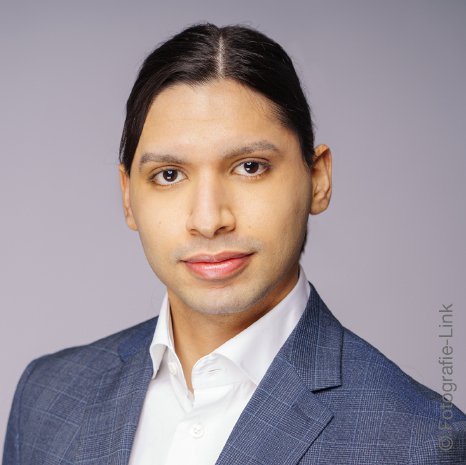
Armin Dadras serves as a Junior Researcher at the University of Applied Sciences St. Pölten within the Media Computing Research Group of the Institute of Creative Media Technologies and Department of Media and Digital Technologies. His academic qualifications include: Bachelor of Arts (BA) Bachelor of Science (BSc) Master of Science (MSc) His research bridges computer vision and biomedical engineering, specializing in interpretable geometric feature extraction for photography composition analysis and deep learning applications in medical imaging. Current work focuses on rule-of-thirds detection algorithms and glottis segmentation failure identification in endoscopic videos. Publications reveal a strong interdisciplinary trajectory merging media technologies with healthcare solutions, particularly through computational photography and speech pathology diagnostics. Dadras actively contributes to the Media Computing Research Group, driving innovation in media technology applications through advanced computing methodologies. No documented information exists regarding student supervision or research grant acquisitions.