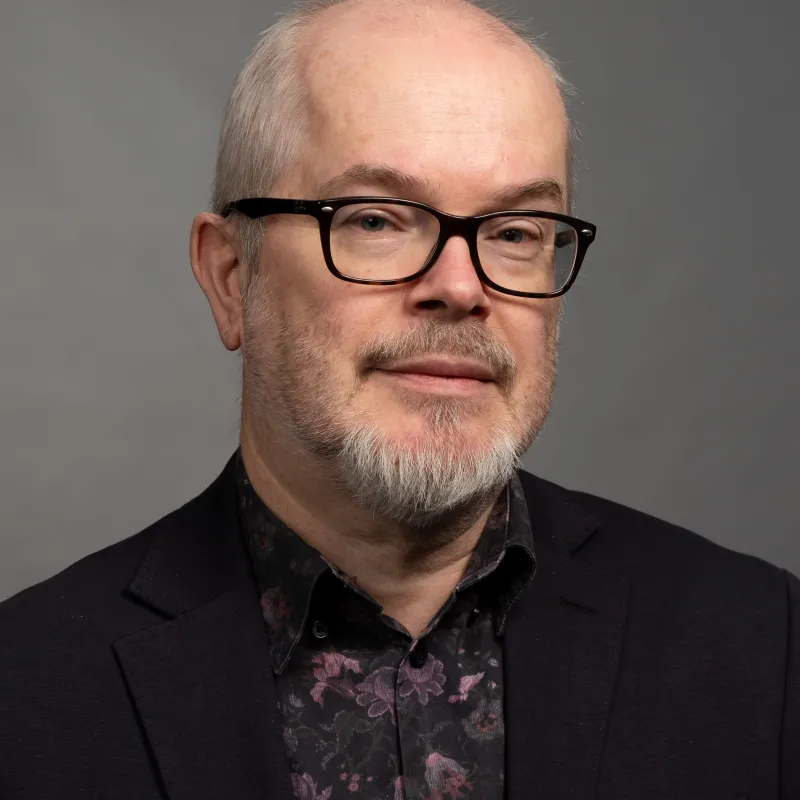
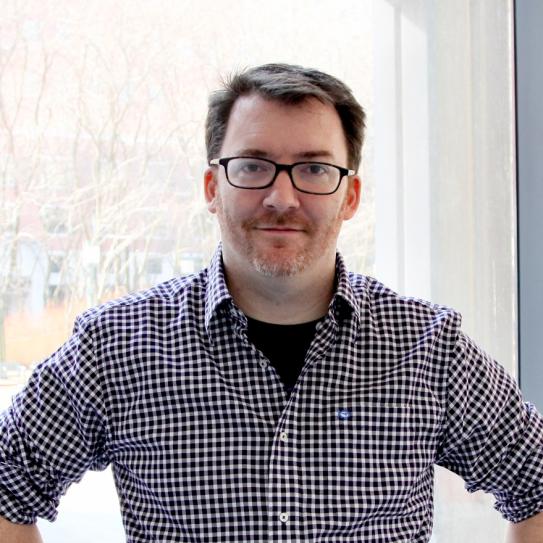
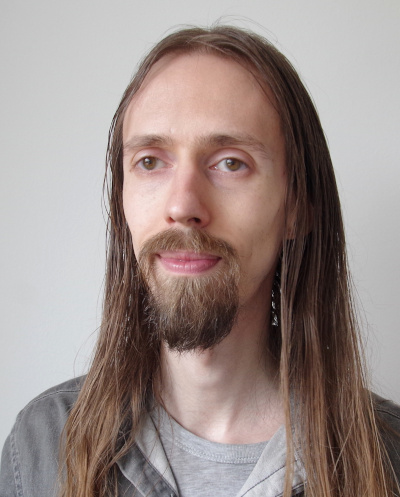
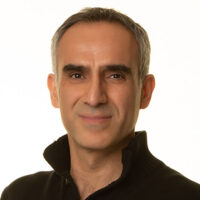
Mohamed Khamis is an Associate Professor at the University of Glasgow , specializing in Human-Computer Interaction (HCI) with a focus on Human-centered Security and Eye Tracking for privacy protection. His research spans Pervasive Displays , Usable Security , and User Privacy in immersive environments. PhD from Ludwig Maximilian University of Munich (LMU) Supervised by Florian Alt and Andreas Bulling Research Interests: Usable Security and Privacy Designing Gaze-based Systems Thermal Attacks and Shoulder Surfing Mitigation Security in Public Displays and Virtual Reality Recent Publications demonstrate expertise in: Drone Interaction and Proxemics Privacy Scales for Measuring Granular Constructs Gaze-enabled Mobile Authentication Multimodal Security Systems Deepfake Privacy Applications XR Dark Patterns Analysis Scientific Contributions: Recipient of multiple Honorable Mention Awards at CHI and MobileHCI Funding from EPSRC for thermal imaging research Keynote speaker at ECCV 2020 Open Eyes Workshop Co-organizer of ETRA workshops on Eye-Gaze for Security
Karan Ahuja is the Lisa Wissner-Slivka & Benjamin Slivka Assistant Professor of Computer Science at Northwestern University, directing the Sensing, Perception, Interactive Computing & Experiences (SPICE) Lab. He earned his Ph.D. in Human-Computer Interaction from Carnegie Mellon University (2023) and a B.Tech. in Computer Science (2017). His research focuses on creating technologies that sense and understand human behavior, with applications in mobile health, extended reality, and natural user interfaces. Key projects include LemurDx for ADHD diagnosis, EITPose for wearable hand pose tracking, and MobilePoser for full-body pose estimation via consumer IMUs. Awards include Forbes 30 Under 30 (2024), MIT 35 Innovators Under 35 Asia Pacific, and ACM SIGCHI's Outstanding Dissertation Award. He has worked at Google, Apple, Microsoft Research, Meta Reality Labs, and IBM Research. His lab emphasizes real-world deployments, with technologies licensed and integrated into products used by millions. Prospective students are invited to join his lab at Northwestern via a dedicated application form. Research spans embedded systems, computer vision, and on-device ML, with a focus on impactful applications in healthcare and XR.
Heikki Handroos is a Full Professor of Mechanical Engineering at LUT University, leading the Laboratory of Intelligent Machines since 1993. He holds a DSc (Technology) from Tampere University of Technology and has served as Vice-Dean of the Faculty of Technology (2007-2009) and currently chairs the Collegiate Body of LUT University. His research focuses on mechatronics, robotics, control systems, and fluid power, with over 300 publications and 2,400+ citations. He has supervised 34 doctoral theses and 150+ MSc projects, managed R&D projects exceeding €20M, and co-founded four tech startups. His work spans industrial collaborations, digital twin applications, and innovative robotics for nuclear energy (e.g., DEMO reactor maintenance systems). He has held visiting professorships in the U.S., Japan, and Russia, and actively contributes to academic editorial roles and professional societies like ASME and IEEE.
Edgar Weippl is a Professor at the Faculty of Computer Science, University of Vienna, where he serves as Vice Dean and Head of the Research Group Security and Privacy. His work spans cybersecurity, blockchain, and machine learning, with teaching roles in information security and software security courses. Current Positions: Vice Dean (Faculty of Computer Science), Head (Security and Privacy Research Group), Deputy Head (Neuroinformatics & Knowledge Engineering Groups) Research Interests: Cybersecurity, blockchain, IoT security, code obfuscation, privacy technologies, reinforcement learning, and socio-technical systems security Selected Publications: Focus on blockchain privacy, VoWiFi security, code obfuscation, and reinforcement learning applications
R. Luke DuBois is an Associate Professor and Co-Chair of the Technology, Culture and Society Department at the NYU Tandon School of Engineering, where he also directs the Integrated Design & Media program and the Brooklyn Experimental Media Center. He holds a DMA in music composition from Columbia University and is a renowned artist, composer, and performer whose work explores intersections between technology, sound, and visual media. His research focuses on digital media, human-computer interaction, and emerging technologies applied to artistic expression and accessibility. Key roles include directing the SONYC initiative (addressing urban noise pollution via AI) and leading the NYU Ability Project (advancing disability studies through technology). He has collaborated with institutions like the Smithsonian and artists such as Maya Lin, and his work has been exhibited globally, including at the Sundance Film Festival and the Aspen Institute. DuBois co-developed the Jitter software suite for real-time data manipulation and performs in avant-garde groups like Bioluminescence and Fair Use. His artistic practice combines time-lapse phonography, interactive installations, and interdisciplinary projects that critique cultural ephemera while advancing accessibility in STEM and the arts. Recent contributions include browser-based tools for accessible music notation (SoundCells) and sonification techniques for calculus education. He serves on the Board of the ISSUE Project Room and has been featured in major publications like the New York Times and TED Conference talks.
Serge Belongie is a Professor at the Department of Computer Science (DIKU) at the University of Copenhagen, where he holds dual affiliations with the Pioneer AI research section and the Image Analysis, Computational Modelling, and Geometry section. His academic position places him at the forefront of interdisciplinary research connecting computer vision with language models, geospatial analysis, and cultural understanding. Professor Belongie's research program encompasses several critical domains in modern artificial intelligence: Advanced computer vision and image analysis techniques Vision-language model integration and multimodal systems 3D point cloud processing and semantic segmentation Geospatial representation learning for environmental applications Fine-grained object recognition and detection Cultural context understanding in AI systems His recent publication record reveals a sophisticated trajectory toward developing precise control mechanisms for vision-language models, with applications spanning forensic analysis, cultural heritage preservation, and social media understanding. The research demonstrates increasing sophistication in handling cultural context and enabling fine-grained manipulation of visual content through natural language interfaces. Professor Belongie maintains an active research group producing significant scholarly output, with over 280 research publications documented in his academic profile. His work is supported by research funding that enables cutting-edge exploration in multimodal AI systems with practical societal impact. He plays a key role in the Pioneer AI center at the University of Copenhagen, which focuses on advancing artificial intelligence through interdisciplinary collaboration and innovative research approaches that bridge theoretical computer science with real-world applications.
Mark B.N. Hansen is the James B. Duke Distinguished Professor of Literature at Duke University, affiliated with the Trinity College of Arts & Sciences. He holds roles such as Director of the Literature Program and previously served as Director of Graduate Studies and Undergraduate Studies in Literature. His academic journey includes a Ph.D. from the University of California, Irvine (1994), an M.A. (1989), and a B.A. from New York University (1987). Hansen’s research explores the intersection of technology, human agency, and social life, spanning literary studies, media theory, phenomenology, and cognitive neuroscience. He emphasizes the role of technological exteriorization in defining human experience, with notable contributions to digital media aesthetics, media ontology, and the environmental turn in media studies. His publications reflect a focus on 21st-century media’s impact on perception, temporality, and embodiment. Recent works include analyses of deepfake technology, feed-forward agency, and technical feeling. Hansen’s teaching spans special topics in literature, visual studies, and computational media, reflecting his interdisciplinary approach. Recipient of prestigious awards like the National Humanities Center Fellowship (2014) and a Fulbright Senior Specialist designation (2012), Hansen also serves on editorial boards and professional organizations. His research has been supported by grants such as Duke’s Global Humanities Seed Grant (2022).
Dr. Paul Henderson is a Lecturer in Machine Learning at the School of Computing Science, University of Glasgow. He holds a BA in Mathematics (University of Cambridge, 2009), an MSc in Informatics (University of Edinburgh, 2010), and a PhD in Computer Vision (University of Edinburgh, 2018). His research focuses on generative AI, probabilistic machine learning, and minimally-supervised approaches to 3D computer vision, with applications in healthcare, computer graphics, and physical sciences. Education: PhD in Computer Vision (University of Edinburgh, 2018) MSc in Informatics (University of Edinburgh, 2010) BA in Mathematics (University of Cambridge, 2009) His work spans generative models, medical imaging, and robotics. Notable contributions include datasets like Flat’n’Fold and techniques in diffusion models for text-to-image retrieval. He has received grants including the Royal Society Research Grant (2022-2023) and the Vesuvius Challenge Autosegmentation Prize (2025). He supervises PhD students in topics such as medical image segmentation and generative AI. Teaching: CS5002 Advanced Programming, CS4061/CS5014 Machine Learning.
Thomas Poell is Senior Lecturer in the Department of Media Studies at the Faculty of Humanities, University of Amsterdam. His scholarly work sits at the intersection of digital media studies, platform studies, and political communication, with a focus on how digital platforms reshape public communication and cultural production. Poell's research interests primarily center on platformization processes and their societal implications. His influential work examines how digital platforms mediate public communication, with particular attention to protest movements, multilingual communication, and the transformation of cultural industries. He has made significant contributions to understanding the political economy of platforms, platform power dynamics, and the evolving relationship between platforms and public values. His methodological approach combines qualitative analysis of platform architectures with empirical studies of user practices across different cultural and linguistic contexts. Analysis of Poell's recent publications reveals a clear trajectory from studying social media's role in political movements to examining broader platformization processes. His work increasingly focuses on platform power across specialized domains including medical imaging, advertising ecosystems, and news industries. A consistent thread throughout his scholarship is examining how platform architectures shape communication practices and power relations, with growing attention to issues of visibility, governance, and equity in platformized environments. Poell has made significant contributions to the field through his co-authored book The Platform Society (2018), which established foundational concepts for understanding how digital platforms transform various sectors of society. He has also co-edited Global Cultures of Contestation (2017) and The Sage Handbook of Social Media (2018), demonstrating his leadership in synthesizing scholarly knowledge about digital media and platform dynamics. His influential article "Twitter as a multilingual space: The articulation of the Tunisian revolution" exemplifies his approach to studying platform-mediated communication during political upheavals. This work demonstrated how Twitter functioned as a global communication space during the Tunisian revolution, with different language communities articulating distinct accounts of the revolution while remaining interconnected through strategic language use by key activists.
Jessica J. Fridrich is a Distinguished Professor in the Department of Electrical and Computer Engineering at Binghamton University, part of the State University of New York (SUNY) system. She is affiliated with the T. J. Watson School of Applied Science and Engineering. Her research focuses on steganography, steganalysis, digital forensics, and machine learning, with notable contributions to secure data hiding and patented camera fingerprinting techniques approved for legal evidence. Education: PhD in Electrical and Computer Engineering from Binghamton University Her research interests include steganography and steganalysis of digital images, digital forensics for linking photos to cameras via sensor fingerprints, signal estimation and detection, and applications of machine learning. Earlier work explored chaotic nonlinear dynamical systems and encryption. Her methods have led to over 150 refereed publications and seven successfully commercialized patents. Her articles emphasize advancements in batch steganography, JPEG compatibility, and adaptive embedding strategies. Recent work leverages machine learning for steganalysis and explores security trade-offs in high-dimensional feature spaces. 2006-2007 Chancellor's Award for Excellence in Scholarship and Creative Activities 2002 Chancellor's Award for Outstanding Inventor Narrative on advising and grants: She mentors graduate students and leads projects funded by AFOSR, NSF, and AFRL. Her research addresses challenges in data hiding security, forensic analysis, and optimizing steganographic algorithms. The Digital Data Embedding Lab, which she directs, focuses on algorithmic innovation and empirical validation in steganography and forensics. Labs/Teams: Digital Data Embedding Lab
Jia-Bin Huang is an Associate Professor in the Department of Computer Science at University of Maryland, College Park , with a secondary appointment at the University of Maryland Institute for Advanced Computer Studies . His work bridges computer vision , computer graphics , and machine learning . His research focuses on 3D scene reconstruction , neural radiance fields , generative models , and multimodal foundation models . He has made significant contributions to video super-resolution , text-driven 3D modeling , and inverse rendering techniques. 15 recent publications (2024-2025) at top venues: CVPR , NeurIPS , SIGGRAPH Asia , 3DV , and ECCV Pioneering work in Urban Scene Inverse Rendering , Generative Video Editing , and 3D Human Digitization He has received multiple awards including the 3M Non-Tenured Faculty Award , ETRA Best Paper , and NSF Grants . His lab trains 12 PhD students and has graduated 18 Masters/PhD students now at institutions like Stanford , Meta , and Google .
Shujun Li is a Professor of Cyber Security and Head of the Cyber Security Research Group at the School of Computing, University of Kent. He also holds a Visiting Professorship at the Department of Computer Science, University of Surrey. His research focuses on cyber security, privacy, AI applications, and human-centric computing. He leads the Institute of Cyber Security for Society (iCSS), a university-wide interdisciplinary research centre. Education: PhD in Information and Communication Engineering (Xi'an Jiaotong University, 2003), followed by postdoctoral research at City University of Hong Kong, Humboldt Research Fellowship at FernUniversität in Hagen, and a 5-year Zukunftskolleg Research Fellowship at Universität Konstanz. Research interests include cyber security (usable security, digital forensics, misinformation), AI safety, human factors, and socio-technical systems. He has published over 100 papers, with awards including the IEEE Guillemin-Cauer Best Paper Award and EPSRC recognition. Awards: Includes IEEE Transactions Best Paper Awards, EPSRC peer review recognition, and multiple conference best paper awards. Active in interdisciplinary projects like MACRO (cyber risks in mobility systems) and ACCEPT (reducing human-related cyber risks). Labs/Teams: Directs iCSS, co-founded Kent & Medway Cyber Cluster, and leads the Kent Interdisciplinary Research Centre in Cyber Security (KirCCS). Collaborates with industry and government agencies on cyber resilience and AI ethics.
Sylvain Lefebvre is a permanent researcher at INRIA (Institut National de Recherche en Informatique et en Automatique) in France, where he leads the MFX research team since 2018. Previously, he was part of the ALICE group at INRIA Nancy (2009-2018) and the REVES team in Sophia Antipolis (2006-2009). His career includes a postdoctoral position at Microsoft Research Seattle (2005) following his PhD at INRIA Rhones-Alpes under Fabrice Neyret. His educational background includes a PhD in Computer Graphics from Université Joseph Fourier (Grenoble) in 2005, preceded by a Master in Computer Graphics from INP Grenoble in 2001. His habilitation thesis focused on Runtime Texture Synthesis. Lefebvre's research centers on simplifying content creation for highly detailed patterns, structures, and shapes with applications spanning Computer Graphics to additive manufacturing. He develops fast, controllable by-example synthesis approaches that generate content while enforcing user-specified constraints. His work addresses computational challenges through novel data structures and algorithms optimized for GPUs and FPGAs, including his Silice programming language. The ERC-funded ShapeForge project (2012-2017) advanced shape generation for 3D printing, leading to the IceSL software for digital modeling and fabrication. Analysis of his 15 most recent publications reveals a strong focus on additive manufacturing optimization, with recurring themes in structural integrity, material efficiency, and geometric algorithms. His work bridges computer graphics theory with practical fabrication constraints, particularly in microstructure design, slicing techniques, and mechanical metamaterials. The interdisciplinary nature spans computer science, materials engineering, and robotics. EUROGRAPHICS Young Researcher Award (2010) ERC Starting Grant for ShapeForge project (2012) Lefebvre has advised over 25 PhD students and interns including Marco Freire, Thibault Tricard, and Jimmy Etienne. His ShapeForge project received significant ERC funding, supporting research in computational fabrication. He serves on numerous program committees including SIGGRAPH, Eurographics, and SIGGRAPH Asia, reflecting his leadership in the computer graphics community. As leader of the MFX team since 2018, Lefebvre directs research in computational fabrication, focusing on IceSL software development for 3D printing workflows. The team integrates computer graphics techniques with manufacturing constraints, developing tools that simplify complex object design and fabrication while addressing real-world challenges in material usage and structural integrity.
Shahin Sirouspour is a Professor in the Department of Electrical and Computer Engineering at McMaster University. His research focuses on robotics, autonomous systems, control systems, and optimization, with applications in aerial robotics, teleoperation, haptics, medical robotics, and smart energy grids. He is affiliated with the Telerobotics, Haptics and Computational Vision Laboratory and teaches courses such as Non-linear Control Systems and Electrical Systems Integration Project. He holds a Ph.D. from the University of British Columbia and has supervised numerous graduate students. His lab includes advanced equipment like multi-axis robotic manipulators, haptic interfaces, and real-time computing systems. Education: B.Sc. and M.Sc. from Sharif University of Technology (Iran), Ph.D. from University of British Columbia (Canada). Current roles include accepting graduate students and leading research clusters in Digital & Smart Systems, Energy, and Transportation. Awards include the McMaster President's Award for Excellence in Graduate Supervision. His work bridges theoretical control systems with practical applications in healthcare, energy, and autonomous systems. Research highlights include developing control strategies for multi-agent robotic systems, smart grid optimization, and medical robotics. Collaborations with institutions like MacAUTO and industry partners (e.g., MDA Space Missions) enhance translational impact. His lab supports projects on asymmetric teleoperation, deformable tissue simulation, and microgrid energy management.
Ling Zhao is a distinguished Professor at the School of Management, Huazhong University of Science and Technology, China, with extensive research contributions spanning artificial intelligence, machine learning, information systems, and biomedical applications. With over 150 publications since 2008, Dr. Zhao has established herself as a leading researcher in multiple interdisciplinary domains, particularly in applying computational methods to solve complex real-world problems. Dr. Zhao's research interests encompass a broad spectrum of cutting-edge topics including artificial intelligence, machine learning, data mining, control systems, and information systems. Her work demonstrates exceptional versatility, bridging theoretical computer science with practical applications in healthcare, transportation, cybersecurity, and business management. Notably, she has made significant contributions to sentiment analysis, medical image processing, algorithmic management, and privacy-preserving data analysis. Her research methodology often combines deep learning approaches with domain-specific knowledge to develop innovative solutions. Analysis of Dr. Zhao's recent publications (2023-2025) reveals a strong focus on interdisciplinary applications of AI, with particular emphasis on healthcare informatics (medical image analysis, disease diagnosis), human-computer interaction (algorithmic management effects), and advanced machine learning techniques (graph neural networks, multimodal learning). Her work shows a consistent trend toward increasingly complex and integrated systems that address real-world challenges across multiple domains. Dr. Zhao has made substantial contributions to academic advising and research mentorship, though specific student names aren't detailed in the available publications. Her research has been supported by various grants enabling work in AI applications, biomedical engineering, and information systems. Dr. Zhao maintains active collaborations with researchers across China and internationally, as evidenced by her co-authorship patterns. While specific laboratory information isn't explicitly mentioned in the publication records, Dr. Zhao appears to lead or be significantly involved in research groups focusing on AI applications in management and healthcare. Her work on medical imaging, sentiment analysis, and control systems suggests involvement in multiple specialized research teams addressing different application domains through computational approaches.