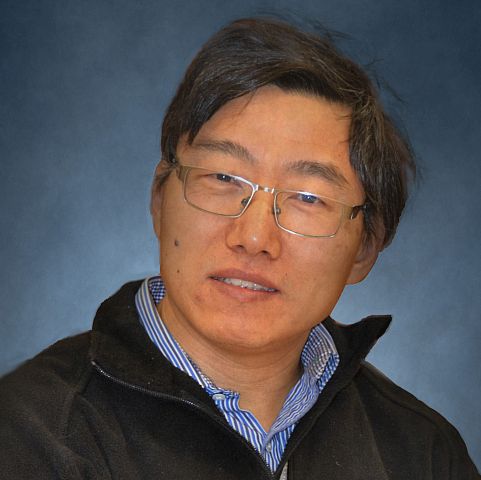
Qingguo Li is a Professor and Associate Head at the Department of Mechanical and Materials Engineering , Queen's University , and a member of the Ingenuity Labs Research Institute . He specializes in biomechanical system design, energy harvesting, wearable sensors, gait analysis, and load carriage systems. His research integrates robotics, biomedical engineering, and sensor technology to develop human-centric devices and mobility aids. Current Roles : Professor, Associate Head, Queen's University Research Institute : Ingenuity Labs Research Institute Lab : Bio-Mechatronics and Robotics Laboratory His work focuses on biomechanical energy harvesting , IMU-based motion analysis , and assistive device development . Key applications include stroke rehabilitation, gait monitoring, and wearable power generation systems. Articles span cable-driven robots , smart walkers , and 3D printing mechanisms , emphasizing human-robot interaction and dynamic modeling . The lab explores sensor calibration , adaptive control algorithms , and human movement optimization . Areas of impact include rehabilitation engineering , load carriage stability , wearable sensor accuracy , and assistive robotics . His team develops solutions for gait asymmetry detection , post-stroke mobility , and low-cost energy systems , leveraging machine learning and kinetic modeling .
Dr. Jennifer Jenson serves as Professor of Digital Languages, Literacies, and Cultures within the Department of Language and Literacy Education at the University of British Columbia's Faculty of Education. She joined UBC in January 2019 after 18 years at York University, where she directed the Institute for Research on Digital Learning. Her academic leadership extends to co-editing Loading: The Journal of the Canadian Game Studies Association and past presidency of the Canadian Game Studies Association. Dr. Jenson holds a Ph.D. from Simon Fraser University. Her research program critically examines digital games, literacies, and pedagogical practices through lenses of gender, equity, and decolonization. She has conducted longitudinal studies on gender and digital gameplay, developed educational games through the Play:CES lab, and authored influential reports for the Ontario Ministry of Education including “21st Century Skills, Technologies and Learning”. Her publication trajectory (2015-2023) reveals consistent focus on regendering game cultures, multimodal learning frameworks, and computational literacy in youth media engagement. Work spans critical analysis of “The Entrepreneurial Gamer” concept to contemporary digital literacies in multimodal contexts, emphasizing how game-based learning can disrupt exclusionary practices while advancing inclusive education. No scientific awards were explicitly documented in the source materials. Dr. Jenson maintains active graduate supervision, currently advising doctoral candidates like Laura Brass researching immigrant women language teachers’ identities. Her sustained research funding includes leadership of the international SSHRC Partnership Grant “Re-Figuring Innovation in Games” (2015-2021) and SSHRC Insight Grant “Think, Design, Play” (2014-2020), with collaborations spanning school boards, technology companies, and global institutions like SRI International and Nottingham University. She co-founded the CFI-funded Play:CES lab where teams developed educational games including “Contagion” and “Epidemic: Self-Care for Crisis”, and currently leads the Re-Figuring Innovation in Games (ReFiG) collective – an international consortium of scholars, community organizers, and industry partners dedicated to transforming game culture through equity-centered innovation.
Karyn Moffatt is an Associate Professor in the School of Information Studies at McGill University and holds the Canada Research Chair in Inclusive Social Computing. As Graduate Program Director for the PhD program, she leads the Accessible Computing Technologies Research Group (ACT Lab), focusing on designing inclusive computing applications that support social engagement across diverse lifespans and abilities. Her work bridges human-computer interaction, accessibility research, and real-world community impact. Educational background: PhD in Computer Science, University of British Columbia MSc in Computer Science, University of British Columbia BASc in Computer Engineering, University of British Columbia Research Interests: Dr. Moffatt's work centers on inclusive social computing with emphases on aging populations , disability access , and intergenerational communication . She investigates how technology can overcome barriers to social participation through co-design methodologies, particularly for older adults and individuals with cognitive or physical disabilities. Current projects explore AI-enhanced aging support, dementia-friendly social platforms, accessible financial technology, and respite care coordination systems. Her approach integrates participatory design with rigorous usability testing to create solutions that address real-world challenges in healthcare, finance, and community engagement. Publication Trends: Analysis of her 15 most recent publications reveals consistent focus on aging and accessibility (60% of works), with growing emphasis on AI ethics (2025), dementia support systems (30% of 2023-2024 works), and accessible financial technology (2024). Methodologically, 75% employ co-design or participatory approaches, while 40% involve longitudinal field studies. Key venues include CHI (33%), ASSETS (20%), and ACM Transactions on Accessible Computing (27%), demonstrating leadership in top-tier HCI and accessibility forums. Scientific Awards: Multiple Best Paper Awards from ASSETS, CHI, and CSCW conferences Canada Research Chair in Inclusive Social Computing Advising and Grants: Dr. Moffatt currently supervises PhD candidates Chong Hu and Muhe Yang, having graduated four students since 2022 including Maurício Fontana De Vargas (2023) and Carrie Dai (2023). Her active grants include: NSERC Discovery Grant (2024-2029) as PI: Ethical AI for active aging Canada Research Chair renewal (2022-2027) as PI McGill Nursing Collaborative grant (2023-2025) as Co-I: iRespite mHealth app for palliative care Labs and Teams: She directs the ACT Lab, which partners with healthcare providers, public libraries, and community organizations to develop and deploy inclusive technologies. Current initiatives include the QuickPic AAC system for speech therapy, dementia-focused social programs with Montreal libraries, and Quebec-wide respite care coordination tools, all developed through interdisciplinary collaboration with clinicians, caregivers, and end-users.
Jian Zhao is an Associate Professor at the University of Waterloo's School of Computer Science, specializing in Information Visualization (InfoVis), Human-Computer Interaction (HCI), and Data Science. With a Ph.D. from the University of Toronto (2016), his research emphasizes interactive visualization techniques, AI integration in design processes, and socio-technical systems. He explores how human-AI collaboration can enhance data analysis, presentation, and user experience in complex systems. Key research areas include: 1) AI-Driven Design (e.g., code generation via sketching, infographic creation), 2) Health Informatics (therapeutic AI tools for autism support), 3) Immersive Technologies (VR/AR interfaces for presentations and education), and 4) Social Computing (remote family communication, multi-modal emoticons). His work bridges technical innovation with human-centered design principles. His publications (2021–2025) reflect a focus on interactive visualization frameworks (e.g., iTrace for cross-view data analysis), AI-human collaboration (CoLadder for hierarchical code editing), and specialized applications like TherAIssist for art therapy and EMooly for autism support. Zhao frequently explores novel interaction modalities , including gesture-based VR interfaces and sketch-based programming tools. He leads projects in computational notebooks (EDAssistant, Slide4N), visual analytics (MissBin for bipartite networks), and neurofeedback training games (Eggly). His work often emphasizes systematic design considerations for missing data, cross-view analysis, and contextual visualization in spatial AR environments.
Thierry Warin is a Full Professor of Data Science for International Business at HEC Montréal, directing the Department of International Business. He holds the Professorship in Data Science for International Business and is a Principal Investigator at CIRANO, leading the World Economy theme. His roles include affiliations with Harvard Business School’s Microeconomics of Competitiveness program and the International Trade and Finance Association presidency (2020-2022). Education: PhD from ESSEC Business School (France, 2000). Professional development includes the Harvard Business Analytics Program (2018-2020) and GIS training at Harvard. Research Interests: Data science applications in global economic transformations, including network theory, natural language processing, and computational methods. Focus areas: algorithmic collusion, platform economies, and metadata-driven analyses. He develops open-source tools like the statcanR package and advocates for reproducible research. Articles Trends: Recent work explores AI regulation, algorithmic competition, climate transition plans, and central bank speech analysis. Methodologies span structural topic modeling, social media analytics, and entropy-based frameworks. Awards: Honored with the Highly Commended Paper Award (2017-2018) and Emerald Literati Award (2018) for reverse innovation research. Recognized for contributions to computational social science and regulatory frameworks. Advising & Grants: Supervised 16 master’s projects since 2019, focusing on data science applications in global business challenges. Active in interdisciplinary initiatives like the St. Lawrence–Great Lakes corridor data hub. Labs & Philanthropy: Founded quantum simulations and leads Ed’Haîti , an NGO addressing education in Haiti. Collaborates on Science des données au féminin en Afrique , empowering 200 African women with data science skills.
Dr. Reza Samavi is an Associate Professor at Toronto Metropolitan University's Department of Electrical, Computer, and Biomedical Engineering, Faculty of Engineering & Architectural Science. He is also a Faculty Affiliate with the Vector Institute for Artificial Intelligence and directs the Trustworthy AI Research Lab (TAILab). Previously, he served as Assistant Professor and eHealth Graduate Program Coordinator at McMaster University's Department of Computing and Software (2014-2020). Holding a PhD in Computer Science (University of Toronto, 2013), his academic journey bridges industry experience with rigorous scholarly contributions. His research lies at the critical intersection of Trustworthy AI , Machine Learning Security , and Medical Informatics . He investigates Safety & Security of ML Algorithms Privacy-Preserving AI Systems Transparency Frameworks for Medical AI Blockchain-enabled Privacy Auditing Game Theory for Model Robustness Optimization-based Anonymization Techniques The TAILab research group under his leadership has produced groundbreaking work in Uncertainty Quantification for Neural Networks Robustness Against Adversarial Attacks Medical Image Analysis Clinical Decision Support Systems Emergency Medicine Predictive Modeling His recent projects focus on enhancing migrant youth mental health through LLM-based conversation agents and developing certified robustness guarantees for ensemble networks. Dr. Samavi's scholarly excellence is recognized through Privacy Technologies Research Award (IBM) Privacy By Design Research Award (Ontario IPC) Bridging Divides Emerging Research Grant (TMU) NSERC PGS-D Recipient (Co-supervised student) SOSCIP Accelerator Grant He has secured major funding from NSERC , SOSCIP , MITACS , HHS , and IDEaS programs. As a dedicated educator, Dr. Samavi teaches graduate courses in Secure Machine Learning and Software Testing while mentoring 15+ graduate students across PhD , MASc , and MEng programs. His lab has presented at premier venues including AAAI , IJCAI , and IEEE Transactions while maintaining active collaborations with institutions like Harvard, ETH Zurich, and the University of Waterloo.
David Mould is a Professor in the School of Computer Science at Carleton University. His research focuses on computer graphics, procedural modeling of natural phenomena, non-photorealistic rendering, and computer games. He holds a PhD from the University of Toronto (2002), MSc from the University of Saskatchewan (1996), and BSc from the University of British Columbia (1994). PhD: University of Toronto (2002) MSc: University of Saskatchewan (1996) BSc: University of British Columbia (1994) Research interests include procedural modeling of trees, lightning, and terrain; image stylization techniques such as stained glass transformation and wax crayon simulation; and nonlinear storytelling in games. His work emphasizes algorithmic innovation and perceptual quality in graphics. Recent publications span topics like texture synthesis, real-time video stylization, and fluid animation techniques. He leads the Graphics, Imaging, and Games (GIGL) research group at Carleton. Teaching responsibilities include courses in game development (COMP 1501–4501), technical writing (COMP 3301), and graduate courses on game design and image processing.
Jinghui Cheng is an Associate Professor at the Department of Computer Engineering and Software Engineering at Polytechnique Montréal . He holds a PhD in Computer Science from DePaul University (2017), preceded by an MSE and BSE from Xi’an Jiaotong University, China. His research uniquely bridges Human-Computer Interaction (HCI) with Software Engineering , focusing on technologies that support domain experts with specialized information needs. Awards : Canada Research Chair Tier 2 in User Experience Design of Data-Driven Systems His recent work examines playful AI interactions (e.g., ChatGPT), designer-developer collaboration , and privacy motivation in UI/UX. He actively supervises PhD and Master’s students in the HCD Lab , with over 20 completed theses. Collaborations span institutions like the École Polytechnique and partnerships with researchers such as Jin L. C. Guo and Bram Adams . Cheng’s 15 most recent publications (2023-2025) reflect trends in AI-assisted design , usability in open-source communities , and ethical technology development . His grants include the AUDACE grant (2020) co-led with Dr. Gabrielle Pagé, focusing on healthcare applications.
Gaang Lee is an Assistant Professor in the Department of Civil and Environmental Engineering at the University of Alberta's Faculty of Engineering, where he joined in 2022 after earning his Ph.D. from the University of Michigan. His research pioneers 'sympathetic' built environments that enhance safety, health, productivity, and comfort for workers and users through integration of wearable biosensors, AI, extended reality, and robotics with psychophysiological theories. Education: Ph.D in Civil and Environmental Engineering, University of Michigan, Ann Arbor (2022) - Emphasis: Construction Engineering and Management; Graduate Certificate in Computational Discovery and Engineering Graduate Certificate in Computational Discovery and Engineering, University of Michigan, Ann Arbor (2022) M.S. in Architectural Engineering, Yonsei University, South Korea (2012) - Emphasis: Construction Engineering and Management B.S. in Architectural Engineering, Yonsei University, South Korea (2010) Dr. Lee combats technological exclusion for marginalized groups (construction workers, older adults) by developing empathetic technologies for workplaces, buildings, and urban spaces. His work applies human sensing, AI, and digital twins to create environments that adapt to diverse human needs, with key projects spanning psychophysiological safety monitoring, human-robot collaboration, and inclusive urban design. He integrates psychophysiological and socio-cognitive theories to address real-world gaps in construction engineering and computer science. His recent publications (2023-2025) reveal strong trends in AI-driven safety hazard identification, biosensor-based stress/fatigue monitoring, and virtual reality for construction team dynamics. A critical emerging focus is equity-centered technology design, with increasing publications addressing inclusive built environments and technological access for vulnerable populations through graph-based algorithms, domain adaptation, and interpretable AI models. Scientific Awards: No awards mentioned in the provided text. Dr. Lee actively recruits students for his 'Empathetics' research group starting in 2026, prioritizing candidates with empathy, research motivation, and commitment to diversity and inclusion. While specific grants are not detailed, his research program receives institutional support from the University of Alberta and likely external funding given its interdisciplinary scope and industry relevance. He leads the 'Empathetics' research group (part of Attentive Hub) which emphasizes diversity as fundamental to innovation. Current projects include psychophysiological monitoring for occupational safety, trustable human-robot collaboration systems, and extended reality frameworks for empathetic built environments. The group collaborates with IHT LAB (https://www.iht-lab.com/) and focuses on deploying technologies that make daily surroundings safe, healthy, and truly inclusive for all individuals.
Zhao Zhao is an Assistant Professor at the School of Computer Science, University of Guelph. Her work focuses on wearable systems, human-robot interaction, and gamification for health and education. She holds a PhD from Carleton University (2019) and completed a postdoctoral fellowship at the University of Toronto (2019–2023) before roles at McMaster University and her current position. Education includes a BSc in Computer Science from University of Electronic Science and Technology of China (2011), MSc from Carleton University (2014), and PhD in Electrical and Computer Engineering (2019). Research interests span physiological computing, AI-assisted creativity tools, and adaptive systems leveraging wearable sensors. Key research areas include: 1) Wearable-based gamification for health and education, 2) Emotion sensing via physiological signals, and 3) Human-robot interaction enhanced by wearable data. Her lab uses Empatica EmbracePlus wristbands and Emotiv EEG headsets to analyze real-time physiological responses in diverse interaction scenarios. Recent publications (2020–2025) emphasize personalized exergame systems, child-robot interaction studies, and AI linguistic competency analysis. She actively seeks graduate students and industry partnerships in wearable technology, education tech, and HRI.
Dr. Christopher Collins is a Professor of Computer Science at Ontario Tech University, leading the Visualization for Information Analysis Lab (vialab). He holds a PhD from the University of Toronto (2010) and focuses on interdisciplinary research in information visualization, human-computer interaction, and natural language processing. His work addresses challenges in information overload, text analytics, and novel interfaces such as touch, pen, VR/AR. Collins' research has been featured in top-tier venues like ACM CHI and IEEE Transactions on Visualization and Computer Graphics, earning honorable mentions and over $3M in funding as sole PI. He serves on the IEEE VIS Executive Committee and Board of Governors at Ontario Tech University. Education: PhD in Computer Science, University of Toronto (2010) MSc in Computer Science, University of Toronto (2004) BSc (Hons) in Computer Science, Memorial University (2001) Research Interests: Collins' work spans information visualization , pen+touch interfaces , visual analytics , and text-driven systems . He explores how interactive technologies can democratize complex data analysis, particularly in education, healthcare, and creative domains. Recent projects include gaze-driven learning tools, context-aware camera interfaces, and bias-mitigating product review analysis. Awards: ACM CHI Honorable Mention Award IEEE VIS Honorable Mention Award Grants & Impact: Secured $3M+ in research funding. Media coverage includes New York Times and CBS Sunday Morning for innovations in visualization and text analytics. Teaches courses in human-computer interaction, computer graphics, and information visualization. Labs & Collaborations: vialab develops tools like Lexichrome , ConToVi , and NeuroSight . Active in IEEE Visualization and ACM Interactive Media communities. Collaborates with academia and industry globally.
Dr. Daniel H. Jarvis is a professor at the Schulich School of Education, Nipissing University, where he teaches in both undergraduate (BEd) and graduate (MEd/PhD) programs. His research focuses on mathematics education, technology integration, curriculum development, and STEAM education initiatives. He has led several collaborative research projects including a SSHRC-funded international study on Computer Algebra Systems (CAS) technology in undergraduate mathematics instruction. Dr. Jarvis's research interests span mathematics pedagogy, workplace technology applications, interdisciplinary curriculum integration, and innovative educational approaches. His work consistently explores the intersection of mathematical concepts with technology-enhanced learning environments. His publications demonstrate a strong focus on educational technology integration, mathematics pedagogy, and curriculum innovation. Recent work examines exergames in wellbeing education, communities of practice for language teachers, and technology-enhanced assessment methods in mathematics education. Dr. Jarvis has held significant administrative roles including Chair of Graduate Studies in Education (2011-2013) and Associate Dean (Interim) of the Bachelor of Education programs (2022-2024). He has collaborated on cross-disciplinary projects with colleagues in Geography, Computer Science, Nursing, and Physical Education.
Brian Ross is a Professor at the Department of Computer Science, Brock University. He holds a BSc (Hon) from the University of Manitoba, MSc from the University of British Columbia, and PhD in Artificial Intelligence from the University of Edinburgh. His research focuses on evolutionary computation , particularly genetic programming , with applications in computational biology , evolutionary design , and computational aesthetics . Education: BSc Computer Science (Hon), University of Manitoba MSc Computer Science, University of British Columbia PhD Artificial Intelligence, University of Edinburgh Research Interests: Computational Intelligence: genetic programming, evolutionary algorithms, multi-objective optimization Evolutionary Design: computational aesthetics, 2D/3D modeling, energy-efficient architecture Applications: computational biology, stochastic process algebra, GPU-based image analysis Article Trends: His recent work combines deep learning with evolutionary algorithms to enhance diversity in agent behavior and design optimization. Earlier studies focused on stochastic modeling of biological networks and procedural texture generation . Collaborations span computational aesthetics, passive solar architecture, and non-photorealistic rendering techniques. Students & Collaborations: He has supervised diverse projects including evolved intelligent agents , passive solar building design , and evolutionary art systems . Notable students include Marshall Joseph (2023), Tyler Cowan (2021), and Sheikh Faishal Basher (2021).
Vicky McArthur is an Associate Professor at Carleton University's School of Journalism and Communication, specializing in Media Production and Design with cross-appointment in Communication and Media Studies. She co-directs the MARVEL Lab, a leading facility for mixed/augmented reality and virtual environments research. Research Interests : Her work bridges Human-Computer Interaction (HCI) with game design, digital humanities, and immersive storytelling. Key areas include: Augmented and Virtual Reality systems Avatar-mediated communication Cultural analysis of digital media Visual language learning frameworks Funding & Collaboration : Currently supported by SSHRC, NSERC, and CFI grants, her research involves international partnerships like the 2024 Nara Institute collaboration in Japan. Her lab features optical tracking, MoCap suits, and HMD fleets for cutting-edge experiments. Scientific Recognition : Awards include: Young Network Investigator (2014, GRAND-NCE) Research Achievement Award (2021) Research Excellence Award (2022) Multiple ACM Best Paper honours Publication Diversity : Publishes in ACM CHI, IEEE Visualization, Frontiers in Psychology, and cultural studies venues like ISEA and Replaying Japan, reflecting her interdisciplinary approach.
Dr. Richard W. Lachman is a Professor in Digital Media at Toronto Metropolitan University's RTA School of Media, while currently on leave. He serves as Director of Zone Learning, Creative Technology Research and Development, and the Experiential Media Institute. Director, Zone Learning (Toronto Met) Director, Creative Technology R&D Director, Experiential Media Institute His research explores convergent media, digital documentary, collaborative work, and new storytelling forms. He specializes in prosocial VR applications, interactive cinema, and emotional regulation through games. Current projects include immersive narratives for mental health and AI-enhanced media production. Recent scientific publications focus on: Virtual reality applications for clinical psychology Interactive storytelling in metaverse environments Conversational AI design challenges Prosocial impact of immersive media AI integration in entertainment workflows Awarded the Gemini Award for creative production, Lachman collaborates with Discovery Channel Canada, NFB, CTV, and the Banff Centre for the Arts. His work spans entertainment properties, educational gamification, and cross-disciplinary innovation in STEAM education. Over 25 years of industry experience in computer games shipping millions of copies Featured in New York Times, Time Magazine, and USA Today Exhibited at American Museum of the Moving Image