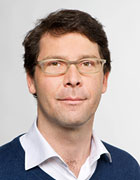
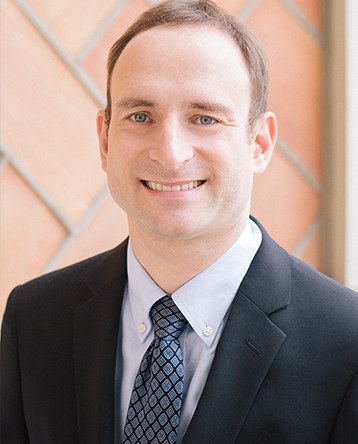
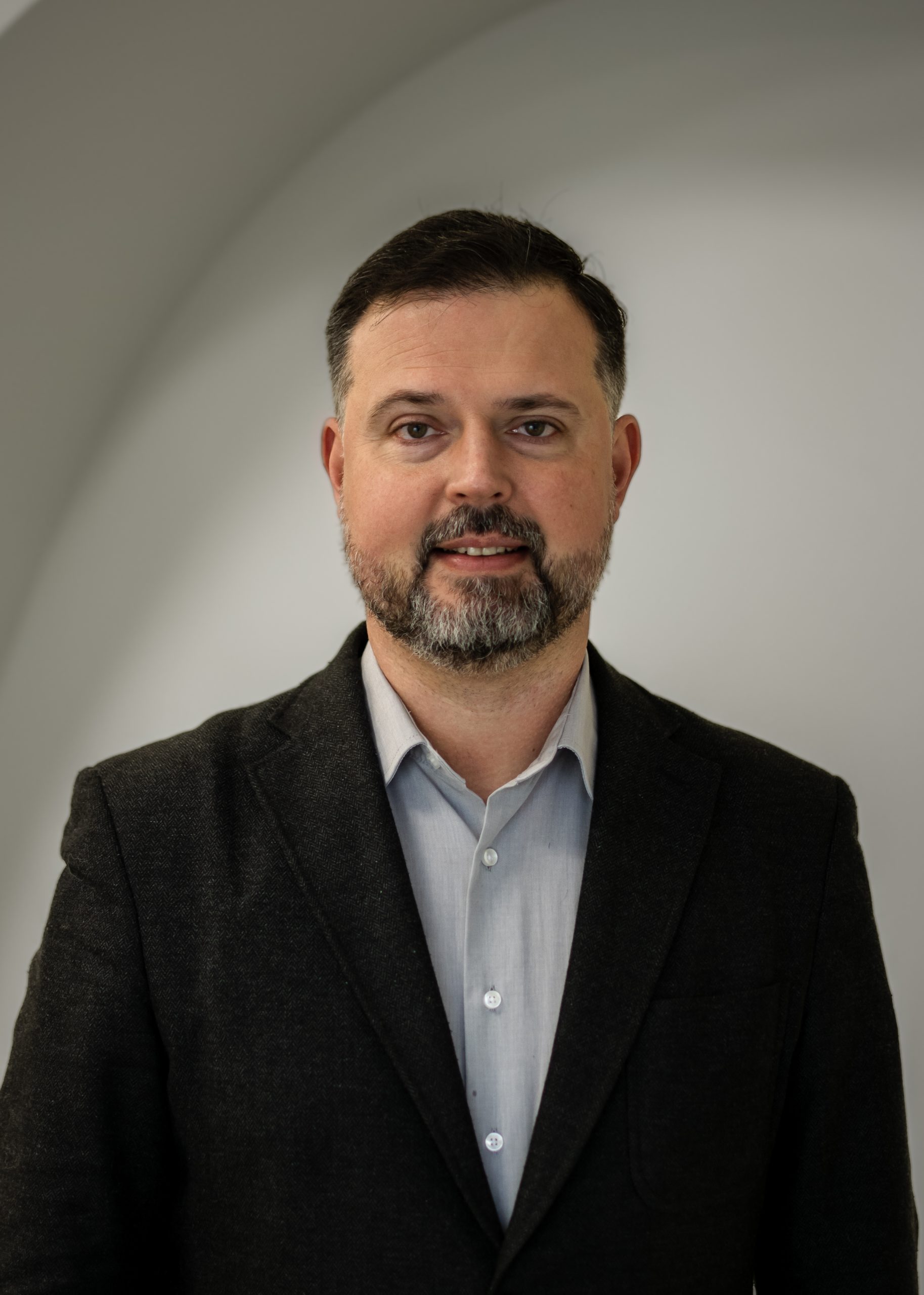
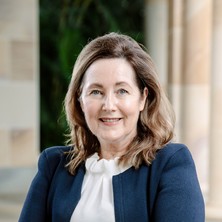
Alexis Blanchet is a Professor at the Université Sorbonne Nouvelle, holding the rank of Maître de conférences Hors Classe since 2022. He serves as Deputy Director of the Cinéma et Audiovisuel department and directs the university's vidéoludothèque. His research focuses on the economic and cultural history of the video game industry in France, intersections between cinema and digital media, and interactive narrative forms. Key roles: Member of IRCAV research institute, former director of the CAV master's program. Research interests include game studies, transmedia storytelling, and media industries analysis. Published extensively including Une Histoire du Jeu Vidéo en France and Lire les Magazines de Jeux Vidéo . Active in academic governance and public outreach through conferences, media appearances, and collaborative projects.
Professor Dr. Michael Woywode is a full professor and holds the Chair of SME Research and Entrepreneurship at the University of Mannheim , within the Business School . His research and teaching are embedded in the Institute for SME Research and Entrepreneurship (ifm Mannheim) , a central research institute of the university, and the Mannheim Center for Entrepreneurship and Innovation (MCEI) , which offers entrepreneurship courses university-wide. Research Interests: Family Firms: Succession planning, leadership transitions, and post-succession innovation. Entrepreneurship: Founder behavior, startup ecosystems, and entrepreneurial decision-making. Digitalization in SMEs: Competitiveness, digital transformation, and innovation in small and medium-sized enterprises. Self-Employment & Labor Markets: New forms of self-employment and their societal implications. Teaching: Prof. Woywode teaches across Bachelor’s, Master’s, and Doctoral levels, offering courses such as Strategic and International Management , Introduction to Entrepreneurship , and Managing the Family Business . Research Output: His recent publications span high-impact journals including Organization Science , Family Business Review , and Journal of Small Business Management , with a clear focus on entrepreneurship, family business, and institutional theory. Team & Collaboration: He leads a multidisciplinary team including postdocs, PhD candidates, and research associates, working closely with the MCEI and ifm Mannheim to foster entrepreneurship research and education.
Christian Poellabauer is a Professor at Florida International University (FIU) in the Knight Foundation School of Computing and Information Sciences, serving as Interim Associate Dean for Research and Graduate Studies in the College of Engineering & Computing. He holds a Ph.D. from Georgia Institute of Technology (2004) and a Diplom-Ingenieur from TU Vienna (1998). His research focuses on mobile sensing, data analytics, and healthcare technologies, leading the MOSAIC Lab which develops solutions for healthcare, IoT, and smart cities. He previously led the Mobile Computing Lab at the University of Notre Dame and held leadership roles in data science institutes. Research Interests: His work spans digital biomarkers for neurodegenerative diseases, speech analysis for mental health, wearable device authentication, and wireless sensor networks. The MOSAIC Lab addresses challenges like real-time sensor data analysis on constrained devices and translating insights into clinical applications. Teaching: He has taught courses on Operating Systems, Mobile Computing, and Smart Health at both FIU and Notre Dame. Recent courses include COP4610 (Operating Systems Principles) and COP5614 (Graduate Operating Systems) at FIU. Service: He serves as Associate Editor for IEEE Transactions on Network Science and Engineering, and has organized conferences like ICNC 2023 and IEEE MASS 2021. His academic service includes roles on editorial boards and technical program committees for major conferences in distributed computing and networking. Advising & Labs: Advises current Ph.D. students in areas like multi-modal sensing for affective computing and mental health crowdsensing. Past students have pursued roles in academia and industry (e.g., Rose-Hulman Institute of Technology, Facebook, Microsoft). The MOSAIC Lab collaborates on projects like digital clinical outcome assessments and motor impairment detection.
Dr. Thomas E. Doyle is an Associate Professor at the McMaster School of Biomedical Engineering and the Department of Electrical & Computer Engineering at McMaster University. His research focuses on biomedical signal processing, human-computer interfacing (HCI), and machine learning applications for healthcare augmentation, rehabilitation, and enhancement. He holds a Ph.D. from Western Ontario, Canada, and teaches courses like COMPENG 2DI4 (Logic Design). His work bridges cybernetics and clinical applications, emphasizing AI-driven solutions for medical diagnostics, patient monitoring, and space exploration. Education: B.E.Sc, B.Sc, M.E.Sc, Ph.D. from Western Ontario, Canada Recent Projects: Developed AI systems for remote healthcare diagnostics (2023) Collaborated with NASA on medical emergency simulators for deep space missions (2017–2023) Led ventilator development efforts for local hospitals during the pandemic (2020) His research interests span machine learning for mental health diagnostics, trust quantification in medical AI, and extended reality (XR) for medical training. He emphasizes interdisciplinary approaches, integrating computational methods with healthcare challenges. Recent publications highlight applications in pediatric emergency care, chronic pain management, and reliable medical device design. Dr. Doyle actively engages in educational initiatives, including first-year engineering pedagogy and experiential learning programs. He has received funding for projects such as the Educating the Engineer of 2025 (EtE-25) awards and contributes to initiatives like the Digital & Smart Systems and Health & Bio-innovation research clusters at McMaster.
Prof. Alexander Pretschner is a Professor of Software & Systems Engineering at the Technical University of Munich (TUM) and Founding Director of the Bavarian Research Institute for Digital Transformation (bidt). He also serves as Scientific Director of fortiss, a Bavarian research institute for software-intensive systems. His research focuses on software engineering, testing, information security, and ethical software development. Pretschner holds a PhD from TUM and has held academic positions at Karlsruhe Institute of Technology (KIT) and TU Kaiserslautern. He is a co-editor of several prestigious journals, including IEEE Transactions on Reliability and the Journal of Software Testing, Verification and Reliability. Education: PhD in Computer Science, Technical University of Munich MSc in Computer Science, University of Kansas (on Fulbright Scholarship) Diplom in Computer Science, RWTH Aachen University Research Interests: His work spans testing methodologies, secure software design, and ethical considerations in agile development. Notable contributions include frameworks for metamorphic testing, distributed data usage control, and accountability mechanisms for cyber-physical systems. Awards: IBM Faculty Award (2012, 2013) Google Focused Research Award (2011, 2012) EARTO Innovation Prize (2014) 2nd Platz Supervisory Award (2020) Advising & Grants: Pretschner has supervised numerous PhD and Master’s students, contributing to over 200 publications. He leads projects like EDAP (Ethical Deliberation in Agile Processes) and collaborates with industry partners on cybersecurity and AI ethics initiatives. Labs & Teams: His work is anchored in bidt, fortiss, and TUM’s Chair of Software & Systems Engineering, focusing on societal impacts of digitalization and trustworthy AI systems.
Dr Duncan Smith is an Associate Professor in GIS and Visualisation at the Centre for Advanced Spatial Analysis (CASA) at University College London (UCL). He serves as Programme Co-Director for the MSc Urban Spatial Science, focusing on digital visualisation and Geographical Information Systems (GIS) education. His research emphasizes urban sustainability, transport accessibility, and interactive urban visualisation, with a particular interest in global mega-cities like London, Singapore, and São Paulo. Dr Smith holds a PhD from UCL (2011), an MSc from the University of Edinburgh (2005), and a BA (2003). His recent projects include leading the ESRC-funded Driving Urban Transitions project (2024) exploring sustainable travel in small cities and outer metropolitan areas. Previously, he was Co-Investigator on the SIMETRI project (NSFC JPI Urban Europe) analyzing urban sustainability in London, the Randstad, and China's Greater Bay Area. His research interests span urban visualisation techniques, transport equity analysis, and polycentric urban development. Key areas include GIS-driven urban modelling, accessibility metrics, and the intersection of housing policy with sustainable urban form. His interactive visualisations, available on citygeographics.org , showcase innovative approaches to spatial data presentation. Dr Smith's work consistently addresses global sustainability challenges through geospatial methodologies. Recent studies highlight inequalities in transport accessibility and the spatial implications of urban policies. Upcoming projects will further investigate small-city mobility dynamics using multi-national collaborations with Amsterdam and Lisbon researchers.
Tejaswi Gowda is an Assistant Professor at Arizona State University's School of Arts, Media and Engineering within the Herberger School of Design and Arts. He specializes in Internet of Things (IoT), full-stack cloud computing, and extended-reality (XR) technologies, with applications in wearable systems, web development, and MLOps. His teaching portfolio includes courses like AME 220: Programming for the Web, AME 394: Programming the Internet of Things, and AME 494: Programming for the Social-Interactive Web. He also runs a startup focused on full-stack development and IoT consulting/product design. PhD in Computer Science (Arizona State University, 2012) Bachelor of Engineering (NITK Surathkal, India, 2005) His research spans IoT, cloud computing, digital culture, and human-computer interaction, integrating technical innovation with community-embedded projects. Expertise areas include ecosystem ecology, internet research, and social-interactive web programming.
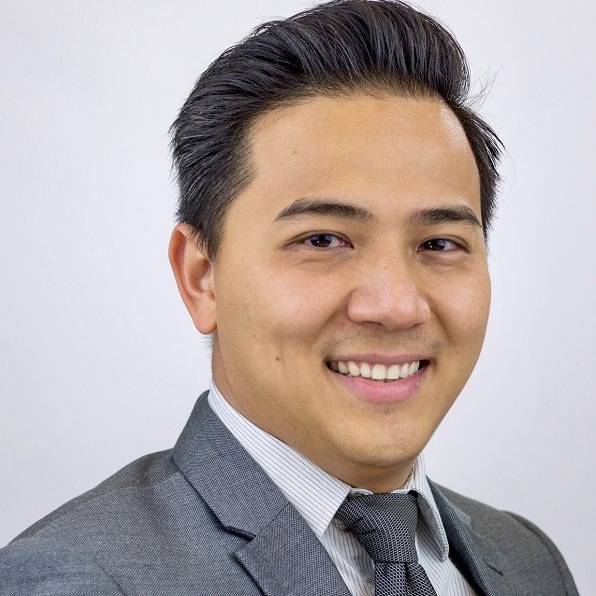
N. Rich Nguyen is an Assistant Professor in the Department of Computer Science at the University of Virginia (UVA), where he joined in August 2018. He's part of the School of Engineering and Applied Science and is on a teaching track , focusing on making machine learning accessible and engaging for all students. Research and Innovation: Rich Nguyen's research interests include biomedical image analysis , machine learning , and computer science education . He aims to reinvent instructional activities to make them adaptive and engaging by incorporating art and music elements to help everyone learn coding. Notable research contributions include: Floodwatch : A system for flood monitoring using crowdsourced images TuneScope : A digital music creation tool combining SoundScope and Snaps! technology CAD Library : Open-source design tools for educators AI for early sepsis detection : Highlighted in UVA Today Teaching Accomplishments: Before UVA, Rich taught computer science courses at UNC Charlotte for four years to a total of 1,458 students. At UVA, he teaches several courses including: CS 4774: Machine Learning (multiple semesters) CS 2501: Machine Learning for All (launched in Fall 2021) SYS 6016 / SDS 6050: Deep Learning CS 2150: Data and Program Representation (multiple semesters) CS 6316: Machine Learning (Graduate Level) CS 2910: CS Education Practicum (for Teaching Assistants) He previously taught at UNC Charlotte: ITCS 1600: Computing Professionals ITCS 2600: Computing Professionals for Transfer Students ITCS 4156: Introduction to Machine Learning ITCS 2215: Design and Analysis of Algorithms Academic Achievements: Rich Nguyen has received several notable awards and grants: Google Faculty Award for Machine Learning Education with TensorFlow (2019) Best Paper Award at IEEE BigDataSE (2022) Best Poster Award at SITE Conference (2022) CCI Faculty Innovation Award (2018) NSF grants for Smart and Connected Communities (2022) and Computational Thinking (2021) 3 Cavaliers Grant on Coding and Music (2021) Student Mentorship: Rich has mentored numerous students and teaching assistants who have achieved recognition. Notable students include: Joy Qiu - Published in Clinical Infectious Diseases Louisa Edwards and Zach Boner - Invited to Ken Ono Podcast Mike Ferguson - Winner of CS Louis T. Rader Undergraduate Teaching Award He has also served as faculty advisor for HooHacks (UVA's hackathon) and co-founded CharlotteHack at UNC Charlotte. Labs and Collaborations: Rich Nguyen leads the ML4VA (Machine Learning for Virginia) initiative, engaging students in project-based learning to apply machine learning to real-world problems affecting Virginia communities. He collaborates with institutions for symposiums on smart cities, particularly with ASEAN universities, and has partnered with Premier Healthcare for hackathons and with Glen Bull on educational technology projects.
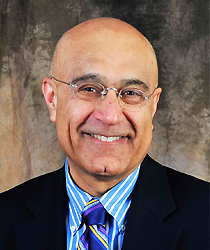
Mohammad Modarres is the Nicole J. Kim Eminent Professor at the University of Maryland within the A.J. Clark School of Engineering. He serves as Director of the Center for Risk and Reliability (CRR) and is a Professor of Nuclear Engineering in the Department of Mechanical Engineering. Dr. Modarres co-founded the world's first degree-granting graduate curriculum in reliability engineering at the University of Maryland and has established himself as an international expert in reliability and risk analysis. Dr. Modarres received his educational credentials from prestigious institutions: B.S. in Mechanical Engineering from Tehran Polytechnic M.S. in Mechanical Engineering from MIT M.S. and Ph.D. in Nuclear Engineering from MIT Dr. Modarres' research spans multiple critical areas in engineering risk and reliability. His primary interests include probabilistic risk assessment, uncertainty analysis, probabilistic physics of failure, and probabilistic fracture mechanics. His work encompasses both experimental investigations and sophisticated probabilistic model development. He has made significant contributions to materials degradation science, prognosis and health management systems, and nuclear safety analysis. His research bridges theoretical developments with practical applications in complex engineering systems, particularly in nuclear power and aerospace sectors. Analysis of Dr. Modarres' recent publications reveals a strong trend toward integrating advanced data science techniques with traditional reliability engineering. His work increasingly incorporates machine learning, deep learning, and entropy-based approaches to solve complex problems in prognostics and health management. There's a clear focus on multi-unit systems, particularly in nuclear power applications, and a growing emphasis on data-driven methodologies for remaining useful life estimation and failure prediction. His research maintains a strong foundation in probabilistic methods while embracing cutting-edge computational approaches. Dr. Modarres has received numerous prestigious honors and awards throughout his distinguished career: Nicole Y. Kim Eminent Professorship in Engineering Minta Martin Professorship in A.J. Clark School of Engineering University of Maryland Distinguished Scholar-Teacher (2019) Tommy Thompson Award for outstanding lifetime contributions to nuclear safety (American Nuclear Society) Fellow, American Nuclear Society Fellow, Institute of Electrical and Electronics Engineers (IEEE) Life Fellow of IEEE 1996 Maryland Inventor of the Year Award (in Information Sciences) FDA Commissioner Special Citation for Contributions to Risk Assessment Methods (2004) 2008 International Research Leadership Award (Society for Reliability Engineering, Quality and Operations Management) Honorary Doctorate from Universidad Da Vinci de Guatemala As the founding director of the Center for Risk and Reliability, Dr. Modarres has built a world-renowned program that has awarded over 500 Ph.D. and master's degrees. His research has been supported by significant grants from government agencies and industry partners, particularly in nuclear safety, aerospace reliability, and critical infrastructure protection. He has mentored numerous students who have gone on to become leaders in reliability engineering across various industries. His center collaborates extensively with the International Atomic Energy Agency (IAEA) and other international organizations on risk assessment methodologies. The Center for Risk and Reliability (CRR), which Dr. Modarres directs, serves as a hub for multidisciplinary research in risk and reliability engineering. The center has recently renovated its facilities to enhance collaboration among researchers from different engineering disciplines. CRR maintains strong partnerships with industry leaders including Amazon Lab126 (as evidenced by their collaboration on device durability research) and has been instrumental in advancing probabilistic risk assessment tools used in nuclear power plant safety analysis. The center hosts regular seminars, workshops, and international conferences, positioning itself at the forefront of risk and reliability research globally.
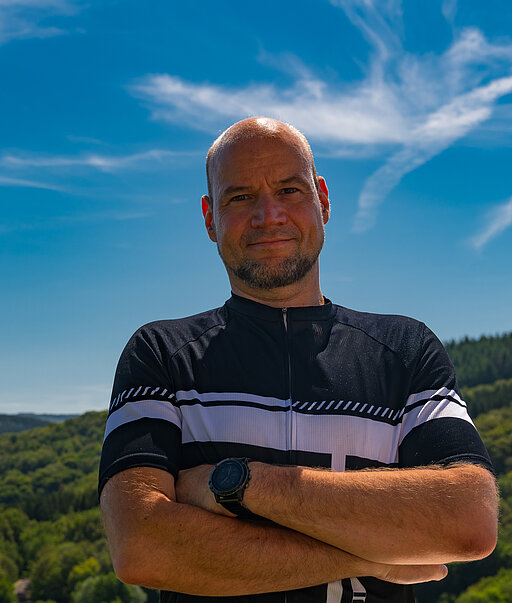
Prof. Dr. Ingo Scholtes is Chair of Machine Learning for Complex Networks at Julius-Maximilians-Universität Würzburg's Center for Artificial Intelligence and Data Science (CAIDAS). His research spans network science, graph machine learning, and computational social science, with applications in software engineering, ecology, biology, and physics. He received a Juniorfellowship from the German Informatics Society (2014) and an SNSF Professorship (CHF 1.5Mio, 2018). Current affiliations: JMU Würzburg (since 2021), University of Zurich (2018-2024), Bergische Universität Wuppertal (2019-2021) Research focus: Higher-order network modeling, temporal graph analysis, AI for collaborative systems, causality-aware machine learning His recent publications demonstrate strong trends in temporal network analysis , graph neural networks for time-series, and higher-order models across software engineering and social science domains. He co-chairs multiple international workshops on complex networks and serves as associate editor for EPJ Data Science and Advances in Complex Systems. Key scientific contributions: Foundational work on higher-order network models published in Nature Physics Methodological innovations in temporal network visualization (HOTVis) and path-based analysis (pathpy) As both educator and organizer, he leads the Computational Social Science Section at GI e.V., mentors across disciplines, and develops tools like git2net for collaboration analysis. His work bridges theoretical foundations with practical applications in network science.
Franz Franchetti is the Kavčić-Moura Professor of Electrical & Computer Engineering at Carnegie Mellon University. He serves as Associate Dean for Research and Director of the Engineering Research Accelerator at CMU. Education: Ph.D. in Computational Mathematics (Vienna University of Technology, 2003) M.Sc. in Technical Mathematics (Vienna University of Technology, 2000) His research interests focus on automatic performance tuning and program generation for emerging parallel computing platforms , including multicore CPUs , GPUs , and 3DIC chip design . He leads the SPIRAL effort to automate highly optimized software libraries and explores domain-specific compiler transformations in HPC applications for smart grids and material sciences . Recent work extends SPIRAL to quantum computing . The scientific awards Franchetti has received include the Gordon Bell Prize (2006) , HPC Challenge Class II Award (2010) , and the CIT Dean's Early Career Fellowship (2013) . He and his students have won multiple Best Paper Awards at HPEC, DAC, and ISPA ACM TODAES Best Paper (2014) Student Research Competition wins (PACT 2024, CGO 2023) Franchetti has advised students like Richard Veras and Thom Popovici . He has secured significant grants from agencies such as DARPA, DOE, NSF, and industry partners (Intel, NVIDIA, Mercury). He co-founded SpiralGen, Inc. and holds leadership roles in organizations like ASciNA Western Pennsylvania and as Honorary Consul of Austria in Pittsburgh.
Dr. Nerijus Maliukevičius serves as an Assistant Professor at Vilnius University's Institute of International Relations and Political Science, where he conducts research and teaching within the Department of Political Behavior and Institutional Studies. His expertise centers on information warfare, strategic communication, and Russian geopolitical strategies, with extensive publications analyzing disinformation campaigns targeting Baltic and European states. Maliukevičius' research interests focus on Information Warfare , Russian Studies , and Propaganda Countermeasures , examining how technological advances reshape conflict dynamics. His work investigates Kremlin influence operations across media ecosystems, emphasizing social resilience frameworks and psychological defense mechanisms against hybrid threats. Key contributions include foundational studies on Russian information geopolitics and contemporary analyses of operations like Ghostwriter that exploit digital vulnerabilities in democratic societies. His publication trajectory reveals a strategic evolution from theoretical frameworks (2002-2008) toward actionable counter-strategies, with recent work prioritizing social resilience metrics and Nordic-Baltic defense coordination. This shift reflects escalating geopolitical tensions following Crimea's annexation and Ukraine's invasion, where his analyses of Russian media tactics have gained critical policy relevance across NATO and EU institutions. Maliukevičius has secured major research funding including the IARPA-funded SAGE project (2016-2019) for geopolitical forecasting and Lithuania's national disinformation study (2021). He regularly advises governments through high-impact presentations at NATO StratCom CoE, NED forums, and Lublin Triangle initiatives, translating academic insights into operational countermeasures against active measures. As co-leader of Vilnius University's Politics of Technology Research Group and Belarus Research Group, he directs collaborative investigations into AI-driven disinformation and authoritarian influence networks. His teams develop early-warning systems for hybrid threats while training next-generation analysts through specialized courses like Information Warfare and Strategic Political Communication.
Ian Ewart is an Associate Professor at the University of Reading's School of the Built Environment, serving as Head of Construction and Engineering Management and Research Group Lead for Organisation, People and Technology. He chairs the Research Ethics Committee since 2016 and supervises undergraduate/postgraduate dissertations. His academic journey spans engineering and anthropology: DPhil Social and Cultural Anthropology, University of Oxford, St Hugh's College (2007-2012) MSc Material Anthropology and Museum Ethnography, University of Oxford, St Hugh's College (2006-2007) BA (Hons) Archaeology and Anthropology, University of Oxford, Harris Manchester College (2003-2006) Diploma in Management Studies, University of the West of England (1990-1994) BEng (Hons) Mechanical Engineering, Staffordshire University (1983-1987) Ewart's research integrates ethnographic methods with digital technology studies, examining human-technology interactions in construction and domestic settings. His work bridges engineering practice and social anthropology, focusing on skill transmission, sustainable design, and multisensory experiences in virtual environments. Publications from 2025-2013 reveal a dominant trajectory in digital twins for socio-ecological sustainability, VR-based occupant behavior prediction, and HBIM for heritage conservation. The corpus demonstrates consistent cross-disciplinary innovation, merging archaeological reconstructions with healthcare applications while maintaining anthropological rigor. Key recognition: ESRC Future Research Leader fellowship (2013) for Designing Healthy Homes project He supervises PhD candidates like Afolabi Dania (Nigerian sustainable construction) and Joanna Hull (Heritage BIM), leveraging ESRC funding for ethnography-VR health studies. His grants emphasize participatory design and real-world impact assessment in built environments. Leaders the Organisation, People and Technology research group, developing multisensory Roman town reconstructions with sound/smell integration to advance archaeological and architectural experience modeling.
Mohammad T. Alhawary is Professor of Arabic Linguistics and Second Language Acquisition at the University of Michigan's Middle East Studies department within the College of Literature, Science, and the Arts. He serves as Director of both the MA Program in Arabic for Professional Purposes (APP) and the MA Program in Teaching Arabic as a Foreign Language (TAFL). His educational background includes a Ph.D. from Georgetown University (1999). Prior to joining the University of Michigan, he contributed to developing Arabic and Middle Eastern Studies programs at various US institutions. Professor Alhawary's research spans both theoretical and applied Arabic linguistics, with particular focus on second language acquisition processes. His work examines how factors like age, input quality, output practice, and first language transfer affect Arabic language learning. He has made significant contributions to understanding Arabic language pedagogy, curriculum design, proficiency testing, and the application of technology in language learning. His research also extends to bilingualism, multilingualism, language impairment, and Arabic medieval grammatical traditions. His publications reflect a strong trajectory in Arabic linguistics research, with recent works focusing on practical language teaching applications, reading comprehension mechanisms, code-switching patterns in digital communication, and multilingual acquisition processes. The 2023 publication 'Teaching Arabic as a Foreign Language' represents his latest contribution to language pedagogy methodology. 2019 AATA Book Award for 'Arabic Second Language Learning and Effects of Input, Transfer, and Typology' As an academic leader, Professor Alhawary serves as Executive Director of the American Association of Teachers of Arabic and edits both the Journal of Arabic Linguistics Tradition and Al-'Arabiyya journal. He continues to develop empirical research on Arabic second language acquisition to inform teaching practices both in America and globally.
Professor Janet McColl-Kennedy is a leading figure in marketing and service science at The University of Queensland's Business School. She serves as Program Lead for Innovation Pathways (FaBA) and co-founded the Service Innovation Alliance (SIA) research hub, focusing on customer experience, AI, digital transformation, and sustainability. With Fellow status in the Academy of the Social Sciences in Australia and the Australian and New Zealand Marketing Academy, she holds international recognition including Research.com's World's Best Business Scientists ranking and the Christopher Lovelock Career Contributions to the Services Discipline Award (2025). University of Queensland Business School Honorary Visiting Professor, Cambridge Service Alliance Research Collaborator, University of Cambridge Her research spans customer experience management, service ecosystems, digital transformation, and healthcare services. She has pioneered frameworks for customer value co-creation and service recovery strategies, integrating AI and behavioral science. Her 2019 paper on customer experience insights was implemented by a major B2B organization, while her work on value co-creation improved outcomes at Lutheran Community Care. Recent publications focus on AI impacts in food and beverage services, sustainable service ecosystems, and digital health interventions. She has secured over $89 million in competitive grants, including multiple ARC Linkage and Discovery Projects, and leads cross-disciplinary teams with institutions like Cambridge University and Arizona State University. 2024 - ARC College of Experts appointment 2023 - Bo Edvardsson Industry Impact in Services Award 2022 - Elected Fellow of Academy of the Social Sciences in Australia 2021 - Clarivate Highly Cited Researcher 2018 - Ranked most influential marketing academic in Australia With over 220 publications and a Google Scholar H-index of 62, she has mentored 15 PhD students and examined theses at multiple universities. Her teaching spans 30+ years across undergraduate, postgraduate, and executive programs in Australia, USA, Italy, China, and Korea, with awards for blended learning and corporate education.