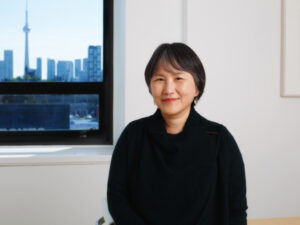
Dr. Eunice Eunhee Jang is a Professor in the Department of Applied Psychology and Human Development at the Ontario Institute for Studies in Education (OISE), University of Toronto. Her research focuses on synergistic learner modeling, dynamic assessment systems, and the intersection of language testing with educational measurement. PhD with specializations in language testing, educational measurement, and program evaluation Develops interactive digital assessment interfaces for struggling readers Author of "Focus on Assessment" (2014) and co-author of OECD Reviews on Evaluation and Assessment in Education Research Interests Dr. Jang's work explores prismatic assessment analytics to understand learner potential and predict learning pathways. She integrates natural language processing and machine learning to create diagnostic feedback systems that support cognitive, metacognitive, and affective growth in technology-rich classrooms. Scientific Awards Jacqueline Ross TOEFL Dissertation Award Caroline Clapham IELTS Master’s Award Tatsuoka Measurement Award Professional Contributions She has served on major advisory boards including EQAO provincial assessments and TOEFL Committees of Examiners. Currently, she is an elected board member for the International Language Testing Association and contributes to the Broader Measures of Success Advisory Committee for People for Education.
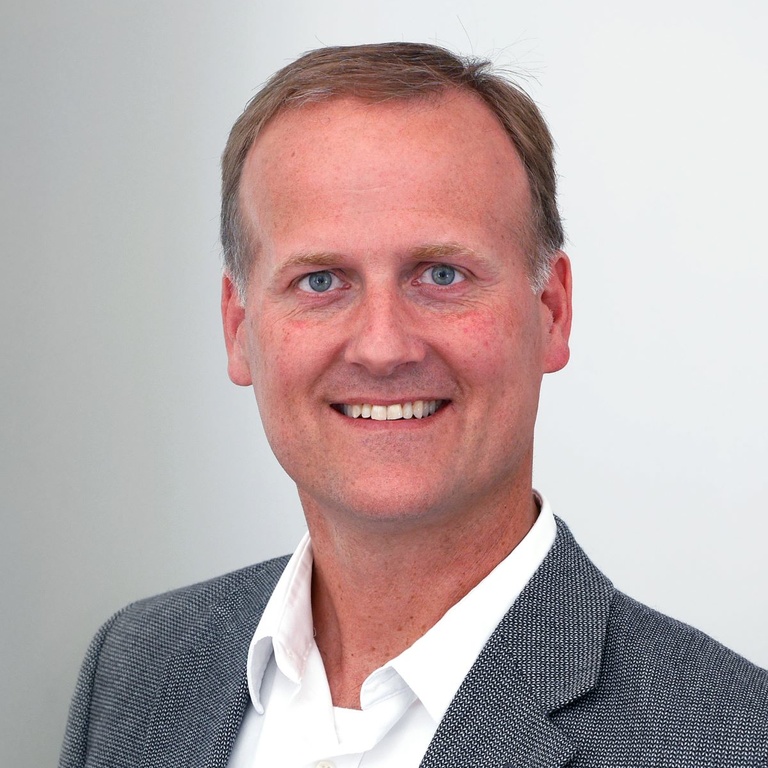
Dr. Conny H. Antoni serves as a Senior Research Professor in Work, Industrial, and Organizational Psychology at the Department of ABO Psychology, University of Trier. Their research focuses on digital collaboration, team dynamics, and psychosocial risk management in modern work environments.
David H Laidlaw is a Professor of Computer Science at Brown University, specializing in virtual reality, scientific visualization, and medical imaging. His work spans interdisciplinary applications in neuroscience, biomedical research, and educational tools. Brown University Affiliation Department of Computer Science His research focuses on: Immersive visualization for complex data analysis Diffusion MRI and neuroimaging techniques Human-computer interaction in virtual environments 3D interaction methods for scientific exploration Collaborative visualization tools for multidisciplinary teams Recent trends in his publications highlight advancements in: Graph neural networks for biomedical data Memory-efficient segmentation algorithms Perceptual studies in VR environments Annotation and analysis of placental vasculature Technological innovations in foot dynamics research He teaches courses in virtual reality design and scientific visualization, including: CSCI 1370 - Virtual Reality Design for Science CSCI 1951S - Virtual Reality Software Review CSCI 1951T - Surveying VR Data Visualization Software CSCI 2370 - Interdisciplinary Scientific Visualization
Univ.-Prof. Dr. Michaela Sambanis is a Professor of English Didactics at the Institute of English Philology within the Department of Philosophy and Humanities at Freie Universität Berlin. She has held this position since 2011 and previously served as the managing director of the Institute from Winter semester 2017/2018 to October 2019. Her academic journey includes research work at the Transfer Center for Neuroscience and Learning at the University of Ulm (2008-2011), completion of her habilitation in 2006, and her promotion in 2001. Professor Sambanis's research centers on the innovative intersection of educational neuroscience and language teaching methodology. Her work pioneers the field of Positive Foreign Language Didactics, connecting positive psychology with language education. She investigates embodied cognition approaches, particularly movement-based learning, and explores theater methods and arts integration in language instruction. Her research also addresses teacher well-being and health, multilingualism in educational settings, and the application of neuroscience findings to practical classroom situations. The k2teach project represents her current focus on teaching-learning labs in English teacher education. Her scholarly output demonstrates a consistent trajectory toward integrating neuroscience with language pedagogy, with recent publications increasingly addressing mental health, digital transformation in education, and positive psychology applications. The evolution of her work shows a progression from practical teaching methods to increasingly sophisticated neurodidactic frameworks that bridge scientific evidence with classroom practice. Professor Sambanis serves on multiple scientific advisory boards including the Goethe Institut in Munich, the Transfer Center for Neuroscience and Learning at the University of Ulm, and the Schlözer Program for Teacher Education. She is also the founding chair of the cross-state E&M Berlin-Brandenburg section and a member of the German Society for Foreign Language Research (DGFF). Her editorial work includes the SELT book series on English Language Teaching. Her teaching responsibilities include supervising master's theses in English teaching, and she has developed numerous teaching-learning laboratories that connect theoretical knowledge with practical application in teacher education. Her work demonstrates a strong commitment to evidence-based foreign language didactics that incorporates insights from neuroscience, psychology, and educational research.
Ricardo Valerdi is a Professor and Department Head in the Department of Systems and Industrial Engineering at the University of Arizona's College of Engineering. He is a Distinguished Outreach Professor, Faculty Athletics Representative for the Big 12 Conference and NCAA, and a member of the Graduate Faculty. His academic journey includes positions at MIT (2005–2011) and continuous service at the University of Arizona since 2011, with current roles beginning in 2018 and ongoing leadership since 2020. His educational background includes a PhD in Industrial and Systems Engineering from the University of Southern California, an MS in System Architecture and Engineering from the same institution, and a BS in Electrical Engineering from the University of San Diego. Valerdi's research spans systems engineering, cost estimation, model-based systems engineering (MBSE), digital engineering, sports analytics, and test and evaluation of complex systems. He is renowned for his work on the Constructive Systems Engineering Cost Model (COSYSMO) and has pioneered the integration of virtual reality with MBSE. His recent publications reflect a strong focus on executable modeling, systems thinking education, cost modeling convergence, and applications in space and defense systems. His body of work from 2020 to 2025 shows a consistent trajectory in advancing digital engineering tools, integrating immersive technologies into systems design, refining parametric cost models, and assessing systems thinking competencies in education. The publications emphasize interdisciplinary applications, including space missions, ERP systems, and cyber resiliency, demonstrating a blend of theoretical and applied systems engineering. Best paper award, Journal of Systems Engineering International Council of Systems Engineering, Summer I 2016 Foreign Member, Mexican Academy of Engineering, Summer I 2016 Frank Freiman Award for Lifetime Achievement in Cost Estimation and Parametric Modeling, International Cost Estimating & Analysis Association, Fall 2015 Dr. Valerdi has advised numerous graduate students and led educational initiatives integrating industry-focused projects. He founded and co-edited the Journal of Enterprise Transformation and served as editor-in-chief of the Journal of Cost Analysis and Parametrics. He has received significant recognition and grants supporting research in systems engineering cost modeling, human systems integration, and digital transformation. His leadership extends to service as a Fulbright Scholar, visiting professor at West Point, and visiting fellow of the UK Royal Academy of Engineering. He leads research teams focused on cost estimation, digital engineering, and systems integration, often collaborating with defense and aerospace stakeholders. His labs and initiatives emphasize virtual reality integration, executable modeling, and systems thinking assessment. Future work is expected to further explore AI-driven cost models, digital twins for complex systems, and scalable frameworks for MBSE adoption across domains.
Wouter Lueks is a faculty member at the CISPA Helmholtz Center for Information Security in Saarbrücken, Germany. His research focuses on designing secure, practical, and privacy-friendly systems using applied cryptography, anonymous communication, and systems engineering. He leads a lab and actively mentors PhD and PostDoc researchers. Education: PhD in Computer Science (Radboud University, Netherlands), advised by Jaap-Henk Hoepman and Bart Jacobs. Postdoctoral Researcher at EPFL, Switzerland (SPRING Lab). Research Interests: Privacy-preserving systems for humanitarian aid and public health. Cryptography in decentralized networks and anonymous communication. Secure protocols for identity management and voting systems. Key Publications: Recent work includes privacy-preserving digital wallets for aid distribution (IEEE S&P 2025), biometric deduplication systems (IEEE S&P 2024), and decentralized proximity tracing protocols (Commun. ACM 2022). His research emphasizes practical applications of zero-knowledge proofs and attribute-based credentials. Awards: Distinguished Paper Award at IEEE S&P 2023. Runner-up Casper Bowden PET Award 2021 and CNIL-Inria Privacy Award 2021. Advising & Grants: Supervises PhD/PostDoc researchers and collaborates on projects funded by EU and industry grants. Active in open-source contributions, including the zksk library and Lightnion anonymous communication tool. Labs/Teams: Principal investigator at CISPA, collaborates with the SPRING Lab (EPFL) and leads interdisciplinary teams in privacy-enhancing technologies.
Taiwo Amoo is an Assistant Professor of Business and Quantitative Methods at Brooklyn College, CUNY , where he has been employed since 1999. His academic career spans institutions including Baruch College (substitute and adjunct roles, 1993-1999) and Kaduna Polytechnic, Nigeria (1987-1988). With a PhD in Operations Research (University of Exeter, 1992) and a BSc in Statistics (University of Ibadan, 1986), Amoo specializes in operations management, statistical analysis, and educational innovation. Current position: Assistant Professor (Brooklyn College, CUNY) Key expertise: Operations Management, Queueing Theory, Rating Scale Methodology Technological proficiency: SAS, SPSS, Oracle Database Systems His research focuses on optimizing rating scale design , integrating technology in education , and interdisciplinary approaches to business programs . Publications from 2000-2002 examine biases in survey construction, humor as an educational tool, and the relevance of traditional disciplinary structures in modern academia. Notable awards include PSC CUNY Grants and recognition as the Best Statistics Student at the University of Ibadan. Current affiliations: Brooklyn College (CUNY) Past affiliations: Baruch College (CUNY), University of Exeter, Kaduna Polytechnic
Janille Smith-Colin is the J. Lindsay Embrey Trustee Assistant Professor of Civil & Environmental Engineering at Southern Methodist University (SMU), where she leads the Smith-Colin Research Group. As a licensed Professional Engineer (P.E.) and Jr. Editor for the ASCE Journal of Infrastructure Systems, her work bridges infrastructure management with social equity. She serves on the Transportation Research Board Standing Committee on Transportation Planning Analysis and Application (AEP15). Her educational background includes: Ph.D. in Civil and Environmental Engineering from Georgia Institute of Technology Master of Science in Civil and Environmental Engineering from University of Wisconsin-Madison Bachelor of Arts in Engineering Studies from Lafayette College Smith-Colin's research centers on sociotechnical systems modeling to advance equity, sustainability, and resilience in transportation infrastructure. She employs system dynamics and spatial analysis to examine transportation as a social determinant of health, with emphasis on underserved communities. Her engineering education work integrates community-based participatory research and design thinking to develop inclusive pedagogical approaches. Recent publications reveal a strong trend toward data-driven equity assessment, utilizing social media mining, mobile trajectory data, and spatial analytics to investigate infrastructure deserts, micromobility access, and health impacts. She pioneers social return on investment (SROI) frameworks for transportation solutions, connecting civil engineering with public health and disaster resilience through interdisciplinary methodologies. Scientific recognition includes: Best Poster Award, International Conference on Transportation & Development (2023) Golden Mustang Teaching Award, SMU (2023) National Academies Gulf Coast Research Program Early Career Fellowship (2021) ASCE ExCEED Teaching Fellow (2019) Her research is funded by the National Academies of Sciences, Engineering and Medicine, with grants supporting equity-focused transportation projects. While student advisees aren't explicitly listed, her community-based research approach indicates active mentorship in solving civil engineering challenges for marginalized groups. She also contributes to transportation policy through regional collaborations. The Smith-Colin Research Group develops evidence-based tools for infrastructure equity, conducting spatial analysis of transportation systems and health outcomes. Current projects involve system dynamics modeling for social sustainability, Twitter-based crisis response monitoring, and partnerships with Dallas-area agencies to map infrastructure deficiencies and mobility barriers.
Mohamed Khamis is an Associate Professor at the University of Glasgow , specializing in Human-Computer Interaction (HCI) with a focus on Human-centered Security and Eye Tracking for privacy protection. His research spans Pervasive Displays , Usable Security , and User Privacy in immersive environments. PhD from Ludwig Maximilian University of Munich (LMU) Supervised by Florian Alt and Andreas Bulling Research Interests: Usable Security and Privacy Designing Gaze-based Systems Thermal Attacks and Shoulder Surfing Mitigation Security in Public Displays and Virtual Reality Recent Publications demonstrate expertise in: Drone Interaction and Proxemics Privacy Scales for Measuring Granular Constructs Gaze-enabled Mobile Authentication Multimodal Security Systems Deepfake Privacy Applications XR Dark Patterns Analysis Scientific Contributions: Recipient of multiple Honorable Mention Awards at CHI and MobileHCI Funding from EPSRC for thermal imaging research Keynote speaker at ECCV 2020 Open Eyes Workshop Co-organizer of ETRA workshops on Eye-Gaze for Security
Dr. Andrew D. Eaton is an Assistant Professor at the University of Regina’s Faculty of Social Work (Saskatoon Campus) and holds a Status-Only Assistant Professorship at the Factor-Inwentash Faculty of Social Work, University of Toronto. He earned his PhD and MSW from the University of Toronto and his BSW from Toronto Metropolitan University. His research focuses on HIV/AIDS, mental health crises, aging populations, sexual health, and harm reduction, with a commitment to community-based participatory research. Eaton’s work addresses complex comorbidities affecting marginalized groups, particularly sexual and gender minorities. He leads projects such as the '3 Infections, 1 Fight Study' using geospatial tools to reduce harm from injection drug use, and the 'ReportNeedles.ca' initiative to map needle disposal hotspots. His studies also explore cognitive remediation therapies for aging HIV-positive populations and crisis mental health response models. He holds grants from CIHR, SSHRC, CTN, and OHTN. His publications emphasize innovative interventions, including cognitive training programs, civilian-led crisis response systems, and global comparative studies on sexual identities. Eaton’s lab (eaton-lab.com) fosters collaboration between academics, practitioners, and communities to translate research into actionable health policies and practices.
Eunjung Lee is a Professor and the Factor-Inwentash Chair in Mental Health & Health at the Factor-Inwentash Faculty of Social Work, University of Toronto, where she also serves as the Associate Dean, Academic. She holds a Ph.D. from Smith College. Her research focuses on cross-cultural psychotherapy, clinical practice in community mental health, and simulation-based learning in social work education. She critically examines policy discourses affecting immigrants and refugees under neoliberalism, challenging traditional notions of multiculturalism. Lee teaches clinical courses in the MSW program and social work theory at the doctoral level, emphasizing culturally responsive practice and social justice. Research & Grants Explores anti-Asian racism, youth cannabis use, and technology’s role in mental health for marginalized groups. Recipient of grants including the Simulation-Based Learning in Social Work Education and Global Research Network for Student Mental Health . Teaching & Leadership Chairs the MSW clinical curriculum and mentors students in critical practice. Advances equity through academic leadership and policy advocacy. Labs & Initiatives Leads the Inlight Initiative for student mental health. Pioneers digital simulation tools for culturally competent practice.
Stephen Brown is a Professor at the University of Toronto within the Department of Electrical and Computer Engineering under the Faculty of Applied Science and Engineering. He earned his B.A.Sc and M.A.Sc in Electrical Engineering from the University of Toronto and New Brunswick, respectively, and a Ph.D. in Electrical Engineering from the University of Toronto (1992). His career spans over two decades in academia and industry collaboration. Education : B.A.Sc, University of New Brunswick M.A.Sc, University of Toronto Ph.D, University of Toronto Professor Brown’s research focuses on field-programmable gate arrays (FPGAs) , CAD algorithms , and computer architecture , with applications in machine learning and high-level synthesis . He is a principal investigator in the LegUp project , an open-source high-level synthesis framework that bridges software and hardware design. His work also extends to optimizing FPGA interconnect delays, physical synthesis, and logic block architectures. Key trends in his publications include advancements in high-level synthesis tools, FPGA architecture evaluation, and timing-driven design methodologies. His contributions often intersect with design automation , resource sharing , and embedded systems . Scientific Awards : NSERC 1992 Doctoral Prize Hart Professorship for Innovation in Teaching (2017) Multiple teaching excellence awards Best Paper Award at ICCAD 1990 Best Paper Award nomination at Canadian Conference on VLSI (1989) As Director of the FPGA University Program at Intel Corporation, he leads industry-academia initiatives. His teaching portfolio includes courses like ECE253 (Digital Logic) and ECE1733F (Switching Theory).
Craig L. Just holds the Donald E. Bently Professorship in Engineering and serves as a Professor in the Department of Civil and Environmental Engineering at the University of Iowa's College of Engineering. He also works as a Faculty Research Engineer at IIHR—Hydroscience and Engineering. With a PhD in Environmental Engineering and Science (2001) and an MA in Chemistry (1994), both from the University of Iowa and University of Northern Iowa respectively, his career spans over two decades of academic and practical contributions. Education: PhD, Environmental Engineering and Science, University of Iowa (2001) MA, Chemistry, University of Northern Iowa (1994) BS, Chemistry, University of Northern Iowa (1992) Dr. Just's research focuses on water quality monitoring through sensor technology, freshwater mussel biosensing , pharmaceutical contaminant removal , and PCB exposure analysis from dredging operations. His work bridges environmental engineering with ecological health and sustainable systems. Recent publications highlight trends in anaerobic digestion optimization , PCB emission characterization , and machine learning applications for biogas prediction. He has extensively studied constructed wetlands , nitrogen cycling , and flood risk mitigation in agricultural and urban contexts. As director of the Iowa Wastewater and Waste to Energy Research Program, he leads initiatives connecting bioremediation , smart infrastructure , and community engagement . His projects span from hydrological modeling in Iowa to international water programs in Honduras.
Dr. Patrick S. Market is a Professor of Atmospheric Science and currently serves as the Director of the School of Natural Resources at the University of Missouri. He also acts as Interim Co-Director of the Missouri Water Center. His research focuses on synoptic and mesoscale dynamics, particularly winter weather, heavy rainfall, flash flooding, and severe local storms. He has contributed to advancements in precipitation efficiency studies and operational forecasting techniques. His work explores the role of artificial intelligence in weather prediction and communication, emphasizing the continued importance of human expertise in an automated forecast process. Dr. Market has secured grants for data stream maintenance and digital equity planning, and he has led educational initiatives integrating research into synoptic meteorology classrooms. Notable collaborations include projects with the National Weather Service and studies on the Ozark Plateau's topographical influence on weather systems.
Dr. Asier Moneva is a Postdoctoral Researcher at the Netherlands Institute for the Study of Crime and Law Enforcement (NSCR) and The Hague University of Applied Sciences , specializing in cybercrime , environmental criminology , and situational crime prevention . His work focuses on offender decision-making in cyberspace, cybercrime victimization patterns, and the application of data science to crime analysis. Education : PhD in Criminology (2020), Master in Crime Analysis and Prevention (cum laude, 2017) from Miguel Hernández University. Current Role : Analyzing cybercrime patterns through environmental criminology frameworks and data science methodologies. Moneva's research examines longitudinal offending patterns in cybercrime, particularly through analyses of web defacement archives ( Zone-H data) and hacker behavior. His studies reveal extreme concentration of cybercrime among chronic offenders, with 2.9% of hackers responsible for 68.5% of defacements. He also investigates repeat victimization dynamics in digital environments and the effectiveness of warning banners as deterrents. Recent publications focus on ransomware payment decisions by SMEs, stolen data markets on Telegram, and the intersection of familial relationships with cybercrime involvement. His work combines quasi-experimental designs , crime scripting , and conjunctive analysis to develop prevention strategies.




.jpeg?h=700&iar=0&w=700&hash=ECBB86D790E7934E1AF1CA57FF156948)