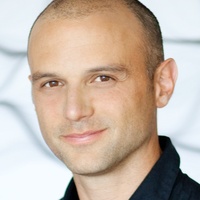
Prof. Dr. Ingo Scholtes is Chair of Machine Learning for Complex Networks at Julius-Maximilians-Universität Würzburg's Center for Artificial Intelligence and Data Science (CAIDAS). His research spans network science, graph machine learning, and computational social science, with applications in software engineering, ecology, biology, and physics. He received a Juniorfellowship from the German Informatics Society (2014) and an SNSF Professorship (CHF 1.5Mio, 2018). Current affiliations: JMU Würzburg (since 2021), University of Zurich (2018-2024), Bergische Universität Wuppertal (2019-2021) Research focus: Higher-order network modeling, temporal graph analysis, AI for collaborative systems, causality-aware machine learning His recent publications demonstrate strong trends in temporal network analysis , graph neural networks for time-series, and higher-order models across software engineering and social science domains. He co-chairs multiple international workshops on complex networks and serves as associate editor for EPJ Data Science and Advances in Complex Systems. Key scientific contributions: Foundational work on higher-order network models published in Nature Physics Methodological innovations in temporal network visualization (HOTVis) and path-based analysis (pathpy) As both educator and organizer, he leads the Computational Social Science Section at GI e.V., mentors across disciplines, and develops tools like git2net for collaboration analysis. His work bridges theoretical foundations with practical applications in network science.
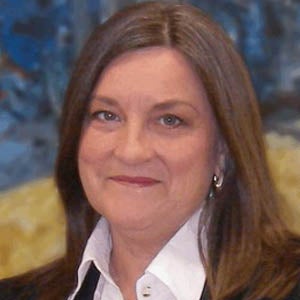
Professor Patricia H. Reiff is a Professor in the Department of Physics and Astronomy at Rice University and Associate Director for Outreach Programs at the Rice Space Institute. Her research focuses on space plasma physics, magnetospheric dynamics, auroras, and space weather. She has led missions like the Magnetospheric Multiscale (MMS) and contributed to the Dynamics Explorer, Polar, and Cluster missions. Reiff has pioneered public education initiatives, including the Discovery Dome portable planetarium system and the 'Totality!' planetarium show, reaching global audiences. She has trained fourteen PhD students and directs the Master of Science Teaching (MST) program, which has produced 36 teacher alumni as of 2024. Education: B.S. Physics (Oklahoma State University, 1971), M.S. Space Science (Rice University, 1974), and Ph.D. Space Physics and Astronomy (Rice University, 1975). Her research uses data from missions like MMS and citizen science projects like Citizen CATE to study magnetic reconnection and space weather effects. Key research interests include solar wind-magnetosphere-ionosphere interactions, magnetospheric reconnection, and the societal impacts of space weather. She has authored over 160 refereed publications and holds an H-index of 40. Reiff’s awards include AGU Fellow (1997), the Athelstan Spilhaus Award (2009), and NASA Group Achievement Awards. She is a vocal advocate for STEM education, frequently appearing in media to discuss eclipses and space science, including her role as a solar eclipse tour guide and science commentator.
Frédéric Kaplan serves as Director of the College of Humanities at École Polytechnique Fédérale de Lausanne (EPFL), where he holds the Chair of Digital Humanities. He also serves as President of the Time Machine Organisation, a nonprofit entity comprising over 600 institutions. His academic appointments span multiple departments including the Digital Humanities Laboratory (DHLAB), School of Architecture (SAR), and School of Humanities (SODH), demonstrating his interdisciplinary leadership across EPFL's academic structure. Dr. Kaplan's research focuses on the intersection of computational methods and humanities, particularly in historical urban analysis, cultural heritage digitization, and the development of the Mirror World concept. His work bridges computational techniques with historical scholarship, creating new methodologies for analyzing historical documents, maps, and urban structures through advanced digital tools. His research has significant implications for how we understand and reconstruct historical urban environments and cultural heritage. His publication record reveals a strong emphasis on computational approaches to historical data, with recent work focusing on LLM applications for historical cadastre navigation, historical map analysis through deformation patterns, 4D city modeling, and language technology applications for historical document processing. This research trajectory demonstrates an evolving focus from basic digitization toward sophisticated analytical frameworks that extract deeper historical insights from digital representations. Kaplan has supervised numerous doctoral students whose work spans digital heritage applications, historical document analysis, computational cartography, and language technology. His research has been supported through multiple institutional frameworks at EPFL and has resulted in practical applications demonstrated through exhibitions at major institutions including the Venice Architecture Biennale, Grand Palais, Centre Pompidou in Paris, and the Museum of Modern Art in New York. He leads the Digital Humanities Laboratory (DHLAB) which serves as a nexus for computational approaches to humanities research. The lab focuses on developing methodologies for historical data analysis, creating digital tools for cultural heritage institutions, and exploring the theoretical implications of computational approaches to historical scholarship. The lab's work with the Time Machine Organisation represents one of the most ambitious efforts to create comprehensive digital reconstructions of historical urban environments.
Mazdak Nik-Bakht is an Associate Professor at Concordia University's School of Building, Civil, and Environmental Engineering. His work bridges construction engineering with digital innovation, focusing on smart infrastructure and sustainable development. PhD, Construction Engineering & Mgmt., University of Toronto PhD, Structural Engineering, Iran University of Science & Technology MASc & BASc, Structural and Civil Engineering, Iran University of Science & Technology His research integrates Artificial Intelligence and Social Network Analysis into construction management systems. Key areas include: Smart infrastructure and urban computing Deconstruction and circular economy principles Building Information Modeling (BIM) and digital twinning Process mining in Architecture, Engineering, and Construction (AEC) industry Decision models in construction project management Semantic computing and computational linguistics applications Recent publications show a focus on BIM analytics , urban resilience , and social media's role in infrastructure planning . Papers often combine AI and network theory to solve complex construction challenges. 2015 Outstanding paper award - Built Environment Project and Asset Management journal He teaches courses on: Big Data Analytics for Smart City Infrastructure Building Information Modeling (BIM) for Construction Building Economics Project Cost Estimating
Nicolas Federico Martin is an Associate Professor in the Department of Crop Sciences at the University of Illinois at Urbana-Champaign, with additional appointments as Associate Professor in the Center for Latin American and Caribbean Studies, Center for Digital Agriculture, and the National Center for Supercomputing Applications (NCSA). His interdisciplinary work bridges traditional agricultural science with cutting-edge computational approaches. Dr. Martin's research focuses on the intersection of agriculture and data science, with particular emphasis on: Precision agriculture and on-farm experimentation methodologies Machine learning applications for crop management and yield prediction Nitrogen and nutrient management optimization Soybean and corn breeding and production systems Remote sensing and UAV applications in agriculture Sustainable agricultural practices including cover crop management His publication record demonstrates a clear trajectory toward increasingly sophisticated integration of artificial intelligence with agricultural science. Recent work shows heavy emphasis on using machine learning algorithms (particularly reinforcement learning, convolutional neural networks, and generalized additive models) to solve practical farming challenges related to crop management decisions, yield prediction, and resource optimization. This research has significant implications for both scientific understanding of crop-environment interactions and practical farm management. Dr. Martin actively collaborates across disciplines and institutions, as evidenced by his extensive co-authorship network spanning agronomy, computer science, environmental science, and economics. His work has garnered attention from numerous news outlets and social media platforms, indicating its relevance to current agricultural challenges. He is a key contributor to the Data-Intensive Farm Management project, which aims to transform agronomic research through on-farm precision experimentation. His affiliation with NCSA provides access to high-performance computing resources essential for processing large agricultural datasets. Additionally, his work in Latin American agriculture (particularly in Mexico and Argentina) reflects his commitment to addressing global food security challenges.
Amalia Foka is an Assistant Professor in Computer Science Applications for the Arts at the Department of Fine Arts & Art Sciences , School of Fine Arts , University of Ioannina , Greece. She has held academic positions at the University of Patras (2005-2013), University of Ioannina (2005-2008), and Computer Technology Institute & Press "Diophantus" (2014-2015). Her research bridges Artificial Intelligence with Digital Art , focusing on Generative AI , Social Media Mining , and Human-Computer Interaction within artistic contexts. Education: BEng in Computer Systems Engineering (1998) from the University of Manchester Institute of Science & Technology (UMIST) , UK MSc in Advanced Control (1999) from UMIST PhD in Robotics (2005) from the Department of Computer Science , University of Crete Her artistic research includes projects like Bushwalking (StyleGAN2 landscape generation), Breaking the Silence (NLP analysis of taboo topics), and The Invisible Structures of the Artworld (social media-driven network visualization). She leads the Multimedia Lab at the University of Ioannina, focusing on AI in Creative Processes and Digital Interaction methodologies.
Ulrik Schroeder is a Universitätsprofessor (Full Professor) at RWTH Aachen University, leading the Chair of Learning Technologies within the Faculty of Computer Science. His research focuses on the intersection of educational technology, learning analytics, and immersive technologies with particular emphasis on practical implementations in higher education settings. Professor Schroeder's research spans multiple interconnected domains in educational technology. His primary interests include Learning Analytics implementation (particularly using xAPI standards), Virtual Reality applications for education, Open Educational Resources development and conversion, and gamification approaches for programming education. He has developed several notable tools including convOERter for OER conversion, WebWriter for creating explorable explanations, and various xAPI-based learning analytics infrastructures. His work consistently bridges theoretical frameworks with practical educational applications, often focusing on computer science education contexts. Analysis of his recent publications reveals a strong trend toward integrating Learning Analytics with immersive technologies, particularly Virtual Reality environments. His research demonstrates a systematic approach to educational technology development, with emphasis on scalability, interoperability through standards like xAPI, and practical implementation in real educational settings. The work increasingly focuses on personalized learning paths, quality assurance for educational resources, and privacy-conscious data collection. Co-editor of 21. Fachtagung Bildungstechnologien (DELFI) (2023) Co-editor of Hochschuldidaktik der Informatik HDI 2018 Co-editor of DeLFI 2018 conference proceedings Professor Schroeder has supervised numerous doctoral and postdoctoral researchers who frequently appear as co-authors on his publications, indicating an active research group. His projects often involve interdisciplinary collaborations across computer science, education, and psychology. Current major initiatives include the AIStudyBuddy project for study path analysis and the development of VR classroom simulations for teacher training. His research group, the Learning Technologies Innovation Lab, develops open research tools that support various aspects of educational technology research and implementation.
Professor Lucy Kimbell is Professor of Contemporary Design Practices at Central Saint Martins, University of the Arts London, where she convenes the Policy Futures Studio. She is Co-Director of the Sustainable Transitions through Democratic Design Doctoral Network funded by the EU Marie Curie programme and serves as Visiting Professor at University of Ulster and Honorary Adjunct Professor at RMIT University. Her work bridges design practice, public policy, and social innovation across multiple international contexts. Professor Kimbell's educational background includes a PhD in Design from Lancaster University (2013), an MA in Computing in Art and Design from Middlesex University (1996), and a B. Engineering in Design and Appropriate Technology from the University of Warwick (1989). Her academic journey reflects a consistent integration of technical, creative, and social perspectives. Kimbell's research focuses on service design, social design, and design for policy, with increasing emphasis on sustainable transitions and democratic innovation. She explores how design methods can address complex societal challenges, particularly through transdisciplinary approaches that connect creative practice with public policy contexts. Her work examines the role of design in government, professional services, and community settings, with particular attention to AI readiness in professional service firms and antimicrobial resistance policy in India. She has pioneered frameworks for measuring design's social and environmental value, notably through the Design Value framework developed with the Design Council. Her recent publications demonstrate a clear trajectory toward understanding design's role in public policy, sustainable transitions, and democratic innovation. The research shows increasing integration of practice-based research methods with policy development, emphasizing transdisciplinary collaboration and the application of design thinking to complex societal challenges. There's a notable focus on developing frameworks for measuring design's social and environmental value and advancing democratic innovation through design practice. Notable recognitions include: AHRC Research Fellow in Policy Lab in the Cabinet Office (2014-15) Principal research fellow at University of Brighton (2013-15) Clark Fellow in Design Leadership at Said Business School, University of Oxford (2005-10) Professor Kimbell supervises transdisciplinary PhD research connecting design with public policy, with six completions to date including four UAL-KCL joint studentships. She examines PhDs internationally and serves on the supervisory board for the PhD in Service Design for Public Sector at Sapienza University, Rome. Her grant portfolio includes major projects funded by EU Marie Curie, AHRC, ESRC, and Creative Europe, totaling millions in research funding for design-led approaches to societal challenges, including the Sustainable Transitions through Democratic Design Doctoral Network (2024-28) and the AHRC Design & Policy Research Network (2022-23). She previously directed UAL's Social Design Institute (2019-2022), which brought together university expertise in design for society through capacity building, joint research, publications, and public events. Her collaborative work extends to knowledge exchange projects with Design Council, Department of Work and Pensions, Northern Ireland Social Care Council, and Bite Back 2030, demonstrating her commitment to applying design thinking to real-world policy and social challenges.
David Mwambari serves as Associate Professor at KU Leuven's Faculty of Social Sciences within the Unit Leuven International and European Studies (LINES). He leads the ERC-funded TMSS project on Life Narratives of Violence Among Refugees from Africa's Great Lakes Region and holds affiliations with the Oxford Consortium on Human Rights and the Centre for Mediation in Africa at the University of Pretoria. His educational background includes BA/MA in International Relations from United States International University-Africa, MA in Pan-African Studies from Syracuse University, and PhD in History from La Trobe University. He previously held academic positions at King's College London, Ghent University, and United States International University-Africa. Mwambari's research centers on memory studies with emphases on post-genocide Rwanda, colonial durabilities, and refugee narratives. His work examines how cultural memory shapes state formation, peacebuilding, and identity politics through interdisciplinary methodologies blending historical analysis, ethnography, and critical theory. Recent projects investigate vernacular memory practices during crises and the spatial dimensions of post-conflict reconstruction. His scientific contributions include the monograph Navigating Cultural Memory (Oxford University Press, 2023), co-edited volume Beyond History (Rowman & Littlefield, 2020), and editorial roles for Qualitative Research journal and Brill's 'Mobilizing Memory' series. His publications demonstrate evolving focus from leadership studies toward memory politics and decolonial research methodologies. European Research Council (ERC) Grant for TMSS Project Fellow at Churchill College, University of Cambridge African Academic Diaspora Fellow at CODESRIA FWO Postdoctoral Research Fellowship Mwambari actively mentors early-career scholars across Africa, Latin America, and East Asia while contributing to public discourse through Al Jazeera and community projects training history teachers in East Africa. His consultancy work addresses cross-disciplinary challenges in healthcare, education, and security, reflecting his commitment to applied scholarship beyond traditional academic boundaries.
Abigail Jacobs is an Assistant Professor at the University of Michigan , jointly appointed in the School of Information and the College of Literature, Science, and the Arts . She is also affiliated with the Center for Ethics, Society, and Computing (ESC) and the Michigan Institute for Data Science (MIDAS) . Education: PhD in Computer Science, University of Colorado Boulder (2015-2019) BA in Mathematical Methods in the Social Sciences and Mathematics, Northwestern University (2011-2015) Research Interests: Dr. Jacobs examines measurement and validity in machine learning , focusing on hidden assumptions in AI systems, governance structures in sociotechnical systems, and inequality in algorithmic design. Her work bridges AI, data science, and social science methodologies, emphasizing interdisciplinary collaboration. Recent Publications (2024-2025) explore generative AI evaluation, algorithmic transparency in government (e.g., US Census Bureau), motion capture data ethics, and sociotechnical frameworks for AI governance. Earlier works (2023) address fairness in ranking systems and racial categorization in algorithmic bias studies. Scientific Awards: Microsoft Research AI & Society Fellowship (2024) NSF Graduate Research Fellowship (during PhD) Advising & Grants: She co-advises Ph.D. students Amina Abdu and Meera Desai . Her research includes a Notre Dame-IBM Tech Ethics Lab grant on AI audits and collaborations with institutions like UC Berkeley, Microsoft Research, and the National Academies .
Susan Holmes is Professor at the School of Media, Language and Communication Studies at the University of East Anglia (UEA), where she joined as Reader in Television in 2007 and was appointed to Professor in 2018. She is an active member of several research groups including Media Equality, Film, Television and Media, Gender and Its Intersections Steering Committee, and HealthUEA. Her work spans television studies, celebrity culture, and feminist approaches to eating disorders. Professor Holmes received her academic training at the University of Sussex (BA in English and Media Studies), followed by an MA in Film from the University of Southampton, and completed her PhD on British film and television in the 1950s at the same institution. Prior to joining UEA, she taught Media and Cultural Studies at the Southampton Institute (now Southampton Solent University) and television and film at the University of Kent. Her research focuses on several interconnected areas that challenge traditional disciplinary boundaries. In television studies, she has made significant contributions to understanding British television history, particularly through her books 'British TV and Film in the 1950s' and 'Entertaining TV: the BBC and Popular Programme Culture in the 1950s,' where she challenges canonical ideas about early BBC television. Her work on reality TV examines historical development, generic labeling, and celebrity. Since 2014, she has conducted important empirical research on feminist approaches to eating disorders, analyzing media representations and working directly with people with lived experience. A key focus of this research examines how feminist approaches are neglected in contemporary eating disorder treatment, with implications for both clinical practice and cultural understanding. She co-founded the influential Celebrity Studies journal in 2010 and edited it for the first eight years of its publication. Analysis of Professor Holmes' recent publications reveals a clear trajectory where her expertise in media and television studies converges with her feminist scholarship on eating disorders. Her most recent work (2023-2025) increasingly focuses on cross-cultural applications of feminist approaches to eating disorders (including work in China), the use of innovative methodologies like Photovoice, and examinations of therapeutic alliance in treatment settings. Simultaneously, she continues to analyze contemporary media representations, particularly focusing on motherhood, true crime television, and reality TV through feminist lenses. This dual focus demonstrates how media representations shape cultural understandings of both celebrity and health conditions. Professor Holmes' significant contributions to academia have been recognized with several prestigious awards: Senior Fellowship from Advance HE (2024) UEA engagement award (2017) ALPSP award nomination for Celebrity Studies as best new journal (2011) She currently runs the Feminist Media Studies research cluster at UEA and is actively supervising postgraduate research in areas including popular television, television/film history, British TV history, stardom/celebrity, and feminist approaches to eating disorders. Her current major research project is the 'ALLIANCE study' (2024-2026), funded by the National Institute for Health and Care Research, which aims to develop practice and policy recommendations to support effective therapeutic alliance in inpatient treatment for eating disorders. This builds on her earlier British Academy-funded research on 'Entertaining Television: British TV, the BBC and Popular Programme Culture in the 1950s' (2007-2008). Professor Holmes plays a significant role in the academic community through her editorial work, serving on the boards of journals including Archives of Psychology, Big Data & Society, and Critical Studies in Television, and previously as co-founder and editor of Celebrity Studies. She has also been active in media engagement, contributing expert commentary on topics ranging from Netflix's portrayal of eating disorders to Celebrity Big Brother.
Professor Dinusha Mendis is a leading academic in Intellectual Property and Innovation Law at Bournemouth University, where she serves as Director of the Centre for Intellectual Property Policy and Management (CIPPM). Her expertise bridges copyright law with emerging technologies like 3D printing, AI, blockchain, and the Metaverse, informed by extensive research and consultation with entities such as the European Parliament, UKIPO, and corporations like HP and Chanel. She holds a PhD from Edinburgh University and has authored seminal works on the intersection of technology and IP. BSc in Law from Aberdeen University LLM and PhD from Edinburgh University Called to the Bar of England and Wales Her research focuses on copyright challenges in immersive environments , AI-generated content regulation , and blockchain/NFTs . She led major studies for the European Commission and UKIPO , including the first peer-reviewed work on 3D printing and IP. Her 2019 co-edited book with Stanford and QUT scholars established foundational frameworks for additive manufacturing legal analysis. Recent publications highlight AI copyright disputes (2024 The Conversation ), NFT legal ambiguities (2022), and pandemic-era 3D printing (2020). Trends show increasing emphasis on decentralized IP systems and machine learning's impact on creative industries . Scientific Awards & Grants JSPS Visiting Professorship (2023) Daiwa Anglo-Japanese Foundation Grant (2024) EU Commission Research Funding (2020) AHRC Grant for 3D Jewellery Study (2017) As a PhD supervisor, she mentors researchers on AI copyright (Benjamin White), crypto-art (Bahar Dagli), and music creation law (Elizabeth Bailey). She contributes to global IP policy through the World Economic Forum's Metaverse Governance Team and EU IPR Enforcement Projects .
Elizabeth Bruch is an Associate Professor of Sociology and Complex Systems at the University of Michigan, serving as Associate Director of the Institute for Data and AI in Society. She holds External Faculty status at the Santa Fe Institute and is affiliated with the Center for Population Studies. With a Ph.D. from UCLA and an M.S. in Statistics, her research integrates choice modeling, network science, and agent-based simulations to study individual decisions in social environments. Key areas include residential segregation, dating markets, and higher education. Education: Ph.D. and M.S. in Sociology/Statistics (UCLA), B.A. in Sociology (Reed College) Affiliations: Santa Fe Institute, Institute for Advanced Study Berlin Her work has been published in Science , PNAS , and American Journal of Sociology , earning awards like the ASA Methodology Innovation Prize and the Merton Prize. Her upcoming book Date Like a Local (Princeton, 2026) explores urban influences on romantic behavior. Bruch’s research addresses societal challenges through computational methods, including pandemic modeling during the 2020 crisis and algorithmic analysis of dating markets. She serves on Santa Fe Institute’s Science Steering Committee and collaborates across disciplines to advance complexity science.
Michael Smith is the McCosh Professor of Philosophy at Princeton University. He holds a DPhil from Oxford University (1989) and has been a faculty member since 2004, previously at the Australian National University. His research focuses on ethics, moral psychology, philosophy of mind, political philosophy, and philosophy of law. Smith’s work integrates constitutivist theories of practical reason with analyses of moral agency. He has contributed to debates on moral rationalism, the nature of reasons for action, and the relationship between rationality and normativity. Education: MA, Monash University (1980); BPhil (1983), DPhil (1989), University of Oxford Smith’s scholarship emphasizes the interplay between ethical theory and psychological explanations of agency. Recent publications explore topics like carbon capture technologies, cultural clashes in moral reasoning, and probabilistic forecasting in oceanography. His philosophical contributions address foundational questions in meta-ethics, including the ‘moral problem’ and the implications of constitutivism for normative frameworks. He advises on interdisciplinary projects at the intersection of philosophy and emerging technologies. Notable research trends include applying philosophical analysis to environmental ethics and developing frameworks for resolving moral dilemmas through rational agency models. His work often bridges analytic philosophy with empirical inquiries in psychology and social science.
Mark Bocko is a Distinguished Professor of Electrical and Computer Engineering at the University of Rochester, affiliated with the Hajim School of Engineering & Applied Sciences. He holds roles as Director of the Center for Emerging and Innovative Sciences (CEIS) and Director of Audio & Music Engineering. He earned his PhD in Physics from the University of Rochester in 1984, focusing on gravitational wave detectors. His research spans audio signal processing, sensors, superconductivity, and quantum computing. Notable contributions include flat-panel loudspeaker development, non-contact ECG sensors, and quantum coherence studies in Josephson junctions. Research interests include audio and acoustic signal processing, computer audition, and sensor technologies. His work integrates interdisciplinary approaches, combining electrical engineering, physics, and computer science. Awards include the 2012 Goergen Award for Teaching and Mercer Brugler Distinguished Teaching Professor (2008–2011). Recent publications address modal crossover networks for loudspeakers, vibrational touch sensing, and room impulse response modeling. He has advised PhD students on topics like spatial audio rendering and musical vibrato analysis. His labs focus on advancing audio engineering and smart sensor systems through collaborative industry partnerships.