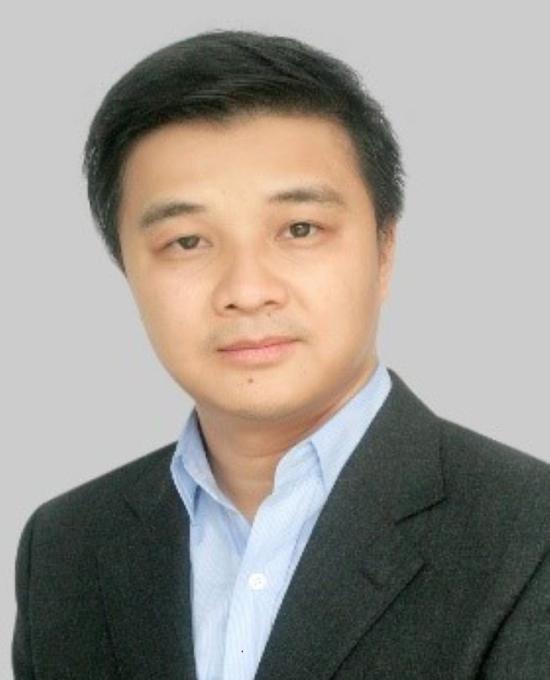
Dr. Anna-Maria Platschek is an academic staff member at the Institute of Movement and Neurosciences (German Sport University Cologne). Her research focuses on cancer-related fatigue , cognitive impairments , and exercise interventions for pediatric oncology patients. She collaborates extensively with institutions like the Institute of Cardiology and Sports Medicine and researchers including Thomas Abel , Saskia Henckert , and Hans-Georg Predel . Awards : Outstanding Trainee Research Award (MASCC Fatigue Study Group, 2019) Multiple Reisestipendium awards (2013–2022) Projects : ExerBrain Study (2024–2027) MORE! Move & Relax! (2020–2023) ChiMove (2016–2020) Her work bridges neuroscience and sports medicine , aiming to improve quality of life for children undergoing cancer therapy through tailored physical interventions.
Elisabeth Anvik is an Associate Professor in the Department of Early Childhood Education at the Faculty of Education and International Studies, Oslo Metropolitan University (OsloMet). She also serves as Head of Studies – Area of Responsibility 4, contributing to academic leadership in teacher education. Her work is deeply rooted in music, cultural heritage, and arts-based pedagogy in early childhood contexts. Position: Associate Professor Institution: Oslo Metropolitan University School: Faculty of Education and International Studies Department: Department of Early Childhood Education Email: elisabeth.anvik@oslomet.no Office: Pilestredet 42, Q4041, Oslo Her research interests center on early childhood education, with a focus on music, immaterial cultural heritage, sustainability, play, aesthetics, and technology. She is actively involved in the research groups BLEST (sustainability, play, aesthetics and technology), KunstForsk (arts-based and artistic research), and Philosophy, Art and Culture. Her work emphasizes cultural diversity in teacher training and the role of music in preserving and renewing traditions within kindergarten settings. The recent publications and dissemination activities reveal a consistent engagement with transformative singing practices, digital tools in music education (e.g., the 'Trall' app), and the integration of artistic research in professional pedagogy. Themes across her work include cultural continuity, pedagogical innovation, and the expressive dimensions of early learning. Elisabeth Anvik is a key contributor to the ongoing research project Vibrant Connections , which investigates how music supports cultural heritage in Norwegian kindergartens and teacher education programs. She collaborates extensively with colleagues such as Liv Anna Hagen, Siri Haukenes, and Nina Engesnes. She has authored scientific publications, a textbook ( RAFFE RIFF. Sanger i sirkel ), and over 130 dissemination works, demonstrating a strong commitment to both academic and public engagement. While no formal scientific awards are listed, her extensive output and project leadership indicate significant recognition in her field. She advises on educational practices, contributes to curriculum development, and leads initiatives that bridge research, artistic practice, and early childhood pedagogy. Her work is supported through institutional research funding and collaborative projects rather than individual grants, as per available data. She is affiliated with multiple research groups: BLEST, KunstForsk, and Philosophy, Art and Culture—each contributing to interdisciplinary and arts-integrated approaches in education.
Ana Sokolova is a Professor in the Department of Computer Science at the University of Salzburg. She is affiliated with the Faculty of Digital and Analytical Sciences and actively contributes to research in theoretical computer science. University: University of Salzburg Faculty: Faculty of Digital and Analytical Sciences Department: Computer Science Email: ana.sokolova@plus.ac.at Her research focuses on probabilistic systems , concurrency theory , convex algebras , and formal verification . This work bridges theoretical foundations with practical applications in distributed computing and programming semantics. Recent publications highlight advancements in trace semantics , determinization , probabilistic anonymity , and coalgebraic modeling . Key trends include the integration of Markov chains , nondeterministic systems , and algebraic structures for formal verification.
Rob Rozehnal is a Professor and Chair in the Department of Religion at Lehigh University, where he also serves as Founding Director of the Center for Global Islamic Studies. His academic career spans interdisciplinary roles in Global Studies, Asian Studies, and South Mountain College. 2003 Ph.D. in Islamic Studies and History of Religions from Duke University 1995 M.A. in South Asian Studies from University of Wisconsin-Madison 1991 B.A. summa cum laude in History and Asian Studies from University of Puget Sound Rozehnal's research focuses on Sufism in South Asia, digital religion in Islamic contexts, ritual studies , postcolonial theory , religious nationalism , and globalization . His work bridges traditional Islamic scholarship with contemporary digital media analysis. His publications map Islamic digital media trends, including cyber Sufi communities and virtual expressions of American Islam. He has received significant funding such as the $1.4 million Mellon Foundation grant (2009-2015) and multiple Lehigh University fellowships. Lehigh University, College of Arts and Sciences, New Directions Fellowship (2013-2015) Charlotte W. Newcombe Doctoral Dissertation Fellowship (2003) American Academy of Religion, graduate student paper award (2000) Duke University Graduate School and International Studies Fellowship (2000) Rozehnal directs Lehigh's summer study abroad programs in India and Turkey focused on Islamic heritage, while maintaining personal interests in outdoor activities and meditation.
Eugene Kennedy is a Professor in the Department of Educational Research at Louisiana State University's College of Human Sciences & Education. Holding a PhD in Educational Research Methodology from the University of South Carolina (1990), Kennedy's career spans academic research, state education departments, and technical consulting roles. His work focuses on educational effectiveness, psychometrics, and technology integration in education. Bachelor's: Sociology, Benedict College (1977) Master's: Educational Statistics & Measurement, University of Iowa (1982) PhD: Educational Research, University of South Carolina (1990) Kennedy's research interests include educational research methodology , psychometrics , school effectiveness , STEM education , data-driven decision making , and learning analytics . His recent publications demonstrate increasing focus on AI's role in education and data-driven strategies for improving educational outcomes. His academic work shows trends in educational technology integration , quantitative research methods , and STEM equity initiatives . Key themes include using data mining for educational insights, technology tools for school leadership, and innovative teaching strategies to improve student outcomes. Kennedy has participated in grants including: Co-PI for Evaluation proposal for the EBRPS American Recovery and Reinvestment Act Program (2010-2011) PI for Longitudinal Study with University of Louisiana Lafayette (2008-2009) Contact: ekennedy@lsu.edu | 221 Peabody Hall | 225-578-2193
Anna Weinstein is an Associate Professor of Screenwriting in the Department of English at Kennesaw State University, where she coordinates the Graduate Certificate in Screen & Television Writing. She is a core faculty member in the Master of Arts in Professional Writing program and an affiliated faculty member in the Gender and Women's Studies program. Her educational background includes an M.F.A. in Creative Writing & Writing for the Performing Arts from the University of California, Riverside, and a B.A. in Speech Communication from the University of North Carolina, Chapel Hill. Anna's research focuses on screenwriting, women's representation in film and television, and industry studies. Her creative work includes developing a limited series on Georgian author Lillian E. Smith and adapting 'The Jack Tales' for film. She frequently explores contributions of women both in front of and behind the camera, advancing critical discourse on gender in media. Analysis of her recent publications reveals a consistent emphasis on female-driven narratives and global women directors. Her work predominantly features interviews with filmmakers and critical analyses of women's roles in cinema history, highlighting diverse voices and underscoring her commitment to documenting underrepresented perspectives in screenwriting and media studies. Anna Weinstein serves as Secretary for the Screenwriting Research Network (2022-2024) and Co-chair of the Film Area for the Popular Culture Association (2021-present). As Coordinator of the Graduate Certificate program, she mentors students in screenwriting and professional writing, fostering next-generation media creators through curriculum development and personalized guidance.
Barbara Bigliardi is an Associate Professor at the Department of Engineering and Architecture, University of Parma, with national scientific qualification for full professor in Economic-Management Engineering (SSD ING-IND/35). She serves as President of the Management Engineering Program at University of Parma and Director of Bachelor's/Master's programs at University of San Marino, co-leading double-degree initiatives between the two institutions. Over 100 publications (57 SCOPUS-indexed) with H-index=20 Editorial roles: Cambridge Scholars Publishing (2019), MDPI Sustainability, Sci, European Journal of Innovation Management Key research areas: Open Innovation, Technology Transfer, Food Industry Innovation, Industry 4.0, Supply Chain Sustainability Recent Publications (2024-2025) demonstrate leadership in: Industry 4.0 integration with circular economy AI applications in public administration and healthcare Digitalization of food supply chains Green startup resource orchestration Simulation-based optimization in remanufacturing Sustainable additive manufacturing Scientific Recognition : 2005 Emerald Highly Commended Award 2013 Most Cited Paper in Trends in Food Science & Technology 2019 Highly Cited Paper in Review of Policy Research Research Leadership includes: National Observatory on Start-ups (President since 2021) National Observatory on Reputation (Vice President since 2019) INAIL-funded mobile risk assessment systems (2018-2020) INAF space technology transfer projects (2018-present) Academic Contributions : Supervised over 300 theses Deputy Coordinator of Industrial Engineering Doctoral Program Director of Management Engineering Programs (Parma & San Marino) Founder of academic spin-offs: Sistemi per il marketing di contenuto S.r.l. (2016-present), Univenture SrL (2006-2010)
Dacia Dressen-Hammouda is a Professor of Universities at Université Clermont Auvergne, affiliated with the ACTé Laboratory (Activity, Knowledge, Transmission, Education). She co-leads Theme 1 ( Situations of knowledge transmission and learning ) and has held significant educational responsibilities since 2007, including designing and managing the Multilingual Technical Documentation Engineering and Multilingual Information Design programs. Her research spans English for Specific Purposes (ESP) , multimodality , indexicality , and intercultural rhetoric , with a focus on digital communication and AI integration in education. Research Themes include: Digital and multimodal supports in specialized English Genre-based pedagogies for professional and academic writing Intercultural challenges in second-language politeness negotiation Recontextualization of expert knowledge in digital media Indexicality as a framework for disciplinary identity analysis Article Trends highlight her work on multimodal literacy through instructional videos, indexicality in professional writing , and digital science communication . She explores how digital tools reshape genre mastery and how intercultural exchanges influence academic writing practices. Scientific Contributions include collaborations with researchers like Ciara R. Wigham and Susan Birch-Becaas , with projects such as the DILAN Project (Digital Language and Communication Training for EU Scientists). She has supervised PhD candidates Hamza Miftah and Nedjah Zerrouki , focusing on AI-driven writing support and multimodal travel blogs. Lab Engagement : As co-responsible for Theme 1 at the ACTé Laboratory, she integrates activity theory and ethnographic approaches to study writing as a social and pedagogical activity.
Ngoc Thang NGUYEN is an Associate Professor of Management and Vice Dean at the Hanoi School of Business and Management , Vietnam National University, Hanoi. He is also an Affiliate Senior Research Fellow at IPAG Business School , France. He holds a Ph.D. in Applied Economic Sciences from Ghent University (2009), an MBA from the University of Southern California (2003), and dual bachelor’s degrees in Economics and English from National Economics University and Hanoi University (1999). Education: Ph.D. in Applied Economic Sciences, Ghent University, Belgium (2009) MBA, University of Southern California, U.S.A. (2003) Bachelor of Economics, National Economics University, Vietnam (1999) Bachelor of English, Hanoi University, Vietnam (1999) His research focuses on Human Resource Management, Knowledge Management, Green HRM, and Corporate Social Responsibility (CSR), particularly examining labor practices and organizational sustainability. He has published in journals such as Asia Pacific Business Review , International Review of Economics and Finance , and Journal of Developmental Entrepreneurship . His recent work explores employer branding, CSR attractiveness for Generation Z job seekers, and green training’s impact on environmental performance. He has led 4 research projects at Ministerial and National levels and served on editorial boards for journals including Asia Pacific Business Review and Journal of Human Resource and Sustainability Studies . He has taught over 1,000 executive courses for corporations like Samsung, Viettel, and Petro Vietnam, and supervised doctoral dissertations as pre-examiner or committee member.
Tanya Gupta is a Lecturer in the Department of Chemistry and Biochemistry at the University of Oregon , College of Arts and Sciences. With a PhD in Chemical/Science Education from Iowa State University, she specializes in student-centered inquiry-based teaching and technology integration in chemistry education. Education : PhD (2012) and MEd (2007) in Science Education from Iowa State University; MSc (2000) in Inorganic Chemistry and BSc (1998) in Chemistry Honors from Indian institutions Tanya’s research focuses on enhancing student retention through inquiry-based pedagogy , simulations , and collaborative learning . Her work addresses Diversity, Equity, Inclusion & Access (DEIA) in STEM education, with expertise in instructional design models like ADDIE, SAM, and Kirkpatrick. She has taught at multiple institutions, including Iowa State University and Grand Valley State University, delivering both large-enrollment and graduate-level courses through face-to-face, hybrid, and distance education platforms. Tanya’s publications and book chapters highlight her contributions to technology integration in chemistry education, game-based learning , and social media applications for student engagement. Her work spans curriculum development, educational research, and professional development for science educators.
Erika Lee is the Bae Family Professor of History and Radcliffe Alumnae Professor at Harvard University, serving as Director of the Schlesinger Library on the History of Women in America. A past president of the Organization of American Historians, she is a leading scholar of U.S. immigration, Asian American history, and xenophobia across the 19th-21st centuries. Her research centers on immigration history, Asian American history, and the intersections of race, xenophobia, law, gender, and society. Lee examines how systemic racism and exclusionary policies have shaped American identity, with particular focus on Asian American experiences and the historical roots of contemporary anti-immigrant sentiment. Lee's recent publications (2020-2024) analyze xenophobia during crises like the COVID-19 pandemic, anti-Asian discrimination, and immigration policy weaponization. Her work reveals historical patterns connecting past exclusion laws to modern nativist movements while highlighting immigrant resilience and the power of public history. Lee's honors include: American Book Award Asian/Pacific American Award for Literature Andrew Carnegie Fellowship Election to the American Academy of Arts & Sciences Immigrant Heritage Award Pioneer Award from OCA Champion for Justice Award She received the Andrew Carnegie Fellowship for research funding and testified before Congress on anti-Asian discrimination. As a public intellectual, Lee frequently contributes to media discussions on immigration and race through major outlets including the New York Times and CNN. Lee co-founded three digital humanities initiatives: Immigrant Stories (documenting immigrant experiences through digital storytelling), #ImmigrationSyllabus (educational resource on immigration history), and Immigrants in COVID America (tracking pandemic impacts on immigrant communities).
Professor Helen Sauntson is affiliated with York St John University as a faculty member in the School of Education, Language and Psychology and Director of the Centre for Language and Social Justice Research . She holds a PhD from the University of Birmingham and is a Senior Fellow of the Higher Education Academy (SFHEA). Her teaching spans undergraduate and postgraduate programs in English Language and Linguistics and TESOL . Educational Background : BA – Central England PGCE – University of Birmingham PhD – University of Birmingham SFHEA (Senior Fellow of the Higher Education Academy) Research Focus : Professor Sauntson’s work centers on intersections of language, gender, and sexuality within educational contexts. Her recent publications and conference presentations highlight: Discourse analysis of anti-LGBTQ+ rhetoric Neoliberalism’s impact on academic freedom Queer theory applications in TESOL Policy analysis of Relationships and Sex Education guidelines Student resistance to heteronormativity Critical linguistic frameworks for inclusive pedagogy Professional Leadership : She serves as: Co-editor of Palgrave Studies in Language, Gender and Sexuality Co-editor of Cambridge Elements in Language, Gender and Sexuality Editorial board member for Journal of Language and Sexuality and Gender and Language Teaching & Advocacy : Her pedagogy integrates research-led approaches to sexual diversity training and LGBTQ+ inclusion, with a focus on: Curriculum reform for inclusivity Teacher training programs Policy advisory roles Global queer educational frameworks
Paolo Prandoni is a Lecturer at École Polytechnique Fédérale de Lausanne (EPFL) in the School of Computer and Communication Sciences (IC). He serves as a Scientist in the Audiovisual Communications Laboratory (LCAV) and teaches in the SSC-ENS and SIN-ENS units, focusing on signal processing theory and practical applications in audiovisual communications. He earned his PhD from EPFL after completing all prior education there, driven by childhood fascination with long-distance telephony. His doctoral work established foundations in communication systems that continue to inform his research. Prandoni's research spans audio/image processing, machine learning for media analysis, and DSP education. Key areas include computational photography (e.g., spectral imaging, stained glass rendering), speech quality assessment via transfer learning, music information retrieval (e.g., fingering prediction), and audience analytics through his company Quividi. His work consistently bridges theoretical signal processing with real-world implementation. Recent publications reveal a strategic shift toward machine learning integration in signal processing tasks, particularly non-intrusive speech assessment and lensless imaging reconstruction. Simultaneously, he advances DSP pedagogy through MOOC development and hands-on teaching tools using off-the-shelf hardware, emphasizing accessibility and practical skill development. No scientific awards are documented in the provided materials. He has advised PhD student Thanikachalam Niranjan (thesis: Image Based Relighting of Cultural Artifacts , 2016) and teaches Communication Systems and Computer Science courses. His educational impact extends through the open-access textbook Signal Processing for Communications (2008) and tools like MultiPub for maintainable online classes. Industry engagement includes Quividi co-founding (2006) and ongoing CSO role in attention analytics. As a core LCAV laboratory member, he collaborates on interdisciplinary projects including cultural heritage digitization, embedded signal processing systems, and real-time audience measurement, leveraging EPFL's infrastructure for both academic and commercial applications.
Laila Kadiwal serves as an Associate Professor (Teaching) in the Department of Education, Practice & Society at the UCL Institute of Education, University College London. Her academic work bridges critical theory with practical applications in international education contexts. Dr. Kadiwal earned her DPhil from the University of Sussex, an MSc in Higher Education from the University of Oxford, and completed the Graduate Programme in Islamic Studies and Humanities through SOAS University of London and the Institute of Ismaili Studies. Prior to her UK appointment, she taught for 12 years in diverse educational settings across India. Her research employs a decolonial lens to investigate racism, identity weaponization by authoritarian actors, and knowledge production politics in education and international development. Working across India, Pakistan, Tajikistan, and the UK, she examines education's role in conflict zones, refugee experiences, climate injustice, and minority rights. Notable contributions include developing the Theatre of the Privileged decolonial pedagogy and the 'india and me: engage.reflect.act' public education program that engages with grassroots movements addressing intersectional injustices. Analysis of her recent publications reveals consistent scholarly output focused on decolonial education approaches, critical consciousness development, and resistance to authoritarianism, particularly in South Asian contexts. Her work demonstrates methodological diversity, incorporating semi-structured interviews, participatory approaches, visual analysis, and conceptual frameworks. As co-director of Best Foot Music, Dr. Kadiwal extends her academic work into community practice through an intercultural organization collaborating with displaced and refugee artists in the UK. With extensive international teaching experience, she has supervised over 550 students from 46 countries. At UCL, she leads MA modules including 'Education and Development in Asia' and 'Education in Muslim Communities,' while also serving as a visiting lecturer at institutions including the University of Sussex, University of Brighton, King's College, and universities in Sweden and China.
Steve Rigley is the Undergraduate Programme Leader for Communication Design at The Glasgow School of Art . He is a Senior Lecturer with a focus on graphic design, typography, and design education, exploring intersections between academic research and practice. Research Interests: Graphic design theory, typographic experimentation, sustainable practices in design, cultural studies (particularly India), and interdisciplinary design. Collaborations: Worked with colleagues like James Corazzo, Robert Harland, and Alison Honnor on REF-related research and pedagogic frameworks. Rigley’s publications include critical essays in The Design Journal and Eye magazine , alongside co-authored monographs on design education. His exhibitions (e.g., Like That Only , Scarehead ) highlight material culture, vernacular design, and experimental typography. His work often addresses the challenges of establishing academic research culture within graphic design, informed by global policy and educational practices. Notable Contributions: Participation in the Research Excellence Framework studies, leadership in the GSA Caseroom Research Cluster, and advocacy for letterpress as a pedagogic tool. His projects span from South Indian firework packaging to critiques of digital typefaces like Arial, reflecting on globalization and design’s societal role.