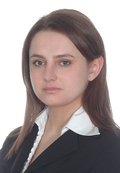
Dr. Muriel Waterlot serves as an Assistant Professor at the Department of Dutch Language and Literature within the Faculty of Humanities at the John Paul II Catholic University of Lublin. Her research focuses on translation didactics , intercultural competence , and contrastive linguistic analysis between Polish, Dutch, and Flemish contexts. Supervised 18+ diploma theses on topics like Zeeuws dialect preservation, Dutch-English modal verbs, and Polish-Dutch phraseological units Contributed to translation theory through publications and presentations at international conferences including TransELTE and THERMOS Active in editorial and expert councils for academic journals and PhD programs Her recent work explores terminological variants in Polish-Dutch-French contexts , multilingual translation approaches , and pedagogical models for foreign language teaching . She advocates for task-based translation methodologies and cross-cultural business communication frameworks. Key projects involve EU-funded initiatives like Language in Business – Business in Language (Erasmus+) Developed the Waterlot Model for tourism web-text translation Coordinated international translation education programs
Thomas J. Goldsby is the Dee & Jimmy Haslam Chair of Supply Chain and Professor of Supply Chain Management at the Haslam School of Business, University of Tennessee, Knoxville. He serves as co-executive director for the Global Supply Chain Institute and directs the MS-SCM Tricon program. His expertise spans logistics strategy, supply chain integration, and lean/agile supply chain frameworks, with an emphasis on resilience, transparency, and digital transformation. Education: Ph.D. in Business Administration (1998), Michigan State University M.B.A. in Economics and Transportation (1993), University of Kentucky B.S. in Economics and Finance (1992), University of Evansville Recent research trends include cyber resilience in supply chains, trade policy impacts (e.g., GST in India), and consumer-centric logistics strategies. His work bridges academic rigor and industry relevance, reflected in over 100 publications and leadership roles as co-editor-in-chief of the Journal of Business Logistics and editor emeritus of the Transportation Journal . Scientific Awards: Multiple Best Paper Awards 2019 'Rainmaker' by DC Velocity Magazine Lifetime Achievement Award from Supply Chain Leaders in Action Teaching Excellence Awards at multiple universities Goldsby has secured over $4.5 million in research grants and supervised 100+ industry supply chain projects. He co-hosts the Tennessee on Supply Chain Management podcast and has delivered executive programs globally. His leadership in academic-practitioner collaboration and sustainability initiatives underscores his influence in shaping supply chain discourse.
Dr. Sylwia Gwiazdowska-Stańczak is an Assistant Professor at the Department of Educational Psychology and Family, Institute of Psychology, Faculty of Social Sciences, John Paul II Catholic University of Lublin. Her work bridges school psychology, occupational health, and family dynamics, focusing on educational engagement, psychotechnical assessments, and stress management. Specializes in gifted education and family-school collaboration Expert in driver psychological evaluations and technostress research Conducted studies on adolescent family perceptions and overqualification in employment Research Trends: Recent publications analyze mindfulness in occupational settings, family influences on academic performance, and technology-induced stress. She emphasizes practical psychological applications in education and workplace environments. Scientific Contributions: 2024: Developed a model for gifted student development 2023: Explored mindfulness mediation in driver stress 2022: Authored school climate guides and driver assessment frameworks 2021: Investigated technostress and parental attitude correlations 2019: Studied family impacts on career overqualification decisions 2018: Examined family dynamics of gifted students Projects: Managed a family perception study for gifted students (2011) and contributed to international psychological assistance programs. Active in science popularization, including participation in the Lublin Science Festival.
Pablo Marín Liebana is an Assistant Professor at the Faculty of Teacher Training of the Universitat de València , specializing in the Didactics of Musical Expression . As a researcher in the iMUSED (Investigating Music Education) group, his work bridges music education with critical pedagogy and emotional development. Education: Doctorate from Universitat de València (2021), thesis on integrating student musical preferences into critical education. His research focuses on leveraging soundscapes, digital tools, and students' cultural identities to transform music education. Recent publications emphasize auditory analysis, socio-critical curricula, and technology integration in primary/secondary education. Articles from 2025–2022 highlight themes like emotional development, textbook evolution, and collaborative learning through music. Marín Liebana actively explores interdisciplinary approaches, such as connecting music with environmental education and experimental sciences. His contributions include frameworks for critical listening, gender perspectives in textbooks, and the use of platforms like Instagram to enhance student engagement. He collaborates with supervisors Dr. Ana María Botella Nicolás and Dr. Xosé Manuel Souto González, focusing on curriculum innovation and teacher competencies. His work also addresses systemic issues in music education, including ethnocentrism and intercultural representation.
Audra Diers-Lawson is a Professor of Risk and Crisis Communication at Kristiania University of Applied Sciences, leading the WHO-Europe Collaboration Center for Risk Communication, Community Engagement, and Infodemic Management. She holds a PhD from the University of Texas-Austin (2006) and has over 35 publications, including monographs and edited volumes. Her research bridges academic theory with practitioner needs, focusing on risk communication, global crisis leadership, and organizational stakeholder relations. She collaborates with international bodies like the EU and WHO to shape policy and practice in public health emergencies. Her work emphasizes interdisciplinary collaboration, methodological diversity, and cross-cultural crisis preparedness. Recent projects include analyzing AI-driven activism (e.g., Scottish independence debates) and evaluating pandemic communication strategies across nations. She actively advises governments and NGOs on crisis response frameworks and has contributed to initiatives in the Balkans, Central Asia, and New Zealand. Dr. Diers-Lawson is a global leader in her field, serving as editor/reviewer for academic journals and holding leadership roles with ECREA and ICRCA. Her current focus includes pragmatic optimism models for crisis leadership and the role of employee voice in organizational safety.
Mari Johanne Wikhaug Andersen is an Associate Professor at the Department of Language, Literature and Culture, Oslo and Akershus University College of Applied Sciences (HiOA). Her academic work focuses on multilingualism in vocational education, Norwegian as a second language, and teacher agency within educational policy frameworks. She holds a master's degree (2014) and recently completed a doctoral project (2024) exploring multilingualism in Norwegian vocational classrooms through linguistic ethnography. Her research integrates sociolinguistic theory with practical classroom dynamics, addressing challenges such as anglonormativity, monolingual policy constraints, and teacher-student interactions in linguistically diverse settings. Key areas include curriculum implementation in vocational education, language policy enactment, and strategies for supporting multilingual learners in technical programs like hairdressing and mechanics. Andersen has published extensively on teacher perspectives, policy gaps, and pedagogical innovations in multilingual vocational contexts. Recent work emphasizes the role of vocational teachers as policy actors negotiating between national language mandates and classroom realities. Her findings highlight systemic barriers to multilingual inclusivity and propose actionable frameworks for enhancing teacher agency in diverse classrooms. Teaching responsibilities include courses on second language pedagogy, multilingualism in education, and Norwegian for vocational educators at bachelor's and master's levels. She actively supervises master's students in applied linguistics and teacher education programs.
Oliver Laasch serves as a Senior Lecturer in Entrepreneurship and Innovation at the University of Manchester and holds an Adjunct Associate Professor position in Strategy at the University of Nottingham Ningbo China. His academic career includes full-time roles at Steinbeis University Berlin, Tecnologico de Monterrey (Mexico), and Seoul National University (South Korea), along with visiting positions at the University of Tübingen’s Global Ethic Institute and Copenhagen Business School. His research centers on responsible management education , alternative business models , and sustainability innovation . Key areas include biomimetic management, performative practices, constitutive communication, and specialized business models for family enterprises, sports organizations (including e-sports), religious institutions, and social enterprises. His work directly contributes to UN Sustainable Development Goals through the Principles for Responsible Management Education (PRME) initiative. Laasch serves as Associate Editor for Academy of Management Learning and Education and sits on the editorial board of Long Range Planning . He has edited special issues for the Journal of Business Ethics and Journal of Management Education , while his textbook Principles of Responsible Management received commendation in Academy of Management Learning and Education . Scientific Recognition: Best Paper Award, Academy of Management (2016) Top 100 Global Sustainability Leaders (2014) Cloverleaf Best Conference Paper Award (2018) Best Professional Development Workshop Award (2014) As an active educator, Laasch has designed courses across bachelor's, master's, PhD, and executive levels, including the Coursera MOOC Managing Responsibly . He also provides extensive coaching and consulting for universities and corporations in faculty development. His research output spans 29 publications including books, articles, and editorial work, with recent focus on business model transformations during crises, responsible management frameworks, and sustainability pathways. Laasch founded the Center for Responsible Management Education (CRME) and coordinates UN working groups under the PRME initiative, demonstrating significant leadership in shaping global management education standards.
Marie-France Clerc-Girard is an Associate Professor at ICN Business School , specializing in strategy and entrepreneurship. She leads the ARTEM Department, driving transdisciplinary educational initiatives that bridge business with arts, design, and social innovation. Her work emphasizes creative problem-solving, corporate collaboration, and student project support through the ICN Entrepreneurs association and the ARTEM "Living Consulting and Innovation" workshop. Focus on social/solidarity economy (ESS) and territorial cooperation dynamics Developed interactive creativity seminars with Artem Alliance schools Collaborated with major companies like La Poste Group, KPMG, and Groupama Coordinated the "Innovation & Entrepreneurship" chair with industry partners Her research explores entrepreneurship at microeconomic and territorial scales, particularly ESS-private sector synergies. Publications include case studies on startups, digital transformation, and circular economy practices (e.g., Valopneu® tyre recycling). She also emphasizes pedagogical innovation through immersive workshops (CreaCthon, BB Days) and corporate consulting projects. Her academic leadership integrates real-world problem-solving with theoretical frameworks.
Dr. Tobias Michael Scholz is an Associate Professor at the University of Agder within the Department of Information and Communication Technology . Widely recognized as the "godfather of esports research", he has dedicated 25 years to exploring the intersection of esports, human resource management, and digital transformation. As founder of the Esports Research Network and chief scientific officer of metagame , Scholz bridges academia and industry, particularly focusing on innovative educational programs that utilize esports to develop future workforce skills in Norway. Research Interests include gamification in HR, transferable skill development, corporate esports strategies, and sustainability in digital environments. His work examines how gaming mechanics can enhance hybrid team collaboration, risk governance, and intercultural management practices in global business contexts. Publication Trends reveal his specialization in esports business models, digitalization of work, and skill transfer mechanisms. Recent articles explore metaframe frameworks for professional dynamics, Olympic esports integration, and AI's impact on human resources. Professional Networks include the Esports Research Network and metagame . He actively collaborates with institutions like IATED and Routledge , contributing to annual conferences such as HICSS and ICERI.
Montserrat Calbó i Angrill is a Professor in the Department of Specific Didactics at the University of Girona , affiliated with the Faculty of Education and Psychology . She coordinates visual arts education programs and has served as Vice-Dean of Teachers (2008-09). As a researcher in the Education, Heritage and Intermediate Arts (GREPAI) group under the Institute of Educational Research , her work spans artistic education, ecological art, and interdisciplinary learning. Education : PhD in Fine Arts (2001) from the University of Barcelona with a thesis on environmental interpretations in artistic education. Research Focus : Integrating art into broader educational contexts, emphasizing sustainability, teacher training, and creative learning. Her recent publications highlight interdisciplinary art education trends, including ecological art projects (2022), structured logical materials for early childhood mathematics (2022), and digital education initiatives like UdiGitalEdu (2020). She explores multisensory and multicultural approaches, such as visual poetry analysis (2011-2012) and heritage education (2005-2011). Contact : montserrat.calbo@udg.edu
Prof. Dr. Ulrike Wuttke is Professor of Library Science – Strategies, Service Development, and Science Communication at the University of Applied Sciences Potsdam (FHP), where she directs the Bachelor's Programme in Library Science and serves as Internationalisation Officer. Previously, she held an Interim Professorship in Library and Information Technology (2020–2023) and worked as a senior researcher on EU projects including PARTHENOS and Humanities at Scale. Her education includes a Doctoral degree in Literature from Ghent University (2012), a Master's in Library and Information Science from TH Köln (2019), a Master's in Editorial Science from Freie Universität Berlin (2008), and a Master's in Dutch and English Philology from Freie Universität Berlin (2003). Wuttke's research explores digital knowledge ecosystems, focusing on: Digital Humanities methodologies and epistemology Research data management and open science infrastructures Data literacy and scholarly communication Digital transformation of libraries and historical perspectives Science communication via podcasts and social media Her publications reveal interdisciplinary work bridging library science, digital humanities, and medieval studies, emphasizing practical infrastructure development and ethical data practices. Awards: Mgr. Charles De Clercqprijs (2013) for religious history research She actively contributes to EU research consortia including PARTHENOS, RDMO, and NFDI4Culture, and leads FHP's research data management initiatives. As board member of the Digital Humanities Association (DHd) and Deputy Editor of OpenMethods, she shapes scholarly communities across Europe.
Maria Hofman-Bergholm is a researcher at Åbo Akademi University's Faculty of Education and Welfare Studies, specializing in Environmental Education, Sustainability, and Education for Sustainable Development. Her work emphasizes nature-based pedagogical strategies to enhance wellbeing, resilience, and socio-emotional learning among youth. Licentiate of Philosophy (Åbo Akademi University) Her research focuses on integrating ecological principles into teacher education, leveraging storytelling as an educational tool, and addressing mental health through sustainable practices. Recent publications explore food systems, planetary health, and Nordic perspectives on nature-based resilience. She contributes to advancing socio-emotional skills and educational equity through innovative pedagogical frameworks, though no specific scientific awards or student advisement details are publicly listed. Her work spans interdisciplinary collaborations and policy-oriented analyses.
Paul R. Gormley is a Professor in the College of Arts and Sciences at Lynn University, specializing in Criminal Justice Administration. He holds a Juris Doctor (J.D.) from New England Law and a Doctorate in Law & Policy (LP.D.) from Northeastern University, alongside a B.A. from Lesley University. Education: B.A., J.D., LP.D. Prior affiliations: North Shore Community College, University of Massachusetts at Lowell Research interests: Criminology, Criminal Law, Law and Psychology, Technology in Justice, Public Policy His recent research explores the death penalty, AI in academia, competency-based education, and inclusive learning tools. Gormley emphasizes experiential learning and societal engagement in his teaching philosophy. He has presented extensively on criminal justice, academic assessment, and pre-law advising. While no formal scientific awards are documented in the provided text, his work focuses on improving legal pedagogy, student advocacy, and technology integration in criminal justice. He has no listed formal advisees or grants within the available data.
Gerald Steiner is a full professor of organizational communication and innovation, dean of the Faculty of Business and Globalization, and chair of the Department for Knowledge and Communication Management at Danube University Krems in Austria. He is also a member of the Associate Faculty at the Complexity Science Hub Vienna since 2018, reflecting his deep engagement with systems and complexity science. His academic journey includes a PhD in management studies and social sciences from the University of Graz and a BSc in mechanical engineering, with training at UC Berkeley, UCLA, and the University of Oklahoma. His education includes: PhD in Management Studies and Social Sciences (Organizational and Innovation Management), University of Graz Bachelor of Science in Mechanical Engineering, Austria Training at UC Berkeley, UCLA, and University of Oklahoma at Norman Gerald Steiner's research is rooted in systemic and sustainability management, guided by a complexity science framework. His work explores sustainability-oriented innovation systems, knowledge integration, transdisciplinarity, and stakeholder collaboration. He investigates competences for solving complex problems and sustainable entrepreneurship, with recent focus on sustainable resource management, particularly the phosphorus supply chain and phosphate rock mining. His research emphasizes collaborative, science-practice co-creation and digital transformation in innovation systems. The recent publications reflect a strong interdisciplinary trend, bridging sustainability science, public health, mineral economics, and digital entrepreneurship. Articles frequently address systemic challenges during crises (e.g., COVID-19), transdisciplinary modeling, and resource security. Keywords span environmental science, behavioral science, policy, and systems thinking, indicating a holistic, integrative research approach. Scientific awards are not explicitly listed in the provided text. Gerald Steiner actively mentors students and early-career researchers, as evidenced by co-authorships with individuals such as L. Satalkina, L. Zenk, and J. Weitzer. He co-directs the PhD program in migration studies, indicating leadership in graduate education. While specific grants are not mentioned, his involvement in transdisciplinary labs and high-impact publications suggests successful funding acquisition. His work often involves international collaboration, especially with institutions in the D-A-CH region and the United States. He has co-founded four transdisciplinary labs at Danube University Krems: the Transdisciplinarity Laboratory Sustainable Digital Environments, the Transdisciplinary Laboratory for Sustainable Mineral Resources, GovLab Austria, and the Biodiversity Hub. These labs serve as platforms for integrating science, policy, and practice in sustainability transitions.
Lucy Ansley is a Senior Research Fellow at De Montfort University (DMU) in the School of Applied Social Sciences, Faculty of Health and Life Sciences. She is actively engaged in research on educational technology, equity, and decolonising curricula, and contributes to teaching and student supervision across undergraduate and postgraduate programmes. She also leads NVivo training for researchers across the university. Education: PhD in Education and Technology, De Montfort University (2018) MA in Learning, Technology and Education (Distinction), University of Nottingham BA (Hons) in Dance and Education Studies (First Class), De Montfort University Her research focuses on educational technology, digital literacy, social justice, and decolonisation in higher education . She employs participatory and creative methodologies, particularly grounded theory, to amplify non-dominant voices and co-create inclusive educational frameworks. Her work often involves collaboration with students, staff, and community stakeholders to drive systemic change. The recent articles and reports reflect a strong trajectory in curriculum decolonisation, racial equity, Muslim student experiences, and digital literacy in education . These works highlight institutional transformation, anti-racist pedagogy, and innovative approaches to inclusive learning environments. Many stem from collaborative, university-wide initiatives such as Decolonising DMU and the Aziz Foundation audit. Scientific Awards: UKRI Green Gowns Diversity, Equity and Inclusion in Sustainability Award (2023) International Green Gowns Award, Highly Commended (2024) Advance HE Collaborative Award for Teaching Excellence (2023) ALT Learning Technologist of the Year (2014) Reclaim Open Learning Innovation Contest recognition by MacArthur Foundation, MIT Media Lab (2013) Lucy supervises student research at BA, MA, and PhD levels and has secured funding from bodies including HEFCE, HEIF5, the Aziz Foundation, and DMU. Her current projects include the Muslim Friendly Universities Audit and ongoing work with the Decolonising DMU initiative. She is affiliated with the Social Sciences Research & Innovation Institute and the Centre for Social Justice and Empowerment at DMU, contributing to interdisciplinary research on equity and social change.