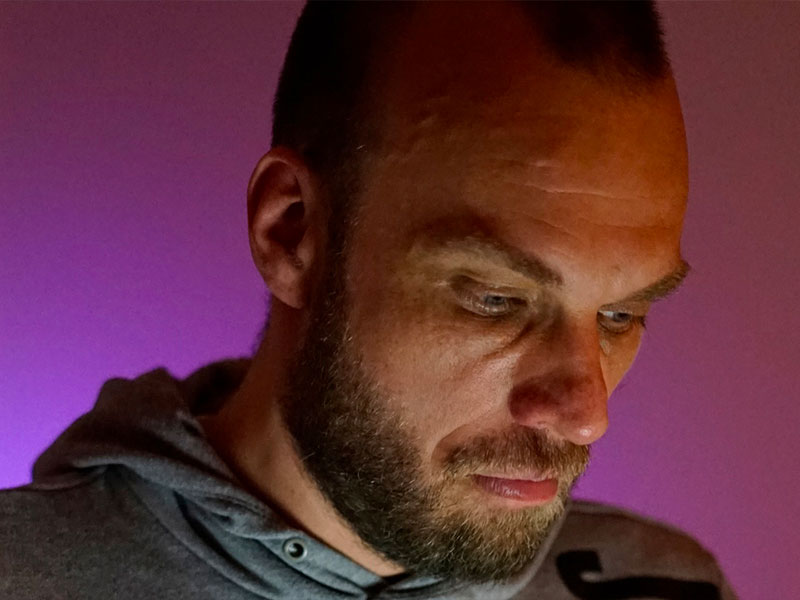
Dominic Thibault is an Assistant Professor at the Faculty of Music, Université de Montréal . His research-creation explores human-machine interaction in musical contexts, focusing on embodied cognition through electroacoustic compositions, audiovisual performances, and musical software development. Co-director, Laboratoire Formes·Ondes Active member, CIRMMT (Centre for Interdisciplinary Research in Music Media and Technology) Research axis leader, Expanded Musical Practice (CIRMMT) Member, Québecor Millénium entrepreneurship committee Scientific committee member, ACFAS
Alexandra BELIBOU is a PhD Lecturer at the Department of Music Performance and Pedagogy, Faculty of Music, Transilvania University of Brașov. Her work bridges musicology with modern interdisciplinary approaches, focusing on music education technology, therapeutic applications, and 20th-century compositional analysis. She holds a prominent position in advancing digital pedagogy through software integration. Research Interests: Music therapy methodologies emphasizing pluralistic approaches in clinical settings AI applications in music composition and education Analysis of 20th-century composers like Schoenberg, Reich, and Pärt Cultural studies of folk music traditions (e.g., Irish dance music, Romanian psalmic liturgy) Publications Trends: Recent work explores pandemic-era musician well-being, AI-assisted composition tools, and the intersection of music with medicine/physics. Earlier research delves deeply into psalmic text settings across centuries, minimalist techniques, and numerical symbolism in atonal music. Her teaching and research emphasize bridging traditional musicology with emerging technologies, as seen in proposals for software-based creativity workshops and interdisciplinary curricula.
Henrik von Coler is an Assistant Professor at Georgia Institute of Technology's School of Music within the College of Design. His work bridges engineering, electronic music, and empirical research, focusing on spatial audio systems, live electronics, and human-computer interaction in musical contexts. He joined Georgia Tech in 2023 after serving as director of the TU Studio for Electronic Music at Technische Universität Berlin from 2015 to 2023, where he founded the Electronic Orchestra Charlottenburg (EOC) to explore live electronic ensembles in multichannel environments. His research emphasizes the integration of sound, space, and HCI to enhance compositional and performative expressiveness. Notable projects include immersive audio installations, virtual instrument design, and AI-assisted composition. Coler has performed globally on immersive audio systems and curated international concerts. His technical contributions span spatial sound synthesis algorithms, networked music systems, and real-time signal processing tools. Key areas of exploration include volumetric music performances in metaverse environments, hybrid spatial interaction via ARCube, and statistical models for spectral synthesis. He has developed open-source systems like Orchestra (for metaverse performances) and SPRAWL (for ensemble interaction). Coler’s work often combines empirical research with artistic practice, aiming to redefine the boundaries of live electronic music through technological innovation. His academic output spans over 30 peer-reviewed articles since 2011, with recent focus on metaverse applications, AI-human collaboration, and immersive audio design. While no formal awards are listed, his leadership roles and project outcomes highlight significant contributions to music technology and spatial audio engineering.
Darko Etinger is an Associate Professor and currently serves as the Dean of the Faculty of Informatics at Juraj Dobrila University of Pula in Croatia. His academic career spans over two decades with significant contributions to the fields of information systems, educational technology, and artificial intelligence. He teaches undergraduate courses including Artificial Intelligence, Business Information Systems, Business Process Management, ICT Fundamentals, Information Systems, Introduction to Artificial Intelligence, and Multimedia Systems. At the graduate level, he teaches Development of IT Solutions, IT Management, Modelling and Simulation, and Project Management. He also supervises doctoral research in Management of Information Technologies in Education. Dr. Etinger's research interests span several key areas in computer science and education technology. He has made significant contributions to understanding how information and communication technologies can support children with special educational needs, as evidenced by his 2024 and 2025 books on the topic. His work also focuses on business process management, educational data mining, and the application of artificial intelligence in educational contexts. His 2024 book 'Introduction to R and RStudio' demonstrates his commitment to data science education. Analysis of his recent publications shows a strong focus on practical applications of technology in education and business. His work spans educational robotics, learning management systems analysis, business process modeling, and the application of large language models in healthcare. He has a particular interest in how technology can be made accessible and beneficial for diverse learner populations, including those with special needs. His research often takes a human-centered approach, examining not just the technology itself but how it's adopted and used by end users. His 2025 bibliometric analysis of metaverse security demonstrates his ability to tackle emerging technological challenges. Associate Professor at Faculty of Informatics, Juraj Dobrila University of Pula Current Dean of Faculty of Informatics Author of multiple publications on educational technology and information systems Supervisor for numerous graduate theses on educational technology topics Active participant in EDIH Adria project as evidenced by 2025 publications Researcher in educational robotics implementation in Croatian schools Dr. Etinger has advised numerous students completing their theses, with a focus on educational technology applications. His research has been published in various international conferences and journals including IEEE Engineering Management Review, Procedia Computer Science, and System Dynamics Review. His current research appears to be heavily focused on the EDIH Adria project, which is a European Digital Innovation Hub initiative focusing on technology transfer and business innovation. He maintains an active research program with publications spanning from 2003 to the present, demonstrating sustained scholarly contribution to his fields of expertise.
Professor Dr. Johannes Ismaiel-Wendt is a faculty member at the Institute for Music and Musicology , part of the University of Hildesheim ’s School of Cultural Studies & Aesthetic Communication. He earned a doctorate in cultural studies, sociology, and musicology from the University of Bremen (supervised by Prof. Dr. Sabine Bröck and Prof. Dr. Alexander Weheliye) with his dissertation tracks'n'treks. Popular Music and Postcolonial Analysis (2011). Ismaiel-Wendt is a certified educator, known for blending research with live drum machine performances and sound lectures. From 2012 to 2018, he served as Junior Professor for Systematic Musicology and Music Sociology before being appointed University Professor in 2018.
Anne Danielsen is a Professor and Deputy Head at the RITMO Center for Interdisciplinary Studies of Rhythm, Time, and Motion at the University of Oslo. Her research bridges musicology, cognitive science, and interdisciplinary studies, focusing on rhythm, music production, and the intersection of music, media, and technology. University: University of Oslo Role: Professor Projects: TIME (NFR TOP RESEARCH), RITMO (NFR Center of Excellence) Danielsen’s work explores microrhythm , groove , and temporal perception in music, with a particular emphasis on popular and African-American music . She investigates how music cognition interacts with sonic features and body posture in performance, integrating psychological and acoustic analysis . Her recent projects include MusicLab Copenhagen , a dataset for interdisciplinary concert research, and studies on beta oscillations and pupil responses in groove perception. Danielsen collaborates across disciplines, examining how personality traits and genetic factors influence musical sensibility through twin studies. In music production , she analyzes how digital audio workstations transform rhythmic structures and investigates acoustic chamber design for sound experiments. Her research also addresses gender patterns in music mediation and the cultural implications of rhythmic aesthetics.
Dr Ambrose Seddon is a Principal Academic in Music and Audio Technology at Bournemouth University, specializing in electroacoustic and electronic music. He holds a BMus (Hons) from Goldsmiths College, University of London, an MA in Electroacoustic Composition, and a PhD in Music (electroacoustic composition), both from City, University of London. His research focuses on electroacoustic composition, multichannel and ambisonic techniques, form in electroacoustic music, and music analysis. Notable awards include the 1st Prize at the Klang! and Visiones Sonoras competitions, and the European Region Composition Prize at ICMC 2007. He has residences at Elektronmusikstudion (EMS) and Visby International Centre for Composers (VICC). Dr Seddon teaches composition, studio recording, and creative music technology, supervising PhD students in related fields. His work spans sound installations, live electronics with the ensemble NonRecursive, and performances at venues worldwide. Academic roles include external examiner for BSc Music and Sound Technology at the University of Portsmouth and leadership in the Creative Sonic Practice Research Group.
Professor Nick Bryan-Kinns is Professor of Creative Computing at the Creative Computing Institute, University of the Arts London. His research explores new approaches to interactive technologies for the Arts and Creative Industries through Creative Computing, with a current focus on Human-Centred AI and eXplainable AI for the Arts. His research interests center on making audio engineering more accessible and inclusive, championing sustainable and ethical IoT and wearables, and engaging communities with physical computing through craft and cultural heritage. He has developed and led collaborative research with institutions including Tsinghua University, Hunan University, Tongji University, Huazhong University of Science and Technology, and Ateneo de Manila University. His recent publications demonstrate a strong trend toward Responsible AI in music creation, with a focus on reducing bias in AI music generation systems and leveraging small datasets for ethical AI applications. His work explores how AI can be made more transparent and accountable within creative practices. Fellow of the Royal Society of Arts Fellow of the British Computer Society Senior Member of the Association of Computing Machinery Recipient of ACM and BCS Recognition of Service Awards Multiple conference paper awards including Honourable Mentions at ACM CHI conferences QMUL Public Engagement Award Winner (2017, 2015) Professor Bryan-Kinns has supervised 24 graduated PhD students and examined 19 PhD candidates. He has secured over £24 million in research funding, including recent projects such as the AHRC BRAID Fellowship on Explainable Generative AI in the BBC (£117k), AHRC BRAID Flexible Fund on Embracing Authenticity (£10k), and Innovate-UK Creative Catalyst: AI in the Music Industry (£236k). His grant portfolio demonstrates strong international collaboration, particularly with Chinese institutions. He leads the MusicRAI research project focused on building an international community to address bias in AI music generation and analysis, and has developed an open repository of generative AI models for music. His work bridges academic research with practical applications that have been exhibited internationally at venues including Ars Electronica, the V&A, and the Science Museum.
Dr. Mark Marrington is an Associate Professor in Music Production at York St John University, Faculty of Arts. He is a composer, guitarist, and scholar with expertise in musicology of record production, music technology, and 20th-century British art music. His research explores classical guitar recording practices, digital audio workstations (DAW), and heavy metal music aesthetics. He previously taught at Leeds College of Music and the University of Leeds, and has contributed to academic publications on topics ranging from Denis ApIvor's compositional techniques to the role of technology in music production. Research interests include the evolution of classical guitar recording from the early 20th century to today, the impact of DAWs on creativity, and the intersection of technology and heavy metal music. His book *Recording the Classical Guitar* (2021) was a finalist for the ARSC Award. He also serves as a series editor for academic books on music production, including *Gender in Music Production*. Professional activities include roles as an external examiner for several UK universities and contributions to pedagogical guitar publications like *Guitar from Scratch*. His artistic output includes compositions such as *Cars* (2012, created from car sounds) and the *MadeinMIDI* project. He has curated archival materials for Denis ApIvor’s works and lectures widely on topics like metal music production and classical guitar history. Awards: Finalist in 2022 ARSC Award for *Recording the Classical Guitar*. Grants/Projects: Curated the Denis ApIvor archive at University of Leeds, contributed to multiple music technology research initiatives. Labs/Teams: Involved in music production and technology research groups at York St John and collaborating institutions.
Dr Stace Constantinou is a Senior Lecturer in Popular Music and Programme Leader for the Popular Music course at the University of Northampton, affiliated with the Centre for Cultural and Literary Studies within the Culture school. He holds a PhD from Kingston University and is actively engaged in creative research, supervision, and public engagement. PhD, Processes of creative patterning: a compositional approach, Kingston University (2015) His research centers on the intersection of music, technology, and artificial intelligence. He explores AI through programmatic electronic music, develops analytical tools for popular song, and investigates the adaptation of mathematical symmetry into digital signal processing. His creative work emphasizes spatial sound, immersive performance, and the materiality of the audio-object within DAW environments. Key themes include musical creativity, novelty, patterns, and the philosophical implications of AI in music. His recent creative outputs form a thematic arc exploring AI, rebellion, and human identity, most notably through The SAPIAN Trilogy and Rebel-Misfit . These works blend electronic composition with narrative depth, often inspired by thinkers like Zylinska, Bostrom, and Kurzweil. His publications and compositions reflect a consistent focus on sound as a medium for knowledge exchange and conceptual exploration. His scientific recognition includes the Ricordi Prize for Best Composition and the Schillinger Composition Prize. Ricordi Prize for Best Composition Schillinger Composition Prize He supervises two practice-based PhD students: Gemma Boaden, exploring hybrid voice practices for actors, and Michael W. Bell, researching experiential soundtracks using spatial audio technologies. He has secured internal funding for the LIPSY: Live Immersive Performance Soundscape project (2024–2025), demonstrating active grant involvement. His work extends to public engagement through podcasts, radio programs, and exhibitions with the Royal Society of Arts. Dr Constantinou is actively involved in a creative research lab focused on immersive and spatial sound, leading the LIPSY project. His work is inherently collaborative, involving partnerships with artists, film directors, and institutions like Resonance FM, Angel Studios, and The Podcast Company.
Anders Reuter is a Senior Lecturer in Musicology at the Lund University Department of Arts and Cultural Sciences. His research focuses on contemporary pop music, music production digitization, and digital culture including platformization and social media. He teaches courses in popular music, contemporary music production, music history, musical minimalism, and cultural politics. Specializes in TikTok, K-pop, and hip-hop Expert in Music Production and digital aesthetics Active in interdisciplinary research between music and psychology Research trends include platform society impacts on music production, with publications analyzing modularity in digital audio workstations and topological space in pop music. Currently serves as Assistant Supervisor for the A Studio Online dissertation project and Researcher in the Aesthetic Studies Reading Group . Participates in international conferences like IASPM UK & Ireland Biennial Conference and Psychology & Music Interdisciplinary Encounters.
Zlatko Baracskai is a Bosnian-Hungarian experimental musician, sound programmer, and academic. He currently serves as a Senior Lecturer at the University of West of England in the Faculty of Computer Science and Creative Technologies, while also holding a Visiting Professor position at the Faculty of Music in Belgrade's Music Direction Study Program since 2020. His academic journey includes a sonology degree from the Institute of Sonology in Den Haag and a PhD in contemporary composition from the University of Birmingham (2011). Research interests span Electronic music composition Algorithmic sound processing Experimental audio technologies Neural network applications in music Asymmetrical rhythm development His publications demonstrate technical expertise in audio algorithm design and neural networks for sound manipulation, with conference papers presented at AES, ICMC, and IEEE SpliTech. Notable projects include Coca-Cola Beatbox Pavilion (2012) and De-Fuse Interactive Installation (2005).
Seth Pendergast is an Assistant Professor of Music in the School of Music, Theatre, and Dance at Colorado State University, part of the College of Liberal Arts. His research focuses on adolescent music participation, technology integration in music education, and choral pedagogy. He holds a Ph.D. in Music Education from the University of Utah, an M.M. from Florida State University, and a B.S. from Southeastern University. Dr. Pendergast's scholarship explores how formal and informal music education contexts influence student engagement. He has published book chapters on technology-based music courses and presented at national conferences like the Music Research and Teacher Education National Conference. Active in professional development, he leads clinics, festivals, and honor choirs, and serves as an adjudicator. He is affiliated with organizations such as the American Choral Directors Association and the Society for Music Teacher Education. His recent articles address curricular change in modern band programs, motivation frameworks for choral participation, and creative music-making with digital tools. While no formal awards are listed, his work emphasizes innovative approaches to music education accessibility and youth engagement.
Will L Townsley is an Assistant Professor and Area Coordinator of Music Industry Studies at The University of Texas at Arlington , where he teaches recording techniques, songwriting, film scoring, and music business . He holds a DMA in Saxophone Performance from Texas Christian University and has a diverse background in classical and jazz saxophone performance , film composition , and commercial songwriting . Doctorate in Saxophone Performance (TCU, 2015) Master's and Bachelor's in Music Education (UTA, 2008 & 2005) Avid Certified Pro Tools Instructor (2023) His research focuses on songwriting pedagogy, film scoring technology, and music industry practices . Recent creative outputs include film scores, jazz compositions, and recordings for academic and commercial contexts. Will’s works span film scoring , jazz composition , blues production , and music technology . Notable trends include collaborations with international competitions , educational film scoring , and studio production innovation . Teaching Recognition, Student Affairs/Lowell K. Davis (2024, 2023) Juried entries in Indie Film Music Contest , North Texas Blues Challenge , and Kerrville New Folk Competition He serves on multiple academic committees related to video game studies , curriculum development , and recruitment , while also advising the Chair's Advisory Council and Community Engagement Committee .
Bora Uslusoy is an Associate Professor in the Music Production and Engineering (MP&E) department at Berklee College of Music. He is based in the greater Boston area and brings a rich blend of academic, artistic, and entrepreneurial experience to his role. Education: Master of Arts in Digital Communications and Media/Multimedia, Beykent University (2017) Bachelor of Arts in Business Administration/Management, Istanbul University (1999) Studio Production Specialist Certificate, Berklee Online Guitar Studies, Musicians Institute London Bora Uslusoy's research and professional interests lie at the intersection of music production, audio engineering, and music technology. He is deeply engaged in the creative integration of acoustic and electronic instruments, emphasizing modern production techniques and collaborative workflows. His work reflects a holistic approach to music creation, spanning performance, production, and education. He is certified as an Avid Pro Tools instructor and a Steinberg Cubase trainer, reinforcing his technical expertise in digital audio environments. His recent production work spans a wide range of artists and genres, with projects released from 2014 through 2025. These works showcase his consistent involvement in mixing, mastering, producing, and performing—particularly on guitar. The articles reflect a strong focus on contemporary music production, with recurring themes in vocal engineering, electronic programming, and collaborative recording. His work often features Turkish and international artists, highlighting a cross-cultural musical perspective. Scientific and Professional Awards: Gold Award, Musicians Institute London: Guitar Institute of Technology Bora Uslusoy has played a significant mentoring and advisory role through his teaching, authorship, and leadership. He founded Modern Müzik Akademisi in Istanbul (2005–2012) and has authored five of the most popular guitar instruction books in Turkey, with over 20,000 copies sold. He has developed online courses and written numerous magazine articles and reviews. While specific grant information is not mentioned, his entrepreneurial ventures—such as bUMA RecordZ—and his sustained artistic output suggest ongoing project-based funding and industry engagement. He leads bUMA RecordZ, an independent record label and project studio equipped for modern music production. The studio serves as a hub for his creative and professional output, supporting recording, mixing, mastering, and production for diverse artists. His work environment reflects a blend of academic rigor and real-world industry practice.