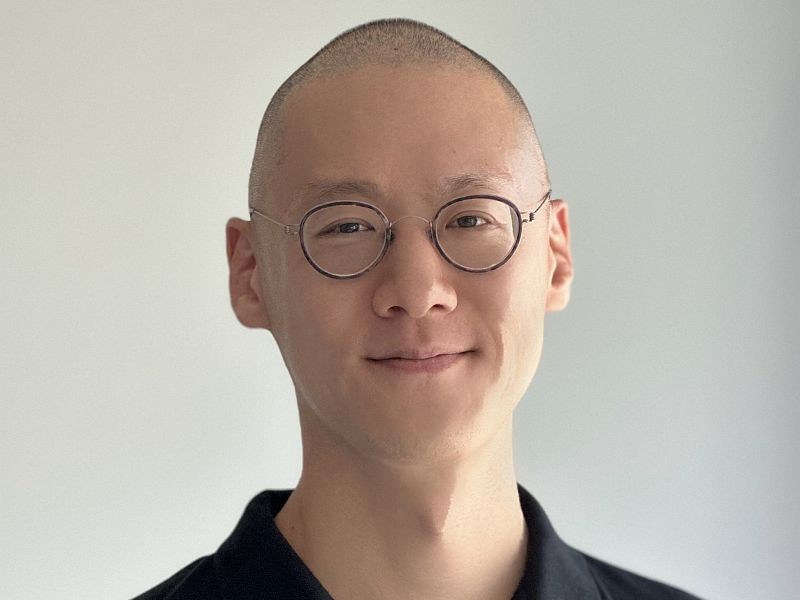
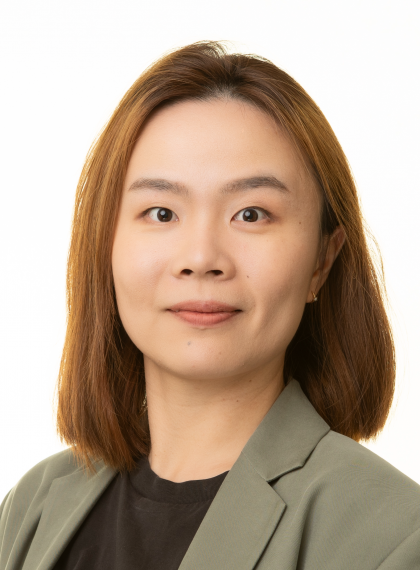
Dominic Thibault is an Assistant Professor at the Faculty of Music, Université de Montréal . His research-creation explores human-machine interaction in musical contexts, focusing on embodied cognition through electroacoustic compositions, audiovisual performances, and musical software development. Co-director, Laboratoire Formes·Ondes Active member, CIRMMT (Centre for Interdisciplinary Research in Music Media and Technology) Research axis leader, Expanded Musical Practice (CIRMMT) Member, Québecor Millénium entrepreneurship committee Scientific committee member, ACFAS
Frank Russo is a Professor in the Department of Psychology at Toronto Metropolitan University, where he holds the NSERC-Sonova Senior Research Chair in Auditory Cognitive Neuroscience. He leads the Science of Music Auditory Research and Technology (SMART) Lab and holds affiliate and adjunct positions at the University Health Network and the University of Toronto, respectively. Research Interests: Dr. Russo's work lies at the intersection of auditory cognitive neuroscience, music psychology, and rehabilitation. His research explores how humans perceive music and speech, particularly under challenging conditions such as hearing loss or non-native accents. He investigates the cognitive and neural mechanisms of listening effort, emotional speech processing, and the social and therapeutic benefits of music, especially through community choirs and digital interventions. Publication Trends: His recent publications emphasize objective measurement of listening effort using functional near-infrared spectroscopy (fNIRS), music-based interventions for Parkinson’s disease and dementia, vocal and emotional responses to singing, and multisensory integration in beat perception. The work is highly translational, bridging basic cognitive neuroscience with clinical and community applications. Scientific Awards and Honors: NSERC-Sonova Senior Research Chair in Auditory Cognitive Neuroscience Fellow of the Canadian Psychological Association Fellow of Massey College Fellow of the Canadian Society for Brain, Behavior and Cognitive Science Past President of the Canadian Acoustical Association Advising and Grants: Dr. Russo actively mentors students and researchers, as evidenced by his co-authorship with numerous junior colleagues. He has secured major funding through NSERC and industry partnerships, enabling the development of impactful technologies such as hearing aid algorithms, sensory substitution systems, and digital therapeutics. His SingWell project fosters collaboration across academic, clinical, and community sectors. Labs and Teams: He directs the SMART Lab at Toronto Metropolitan University, a hub for interdisciplinary research on music, hearing, and cognition. The lab collaborates extensively with KITE Research Institute, Rehabilitation Sciences at the University of Toronto, and various community organizations focused on aging, hearing loss, and neurodegenerative conditions.
Dr. Ian Bruce is a Professor in the Department of Electrical and Computer Engineering at McMaster University, Hamilton, ON, Canada. He has been with the department since 2002, conducting interdisciplinary research that bridges electrical engineering with auditory neuroscience. His work has significant implications for hearing technologies and auditory rehabilitation. Education: B.E. (electrical and electronic) from The University of Melbourne (1991) Ph.D. from the Department of Otolaryngology, The University of Melbourne Dr. Bruce's research program focuses on auditory modeling, hearing aids, cochlear implants, tinnitus, neural coding of speech, and digital speech processing. His work centers on understanding the physiological mechanisms of auditory processing and applying this knowledge to develop improved hearing technologies. He has pioneered computational models of the auditory periphery that accurately predict speech intelligibility for hearing-impaired listeners, directly informing hearing aid and cochlear implant design. Analysis of Dr. Bruce's recent publications (2019-2025) reveals a consistent focus on cochlear implants and auditory nerve modeling, with increasing integration of machine learning techniques. His work demonstrates a sophisticated balance between physiological accuracy and computational efficiency, with recent papers exploring WaveNet-based approximations of cochlear models and DNN-based auditory processing. A significant portion of his research examines the relationship between neural responses and perceptual outcomes in hearing-impaired individuals, particularly regarding temporal processing and speech understanding. Scientific Awards and Recognitions: Fellow of the Acoustical Society of America Member of the Association for Research in Otolaryngology Registered Professional Engineer in Ontario Associate Editor of the Journal of the Acoustical Society of America Dr. Bruce has mentored numerous graduate students through various capstone design projects across multiple engineering disciplines including biomedical, electrical, mechanical, and software engineering. His teaching portfolio includes specialized courses in biomedical signals and systems, cellular bioelectricity, models of the neuron, and advanced signal processing. He has consistently supervised M.Eng. projects and independent studies, demonstrating commitment to training the next generation of engineers in auditory technology development. Dr. Bruce's research is conducted within McMaster University's interdisciplinary biomedical engineering framework, collaborating with clinicians and researchers in otolaryngology and audiology. His laboratory work focuses on developing and validating computational models that simulate auditory nerve responses to both natural and prosthetic stimulation, with direct applications to improving cochlear implant performance and hearing aid algorithms for real-world listening environments.
Vassilios Tzerpos is an Associate Professor at the Lassonde School of Engineering, York University, where he has been since 2001. He holds a Ph.D. in Computer Science from the University of Toronto (2001). His research focuses on audio processing for musical applications, deep learning, digital signal processing, machine listening, and software engineering education. He directs the APTLY lab exploring music-technology intersections and leads the LaSSoftE lab developing socially-oriented software solutions. Education: Ph.D. in Computer Science, University of Toronto, 2001 Research Highlights: Dr. Tzerpos' work spans music information retrieval (e.g., automatic music classification), synthetic speech detection using neural networks, and software engineering pedagogy. His recent projects include Music-STAR for audio re-instrumentation and OER-based learning path creation systems. He has pioneered methods in design pattern detection and software clustering evaluation. Grants & Labs: Leads two research groups: APTLY (music-tech) and LaSSoftE (social impact software). Active in developing adaptive cybersecurity solutions against DoS attacks and refining software architecture recovery techniques. Key Themes in Publications: Recent work emphasizes machine learning applications in music technology and cybersecurity, with foundational contributions to software clustering methodologies and design pattern detection algorithms. His work bridges theoretical computer science with practical applications in education and creative industries.
Marcelo M. Wanderley is a Professor and Director of the Centre for Interdisciplinary Research in Music Media and Technology (CIRMMT) at McGill University's Schulich School of Music. His academic roles include Area Coordinator for Music Technology and membership on the Executive Committee. He holds a PhD in acoustics, signal processing, and computer science from Université Pierre et Marie Curie (Paris VI). Wanderley's research focuses on novel interfaces for music performance, digital musical instruments (DMIs), and human-computer interaction. He has authored influential works such as New Digital Musical Instruments: Control and Interaction Beyond the Keyboard (2006) and pioneered research in gestural control of music. His work integrates engineering, computer science, and musicology to create innovative performance tools, including the T-Stick and Karlax instruments. He has held visiting professorships at Université de Bretagne Sud, Universidade Federal de Minas Gerais (Brazil), and the University of Mons (Belgium), where he was awarded prestigious chairs. Wanderley's awards include the Inria International Chair (2016–2020) and the Distinguished Visitor Award from the University of Auckland. His research has been widely cited in the International Conference on New Interfaces for Musical Expression (NIME), and he actively contributes to editorial boards (e.g., Computer Music Journal ) and academic leadership roles. Wanderley's lab, the Input Devices and Music Interaction Lab (IDMIL), develops open-source frameworks like Puara and Probatio for DMI design and mapping. Key research areas include haptic feedback systems, motion capture of musical performances, and accessibility in music technology. He emphasizes interdisciplinary collaboration, bridging engineering, art, and cognitive science to advance musical expression and performance practices.
Ozgur Yilmaz is a Professor in the Department of Mathematics at the University of British Columbia (UBC). He is the Director of the Pacific Institute for the Mathematical Sciences (PIMS) and has held roles such as Interim Deputy Director at PIMS and Deputy Director at the Banff International Research Station (BIRS). His research focuses on applied harmonic analysis, signal processing, compressed sensing, and seismic signal processing. Education: PhD in Applied and Computational Mathematics from Princeton University (2001), B.Sc. in Mathematics and Electrical Engineering from Boğaziçi University (1997). Research Interests: Mathematical problems in analog-to-digital conversion, blind source separation, sparse approximations, compressed sensing, and their applications in seismic exploration. He has contributed to advancements in sigma-delta quantization, low-rank matrix recovery, and compressed sensing algorithms. Funding: Recipient of NSERC Discovery Grants, UBC Data Science Institute grants, and leadership in collaborative research groups (CRGs) on high-dimensional data analysis and applied harmonic analysis. His work bridges theoretical mathematics with practical applications in signal processing and AI-driven medical imaging. Students and Postdocs: Supervised numerous PhD and MSc students in areas like compressed sensing, seismic data reconstruction, and machine learning. Current advisees include Aaron Berk and Xiaowei Li. Former students hold positions at academic institutions and tech companies. Labs and Collaborations: Affiliated with UBC’s Data Science Institute (DSI), Centre for Artificial Intelligence Decision-making and Action (CAIDA), and the Institute of Applied Mathematics (IAM). Collaborates on projects integrating AI with scientific discovery, such as retinal biomarker identification using deep learning.
Dr. Bon Woo Koo is an Assistant Professor at the School of Urban and Regional Planning , Toronto Metropolitan University. His expertise lies in geospatial urban analytics, walkability, and GIS applications, focusing on urban design for public health equity and innovative data science tools. He holds a PhD in City & Regional Planning from Georgia Institute of Technology, a Master’s in Landscape Architecture from Seoul National University, and a Bachelor’s in Interior Design from Kookmin University. Education: PhD in City and Regional Planning, Georgia Institute of Technology Master of Landscape Architecture, Seoul National University Bachelor of Interior Design, Kookmin University Research Interests: Dr. Koo investigates urban environments’ impact on health and well-being, equity in environmental amenities (e.g., tree canopies), and advanced GIS techniques. He develops automated audit methods for walkability and explores spatial modeling for urban sustainability. His work bridges data science with policy, contributing to CDC health surveillance and smart city initiatives. Publications: His research appears in journals like Landscape and Urban Planning , Environment and Behavior , and Health and Place , with a focus on walkability audits, urban tree equity, and audio-based pedestrian sensing. Recent work addresses post-pandemic mental health and broadband equity strategies. Professional Engagement: He has advised the CDC’s technical panel on leveraging big data for health policy, presented at conferences like the Association of Collegiate Schools of Planning, and collaborated with institutions like Universitas Gadjah Mada and the Atlanta Regional Commission.
Urs Hengartner is an Associate Professor at the Department of Computer Science, University of Waterloo. His research focuses on information privacy, computer and network security with emphasis on smartphones, IoT, and machine learning-based authentication systems. He holds a Ph.D. (2005) and M.Sc. (2003) from Carnegie Mellon University, and a Diploma from ETH Zürich (1997). His work spans Adaptive security attacks on ML systems Implicit user authentication frameworks Privacy-preserving technologies for location and genomic data Secure authentication systems resilient to voice/spoofing attacks Recent publication trends show a strong focus on adversarial attack detection (e.g., watermarking evasion, diffusion model attacks) and context-aware authentication systems . His frameworks like MRAAC and SHRIMPS address multi-stage authentication challenges in mobile ecosystems. Key contributions include frameworks for evaluating multi-user authentication systems (SHRIMPS), risk-aware access control (MRAAC), and novel defense strategies against collaborative robot traffic fingerprinting. His work bridges security mechanisms with user-centric design principles.
Benoit Champagne is a Full Professor in the Department of Electrical and Computer Engineering at McGill University, Montreal. His research focuses on statistical signal processing, with applications in wireless communications, multi-antenna systems, and adaptive filtering. He has held academic positions since 1990, including roles at INRS-Telecom before joining McGill in 1999. He teaches graduate and undergraduate courses such as ECSE 305 (Probability and Random Signals), ECSE 512 (Digital Signal Processing), and ECSE 617 (Array Signal Processing). Education: B.Eng. (Electrical Engineering) and M.Sc. (Physics) from Université de Montréal (1983, 1985), Ph.D. in Electrical Engineering from University of Toronto (1990). His research spans signal detection/estimation, speech enhancement, MIMO systems, and physical layer security, with over 150+ publications in top journals and conferences. He has supervised numerous graduate students and holds grants from NSERC, CFI, and industry partners like Nortel and Bell Canada. His work emphasizes practical implementations, including hybrid analog/digital beamforming for mmWave systems and energy-efficient resource allocation in D2D communications. He has contributed to IEEE standards through editorial roles (e.g., IEEE Transactions on Signal Processing) and conference organization (e.g., IEEE VTC 2016). Current research explores machine learning integration with signal processing for next-generation wireless systems. Notable contributions include advancements in subspace tracking, cognitive radar systems, and distributed adaptive filtering. His lab collaborates internationally, addressing challenges in 5G/6G networks, massive MIMO, and secure communications.
Glenn Gulak is a Professor in the Department of Electrical and Computer Engineering at the University of Toronto's Faculty of Applied Science and Engineering. He holds the Canada Research Chair in Signal Processing Microsystems and the Edward S. Rogers Sr. Chair in Engineering. A Senior IEEE Member and Professional Engineer in Ontario, he received his Ph.D. from the University of Manitoba. His research spans: Digital Communication Systems: VLSI implementations of MIMO detectors, lattice reduction algorithms, and homomorphic encryption accelerators Lab-on-Chip Microsystems: CMOS biosensors for rapid pathogen detection and integrated fluorescence imaging Recent publications (2019-2025) demonstrate a dominant focus on privacy-enhancing technologies, with 73% concentrated in cryptographic hardware and homomorphic encryption. This reflects industry-aligned work on confidential computing and secure data processing. Awards & Honors: IEEE Millennium Medal (2001) Canada Research Chair in Signal Processing Systems (Tier 1, 2005-2012) Edward S. Rogers Sr. Chair (2005-2010) RBC Research Prize L. Lau Chair (1999-2004) Teaching Award (1999) He has supervised 44+ graduate students (PhD/MASc) with thesis topics spanning VLSI communication systems, CMOS biosensors, and cryptographic accelerators. Notable industry collaboration includes serving as CTO of a semiconductor startup (2001-2003). His lab develops hardware for quantum cryptography and secure medical computation.
Zhao Zhao is an Assistant Professor at the School of Computer Science, University of Guelph. Her work focuses on wearable systems, human-robot interaction, and gamification for health and education. She holds a PhD from Carleton University (2019) and completed a postdoctoral fellowship at the University of Toronto (2019–2023) before roles at McMaster University and her current position. Education includes a BSc in Computer Science from University of Electronic Science and Technology of China (2011), MSc from Carleton University (2014), and PhD in Electrical and Computer Engineering (2019). Research interests span physiological computing, AI-assisted creativity tools, and adaptive systems leveraging wearable sensors. Key research areas include: 1) Wearable-based gamification for health and education, 2) Emotion sensing via physiological signals, and 3) Human-robot interaction enhanced by wearable data. Her lab uses Empatica EmbracePlus wristbands and Emotiv EEG headsets to analyze real-time physiological responses in diverse interaction scenarios. Recent publications (2020–2025) emphasize personalized exergame systems, child-robot interaction studies, and AI linguistic competency analysis. She actively seeks graduate students and industry partnerships in wearable technology, education tech, and HRI.
Richard Dansereau is a Professor and Associate Dean (Graduate Studies) in the Department of Systems and Computer Engineering at Carleton University, part of the Faculty of Engineering and Design. He holds a Ph.D. from the University of Manitoba and is a Professional Engineer (P.Eng.) and Senior Member of IEEE. His research focuses on signal processing, including biomedical applications, compressive sensing, medical imaging, and fractal complexity analysis. He has led the Signal Processing and Machine Learning Lab and advised numerous PhD students in areas like PET image reconstruction and drone detection through Riemannian geometry. His academic roles include serving as Clerk of Senate and Academic Editor for IET Signal Processing. Key research contributions span deep learning for compressive sensing (e.g., DEQ-based networks), cervical cell segmentation, and biomedical signal processing. Over 150 publications highlight his work on topics like PET-MRI fusion, audio-visual speech enhancement, and radar systems. Collaborations include projects on cardiac PET imaging and drone detection algorithms. Awards include the IEEE Senior Member designation. His teaching spans courses such as Digital Signal Processing, Wavelets, and Biomedical Systems across Carleton and the Georgia Institute of Technology.
Dr. Arash Habibi Lashkari is an Associate Professor and Canada Research Chair in Cybersecurity at York University's School of Information Technology. He holds a PhD from the University of Technology Malaysia and completed a Post-Doc at the University of New Brunswick. With over 25 years of teaching experience, he specializes in cybersecurity risk management, malware analysis, and threat hunting. He pioneered Canada’s first cybersecurity Capture the Flag (CTF) competition for post-secondary students and has authored 10 books and over 110 academic articles. Research Interests: Cybersecurity, Network Security, Threat Hunting, Malware Analysis, Cybersecurity Risk Management, and Blockchain Security. He leads the Behaciour-Centric Cybersecurity Center (BCCC), focusing on vulnerability detection technologies and cybersecurity dataset generation. Awards: Mitacs 150 Top Researchers (2017), University of New Brunswick Teaching Innovation Award (2020), Gold Medal at 2020 Canadian Online Publishing Awards, and multiple international security competition awards. His work has been featured in CBC, CIC, and global cybersecurity conferences. Key Projects: Development of intrusion detection datasets (e.g., CIRA-CIC-DoHBrw-2020), malware analysis frameworks, and AI-driven cybersecurity tools. He actively collaborates with organizations like Aviva and NICT on cybersecurity resilience strategies. Teaching: Offers courses in Digital Forensics, Network Security, and Cybersecurity Management. His 'Think-Que-Cussion' teaching methodology emphasizes interactive learning.
Richard M. Dansereau is a Professor in the Department of Systems and Computer Engineering at Carleton University's Faculty of Engineering and Design. He holds a Ph.D. from the University of Manitoba and is a Professional Engineer (P.Eng.) and Senior Member of IEEE. He currently serves as Associate Dean (Graduate Studies) and Clerk of Senate, reflecting his leadership roles within the university. His research interests include: Multimodal and audio-visual signal processing Biomedical and biometric signal processing Image and speech signal processing Compressive sensing and deep learning for reconstruction Fractal and multifractal complexity measures, including Rényi dimensions Applications in medical imaging, speech enhancement, and radar systems Recent publications highlight his lab's focus on advanced deep learning techniques for image reconstruction (e.g., deep equilibrium models for compressive sensing), medical image analysis (e.g., PET reconstruction and cervical cell segmentation), and Riemannian geometry in radar signal processing for drone detection. His work integrates theoretical signal processing with practical applications in healthcare and defense. Scientific awards associated with his research group include: Ontario Graduate Scholarship Alexander Graham Bell Canada Graduate Scholarship (CGS D) John Ruptash Memorial Fellowship NSERC Best Project Award 1st prize in poster competition at hSITE 2012 Finalist for World Congress Award at WSCTS’2006 Dansereau actively supervises graduate students, with a long list of Ph.D. and M.A.Sc. alumni who have worked on topics such as speech separation, ECG analysis, image registration, and radar signal processing. He collaborates with researchers at institutions like the University of Ottawa Heart Institute and Defence Research and Development Canada (DRDC). His lab, the Signal Processing and Machine Learning Lab, continues to publish in top journals and conferences, securing research opportunities for Canadian, American, and British citizens in speech intelligibility research.
Roy Cross is a Professor at the Mel Hoppenheim School of Cinema , Concordia University, where he teaches film production. His career spans analog and digital filmmaking , with a focus on low-budget, sustainable practices and liberating parameters in creative education. Cross has received the 2015 Faculty of Fine Arts Distinguished Teaching Award and secured funding from the FRQSC grant , National Film Board , and Telefilm Canada . His research explores early cinema , black-and-white film processing , and non-toxic photochemical techniques through his LabCaf motion picture processing lab. Cross works extensively with 35mm and 16mm formats , often combining silent film aesthetics with modern storytelling in projects like A Dark Blue Sky (2016) and Dream Of The Woman In Blue (2016). Recent projects include still photography experimentation and screen printing , while maintaining active roles in Montreal's Anglophone Improv Theatre community. Scientific awards highlight his pedagogical philosophy , and participation in the Post Image Cluster at Concordia's Milieux Institute demonstrates ongoing interdisciplinary engagement.