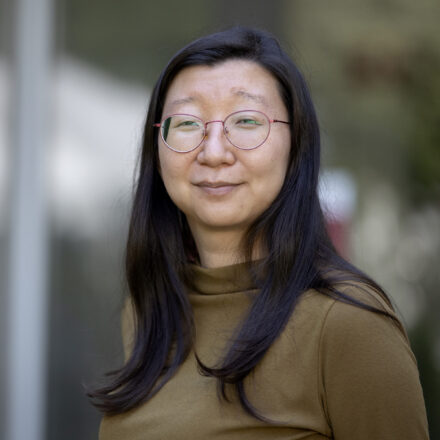
Eugenia Hyung is a Postdoctoral Fellow in the Jacobsen Group at Harvard University, specializing in geobiology, geochemistry, and Earth history. Her research focuses on mantle heterogeneity, isotope analysis, and planetary science, particularly through studies of volcanic systems, meteorite spherules, and high-pressure mineral behavior. Her recent work explores the geochemical signatures of spherules from the CNEOS 2014-01-08 bolide, mantle isotope dynamics, and rift zone magmatism. She has published extensively on topics spanning extraterrestrial materials, mantle mixing rates, and analytical chemistry techniques. Her publications highlight interdisciplinary approaches bridging geochemistry, planetary science, and high-pressure physics, with a focus on early Earth processes, exoplanet radius gaps, and mantle stratification. She employs advanced chromatographic methods and isotope measurements to address fundamental questions in geodynamics and planetary formation. Contact: hyung@fas.harvard.edu
Yasutaka Shimizu is a Professor at the Department of Applied Mathematics , Waseda University , with prior positions at Osaka University and as Visiting Professor at the Institute of Statistical Mathematics. His work bridges mathematical statistics , stochastic processes , and actuarial science . Education : Ph.D. in Mathematical Science (University of Tokyo, 2007) Key Research : Survival energy models for mortality prediction, threshold estimation for jump-diffusions, ruin theory, fractional Brownian motion inference Recent Publications focus on high-frequency data analysis, survival energy hypothesis applications, and statistical methods for financial/actuarial risks. His 2023 work includes threshold estimation under small noise and survival energy models with functional data analysis. Scientific Awards include the Research Achievement Award (Japan Statistical Society), Ogawa Research Encouragement Award , and Competition Outstanding Report Award . Grants from Japan Society for the Promotion of Science cover topics like statistical modeling of stochastic processes, mortality prediction, and financial risk measurement. He maintains professional memberships in the Japan Statistical Society, Mathematical Society of Japan, and Institute of Actuaries of Japan.
Guus Grimbergen is a medical physics researcher at the University Medical Center Utrecht specializing in radiotherapy with a focus on MR-guided treatments for gastrointestinal cancers. His work bridges advanced imaging technologies and precision radiation oncology. PhD in MR-guided radiotherapy for pancreatic cancer Expert in tumor motion compensation and dose accumulation Active in clinical translation of MR-linac technologies His research explores high-precision radiotherapy for cancers like pancreatic and rectal tumors, leveraging Magnetic Resonance Imaging for real-time treatment guidance. Recent publications demonstrate expertise in: Diffusion coefficient measurements for tumor characterization Stereotactic body radiotherapy for metastases Deep learning approaches to medical image segmentation Contact: ggrimbe2@umcutrecht.nl
Philipp Wanner is an Associate Professor (Docent) in Contaminant Hydrogeology at the Department of Earth Sciences, Faculty of Science, University of Gothenburg, Sweden. He leads the IsoGot Laboratory and serves as Principal Investigator of the North American Consortium for Field-Focused Groundwater Research. Additionally, he is a member of the steering group of the Centre for Future Chemical Risk Assessment and Management (FRAM). His work focuses on understanding how contaminants behave in groundwater systems to improve protection and management strategies for this vital resource, which provides drinking water for nearly half the global population and supports 40% of global food production. Dr. Wanner's research centers on contaminant hydrogeology, with particular emphasis on both legacy contaminants (chlorinated solvents, pesticides) and emerging contaminants (microplastics, PFAS). His work combines field studies, laboratory experiments, and advanced analytical techniques like stable isotope analysis to investigate contaminant transport mechanisms, degradation pathways, and risk assessment. This research is critical for developing effective groundwater protection strategies, as contamination often goes unnoticed until it's too late, despite groundwater being a cornerstone of human health, ecosystem stability, and climate change resilience. His recent publication record shows a strong focus on emerging contaminants, particularly PFAS and microplastics, while maintaining expertise in traditional contaminants. The research spans method development, field applications, and risk assessment, with increasing emphasis on interdisciplinary approaches connecting hydrogeology with microbiology, atmospheric science, and environmental policy. This trend reflects the growing complexity of groundwater contamination challenges in the 21st century. Dr. Wanner has secured significant research funding as Principal Investigator for multiple projects: Swedish Research Council (VR) Project Grant: Revolutionizing PFAS Source Identification in Drinking Water (2026-2030) Swedish Research Council (VR) Starting Grant: Plastic and pesticides in agricultural soils (2022-2026) FORMAS Early Career Research Project: Artificial groundwater recharge and PFAS (2022-2026) Carl Trygger Foundation Project: Chlorinated solvent biodegradation (2022-2024) He currently supervises PhD student Tabea Mumberg and postdoc Swagatam Chakraborty, focusing on critical issues at the intersection of agricultural practices, plastic pollution, and groundwater quality. As head of the IsoGot Laboratory, Dr. Wanner leads a research group applying innovative isotope techniques to solve complex groundwater contamination problems, collaborating with researchers across multiple institutions in Sweden, North America, and Europe.
Eero Vuoksimaa is a Senior Researcher at the Institute for Molecular Medicine Finland (FIMM), University of Helsinki, with the academic title of Docent (Adjunct Professor) in Neuropsychology. He supervises doctoral candidates in the Brain & Mind and Population Health programs. His research bridges psychology, neuroscience, and health sciences, focusing on cognitive aging, brain structure, and dementia risk factors. Education: Adjunct Professor of Neuropsychology, University of Helsinki (2015) Postdoctoral training, UC San Diego (2012-2013) PhD in Psychology, University of Helsinki (2010) M.Psych, University of Helsinki (2004) Research Focus: Investigates neurocognitive aging through population studies and neuroimaging, with emphasis on dementia prediction, brain structure-behavior relationships, and genetic influences. Core methodologies include twin studies, MRI analysis, and cognitive assessment. Projects: Leads NeuroEye Insight (2024-2026) and Juselius kulut (2024-2028), and contributes to the Center of Excellence in Complex Disease Genetics and Finnish Twin Cohort studies. Research addresses clinical translation of cognitive biomarkers. Professional Activities: Regular peer reviewer for neuroscience journals ( Cerebral Cortex , Neurobiology of Aging ), conference participant, and science communicator featured in media on topics like Alzheimer's prediction and cognitive development.
Morten Erik Allentoft is a Professor in evolutionary genomics and biodiversity at the Globe Institute, University of Copenhagen, where he holds a fractional appointment while simultaneously leading the Trace and Environmental DNA (TrEnD) Laboratory at Curtin University in Australia. His dual institutional affiliation reflects his international research profile and collaborative approach to scientific inquiry in the field of genomics. Dr. Allentoft obtained his MSc from the University of Copenhagen in 2007 and completed his PhD at Canterbury University in New Zealand in 2011. His academic journey has positioned him at the forefront of ancient DNA research, with a particular focus on population genetics of extinct megafauna and ancient humans, while increasingly applying these methodologies to contemporary biodiversity conservation challenges. His primary research interests span evolutionary genomics, biodiversity conservation, ancient DNA methodology, and environmental DNA (eDNA) applications. A significant portion of his recent work focuses on reptiles and amphibians, with particular emphasis on developing molecular tools for conservation of threatened species. His research integrates cutting-edge genomic techniques with ecological and evolutionary questions, creating novel approaches for understanding both historical and contemporary biodiversity patterns. Analysis of his recent publications reveals a strong trend toward applying eDNA methodologies to conservation challenges across diverse ecosystems, from subterranean environments to terrestrial habitats. His work bridges molecular biology, ecology, and conservation science, with increasing attention to methodological development that can be applied across taxonomic groups. The interdisciplinary nature of his research is evident in collaborations spanning archaeogenetics, linguistics, and neurogenetics, demonstrating the versatility of genomic approaches in addressing diverse scientific questions. Dr. Allentoft has established the Herpetology summer course at the Globe Institute, reflecting his commitment to education and training in specialized areas of biodiversity research. While specific grant details aren't provided in the available information, his extensive publication record and laboratory leadership suggest successful acquisition of research funding to support his team's activities. He leads the Trace and Environmental DNA (TrEnD) Laboratory at Curtin University, which appears to be a multidisciplinary research group focused on developing and applying eDNA methodologies for biodiversity monitoring and conservation. His fractional position at the Globe Institute enables continued collaboration with Danish researchers while maintaining his primary laboratory base in Australia.
Piotr Jan Garbaczewski is a Professor of Physics at the University of Opole, Poland, where he serves as the Head of the Institute of Physics. Previously, he held professorial positions at the University of Zielona Góra (1998-2006) and the University of Wrocław (1971-1998). His research spans multiple areas of theoretical and mathematical physics, with particular focus on: Stochastic processes and random dynamics Quantum mechanics and fractional quantum mechanics Non-equilibrium statistical mechanics Lévy flights and stable processes in bounded domains Diffusion processes with non-conservative drifts Mathematical aspects of quantum potentials Garbaczewski's recent publication record shows consistent output in prestigious journals, with notable work on killing versus branching processes, non-conservative diffusion, and Lévy processes in bounded domains. His research demonstrates a strong connection between stochastic processes and quantum mechanical systems, particularly through the lens of non-Hermitian quantum mechanics and fractional calculus. His scientific achievements include: h-index (WoS Citations): 7 Total Impact Factor: 31.499 Total SNIP: 15.42 Total CiteScore: 28.41 Total ministerial score: 1,210 Throughout his career, Garbaczewski has maintained active collaborations with researchers across Poland and internationally, contributing significantly to the field of mathematical physics through both theoretical developments and practical applications of stochastic processes in physical systems.
Dr. Christopher J. Schultz is a Professor and Chairman of Radiation Oncology at the Medical College of Wisconsin, where he also holds the Bernard & Miriam Peck Family Endowed Chair. He serves as Medical Director of the Gamma Knife program at Froedtert Memorial Lutheran Hospital and is a member of the Cancer Center, Mellowes Center for Genomic Sciences and Precision Medicine, and Neuroscience Research Center. Dr. Schultz's research focuses on advancing precision radiation therapy through innovative imaging techniques and clinical trials. His work spans brain tumor treatment (particularly glioblastoma), Gamma Knife radiosurgery, MR-guided adaptive radiation therapy, and head and neck cancer. He has been instrumental in developing protocols for MR-Linac technology and investigating genomic predictors of radiation response. His recent publications demonstrate a strong emphasis on improving treatment accuracy through quantitative imaging and personalized radiation therapy approaches. His 15 most recent publications reveal a consistent trend toward precision radiation oncology, with increasing focus on MR-guided adaptive therapy, quantitative imaging biomarkers, and genomic predictors of treatment response. The research spans both technical innovations in radiation delivery and clinical outcomes across multiple tumor sites, particularly brain tumors and head and neck cancers. Best Doctors in America (1998-2017) J. Frank Wilson Teaching Award (2011) Fellow (FACR), American College of Radiology (2013-present) Fellow (FASTRO), American Society for Radiation Oncology (2014-present) Bernard & Miriam Peck Family Endowed Chair of Radiation Oncology (2017-present) Thomas L. Smallwood Award for Clinical Excellence (2023) Dr. Schultz has been actively involved in national clinical trials through NRG Oncology/Radiation Therapy Oncology Group, serving on the Brain Steering Committee and Image-Guided Radiation Therapy committee since 1991. His leadership extends to the MOMENTUM Study, a prospective multi-institutional registry examining MR-guided adaptive therapy. He has mentored numerous residents and contributed significantly to radiation oncology education, receiving the J. Frank Wilson Teaching Award from Radiation Oncology Residents in 2011. As Medical Director of the Gamma Knife program since 2007 and Chairman of Radiation Oncology since 2016, Dr. Schultz leads a comprehensive radiation oncology program that integrates cutting-edge technology with clinical excellence. His research group focuses on translating advanced imaging techniques into clinical practice to improve radiation therapy precision and patient outcomes.
Prof. İhsan Kirik serves as Professor at Bingöl University's Vocational School of Technical Sciences, where he conducts research in materials science and welding engineering. His expertise spans friction welding, diffusion bonding, and advanced surface modification techniques for dissimilar material systems. His research focuses on: Microstructure-property relationships in welded joints Mechanical behavior of armor steels and stainless steels Wear and corrosion resistance enhancement through surface engineering Process optimization of joining techniques Characterization of dissimilar metal interfaces Recent publication trends (2017-2021) reveal a strategic shift toward industrial surface engineering solutions, particularly TIG and PTA coatings for wear-resistant applications on Hardox 450 and stainless steels, while maintaining core expertise in friction welding of critical material combinations like Ti-6Al-4V to duplex stainless steels. Academic trajectory: Professor at Bingöl University (current) Assistant Professor at Batman University (2013-2017) Assistant Professor at Bitlis Eren University (2012-2013) Industry experience: Manufacturing Manager at HAY-SAN İMALAT (1993-2006) His 20+ international journal publications demonstrate consistent output in materials engineering, with primary contributions to journals including Materials Testing, Materials and Technology, and Journal of Materials Engineering and Performance. Research is characterized by rigorous microstructural analysis coupled with mechanical property evaluation under industrially relevant conditions.
Mark Lumsden is a prominent Researcher at Oak Ridge National Laboratory specializing in quantum magnetism and neutron scattering techniques. His work focuses on unraveling exotic quantum phenomena in magnetic materials through advanced neutron scattering experiments at the High Flux Isotope Reactor (HFIR) and Spallation Neutron Source (SNS). His research interests span: Magnetism in iron-based superconductors Quantum spin liquids and fractional excitations Topological magnons and Dirac points Frustrated magnetic systems Field-induced quantum phase transitions Spin dynamics in low-dimensional materials Analysis of his 15 most recent publications (2020-2024) reveals a consistent focus on quantum magnetic phenomena using neutron scattering. His work shows increasing emphasis on topological aspects of magnon spectra, field-tuned quantum effects in honeycomb lattices, and instrumentation development for next-generation neutron spectrometers. Key material systems include YbCl 3 , CrSiTe 3 , and frustrated quantum magnets. Scientific recognition: Elected Fellow of the Neutron Scattering Society of America (2022) for outstanding contributions to understanding magnetism in quantum materials Lumsden maintains an active research program with continuous funding evidenced by his publication record. He collaborates extensively through ORNL's user facilities, providing critical neutron scattering expertise to the global condensed matter physics community. His instrumentation work on spectrometers like CHESS enables new scientific capabilities for studying quantum materials. While not leading a named laboratory, Lumsden operates at the forefront of neutron scattering research within ORNL's Neutron Sciences Directorate, contributing to both fundamental discoveries and advanced instrumentation development for probing quantum magnetic phenomena.
Hannes Meinlschmidt is an Assistant Professor and Senior Scientist at the Chair for Dynamics, Control, Machine Learning and Numerics (Alexander von Humboldt Professorship) at Friedrich-Alexander University Erlangen-Nuremberg (FAU) since March 2021. He previously held a PostDoc position at the Radon Institute for Computational and Applied Mathematics (RICAM) in Linz, Austria, from September 2017. He obtained his Diploma (2011) and PhD (2017) in Mathematics from TU Darmstadt, supervised by Stefan Ulbrich. His research intersects optimal control, optimization, and PDE analysis with emphasis on: Regularity theory for elliptic/parabolic equations Control of nonlinear PDE systems Applications with nonsmooth data Variational methods for dynamic models His publications demonstrate expertise in mathematical analysis of physical systems, including semiconductor equations, thermistor control, and biological models. Work frequently addresses mixed boundary conditions, nonsmooth domains, and Hölder regularity. Teaching includes advanced mathematics courses such as: Optimization with PDEs Interpolation theory Partielle Differentialgleichungen I/II He leads research at the FAU DCN-AvH chair, contributing to PDE numerics and control theory.
Dr. Andrew Chew is a Developmental Paediatrician/Psychologist at the Centre for the Developing Brain, King's College London, specializing in Early Life Imaging research. With 47 research publications and 1,518 citations, he has established himself as a significant contributor to the field of neonatal and infant brain development. Dr. Chew's research focuses on the intersection of neuroscience, developmental psychology, and paediatric medicine. His work primarily investigates brain development in neonates and infants using advanced imaging techniques, with particular emphasis on how gestational age, congenital heart disease, and early life factors impact neurodevelopmental trajectories. His research contributes to UN Sustainable Development Goals related to health and well-being. His recent publications (2024-2025) demonstrate active research in cortical scaling of neonatal brains, cognitive outcomes related to gestational age, hippocampal morphometry in congenital heart disease, attentional development, and early autism detection. These works show a consistent pattern of interdisciplinary research bridging clinical medicine, neuroscience, and developmental psychology. Dr. Chew's scientific contributions have formed a distinctive research fingerprint characterized by expertise in: Magnetic Resonance Imaging (100%) Nerve Cell Differentiation (85%) Brain Development (70%) Fractional Anisotropy (70%) Thalamus research (69%) Gestational Age effects (60%) Diffusion MRI (49%) Premature Labor studies (47%) His research has established significant collaborations across multiple institutions and countries, with particular strength in UK-China comparative studies on child development. Dr. Chew's work with community cohorts of toddlers and infants with congenital conditions demonstrates his commitment to translating neuroimaging findings into clinical practice for early intervention.
Professor Serena Counsell is a leading researcher in perinatal imaging and early brain development at King's College London's Centre for the Developing Brain within the Faculty of Life Sciences & Medicine. She holds the Chair in Perinatal Imaging & Health and leads cutting-edge research using advanced MRI techniques to study brain development in fetuses and neonates. Professor Counsell's research expertise spans multiple critical areas: Magnetic Resonance Imaging (100% expertise according to fingerprint analysis) Brain Development (74%) Diffusion MRI (61%) Fractional Anisotropy (60%) Thalamus research (45%) Diffusion Tensor Imaging (36%) Gray Matter analysis (35%) Premature Labor studies (29%) Her recent publications demonstrate a strong focus on understanding how genetic factors, congenital conditions, and environmental influences affect early brain development. Professor Counsell's work bridges neuroscience, cardiology, and imaging technology to improve outcomes for vulnerable infants, with particular emphasis on congenital heart disease and its neurological impacts. With over 18,081 citations across 255 research outputs, Professor Counsell has received significant recognition for her contributions to perinatal neuroscience. Her research has been consistently supported by major funding bodies including the Medical Research Council, British Heart Foundation, and National Institutes of Health. As an active supervisor, Professor Counsell has guided the work of 10 students and currently leads multiple research projects examining critical questions in perinatal brain development. Her Centre for the Developing Brain serves as a hub for innovative research at the intersection of neuroscience, imaging, and perinatal medicine, contributing to United Nations Sustainable Development Goals related to good health and well-being.
Tobias Wood serves as a Senior Lecturer in Magnetic Resonance Imaging within Neuroimaging, leading multiple externally funded research initiatives focused on advancing quantitative MRI methodologies. His primary institutional affiliation remains implied through project leadership but is not explicitly stated in available documentation. Research interests span the full spectrum of Magnetic Resonance Imaging with particular emphasis on advanced image reconstruction techniques and quantitative biomarker development . His work bridges engineering innovation with clinical applications in neurological disorders including multiple sclerosis, Parkinson's disease, and Huntington's disease, while also exploring novel frontiers like the neurocutaneous axis in inflammatory skin conditions. The research fingerprint reveals strong concentration in Myelin Imaging (49%), In Vivo Neuroscience (32%), and Parkinson's Disease research (31%). Recent publications demonstrate consistent output in high-impact journals including Magnetic Resonance in Medicine and Neuropsychopharmacology , with emerging focus on ultra-low-field MRI applications and multi-modal biomarker validation. Key trends include methodological innovation in silent scanning protocols, pediatric coil development, and translation of quantitative techniques to clinical monitoring. Current funding portfolio includes five major projects totaling approximately £2.5M, with leadership roles in EPSRC and CHDI Foundation grants. Collaborative networks span 11 similar research profiles with strong connections to multiple sclerosis research, neurodegenerative disorders, and advanced imaging physics communities. Lab resources include access to high-field MRI systems, specialized computational infrastructure, and clinical validation partnerships. Supervision approach emphasizes interdisciplinary training with strong publication expectations and industry-academic career pathways.
Tareq Alodat is a Lecturer in Statistics and Data Science at the Mathematics & Statistics school of La Trobe University in Melbourne, Australia. He simultaneously holds a Postdoctoral Research Fellow position at UNSW Australia's School of Mathematics and Statistics in Sydney. His academic background includes: PhD from La Trobe University, Melbourne, Australia (2016-2019) Dr. Alodat's research expertise spans theoretical and applied statistics with significant contributions to long-range dependent processes, stochastic modeling, and nonparametric methods. His work bridges probability theory with practical applications in ecology, medical research, and spatial statistics. He has developed novel statistical approaches for complex data structures and contributed to distribution theory, particularly with generalized skew-normal distributions. Analysis of his publication trajectory reveals increasing specialization in fractional stochastic differential equations applied to spherical geometry, alongside continued work in ecological statistics. His research demonstrates consistent theoretical development paired with practical applications across diverse domains, with recent publications showing sophisticated mathematical techniques applied to real-world problems. Dr. Alodat serves as a reviewer for several prominent journals including Communications in Statistics-Simulation and Computation, Symmetry-Basel, and Entropy, reflecting his standing in the statistical community.